A course by Xavier Denia VallsArtist and Teacher
A course by Xavier Denia Valls, Artist and Teacher
- 4.999% positive reviews(518)
- 12,681 students
- 27 lessons (5h 46m)
- 8 additional resources (9 files)
- Online and at your own pace
- Available on the app
- Audio: Spanish, Italian, Turkish, French, Portuguese, English
- Spanish · English · Portuguese · German · French · Italian · Polish · Dutch · Turkish
Level:
Beginner- Unlimited access forever

Discover the step-by-step process and the materials to draw portraits that leap out of the paper
Art has an inherent element of exploration and mystery. According to artist Xavier Denia, who has been studying it for 15 years: "Art is about discovering diverse ways of solving problems and finding ways to communicate, creating unlimited possibilities that make it truly intriguing". Learn the basics of charcoal portraits and achieve a realistic finish that will amaze you.
In this course, Xavier teaches you how to make a realistic charcoal portrait with graphite and white pastel on toned paper. Explore the structure of the face's individual features (nose, mouth, ears, and eyes), and the effect of lights and shadows that help give a certain aesthetic to your drawing.
What will you learn in this online course?
27 lessons & 17 downloads
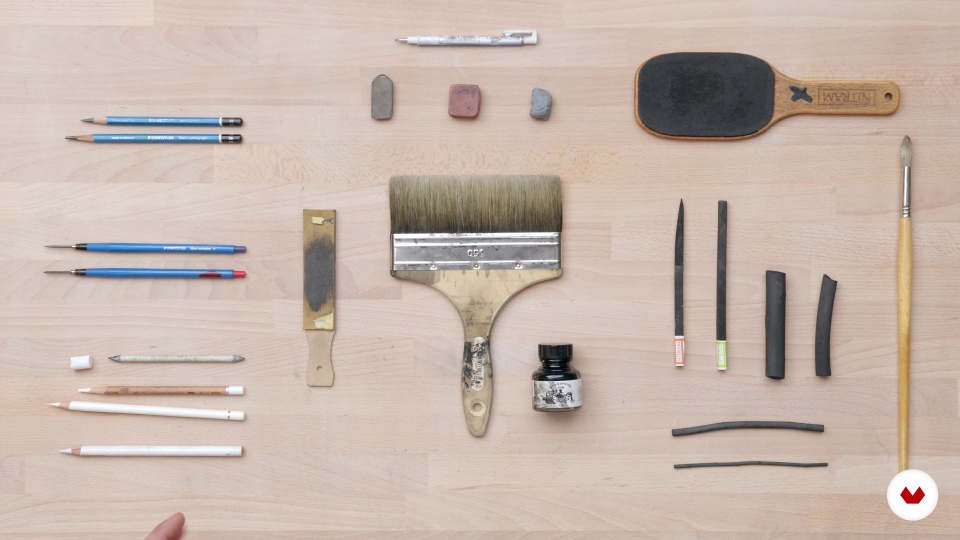
The materials
3 minutes, 11 seconds
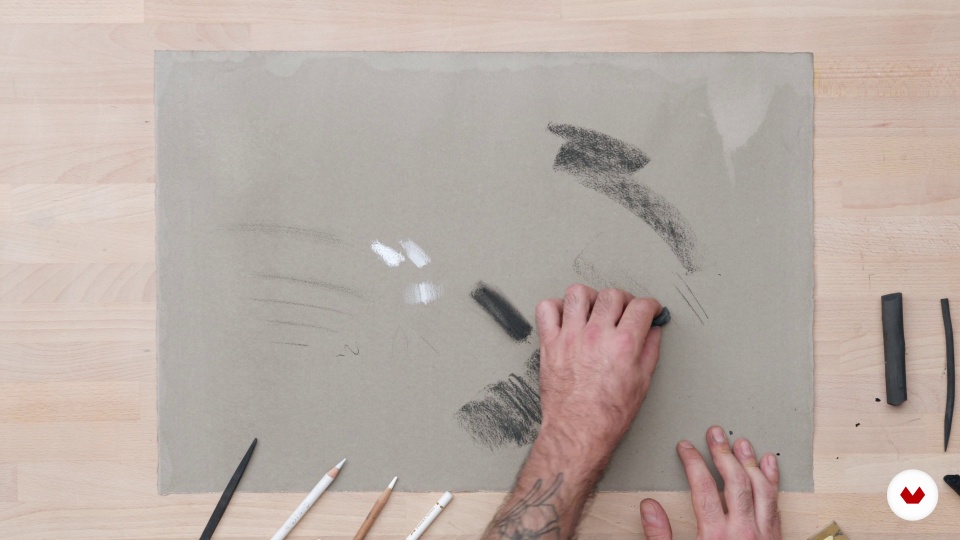
Application of materials
17 minutes, 32 seconds
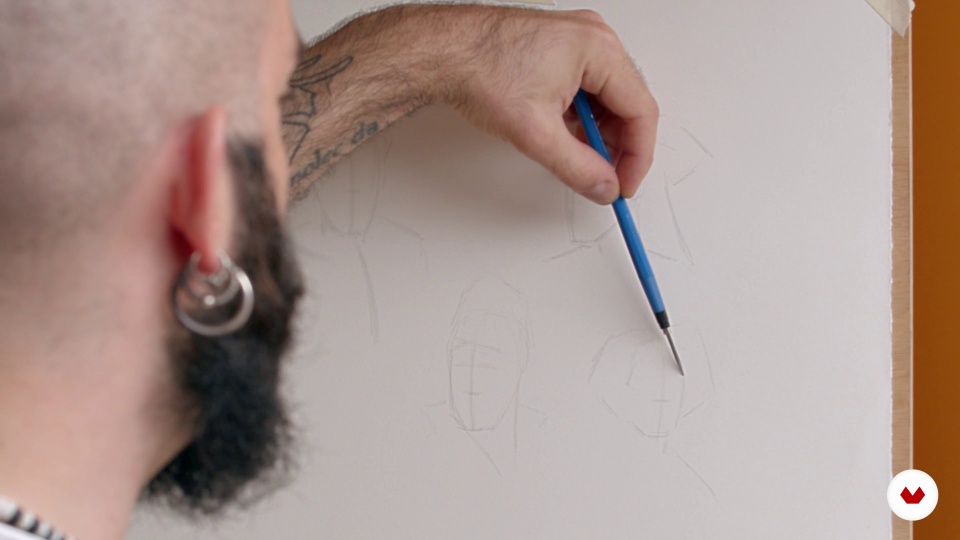
Basic structure
9 minutes, 48 seconds
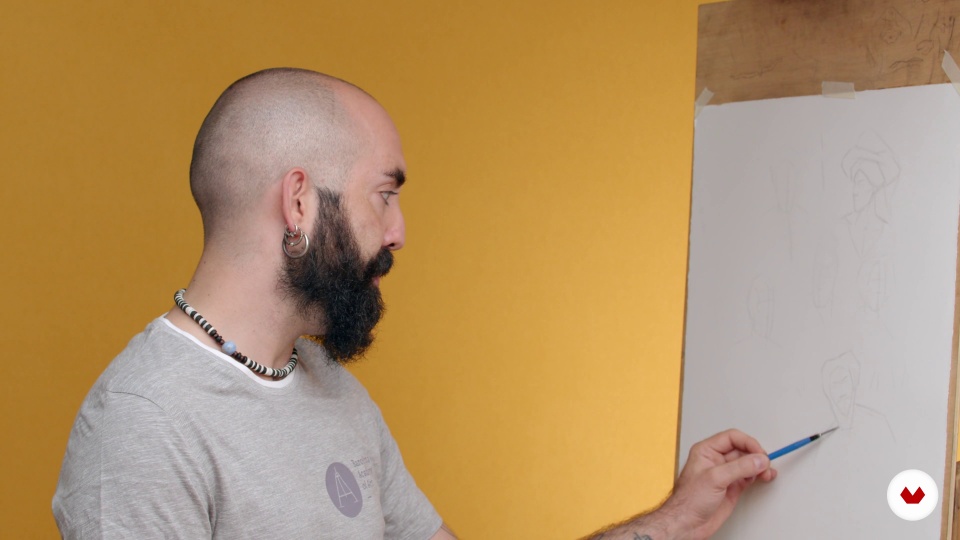
Big Shape Exercise
19 minutes, 27 seconds
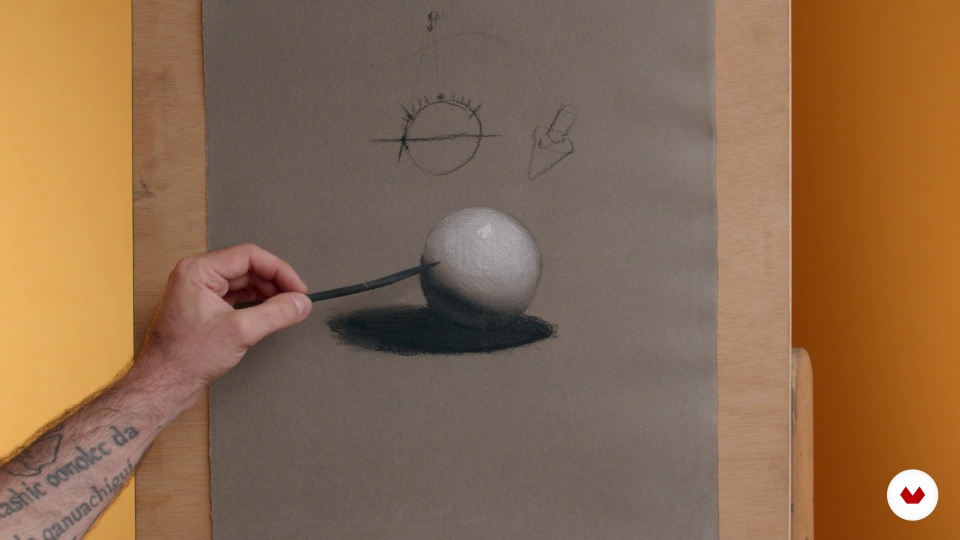
The light
18 minutes, 23 seconds
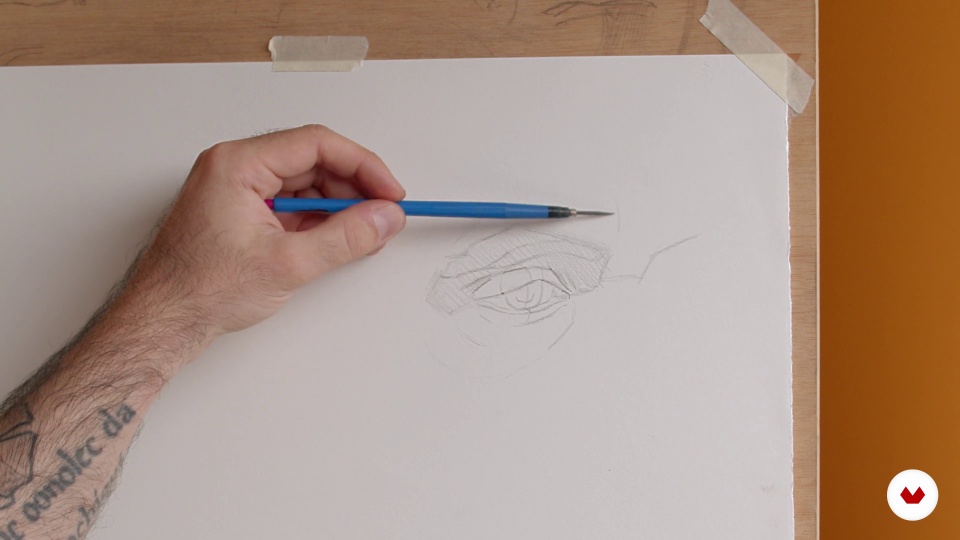
The eye
9 minutes, 34 seconds
What's included in this course?
Xavier Denia starts by giving you a brief presentation of his artistic work, his influences, motivations, and what he intends to go through in this course.
Learn how to prepare and use the materials. Then, learn the basics of how the face is built, how to simplify a portrait (through the big shape exercise), and some basic notions of light and shadow.
Next, study each feature from a morphological angle to learn how shapes work. Start with the eyes and nose, continue with the mouth, chin, forehead, ears, and finish with the hair.
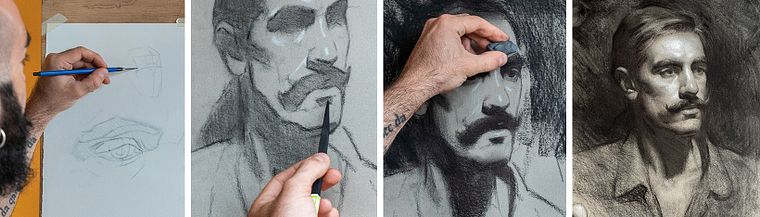
Start working on your final project: a charcoal portrait. Define the subject and composition of your portrait. Then, apply everything you’ve learned including simplification, construction by parts, modeling, textures, lights, halftones, highlights, darkness, and shadows.
Finally, Xavier shows you how to give your drawing some impressive final touches.
What is this course's project?
Draw a portrait with a classic realistic style based on a photograph. Using charcoal, graphite, pencils, and white pastel on toned paper, learn how to create mood and texture in the image.
Who is this online course for?
This course is appropriate for both beginners who want to explore portraiture —since you will learn the most basic concepts—and experienced artists who want to learn the systems and techniques used in traditional nineteenth-century academies.
Requirements and materials
To take this course, no previous experience is needed.
As for materials, you will need charcoal or watercolor paper with a fine grain (not glossy), ink and a sponge or wide brush to tone the paper, an artist gum eraser, charcoal of different sizes, graphite pencils (9B, 4B, 2B and HB), one or two brushes to unify and soften edges, toilet paper to use as a rag, and white pastels. You will also need different types of white pencils: Xavier recommends a Stabilo CarbOthello 1400/100 white pencil, a Polychromos Faber-Castell white pencil, and a Conté à Paris Blanc/France/630 pencil.
Reviews
What students say
Students most often praise the instructor’s clear, patient, step-by-step teaching and strong command of portrait drawing and charcoal. They also value the course’s thorough, well-structured coverage of the portrait process, materials, and practical techniques, noting that it offers useful advice and helps them learn or improve their skills.
- 3 months ago
O curso é bom, mas se beneficiará mais quem já tem alguma experiência com desenho. Às vezes falta um passo a passo mais detalhado e me ressenti muito da falta da visão do retrato de referência enquanto ele desenhava, o que daria uma melhor noção do andamento do trabalho. Mas há dicas muito interessantes e ver um artista no seu trabalho detalhadamente sempre acrescenta a quem está aprendendo.
- 6 months ago
Excelentes consejos, tips y explicaciones, realmente obtyve nuevas perspectivas para mis retratos a carboncillo, muchas gracias!!
- 7 months ago
This course is very comprehensive. Covers the material list very well of how and when to use it and. how to prep the materials. And there are many modules showing how Xavier complete the drawing from start to finish guiding the viewers through his thought process as well as corrections. Very thorough content !
- 8 months ago
Absolutely worth the time. He shares his drawing process in simple, thoughtful details. It felt as if a kind friend was gently teaching me how to draw :)
- 9 months ago
Me encanta este curso! El profesor es excelente y explica unos conceptos muy valiosos y útiles paso a paso. He participado ya en 5 cursos de Domestika y este es mi favorito!

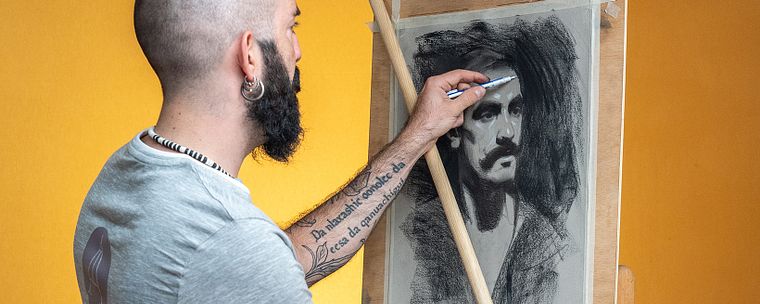
He has participated in collective exhibitions in Italy, the UK, and Spain. In 2019, he was selected as a finalist in the Reina Sofía painting and sculpture competition, in Madrid. A large part of his work can be found in the galleries and rooms at the Barcelona Academy of Art.
Content
- U1
Introduction
- Presentation
- Influences
- What will we do in the course?
- U2
Materials and basic concepts
- The materials
- Application of materials
- Basic structure
- Big Shape Exercise
- The light
- U3
Areas of the face
- The eye
- Nose
- Mouth and chin
- Forehead
- Ear
- The hair
- U4
The portrait
- The photo and the portrait approach
- Big shape 1
- Big Shape 2
- Work in parts 1
- Work in parts 2
- Dark and shadows
- Highlights and halftones 1
- Highlights and halftones 2
- Highlights
- Completion of portrait 1
- Completion of portrait 2
- Completion of portrait 3
- Completion of portrait 4
- FP
Final project
- Realistic Portraits Using Charcoal
What to expect from a Domestika course
Learn at your own pace
Enjoy learning from home without a set schedule and with an easy-to-follow method. You set your own pace.
Learn from the best professionals
Learn valuable methods and techniques explained by top experts in the creative sector.
Meet expert teachers
Each expert teaches what they do best, with clear guidelines, true passion, and professional insight in every lesson.
Certificates
PLUSIf you're a Plus member, get a custom certificate signed by your teacher for every course. Share it on your portfolio, social media, or wherever you like.
Get front-row seats
Videos of the highest quality, so you don't miss a single detail. With unlimited access, you can watch them as many times as you need to perfect your technique.
Share knowledge and ideas
Ask questions, request feedback, or offer solutions. Share your learning experience with other students in the community who are as passionate about creativity as you are.
Connect with a global creative community
The community is home to millions of people from around the world who are curious and passionate about exploring and expressing their creativity.
Watch professionally produced courses
Domestika curates its teacher roster and produces every course in-house to ensure a high-quality online learning experience.
FAQs
You’ll learn realistic drawing techniques, portrait construction, handling light and shadow, facial structure analysis, use of charcoal and pencil, and classical principles applied to both traditional and digital media.
The course is aimed at intermediate students who already have basic drawing skills and want to deepen their knowledge of classical techniques, portraiture, and structural analysis.
You’ll need toned paper, charcoal, drawing pencils, kneaded eraser, brushes, thumbtacks, and access to visual references. Some modules may also require digital tools if you want to explore digital portraiture.
Yes, the course covers traditional techniques like charcoal and pencil, and also explores portraiture in digital media and combining 3D sculpture with digital painting.
You’ll learn to separate light, shadow, and midtones, create visual drama, control highlights and reflected light, and use natural or artificial light to enhance realism in your portraits.
It’s recommended to have basic drawing experience since the course starts with fundamental concepts and progresses to intermediate techniques and more advanced structural analysis.
It gives you a solid foundation in proportions, anatomy, composition, and techniques that will help you master portraiture and develop your own visual language in both traditional and contemporary media.


