


What Is Night Photography?
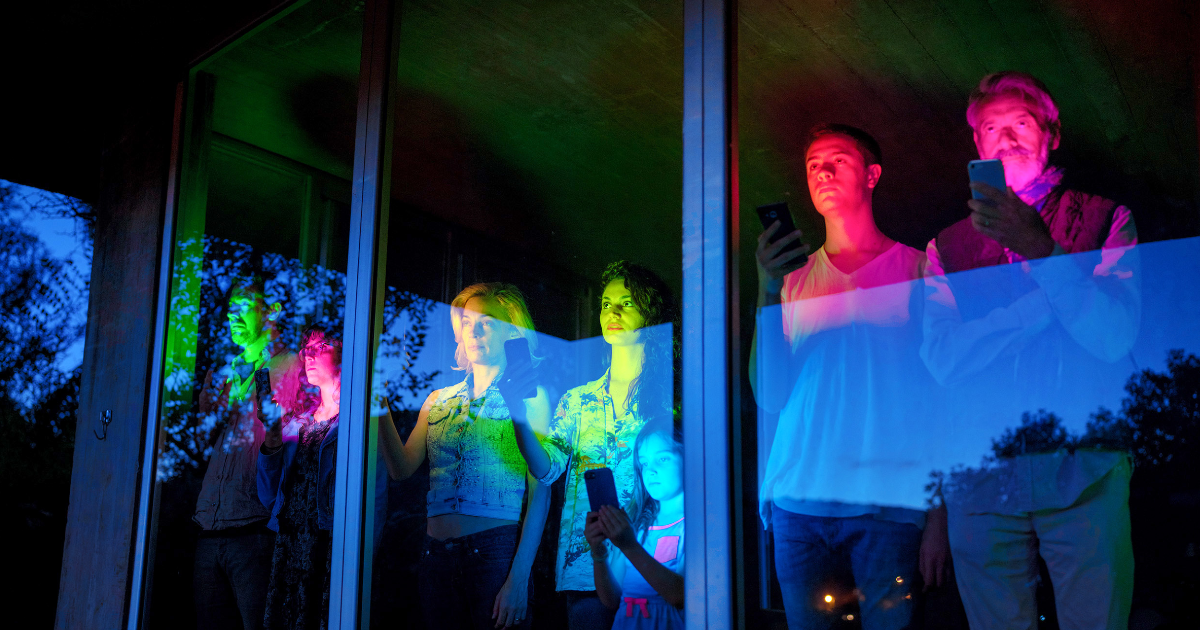
Photographer Alejandro Chaskielberg teaches the basic principles of long exposure photography
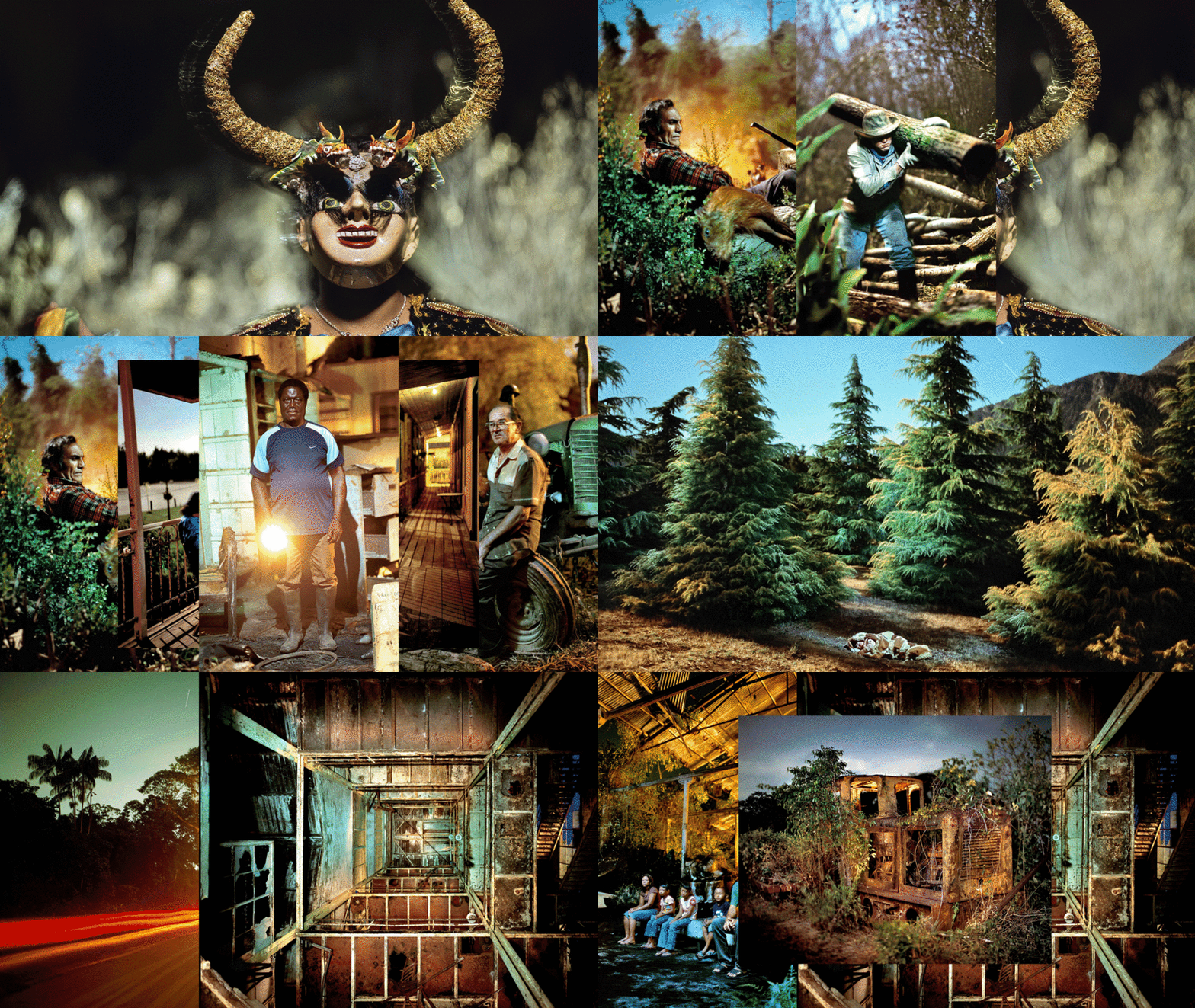
Alejandro Chaskielberg (@alechaski) is a photography director with advanced studies in classical music and animation. This multidisciplinary artist specializes in night photography, a technique that allows him to show an altered version of reality —or, as he defines it, "time frozen between day and night."
His work blends fiction with reality, creating fantastic scenes with real characters. For him, light (or rather, the absence of it) is a powerful creative tool. Today, he'll give you some essential tips that will help you create images like his.
Exposure Time
In night photography, the exposure time can range from seconds to hours, but there really isn't a time limit that marks when a photo can be classed as ‘night photography’. For Alejandro, the term applies when the images have some kind of visible difference from reality. That is, they are taken with a long enough exposure that allows you to see things that would otherwise invisible to the naked eye, as in this example:
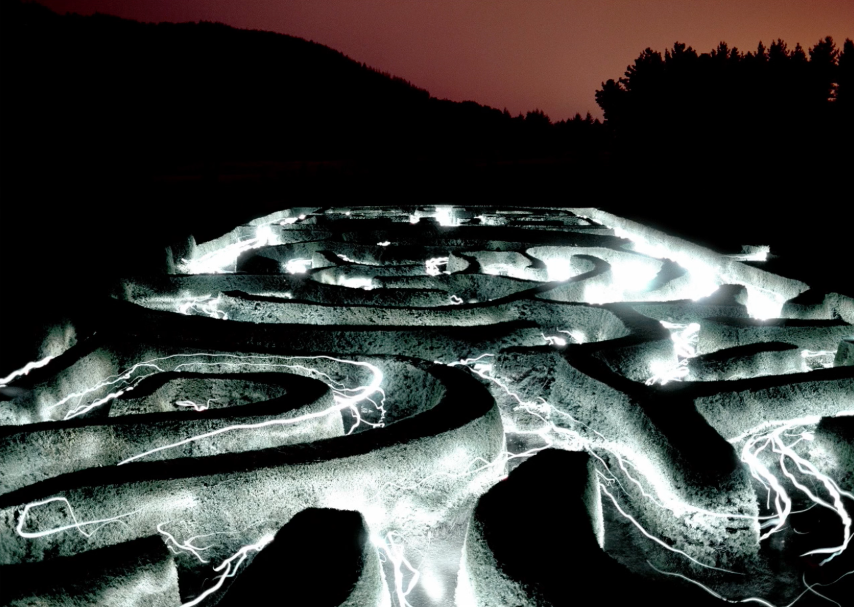
In this case, the camera's shutter was set to "bulb mode" and stayed open for 8 continuous minutes, meaning all the lights in front of the camera, including the dimmer ones, came out in the final image.
To achieve this, Alejandro asked eight people for help, who walked from one side to the other inside the labyrinth with a lit flashlight in hand. The lines that can be seen were generated by these routes, while the light spots were achieved when the people who assisted him stood still in the same place for several seconds.
Factors you should consider
Although there are photographers who do night photography holding the camera with their hands, Alejandro recommends using a tripod. He also shares some tips to play with the three fundamental technical elements of a camera: the aperture, the shutter speed, and the sensitivity (ISO).
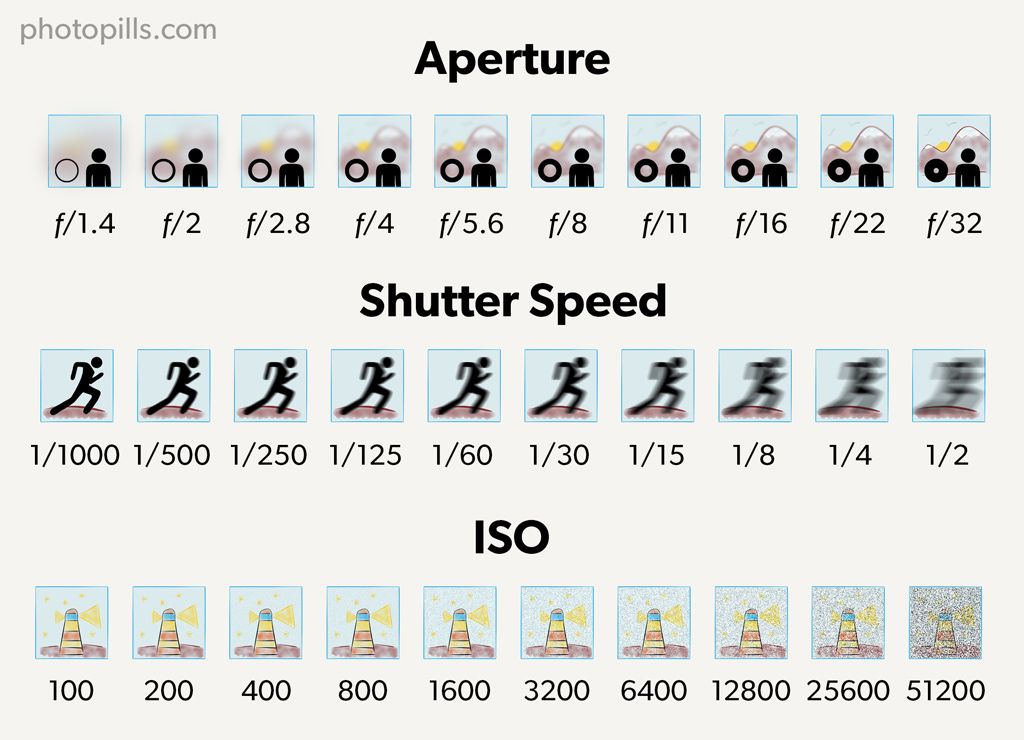
- Aperture: modifies the depth of field. The narrowest apertures are ideal for bringing both close-up subjects and backgrounds into focus, while the widest apertures help separate subjects from their background.
- Shutter speed: Used to achieve or avoid certain effects with objects in motion. With low exposure times, you can precisely freeze an instant, while with long ones, you can get a blurry effect.
- ISO: The sensitivity. This allows you to work with more or less light. However, you should consider that increasing sensitivity also increases the level of noise in the image.
Modifying the aperture or ISO has an immediate impact on the exposure time that you must consider when taking a photo, so it is extremely important to know your equipment and perform some tests before carrying out any project in the dark.
Look at this other example:
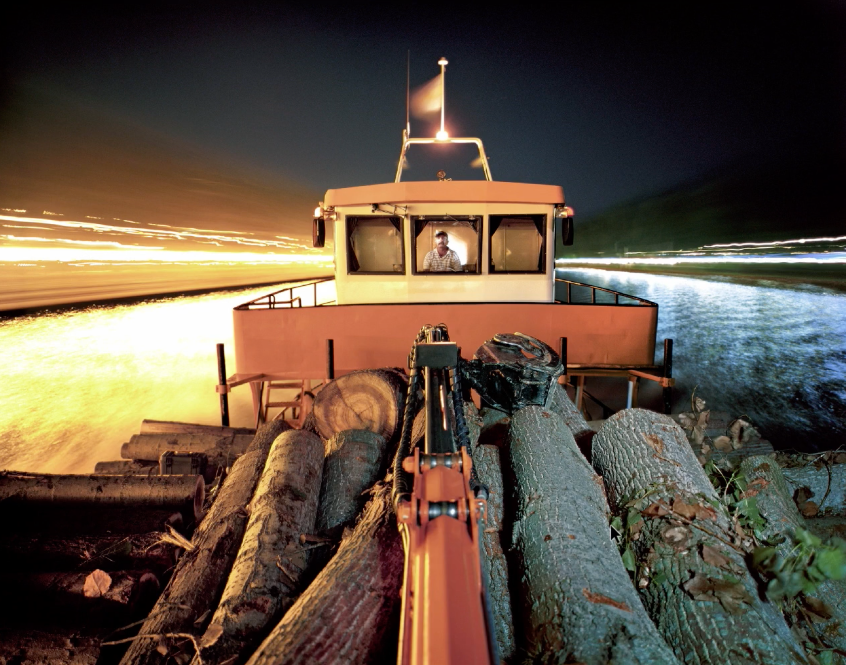
To get this image, Alejandro decided on two minutes of exposure. He set up a tripod on top of a moving ship but made sure that the camera movement and the ship were in sync. That way, the boat is focused sharp, and the light trails around it create the sensation of movement.
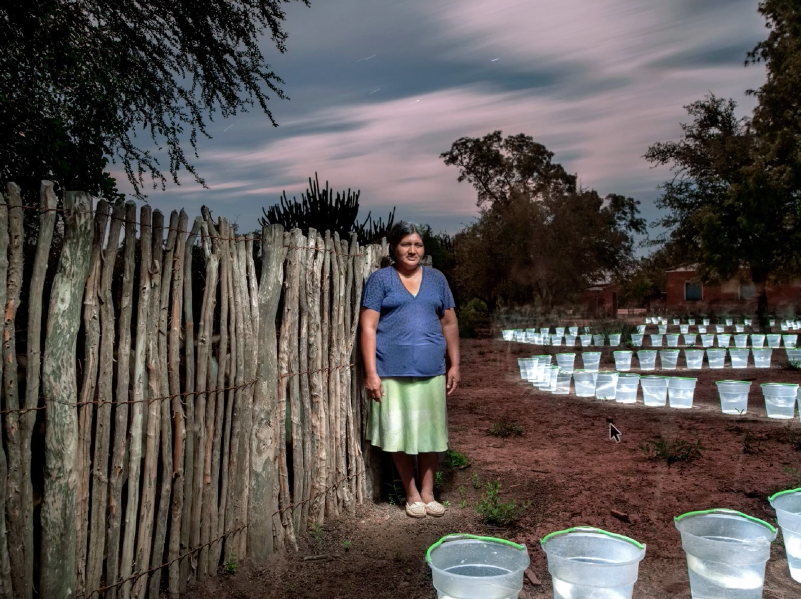
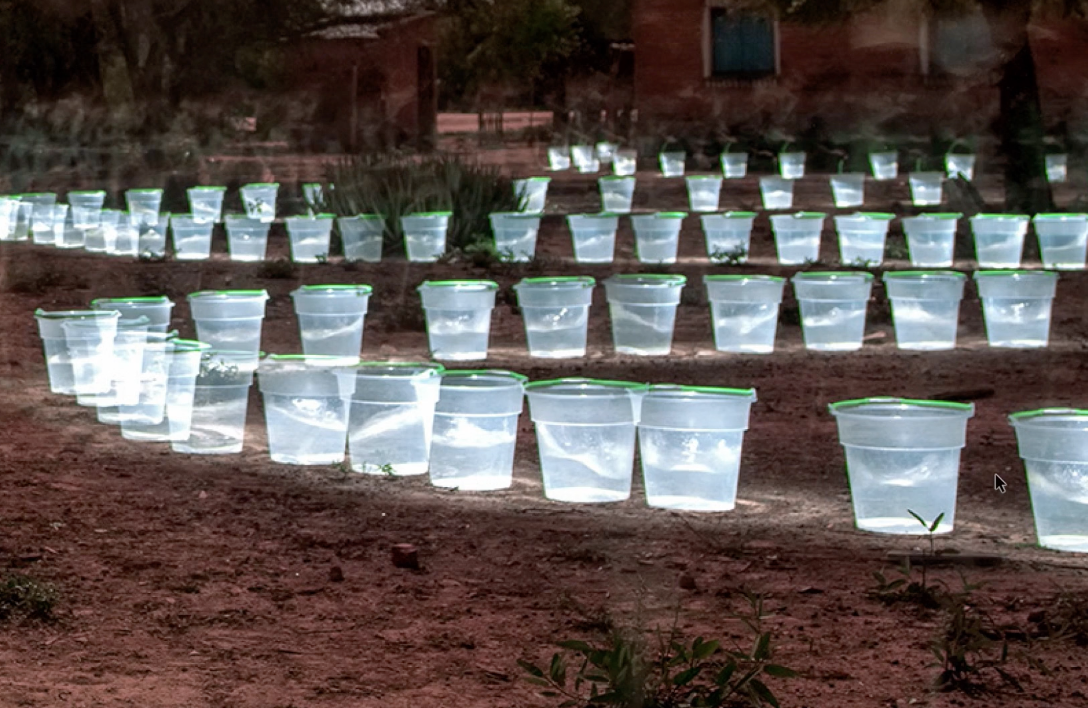
In this photo, the person remained completely still for eight minutes, while Alejandro switched between illuminating her and the fence next to her. He later used a bucket of water that he placed in different positions and illuminated with a flash.
If you want to learn more techniques to take incredible long exposure photographs, sign up for the Night Portrait Photography course, in which Alejandro Chaskielberg will teach you how to tell stories playing with light, time, and the night.
You may also like:
- What Is Self-Portraiture and How to Master It
- What is RAW Imagery and What is It For?
- Do's and Don'ts For Working With Nude Models


0 comments