


How to find your style in illustration: 5 key steps
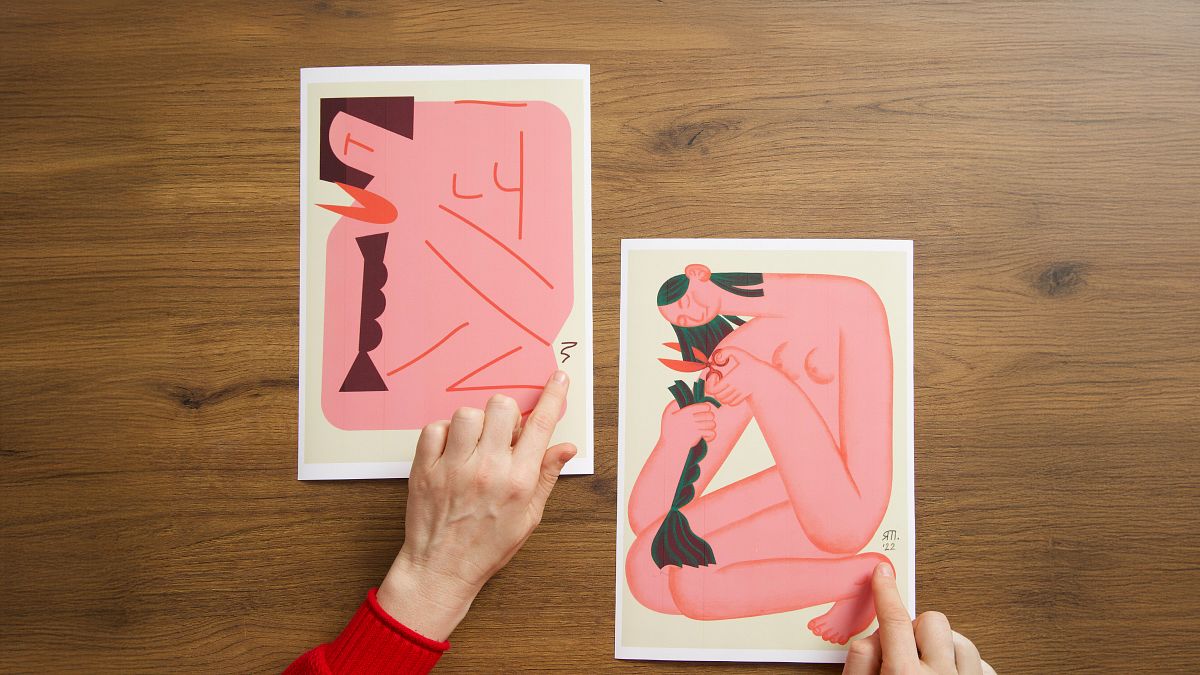
Discover how to develop your own style in illustration with these 5 exercises and practical tips for beginners and advanced illustrators
.
Finding your own illustration style is a common challenge. It requires exploration, practice and reflection. Here are five key steps to start or continue on this path with purpose.
Tania Yakunova is an artist and illustrator with over ten years of experience, recognized for her dynamic style and bold compositions. She has worked with global brands such as TikTok, Google, AirBnB and Penguin Publishing, and has exhibited her work in countries such as France, the United States and Germany. Self-taught with a background in social sciences, Tania is committed to alternative education and understands art as a powerful form of visual communication. Her focus on composition and color has been awarded by institutions such as the World Illustration Awards, and in Domestika she shares her vision with an international community of artists.
1. Explore different techniques and media.
Before defining your style, you need to try different paths. Work with watercolor, digital, ink, pencil, collage... Each technique offers you different expressive possibilities.
Tip: Dedicate a week to each medium, with the sole objective of experimenting without pressure of result.
2. Create a moodboard of references.
Make a visual compilation of works, artists and styles that inspire you. Analyze which elements are repeated: loose lines, vibrant colors, geometric shapes, among others.
Useful tools: Pinterest, Milanote or even a physical folder with clippings.
3. Repeat the same theme with variations.
Choose a motif (for example: a portrait, a plant, an animal) and draw it ten times changing style, technique or color palette.
Objective: See which decisions come naturally and which feel forced.
Join for Free and download
U5_01_Things to keep in mind.zip
4. Ask yourself what you want to communicate.
Your style is not just aesthetics: it's visual communication. Reflect on what topics interest you, what emotions you want to convey, and how your drawing can become a unique voice.
Exercise: Write down three words that define your creative universe. Use that as a compass to make stylistic decisions.
5. Revise, repeat and refine.
Style is not found in a single drawing, but in repetition. Compare your last ten works and see what elements remain the same. Refine and repeat them.
Tip: Print out your illustrations and look at them together-what visual pattern repeats?


0 comments