


Painting Tutorial: How to Quickly Create an Oil Portrait

Learn how to speed up your painting process using oil paints and spray paint with Nikolas Antoniou
Oil painting has a reputation for being a slow process technique, in part thanks to the long drying time involved. However, contrary to what many believe, it is possible to create a portrait quickly using oil paints.
Painter Nikolas Antoniou (@antoniounikolas1), originally from Cyprus, creates experimental mixed media portraits. The result is a powerful mix of atmosphere and emotions that he achieves through thick, fast brush strokes and a touch of spray paint. His work has been exhibited in galleries around the world, such as Morren Galleries, in the Netherlands, and Alpha C. K Art Gallery, in Cyprus. He has also collaborated with spirits giant Absolut Vodka.
In this tutorial, Nikolas Antoniou shatters any prejudices you may have about oil painting, showing you that you can create a super fast and stylish portrait by fusing oil paint with spray paint.
How to quickly create an oil portrait
What you will need:
- At least two colors of oil paint
- A fine brush
- A wide brush
- A small canvas
- White spirit or solvent
- A tissue
- A mask
- Spray paint
1. Start from a central reference point
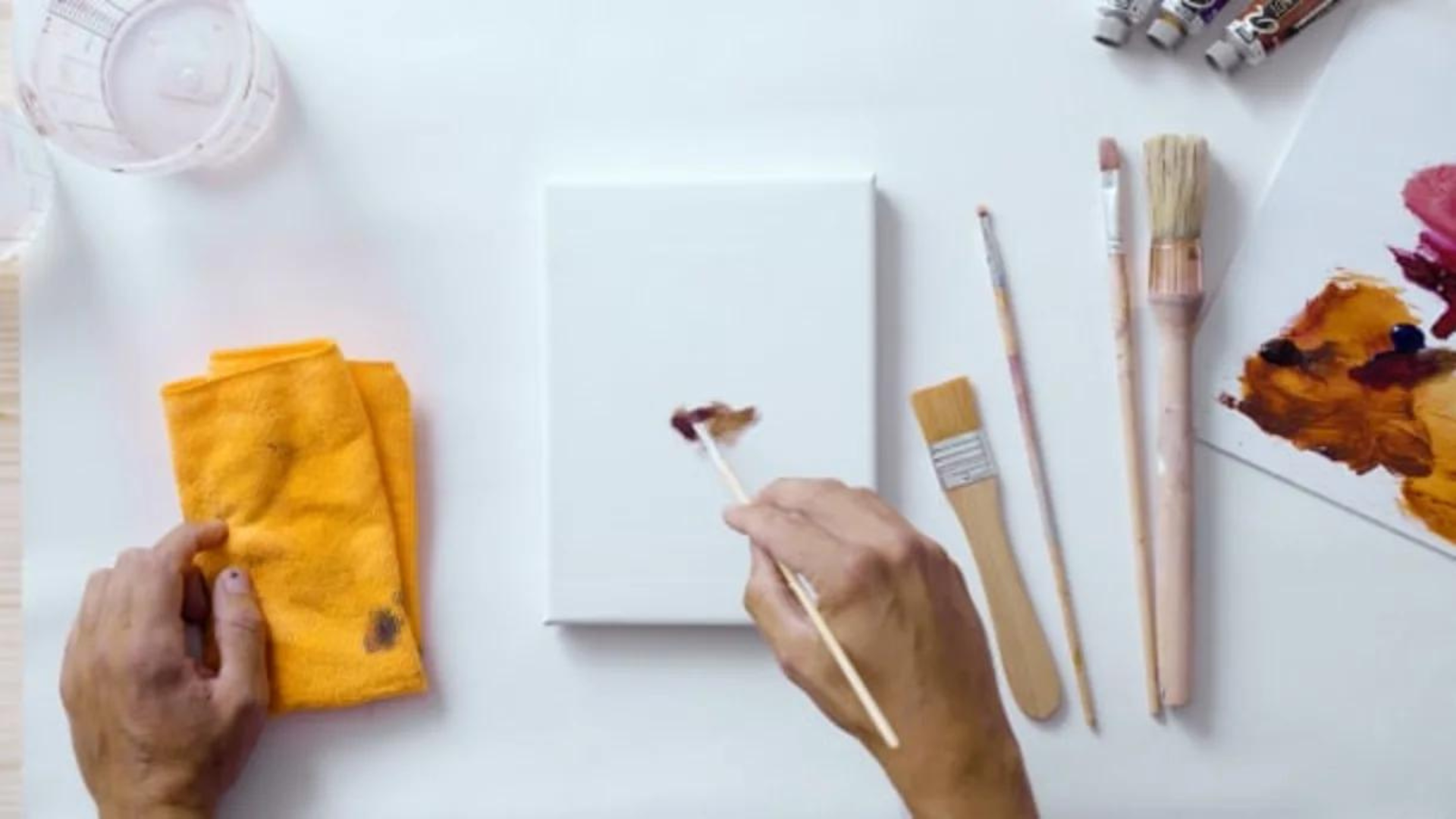
Use the thin brush dipped in turpentine and a little paint to create your first layer. If you don't want to mix your colors, it won't be necessary to do so. Next, create a central reference point on your canvas, around which you can easily build the silhouette of your portrait. In this case, the shadow of the nose is a prominent focal point, so Antoniou paints it first and continues painting from it.
2. Don't worry about the details
Create a rough outline of your figure using quick brush strokes. Don't worry about making mistakes or filling in the details at this point. In the next layer, you'll be able to pay more attention to specific features and remove any unwanted effects. At this stage, the only objective is to find your figure and shape your portrait.

3. Use a tissue and a wide brush to generate effects
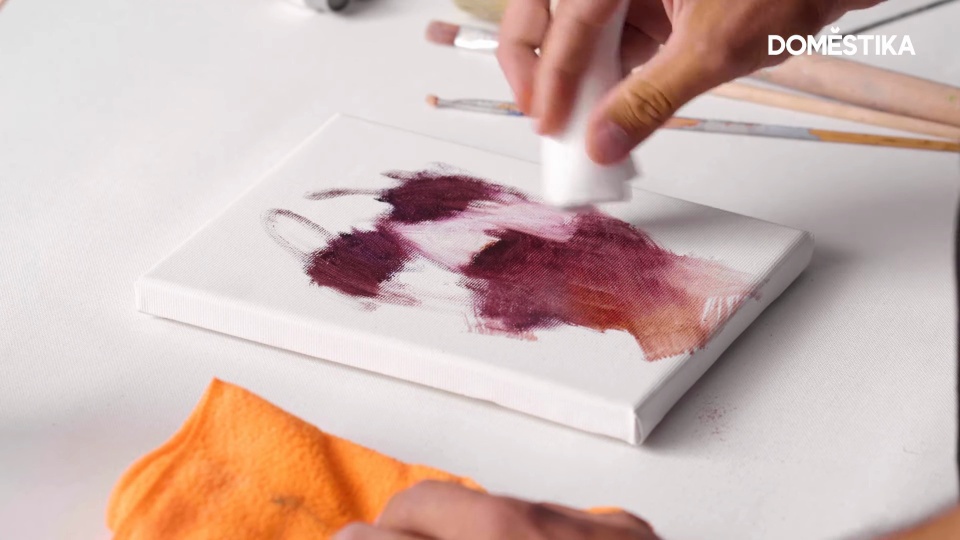
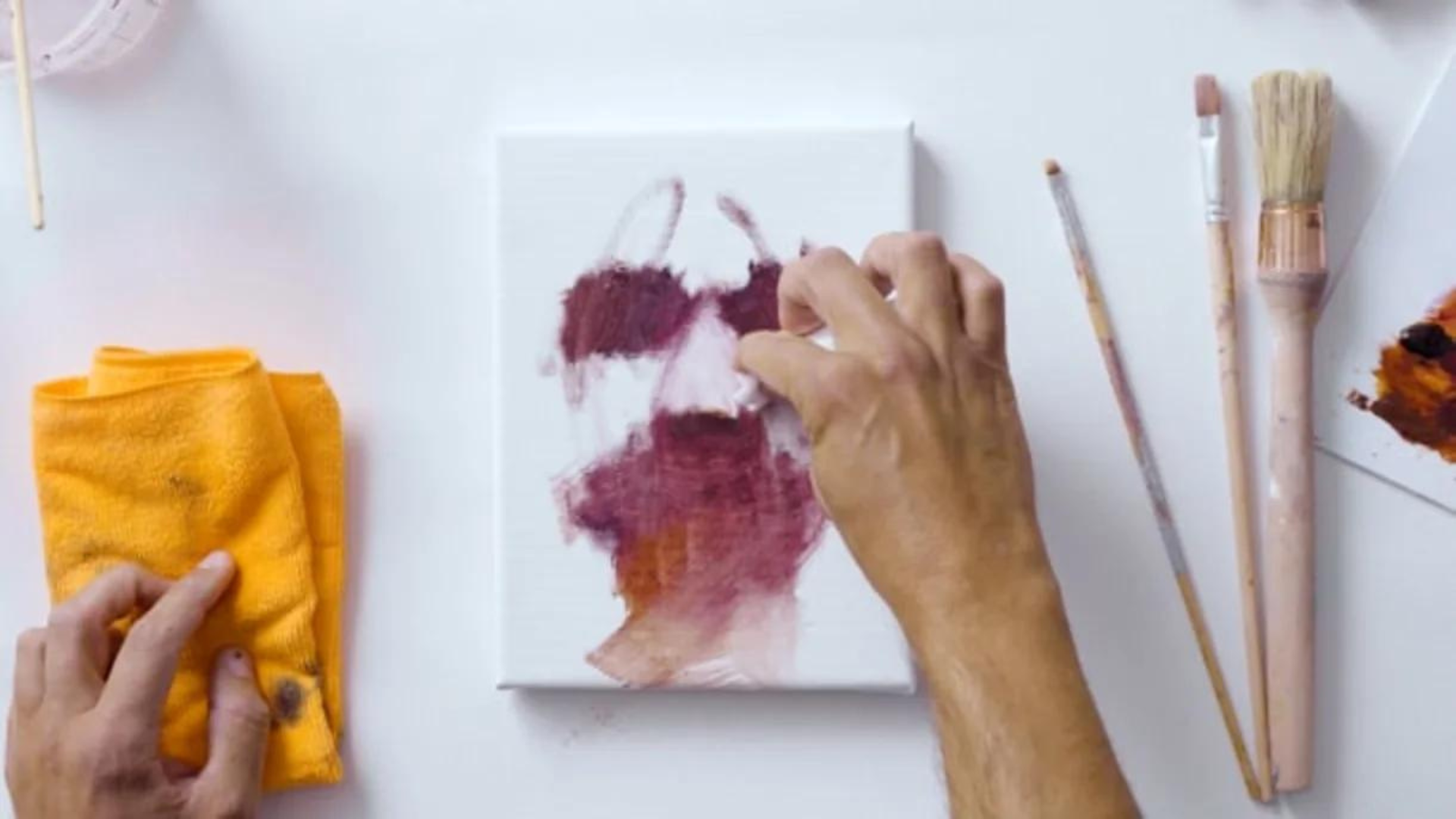
Dip your wide brush in turpentine and create the shadows of your portrait with long, abstract brush strokes. You can also use a piece of tissue dipped in turpentine to blend the layers, create softer tones, or even remove any imperfections.

4. Add warmth and texture using spray paint
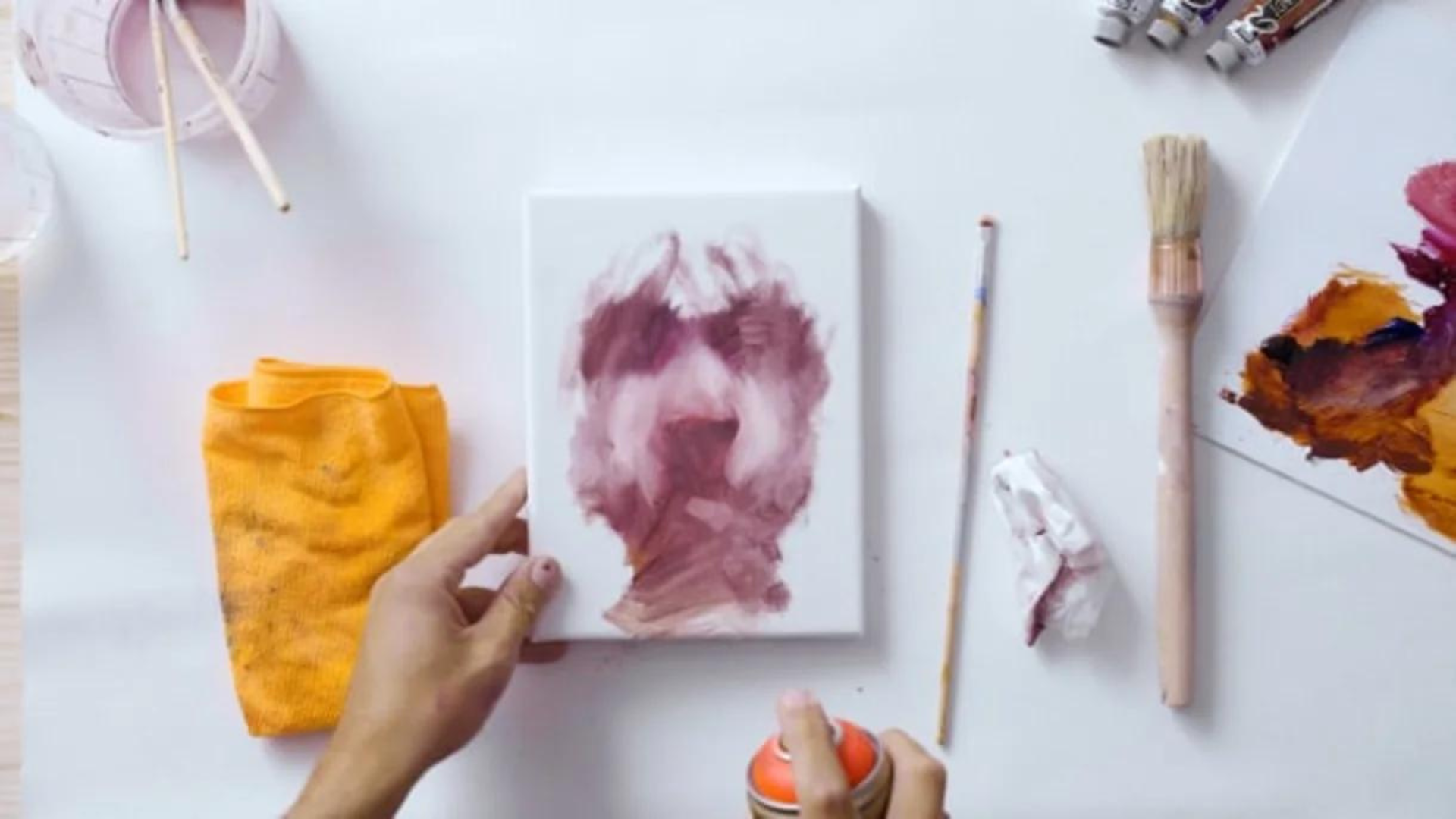
Be sure to wear a protective mask before you start using the spray paint. Apply your paint with short, precise sprays on those areas that need a little more texture and tone. Remember that any drips or splashes are a happy accident that adds an experimental effect to your finished piece.
5. Keep experimenting
You don't have to stop here: continue adding as many layers, details or textures as you consider necessary to achieve a satisfactory result. Remember, the goal is to create an experimental and atmospheric oil portrait using techniques that speed up your process.

Did you like this tutorial? If you want to learn more about mixed media and how to create a portrait, check out Nikolas Antoniou's course, Experimental portrait: fuses oil, acrylic and spray paint.
Spanish version by @arturo_torres_landa
You may also be interested in:
- Oil painting from scratch, a course by Ale Casanova
- Painting Tutorial: oil to water technique for beginners
- Drawing Tutorial: three simple exercises to free your creativity
- What should I look at when I go to a museum?


0 comments