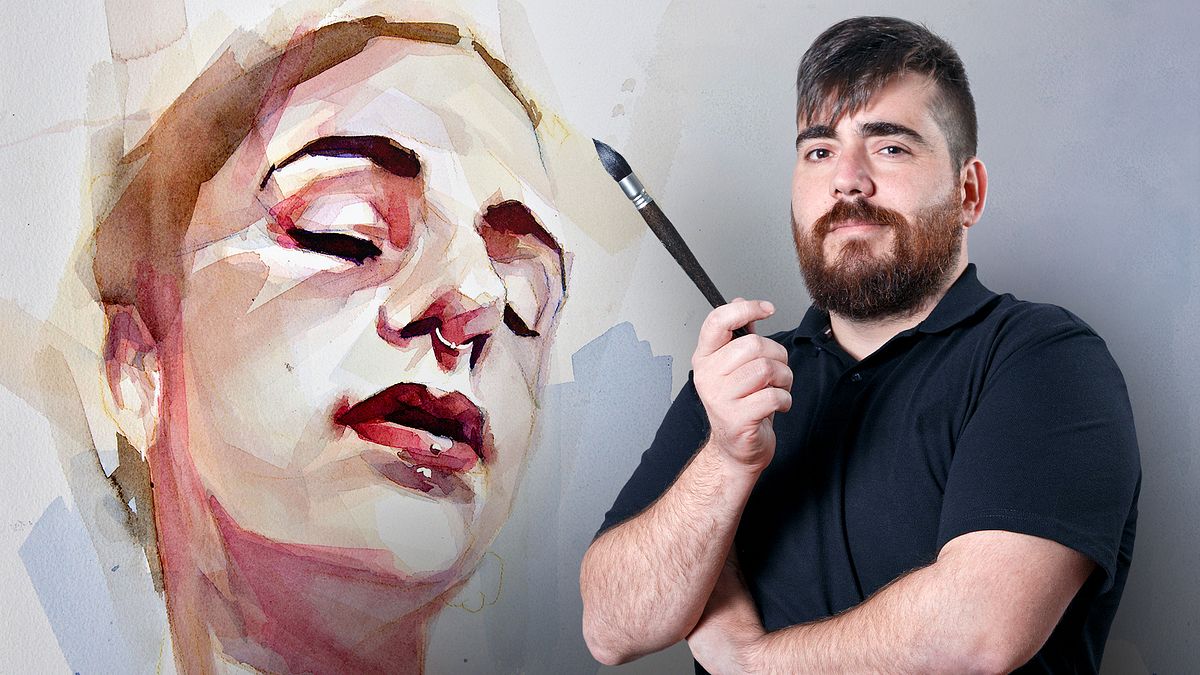

Artistic Portrait with Watercolors
A course by Ale CasanovaPainter and Teacher
A course by Ale Casanova, Painter and Teacher

Learn a foolproof technique for creating watercolor portraits, from the sketch to the finished piece
Watercolor is a beautifully artistic technique in which patience and skill play a big role. Gifted painter Alejandro Casanova works primarily in this medium but also experiments with oil painting. His extensive experience has allowed him to develop a technique in which color and light are the fundamental axes of his work, using the superposition of layers to reflect everything from the shapes generated by light to the shadows on the face and body.
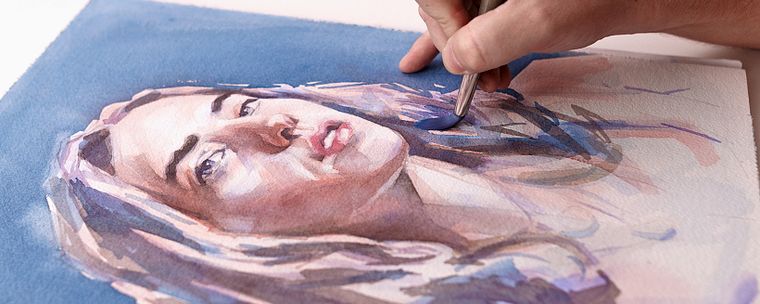
In this course, Alejandro teaches you to create an artistic watercolor portrait with this straightforward and infallible method. Follow his process step by step: composing and capturing the reference photograph, drawing, and of course, using watercolors to their full potential.
Featured review
This is one of the best watercolour courses i have done (although the architecture one comes a close second!). The instructions were clear and all the techniques demonstrated clearly. I have worked with watercolour for many years but still learned so much. Ale was great - talks fast so following the English subtitles was a bit difficult sometimes, but being able to look at the video again and pause it made it easy. I loved this course!
What will you learn in this online course?
15 lessons & 18 downloads
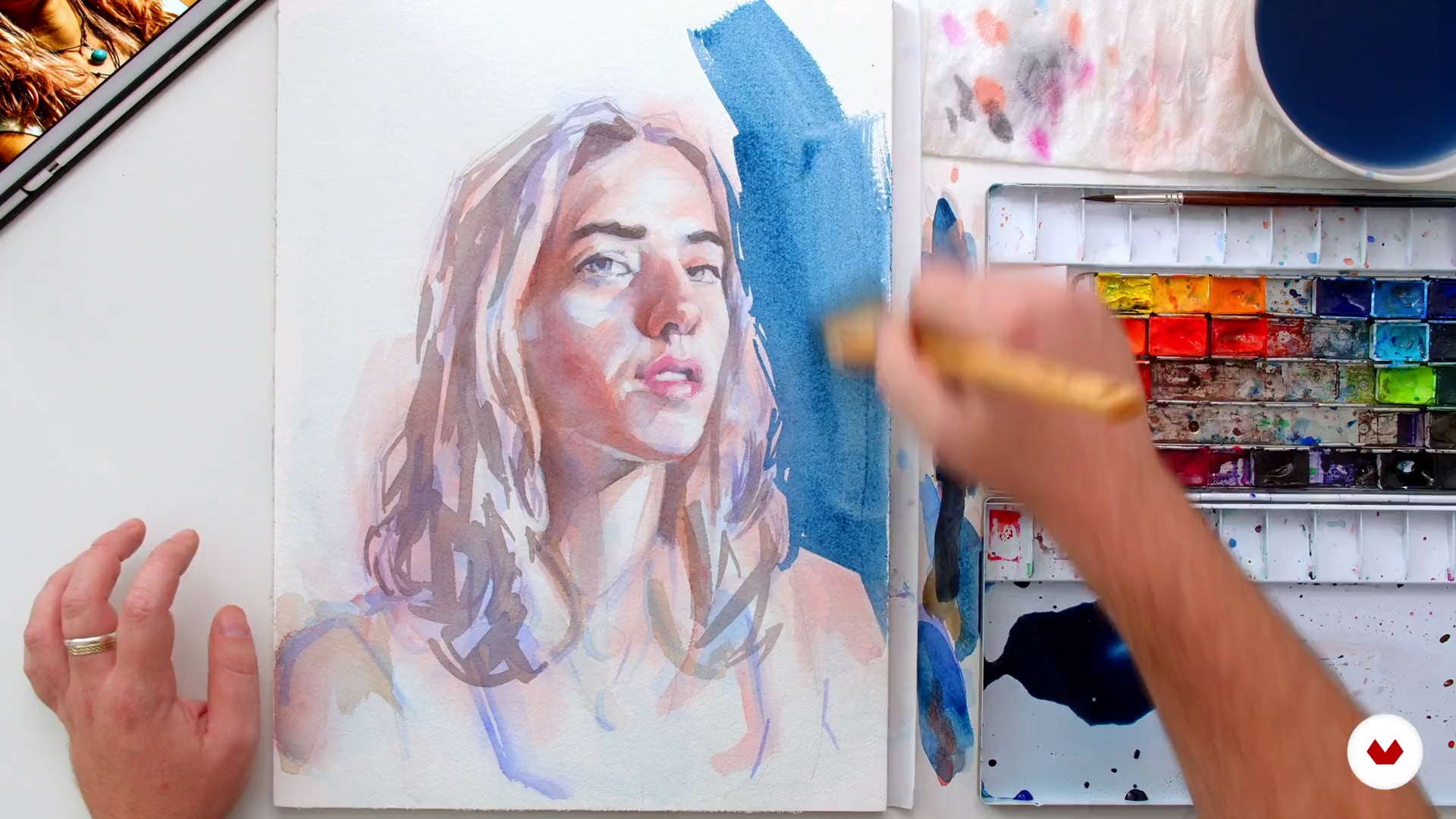
What will we do in the course?
1 minute, 8 seconds
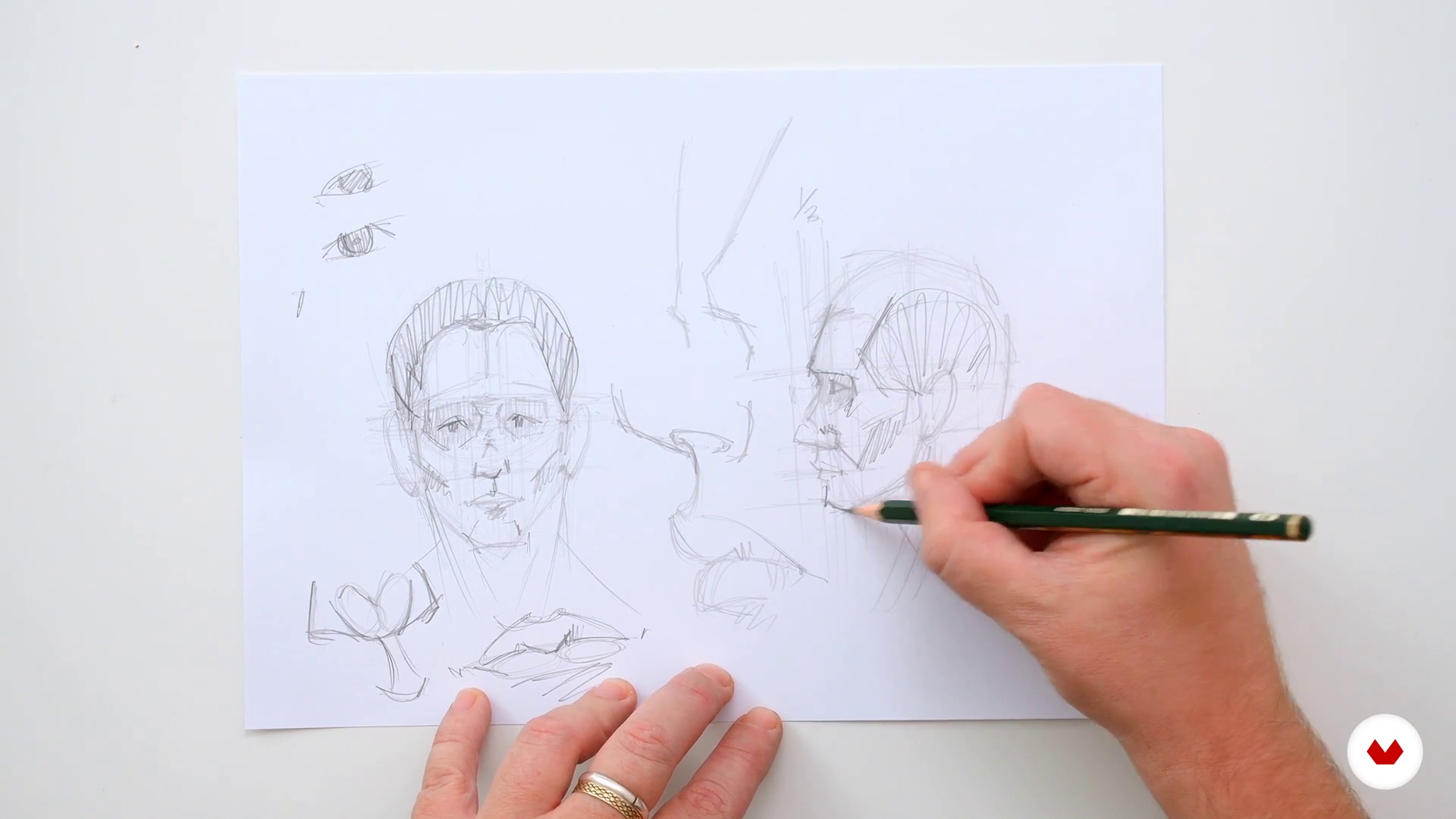
Basic proportions of the head
9 minutes, 7 seconds
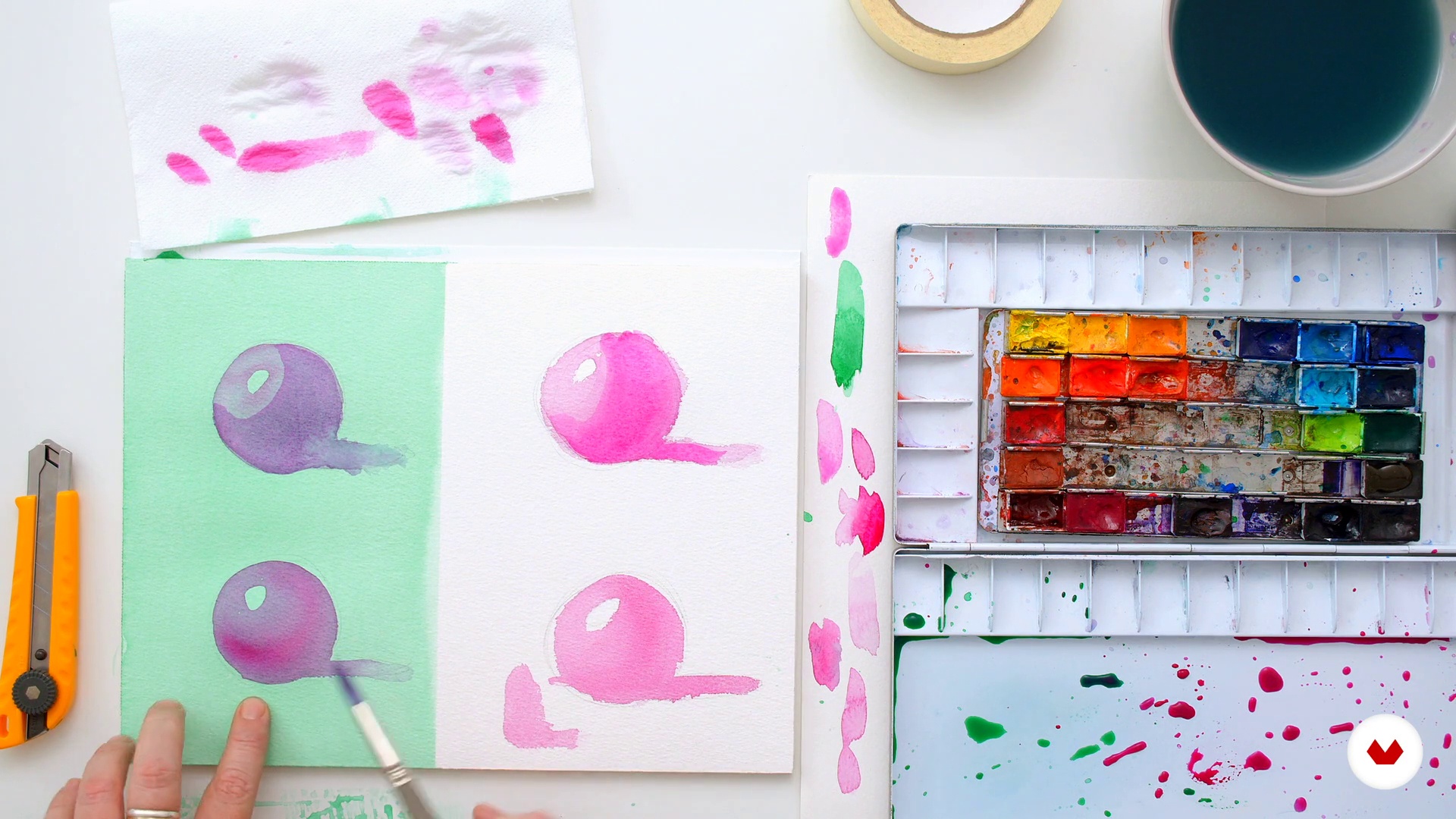
The technique and color in watercolor
17 minutes, 47 seconds
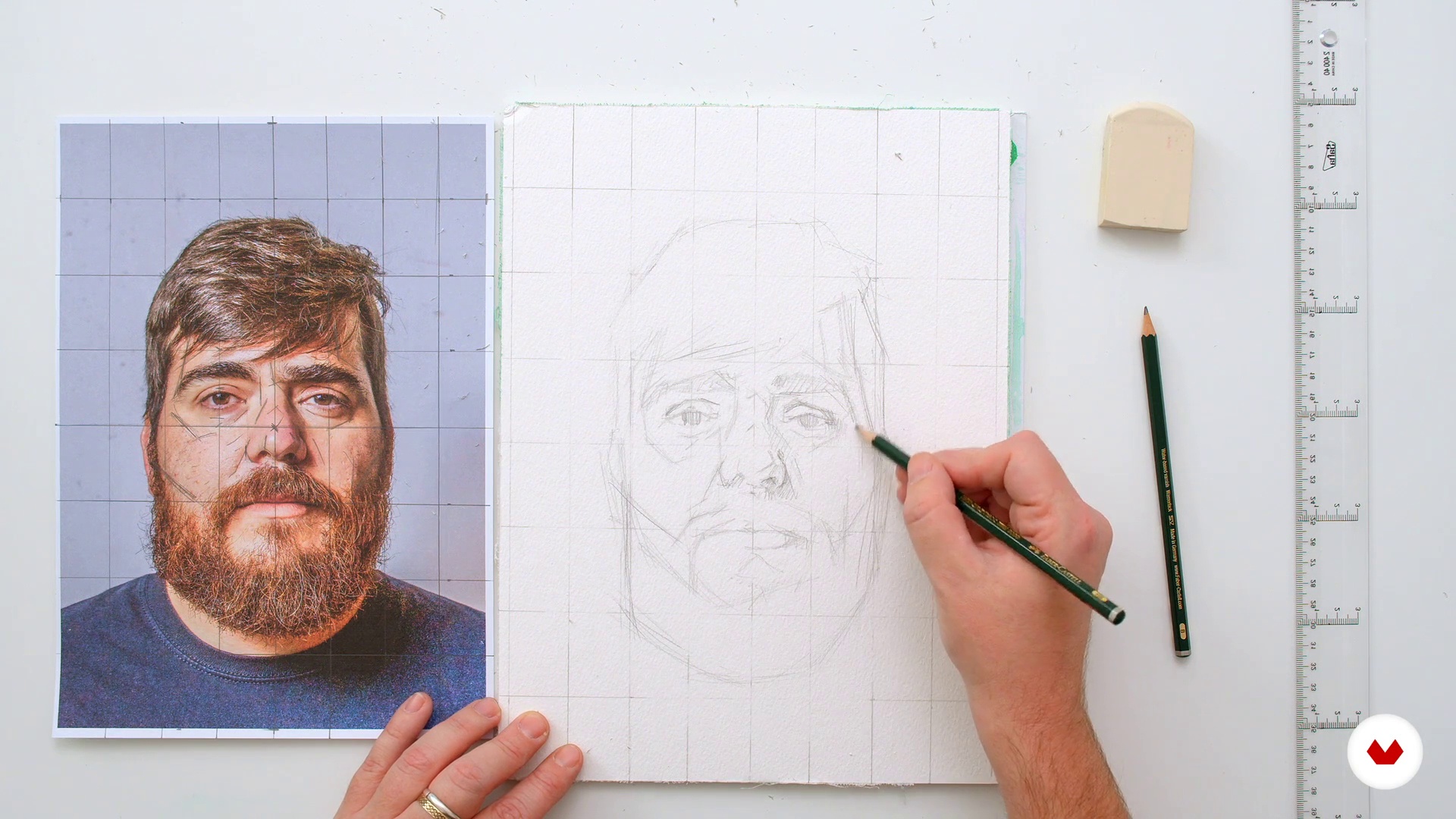
The drawing process
16 minutes, 16 seconds
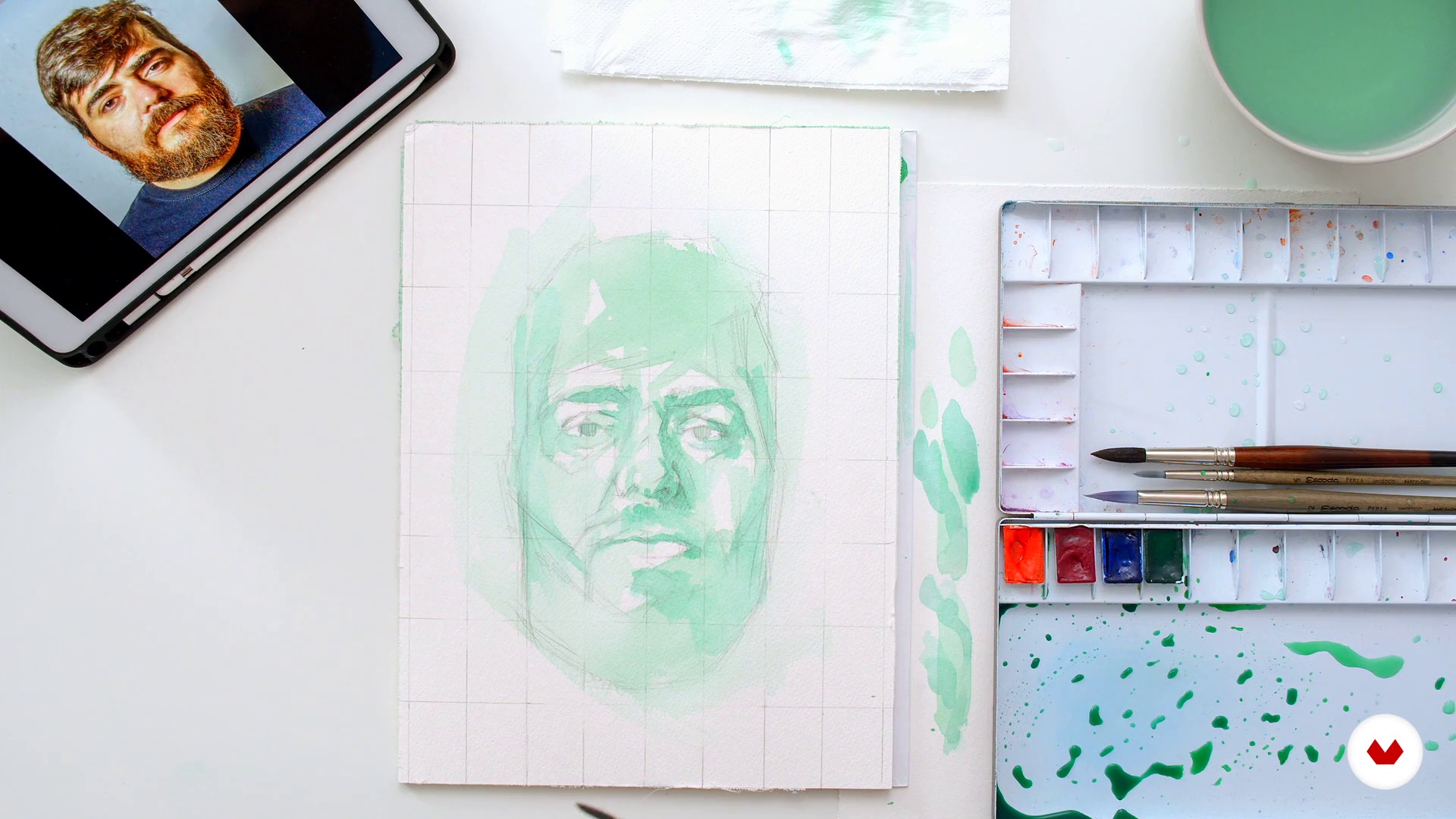
Grisaille
11 minutes, 23 seconds
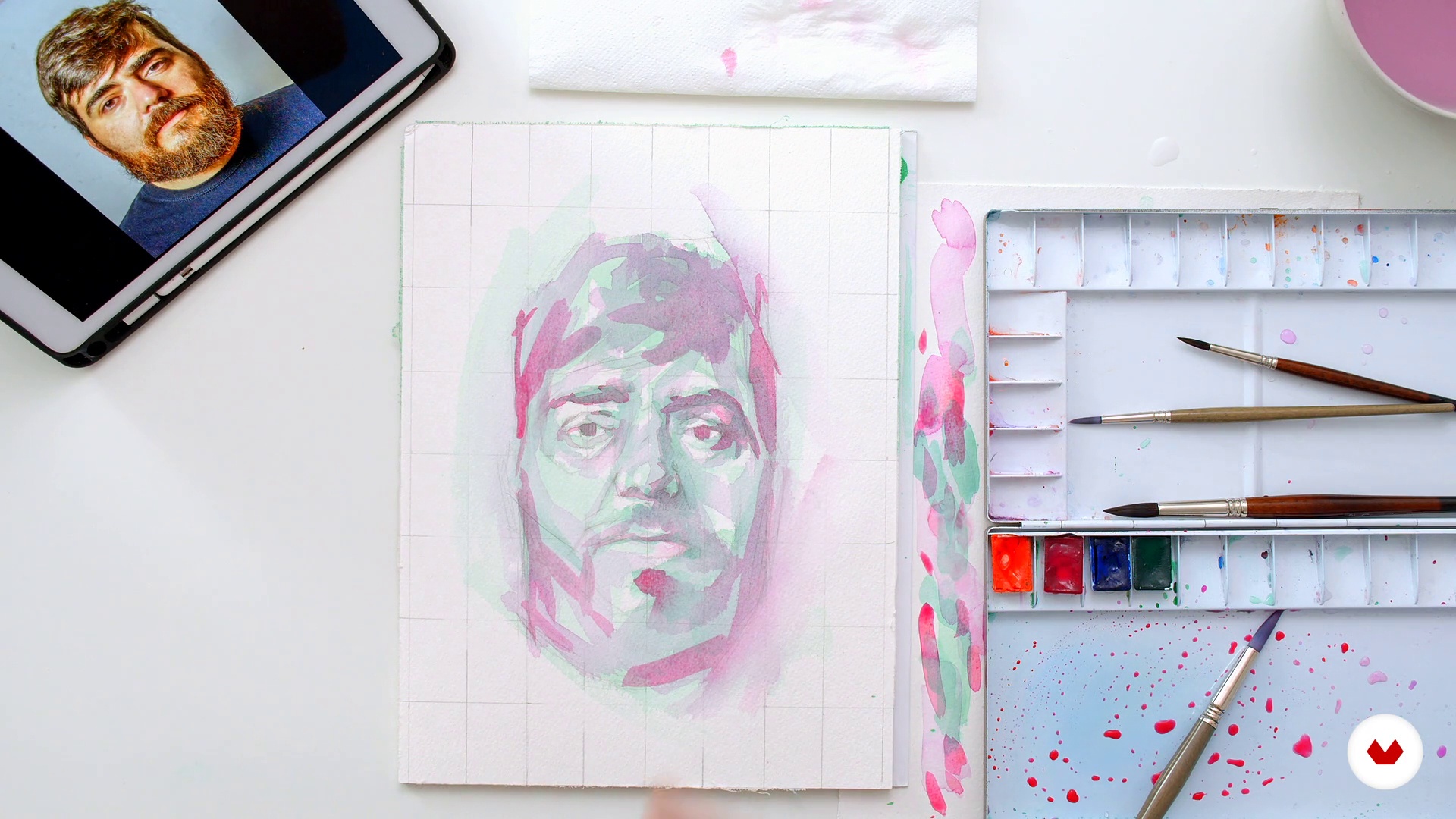
Warm colors
9 minutes, 3 seconds
What's included in this course?
Start by getting to know a little bit about Alejandro and his career in painting and watercolor, as well as his main influences and favorite artists.
Take a look at the different materials out there and learn basic concepts like proportions and volume of the head, forehead, and face before getting started on your drawing!
Dive into this technicolor whirlpool and tackle concepts like lighting, volume, and color using both flat and spherical pigments. Discover the difference between applying the paint dry or wet, as well as the different mixing techniques. Learn about color gradients and much more!
Try out a method for transferring an image to paper using a grid system before seeing how to work in grisaille.
Next, Alejandro talks about adding warm hues to balance the colors of the portrait and how to do color overlays. Find out about the unifying color between warm and cold and how to apply it. Also explore purifying opaque and semi-opaque layers for adding deeper tones.
Alejandro teaches you about different compositions and lighting for creating your watercolor portrait and shows you how to edit it on your tablet or computer to get a range of tones that facilitate the painting process.
Get started with a base wash using carefully selected colors, intensities, and brightnesses in each layer. Now get to work on the face, giving it personality by identifying and adding key features through layers and color washes.
Finish up by exploring resources to help you solve problems that may arise and add the finishing touches to your portrait.
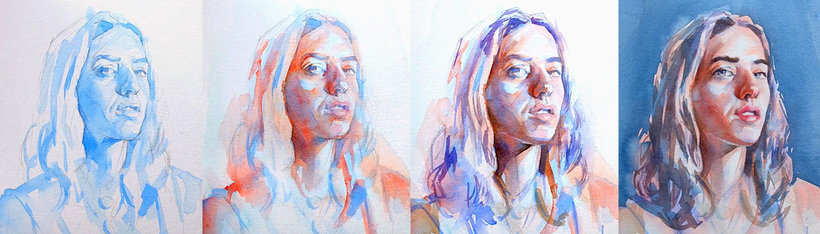
What is this course's project?
Compose a watercolor portrait from photographs of a model.
Projects by course students


Who is this online course for?
Painters, illustrators, and anyone interested in portraiture and the expressive possibilities of watercolor.
Requirements and materials
No knowledge of drawing or watercolor is required for this course as the method is adaptable to any level.
In terms of materials, you need a watercolor set, graphite pencils, an eraser, different watercolor papers, paintbrushes of varying sizes, and a ruler.
Reviews
- 2 months ago
The audio is really fast and Probably AI generated....everything is very rushed so far.But its early days..... My comments are not about im or bis technique...just the presentation.Im not going to give a negative thumbs down but i do think that this needs to be looked at as i wont stay wit it if it continues
- 2 months ago
Un curso excelente. Información amplia y generosa, ejecución sistemática, aclaraciones prácticas. se aprende mucho y amplía la visión de la acuarela, Ej. cabitación del pincel, estilos de las capas, equilibrio colores fríos y cálidos. .. Un profesor con maestría.
- 2 months ago
Gran curso, muy ameno e interesante
- 3 months ago
Le professeur Ale Casanova maîtrise bien sa matière. Bon cours.
- 4 months ago
Gran profesor y curso, muy recomendable. Las nociones explicadas son muy claras y, sobre todo, muy práctico.

His work focuses on the human body and portraiture as a window into the creation of plastic art. He also composes oil paintings, although watercolor is his preferred medium as it allows him to work swiftly and effectively using transparency and the richness of the color spectrum to create figurative pieces. His work has been exhibited in different Spanish as well as other European cities and he has also given numerous workshops across Spain.
Content
- U1
Introduction
- Presentation
- Influences
- What will we do in the course?
- U2
Basic Materials and Techniques
- materials
- Basic proportions of the head
- The technique and color in watercolor
- U3
Drawing and Color: Grisaille Exercise for Skin
- The drawing process
- Grisaille
- Warm colors
- Nexus color and adjustment layer
- U4
Applying the method: Portrait
- Choice and manipulation of photography
- First spots
- Defining face
- Solving problems
- Final details
- FP
Final project
- Artistic watercolor portrait
What to expect from a Domestika course
Learn at your own pace
Enjoy learning from home without a set schedule and with an easy-to-follow method. You set your own pace.
Learn from the best professionals
Learn valuable methods and techniques explained by top experts in the creative sector.
Meet expert teachers
Each expert teaches what they do best, with clear guidelines, true passion, and professional insight in every lesson.
Certificates
PLUSIf you're a Plus member, get a custom certificate signed by your teacher for every course. Share it on your portfolio, social media, or wherever you like.
Get front-row seats
Videos of the highest quality, so you don't miss a single detail. With unlimited access, you can watch them as many times as you need to perfect your technique.
Share knowledge and ideas
Ask questions, request feedback, or offer solutions. Share your learning experience with other students in the community who are as passionate about creativity as you are.
Connect with a global creative community
The community is home to millions of people from around the world who are curious and passionate about exploring and expressing their creativity.
Watch professionally produced courses
Domestika curates its teacher roster and produces every course in-house to ensure a high-quality online learning experience.
FAQs
Yes, this course is designed for students with basic prior drawing and painting skills who want to deepen their knowledge of portrait and contemporary watercolor techniques.
You’ll need 300 gsm watercolor paper, professional brushes (Kolinsky or synthetic), a watercolor palette, pencil, ruler, hairdryer, and photographic portrait references.
You’ll learn how to build realistic watercolor portraits, apply grisaille techniques, control tonal values, select materials, and create color harmony and depth through layering.
The course covers facial structure and proportion, wet-on-wet watercolor techniques, use of grisaille, blending and gradients, material selection, and color management in portraits.
Yes, the course explains the differences in spring, flexibility, and resilience between Kolinsky and synthetic brushes, and when to use each.
You’ll learn to choose 100% cotton watercolor paper with the right weight and texture to get the best results and avoid issues when working wet-on-wet.
Basic drawing skills are recommended since the course focuses on head and face structure and proportions before applying watercolor.