Watercolor Fundamentals: Light and Color
A course by Gonzalo Ibáñez, Watercolorist and Architect


Discover how to observe light and color in the world around you and learn techniques to convey them through your brushstrokes

Ever wanted to master light, color, and atmosphere in your watercolor creations? Discover how to do just that with Gonzalo Ibáñez, expert watercolorist specializing in urban spaces.
In this online course, learn to observe light and color all around you and capture them on your canvas using watercolor. If you'd like to begin with the basics of this artistic technique, check out Gonzalo's first course, Architectural Illustration with Watercolor, where he teaches you how to get most out of your brushes while painting an architectural design from an image.
What will you learn in this online course?
14 lessons & 21 downloads



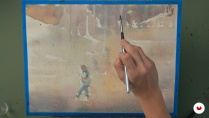
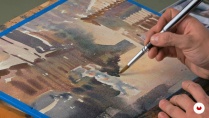
What's included in this course?
Start the course by getting to know Gonzalo Ibáñez and his influences, which have played an essential role in his understanding of light and color in painting. Discover his artistic journey and how it has been shaped by his experiences in the world of watercolor.
First, Gonzalo explains a few fundamental concepts you need for your final project. Delve into the observation of light, color harmony techniques, and how to apply these to painting. Learn about the importance of color noise in constructing realistic scenarios.
Next, choose a reference photo with an interesting composition and sketch the scene on paper. Study the method of constructing your image based on light and color, then create a roadmap of your own work.
Now grab your brushes and develop your watercolor painting, from the first washes and mixtures to the final adjustments. To wrap things up, Gonzalo shares some tips to help you to make decisions on color and discover new tools to find your own style and look.
- 98% positive reviews (223)
- 7,254 students
- 14 lessons (2h 42m)
- 21 additional resources (9 files)
- Online and at your own pace
- Available on the app
- Audio: Spanish, English, French, Italian, Portuguese, Turkish
- Spanish · English · Portuguese · German · French · Italian · Polish · Dutch · Turkish
- Level: Beginner
- Unlimited access forever
What is this course's project?
Paint a landscape in watercolor, placing special emphasis on observing and capturing the light and color in the scene.

Projects by course students


Who is this online course for?
Painters of any style and watercolor enthusiasts interested in the observation of color and light in painting.
Requirements and materials
Previous experience with watercolor is recommended to take this course.
As for materials, you need brushes, pigments, and watercolor paper.

Reviews

Gonzalo Ibáñez
A course by Gonzalo Ibáñez
Gonzalo Ibáñez is an artist who specializes in watercolor landscapes. The difficulty and spontaneity of this technique captivated him in such a way that it became his main form of expression.
He studied architecture at the University of Chile (2017) and holds a diploma in aesthetics and philosophy from PUC (2018). He has participated in festivals and group exhibitions internationally, such as the Kosovo Biennial and the Fabriano Acquarello festival in Italy. He has also won several awards at festivals such as the Mini Castra 2020 in Slovenia and the IWS Chile Viña del Mar 2020.
Content
-
U1
Introduction
-
Presentation
-
Influences
-
-
U2
Principles of Light and Color in Space
-
The Color of Light
-
Study of Color References
-
Color Harmonies
-
Color Noise
-
Contrast and focal interest
-
-
U3
Observation of the Reference
-
How to Choose the Reference?
-
Pencil Sketch
-
Light and Color Plan 1
-
Light and Color Plan 2
-
-
U4
Construction of the Image
-
Light Construction
-
Shadow Construction
-
Construction of Details and General Adjustments
-
-
FP
Final project
-
Watercolor Fundamentals: Light and Color
-
What to expect from a Domestika course
-
Learn at your own pace
Enjoy learning from home without a set schedule and with an easy-to-follow method. You set your own pace.
-
Learn from the best professionals
Learn valuable methods and techniques explained by top experts in the creative sector.
-
Meet expert teachers
Each expert teaches what they do best, with clear guidelines, true passion, and professional insight in every lesson.
-
Certificates
PlusIf you're a Plus member, get a custom certificate signed by your teacher for every course. Share it on your portfolio, social media, or wherever you like.
-
Get front-row seats
Videos of the highest quality, so you don't miss a single detail. With unlimited access, you can watch them as many times as you need to perfect your technique.
-
Share knowledge and ideas
Ask questions, request feedback, or offer solutions. Share your learning experience with other students in the community who are as passionate about creativity as you are.
-
Connect with a global creative community
The community is home to millions of people from around the world who are curious and passionate about exploring and expressing their creativity.
-
Watch professionally produced courses
Domestika curates its teacher roster and produces every course in-house to ensure a high-quality online learning experience.
FAQs
You'll master watercolor techniques focused on landscapes and architecture, learn to handle light, color, and composition, and create textures and depth in your artwork. You'll also explore using references and developing your own personal style.
This course is geared toward intermediate learners. It's perfect if you already have basic watercolor skills and want to dive deeper into advanced techniques for landscapes, lighting, and composition.
You'll need cotton watercolor paper, a variety of brushes, watercolor paints, a mixing palette, water, masking tape, and a pencil for sketching. Having visual references and access to natural light is recommended.
You'll learn to identify light sources, distinguish between cast and form shadows, use tonal values, and apply techniques to simulate direct, indirect, and ambient light in your landscapes and still lifes.
The course teaches how to arrange elements, prioritize focal points, and use structural lines and perspective to create balanced, engaging compositions in urban and architectural scenes.
Yes, you'll learn to use the color wheel, mix complementary and secondary colors, create muted palettes, and control color temperature to achieve harmony and depth.
You'll explore wet-on-wet techniques, pigment use for texture, preserving whites, and methods for creating rich surfaces and realistic color vibrations in landscapes and still lifes.


Muy buenas explicaciones y buena aplicación de las mismas al ejercicio práctico. Muy recomedable!
muy claro aunque se tiene que tener cierto nivel para sacar provecho a las enseñanzas de este joven maestro.
Muy recomendado, el profe es genial, ya estoy viendo otros cursos de el para participar. Me ayudo mucho en mi comienzo con la tecnica.
muy buena explicación, me ha gustado muchisimo 100% recomendado
excelente curso