Ephemeral Architecture: Design Temporary Spaces
Course final project
A course by Diogo Aguiar , Architect


About the final project for: Ephemeral Architecture: Design Temporary Spaces
Ephemeral Architecture: Design Temporary Spaces
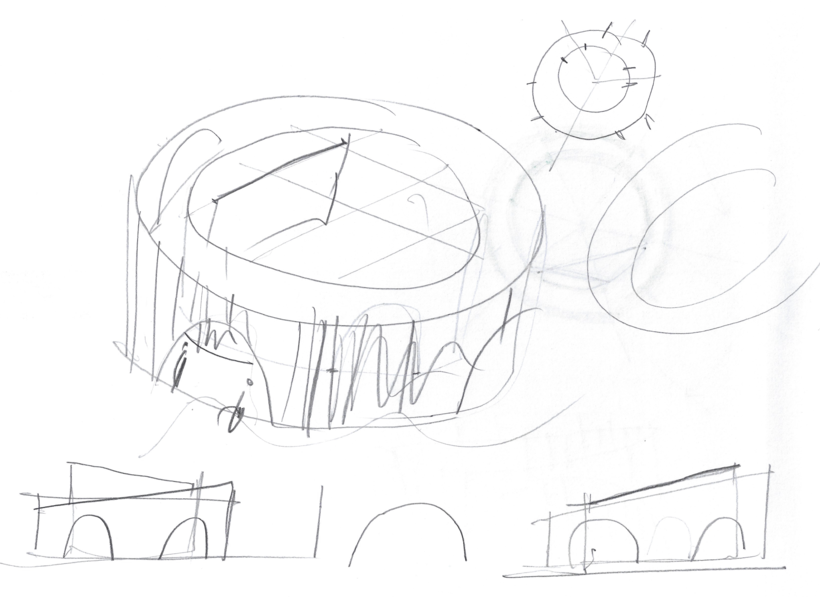
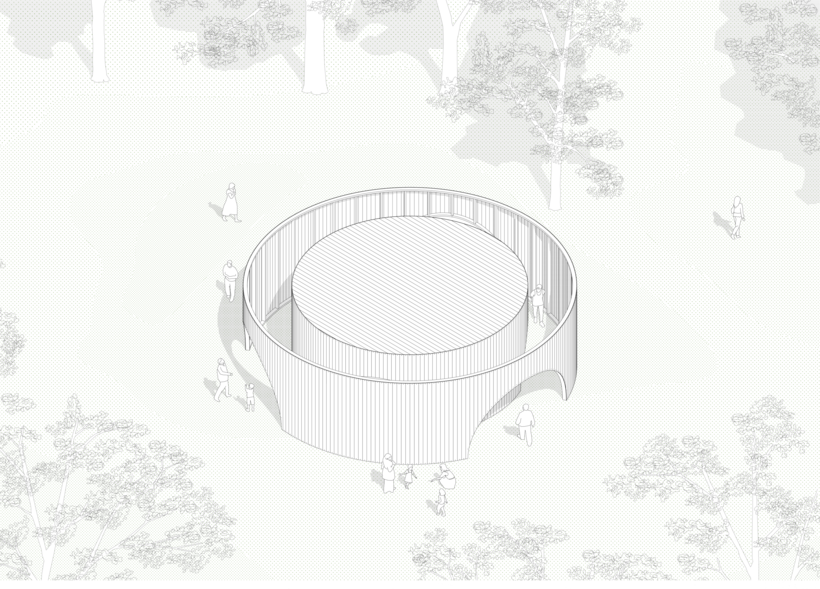
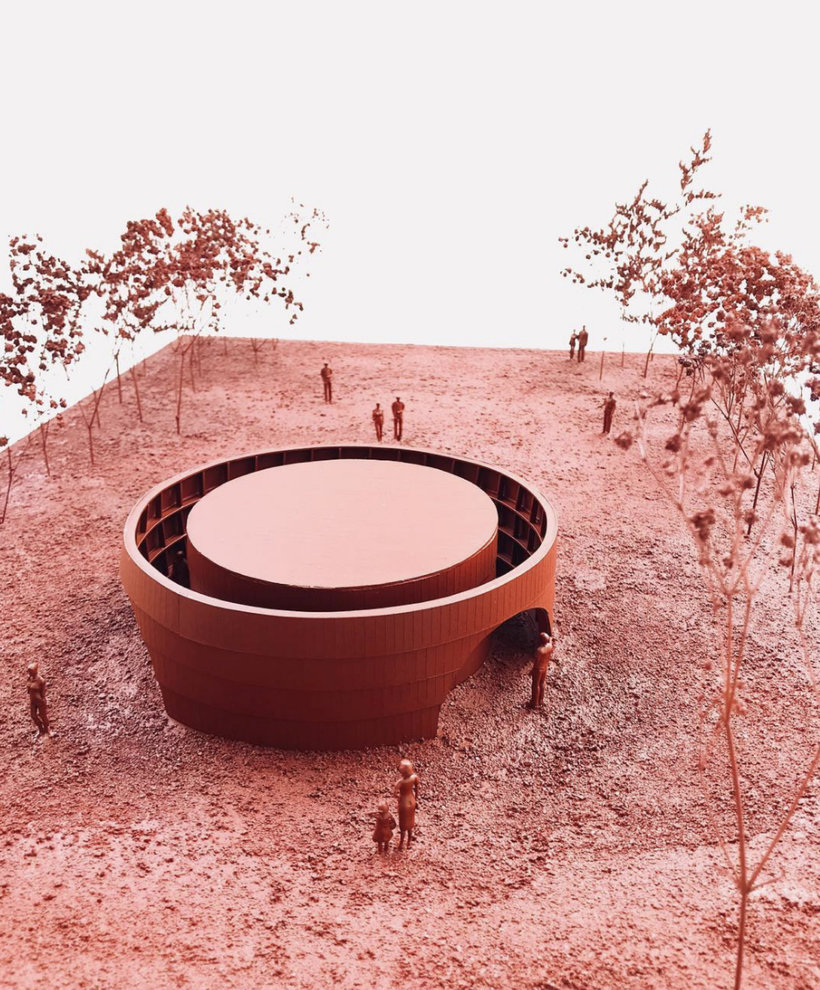
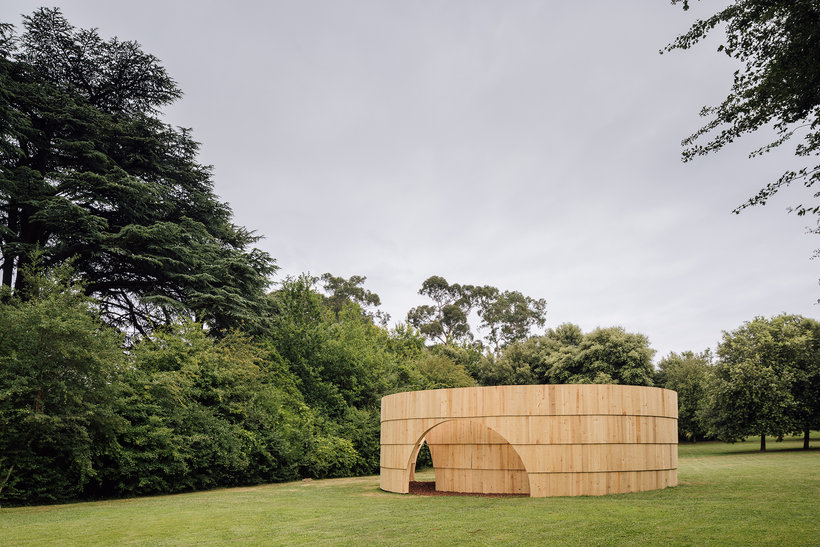
“Hi! Thanks for accompanying me here! I hope you enjoyed this course and that you feel fulfilled with your final project. I tried to create a set of classes that would allow you to develop an ephemeral architectural project in a serious and informed way, but at the same time, with enough freedom and creative autonomy, to create your own project! Above all, I hope you've absorbed the concepts we've covered throughout the classes and that the way we work them will be useful for you to develop future work! I established a possible sequential development of the architectural design work, step by step, which I believe allows me to understand my own workflow and also some of the strategies we used to develop our projects in Diogo Aguiar Studio. Now I will make a brief review of what we learned in the course and all the steps necessary to carry out the final project, your ephemeral museum. • Look for examples that allow you to expand the concept of “ephemeral museum”. This is a diluted typology, with no defined boundaries. • Choose a work of art for your ephemeral museum and, from that same work of art, formalize a referential framework that will be useful to you throughout the development of the project. Look for concrete information about the work of art and its context and also about its author. • Choose an outdoor space to deploy your ephemeral museum that you are able to graphically characterize. • Investigate some architectural themes that might interest you to explore to reinforce the intentionality of your project. • Based on some pre-established geometric rules, design some organization schemes for your exhibition space. Rehearse alternatives until you are comfortable with your result! • Once the two-dimensional organization scheme is resolved, it builds the three-dimensional space in a mockup or virtual model, testing alternative volumetric possibilities. Three-dimensional perception and its relationship with the human scale are fundamental for defining proportions. • Explores the opening of gaps to allow the passage or entry of light. Understands the importance of the location of the span for organizing flows, creating visual crossings or allowing the controlled entry of natural light. • Risk a composition of materials, taking advantage of the ephemeral nature of your project! • Consider some fundamental conditions for the actual implementation of your project. • Understand the importance of knowing how to communicate your work and learn some strategies. Here is an example of how you can present your final project. schist
Partial transcription of the video
“Final Project Hi, now that we're reaching the end of this experience, I want to thank you for your dedication and effort to conclude all the stages successfully. For me, it was a pleasure to share this experience with you. I honestly hope that what you learned is useful in your professional or personal life. Without a client or a specific location, this is a very abstract exercise in architecture, with many ways to tackle the subject. Before we finish here, I'd like to give you some tips that can help in developing your creative process. Ephemeral architecture is a branch of architecture th...”
This transcript is automatically generated, so it may contain mistakes.
Course summary for: Ephemeral Architecture: Design Temporary Spaces
-
Category
Architecture & Spaces -
Areas
Architecture, Interior Architecture, Interior Design, Spatial Design

Diogo Aguiar
A course by Diogo Aguiar
From his namesake studio, architect Diogo Aguiar seeks a balance between art and architecture in all his installations and small-scale constructions, ranging from public to private.
He has appeared in various national and international publications, is a two-time winner of the ArchDaily Building of The Year Award, and has represented Portugal at the Venice Biennale of Architecture. He is also one of the co-founders of the Galeria de Arquitectura located in Porto, Portugal, a gallery that exhibits architectural projects "as an exercise in contemplating this discipline and its limits."
- 96% positive reviews (52)
- 2,286 students
- 15 lessons (3h 10m)
- 27 additional resources (16 files)
- Online and at your own pace
- Available on the app
- Audio: Portuguese
- Spanish · English · Portuguese · German · French · Italian · Polish · Dutch · Turkish · Romanian · Indonesian
- Level: Beginner
- Unlimited access forever
Category
Areas

