

Calligraphy Tutorial: How to Apply Gold Leaf to Paper
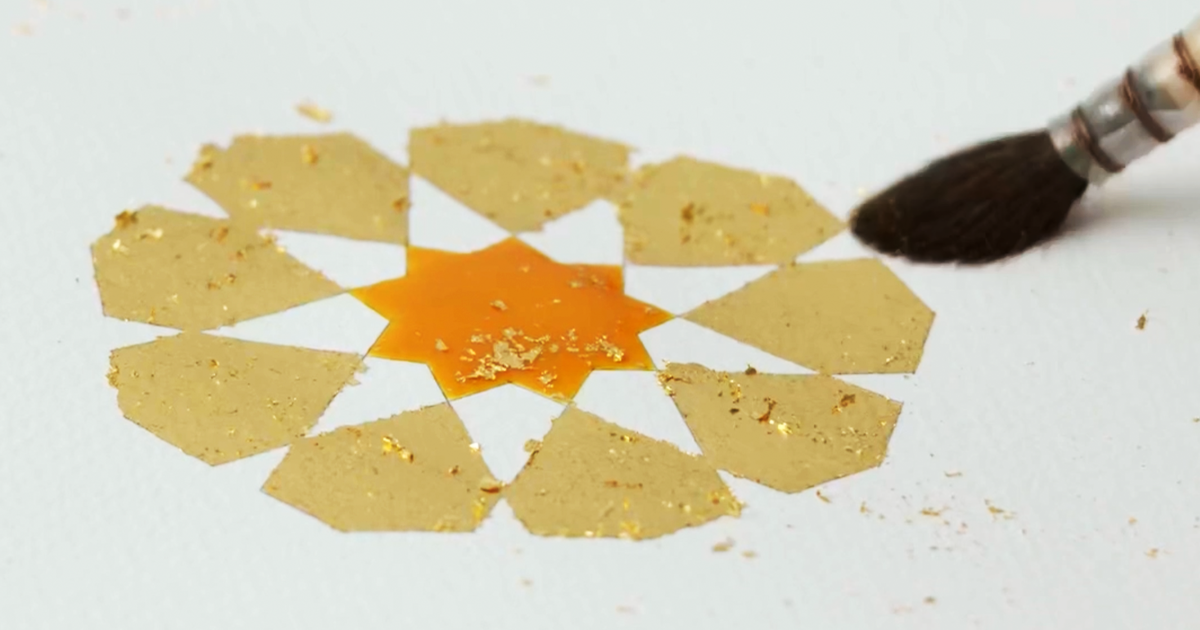
Learn how to incorporate raised and flat gilding techniques into your calligraphy projects, with Maaida Noor
Though it’s been around for thousands of years, calligraphy never fails to mesmerize. There are no end of ways you can embellish your calligraphy, but one of the most striking is that of adding gold leaf. You can add gold leaf through flat gilding techniques, or even create a 3-dimensional effect to your letter, symbol, or shape with raised gold gilding.
Artist and calligrapher Maaida Noor (@maaidanoor) takes inspiration from the history, spirituality, and geometric patterns of Islamic art to create stunning calligraphic pieces. Using a combination of tradition and artistic self-expression, she has produced work for luxury brands such as Estée Lauder, Jo Malone, and Christian Dior, as well as having her work regularly exhibited in a number of prestigious British galleries.
Join Maaida Noor in this tutorial where she shows you how to transform your work with two gold gilding techniques.

How to Apply Gold Leaf to Paper
What materials you will need:
A sheet of paper
A fine tip paintbrush in sizes 000, 0, or 1
Miniatum size
Water Gold size
A few sheets of 24ct transfer gold leaf
A burnisher
A mop brush

1. Use Miniatum size for flat gilding
Size is the glue that you will use to fix the gold onto the page. Miniatum size is used for flat gilding, which means that your gold leaf will appear flat on the page - but no less impressive than the effects created by raised gilding.

2. Apply the Miniatum size
Paint the areas you want to flat gild with the Miniatum size. Be careful to stay within the lines of your pattern, as the gold will rub off wherever it is in contact with the size. Once you have finished, leave the size to dry for 4-5 minutes.
3. Use Water Gold size for raised gilding
Water Gold size will give your gilding a raised effect, so that it sticks out on the page and adds texture. You can add as much or as little size as you like depending on how raised you would like the surface of the page to be, but as a general rule it is good to apply your Water Gold size generously.

4. Apply your Water Gold size
Paint the area that you want to appear raised with a generous amount of Water Gold size. Just make sure to avoid introducing bubbles into your gilding. To do this, dip your paintbrush into the center of the bottle and be careful not to shake your bottle before use. Once you are satisfied with the appearance of your raised gilding, leave it to dry for ten minutes.
5. Rub your gold leaf onto the Miniatum size
Place your sheet of gold leaf directly onto the Miniatum size, and gently rub the back of the sheet with your finger or a burnisher. You can lift the sheet up to check that the size has been completely covered with gold.

6. Brush away any excess
Use your mop brush to gently brush away any excess gold flakes. This will also allow you to see how well covered your size is, and whether you need to go over any areas with the gold leaf again.

7. Apply your gold leaf onto the Water Gold size
Similarly to the Miniatum size, rub the back of your gold leaf onto the size with your finger or a burnisher. You may need to use several sheets of gold leaf to fully cover the area. If the gold is not fixing onto the edges of the size, blow on it to make it sticky and reapply more gold leaf.


8. Polish your raised gilded surface
After you have brushed away any excess gold, gently rub the raised gilding with your burnisher to bring out the shine and increase the drama of your finished piece.

Did you enjoy this tutorial? If you’d like to learn more about traditional calligraphy techniques, check out Maaida Noor’s online course Introduction to Arabic Calligraphy: Maghrebi Script.
You may also like:
- Calligraphy Tutorial: How to Make a Reed Pen for Calligraphy in 5 Minutes
- What is Kufic Script?
- English Calligraphy from A to Z, a course by Bego Viñuela Galarraga
- Arabic Calligraphy Tutorial: Basics for Beginners


0 comments