


Design Tutorial: Composition Exercises to Create Patterned Prints

Learn the basics of composition to create simple prints using paper and card, with Lola San Román
Watercolor print composition exercises are a really fun way to combine illustration with fashion design.
Which is precisely what watercolor artist and textile designer Lola San Román is passionate about. She is expert at combining watercolor with print design to create beautiful textile patterns for clients including Mango, Desigual and El Corté Inglés.
Don’t miss this tutorial in which Lola teaches you her favorite composition techniques.

1. The materials you need
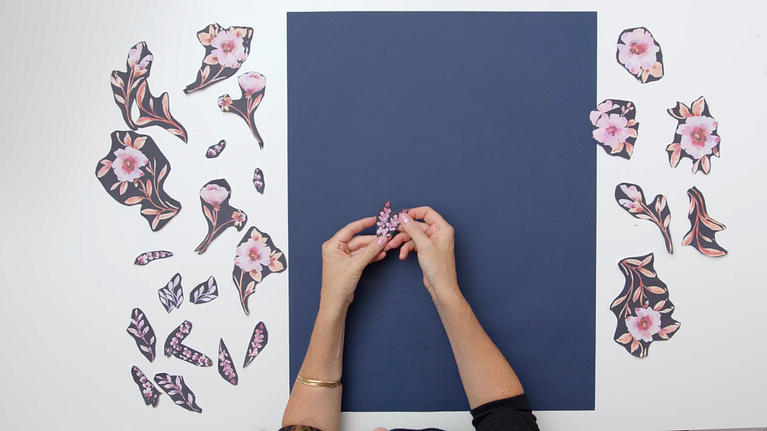
The first thing you have to do is draw your favorite shapes or designs on a piece of cardboard in watercolor. Then scan, print and cut them out to print onto a piece of paper.
The idea is to create a collage of illustrated pieces of card. In this example, Lola painted a few colorful flowers and cut them out.
2. Create a simple composition
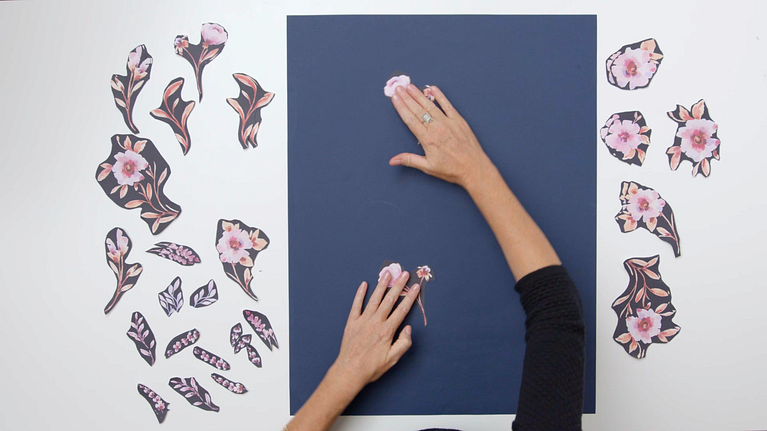
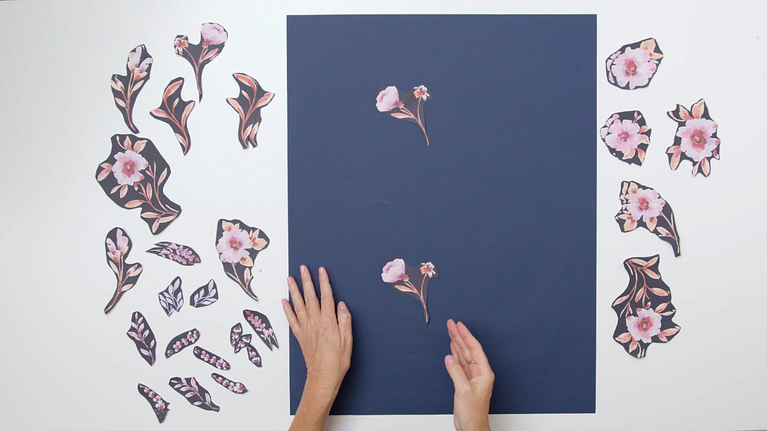
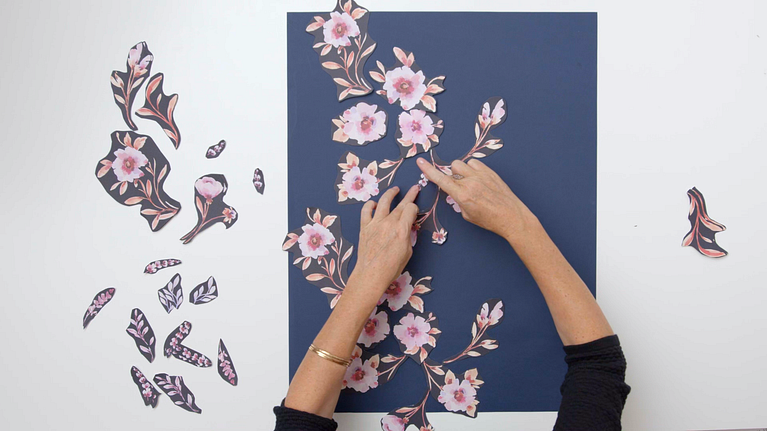
Once you’ve designed your cardboard pieces, create a composition on paper by arranging them in a diagonal formation to create curved movement.
Because you’re working on a print design, the individual elements need their own symmetry in order to generate visual repetitions on the fabric. Make sure you turn the pieces so they’re at the same angle.
3. Avoid horizontal or vertical lines
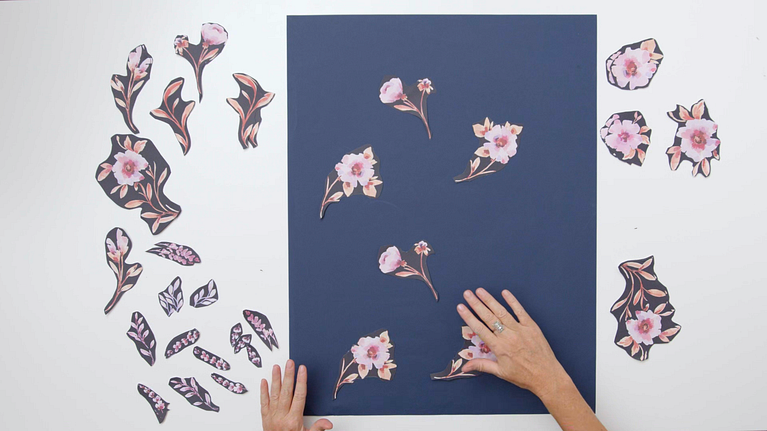
Arrange your pieces on the paper in such a way that they never form horizontal or vertical lines, as these create very rigid lines or grids and do not allow for more dynamic designs.
Always make sure you place the pieces in diagonal lines to generate a lovelier rhythm.
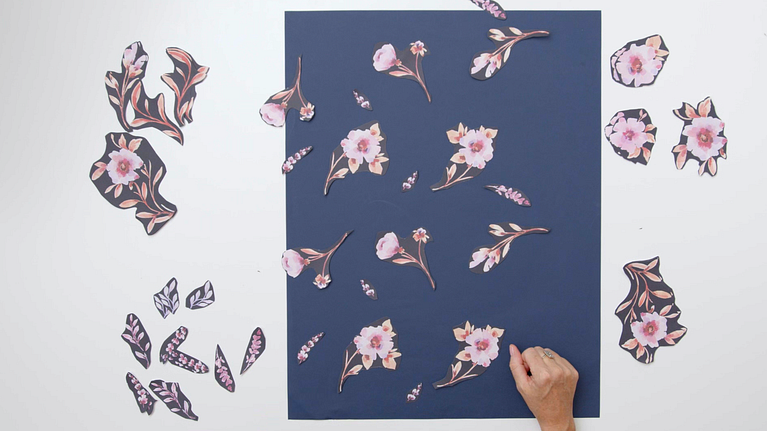
4. Include smaller figures to add a touch of style
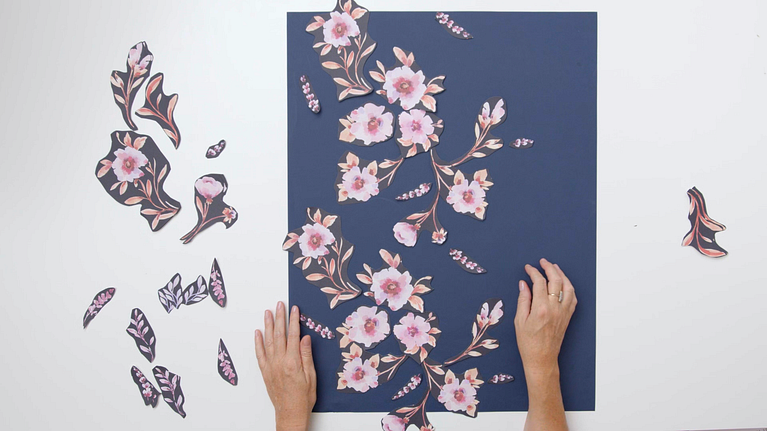
Design and cut out smaller figures to support the big prints and give your pattern more fluidity. This will give your composition added style and character.
5. Create a more complex pattern
Design two or three printed figures in a range of shapes and sizes, to play with the movement and symmetry between them.
Lola designed various medium-sized flowers and single leaf designs, and used them to create a set of more elaborate patterns.
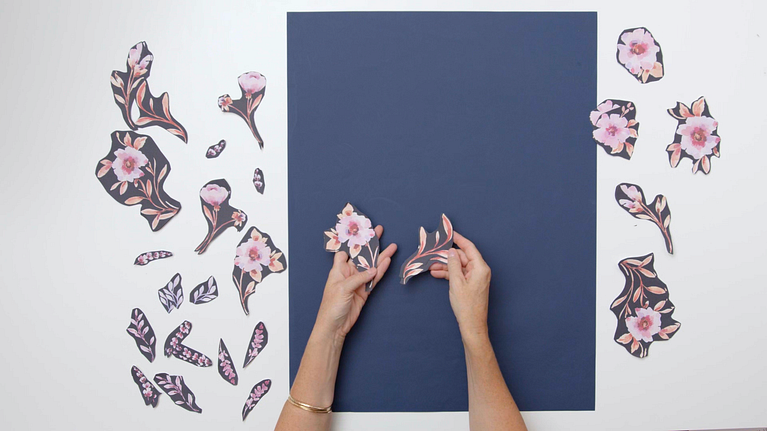
6. Arrange the big pieces on top of each other
Start by positioning your big designs first. Remember, you always have to create symmetrical repetitions to create a harmonious pattern that’s easy on the eye.
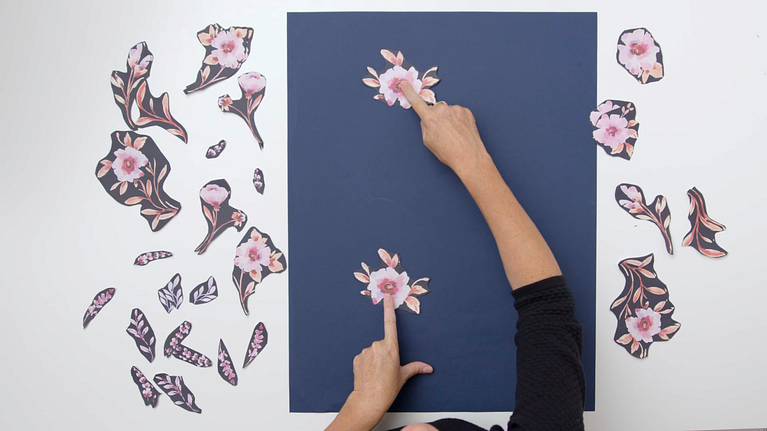
Your figures must also be arranged in the same way from top to bottom: for example, all your flowers should have their leaves facing outwards.
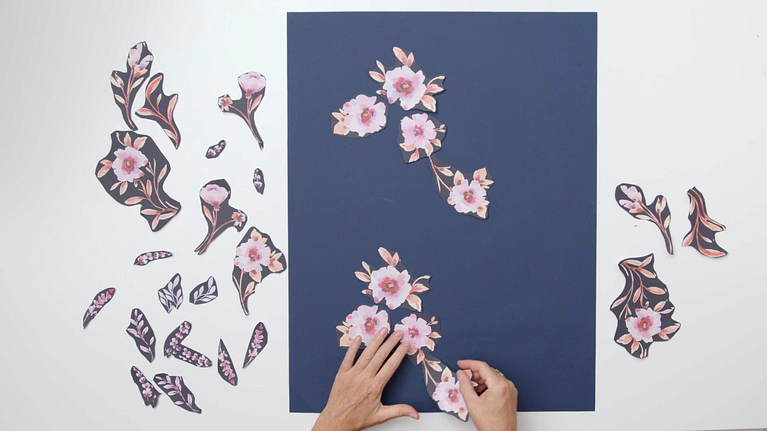
7. Finish by decorating with the small figures
As we saw earlier, smaller figures give your design flow. So adding little flowers or leaves is a great way to add a final flourish.
Tip: The importance of movement
Always remember to create your watercolor flowers in a curved shape, to add rhythm and movement to your pattern. Fluidity and movement are key in any type of print, whether it’s going to be used in textiles or wallpaper.
Avoid designing static figures to create more dynamic drawings and prints. The more your designs move, the more people will like them!
Love this tutorial? If you want to learn how to design prints and create vivid patterns from scratch, don’t miss Lola San Román’s online course: Creating Patterns Using Watercolor.
You may also like:
- Creative Ways to Reduce Climate Change
- 10 Online Upcycling Courses for Getting Creative at Home
- Vibrant Floral Patterns with Watercolors, a course by Anna Lau
- Floral Illustration and Pattern Design, a course by Tatiana Boyko
- Block Printing and Digital Pattern Design, a course by Marta Afonso


0 comments