


How To Create a Papercut Tree of Life
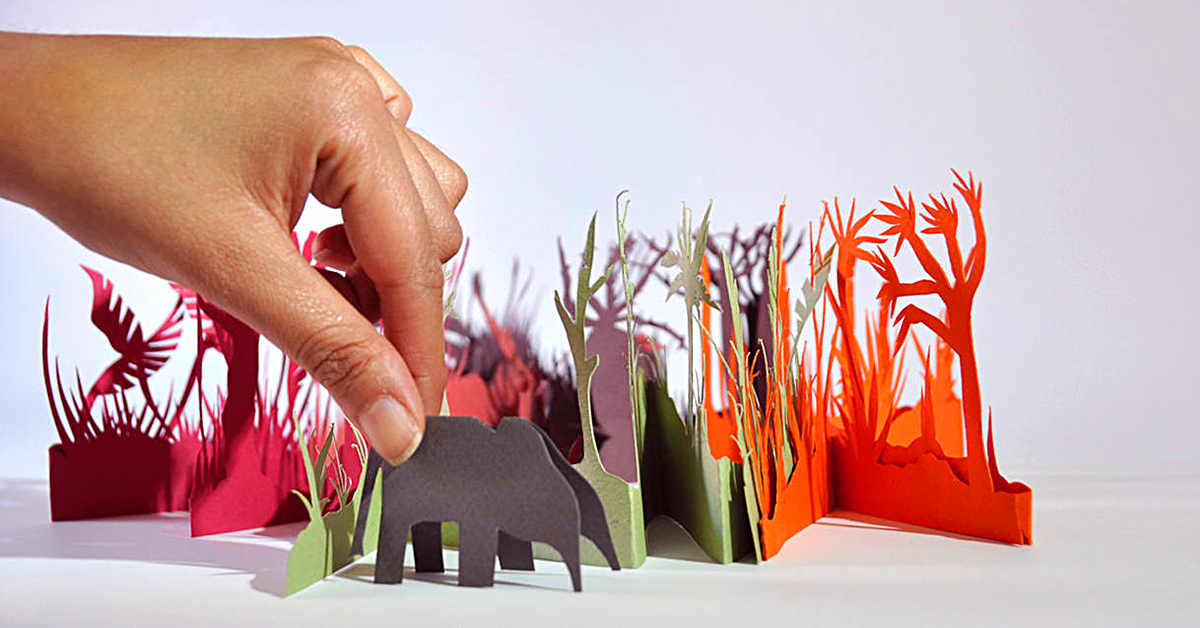
Storyteller and papercutting artist Karishma Chugani walks us through her creative process
Karishma Chugani is a storyteller and papercutting artist whose work blends ancient narrative formats from across the world.
After writing a story, she creates a visual language with images specifically designed to tell that story.

Born in Casablanca to a family of Sindhi origin, Karishma has extended family in India, Ghana, Spain, England, and the United States. She has studied in London, Paris, and Madrid. Her own personal story and ancestral roots are what continue to inspire her work.
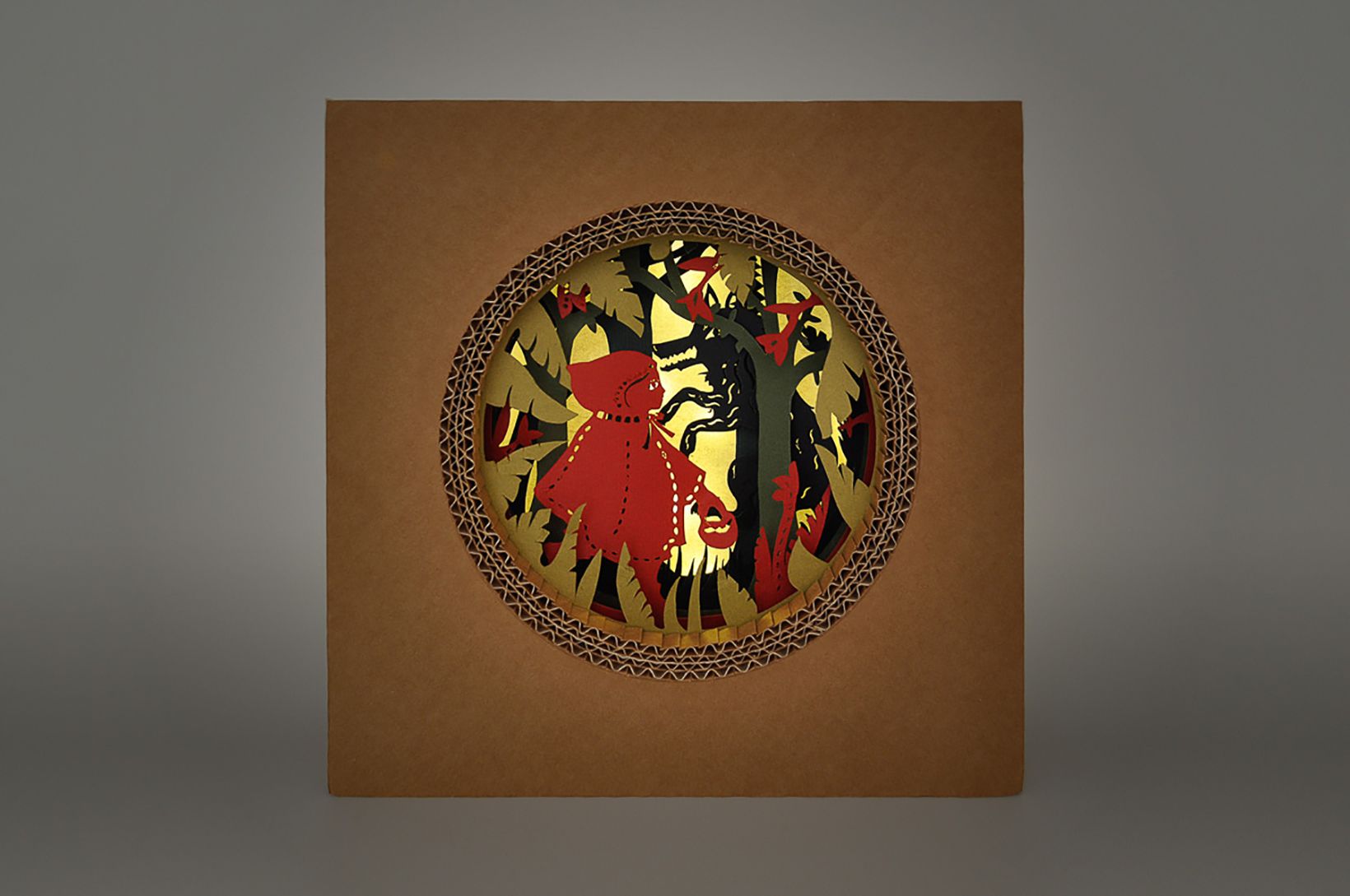
Karishma trained as a fashion designer but has always been interested in all formats of art. She taught herself to paint using oils and watercolors. Over the years, she became interested in storytelling and began writing stories. When she moved to Madrid in 2008, she began learning all about editing, publishing, and book arts. This led to Karishma publishing illustrated books and a theater book, which marked the beginning of her adventures with papercutting.

In her recent Domestika Live, she walked us through how to tell our own story by creating a papercut tree of life.
“Through my work as a visual artist, I have always been fascinated with trees as a sacred symbol of life,” says Karishma. “A tree of life is a very sacred symbol through mythologies across the world. In every different culture, philosophy, country, there are so many different symbolisms to what you can wish for through a tree.”
Materials
To create your own papercut tree of life, you will need:
–a cutting board
–a pair of scissors
–a scalpel or cutting knife
–a pencil
–an eraser
–paper (preferably handmade paper with natural fibers, but standard paper will do)
Getting started
To create her design, Karishma thought about the different wishes she has for herself and her family this year. She decided to use mythical characters to represent her and her family members.
Your design can be as simple or as intricate as you wish, and you can choose any color paper you like. Karishma first sketched out her tree of life onto tracing paper, which is an optional step (alternatively, you can sketch directly onto the paper or just start cutting without sketching anything out beforehand). “I always start a tree of life with the roots. I think it’s really important to feel anchored to one’s roots,” says Karishma.
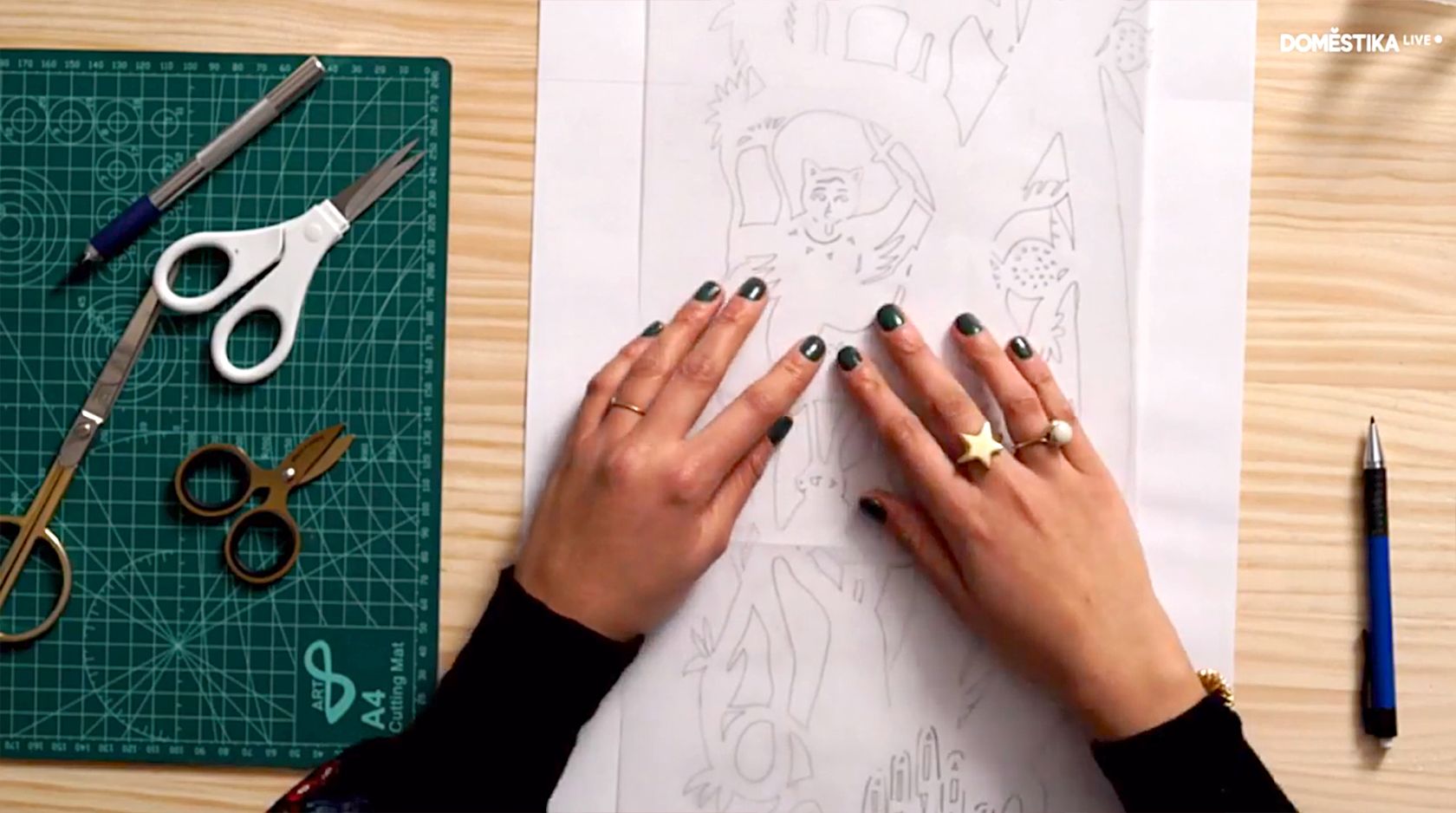
When you directly sketch your design or transfer your tracing-paper design onto the paper that you will later cut, Karishma recommends doing so on the back of the paper. Asian papers don’t react very well to erasers and, this way, when you finish and turn it around, the piece is clean.
When paper cutting such a large piece, it’s essential that everything is connected. “Although there are separations, you have to keep little connections otherwise your tree will just fall apart.”
Cutting out your design
You can now take your cutting board and scalpel and begin cutting out your design. Karishma says that while she mainly uses a linear technique, sometimes she will skip back and forth in order to rest her hand if one area has lots of small details and she needs to switch to an area with bigger cuts. It can help to cut out the details before the big outlines of your shapes. However, the most important thing is to listen to your intuition.
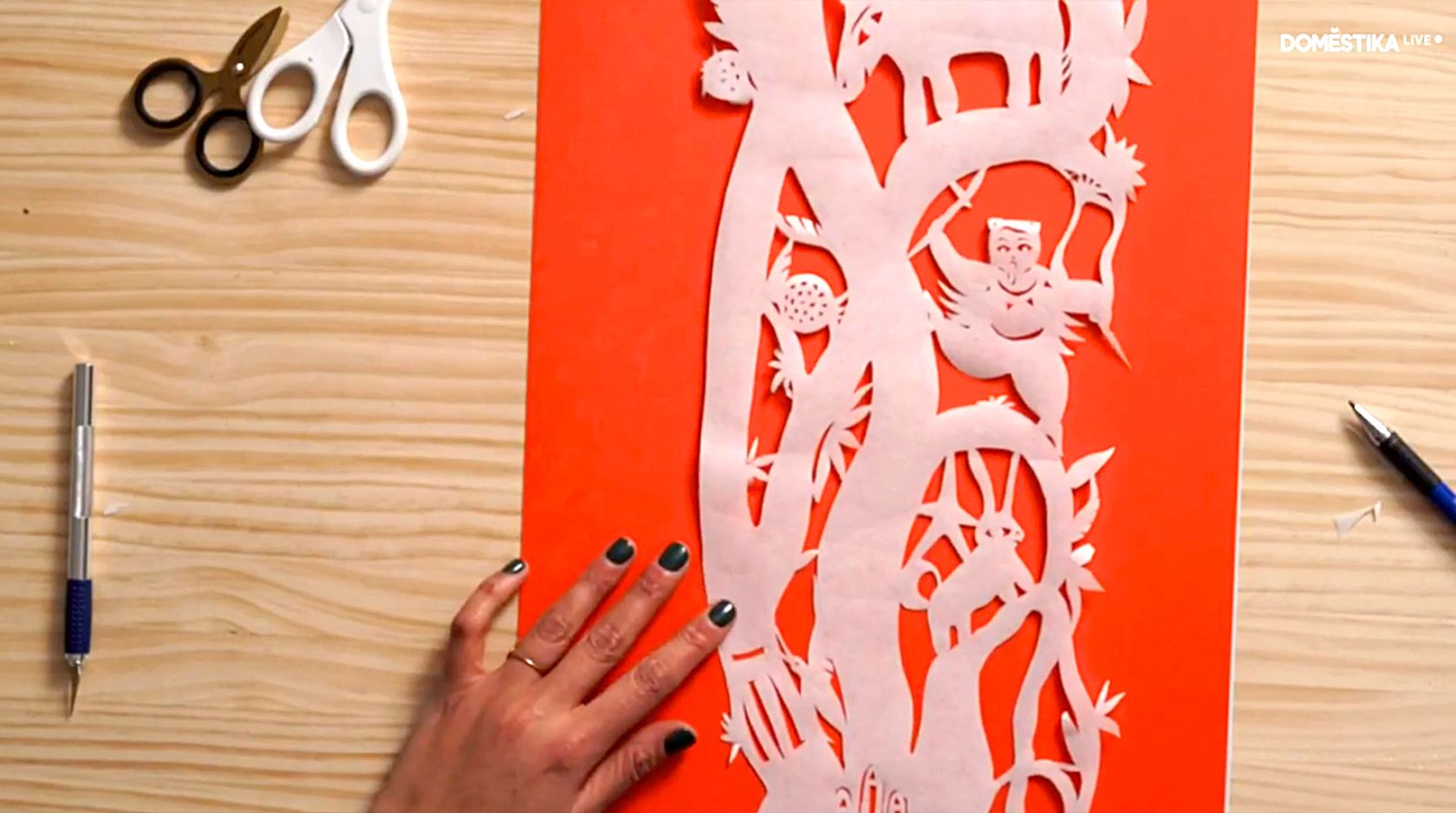
Take care to hold the paper firmly so that you don’t lose your grip and the paper doesn’t fold or wrinkle. “If you’re not so comfortable doing little details with your scalpel, one option is to cut a blob around them and then get back into them at the end with a pair of scissors,” she says. If you find that the ends of your blades break, it means that you’re putting too much pressure on the top of it. “It’s really important that you hold your scalpel as if it were a pen or pencil and have a tight grip. If you’re tipping it too much towards the point, then your blade will break,” adds Karishma. You can put more pressure on the underside of your hand that is holding the scalpel to prevent this.
You might find it easier to turn your board and paper to access certain cuts. Karishma adds that it is better to cut towards you than away from you. If you need to rest your hand, take a break.

Magical solutions
If you make any mistakes when cutting, don’t worry, there are easy ways to fix them. Take a tiny piece of the paper you are using (it’s good to collect scraps) and glue it over the back of the cut using a strong stick glue or some double-sided tape. No one will be able to tell!

If you would like to learn about papercutting techniques in more detail, be sure to check out Karishma’s Domestika course, Paper Cutting Techniques for Storytelling.
You may also like:
–How to Make Lifelike Paper Petals
–Draw Yourself: Paper Artist and Storyteller Karishma Chugani on her Multicultural Inspirations
–What Are Scrapbooks and What Are The Different Types?


0 comments