Character Illustration with Acrylic
A course by Ariel Olivetti , Illustrator and Comic Artist




Learn step by step how to give volume, color, and realism to a superhero using acrylic paint

A superhero’s strength and details make them truly unique. With Ariel Olivetti, you can learn how to give power, realism, volume, and color to your characters using dynamic acrylic painting techniques.
Ariel Olivetti has worked with the titans of the comic industry: Marvel and DC. Now, he teaches his process for creating dynamic superheroes with acrylic paints. If you want to delve deeper into the world of comic characters with Ariel, see his course: Illustration for Comics: Anatomy of a Superhero.
What will you learn in this online course?
13 lessons & 17 downloads




- 99% positive reviews (246)
- 5,292 students
- 13 lessons (2h 0m)
- 17 additional resources (10 files)
- Online and at your own pace
- Available on the app
- Audio: Spanish, German, English, French, Indonesian, Italian, Dutch, Polish, Portuguese, Romanian, Turkish
- Spanish · English · Portuguese · German · French · Italian · Polish · Dutch · Turkish · Romanian · Indonesian
- Level: Beginner
- Unlimited access forever
What is this course's project?
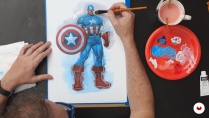
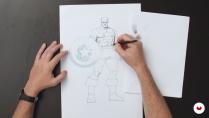
Create an illustration based on Captain America using acrylic paint. Learn the techniques for painting with acrylics step by step, from a linear drawing to a finished illustration that’s ready to digitize and print.

Projects by course students


Who is this online course for?
For anyone who loves illustration, painting, graphic composition, or superheroes. Fans and followers of Ariel Olivetti will also enjoy the course.
Requirements and materials
To take this course, you need intermediate-level drawing skills.
As for materials, you’ll need paper, paper for acrylic paint, an eraser, a black (non-water based) pencil, acrylic paints, acrylic dilutor (either matt or semi-matt), and a range of paint brushes.

Reviews

Ariel Olivetti
A course by Ariel Olivetti
Ariel Olivetti was born in Buenos Aires (Argentina) and studied graphic design at the University of Buenos Aires. His passion for drawing the human figure and creating characters led him to creating cover illustrations for the comic magazine FIERRO in the ‘90s. He is also a co-creator of the comic El Cazador. He has been working in the comic industry for over twenty five years as an artist and illustrator, collaborating on publications for Dark Horse, Valiant, Sideshow, MARVEL, DC Comics, and Upper Deck.
His first artwork for the US market was The Last Avengers story for Marvel Comics, and was followed by Daredevil and X-Men. He has collaborated on a limited edition series for DC called Space Ghost and a host of other titles, including Mystique and Sabretooth (1996), Alpha Flight (1997), and What if? (1997) for Marvel, as well as JLA: Paradise Lost (1998), Haven: The Broken City (2002), Green Lantern (2003), and Batman: Legends of the Dark Knight.
Content
-
U1
Introduction
-
Presentation
-
Influences
-
What will we do in the course?
-
-
U2
Materials, light and shadow
-
Materials
-
Light and shadow 1
-
Light and shadow 2
-
-
U3
Acrylic painting techniques
-
Drawing and shading
-
Color
-
Watering technique and transparent glazes
-
Lighting and volume
-
Final details
-
-
U4
Conservation and presentation of the original
-
Conservation digitization and format
-
Editorial review
-
-
FP
Final project
-
Character Illustration with Acrylic
-
What to expect from a Domestika course
-
Learn at your own pace
Enjoy learning from home without a set schedule and with an easy-to-follow method. You set your own pace.
-
Learn from the best professionals
Learn valuable methods and techniques explained by top experts in the creative sector.
-
Meet expert teachers
Each expert teaches what they do best, with clear guidelines, true passion, and professional insight in every lesson.
-
Certificates
PlusIf you're a Plus member, get a custom certificate signed by your teacher for every course. Share it on your portfolio, social media, or wherever you like.
-
Get front-row seats
Videos of the highest quality, so you don't miss a single detail. With unlimited access, you can watch them as many times as you need to perfect your technique.
-
Share knowledge and ideas
Ask questions, request feedback, or offer solutions. Share your learning experience with other students in the community who are as passionate about creativity as you are.
-
Connect with a global creative community
The community is home to millions of people from around the world who are curious and passionate about exploring and expressing their creativity.
-
Watch professionally produced courses
Domestika curates its teacher roster and produces every course in-house to ensure a high-quality online learning experience.
FAQs
Domestika courses are online classes that allow you to learn new skills and create incredible projects. All our courses include the opportunity to share your work with other students and/or teachers, creating an active learning community. We offer different formats:
Original Courses: Complete classes that combine videos, texts, and educational materials to complete a specific project from start to finish.
Basics Courses: Specialized training where you master specific software tools step by step.
Specialization Courses: Learning paths with various expert teachers on the same topic, perfect for becoming a specialist by learning from different approaches.
Guided Courses: Practical experiences ideal for directly acquiring specific skills.
Intensive Courses (Deep Dives): New creative processes based on artificial intelligence tools in an accessible format for in-depth and dynamic understanding.
All courses are 100% online, so once they're published, courses start and finish whenever you want. You set the pace of the class. You can go back to review what interests you most and skip what you already know, ask questions, answer questions, share your projects, and more.
The courses are divided into different units. Each one includes lessons, informational text, tasks, and practice exercises to help you carry out your project step by step, with additional complementary resources and downloads. You'll also have access to an exclusive forum where you can interact with the teacher and with other students, as well as share your work and your course project, creating a community around the course.
You can redeem the course you received by accessing the redeeming page and entering your gift code.

Práctico y claro! Ariel, además de talentoso un gran maesto. Recomiendo 100% este curso.
¡Impresionante como siempre Ariel Olivetti! Es un curso muy didáctico y fácil de entender! Muy claro en la explicación y super práctico de llevar adelante!
¡Mas que contento de haber adquirido el curso!
trop bien ! les techniques sont très bien expliquées !
de plus beaucoup d'astuce de formats pour les éditeurs!
muy buen curso y muy buena técnica
Ótimo curso!!