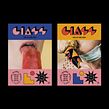
Guided Course: Visual Identity Design with Simple Geometry
Course final project
A guided course by Marco Oggian , Illustrator, Designer, and Art Director

About the final project for: Guided Course: Visual Identity Design with Simple Geometry
Guided Course: Create Visual Identity with Basic Shapes
“Geometry is the foundation of design—circles, squares, and triangles can build entire worlds of identity when used with intention. By combining simple shapes, you can create a system that adapts to any format, from posters to environments. If you’re unsure where to start, the ideas below will help you transform geometry into a flexible and expressive identity. 1. Shape-Based Logo: Simplicity as a Mark Use only basic shapes to design a logo that feels bold and memorable. Focus on clarity and balance rather than complexity. Project example: A logo for a fictional café built from a circle and two rectangles, evoking a cup and saucer. 2. Pattern Collection: Geometry in Repetition Explore rhythm and variation by creating a series of patterns using your shape library. Apply them to wallpapers, textiles, or digital backgrounds. Project example: A repeat pattern made of rotated triangles and circles, producing a playful, modular grid for packaging design. 3. Poster Design: Geometry as Communication Transform your system into a large-scale visual that conveys a message. Experiment with scale, negative space, and layering. Project example: A poster for a music festival built from oversized circles and lines, where geometry echoes the energy of sound. 4. Spatial Application: Identity Beyond Paper Adapt your shapes to a physical environment such as a mural, sign system, or even sports court design. Think about how color and form interact with space. Project example: A basketball court redesigned with bold geometric lines and contrasting circles, turning the floor into a visual identity system. 5. Dynamic System: Shapes in Motion Bring your identity to life through digital animation or interactive applications. Use transformations like rotation, scaling, and repetition to create movement. Project example: A short animation where a set of basic shapes morph into different configurations, serving as an animated brand intro. Every shape you draw is a building block—alone, it may seem simple, but combined, it becomes a language. Treat your visual identity as a system you can expand infinitely: from a single logo to a wall-sized pattern, from print to motion. Geometry gives you the tools, your imagination defines the rules.”
Course summary for: Guided Course: Visual Identity Design with Simple Geometry
-
Category
Design -
Software
Adobe Illustrator -
Areas
Art Direction, Branding & Identity, Graphic Design

Marco Oggian
A guided course by Marco Oggian
Marco Oggian is an Italian-born illustrator, designer, and art director. He first started freelancing twelve years ago and has since worked on over 150 projects across the world. After studying in Switzerland and creating documentaries and marketing strategies in Italy, Marco moved to Spain where he currently works as an art director. There he set up his own studio, Brutto, which specializes in branding, images, videos, objects, and more for a diverse portfolio of clients.
Marco’s goal is to never stop creating. He is known for the simple yet striking geometric compositions he creates as well as the controversial social issues they challenge. He has worked for clients including Samsung, Nike, Vans, Zara, and Vogue and had his designs exhibited in galleries in Paris, Barcelona, and Milan to name just a few. He has also published over twenty books on design, branding, illustration, typography, and photography.
- 14 students
- 9 lessons (1h 59m)
- 10 additional resources (4 files)
- Online and at your own pace
- Available on the app
- Audio: English, German, Spanish (Latam), French, Indonesian, Italian, Dutch, Polish, Portuguese, Romanian, Turkish
- Spanish · English · Portuguese · German · French · Italian · Polish · Dutch · Turkish · Romanian · Indonesian
- Level: Beginner
- Unlimited access forever
Recommended software & tools for this course
 Adobe Illustrator
Category
Areas