Introduction to Journalistic Writing
Course final project
A course by Paco Herranz , Journalist


About the final project for: Introduction to Journalistic Writing
Introduction to Journalistic Writing
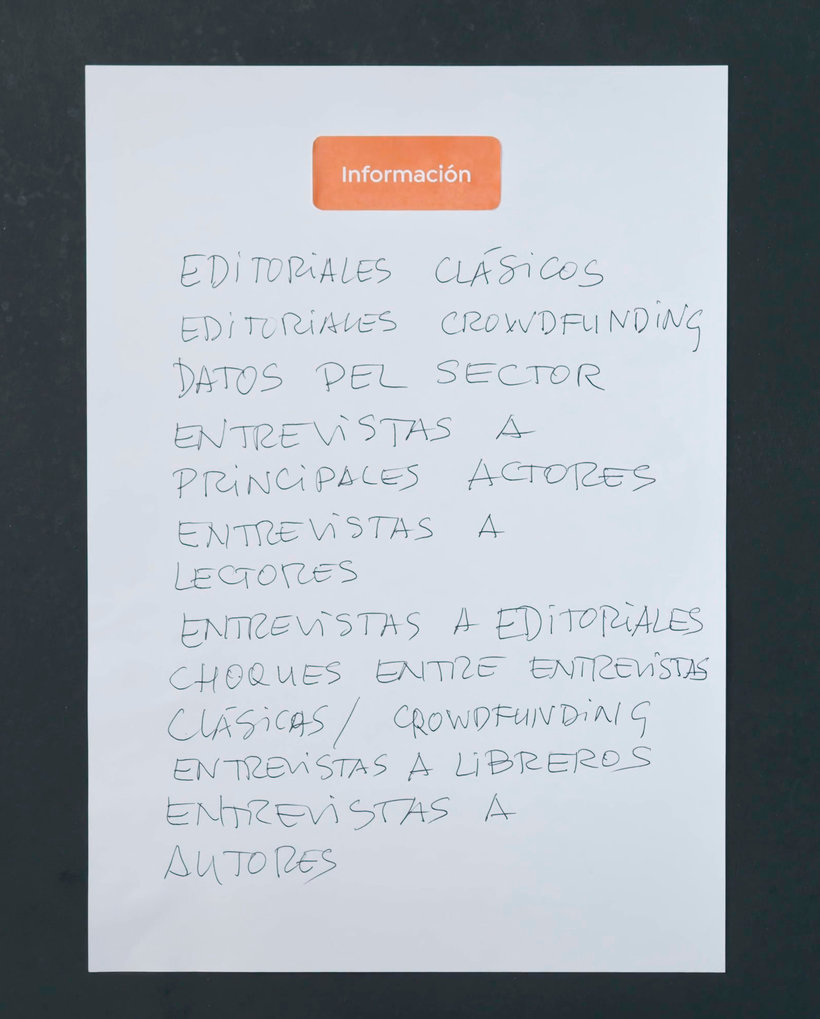
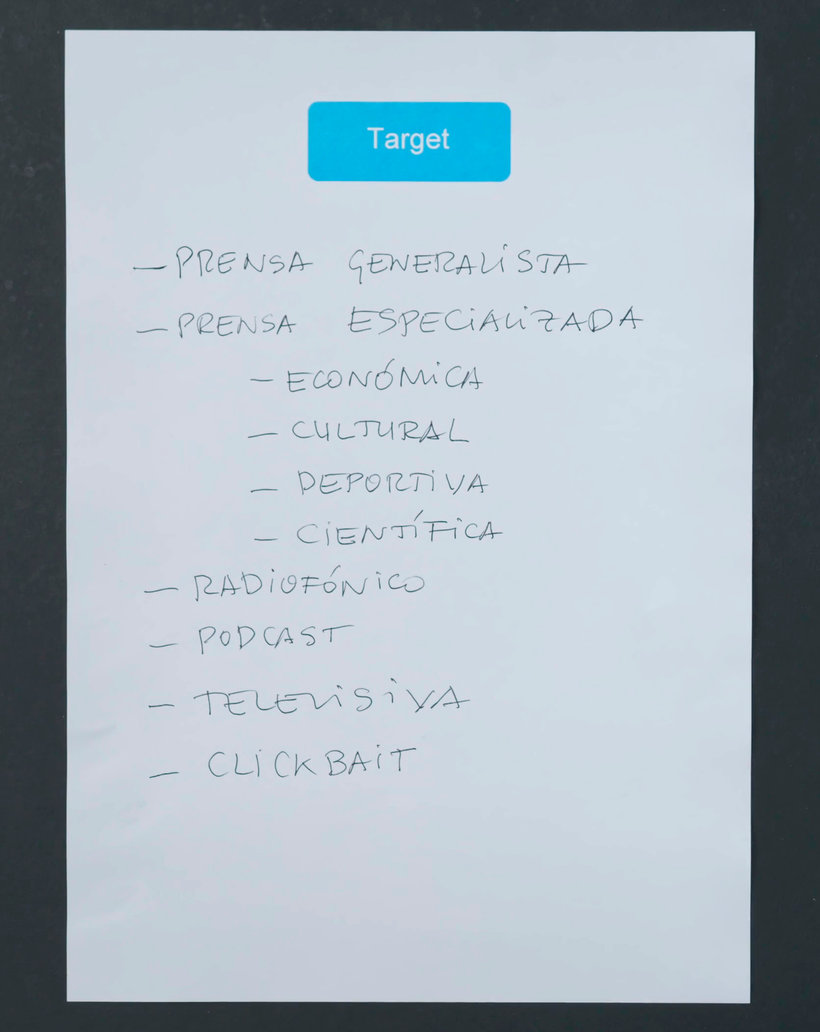
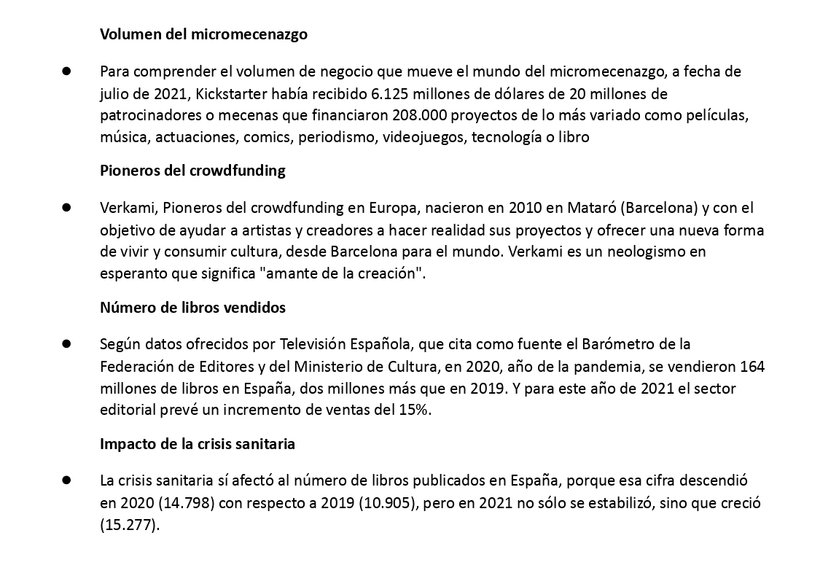
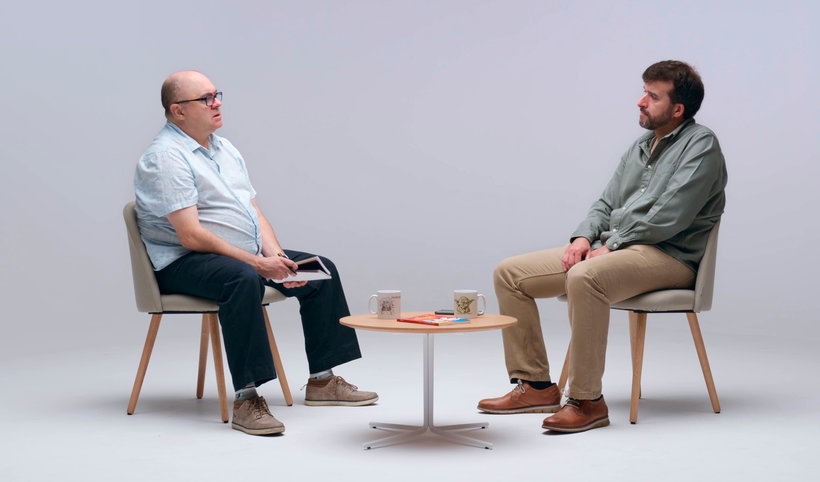
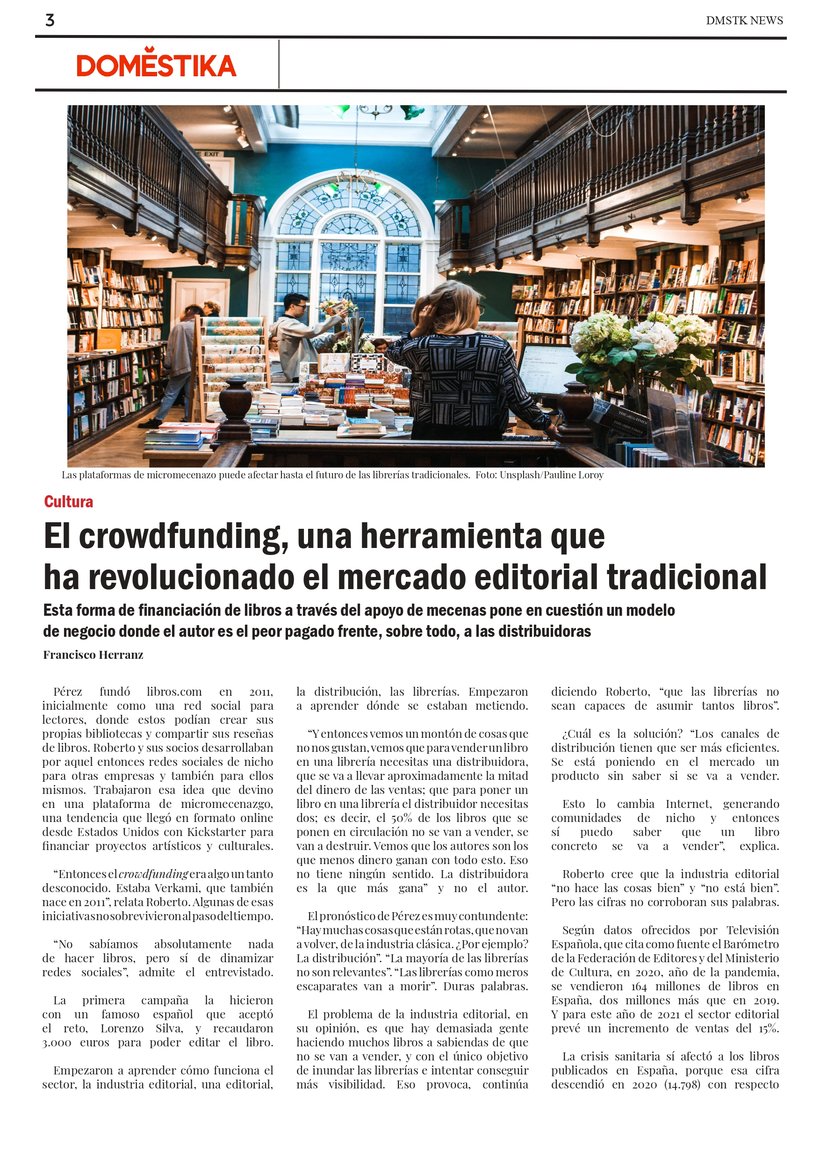
“We have reached the end of the course. I hope you enjoyed it and that it inspired you—and encouraged!—to write and publish your news report. The resources that we have seen during the course can serve as a guide, I recommend that you consult them as many times as necessary. Before we say goodbye, let's review the key phases of the project. It would be great if you could show me an image of each phase and add a brief explanation about what you have done in each one. The subject of my report The first step is to choose a theme. It can be a topical issue, but also one of social interest. It has to be as precise as possible. I have chosen crowdfunding, the financing by anonymous people of projects of all kinds. I found it interesting and, furthermore, I feel personally concerned about the subject because I have written two books financed with this tool. After choosing the topic, I have written a list of actions to be carried out and topics to be discussed, such as analyzing the advantages and disadvantages of crowdfunding, interviewing the actors involved, planning what data to collect, etc. All this would help me later to reach more or less critical conclusions.



Partial transcription of the video
“We have come to the conclusion of the course. I trust you found it enjoyable and beneficial for developing your journalistic report. The resources provided serve as a guide. and I highly recommend utilizing them. consult them whenever you find it necessary to do so. I hope this course has set you firmly on the path of journalism. a truly fascinating world. Now. it's all about getting started and fully immersing yourself in it. Remember to diligently do all the exercises Now is the moment to unleash your creativity. Feel free to experiment. exploring various journalistic genres we've discuss...”
This transcript is automatically generated, so it may contain mistakes.
Course summary for: Introduction to Journalistic Writing
-
Category
Writing -
Areas
Communication, Narrative, Non-Fiction Writing, Storytelling, Writing

Paco Herranz
A course by Paco Herranz
Paco Herranz holds a doctorate in communication sciences from the Complutense University of Madrid. Since 2010, he has been teaching writing courses for the Journalism, Edition, Production, and New Technologies master's program at the CEU San Pablo University, as well as classes on the history of journalism at the University Carlos III of Madrid. He currently collaborates with the Russian news outlet Sputnik, writing weekly analyses on international politics, and with the educational history magazine La Aventura de la Historia. He also works for the digital platform industry TALKS.
From 1989 to 2013, Paco worked for the Spanish newspaper El Mundo and held a variety of positions during his time there, including collaborator, reporter, correspondent in Moscow, and head of international news. As a reporter, he has covered three armed conflicts, written numerous reports on a broad range of topics, and interviewed people from a wide range of backgrounds and circumstances. His career has taken him across the world to report in countries like the United States, Canada, Venezuela, Brazil, Angola, Taiwan, South Korea, Israel, Turkey, Algeria, Poland, the Baltic States, Italy, and Sweden.
- 100% positive reviews (79)
- 3,015 students
- 14 lessons (2h 25m)
- 38 additional resources (13 files)
- Online and at your own pace
- Available on the app
- Audio: Spanish, English, French, Italian, Portuguese, Turkish
- Spanish · English · Portuguese · German · French · Italian · Polish · Dutch · Turkish · Romanian · Indonesian
- Level: Beginner
- Unlimited access forever
Category
Areas

