Graphite Drawing Techniques for Planar Portraiture
Course final project
A course by Dan Thompson , Artist and Teacher




About the final project for: Graphite Drawing Techniques for Planar Portraiture
Graphite Drawing Techniques for Planar Portraiture
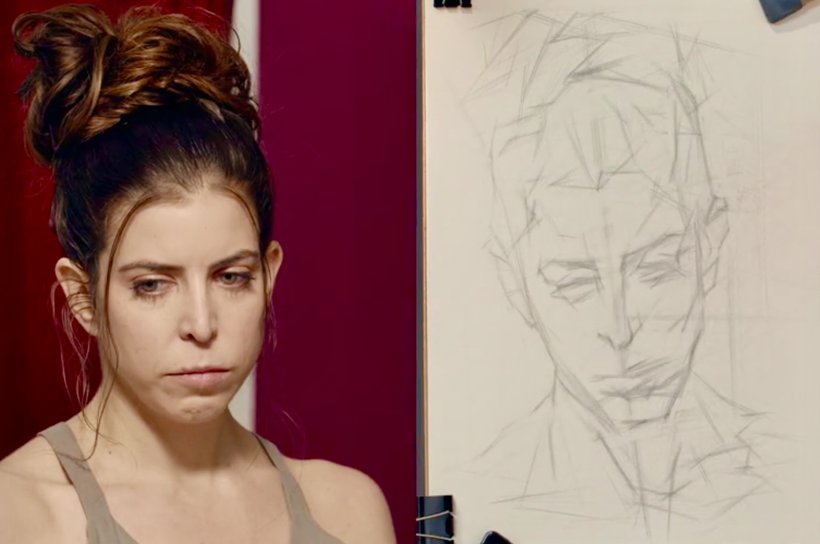
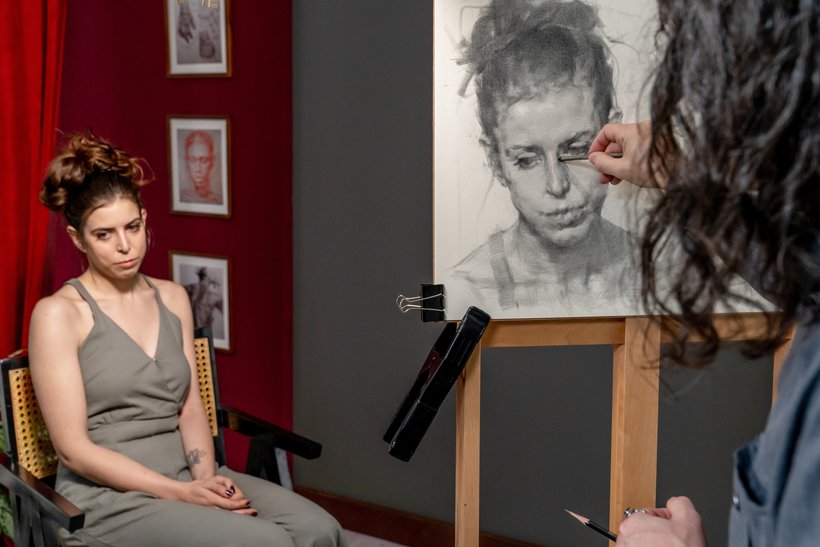
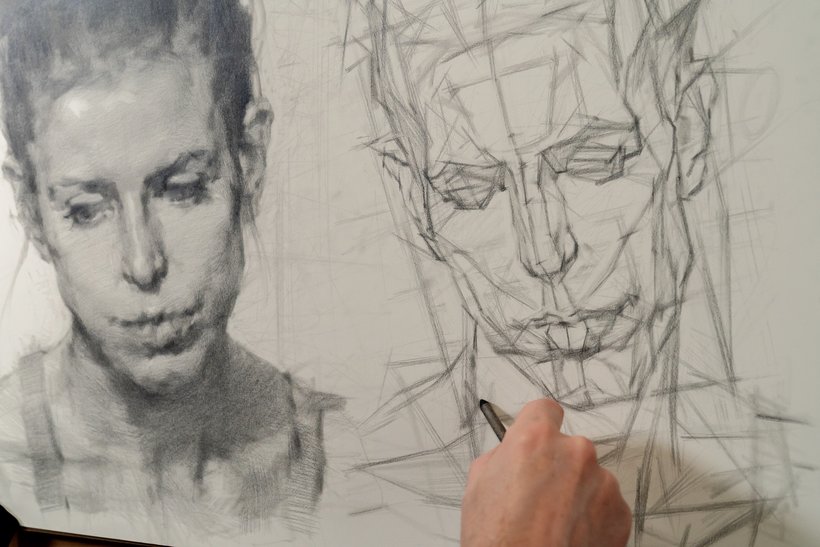
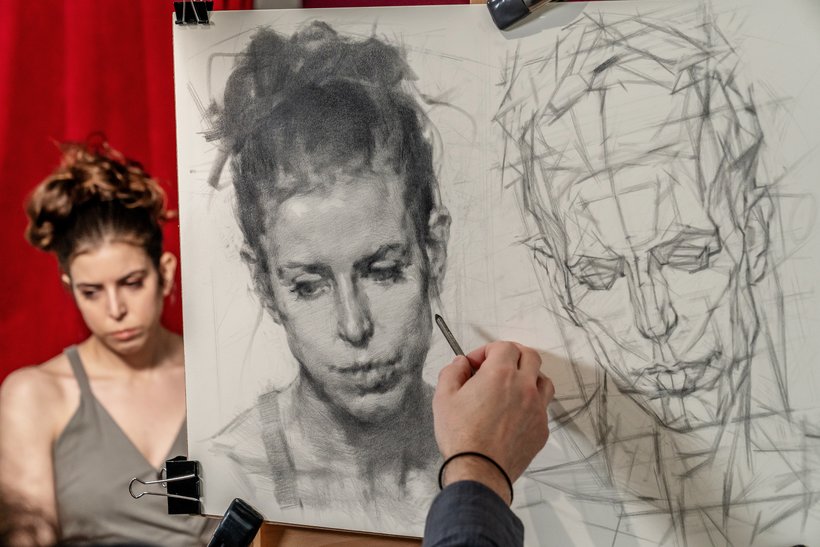
“Congratulations! You have reached the end of this Domestika course. Thank you so much for taking part! I hope you've enjoyed delving into art history and enhancing your drawing skills. Before saying goodbye, let's review the necessary steps to complete your project: Research the Key Concepts To begin, I recommend brushing up on the key concepts of this course. The conceptual nature of the artistic process cannot be overstated. You need to apply all that you've learned about the structure of the human body—its organic nature to taper or flare, resulting in a trapezoid-like construction—to create your own lines. This exercise is more about building the drawing rather than copying what you see. The Optical Drawing Keep your initial lines simple and clear. Relate fundamental information in order to engage with “the art of the start”. At this stage, the outlines should be informative. Get a feel for the space and the individual without achieving an absolute likeness. Embrace the abstraction of what you're dealing with. As you develop the sketch, formulate the design and the proportion. This is a crucial step before progressing to the more complicated stages of tonality. The Shapes Push your optical drawing to the shape stage. Ensure that your lines are well-vectored as you navigate through your piece. Without continuity, the drawing will become chaotic. So, keep your attention on the piece as a whole.
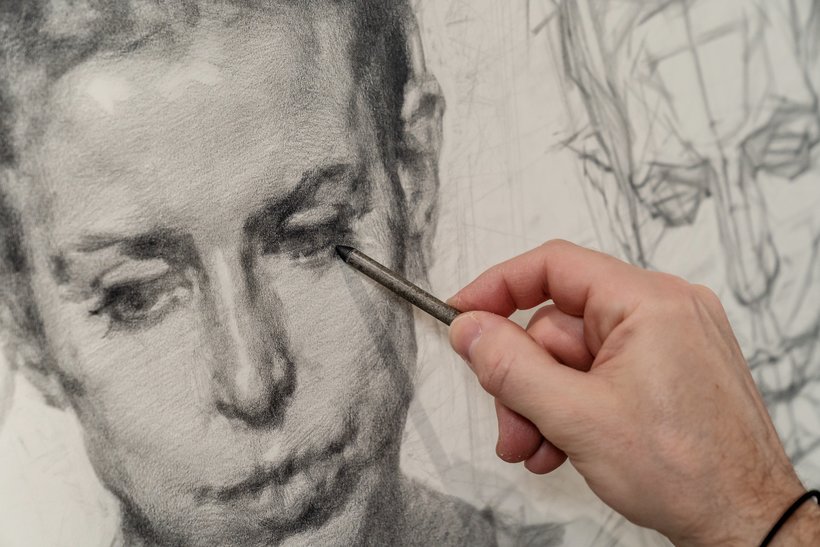
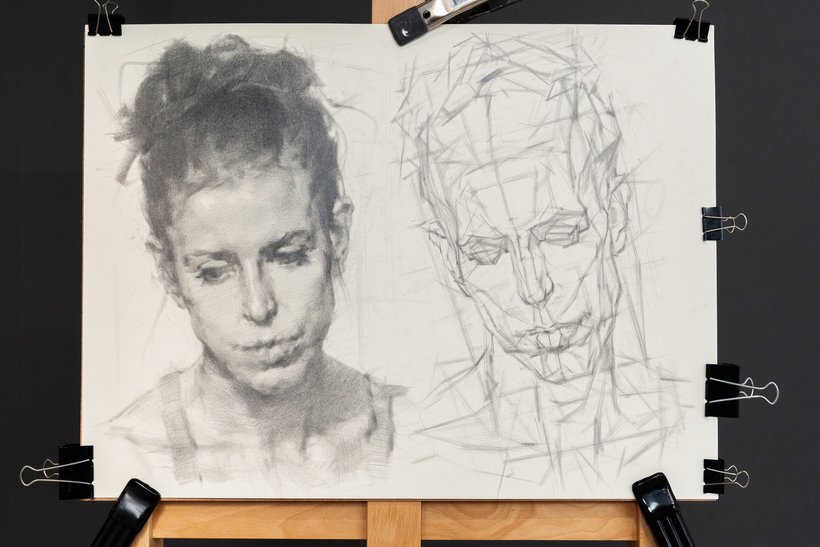
Partial transcription of the video
“Let me conclude by thanking you for taking this course and for our work together to promote stronger drawing skills in your own work. Speaking of stronger drawing skills, I have a few additional recommendations for you as you move forward with your work. As you look ahead, you should meditate on how important it is to refine your relationship of tones to each other. the more highly developed disability is, the more your experimental planar portraits will translate into future drawings. practice your shading on a piece of sculpture like a cast. Perhaps ahead. We call this skill modeling the ...”
This transcript is automatically generated, so it may contain mistakes.
Course summary for: Graphite Drawing Techniques for Planar Portraiture
-
Category
Illustration -
Areas
Artistic Drawing, Drawing, Fine Arts, Portrait Drawing, Realistic Drawing, Sketching

Dan Thompson
A course by Dan Thompson
Dan Thompson is an artist and educator from Virginia, U.S. with over 20 years of experience in his field. He first discovered a love of art through making band posters and later studied for an MFA at the Graduate School of Figurative Art. Passionate about human anatomy and perspective, as well as educating others, he went on to found two art schools of his own in New York.
Dan currently serves as dean of fine arts at Studio Incamminati, as well as the faculty chair of the one-year certificate of fine arts program at the New York Academy of Art. He has been awarded two grants from the Elizabeth Greenshields Foundation and received the Ethel Lorraine Bernstein Memorial Award for Excellence in Painting on multiple occasions. In 2001, he also won Best of Show in the American Society of Portrait Artist’s International Portrait Competition at the Metropolitan Museum of Art. His work can be found in both public and private collections throughout the United States, Canada, Europe, and the Middle East.
- 99% positive reviews (312)
- 12,153 students
- 26 lessons (5h 53m)
- 17 additional resources (8 files)
- Online and at your own pace
- Available on the app
- Audio: English, German, Spanish, Spanish (Latam), French, Indonesian, Italian, Dutch, Polish, Portuguese, Romanian, Turkish
- Spanish · English · Portuguese · German · French · Italian · Polish · Dutch · Turkish · Romanian · Indonesian
- Level: Beginner
- Unlimited access forever
Category
Areas

