Naturalist Illustration with Scratchboard
A course by Julia Rouaux , Scientific and Naturalist Illustrator

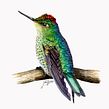

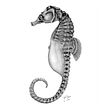

Learn how to capture the precise details and textures of animals in black and white
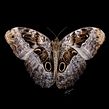

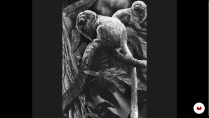
Nature and all of its detail can be a wonderful source of inspiration. For Julia Rouaux, Doctor of natural sciences and a scientific and naturalist illustrator, capturing those details is both her work, and her passion. Join Julia and explore one of her favorite techniques to create artwork with a wide variety of textures and striking contrasts between light and shadow.
In this course, learn how to depict nature with precision using the scratchboard technique. Rediscover illustration as a tool for interpreting nature, teaching about its species, and presenting scientific data in a way that everyone can understand: art.
What will you learn in this online course?
16 lessons & 17 downloads
- 100% positive reviews (53)
- 834 students
- 16 lessons (2h 9m)
- 17 additional resources (5 files)
- Online and at your own pace
- Available on the app
- Audio: Spanish
- Spanish · English · Portuguese · German · French · Italian · Polish · Dutch · Turkish · Romanian · Indonesian
- Level: Beginner
- Unlimited access forever
What is this course's project?
Create a realistic illustration of a mammal or animal of your choice using the scratchboard technique.

Projects by course students


Who is this online course for?
Nature lovers and drawing enthusiasts who want to combine art and science and capture all of nature's little details.
Requirements and materials
Basic drawing skills and a love of nature are all you need for this course.
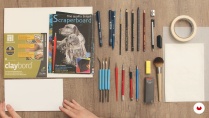
Materials include scratchboards, scratching tools (box cutters, xacto blades, scrapers, etc.), India ink, brushes, black pens, tracing paper, pencils, and carbon paper.

Reviews

Julia Rouaux
A course by Julia Rouaux
Julia Rouaux has always been passionate about nature, even as a child, and she never missed an opportunity to draw it. This led her to take a scientific illustration course after completing her degree in biology and, ultimately, to combine both of her passions while pursuing a PhD in natural sciences.
She currently works as a freelance illustrator and teaches scientific and naturalist illustration. She has created illustrations for scientific studies, informative publications, undergraduate and postgraduate theses, and educational materials including images for three illustrated guides on mammals from South America and around the world.
Content
-
U1
Introduction
-
About Me
-
Influences
-
-
U2
The Technique
-
Naturalistic Illustration
-
The Technique
-
The Materials
-
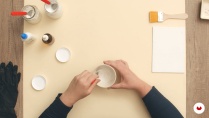
Homemade Substrate Preparation
-
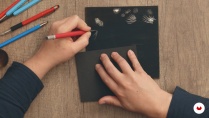
Scraping or Scratching Exercises
-
-
U3
Searching for References and Making the Sketch
-
Documentation on the Species
-
Preliminary Sketch
-
Fur Sketch
-
-
U4
Making the Project
-
Transferring the Sketch
-
First Layers: Marking Directions and Important Structures 1
-
First Layers: Marking Directions and Important Structures 2
-
Lights, Shapes and Textures
-
Final Touches
-
Care and Digitization of the Work
-
-
FP
Final project
-
Naturalist Illustration with Scratchboard
-
What to expect from a Domestika course
-
Learn at your own pace
Enjoy learning from home without a set schedule and with an easy-to-follow method. You set your own pace.
-
Learn from the best professionals
Learn valuable methods and techniques explained by top experts in the creative sector.
-
Meet expert teachers
Each expert teaches what they do best, with clear guidelines, true passion, and professional insight in every lesson.
-
Certificates
PlusIf you're a Plus member, get a custom certificate signed by your teacher for every course. Share it on your portfolio, social media, or wherever you like.
-
Get front-row seats
Videos of the highest quality, so you don't miss a single detail. With unlimited access, you can watch them as many times as you need to perfect your technique.
-
Share knowledge and ideas
Ask questions, request feedback, or offer solutions. Share your learning experience with other students in the community who are as passionate about creativity as you are.
-
Connect with a global creative community
The community is home to millions of people from around the world who are curious and passionate about exploring and expressing their creativity.
-
Watch professionally produced courses
Domestika curates its teacher roster and produces every course in-house to ensure a high-quality online learning experience.
FAQs
Scratchboard is a technique where you scrape away a layer of black ink on a white surface to create detailed illustrations, perfect for capturing textures, light, and shadow in naturalistic and scientific art.
This is an intermediate-level course; basic drawing skills and familiarity with art materials are recommended, but you don’t need to be an expert in scratchboard.
You’ll need scratchboard or Claybord, scraping tools like a craft knife or fiberglass scraper, pencils, microfiber cloths, India ink, carbon or tracing paper, brushes, plus visual references and basic personal protective gear.
You’ll learn how to research species, transfer sketches, create realistic textures and fur, apply light and shadow, fix mistakes, preserve and digitize your work, and understand the difference between naturalistic and scientific illustration.
You transfer your sketch using carbon or tracing paper, carefully pressing to mark key lines without distortion, ensuring your sketch stays true on the final surface.
Yes, you can digitize your artwork by scanning or taking high-quality photos, then refine details digitally for presentations or professional portfolios.
Naturalistic illustration focuses on artistic expression and the beauty of nature, while scientific illustration emphasizes accuracy and clear communication of biological data.

Excelente.
Excelente curso muy completo y bien explicado.
Eine Technik, die ich so noch nicht kannte -
sehr gut erklärt
mit tollen Beispielen.
Ganz herzlichen Dank dafür ...
It was so interesting to see how nature inspires people to create! It was a lovely course, although the materials were a bit hard to get in my area. But it was still a fun experience!
I love this technique and until taking this course had only been practicing with scratch paper, this helped me understand the differences between types of scratch boards and what else I can do with them . Excited to improve my skills!