Botanical Printing on Fabric and Paper
A course by Anabel TorresFashion Designer and Textile Artist
A course by Anabel Torres, Fashion Designer and Textile Artist

Learn how to transfer textures and colors to create patterns with flowers and plants
Can you imagine using nature’s colors to adorn your garments? We’re not aware of the many artisanal methods that are available naturally and sustainably, straight from the comfort of our homes. Fashion designer and textile artist Anabel Alonso designs and sells sustainable, hand-dyed pieces with her brand Antesis.
In her first Domestika course, she teaches a textile dyeing technique with natural pigments, and in this course, she introduces you to an eco-printing technique used to transfer patterns of your favorite plants and flowers onto textiles and paper.
Learn how to extract nature’s textures and colors to then print them using different fixers to obtain different effects, discovering techniques to create outlines, background colors, and other tricks. During the course, create your own sampler from which you will base your final project: printing your favorite patterns on a garment.
What will you learn in this online course?
17 lessons & 18 downloads
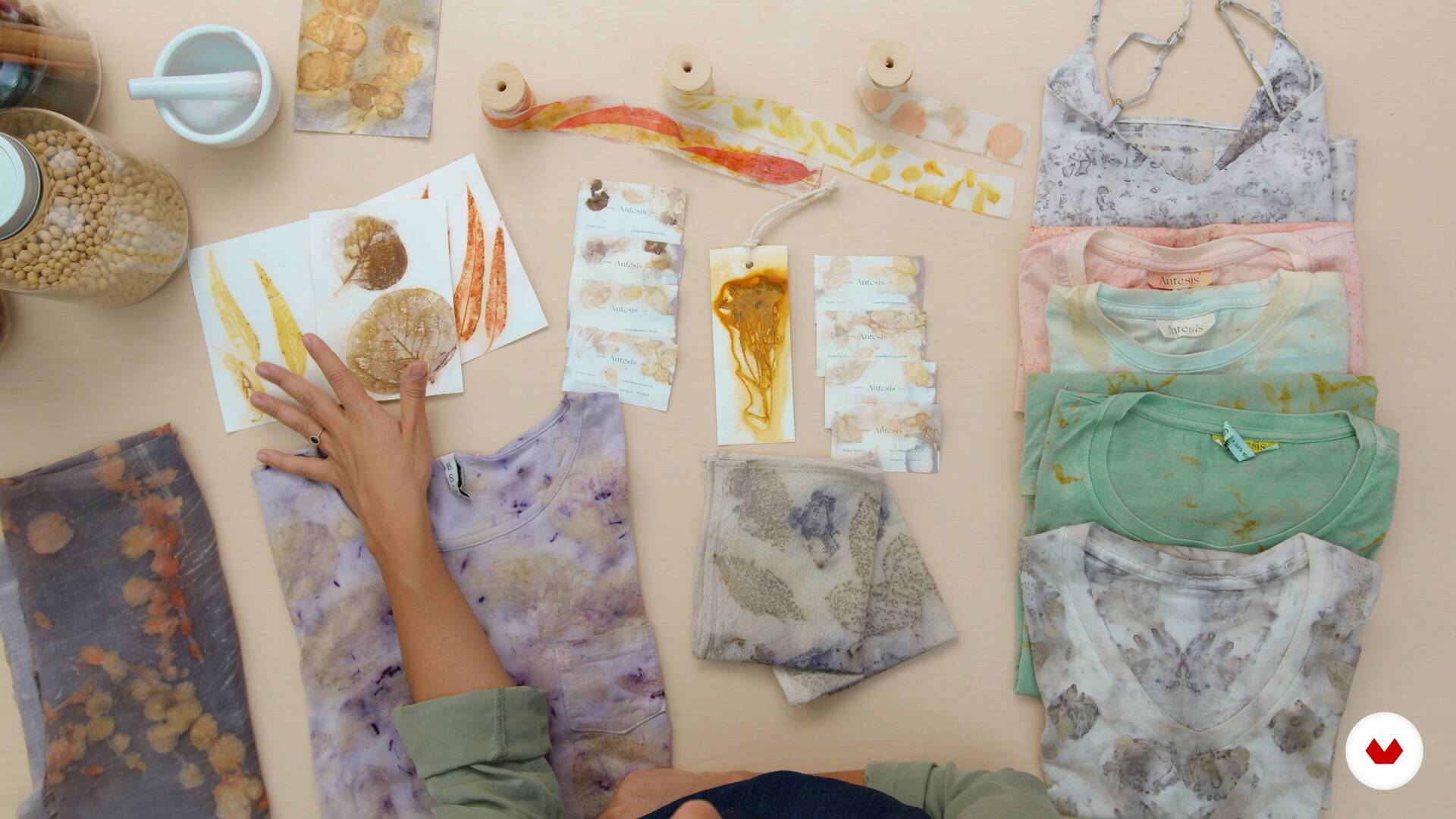
What will we do in the course?
2 minutes, 28 seconds
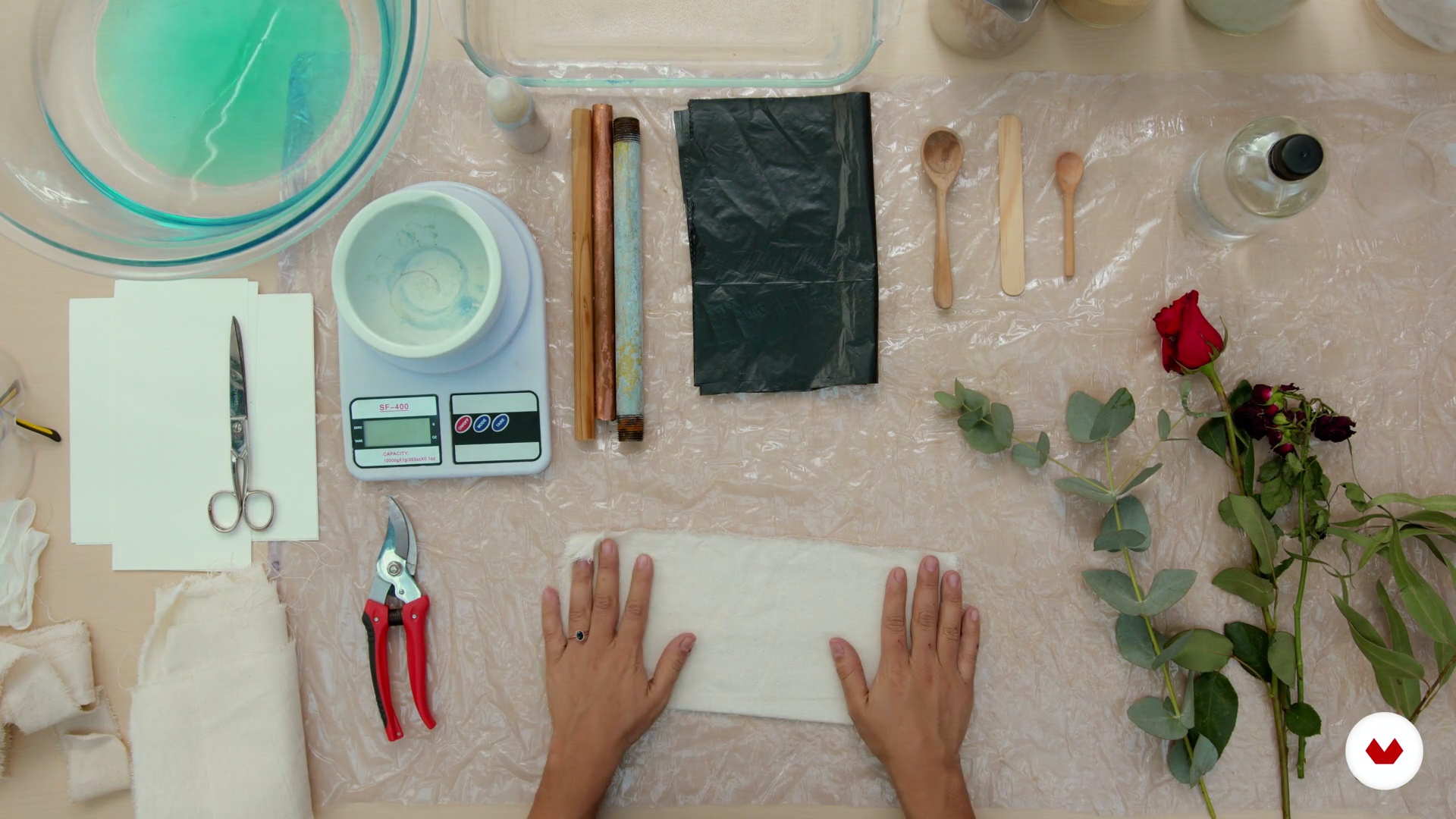
Preparation of materials and work area
5 minutes, 0 seconds
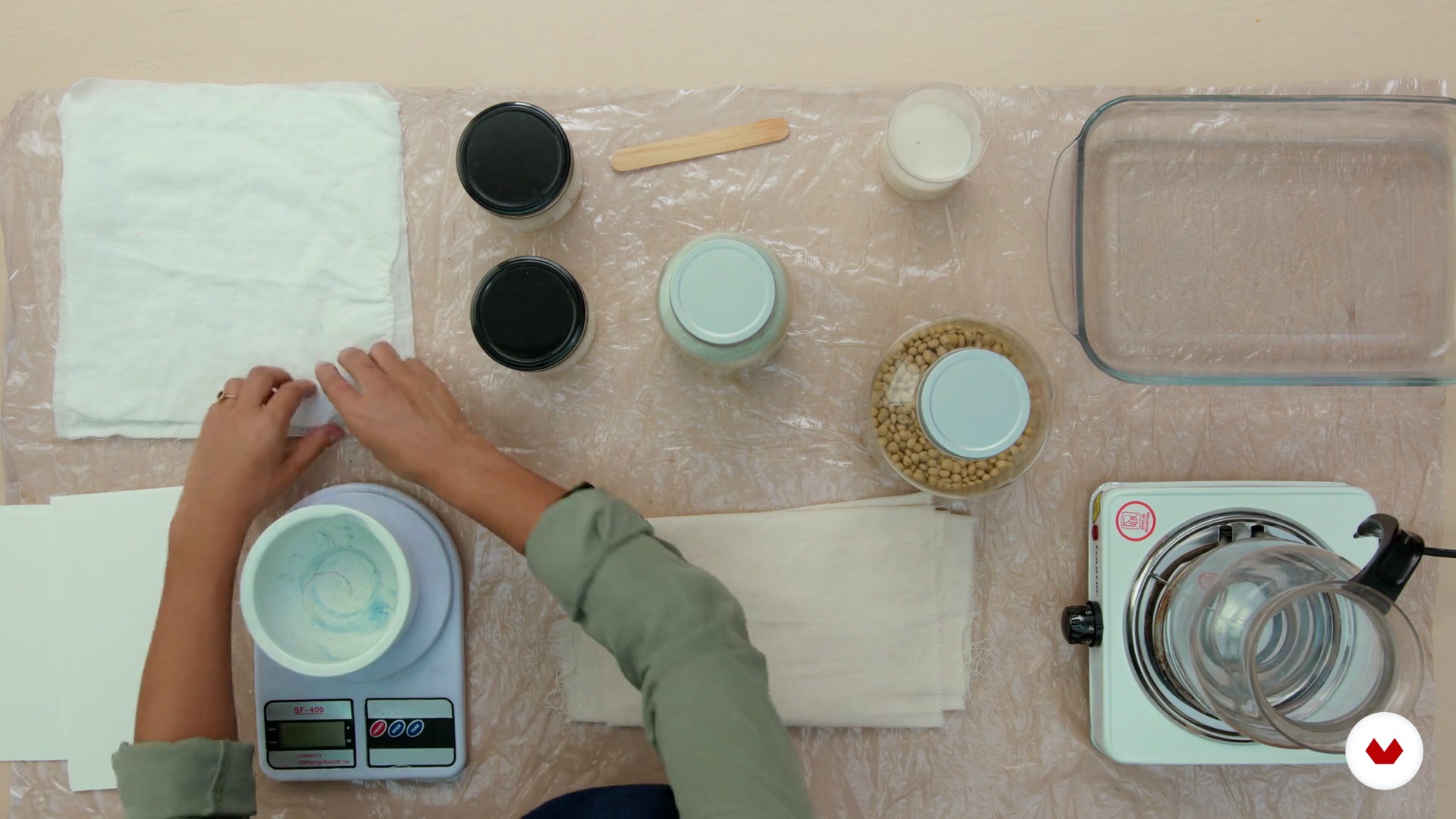
Introduction to washing and etching
8 minutes, 38 seconds
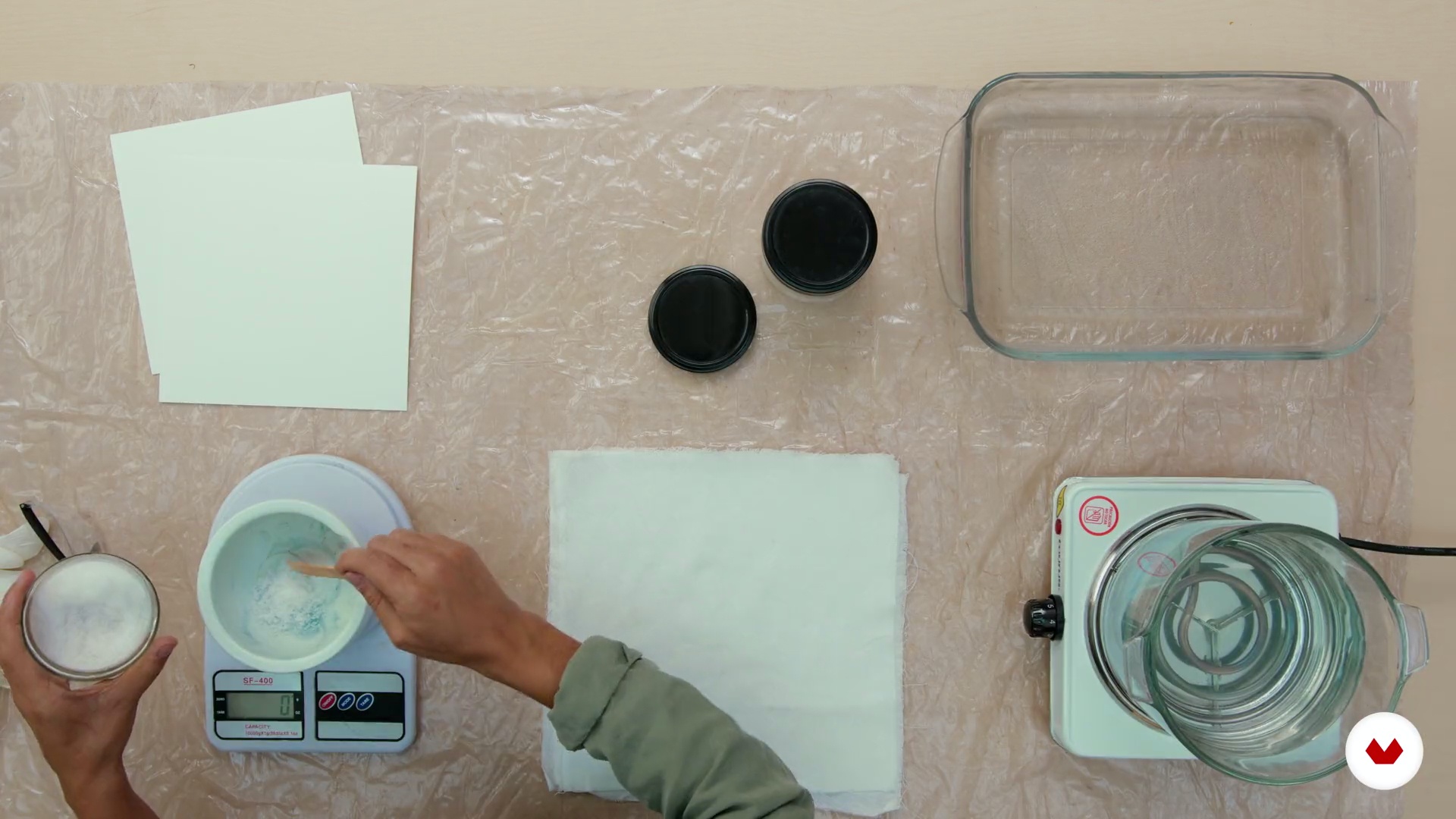
Alum etched
7 minutes, 0 seconds

Bitten with soybeans
6 minutes, 30 seconds
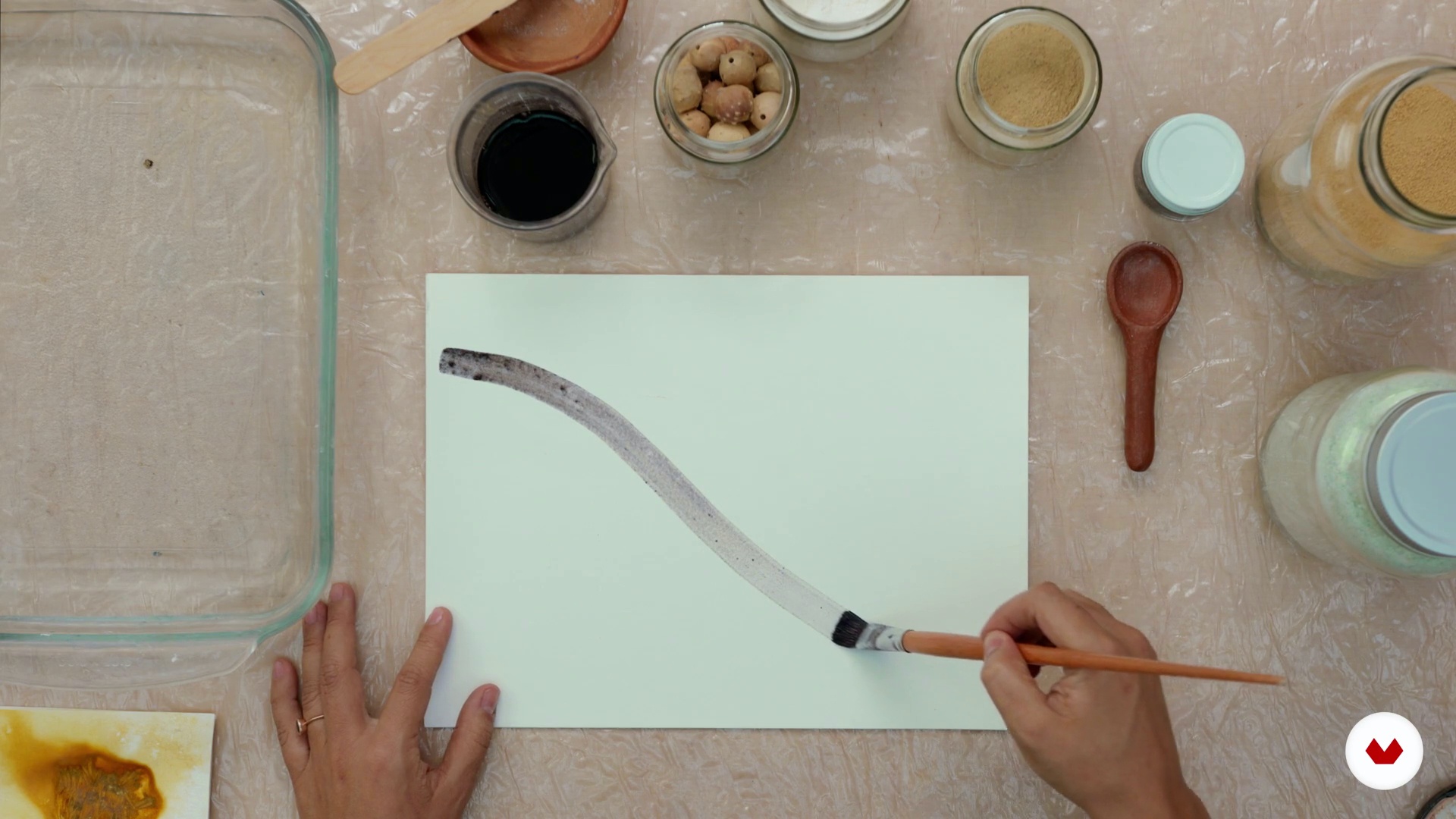
Ferrous sulfate etched
7 minutes, 29 seconds
What's included in this course?
Start by getting to know Anabel, her professional journey as a fashion designer and textile artist, discovering her passion for teaching and plants, and seeing where she draws inspiration from.
She introduces you to the history of botanical printing and the materials and tools you need to prepare your workspace. Discover the importance of being able to correctly identify plants to collect their leaves in an eco-friendly way, and how to prepare them before use.
Then, discover textile color washes, and learn the different types of mordants to fix and modify color using: potassium alum, ferrous sulfate, and soy.
Once you have it all ready, start your basic prints in textiles and paper. When you master the technique, Anabel teaches you how to use ferrous sulfate baths, and other variants to achieve different effects: quick post-mordant baths, other types of washes, tricks to obtain background colors, how to retouch the composition, the Hapa zome technique, or how to do the final ironing, and how to care for them.
With all the techniques you’ll have learned and your sampler ready, you can start planning and developing your final project: your own garment with printed botanical patterns. Create a finalized sampler of different fixers, patterns, and tricks.
What is this course's project?
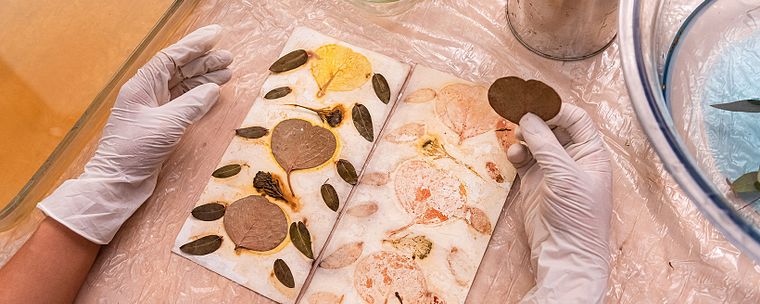
Create a sampler using different fixers, patterns, and tricks, and apply the botanical printing that you learned in the course onto an item of clothing.
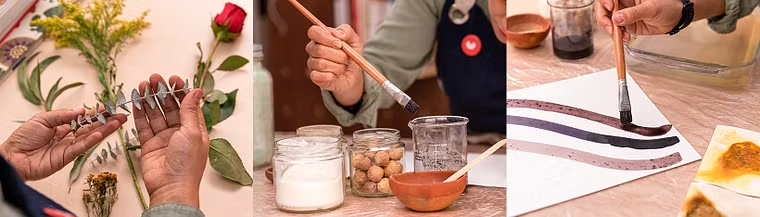
Projects by course students


Who is this online course for?
For artists, designers, and anyone interested in learning about an eco-printing technique.
Requirements and materials
You do not need any previous knowledge to take this course, but if you’ve worked with dyes before, this more advanced printing process will be easier for you.
As for materials, you’ll need natural fabric materials, a scale, toothpicks, metal tubes, mosaics, plastic sheets, white vinegar, ferrous sulfate, sodium bicarbonate, potassium alum, a pot, a vaporizer, soybeans, containers, plywood, aluminum, leaves, and flowers to print.
Reviews
- 10 days ago
Práctico y claro, útil para nuevas ideas con arte textil.
- 2 months ago
I found some of the translations to English poor. I felt the overall design of the course contained to much history and information about dyes, when I just wanted to know the best way to print leaves!!
- santi_23PLUS3 months ago
Me gusto el curso
- 3 months ago
Muy interesante. Explica paso a paso de forma clara
- 4 months ago
Me ha gustado mucho este curso. Todo explicado de manera muy clara, sencilla y ordenada. Me gusta mucho que nos invita a reutilizar cosas que ya tenemos, completando el que todo sea lo más sostenible posible. ¡Ahora a seguir experimentando!

Her focus is on studying and experimenting with colors that can be easily obtained from the world around us—such as indigo, annatto, and cochineal—and she draws inspiration from the textures found in nature.
Content
- U1
Introduction
- Presentation of your portrait
- Influences
- What will we do in the course?
- U2
Getting ready to print with plants
- Brief history and introduction to botanical printing
- Materials and tools
- Plant identification and collection
- Preparation of materials and work area
- U3
Washed and etched
- Introduction to washing and etching
- Alum etched
- Bitten with soybeans
- Ferrous sulfate etched
- U4
Botanical print
- Basic technique for printing on paper
- Basic technique for printing on fabric
- Effects with blankets
- Special effects
- Garment printing
- Final ironing and care
- FP
Final project
- Botanical Printing on Fabric and Paper
What to expect from a Domestika course
Learn at your own pace
Enjoy learning from home without a set schedule and with an easy-to-follow method. You set your own pace.
Learn from the best professionals
Learn valuable methods and techniques explained by top experts in the creative sector.
Meet expert teachers
Each expert teaches what they do best, with clear guidelines, true passion, and professional insight in every lesson.
Certificates
PLUSIf you're a Plus member, get a custom certificate signed by your teacher for every course. Share it on your portfolio, social media, or wherever you like.
Get front-row seats
Videos of the highest quality, so you don't miss a single detail. With unlimited access, you can watch them as many times as you need to perfect your technique.
Share knowledge and ideas
Ask questions, request feedback, or offer solutions. Share your learning experience with other students in the community who are as passionate about creativity as you are.
Connect with a global creative community
The community is home to millions of people from around the world who are curious and passionate about exploring and expressing their creativity.
Watch professionally produced courses
Domestika curates its teacher roster and produces every course in-house to ensure a high-quality online learning experience.
FAQs
Botanical printing is an artistic method that transfers the shapes and colors of plants onto textiles or paper using natural processes and mordants. It allows you to create unique, eco-friendly patterns with leaves, flowers, and sustainable chemicals.
This is an intermediate-level course recommended for those with basic knowledge of textile or art techniques, though no prior experience in botanical printing or natural dyeing is required.
You’ll need natural fabrics or papers, mordants like alum or iron sulfate, leaves and flowers, containers, gloves, a mask, and some kitchen tools. A well-ventilated workspace and basic protective gear are also recommended.
You’ll learn plant-based dyeing techniques, botanical printing on textiles and paper, how to use mordants, selecting and preparing plants, safe handling of chemicals, and creating sustainable artistic compositions.
The course teaches you how to extract and apply dyes like indigo on natural fibers, including the steps to prepare, dye, and fix colors artisanally and eco-consciously on garments and threads.
Ecoprint uses fresh or dried plants to transfer their pigments and shapes onto textiles through mordants and heat, producing unique and sustainable results different from traditional printing.
Not all plants are suitable. The course shows you how to identify species rich in tannins and pigments, how to responsibly harvest them, and which ones work best for botanical printing.