

Expressionism: 5 exercises to explore emotion through color

Let color speak for you: expressionism to explore your inner world
.
Expressionism is much more than an artistic movement: it is an invitation to look inward. Emerging in the late 19th and early 20th centuries, this artistic approach moves away from objective representation to focus on what is not seen: emotions, inner intensity and deep sensations.
Artists such as Edvard Munch, Egon Schiele, Wassily Kandinsky or Emil Nolde used color, line and form as an emotional language. They did not seek to copy reality, but to translate human experience into visceral and vibrant strokes.
In this article we propose 5 expressionist exercises to explore your emotions through color, without the need to master the technique. You just need to let yourself go and let the color speak for you.
The emotional power of color in art.
Color connects with our most intuitive part. Each tone can awaken a different emotion:
- Blue: calm or melancholy.
- Red: anger, passion or intensity.
- Yellow: energy or hope.
- Dark tones: restlessness or introspection.
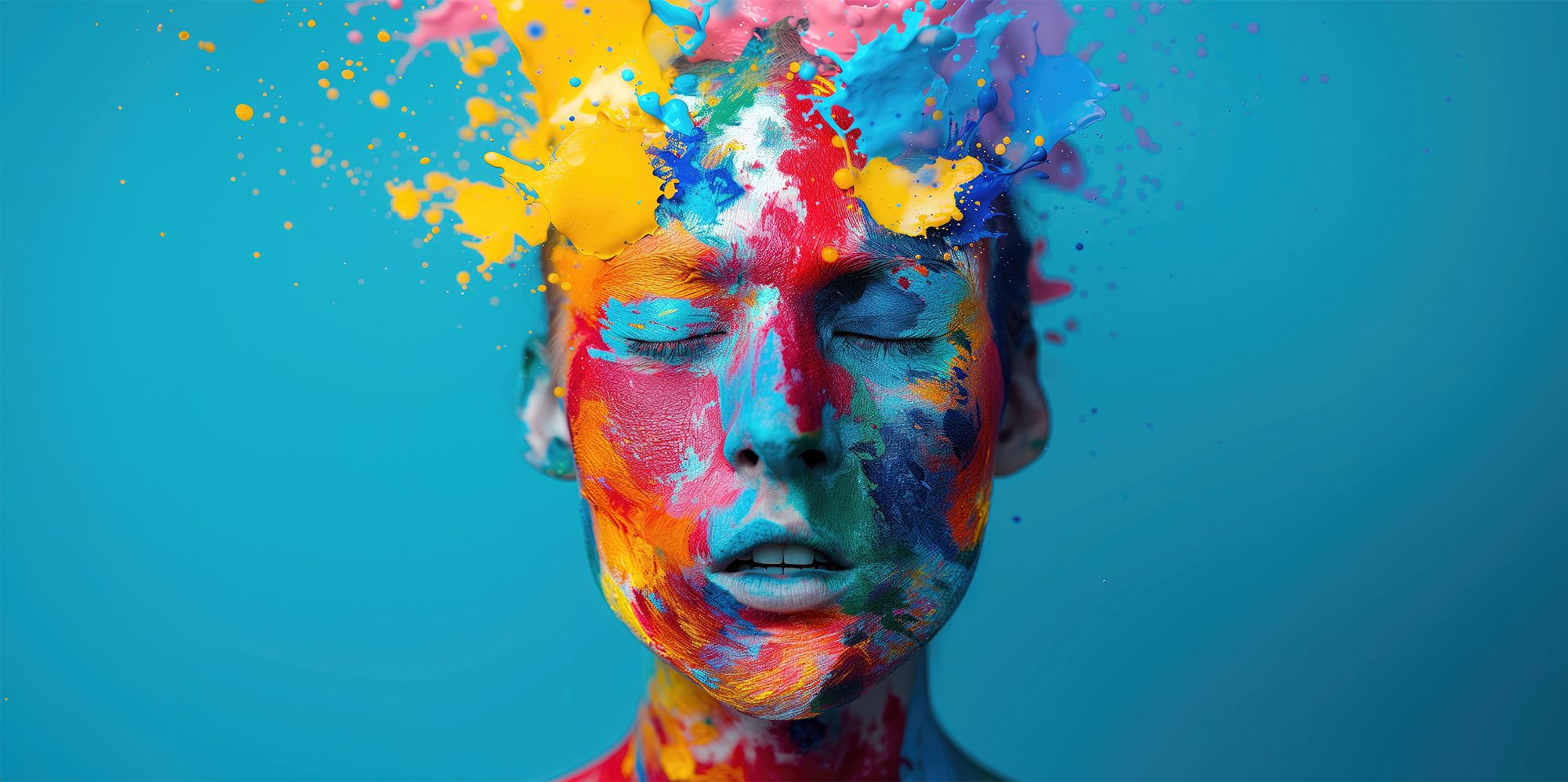
Color works as a direct emotional language. Working with it from an expressionist perspective can help you release tensions, understand your state of mind and open new avenues of self-knowledge. Art thus becomes a safe space to feel without filters.
5 exercises to explore emotion through color.
1. Draw your mood without thinking.
Materials: paper, acrylics or watercolors, brushes.
Select colors intuitively and paint without a plan: spots, lines, free strokes.
Don't look for figures-just let your emotion guide the movement. Then observe: what rhythms and colors appeared?
2. Color the opposite emotion.
Choose an emotion you have felt and work with colors you don't usually associate with it.
This exercise invites you to reinterpret your emotions and discover how color can transform them.

3. The emotional self-portrait.
Don't draw your physical features, but your inner state: tense lines, expansive stains, intense or muted colors.
Take inspiration from expressionist artists like Schiele or Munch. An emotional self-portrait is an abstract mirror rather than a literal image.
4. Listen to music and paint what you feel.
Choose a song and interpret its rhythms with color and spontaneous strokes.
This exercise fuses sound and color, allowing visual movement to emerge without filters.
5. Create your personal palette of emotions.
Select five emotions and assign them a color.
Create a composition that brings them together: an emotional palette that you can use as a reference for other days or projects.

How to connect these exercises with your artistic practice.
These exercises do not seek perfection, but authenticity. Expressionism is born from impulse and emotion. You can integrate them into painting, illustration, collage or design to develop a more personal and deeper practice.
Expressionism is a door to self-knowledge. By working with color as an emotional language, you can express what you can't always find words to say.
[Color not only paints what we see, but also what we feel. Dare to create from emotion[/b].


0 comments