


A History of Three Hundred Sketches
When the most influential designer of the 20th century learned that, in cinema, even geniuses have bosses
In the annals of film graphic design, few collaborations have produced as much wasted paper and as much passive-aggressive correspondence as the meeting between Stanley Kubrick and Saul Bass during the creation of the poster for The Shining. It's a story that perfectly illustrates that fundamental Hollywood truth: that the director's ego, like the universe itself, tends toward infinite expansion.
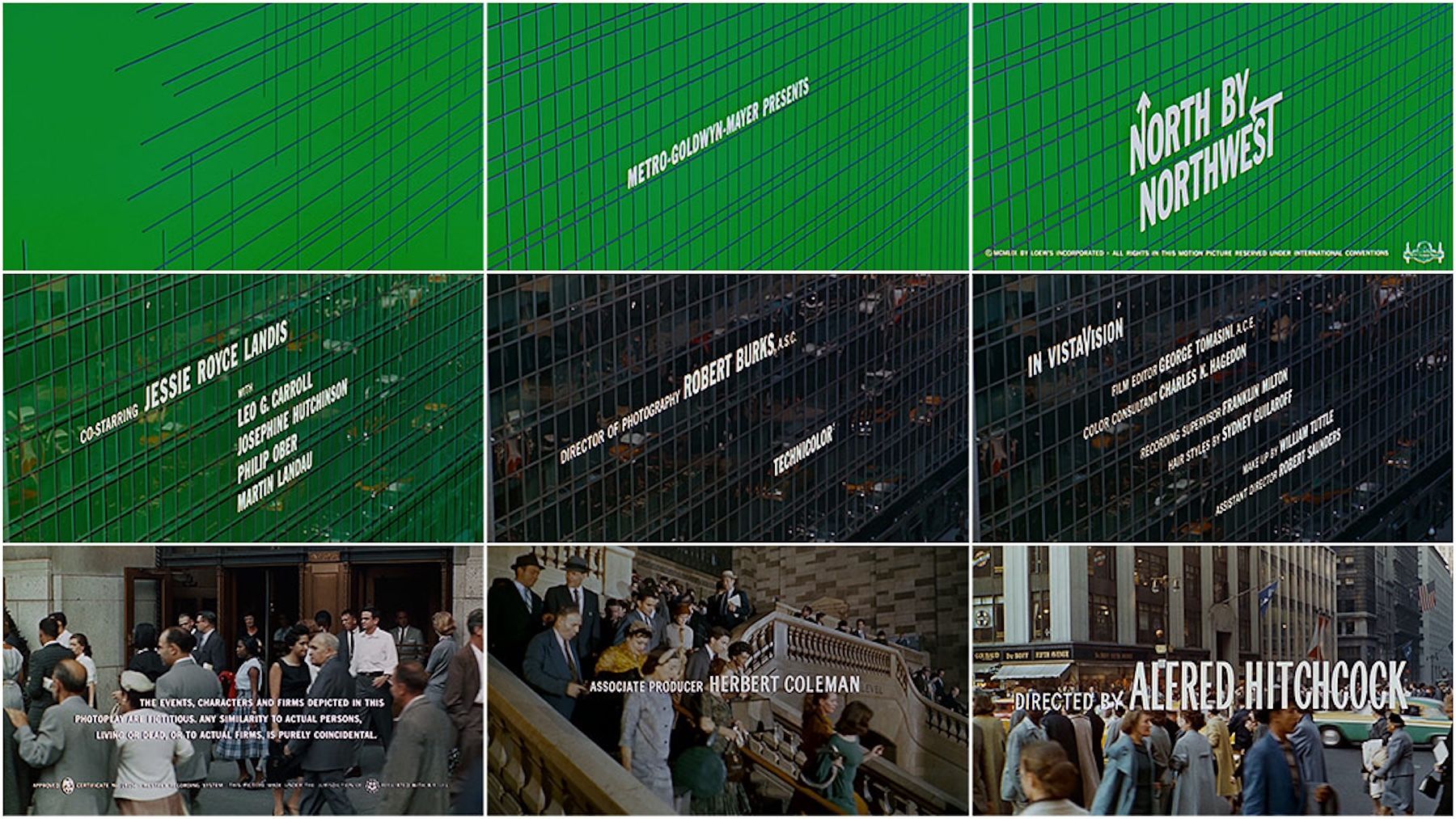
It was 1978, and Saul Bass - the man who had reduced Vertigo to a spiral, Anatomy of a Murder to a dismembered silhouette, and The Man with the Golden Arm to an angular, addicted arm - received what must have seemed like a routine assignment: design the poster for Stanley Kubrick's new film. Bass, accustomed to distilling cinematic essence into pure geometry, couldn't have known he was about to embark on an odyssey of revisions that would make Sisyphus look like a slacker.

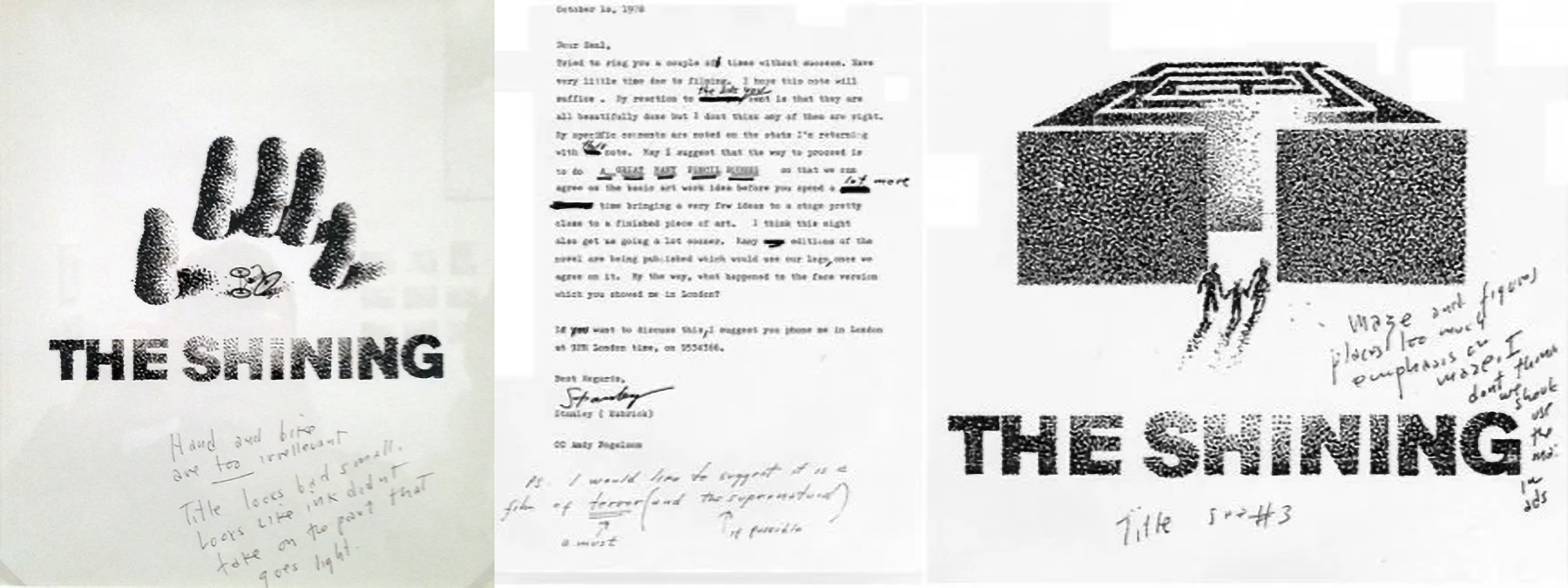
The first five concepts Bass sent employed pointillism, that impressionistic technique of constructing images from tiny dots. Bass, with the enthusiasm of an artist who believes he has captured something essential, described his favorite as "provocative, frightening and emotional." A month later - a full month, note, during which Bass presumably waited with the anxiety of a student awaiting grades - Kubrick's reply arrived in the form of a telegram. With the emotional warmth of a medical diagnosis, the director declared that the designs were "beautifully done" but "none of them are correct."
The Tyranny of Perfection.
What followed was a masterclass in creative micromanagement. Kubrick, the man who once made Tom Cruise repeat the same scene of walking through a door ninety-five times for Eyes Wide Shut, now turned his legendary obsession toward static art. He demanded "many, many pencil sketches" before Bass invested more time in finished designs. The director's handwritten notes revealed a mind that found flaws with a surgeon's precision: one design looked "like a science fiction movie" (a cardinal sin for a horror film); another, which cleverly left blank spaces in the word "Shining" to create a luminous effect, was rejected because the title looked "wrong" and was "hard to read."
Bass, the master of visual minimalism, the man who had taught the world that less is more, now found himself drawing sketch after sketch for a director who seemed to believe that more was barely enough. It was like asking Rothko to add more detail, or insisting that Mondrian needed more curves.

The Variations Marathon.
Kubrick's insistence on including a face-possibly influenced by the original cover of Stephen King's novel, though Kubrick would never admit to such a pedestrian influence-led Bass to produce what he himself estimated at three hundred variations. Three hundred. That's a figure worthy of contemplation. If Bass had spent just one hour on each variation, he would have invested nearly eight weeks of full-time work. If he spent two hours per design, we're talking about four months of labor. All for one poster.
The same designer who had captured Hitchcock's vertigo in a single hypnotic spiral now found himself redrawing the same face inside the same letter, over and over and over again, like a medieval monk illuminating the same manuscript into eternity. Bass, with the philosophical resignation of someone who has seen the abyss and decided to charge by the hour, later admitted that working with Stanley "drove me crazy" but that he deeply respected his obsession. It's the kind of statement survivors of traumatic experiences often make, a mixture of Stockholm syndrome and genuine professional admiration.

The Yellow of Authoritarianism.
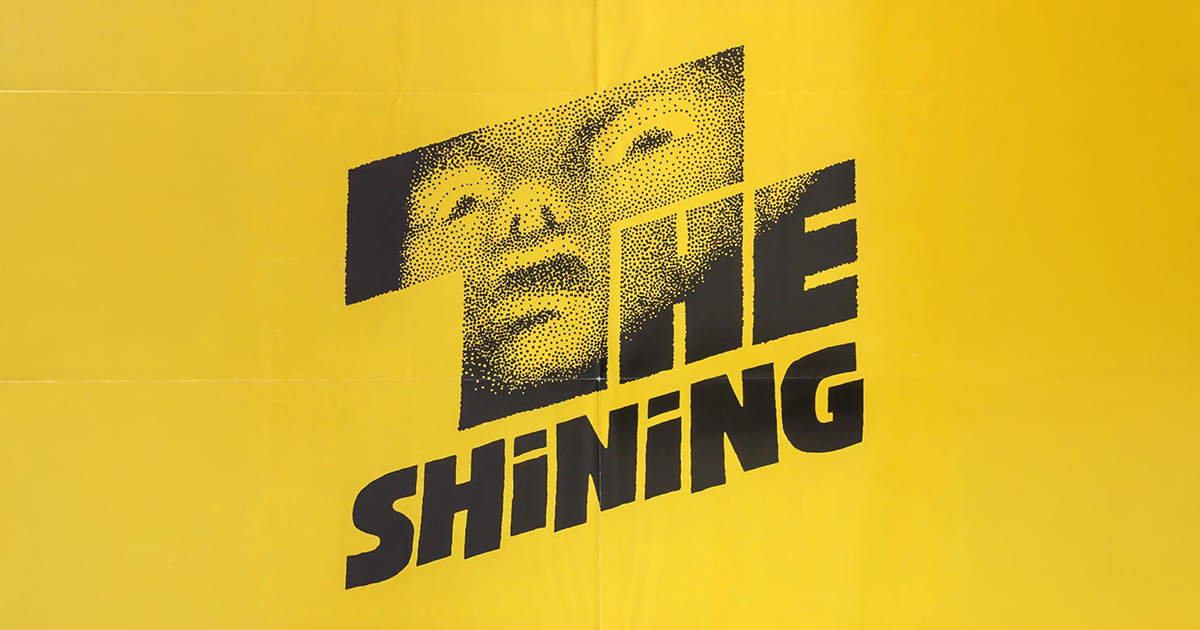
The final design - that terrified face, presumably of young Danny Torrance, trapped inside the monumental 'T' of the title, all against a background of garish yellow - came with its own Kubrickian justification. The yellow, the director explained with the seriousness of a Bauhaus semiotician, was not an aesthetic choice but a decision based on the psychology of urban traffic: 'If you look at danger and traffic signs, pretty much everywhere in the world, black and yellow mean something: It's authoritative.
So it was that one of cinema's most visionary directors decided that his psychological horror film should be advertised with the chromatic palette of a "Caution: Wet Floor" sign. The poster for a masterpiece of modern gothic horror conceptualized according to DOT principles.

The Fate of the Perfectionists.
This poster - the product of months of work, hundreds of iterations, and the gradual erosion of the sanity of one of America's most celebrated designers - had a peculiarly brief commercial life. For the international release and domestic editions, the world adopted a completely different image: Jack Nicholson, axe in hand, smashing through a splintered door with his iconic "Here's Johnny!" A straight shot of the film, no subtlety, no metaphor, no pointillism. No Bass. After three hundred variations, the worldwide audience ended up seeing a production photo that any marketing assistant could have culled in five minutes.
Bass's yellow poster remains a curious artifact in design history: a reminder that in film, an auteur's singular vision often requires the sacrifice of other singular visions on the altar of his genius. It is also a testament to the professional patience of Bass, who somehow managed not to murder Kubrick with an axe during the process, though one imagines the temptation must have been considerable, especially around variation number two hundred.
Today, when graphic designers complain of difficult clients and endless revisions, they can console themselves with the thought of Saul Bass, sitting in his studio, drawing his two hundred and fifty-third variation of a face inside a letter, while somewhere in England, Stanley Kubrick examined each stroke with a magnifying glass, preparing his next rejection telegram.
In the grand scheme of things, perhaps there was something appropriate about The Shining-a film about a man slowly driven mad by isolation and obsessive repetition-having a poster born of a process that nearly drove its designer mad through creative isolation and obsessive repetition. Kubrick, without realizing it or perhaps with full awareness, had turned the design process into a perfect metaphor for his own film. Which would be, in a way, even more disturbing.
Reference Links:
- The Shining (film)
- Saul Bass
- Stanley Kubrick
Courses:
Inspiration:
→ Article inspired by What's up with this poster for 'THE SHINING'? by Jonathan (Paper & Light).


0 comments