


Drawing every day: what really changes after 30 days
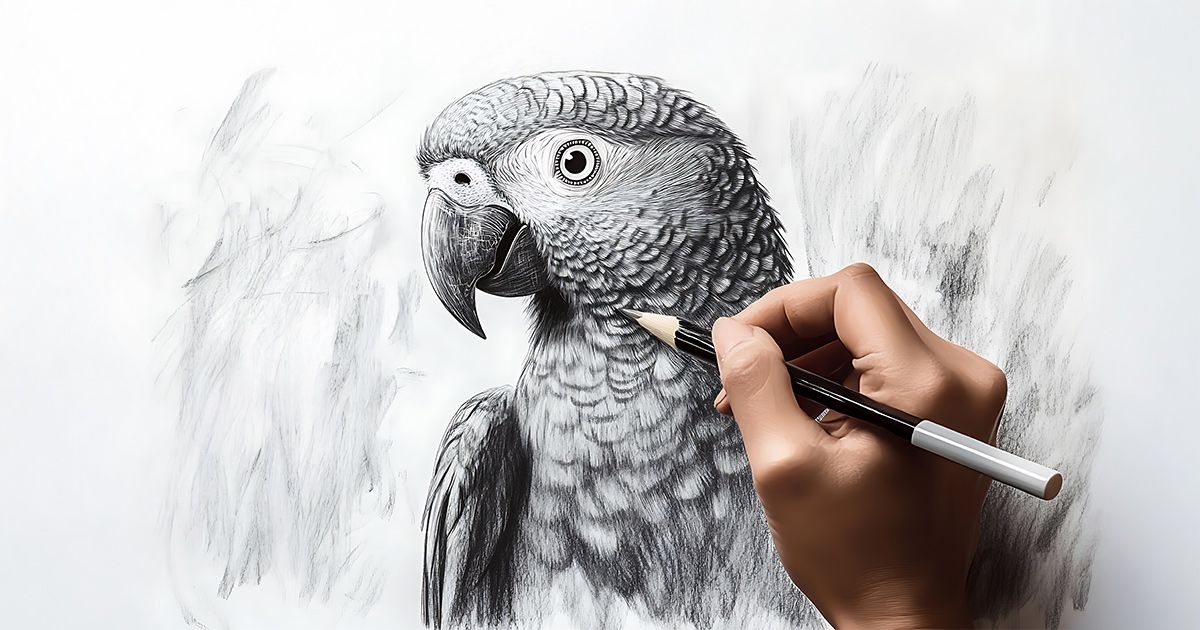
The 30-Day Drawing Challenge: A Transformative Habit or Just a Fad?
.
Over the past few years, the challenge to draw every day for 30 days has become a popular practice among illustrators, art students and people who simply want to improve their creativity. The idea seems simple: dedicate a small moment of the day to drawing and maintain that constancy for a month.
But an inevitable question arises: does it really make a difference in just 30 days or is it just another creative fad?
The reality is that a month of constant practice can produce more profound changes than it seems. It is not only about improving technically, but also about transforming the relationship we have with the creative process. Drawing every day changes the way we observe, think and make visual decisions.
In this article we analyze what technical, mental and creative changes usually appear after a month of daily drawing and why this small habit can have a much greater impact than expected.
What happens during the first few days.
The first few days are often the most difficult. Many people start the challenge with enthusiasm, but soon some of the usual resistances appear.
On the one hand there is the initial self-criticism. It is common to feel that the drawings do not live up to expectations or that the result does not justify the time invested. To this is added another frequent obstacle: the difficulty in finding ideas. When the challenge requires drawing every day, the brain must constantly generate concepts, something that can be exhausting at first.
There is also a practical challenge: finding time in the daily routine. Even dedicating 10 or 15 minutes requires reorganizing habits.
However, after a few days something interesting happens: the act of drawing starts to become a small ritual. The brain stops perceiving it as an extraordinary task and starts to integrate it as a natural part of the day.
Visible technical changes.
After two or three weeks, many people begin to notice clear technical improvements. One of the most obvious changes appears in the stroke. Daily repetition improves line control, reduces drawing stiffness and brings greater security to hand movement.
It also improves the understanding of proportions and composition. By drawing constantly, the eye becomes more sensitive to visual balances: negative spaces, relative sizes or distribution of elements.
Another important advance is the development of visual memory. The brain begins to store shapes, gestures and structures that can then be more easily retrieved. This allows drawing faster and with less dependence on references.
Over time, the creative process also becomes more agile: graphic decisions are made more quickly, freeing up mental energy for experimentation.
Mental and emotional changes.
Beyond technique, the most profound changes are usually psychological.
One of the most important is the reduction of fear of the blank page. When drawing becomes an everyday activity, the beginning is no longer intimidating.
It also increases creative confidence. By producing dozens of drawings in a few weeks, it becomes clear that they don't all have to be perfect to be valuable. This change in perspective reduces the perfectionism that often blocks the creative process.
Another key aspect is the sense of tangible progress. Comparing the first drawings with the last ones of the challenge allows to observe real improvements, which reinforces the motivation to keep practicing.
Changes in personal style.
As the days go by, something more difficult to measure also begins to appear: greater clarity about one's own style. By drawing frequently, visual preferences that were previously unnoticed are revealed. Perhaps certain themes are repeated, certain forms or a particular way of simplifying elements.
These recurring patterns are the basis of a visual language of their own. It does not mean that the style is completely defined in 30 days, but it does mean that it begins to take shape.
Constant practice makes it possible to detect which resources work best and which generate greater creative satisfaction.
Tips for maintaining the habit beyond 30 days.
If the goal is for the challenge to have a lasting impact, the important thing is to maintain the practice after the first month. Some strategies can help:
- Draw little but steadily. Between 10 and 20 minutes a day is usually enough to maintain the habit.
- Alternate technical exercises with free drawing. This avoids monotony and keeps curiosity active.
- Do not share everything on social networks. Some drawings can be just for experimenting without external pressure.
- Record progress. Saving drawings in chronological order allows you to observe the evolution over time.
After 30 days, the most important change is usually not just technical. What is truly transformative is the relationship that is established with the drawing. When drawing ceases to be an exceptional activity and becomes part of everyday life, creativity becomes more accessible. Fear decreases, curiosity increases and the process becomes more natural.
If you liked this article you may also be interested in these online drawing courses at Domestika.


+0 Kommentare