
Adiós
Adiós
di Alejandro Merodio @meraudio
- 111
- 0
- 0
Introducción
"Adiós" is a deeply introspective track by Danbec (Daniel Becerril), blending elements of electropop, dream pop, indie pop, and chillwave to create an atmosphere both nostalgic and emotionally resonant. The song, which may seem to address someone else, is in fact a farewell to a past version of the artist himself. I participated in this project as co-producer, recording engineer, and mixing engineer, helping shape its minimalist but carefully curated sound. Every timbre was chosen with intention, and each recording chain was designed to enhance the emotional honesty of the performance.

Materiales
The recording process was carried out in a hybrid analog/digital setup, prioritizing warmth, depth, and tonal character from the source. Vocals were captured using a Neumann TLM149 microphone, fed through a Shadow Hills Mono Gamma preamp and compressed with a UBK Fatso, achieving a smooth, saturated vocal tone that retained intimacy and subtle dynamic movement.
Synth layers were built using a Roland Juno-106 and a Dave Smith Prophet 8, both recorded through a Neve 1073 preamp and again through the UBK Fatso, which added harmonic depth and analog glue to their textures. The bass—a short scale Fender P Bass with muted roundwound strings—was masterfully interpreted by Adrián Ortega and tracked through a REDDI tube DI, then passed through the Neve 1073 and an Inward Connections opto compressor, producing a warm, melodic low end that anchors the mix with gentle movement.
Production duties were shared between Danbec and myself. The arrangement was intentionally minimalistic—fewer elements, more space—with a strong focus on sound quality and performance nuance. The final slowdown of the song reinforces its reflective tone, allowing the emotional weight of the farewell to settle in slowly.
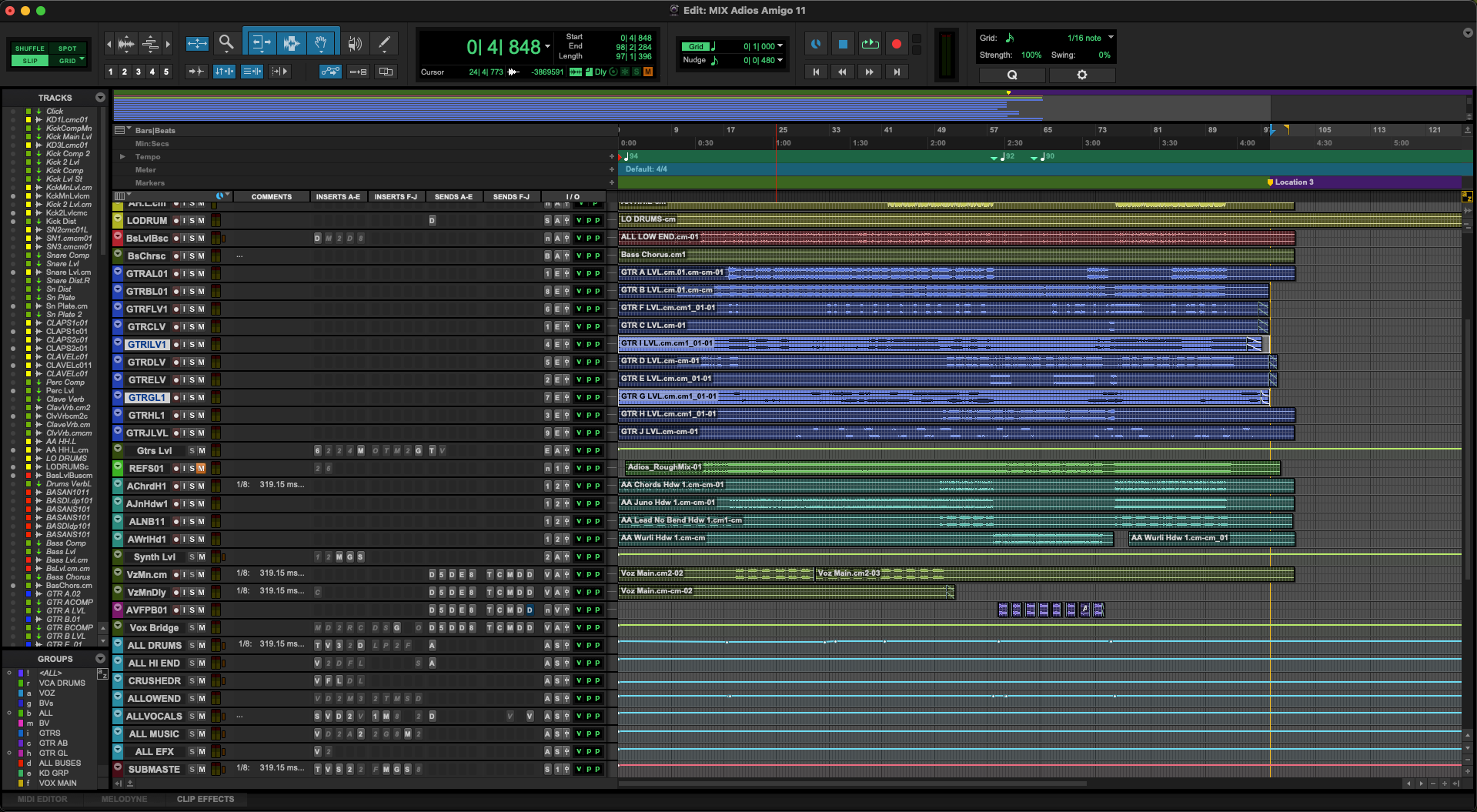
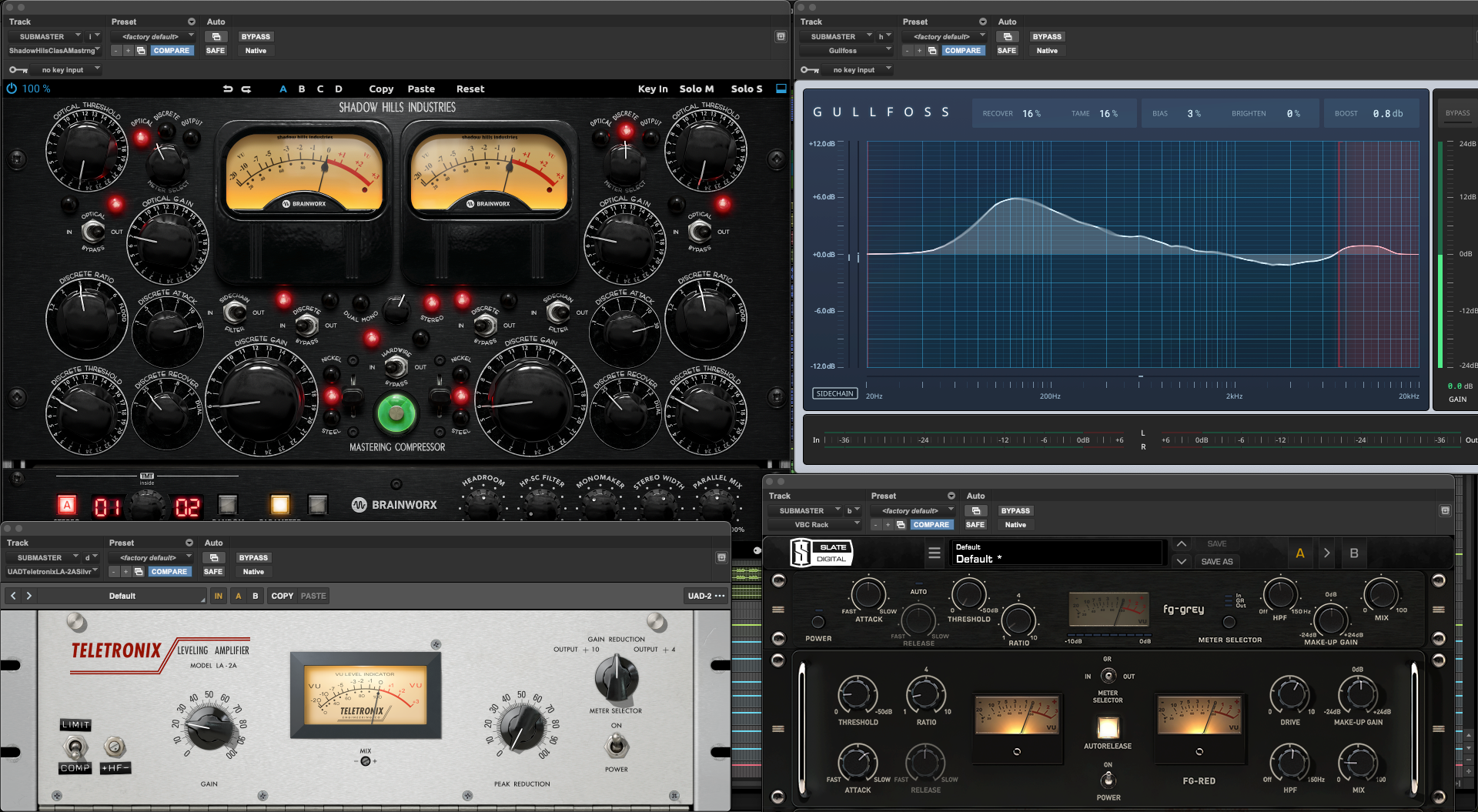
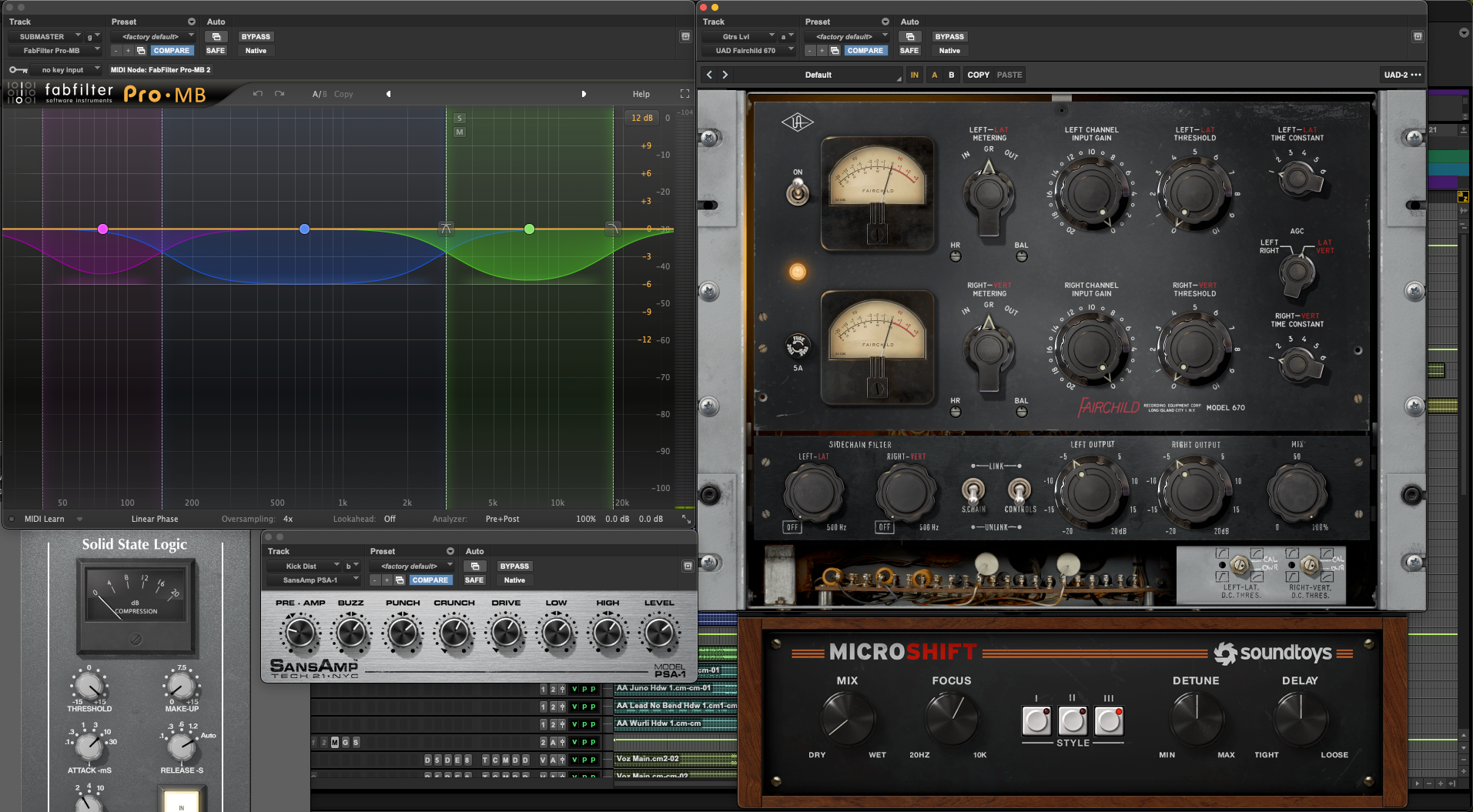
The mixing stage was handled in Pro Tools, using a refined set of tools to preserve the intimate feel of the production while giving it dimension and depth. I worked primarily with plugins from UAD, FabFilter, Acustica Audio, Oeksound, and Soundtoys, using EQ, compression, harmonic enhancement, and modulation to subtly enhance each element without overprocessing. Reverbs and delays were chosen to complement the dreamy atmosphere of the track while automation helped shape the dynamic arc—especially in the decelerating final section.

Recording & Co-Production
Recording & Co-Production:
The process began with the selection and design of tonal chains for each instrument, aiming to capture rich, emotionally resonant textures from the source. For vocals, the TLM149–Mono Gamma–UBK Fatso chain delivered a silky, slightly saturated tone that preserved expressiveness. The synths—Juno-106 and Prophet 8—were carefully layered, each passed through a Neve 1073 and compressed with the UBK Fatso to unify their timbre and soften transients. The bass was recorded through a REDDI tube DI for harmonic fullness, enhanced further by the Neve and opto compression, providing a stable, rounded presence.
As co-producers, Danbec and I decided to focus on restraint and space, ensuring that every element had meaning and function. The overall structure remained simple, but emotionally loaded—culminating in a gradual tempo deceleration that adds weight to the track’s lyrical farewell.

Mixing
1. Mixing took place in Pro Tools, beginning with careful gain staging and a clean session structure based on grouped stem folders (bass, synths, lead vocals, background vocals, FX). A static balance was achieved using only volume and panning to establish the spatial and emotional foundation of the track, followed by early mixbus processing for cohesion, warmth, and dynamic glue.
2. Individual elements were then processed with a combination of analog-style EQs, multiband compression, harmonic saturation, and subtractive EQ to enhance clarity and separation while retaining the organic, melancholic tone of the production. The synths were treated with time-based effects like modulated delay and lush reverb, creating a blurred, dreamlike texture around the voice without overpowering it.
3. The vocal processing was especially nuanced. In the main vocal chain, I used transparent EQ to shape the tone, followed by serial and parallel compression to control dynamics while preserving intimacy. A parallel chain was used to add richness and width, including subtle doubling, chorus, and parallel saturation to reinforce the emotional weight without overwhelming the softness of the delivery. Carefully blended de-essing and dynamic EQ ensured clarity and air without harshness.
4. Dedicated automation played a key role in maintaining interest and guiding the emotional arc. Vocal levels were manually automated throughout the song to emphasize key phrases and transitions, especially in the final ritardando section. Additionally, parameters such as reverb send level, stereo width, harmonic intensity, and even compressor thresholds were automated dynamically to respond to the narrative flow—tightening in verses and expanding in choruses or instrumental breaks.
5. Bus processing across vocals, synths, and FX was tailored to each group’s needs, using light glue compression, parallel saturation, and dynamic transient control to maintain cohesion without sacrificing the softness and vulnerability that define the song’s character. The mix was finalized with detailed attention to transitions, ambience decay, and fades, particularly in the ending slowdown, where reverb tails and volume curves were sculpted to support the fading, introspective tone of the farewell.


0 commenti
Accedi o iscriviti gratuitamente per commentare