
Bob Marley
Bob Marley
by Dean Harrison @igloonaut
- 455
- 19
- 2
Introduction
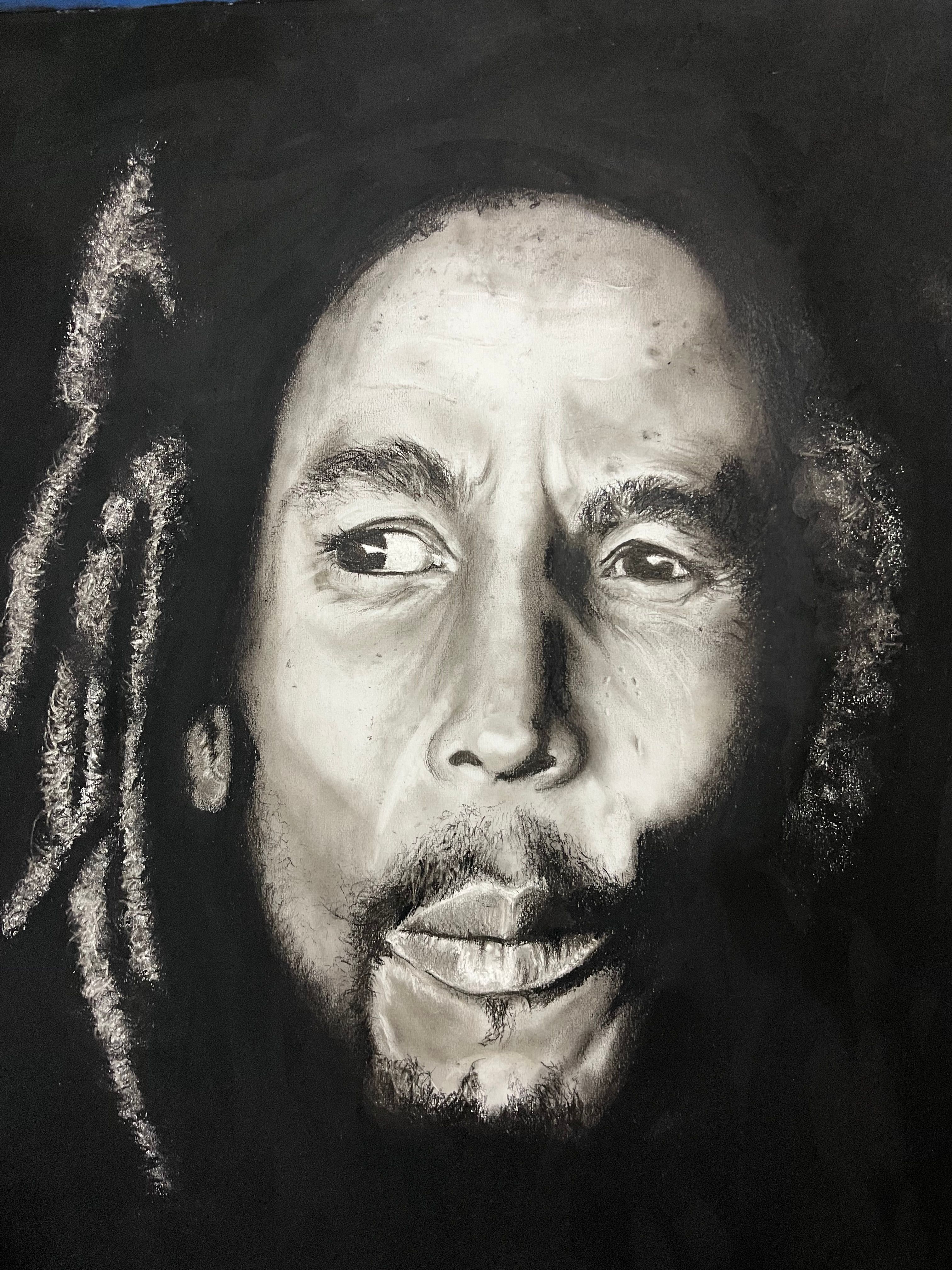
I have been attending a local Charcoal art class for almost 2 years now. I never had any formal training before this and the little I did know about charcoal put me off because my limited knowledge led me to believe I could never achieve the levels of detail that I enjoy. After attending a weekend workshop where I was exposed to the grid method and various tools other than purely vine and willow charcoals, I decided to learn more. I dabbled with a skull drawing and then a portrait of my grandfather in his WWII uniform. I then moved from A3 to A2 and I found myself enjoying the process even more, even though I struggle with imposter syndrome I am at last finding more confidence as with each piece, achieving more detail and gaining additional skills. I decided I would draw portraits of musicians whose work has touched me in some form or another. And to date I have complete a few. After watching this course I picked up some additional techniques that I have incorporated into my work, which have help to elevate my skills and improve the finished pieces, specifically my portrait of Bob Marley.
Supplies
Primeart A2 160gsm Acid-Free white paper
HB Pencil
Ruler
Various Soft charcoal pencils
Soft compressed charcoal sticks
Vine and willow sticks
Smudging brush
Tombow Mono Zero eraser
Kneadable eraser
Electric eraser
Started before the class
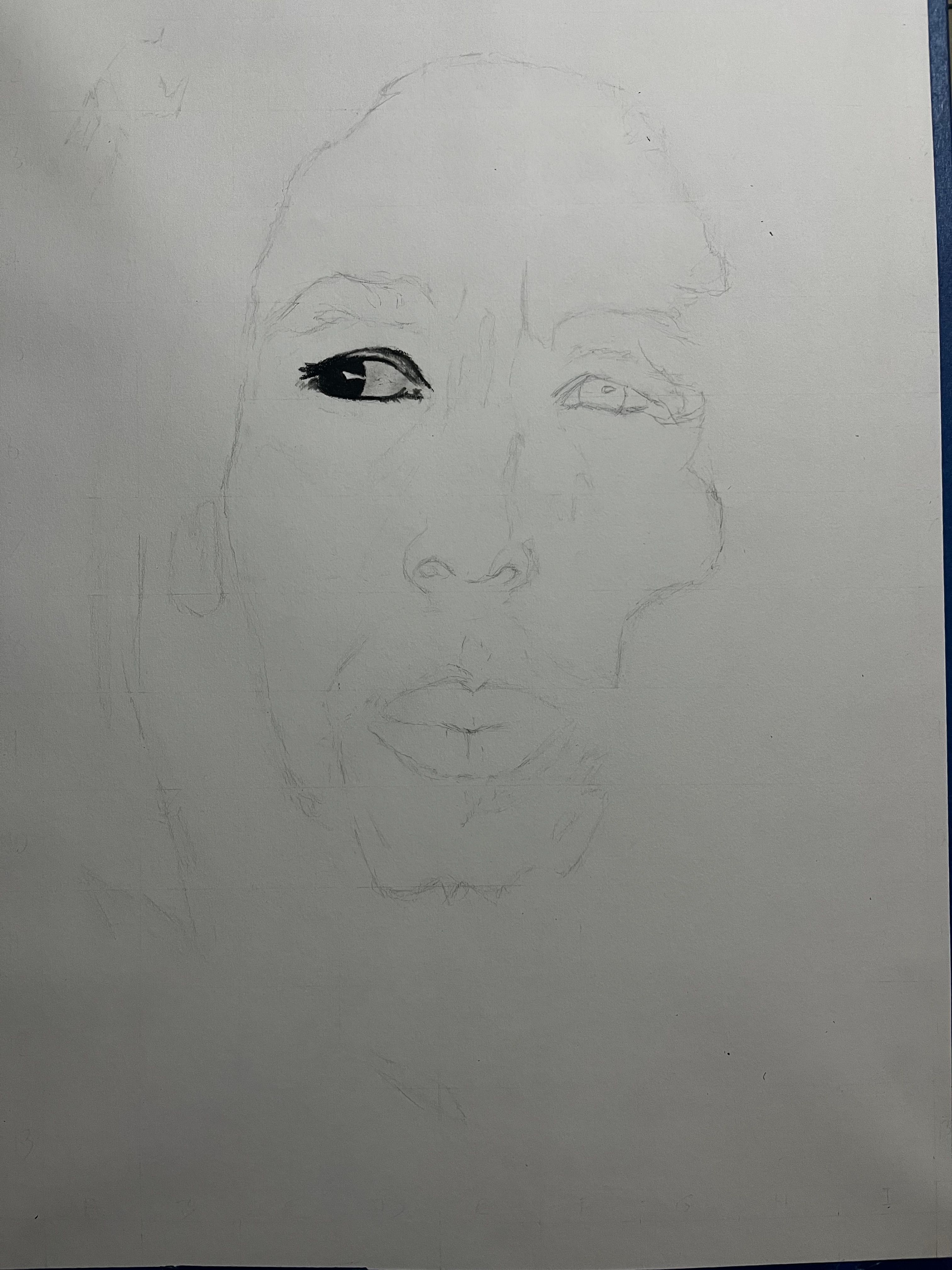
The source photograph is very dark, with only Marley's face lit and visible, and although it is clearly him I felt I wanted to incorporate his dreadlocks. Using other source images and photoshop I managed added in some references of his dreadlocks, which I then incorporated into my final piece. I don't print out the piece as I used my Macbook to navigate around the reference and the grid. I grided up my paper and did a basic line drawing using the HB pencil. Once I was happy with my basic line drawing I erased the grid and started adding Charcoal.
Also I had not started this course when started working on the piece and have historically always rushed to start on the details before toning and blocking in the overall image. This is something that I have started to reverse in my newer pieces.
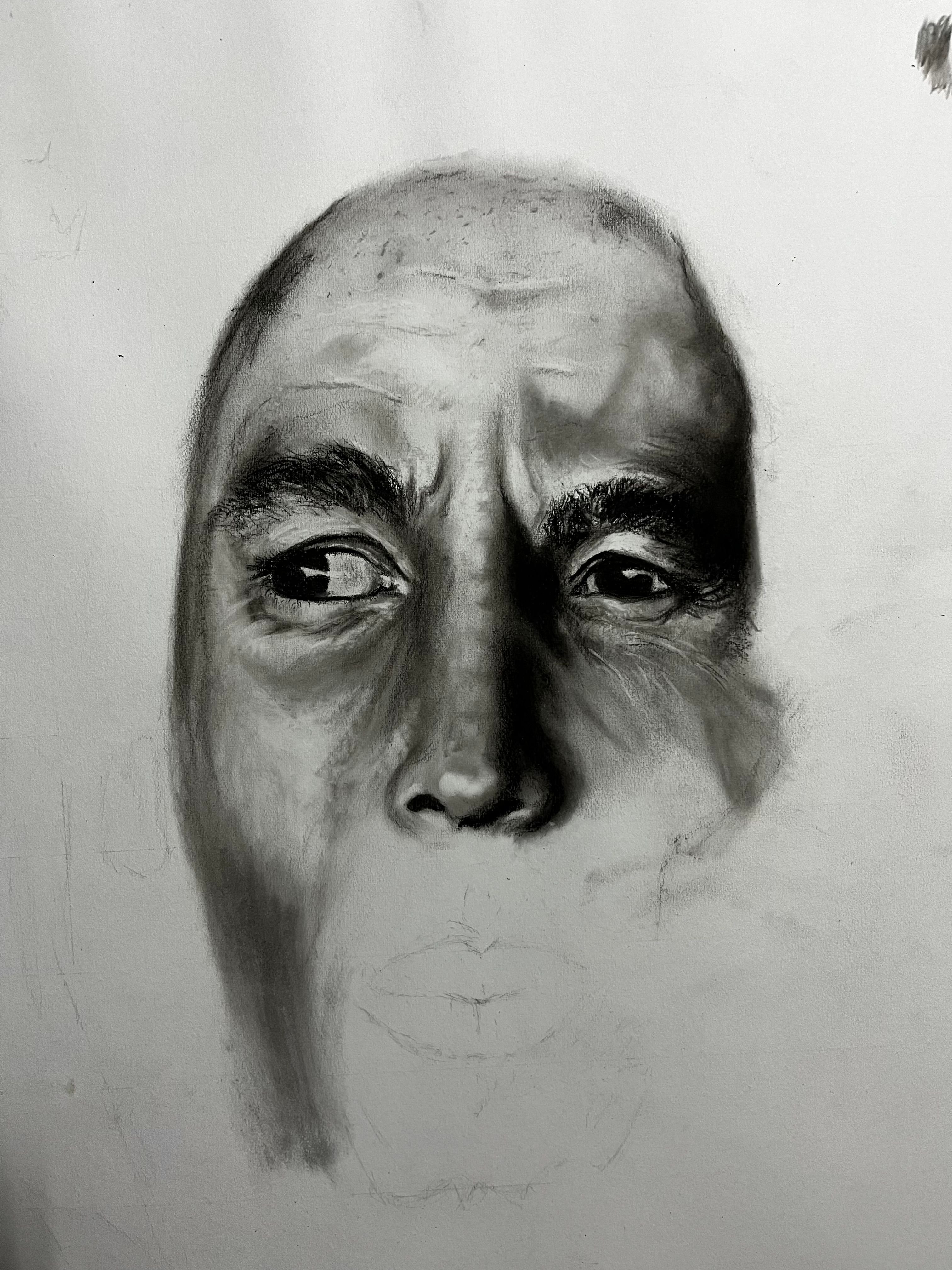
Working from top left and skilling up with a brush
I tend to work from the top left corner and work my way down and to the right as I progress with the piece. Adding in the use of a paintbrush has leveled up my abilities especially when it comes to adding tones and subtle shading across the face for example.
Finishing up
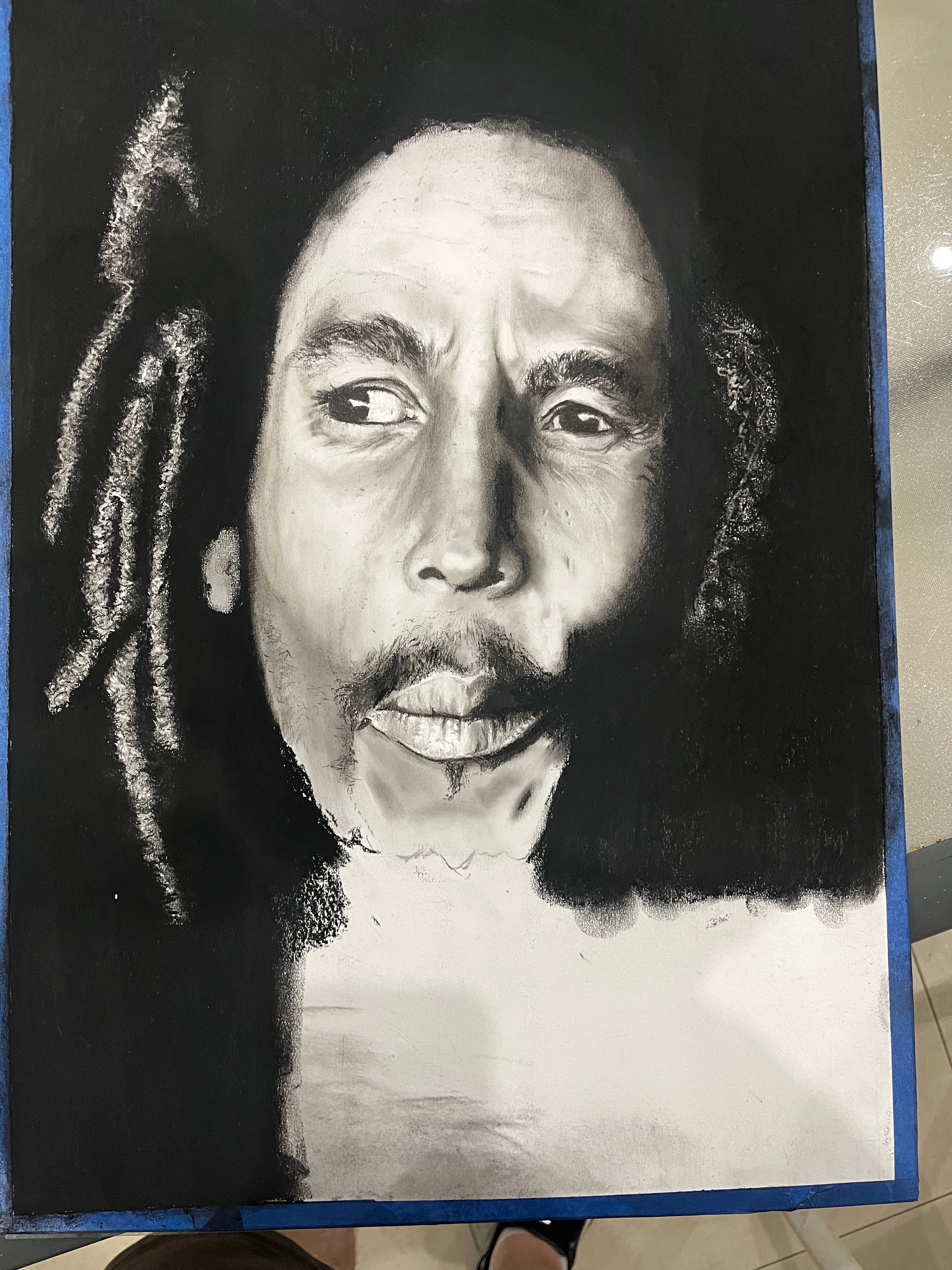
I developed my technique for the dreadlocks and practiced them on a separate piece of paper before attempting them on the actual piece, I then added in the deep black background.
With the way I work I find it very useful to step back from the piece and looking at it from a few meters away, checking it against the reference. I do this all along the way with the process but very specifically when I am at the end. This allows me to correct and see the image, until I find that there is no more to change, this is when I know I am done.
Completed piece and framing
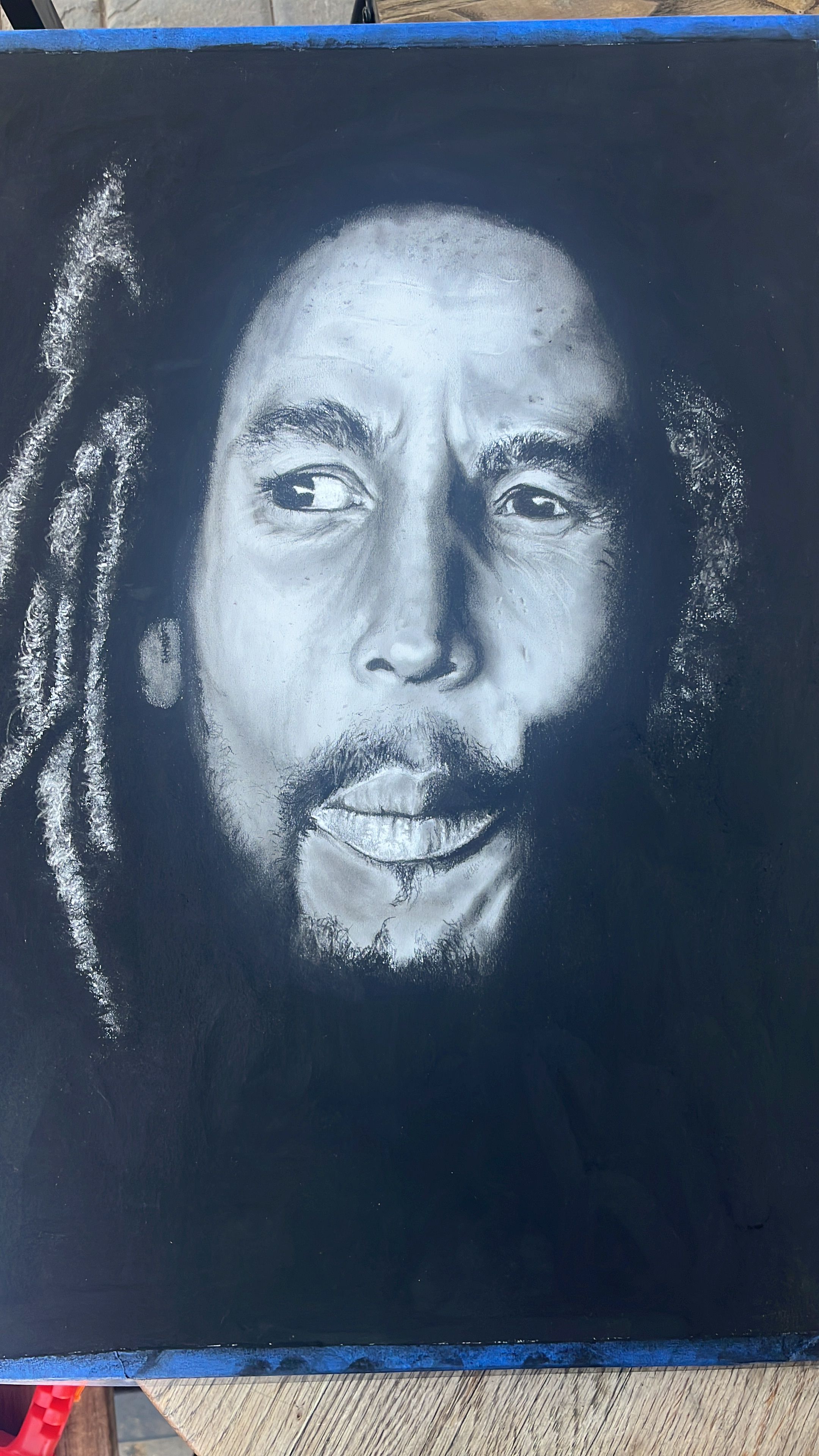
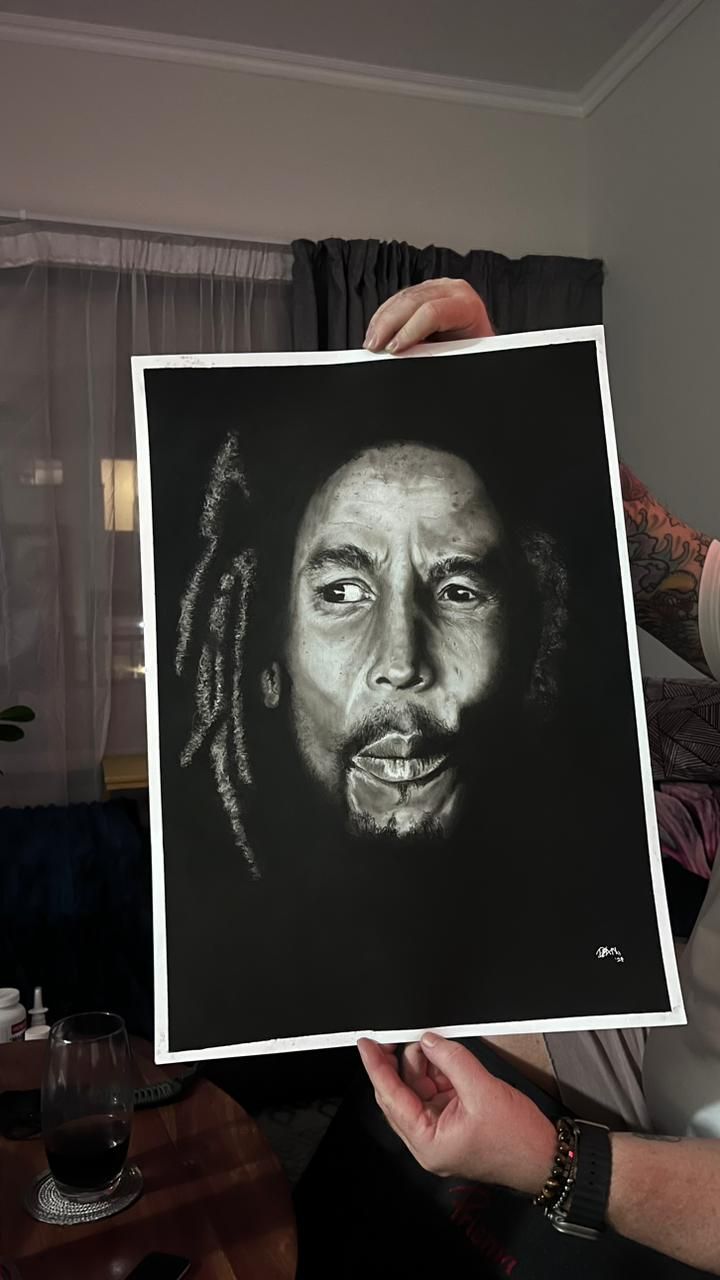
I am super proud of how this piece came out and find that this course really added to my techniques and capabilities. Gridding really helps me to achieve the accuracy I want, and a find the better the job I do at this step the more accurate the piece will be. I am still learning not to rush into the detail, but also find it is important to build your confidence with the materials and process and find your preferred workflow.
A final bit of advice is to frame your work! It more often than not elevates the piece and is also a great way to preserve work that you are proud of. Obviously, if you want to share or sell prints make sure you scan it before framing and If possible take it to a professional framer.


2 comments
woww! 😮 amazing so well done! 👏🏾👏🏾✨
@sarmz_v thank you
Log in or join for Free to comment