Analog and Digital Pattern Design
A course by Juan Díaz-Faes , Illustrator


Learn to create repetition designs with Illustrator, Photoshop and manual printing



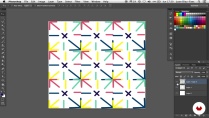
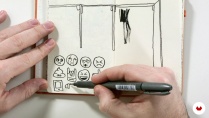
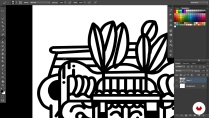
In this course, the Illustrator Juan Díaz-Faes will teach you to understand the function of different types of patterns. You will learn the basic rules of repetition using digital and analog exercises to finally elaborate a much more complex pattern at the end of the course.
What will you learn in this online course?
15 lessons & 10 downloads

- 100% positive reviews (267)
- 3,191 students
- 15 lessons (3h 14m)
- 10 additional resources (8 files)
- Online and at your own pace
- Available on the app
- Audio: Spanish
- Spanish · English · Portuguese · German · French · Italian · Polish · Dutch · Turkish · Romanian · Indonesian
- Level: Beginner
- Unlimited access forever
Recommended software & tools for this course
 Adobe Illustrator
 Adobe Photoshop
What is this course's project?
Create a complex digital pattern that serves to illustrate a book cover, a poster or apply it on textile support.

Projects by course students


Who is this online course for?
To creative professionals who want to take their illustrations and designs to a new dimension. Also to people who want to start in the basic options of Illustrator and Photoshop learning to create simple drawings in one ink.
Requirements and materials
A computer, graphic tablet, Illustrator, Photoshop, ruler, pencil, markers, acrylic paint, stamping roller, scalpel or cutter, Rubber Eva, gouge and surfaces to stamp as fabric or paper.

Reviews

Juan Díaz-Faes
A course by Juan Díaz-Faes
Juan Díaz-Faes has worked as an illustrator since 2011. A graduate in Fine Arts in 2005, his work as an illustrator tends to have a great graphic and narrative weight. Graphic due to his interest in posters and advertising and narrative thanks to the years he worked as camera operator and comic artist. It is also part of the collective Ultrarradio, where they publish works to new artists and disseminate the culture of drawing and comics with events, workshops, publications or exhibitions. Works monthly in MUWOM or in magazines such as Yorokobu and Ling. His illustrations and patterns have been part of advertising campaigns for brands such as Mini, Bombay Sapphire, BBK, Summer Fest, Vodafone or Samsung.
Content
-
U1
Introduction
-
Presentation and pattern exercises
-
Influences
-
-
U2
Basic Patterns
-
First contact, what is a pattern?
-
We started working
-
Basic Pattern in Illustrator
-
Basic Pattern in Photoshop
-
-
U3
Analog Pattern (stamping for a rainy weekend)
-
Preparing the design in Photoshop
-
Material
-
Creating the pieces of the Monotypes
-
Stamping the Monotype
-
-
U4
Complex Digital Pattern (analog and digital)
-
Decide the theme search for references and draw elements
-
Decide the theme search for references and draw elements (part II)
-
Compose drawings
-
Putting Color
-
Final composition and mockup
-
-
FP
Final project
-
Analog and digital pattern design
-
What to expect from a Domestika course
-
Learn at your own pace
Enjoy learning from home without a set schedule and with an easy-to-follow method. You set your own pace.
-
Learn from the best professionals
Learn valuable methods and techniques explained by top experts in the creative sector.
-
Meet expert teachers
Each expert teaches what they do best, with clear guidelines, true passion, and professional insight in every lesson.
-
Certificates
PlusIf you're a Plus member, get a custom certificate signed by your teacher for every course. Share it on your portfolio, social media, or wherever you like.
-
Get front-row seats
Videos of the highest quality, so you don't miss a single detail. With unlimited access, you can watch them as many times as you need to perfect your technique.
-
Share knowledge and ideas
Ask questions, request feedback, or offer solutions. Share your learning experience with other students in the community who are as passionate about creativity as you are.
-
Connect with a global creative community
The community is home to millions of people from around the world who are curious and passionate about exploring and expressing their creativity.
-
Watch professionally produced courses
Domestika curates its teacher roster and produces every course in-house to ensure a high-quality online learning experience.
FAQs
What are Domestika's online courses?
Domestika courses are online classes that allow you to learn new skills and create incredible projects. All our courses include the opportunity to share your work with other students and/or teachers, creating an active learning community. We offer different formats:
Original Courses: Complete classes that combine videos, texts, and educational materials to complete a specific project from start to finish.
Basics Courses: Specialized training where you master specific software tools step by step.
Specialization Courses: Learning paths with various expert teachers on the same topic, perfect for becoming a specialist by learning from different approaches.
Guided Courses: Practical experiences ideal for directly acquiring specific skills.
Intensive Courses (Deep Dives): New creative processes based on artificial intelligence tools in an accessible format for in-depth and dynamic understanding.
When do the courses start and when do they finish?
All courses are 100% online, so once they're published, courses start and finish whenever you want. You set the pace of the class. You can go back to review what interests you most and skip what you already know, ask questions, answer questions, share your projects, and more.
What do Domestika's courses include?
The courses are divided into different units. Each one includes lessons, informational text, tasks, and practice exercises to help you carry out your project step by step, with additional complementary resources and downloads. You'll also have access to an exclusive forum where you can interact with the teacher and with other students, as well as share your work and your course project, creating a community around the course.
Have you been given a course?
You can redeem the course you received by accessing the redeeming page and entering your gift code.
 Adobe Illustrator
 Adobe Photoshop
Excelente curso
Muy útil para conocer el mundo de los patrones, tiene buenos consejos y te enseña cómo usar diversas herramientas.
Fantastic course
me encantó
Me Ha gustado Mucho, lo recomiendo.