Scenographic Photography
A course by Fernando Bayona , Photographer



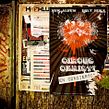

Build your own set and take photographs with a pictorial aesthetic

Fernando Bayona, Artist specialized in Visual Design, will teach you the creative process of a photographic-artistic project from its conception to its materialization.
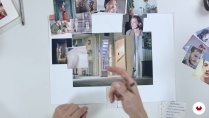
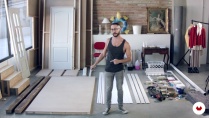
To do this, you will learn to develop an initial idea and carry it out in the form of set design within a studio or set, you will know the types of materials and tools necessary for construction, you will know how to perform a casting of actors using new technologies and tools. second-hand markets in which to find props.
Once your photography set is created, you will discover the lighting techniques of a professional shooting and learn to retouch your images with Lightroom and Photoshop.
What will you learn in this online course?
16 lessons & 18 downloads




- 99% positive reviews (79)
- 1,630 students
- 16 lessons (3h 30m)
- 18 additional resources (14 files)
- Online and at your own pace
- Available on the app
- Audio: Spanish
- Spanish · English · Portuguese
- Level: Advanced
- Unlimited access forever
Recommended software & tools for this course
 Adobe Lightroom
 Adobe Photoshop
What is this course's project?
You will have to make a low cost scenography and a photo session with the theme and the aesthetics that you choose.

Projects by course students


Who is this online course for?
A Photographers, Art Directors, Interior Architects and Designers who want to learn how to create their own scenography in order to recreate an aesthetic or particular location taking care of the light, space, objects and subjects of the scene at a reduced price.
Requirements and materials
Previous knowledge of Photography is needed as well as lighting and camera technical equipment and materials for the construction of the set.

Reviews

Fernando Bayona
A course by Fernando Bayona
Fernando Bayona lives and works between Granada and Madrid.
From his childhood he showed great interest in visual arts, which led him to pursue artistic studies in Fine Arts at the University of Granada, graduating both in Spain and Italy. He completed his artistic training with courses, stays and scholarships in various European countries, as well as a master's degree in photography and visual design at the NABA University in Milan.
His artistic work is based on the production of works based on everyday objects and experiences, anchored in the simplest of daily routines. Most of his works investigate the reflection on human-loving relationships and the identity of the subject.
It addresses love as a key concept of human behavior and its consequences, exploring the most intimate aspects of our relationship with others. The time, either its memory or the passage of it, its alteration, modification or use by history, the organs of power or the viewer itself, is another of the recurring themes in his work.
His photographic images are characterized by a careful staging, where the sets and the elements that are inserted in them are as important as the characters that develop the action. His aesthetics, halfway between the classical pictorial tradition and the more kitsch pop, define his creations.
His works have been exhibited in numerous exhibition centers in Miami, New York, Buenos Aires, Brussels, Berlin, Milan, Rome, Osaka, Tunisia, Madrid, Barcelona, Valencia or Bilbao, as well as in international fairs such as ARCO, ART MIAMI or BASEL .
His projects have been distinguished with numerous scholarships, among which the Manuel Rivera, Iniciarte or BilbaoArte in Spain, Eberhard and BSI in Switzerland, Kabushiki Kaisha in Japan or the Magnum Agency and NABA in Italy, as well as national and international awards. , such as Estampa de la Comunidad de Madrid, Unicaja or SONY World Photography Awards.
His work can be found in numerous private collections, museums and institutions such as the CA2M in Madrid, BSI, Unicaja, Eberhard or the Centro Internazionale di Fotografía (FORMA) in Milan.
He has published 5 books in which his entire career as an artist is collected.
Content
-
U1
Introduction
-
Fernando Bayona I
-
Fernando Bayona II
-
References
-
-
U2
Development of the idea
-
Development of the idea
-
Creation of sketches
-
Casting and team selection
-
-
U3
Creation of the scenery
-
materials
-
Building
-
Props
-
-
U4
Lighting and shooting
-
illumination
-
Photo shooting
-
-
U5
Digital postproduction
-
Revealed in Lightroom
-
Postproduction in Photoshop I
-
Postproduction in Photoshop II
-
Postproduction in Photoshop III
-
Postproduction in Photoshop IV
-
-
FP
Final project
-
Scenographic Photography
-
What to expect from a Domestika course
-
Learn at your own pace
Enjoy learning from home without a set schedule and with an easy-to-follow method. You set your own pace.
-
Learn from the best professionals
Learn valuable methods and techniques explained by top experts in the creative sector.
-
Meet expert teachers
Each expert teaches what they do best, with clear guidelines, true passion, and professional insight in every lesson.
-
Certificates
PlusIf you're a Plus member, get a custom certificate signed by your teacher for every course. Share it on your portfolio, social media, or wherever you like.
-
Get front-row seats
Videos of the highest quality, so you don't miss a single detail. With unlimited access, you can watch them as many times as you need to perfect your technique.
-
Share knowledge and ideas
Ask questions, request feedback, or offer solutions. Share your learning experience with other students in the community who are as passionate about creativity as you are.
-
Connect with a global creative community
The community is home to millions of people from around the world who are curious and passionate about exploring and expressing their creativity.
-
Watch professionally produced courses
Domestika curates its teacher roster and produces every course in-house to ensure a high-quality online learning experience.
FAQs
Contemporary staged photography blends elements of theatrical set design, visual storytelling, and directing actors to create conceptual images, unlike traditional photography which usually captures reality as it is.
Yes, this course is designed for intermediate students who already have basic photography skills and want to deepen their knowledge of staged techniques and complex artistic production.
You’ll learn how to plan, produce, and post-produce staged photo series, build sets with limited resources, direct models, develop visual narratives, and apply lighting, composition, and artistic inspiration techniques.
You’ll need a digital camera, access to editing software (Lightroom and Photoshop), basic set materials (cardboard, fabric, recycled wood), and props depending on your project.
Yes, the course teaches strategies to make the most of your resources, like reusing recycled materials, borrowing props, and building budget-friendly yet striking sets.
You’ll learn to create complex characters, direct poses and expressions, and use set elements and lighting to enhance the narrative and psychological depth of portraits.
Yes, professional lighting setups like chiaroscuro, flash use, modifiers, and fill light are explored to create dramatic and realistic atmospheres in photo shoots.
 Adobe Lightroom
 Adobe Photoshop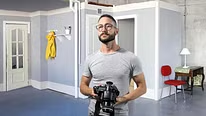
Muy buen curso uno se queda con ganas de mas..-
explicación perfecta
muy recomendable como punto de partida
I got a good idea. thank you
Great source,very informative
Excelente curso, creativo, profesional, didáctico, pero sobre todo cuenta con enormes herramientas y recursos para poner a volar nuestra imaginación a la hora de crear escenografías para nuestras sesiones fotográficas.
Muy buen curso, recomendado!