Introduction to Italic Calligraphy
A course by Belén La Rivera , Graphic Designer and Typography Artist

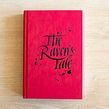



Learn to express yourself in italic letters by exploring shapes and variations


The word "cursive" comes from the Latin curro, meaning "to run." This can be explained by the agility necessary to obtain this style of writing. In theory, the round calligraphic letters were achieved with more care, although paradoxically, some of the most elaborate letters (which therefore required more care and attention) are the inclined ones. Designer and typographer Belén La Rivera is a specialist in calligraphy, a discipline that has helped her not only gain agility in her strokes, but also add personality to her letters and fill her messages with expressiveness.
In this online course, Belén shows you the structure of the italic, or chancellery, letters, both in their formal version and in italics, so that you can experiment with different variations within the style later.
What will you learn in this online course?
21 lessons & 13 downloads





- 98% positive reviews (137)
- 2,503 students
- 21 lessons (4h 13m)
- 13 additional resources (7 files)
- Online and at your own pace
- Available on the app
- Audio: Spanish, German, English, Spanish (Latam), French, Indonesian, Italian, Dutch, Polish, Portuguese, Romanian, Turkish
- Spanish · English · Portuguese · German · French · Italian · Polish · Dutch · Turkish · Romanian · Indonesian
- Level: Beginner
- Unlimited access forever
What is this course's project?
Develop the design of a poster with a phrase that's meaningful to you, taking advantage of the versatility of the calligraphic style with italics.

Projects by course students


Who is this online course for?
Curious people who may not know anything about calligraphy but want to learn, as well as anyone with some notions of calligraphy who wants to review the foundations.
Requirements and materials
No knowledge of calligraphy is required, you can learn the basics in this course.
In terms of materials, you need a clipped pen (either a refillable Parallel Pen or a fountain nib and ink pen), white double letter or A3 practice paper, and heavy quality paper for the final poster. You also need a soft pencil, a ruler, a square, scissors, and adhesive tape.

Reviews

Belén La Rivera
A course by Belén La Rivera
Belén La Rivera is a Chilean graphic designer and lover of good music and drawn letters.
She has been specializing in typography for branding for five years, and four years in calligraphy. She has worked in agencies in Chile and New York using the written word as a communication engine to express a message.
She has collaborated with the Department of Typographic Studies DET UC and Deutsch Inc NY, and her work has been exhibited at the Type Directors Club, the Society of Scribes, and the Tipos Latinos Biennial. She also edited the book El diseño que pasa inadvertido.
Content
-
U1
Introduction
-
Presentation
-
Influences
-
What will we do in this course?
-
-
U2
Preparation mode: basic concepts
-
A little history
-
Calligraphic and typographic concepts
-
Presentation of the tools
-
-
U3
Let's know the italics
-
How to make calligraphic guides
-
Familiarization with the tools
-
Construction of lowercase letters I (first part)
-
Construction of lowercase letters I (second part)
-
Construction of lowercase letters II
-
Capital letters with a pen (part one)
-
Capital letters with a pen (part two)
-
Let's explore the italics
-
Let's play with capital letters (part one)
-
Let's play with capital letters (part two)
-
-
U4
My calligraphic poster
-
Selection of phrase and its graphic concept
-
Sketches for the composition of the sentence
-
Preparing the paper and tools for the final piece
-
Development of the final piece
-
Digitization, Retouching and conversion to other formats
-
-
FP
Final project
-
Introduction to Italic Calligraphy
-
What to expect from a Domestika course
-
Learn at your own pace
Enjoy learning from home without a set schedule and with an easy-to-follow method. You set your own pace.
-
Learn from the best professionals
Learn valuable methods and techniques explained by top experts in the creative sector.
-
Meet expert teachers
Each expert teaches what they do best, with clear guidelines, true passion, and professional insight in every lesson.
-
Certificates
PlusIf you're a Plus member, get a custom certificate signed by your teacher for every course. Share it on your portfolio, social media, or wherever you like.
-
Get front-row seats
Videos of the highest quality, so you don't miss a single detail. With unlimited access, you can watch them as many times as you need to perfect your technique.
-
Share knowledge and ideas
Ask questions, request feedback, or offer solutions. Share your learning experience with other students in the community who are as passionate about creativity as you are.
-
Connect with a global creative community
The community is home to millions of people from around the world who are curious and passionate about exploring and expressing their creativity.
-
Watch professionally produced courses
Domestika curates its teacher roster and produces every course in-house to ensure a high-quality online learning experience.
FAQs
Domestika courses are online classes that allow you to learn new skills and create incredible projects. All our courses include the opportunity to share your work with other students and/or teachers, creating an active learning community. We offer different formats:
Original Courses: Complete classes that combine videos, texts, and educational materials to complete a specific project from start to finish.
Basics Courses: Specialized training where you master specific software tools step by step.
Specialization Courses: Learning paths with various expert teachers on the same topic, perfect for becoming a specialist by learning from different approaches.
Guided Courses: Practical experiences ideal for directly acquiring specific skills.
Intensive Courses (Deep Dives): New creative processes based on artificial intelligence tools in an accessible format for in-depth and dynamic understanding.
All courses are 100% online, so once they're published, courses start and finish whenever you want. You set the pace of the class. You can go back to review what interests you most and skip what you already know, ask questions, answer questions, share your projects, and more.
The courses are divided into different units. Each one includes lessons, informational text, tasks, and practice exercises to help you carry out your project step by step, with additional complementary resources and downloads. You'll also have access to an exclusive forum where you can interact with the teacher and with other students, as well as share your work and your course project, creating a community around the course.
You can redeem the course you received by accessing the redeeming page and entering your gift code.

que curso maravilhoso!!!!
Explica todo super detallado :) Me está gustando
Un corso meraviglioso, completo. Consiglio!
Excelente curso muy bien explicado lo recomiendo
She’s good at giving lecture and giving information. However the additional resources ( document) very poor and insufficient. She provides only worksheets with grid as document. There is no ductus, no alphabets, no variations…etc.