Design Projects: from Research to Concept
A course by Amanda HirakataGraphic designer
A course by Amanda Hirakata, Graphic designer

Learn to give a solid and relevant support to your design
The great designs and brand identities are born from a solid base of research, documentation and conceptualization. Amanda Hirakata - graphic designer - has more than 9 years of experience in branding , among which she has worked for two of Peru's most important design studios such as Infinito and Brandlab. His passion is to create brands that connect people and to achieve this, he has learned to carry out good research so that his design projects have purpose, sustenance and material to create a brand.
In this course you will learn why questioning, empathy and research are important for any design project, giving power and relevance to the outcome of your project.
What will you learn in this online course?
18 lessons & 15 downloads

What will we do during the course?
43 seconds
The investigation
10 minutes, 20 seconds

The creativity
6 minutes, 10 seconds
Conceptualization
4 minutes, 33 seconds

Inspiration and how to approach a brief
8 minutes, 9 seconds
Desktop research
4 minutes, 44 seconds
What's included in this course?
You will learn about Amanda's professional career, among important studies of branding , a season of studies in Japan and several collaborations. You will see that thanks to his experience he has learned the different ways that exist to start a design project and how to support it, in addition to the value of observation, questioning and curiosity at work. You will see its main influences ranging from photography to design.
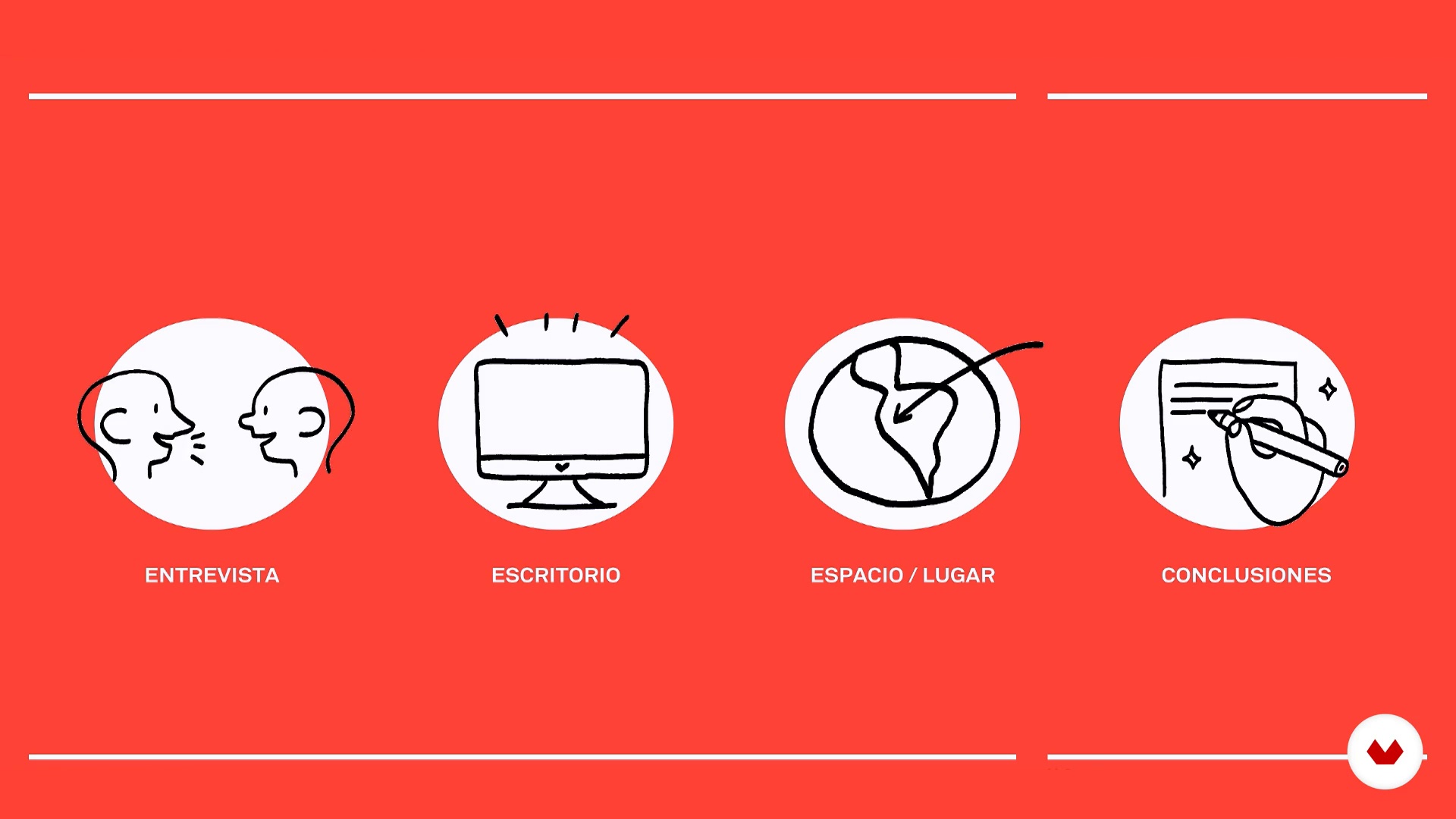
You will start from the basics, learning what research is, why it is important for any design project and you will see the 4 stages of research that you will work on in this course. Then, you will deepen the main tool of every designer: creativity. You will see the types that exist, their stages and then it will be the turn to learn a little theory about conceptualization.
Amanda will explain step by step how she develops a brief, what questions are asked and some useful tips. Next, it will teach you how to approach a project; She will carry out her research process on a museum in Peru but you can do it on whatever you want.
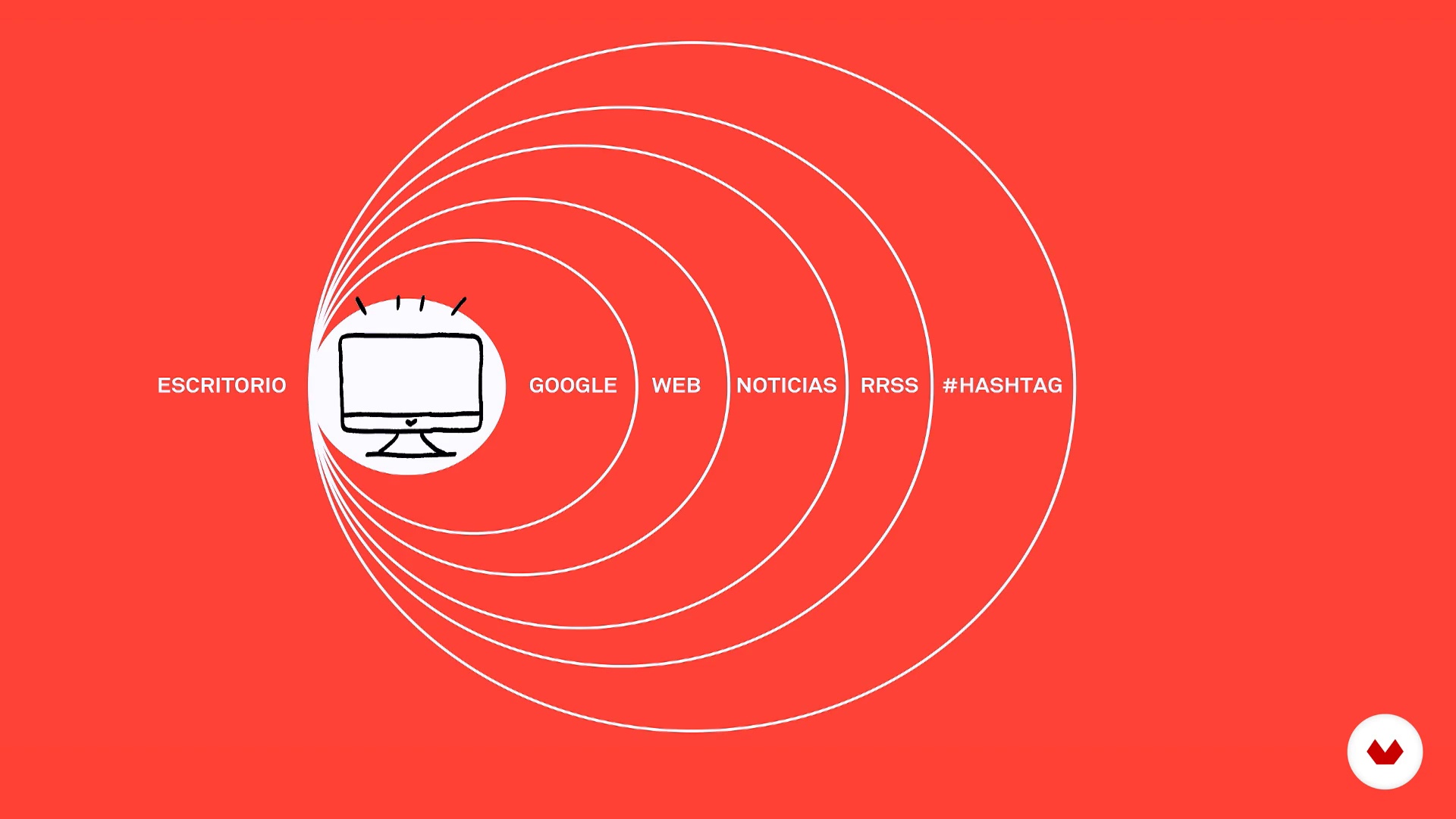
You will collect all available information about the brand or product, such as what it is, the types that exist, the context, its history, the opinions of the users, the competition through a benchmark and referents of the sector that function as inspiration. In addition, you will analyze his identity and investigate the space in which he is physically. All this information will be collected in a document that will be of vital importance for the development of your project.
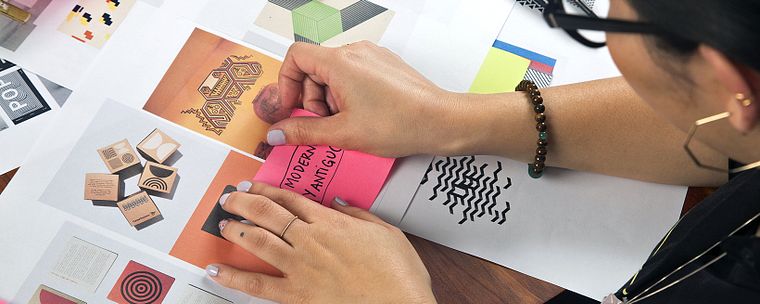
Finally, you will learn to make a mood board and work on keywords that will be the pillars of your work. Then, you will look for inspiration, signs, symbols, colors, among many other resources to fill your board and send the client for approval and thus, start the graphic development of the identity.
At the end of this course you will have learned different ways to approach a graphic design project from scratch, gather all the information necessary to be consistent with the brand and start working with a solid base to create meaningful designs.
What is this course's project?
You will organize the research guidelines of a project to create a graphic project of relevance, which can be social, political, environmental or personal motivation.
Projects by course students


Who is this online course for?
To graphic design students, designers and anyone who has an interest in learning a research, documentation and inspiration process to raise the level of their design projects.
Requirements and materials
You will need prior knowledge of Adobe Illustrator and Photoshop. On the materials, you will need a camera (or your cell phone), a computer with Illustrator, Photoshop and InDesign, pencil, paper and a printer.
Reviews
- 8 months ago
Buenas ideas sobre como llevar a cabo una investigación en este tipo de proyectos.
- 9 months ago
Excelente. Amplia sua visão além apenas do design e o leva ao nível estratégico.
- 10 months ago
Me parece que es muy práctico y preciso, los ejemplos y referencias que comparte Amanda, nos abre posivilidades creativas y de procesos para un mejor resultado. Super recomendado este curso
- 1 year ago
Este curso me permite actualizar mis conocimientos en diseño e implementar mejoras para seguir logrando buenos resultados. Súper recomendado.
- 1 year ago
Cómo estudiante de diseño gráfico parecía que no iba a enseñarme nada nuevo en realidad, pero ver el seguimiento de un proyecto real desde su investigación hasta la propuesta final ha sido genial!. Genuinamente ha hecho que me interese y me surgieran ideas del proyecto que muestra durante el curso. Recomendado 10/10, sobre todo si eres principiante!

Since childhood she had an interest in the arts. Following his passion, he began photography studies but ended up in graphic design, a profession that became his vocation since 2006. He has worked in two of the most important studies in Peru: Infinito consultores and Brandlab.
Content
- U1
Presentation
- Presentation
- Influences
- What will we do during the course?
- U2
Research, creativity and conceptualization
- The investigation
- The creativity
- Conceptualization
- U3
Addressing the project
- Inspiration and how to approach a brief
- Desktop research
- What it is and its history
- User reviews
- Benchmark competitions
- Identity analysis
- Space research
- Conclusions
- U4
Moodboard and design development
- Moodboard
- Keywords
- Moodboard development
- Presentation of identity
- FP
Final project
- Final project
What to expect from a Domestika course
Learn at your own pace
Enjoy learning from home without a set schedule and with an easy-to-follow method. You set your own pace.
Learn from the best professionals
Learn valuable methods and techniques explained by top experts in the creative sector.
Meet expert teachers
Each expert teaches what they do best, with clear guidelines, true passion, and professional insight in every lesson.
Certificates
PLUSIf you're a Plus member, get a custom certificate signed by your teacher for every course. Share it on your portfolio, social media, or wherever you like.
Get front-row seats
Videos of the highest quality, so you don't miss a single detail. With unlimited access, you can watch them as many times as you need to perfect your technique.
Share knowledge and ideas
Ask questions, request feedback, or offer solutions. Share your learning experience with other students in the community who are as passionate about creativity as you are.
Connect with a global creative community
The community is home to millions of people from around the world who are curious and passionate about exploring and expressing their creativity.
Watch professionally produced courses
Domestika curates its teacher roster and produces every course in-house to ensure a high-quality online learning experience.
FAQs
This course is designed for graphic designers, creatives, students, and professionals eager to deepen their skills in research, conceptualization, and inspiration for branding, visual identity, and museography projects.
Advanced experience isn’t required, but having basic graphic design knowledge or a strong interest in the field is recommended to get the most out of the course’s intermediate content.
You’ll need internet access, a computer or tablet, and basic design software (like Adobe Illustrator, Photoshop, or free alternatives). Having a notebook or note-taking apps for researching visual references is also recommended.
You’ll learn how to research and analyze brands, build empathy with clients, support graphic proposals, create mood boards, and draw inspiration from audiovisual and cultural references to strengthen your branding and museography projects.
Research is woven in from the brief, competitor and trend analysis, all the way through to visual conceptualization—helping you make well-founded creative decisions and develop relevant, standout graphic proposals.
Techniques covered include brainstorming, mimetic, bisociative, and narrative creativity, plus using audiovisual references, analyzing films, songs, and design channels to spark inspiration.
Yes, you’ll learn how to do benchmarking, analyze direct and indirect competitors, and research cultural and visual contexts to back up your branding and museography proposals.