

Specialization

Specialization in Artisanal Handbag Design and Creation

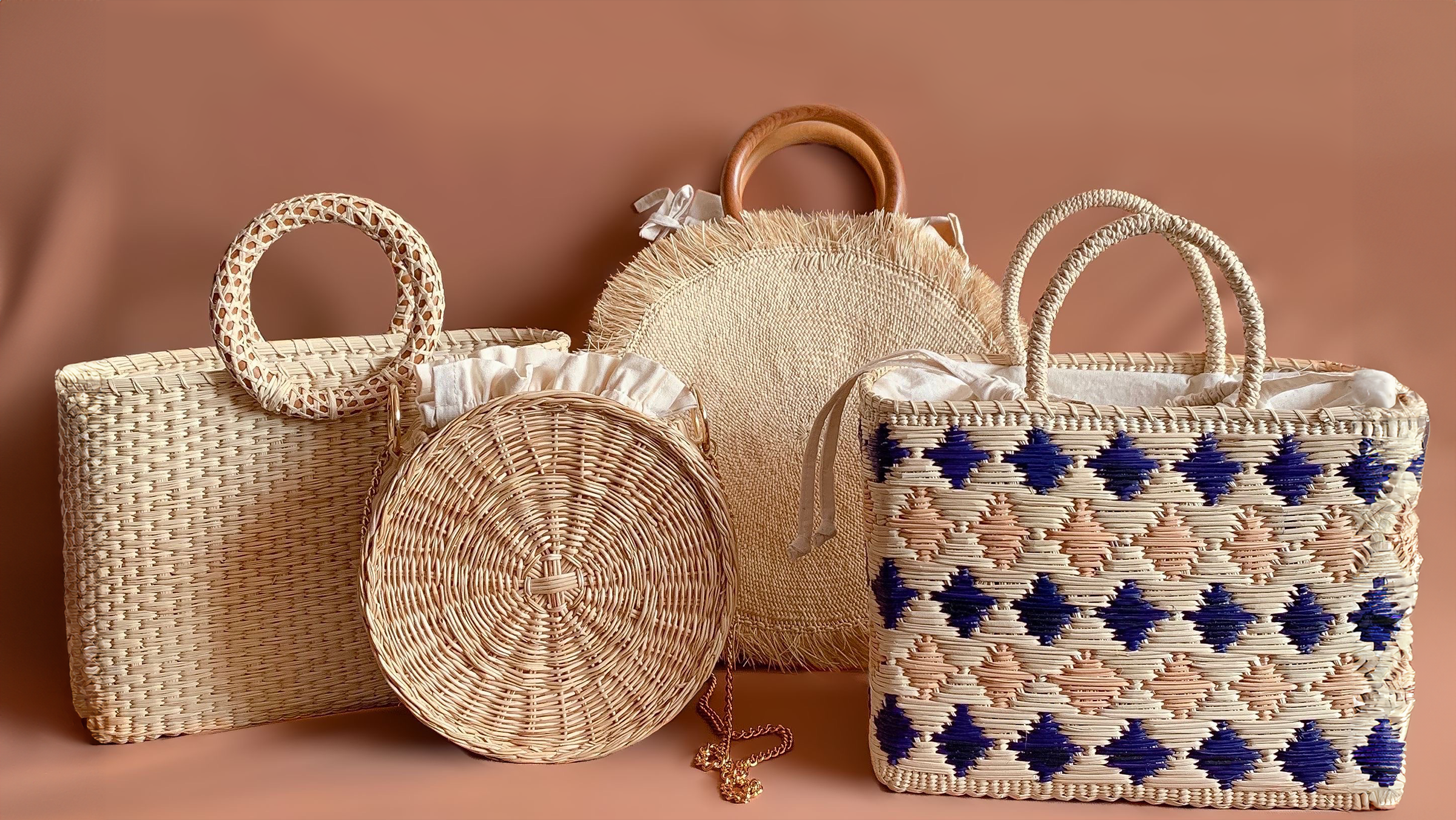
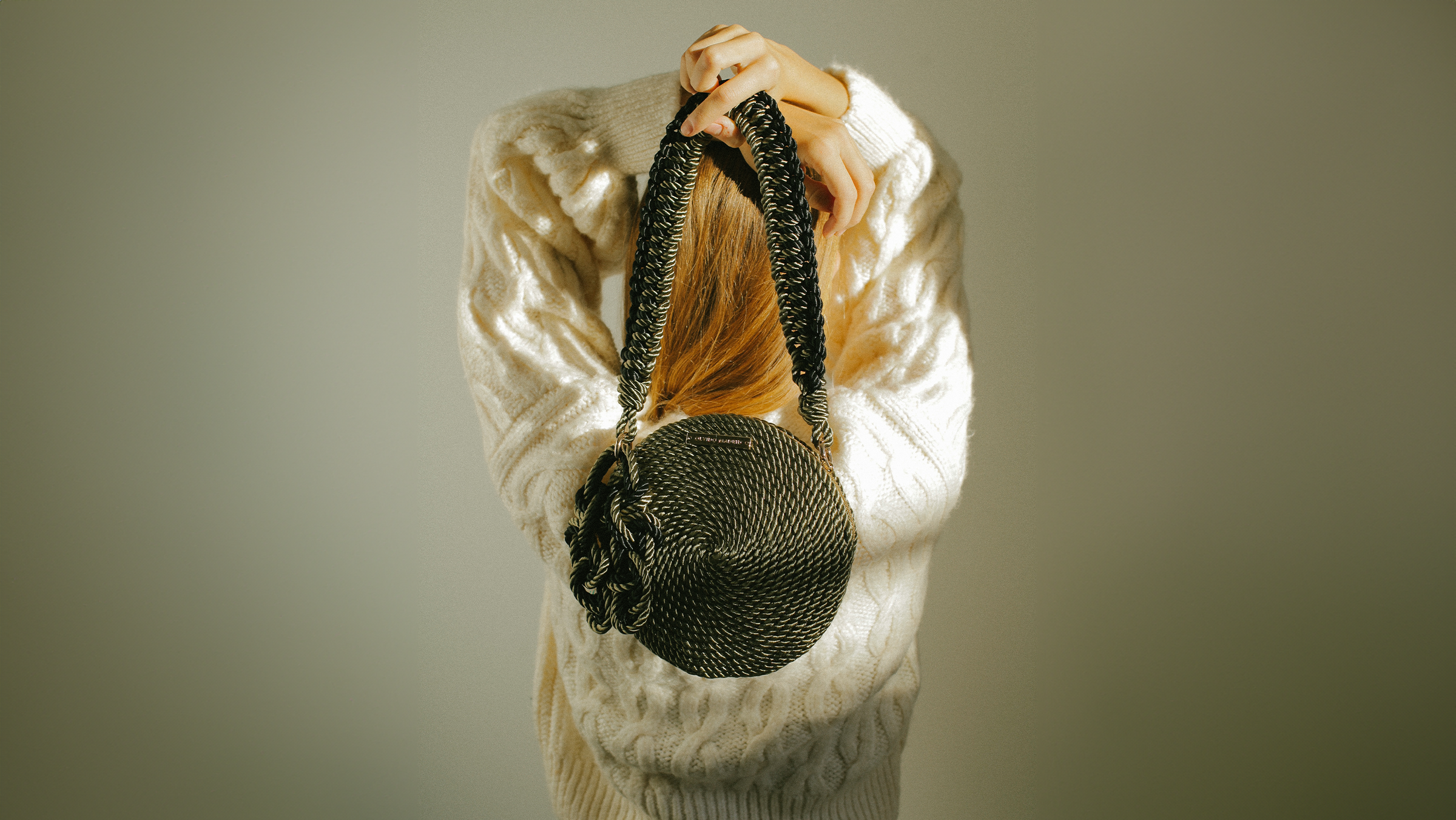
Master the art of artisanal bag creation using diverse materials and techniques for high-quality, unique accessory designs

Specialization · 6 modules

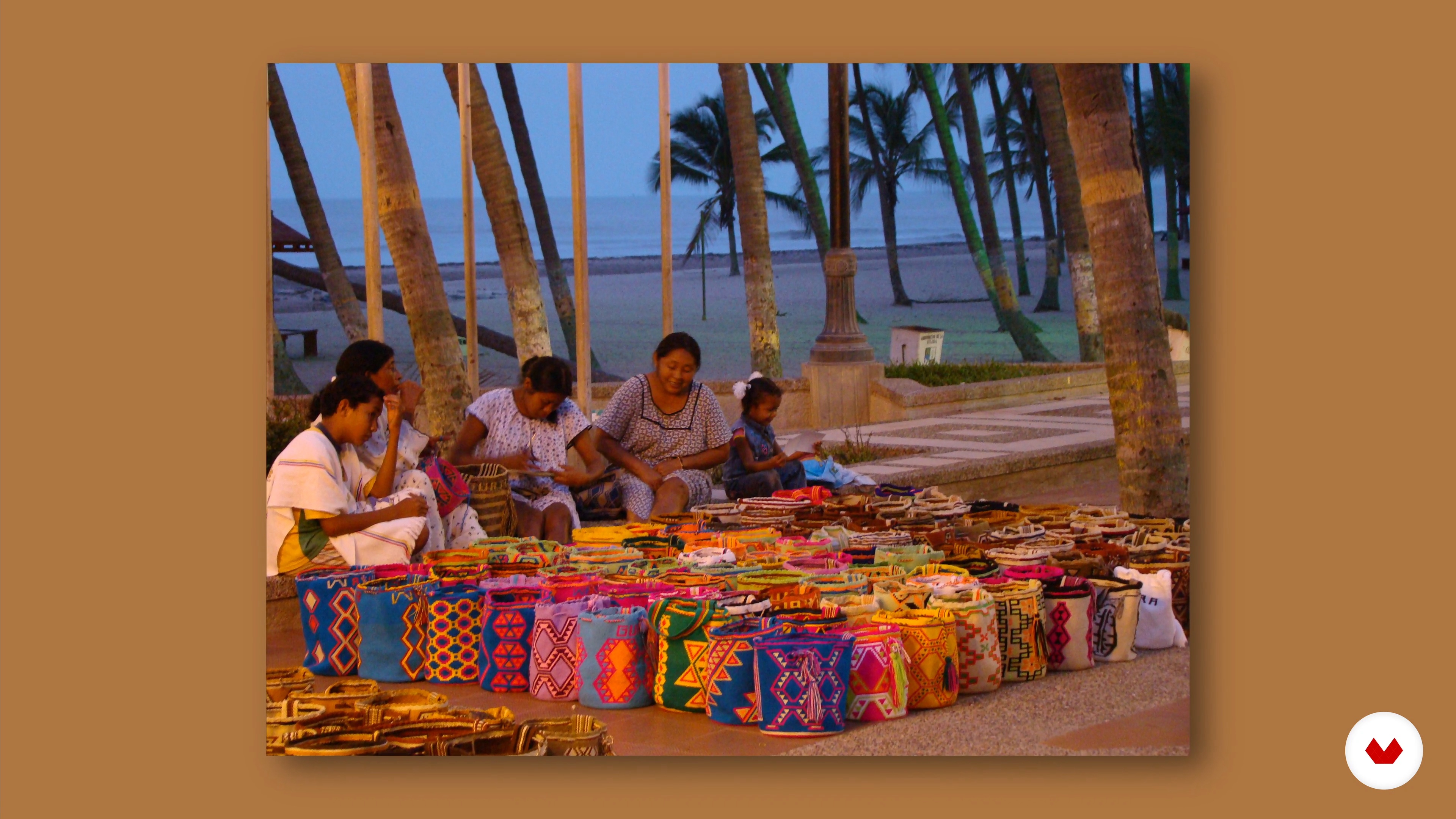
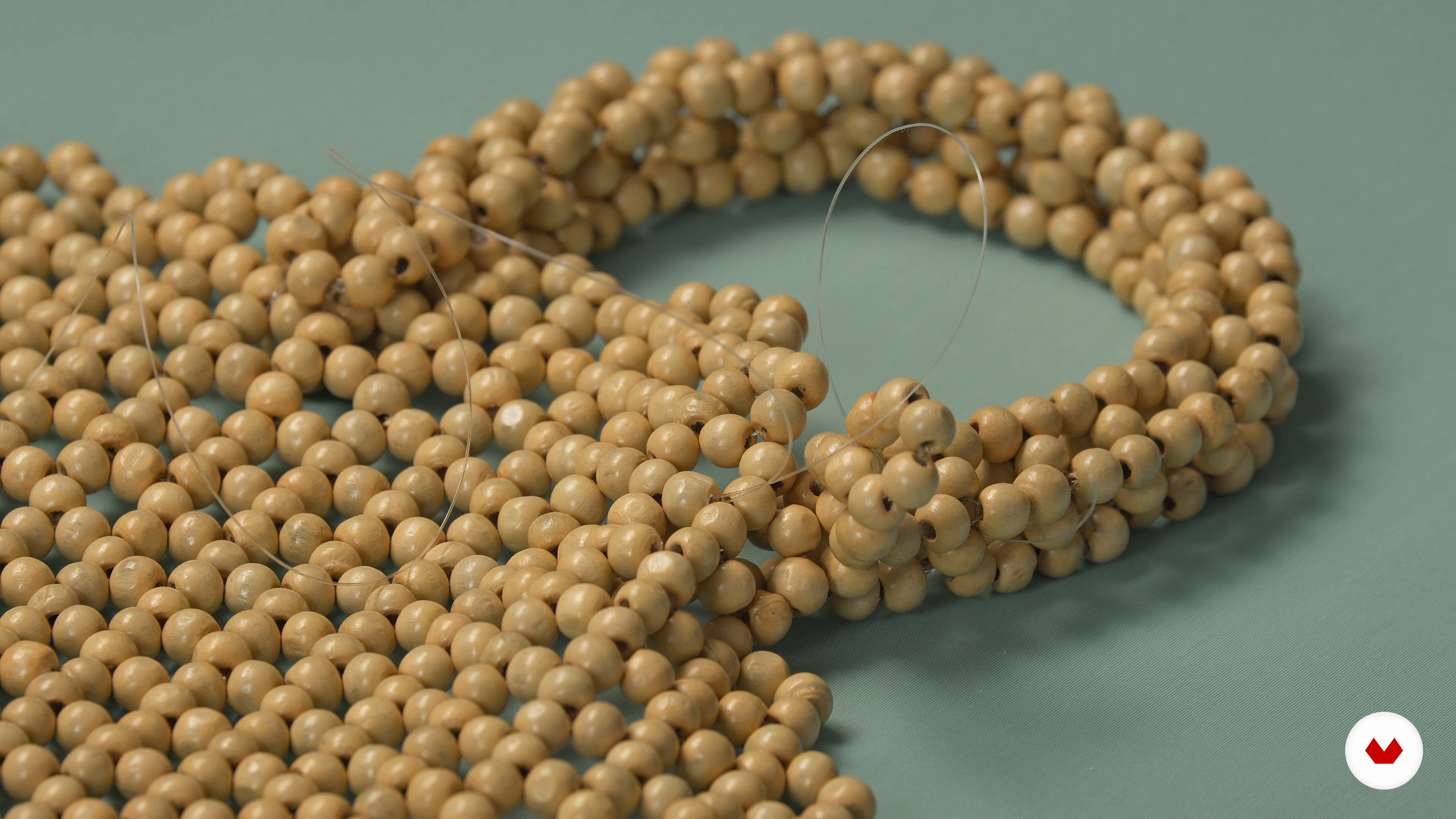
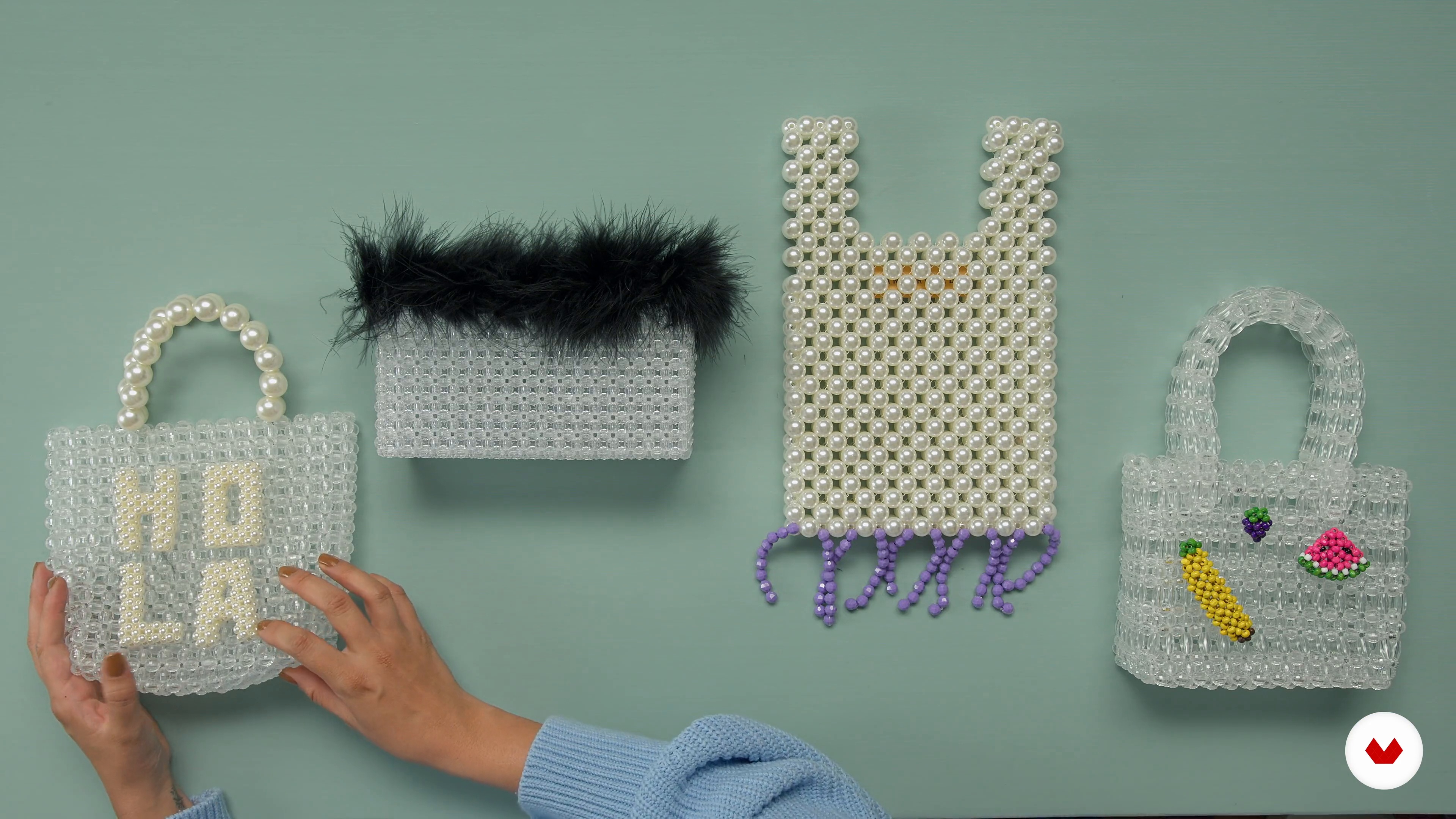
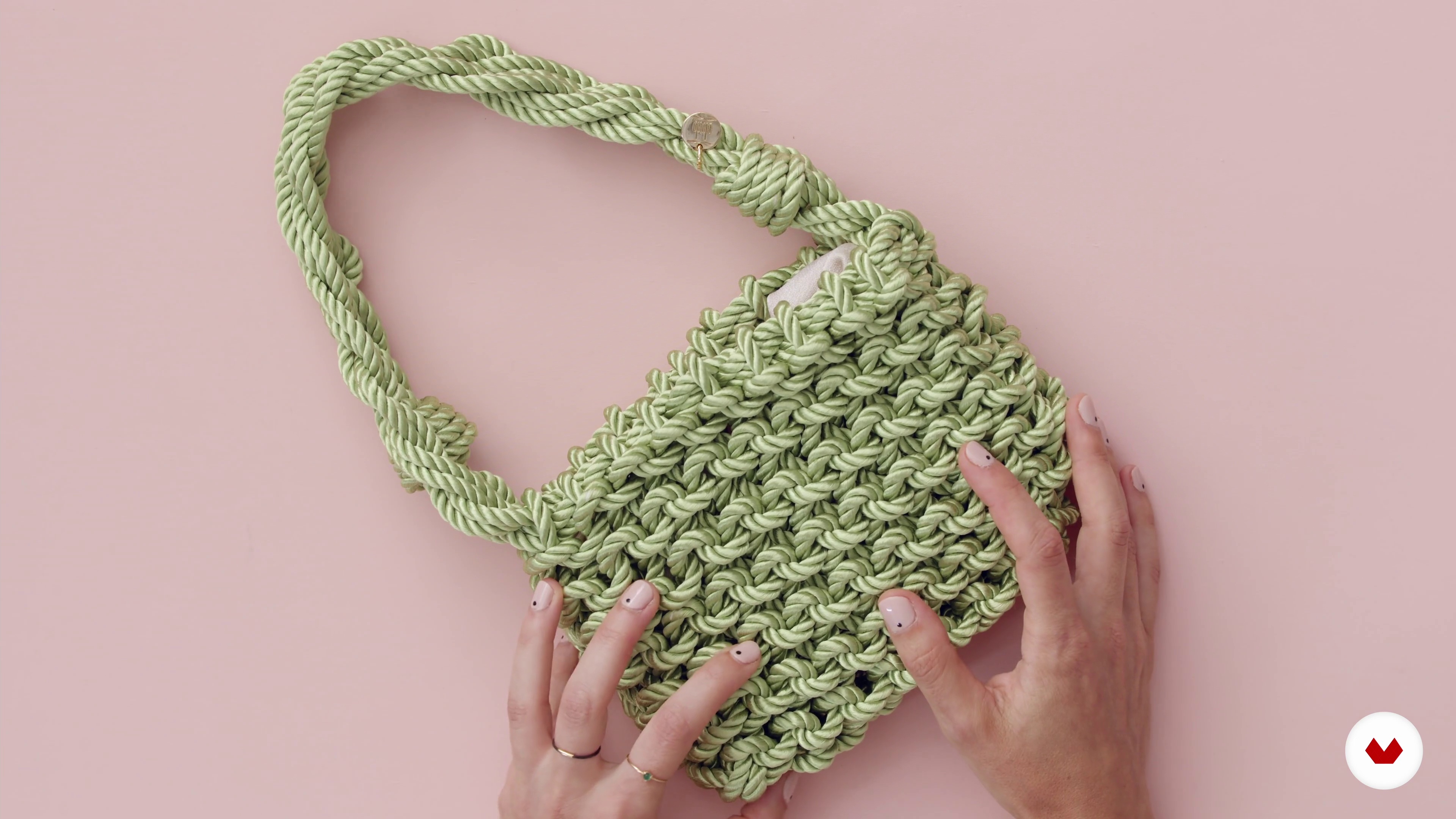
Discover the art of handcrafted bags with a team of master artisans guiding you through a rich journey of creativity and craftsmanship. Explore a variety of materials and techniques, from intricate beadwork and macramé to sophisticated silk-cord designs and contemporary basketry. Each course in this specialization offers a unique perspective, allowing you to develop your own style by integrating traditional methods with modern aesthetics. Whether you're drawn to the elegance of silk cords or the versatility of crochet patterns, there's a wealth of knowledge awaiting to enhance your skills.

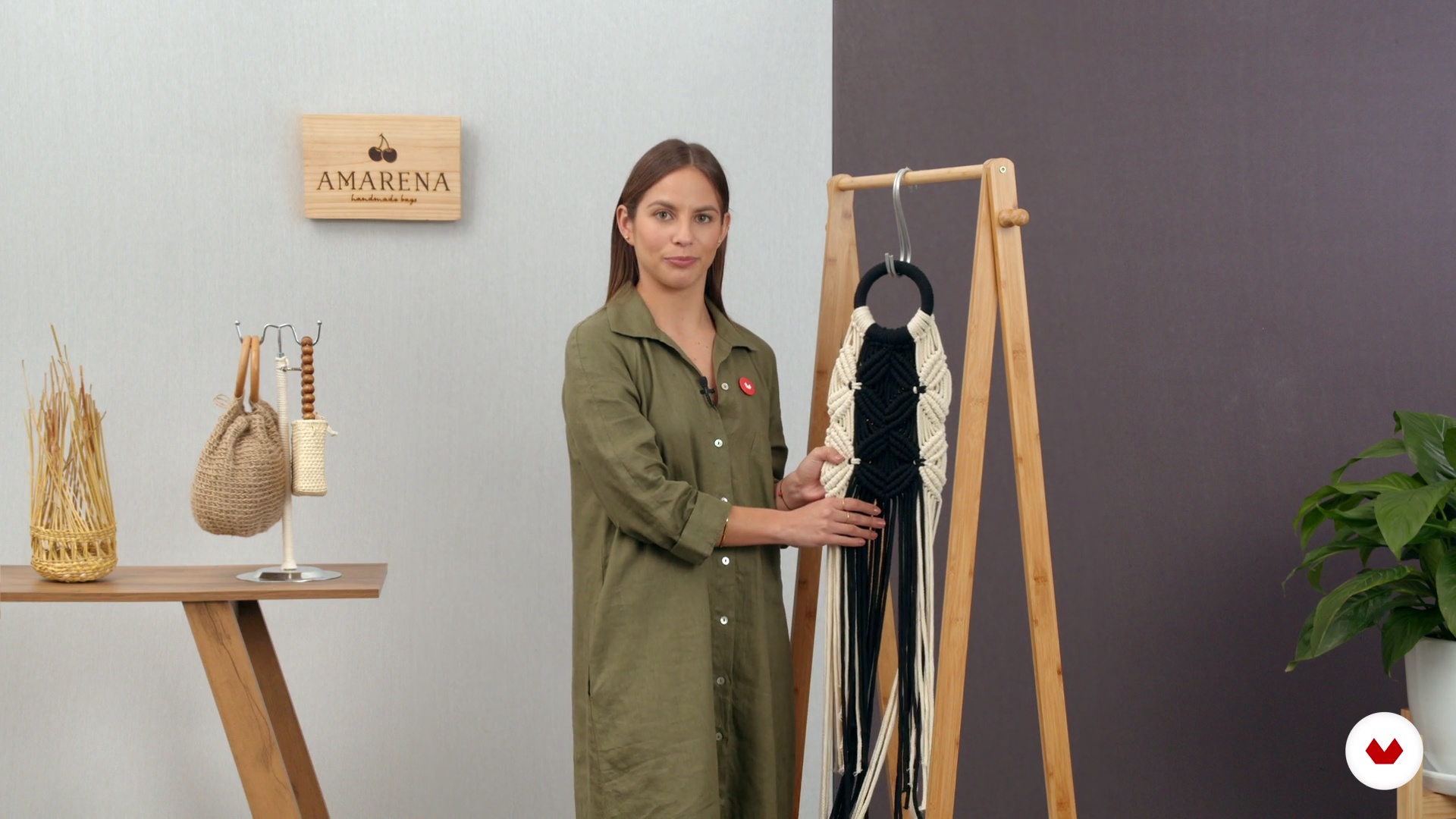
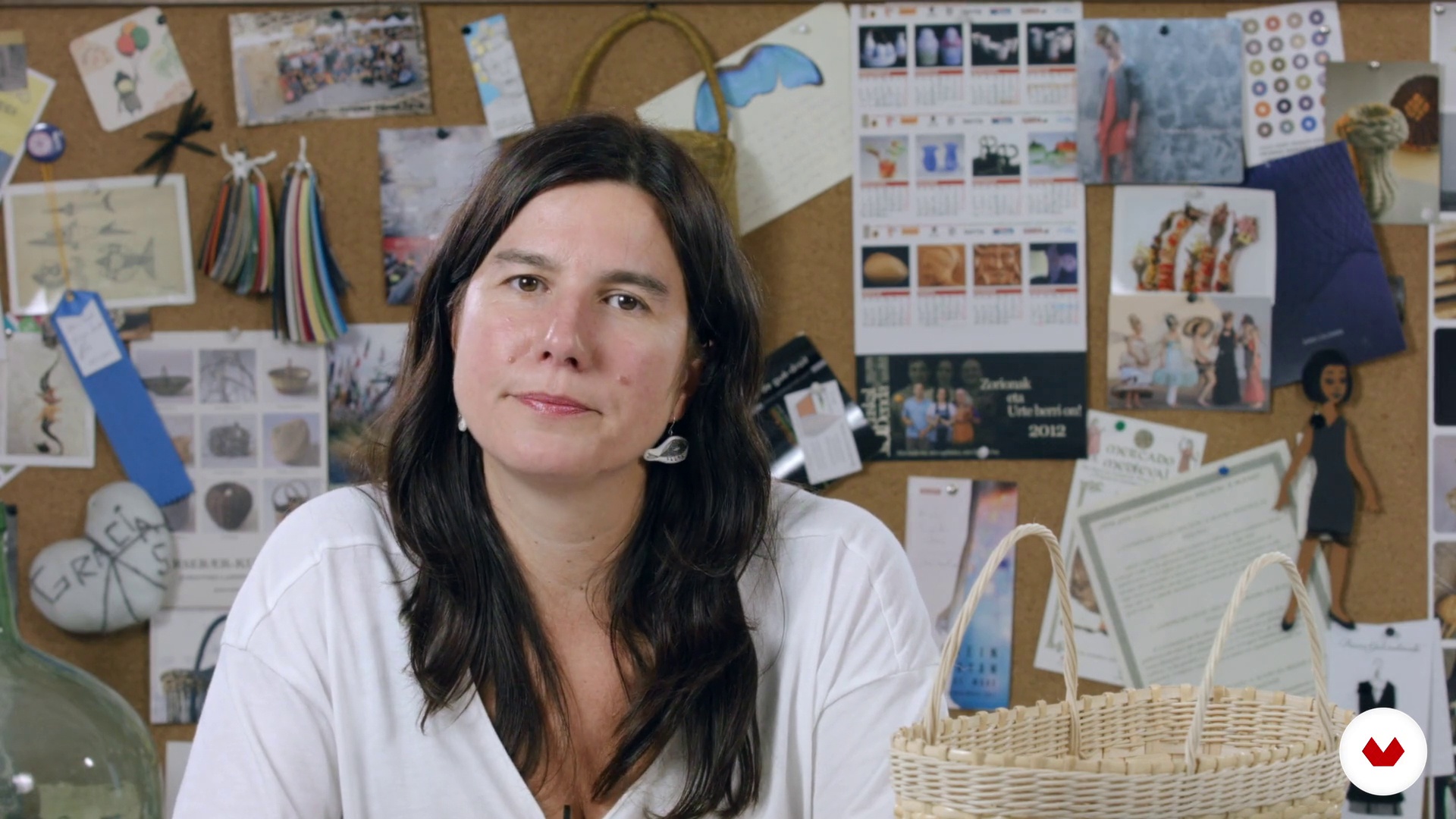
Throughout your learning path, gain insights from experts in their fields. Jimena Londoño will inspire your creativity with beaded bag designs, while AMARENA introduces the beauty of macramé. Olvido Madrid shares the timeless sophistication of silk cords, and Molla Mills brings the charm of crochet patterns. Idoia Cuesta rounds out the experience with innovative basketry techniques, blending tradition with modernity. By the end, you'll possess the expertise to create stunning, personalized handbags that reflect your artistic vision.

Read more ↓

What will you learn in this specialization?
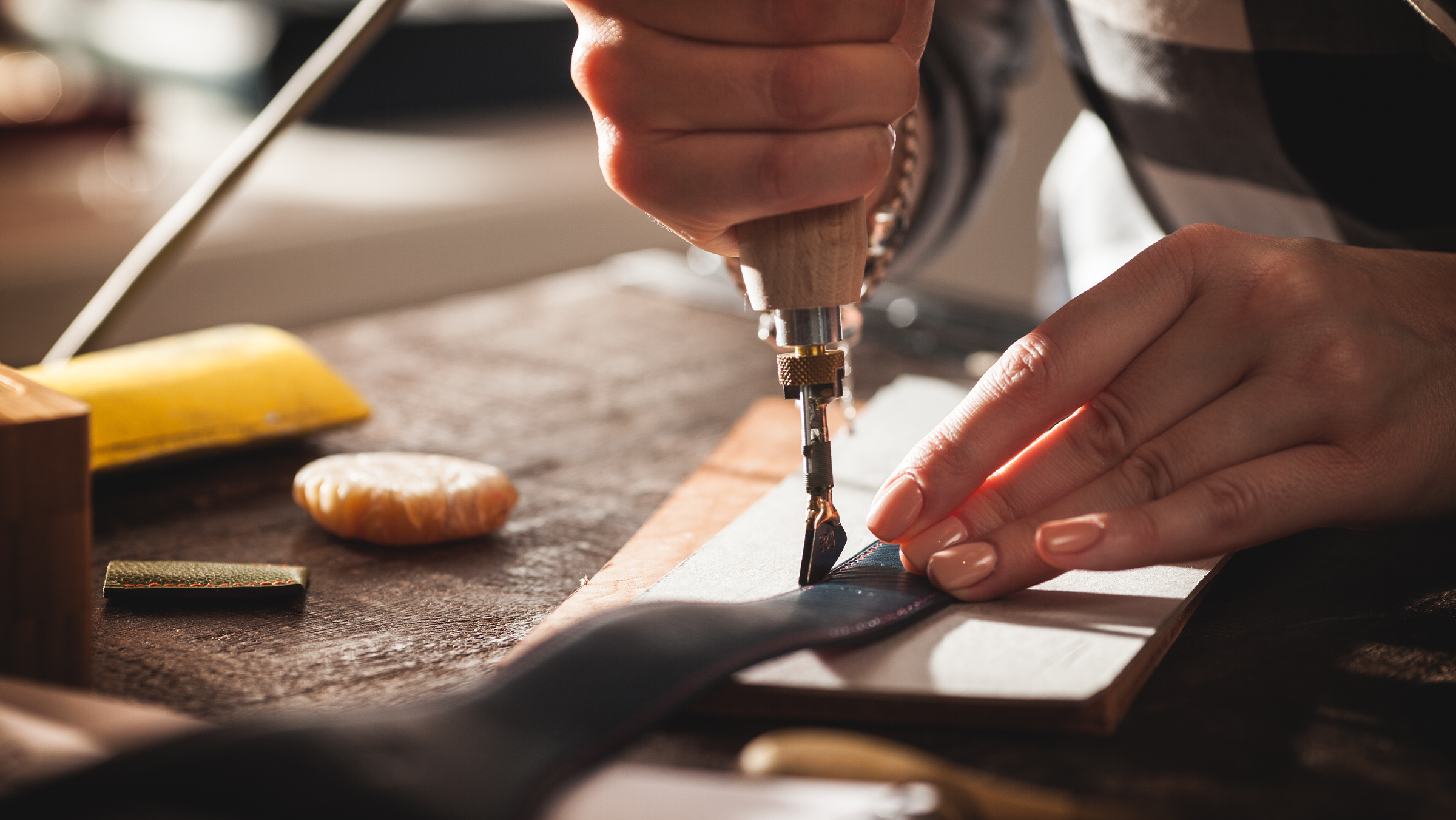
A total of 6 modules and 75 lessons
A total of 12h 15m of vídeo lessons
Taught by 5 selected expert teachers
image
3
The materials
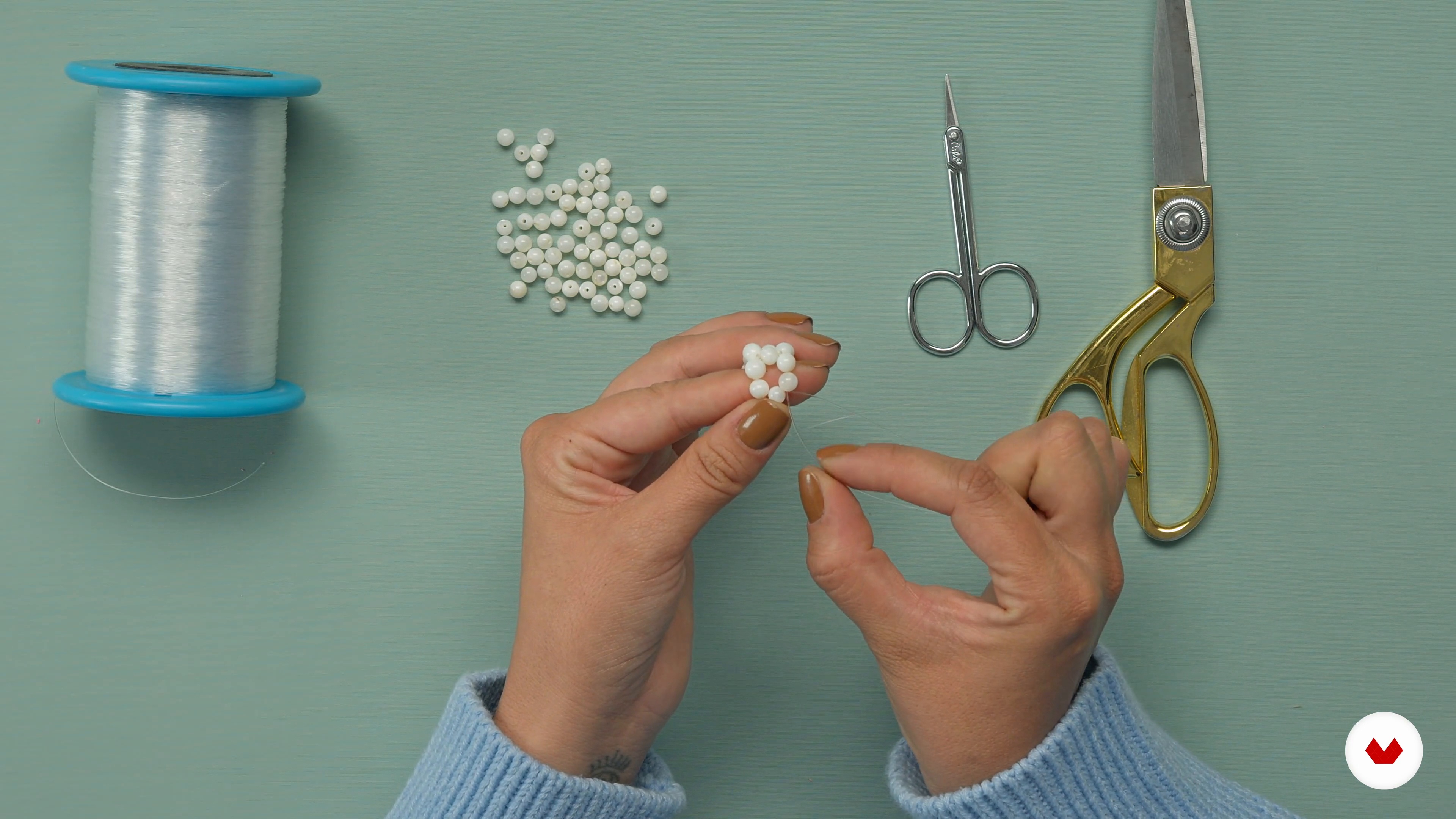
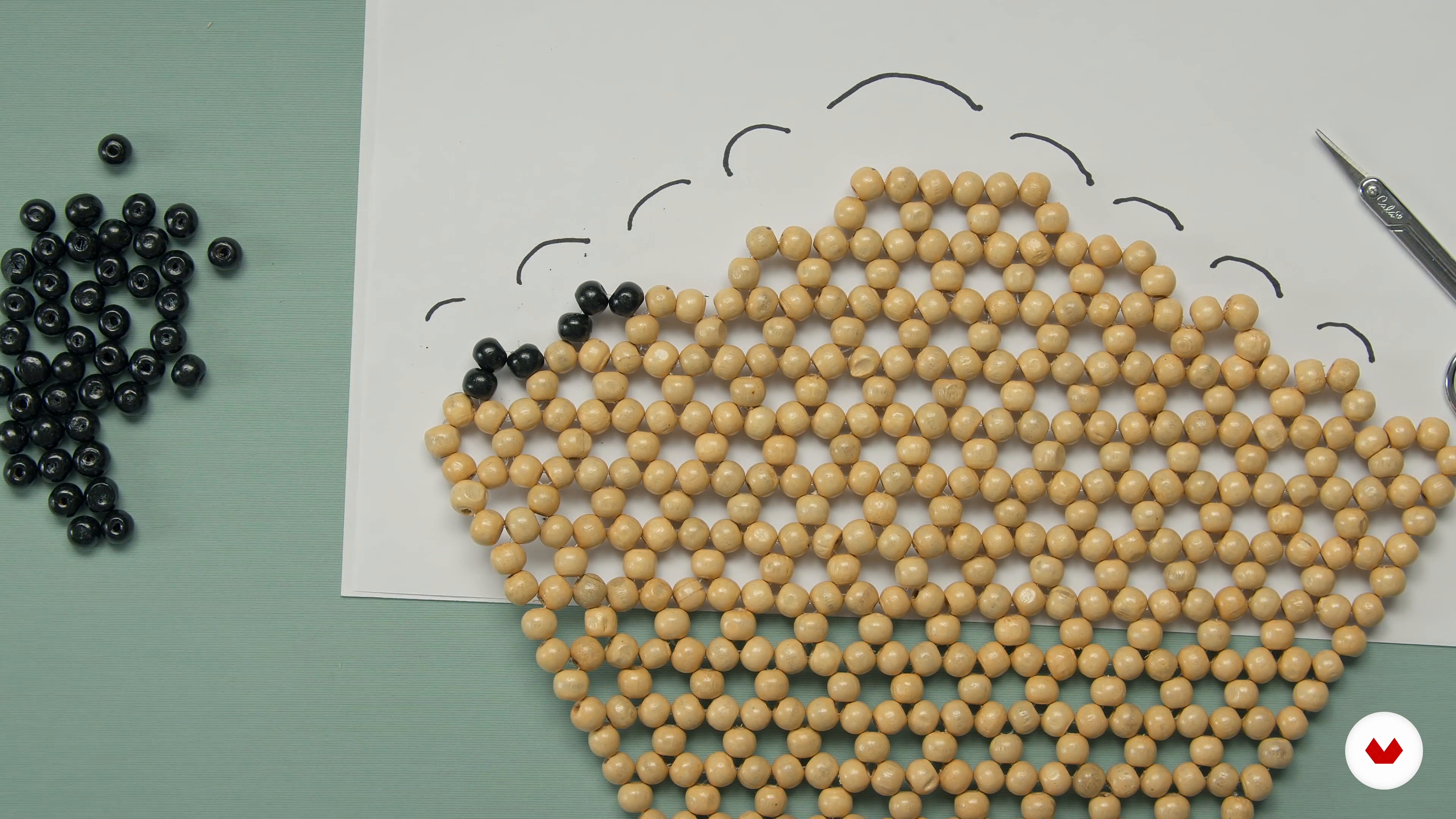
To start, I'll show you the endless possibilities of materials and textures you can use for beaded bags.
3m
image
4
Sample creation and stress based on function 1
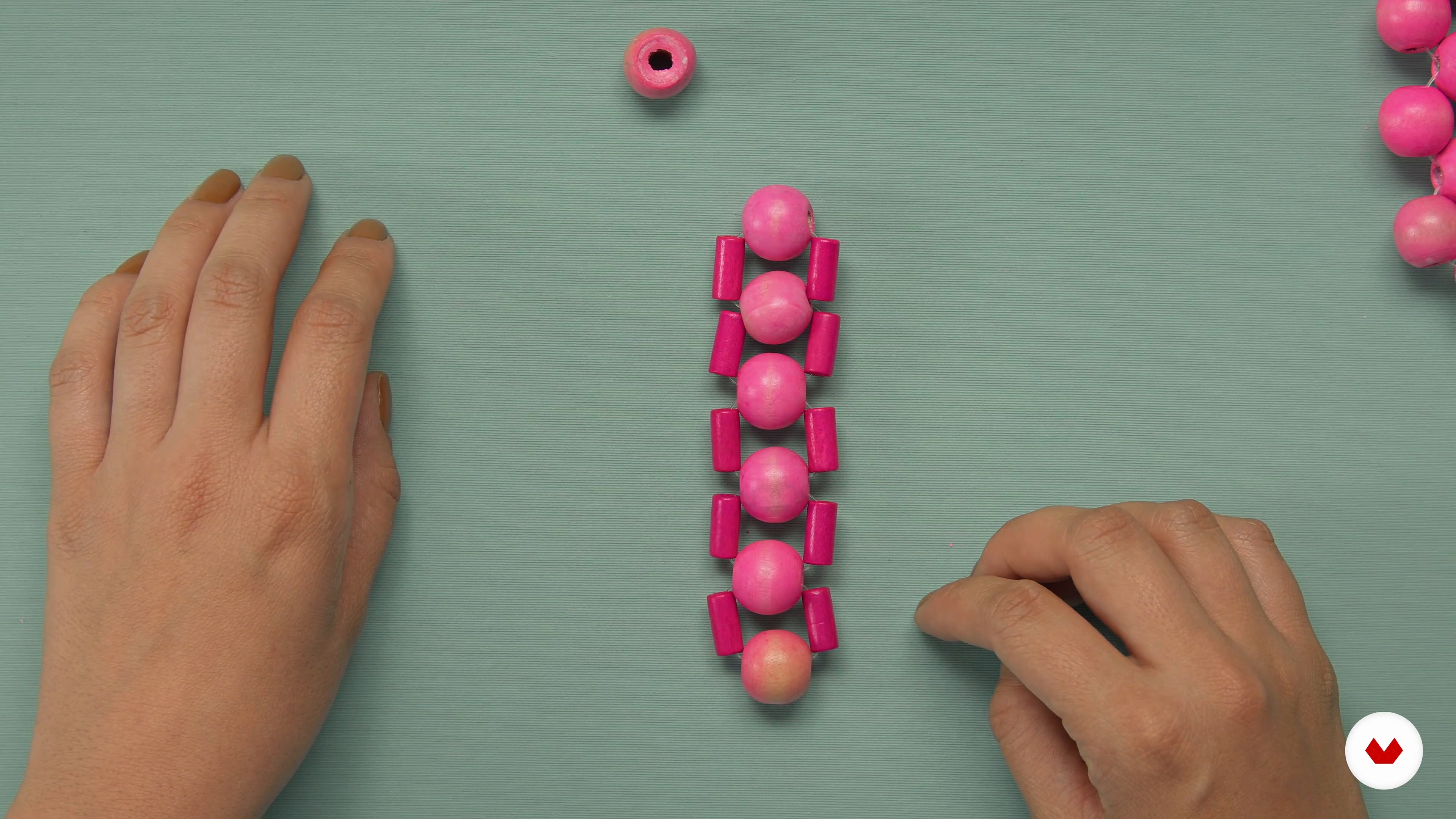
During this lesson you will learn how to create samples with different types of beads and different levels of tension in ties so that you can get an idea of the rigidity you can obtain.
18m
image
5
Sample creation and tension based on function 2
During this second part of the lesson, I will continue to show you the different fabrics that you can use to create unique designs on your bags. Also, this will help you determine the type of account you will use in your different projects.
10m
image
6
Draw and diagram
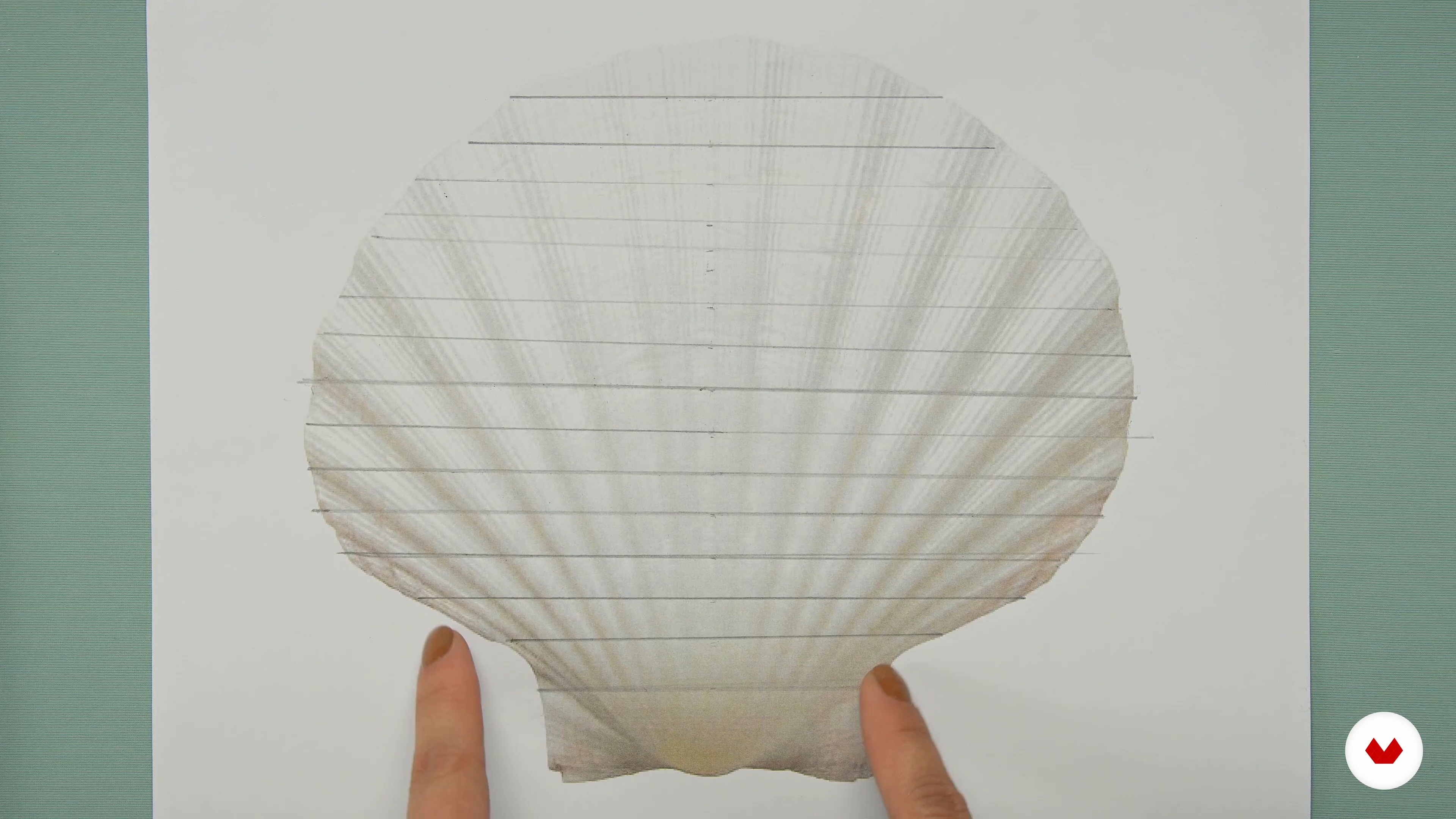
To end this unit, I'll walk you through all the steps you need to know to understand the structure of your bag. You will see how to draw, draw lines and diagram!
3m
image
7
Structure of the first face 1
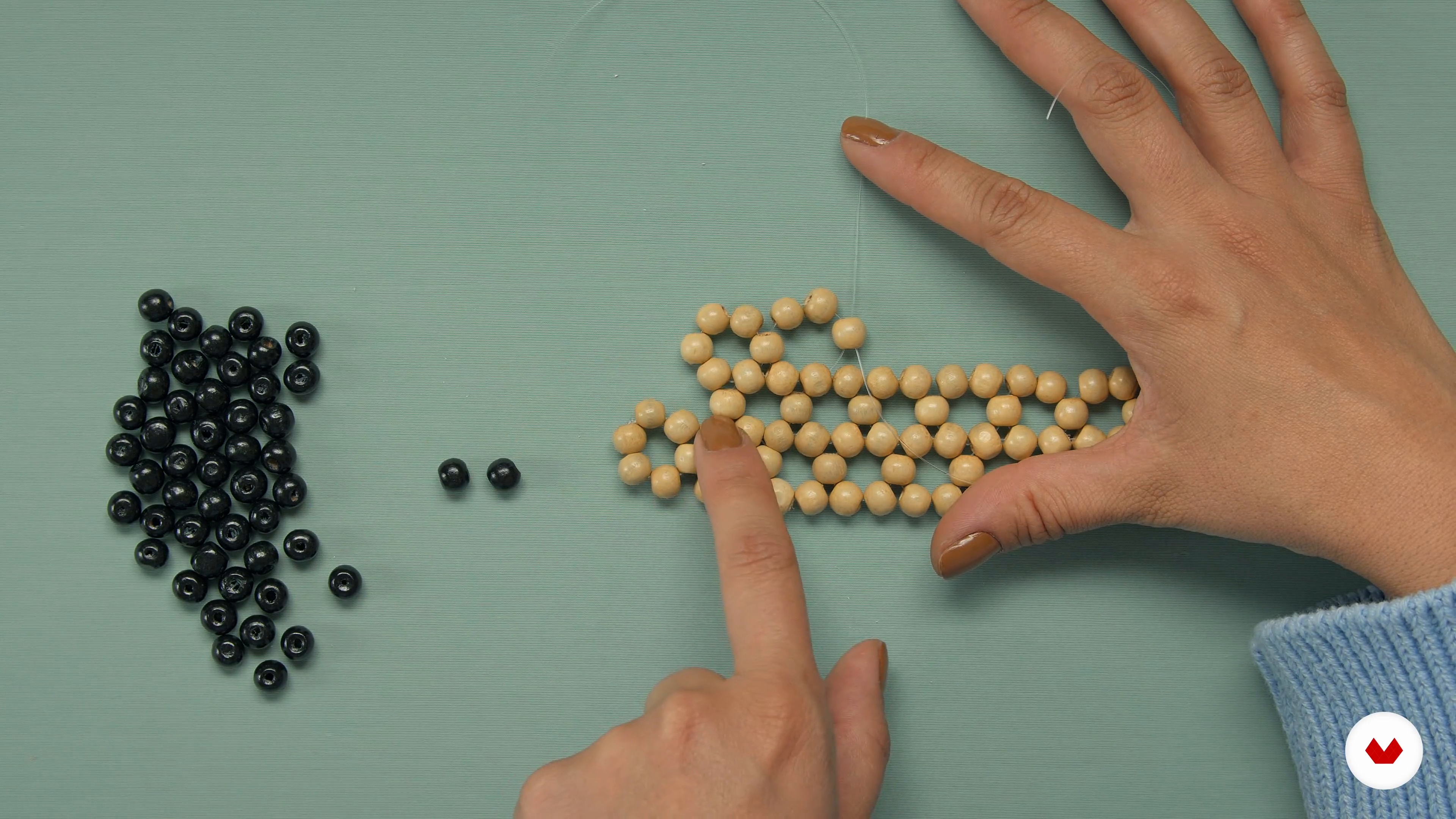
I'll start by showing you how to develop, you're going to create a face of the bag with different colors so you can understand the structure of the bag.
13m
image
8
Structure of the first face 2
In this second part, you will see how it looks finished on the face of the bag. It is important that you take the time to review this lesson as this is where you will learn how to prepare the gaps for seams.
13m
image
9
First and second face, and base
It is time to get down to work. You will learn to bring your course project to life. I will show you how to start building the bag with the previously selected materials.
18m
image
10
The straps 1
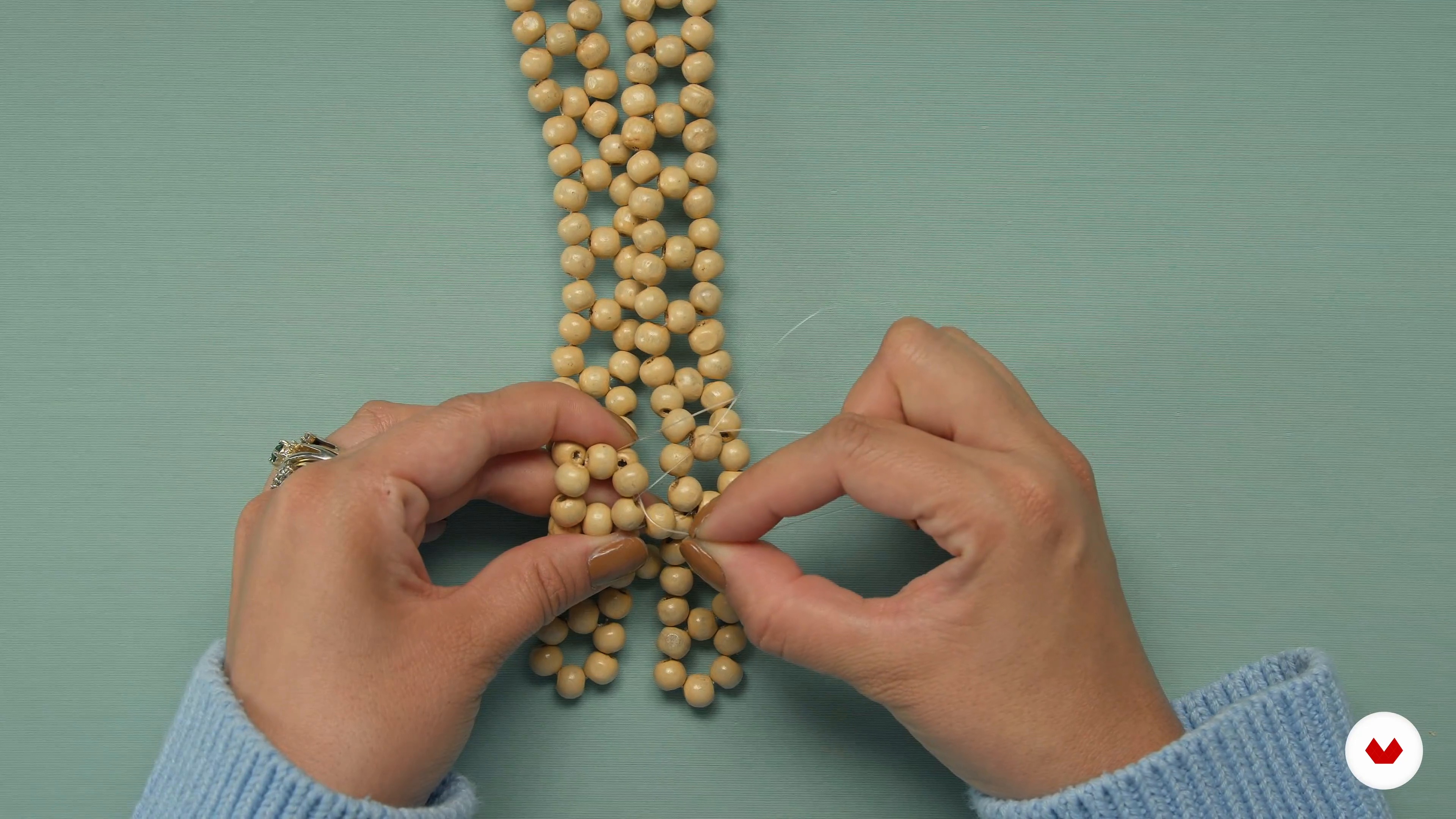
In this lesson you will see how to make the straps of the bag. In this first part you will learn how to make a long and simple strap.
19m
image
11
The straps 2
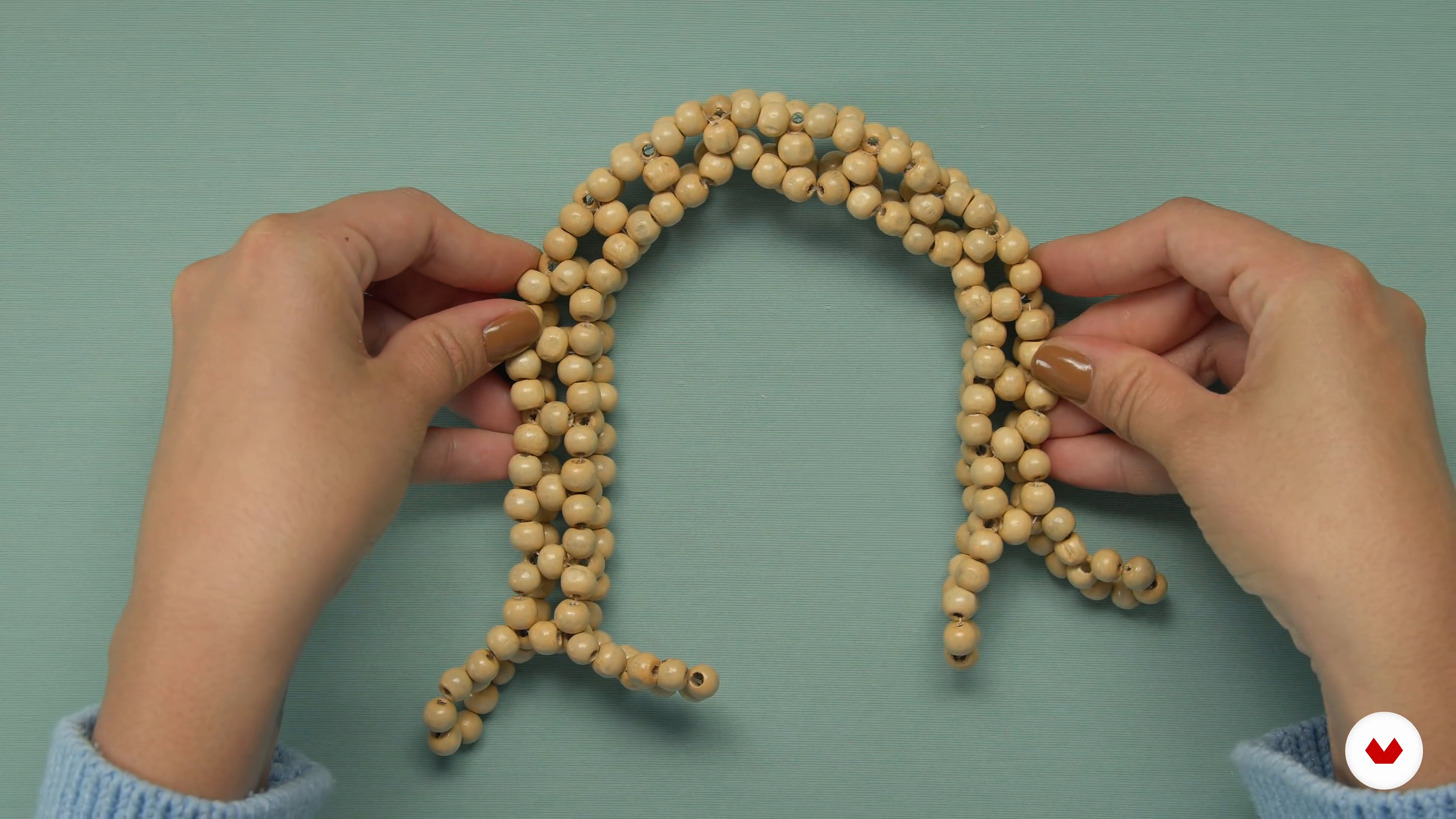
Now I will show you how you can perform a short and complex strap. Remember that the choice of straps depends entirely on the style you want to give your bag.
8m
image
12
Sides and join the strap 1
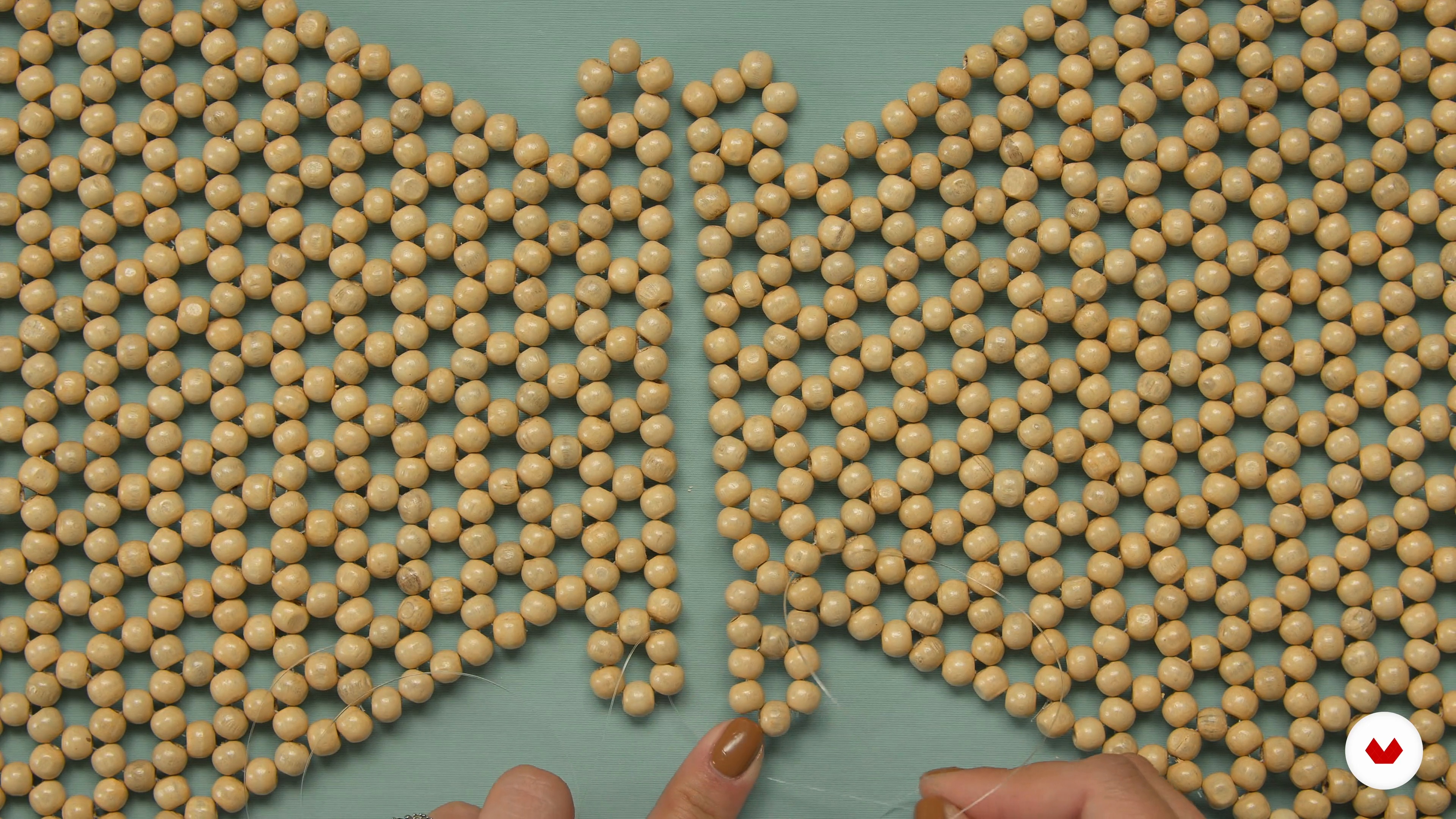
Now you will see how to finish the bag. To do this, in this lesson I will teach you how to attach the straps to the bag and raise the sides.
20m
image
13
Sides and join the strap 2
In closing, I'll show you how to do the final details to fully put the bag together. Also, I'll show you what the finished bag looks like.
20m
image
14
Add textures to your bag
During this first lesson, I will explain how to add textures, charms and everything you can imagine to your bag.
5m
image
15
Creative process for a collection
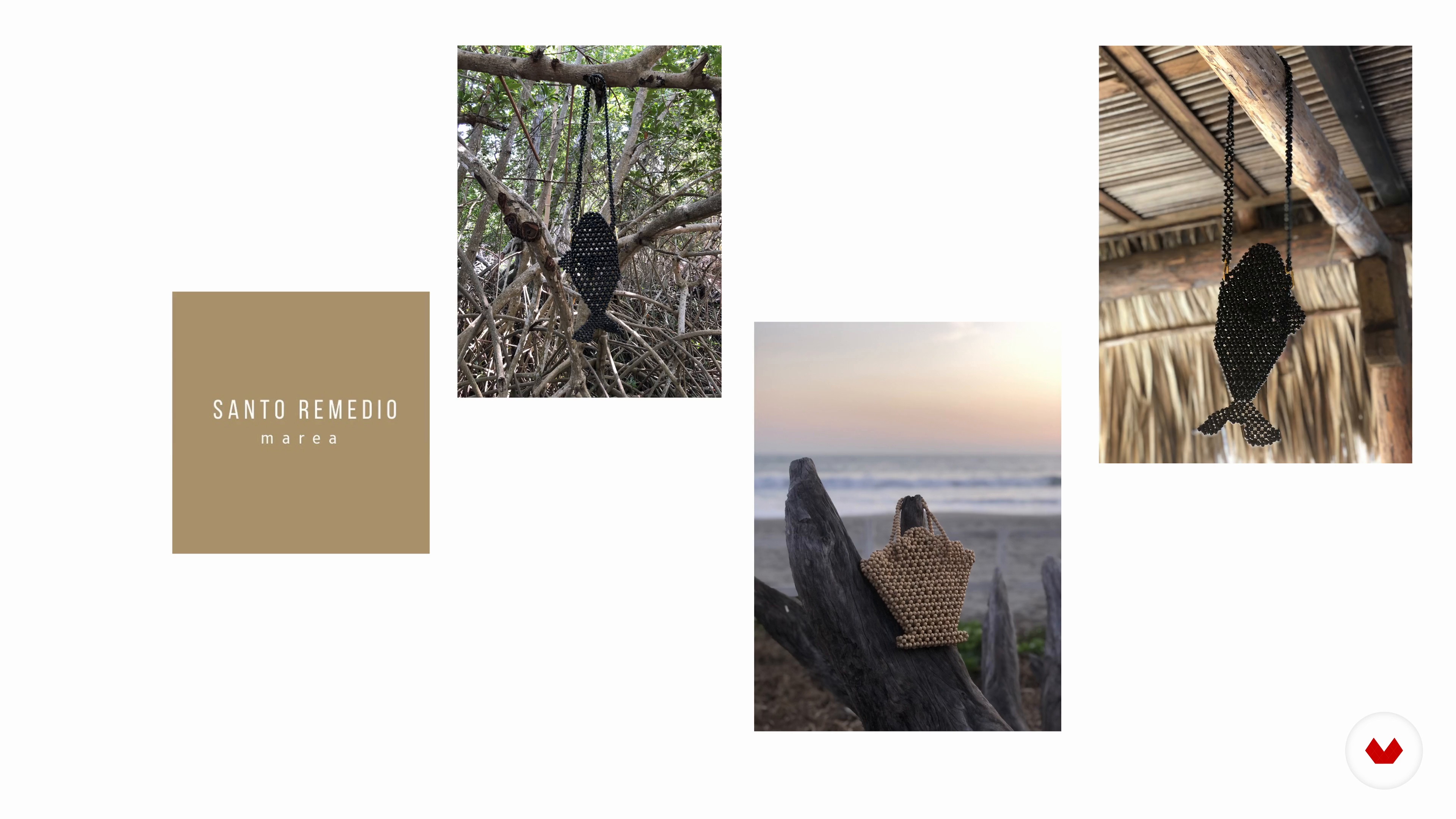
I am going to tell you the step by step of the creation of a collection that we use in Santo Remedio and other important tips.
6m
image
4
Materials
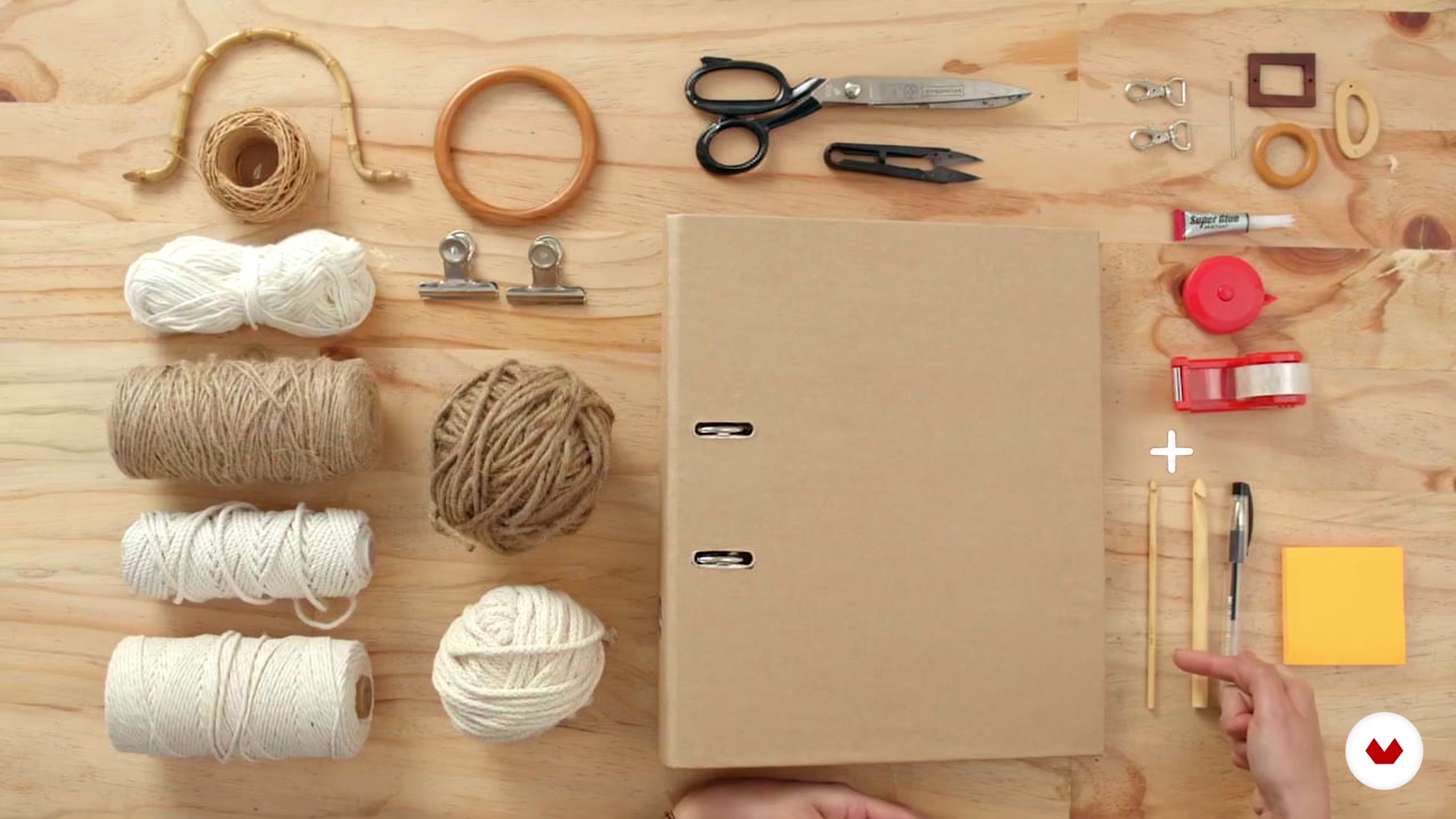
In this lesson, I will show you the materials that we are going to use to put together the content of our sample book.
1m
image
5
Preparation of sample 1
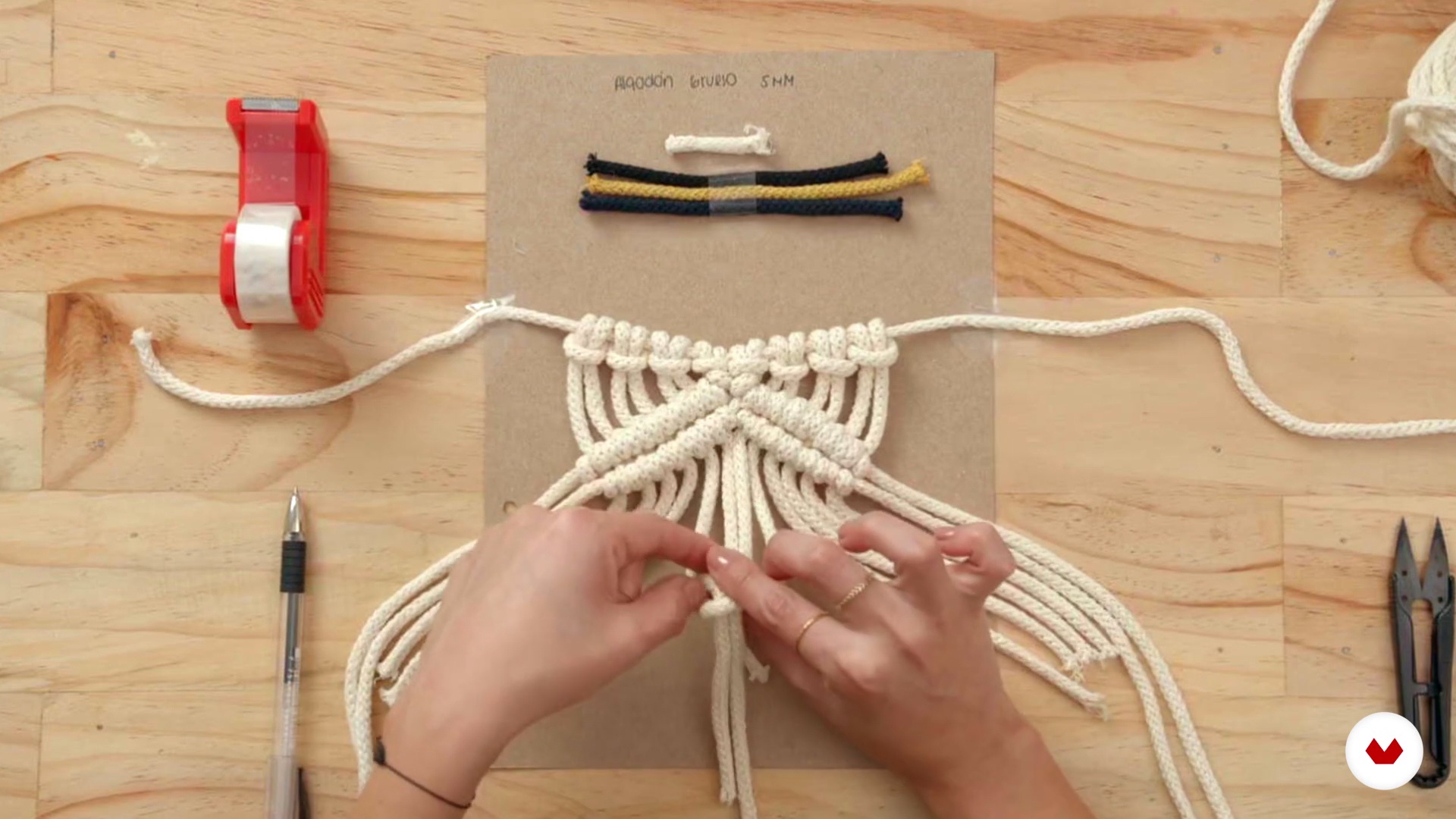
In this lesson, I will explain how to develop our sample book with natural fibers. You will see how to weave a sample of the base and the body of a bag with each fiber.
19m
image
6
Preparation of sample 2
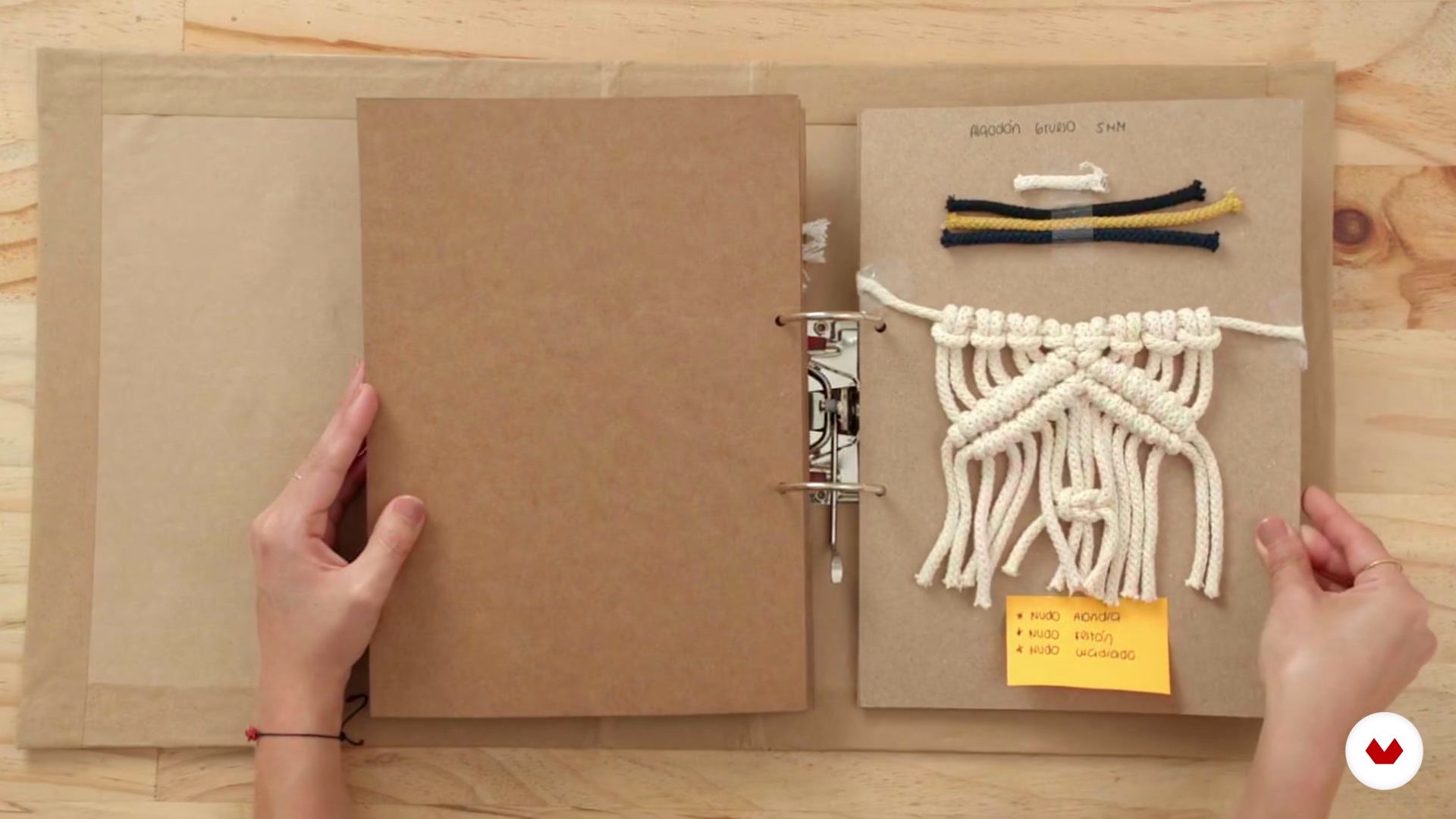
In this second part of the lesson, I am going to finish the crochet piece and include it in our sample book. You will see it complete and organized with all the techniques that I explained to you in this elaboration stage.
7m
image
7
Accessories for samples
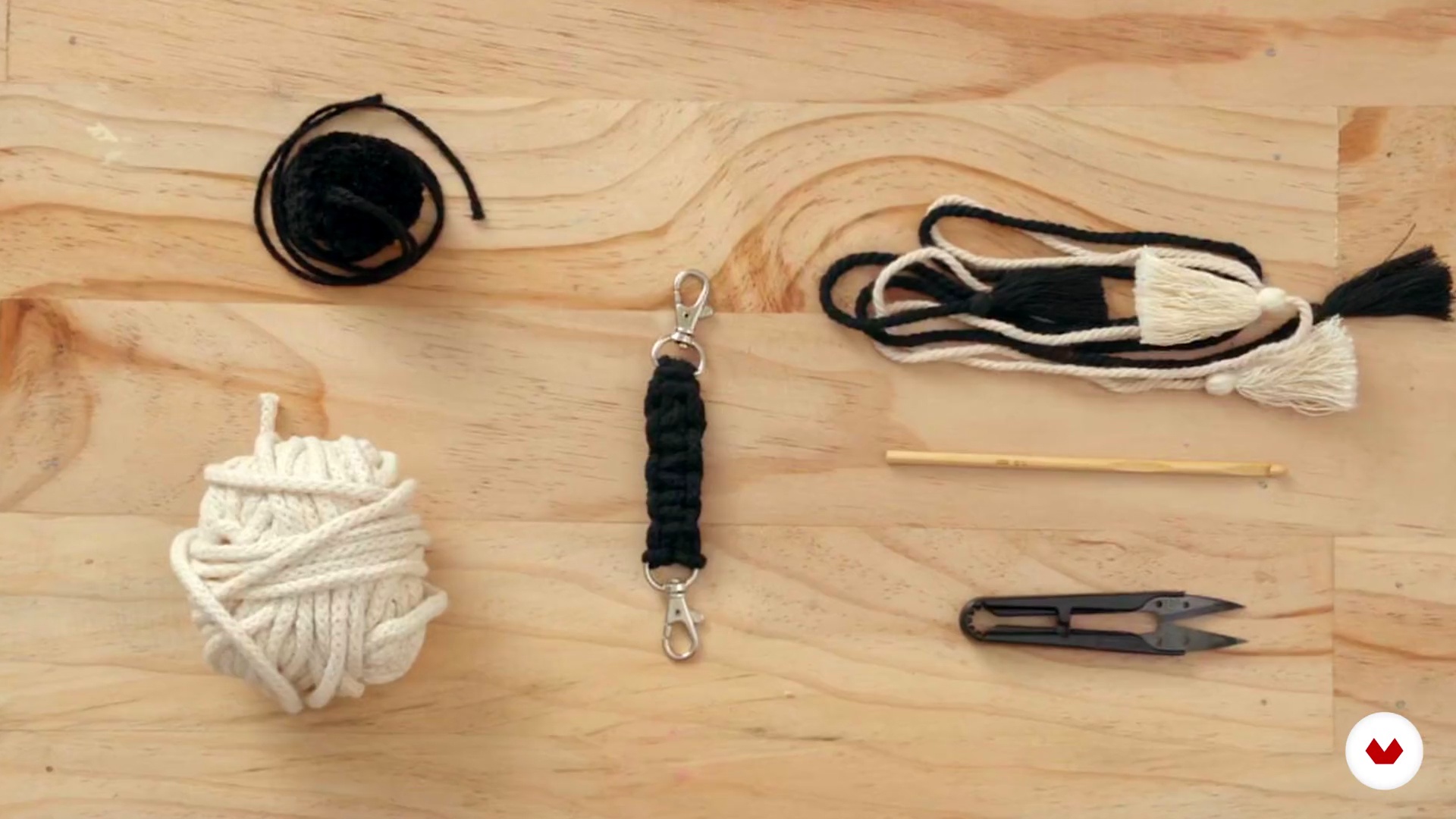
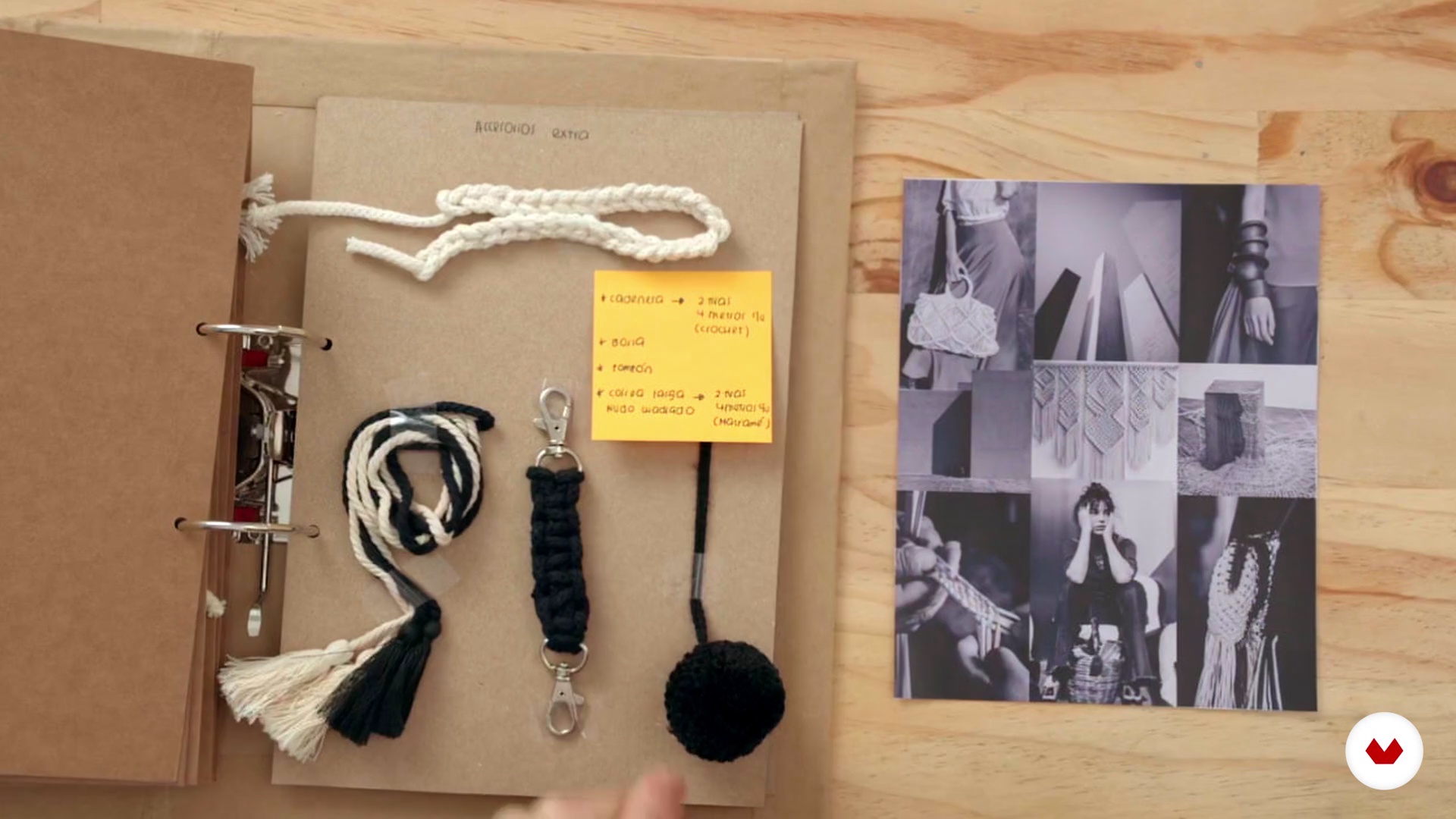
In this lesson, I will teach you how to make accessories like tassels, pompoms, and long woven straps to decorate your bag.
3m
image
8
Inspiration technique: mood board
In this lesson, I will teach you how to create a mood board. We will start by defining a clear idea of what we want to convey and at the same time it will be a method of inspiration for the design and creation of the piece.
8m
image
9
Introduction to bag design
In this lesson, we will land the design idea. To do this, we will select the material, shape, final patterns and colors with the help of our mood board and the sample card to obtain the final design of the bag.
3m
image
10
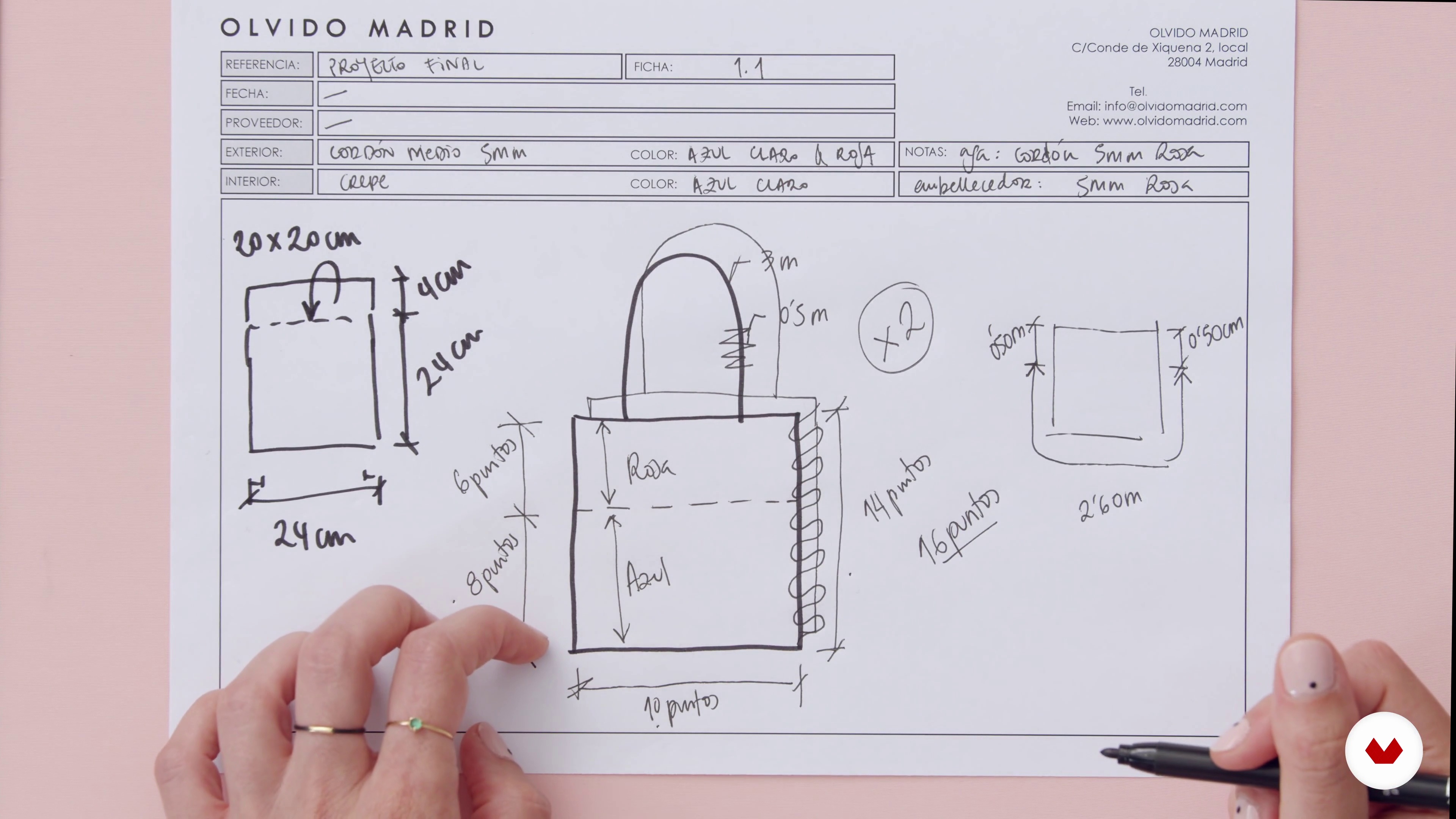
Technical sheets and sketch
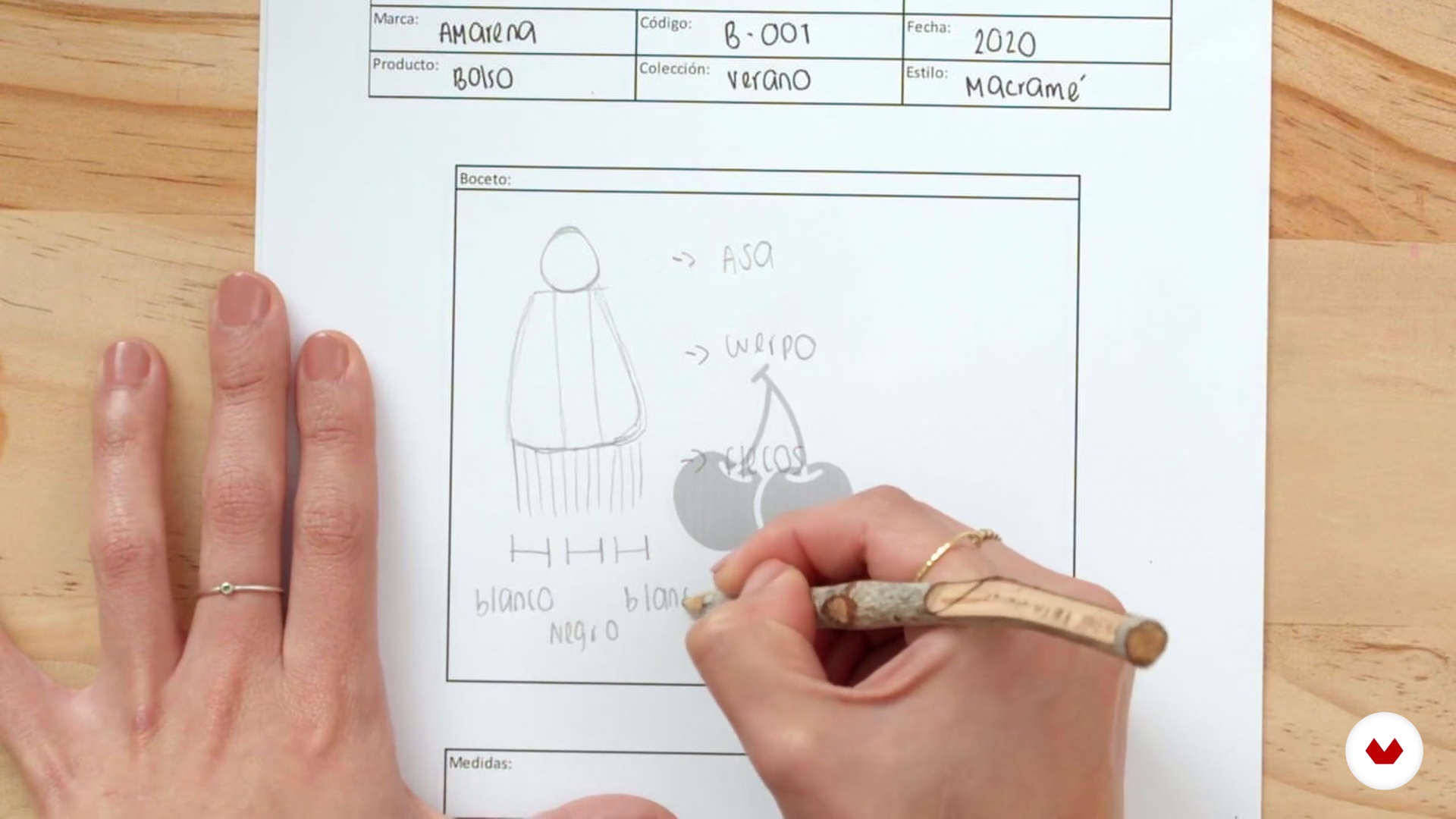
In this lesson, you will see how to make an easy sketch and to serve as a guide when defining the design. It will be a simple drawing whose purpose is that we understand it ourselves, so make all the annotations that you think are appropriate. We will proceed to put this sketch on the technical sheets together with all the important information for the production of the bag.
7m
image
11
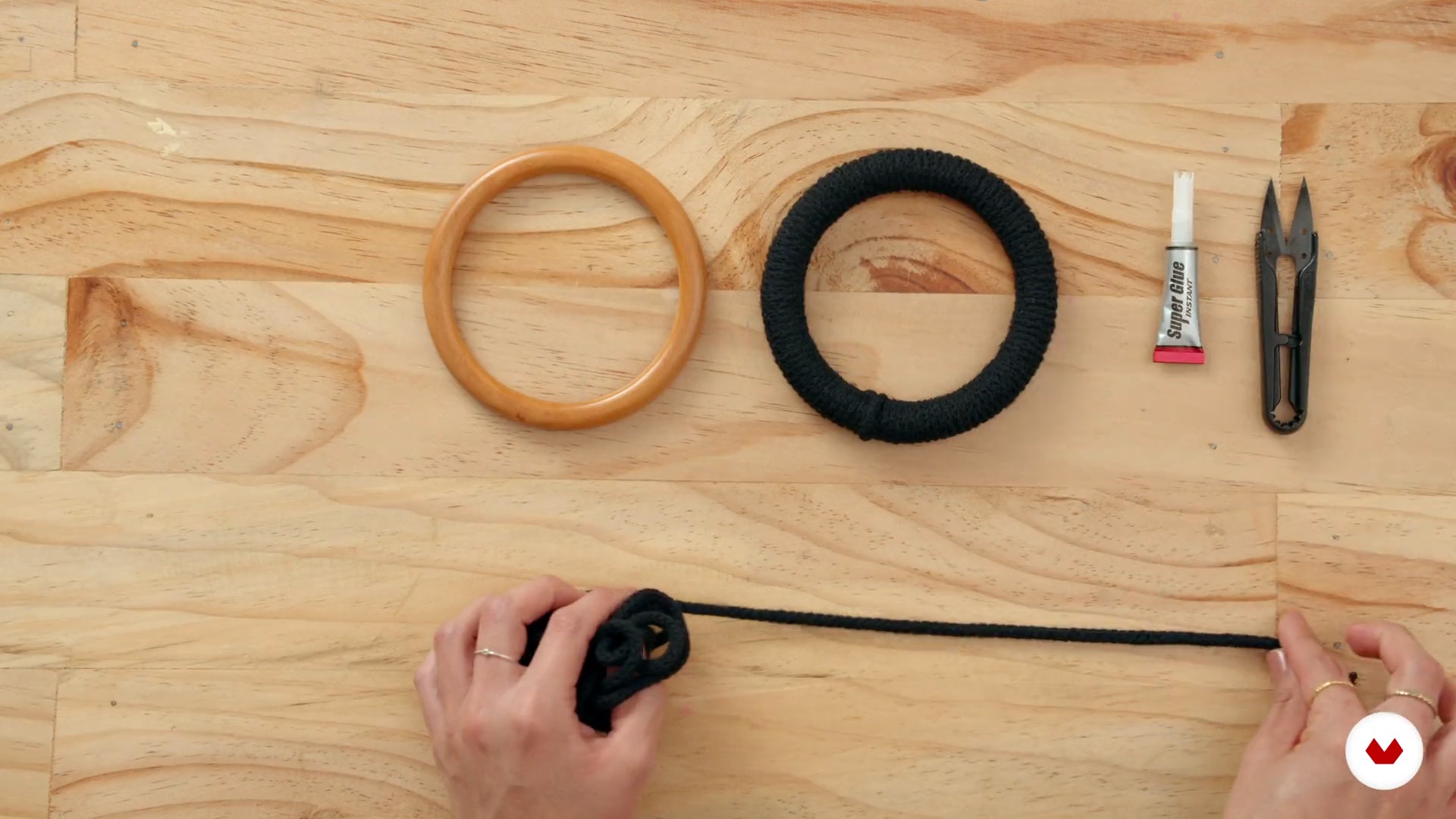
Elaboration of the bag: handles
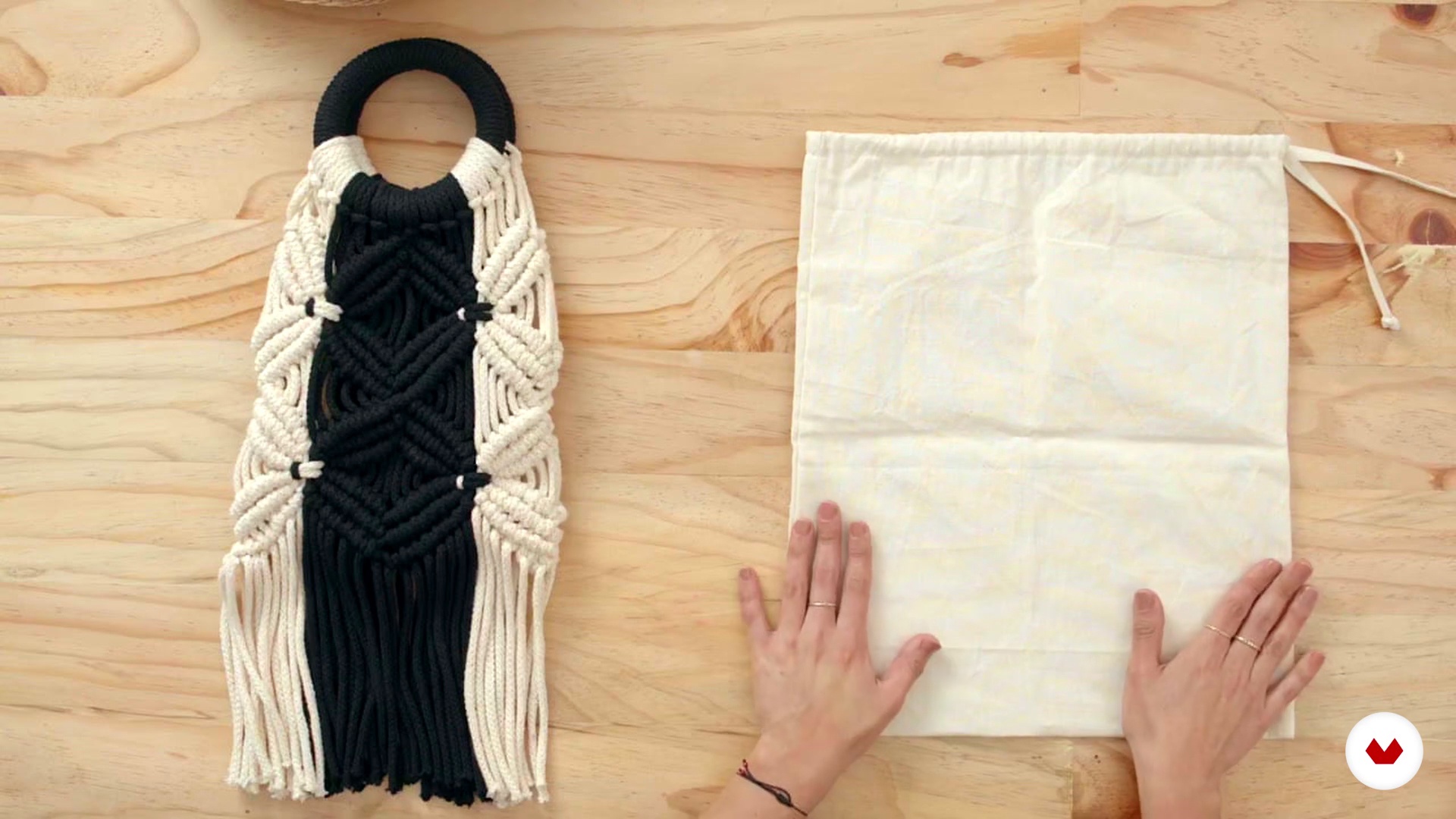
As with most Macramé projects, I'll start the process by explaining how to make the handles. And since ours will be lined, in this lesson, I will teach you step by step.
4m
image
12
Making the bag: body 1
Now that you know how to make the handles, we will start creating the bag. For that, we will take into account our final design and the different styles that exist to stay with the model that we like the most.
18m
image
13
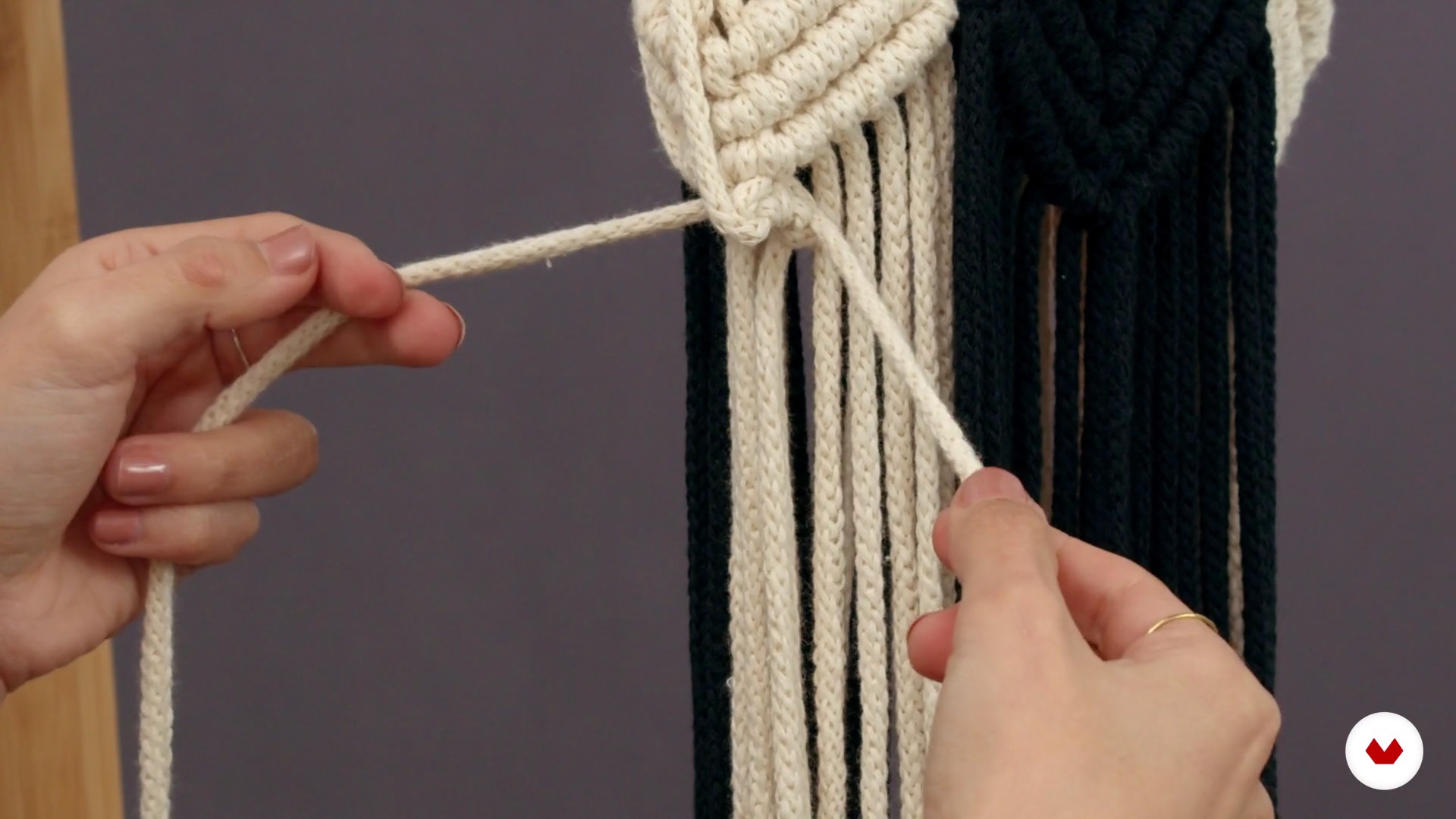
Elaboration of the bag: body 2
Now that we have the rhombuses at the top, I'm going to show you how to join each of them to a square or flat knot. Accompany me!
9m
image
14
Final shots
In this lesson, I will show you the different finishes that we can give to our bag.
5m
image
15
Packaging
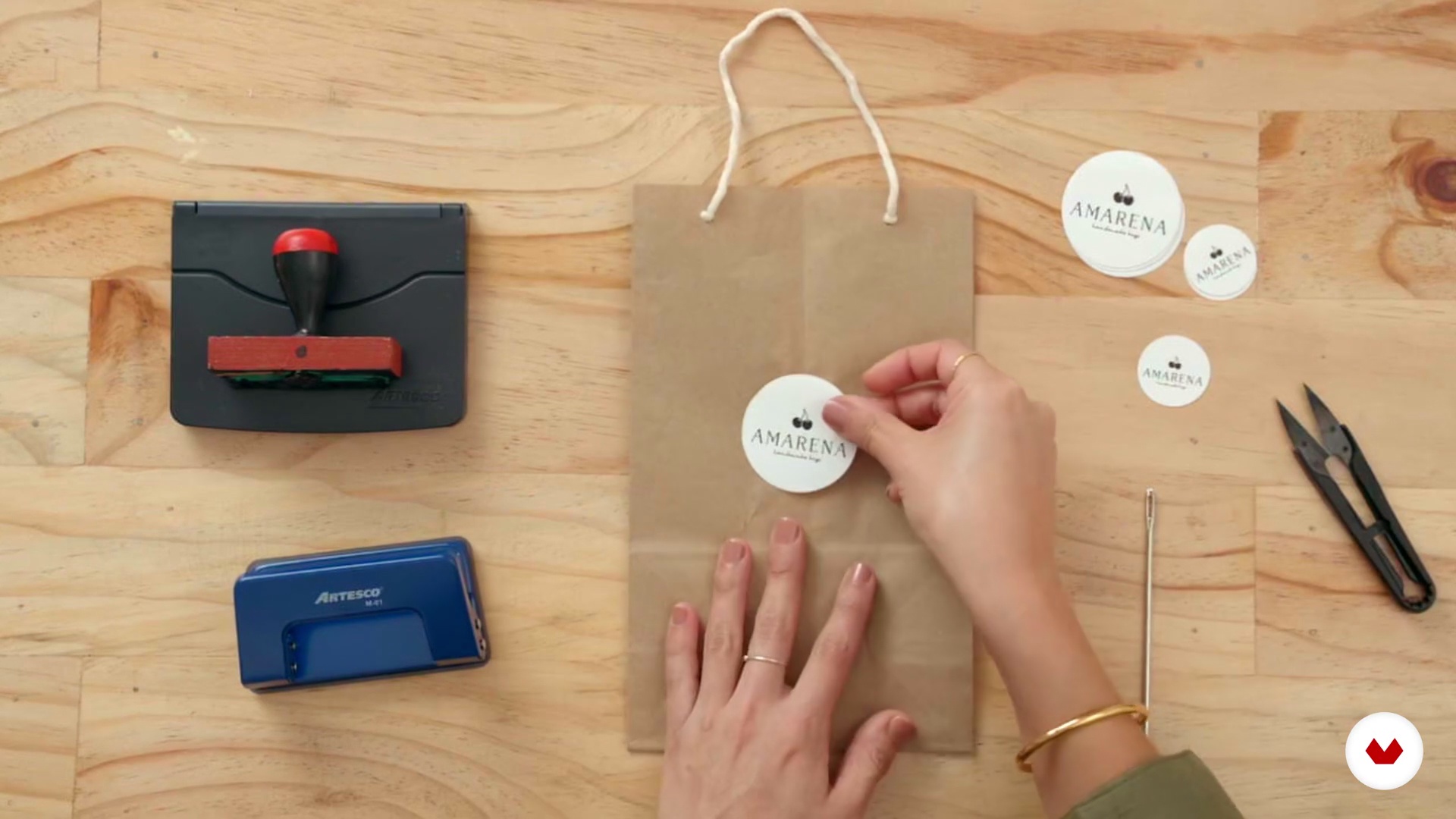
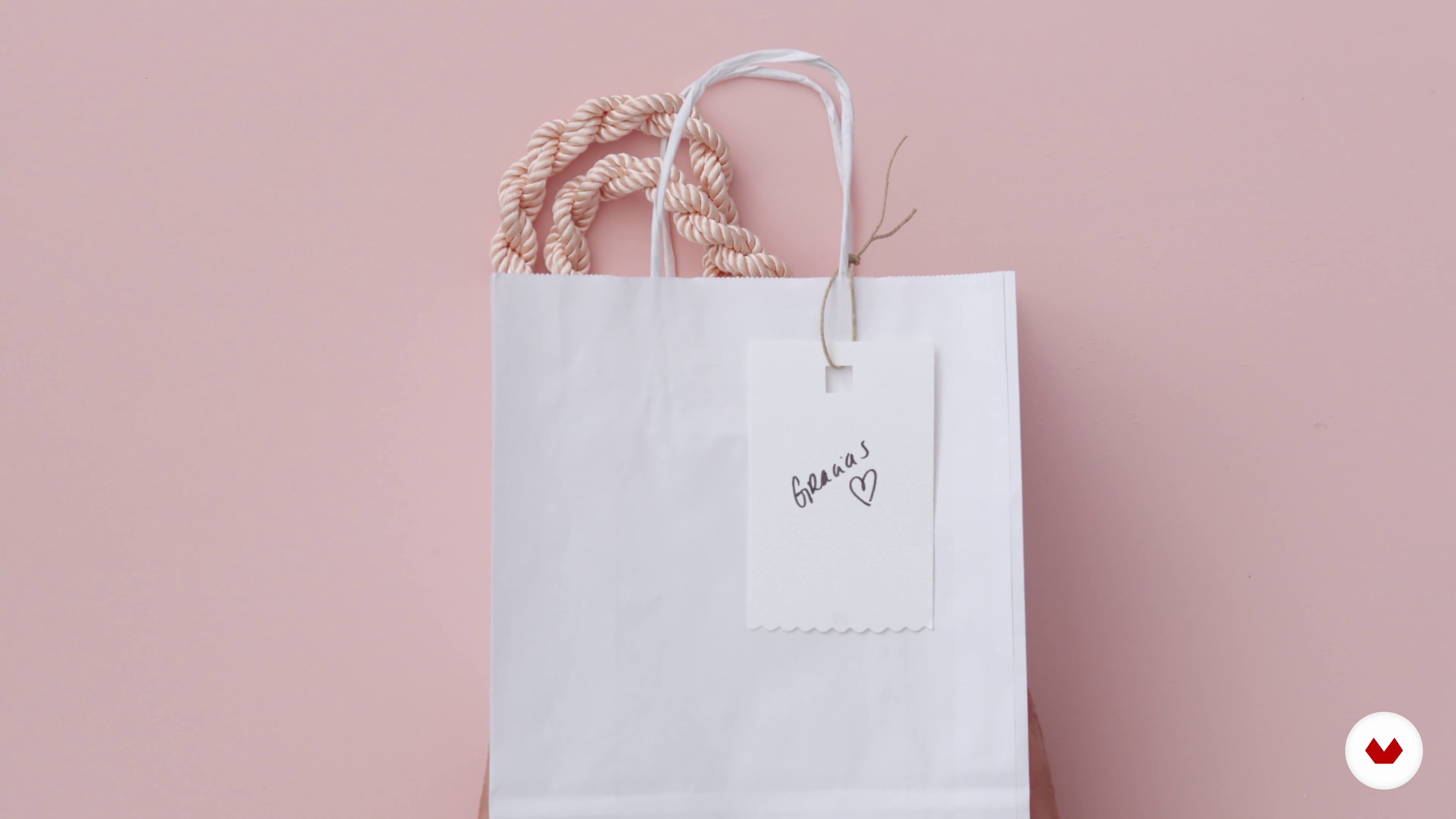
In this lesson, you will learn which packaging is ideal to give away or to market your pieces without leaving the artisan / sustainable concept.
5m
image
16
Part care
Now we will talk about the care you should give to your pieces.
1m
image
17
Presence in networks
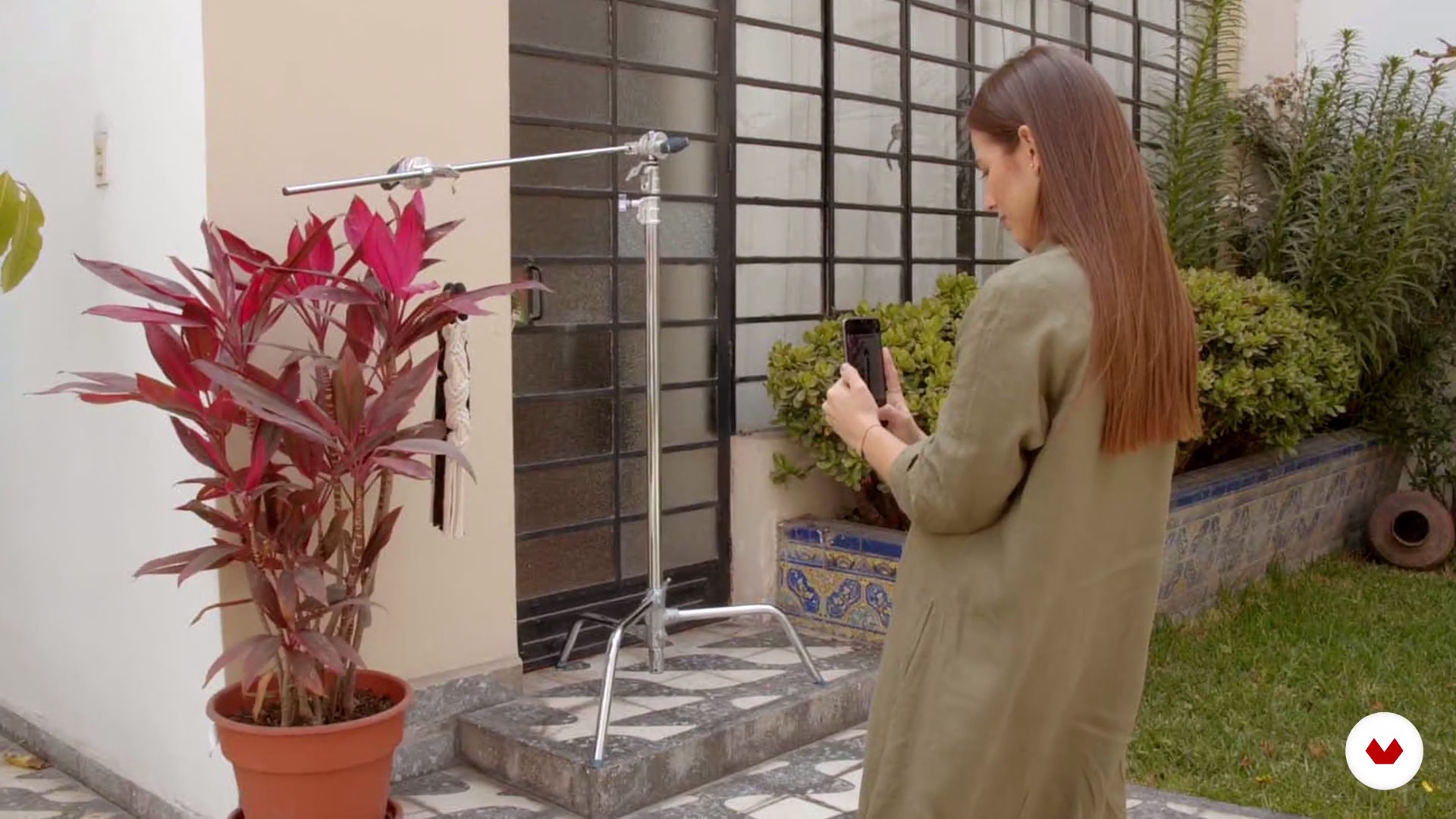
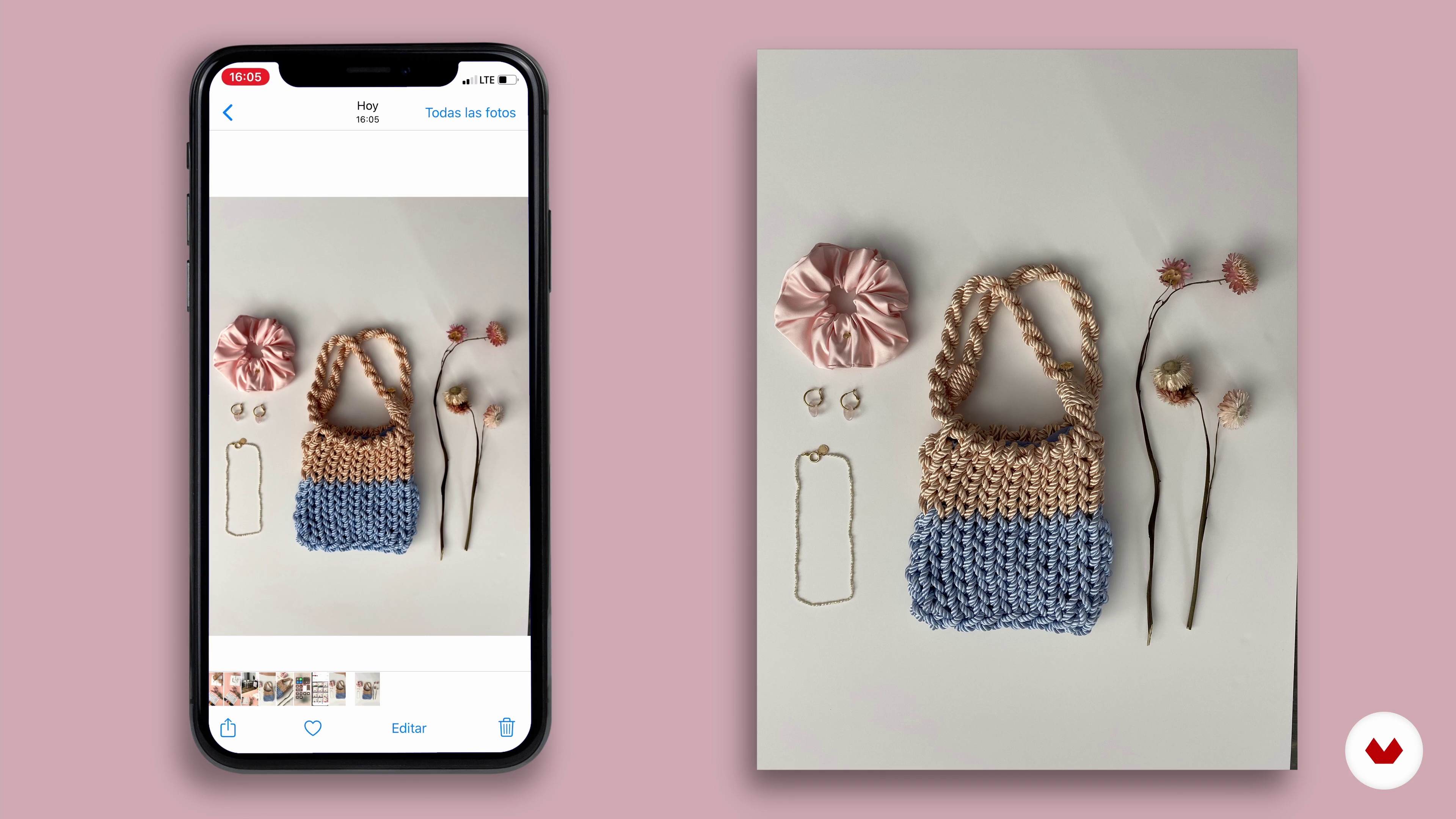
In the last stage, I will give you some tips to improve your presence in networks and I will also teach you how to take easy photos with few materials.
7m
image
3
The importance of design and its function
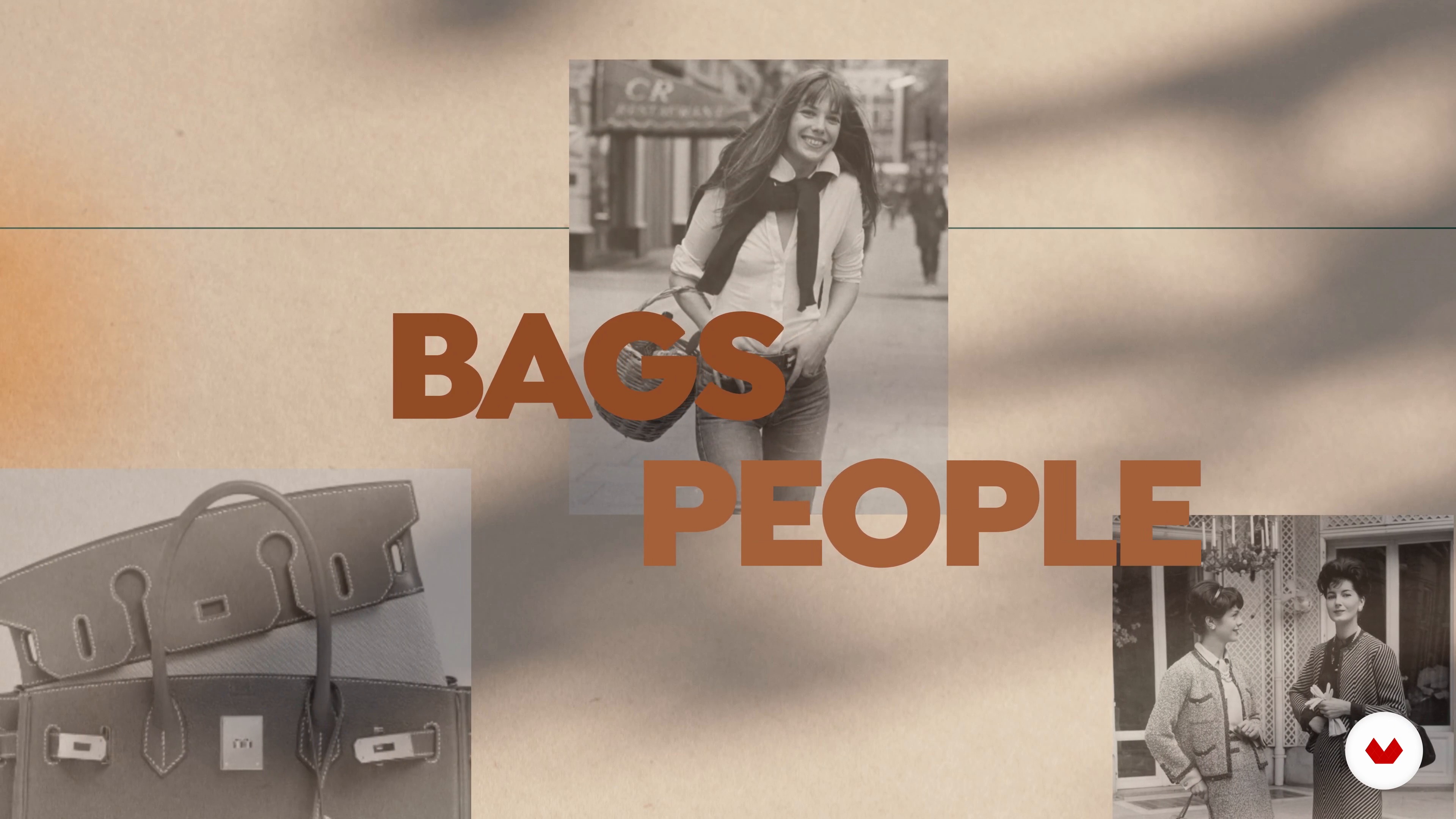
In this lesson I am going to show you examples of iconic bags, drawstring bags and the importance of the relationship between design and functionality. It is essential to define the use that we are going to give to our creations and to know our material to perfection in order to create good products that are practical and last over time.
5m
image
4
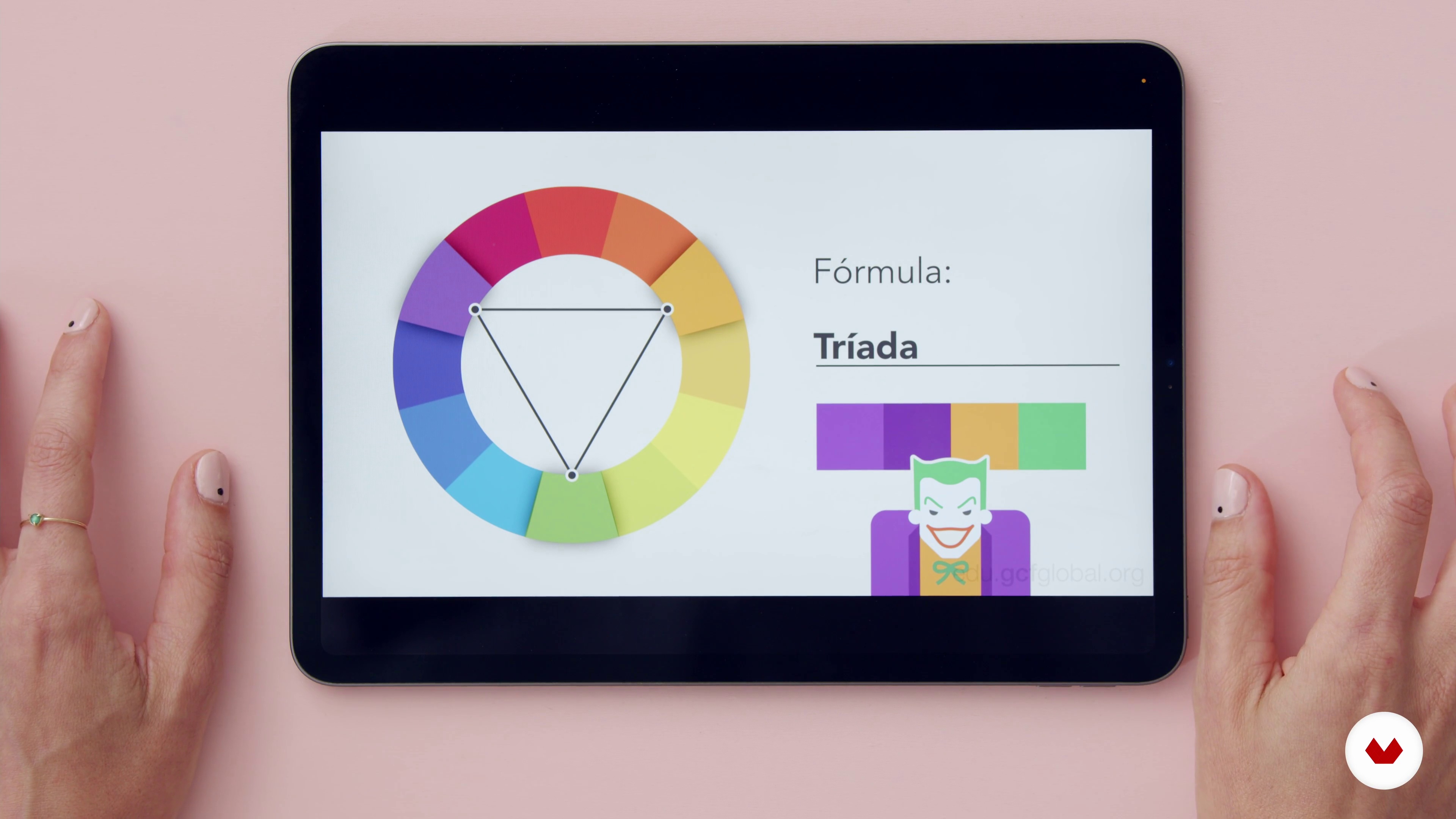
Color psychology applied to design
Next, I want to explain the importance of color to communicate your design. In addition, I will explain how to combine colors so that you make a coherent and balanced design.
5m
image
5
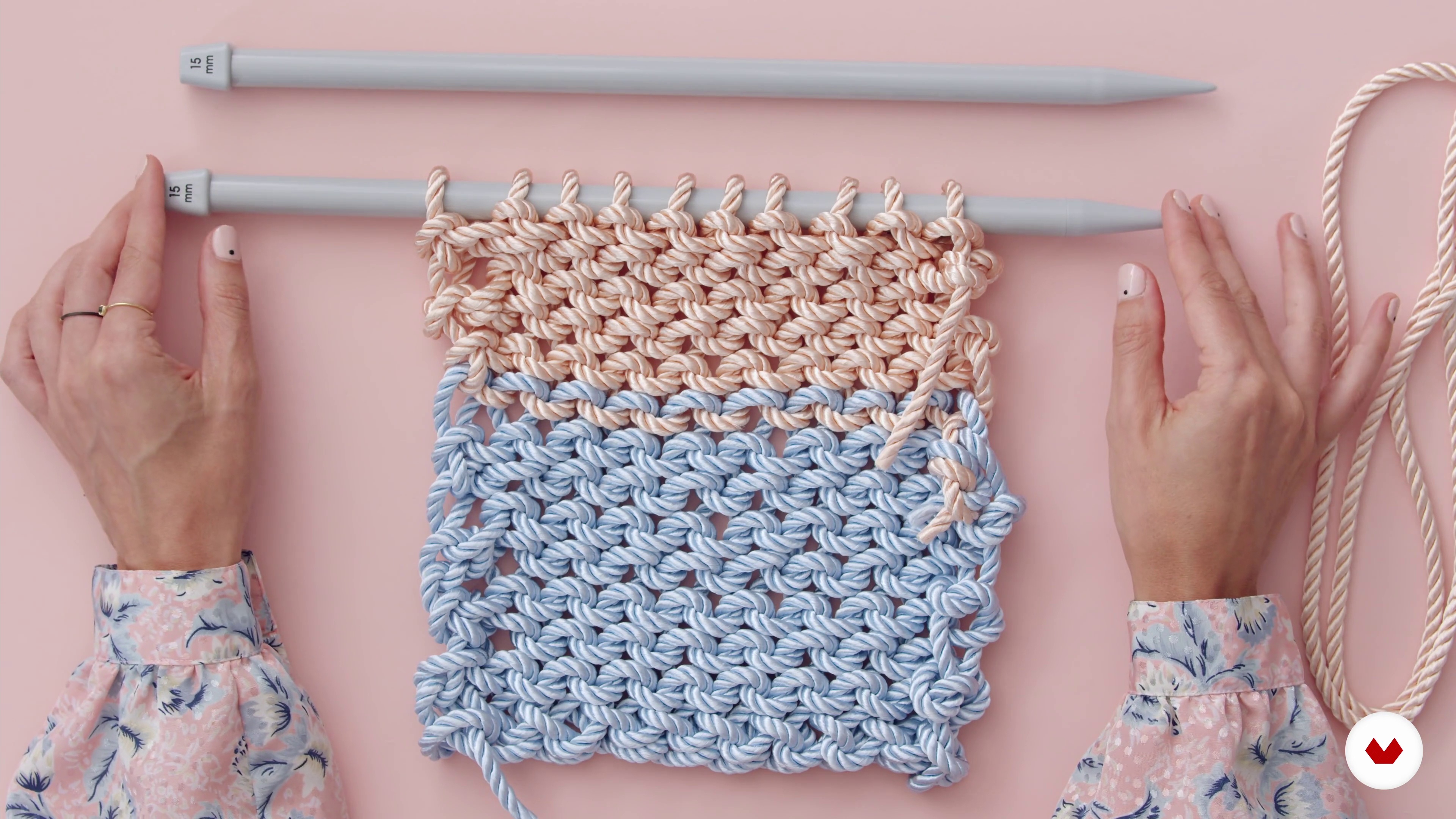
Know the material you work with and the first stitches
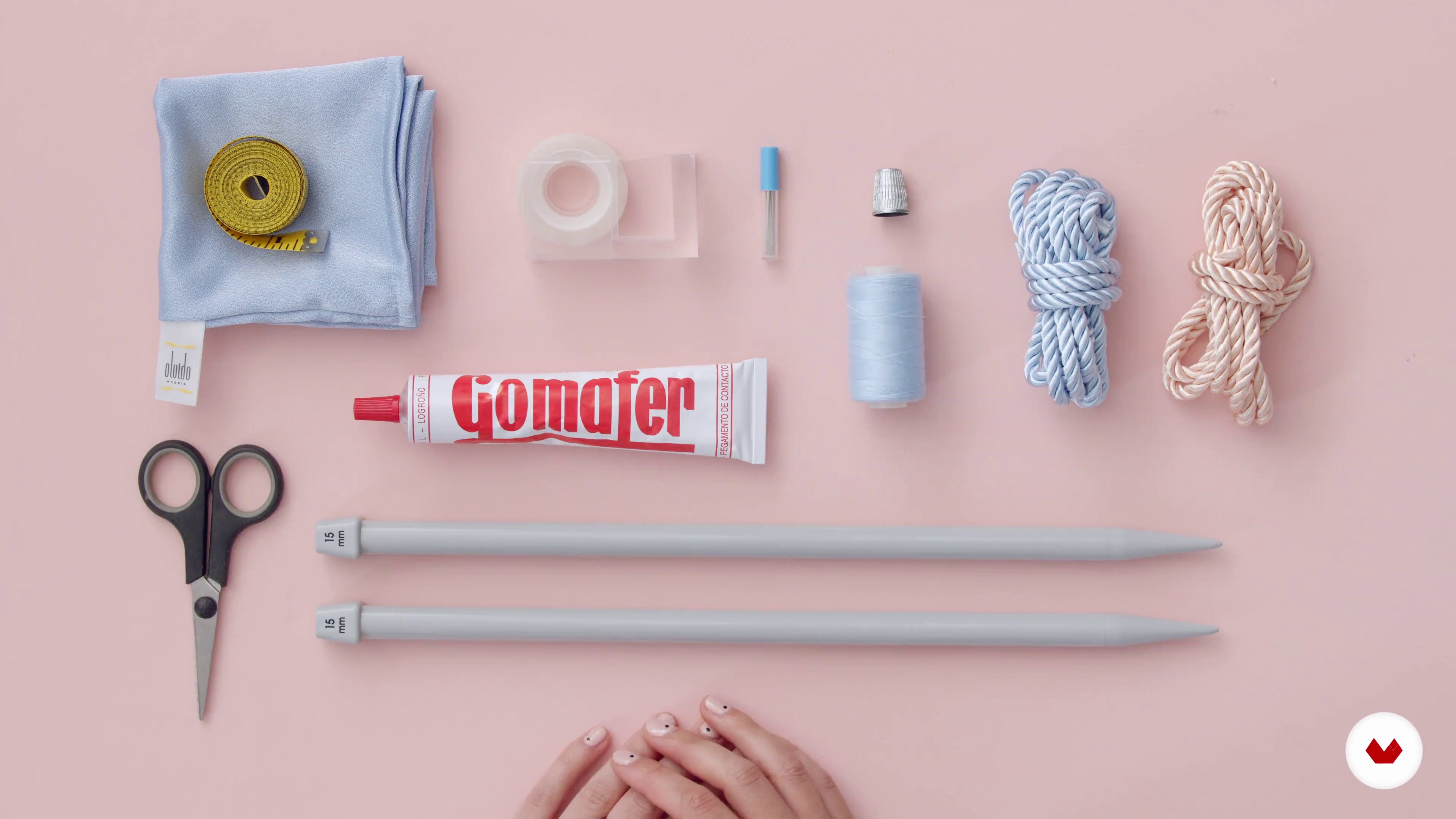
Now we will see how is the material that we are going to use in our final project, the silk cord. We have different thicknesses, twists and finishes. According to our design, we will use one or the other. I am going to teach you how to manipulate the silk cord and how to create a fabric using the technique of weaving with two needles. We will see the stockinette stitch and the garter stitch and we will create a sample with the needles that we will use for our final project, these will have a thickness of 15 mm.
17m
image
6
Techniques for creating silk cord handles
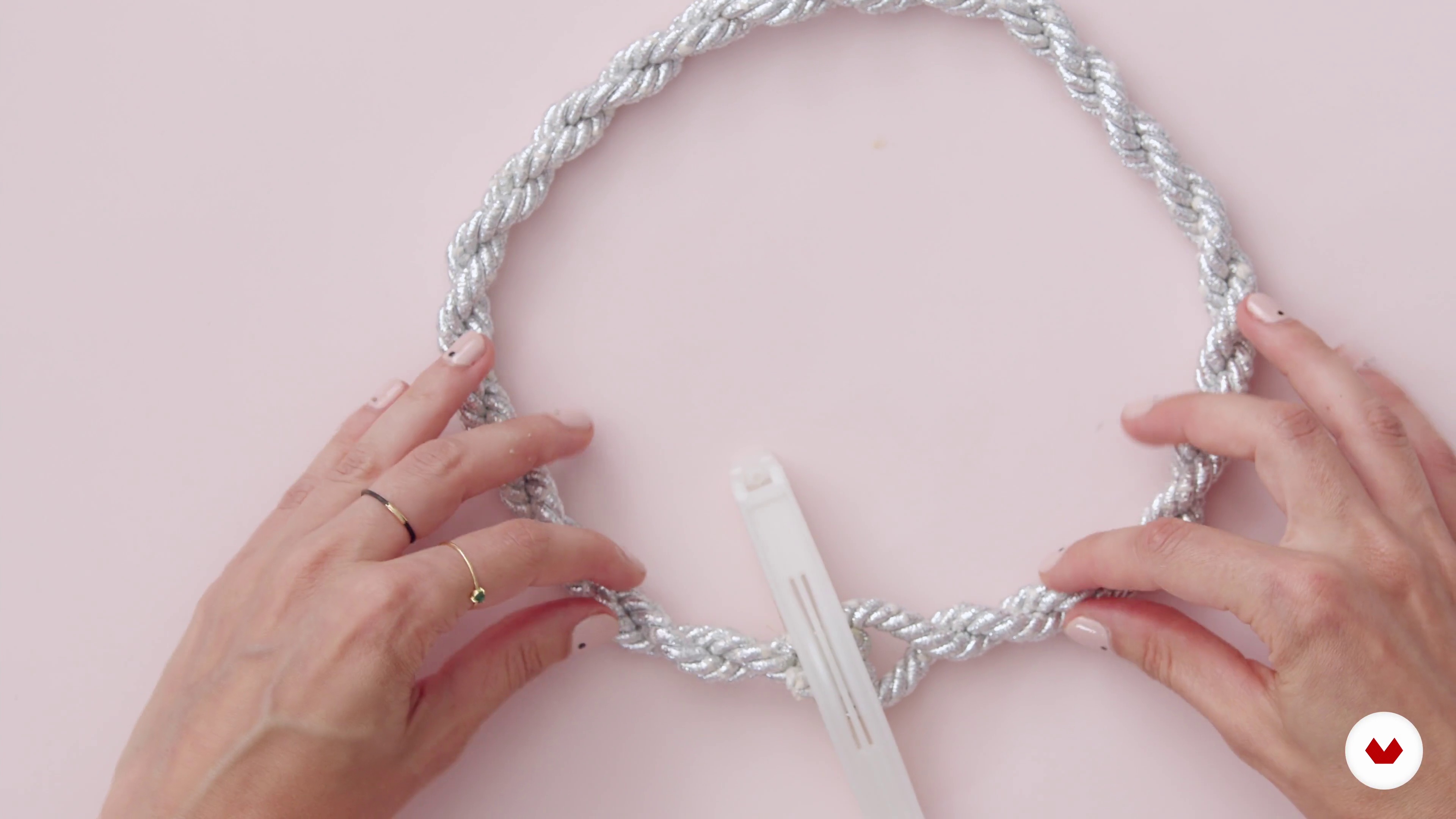
I am going to show you how to make three handles from the three cord thicknesses, with three different techniques: a four-strand braid, for the fine cord; twisted cord, for the medium cord, and a simple macrame knot, for the thick cord.
14m
image
7
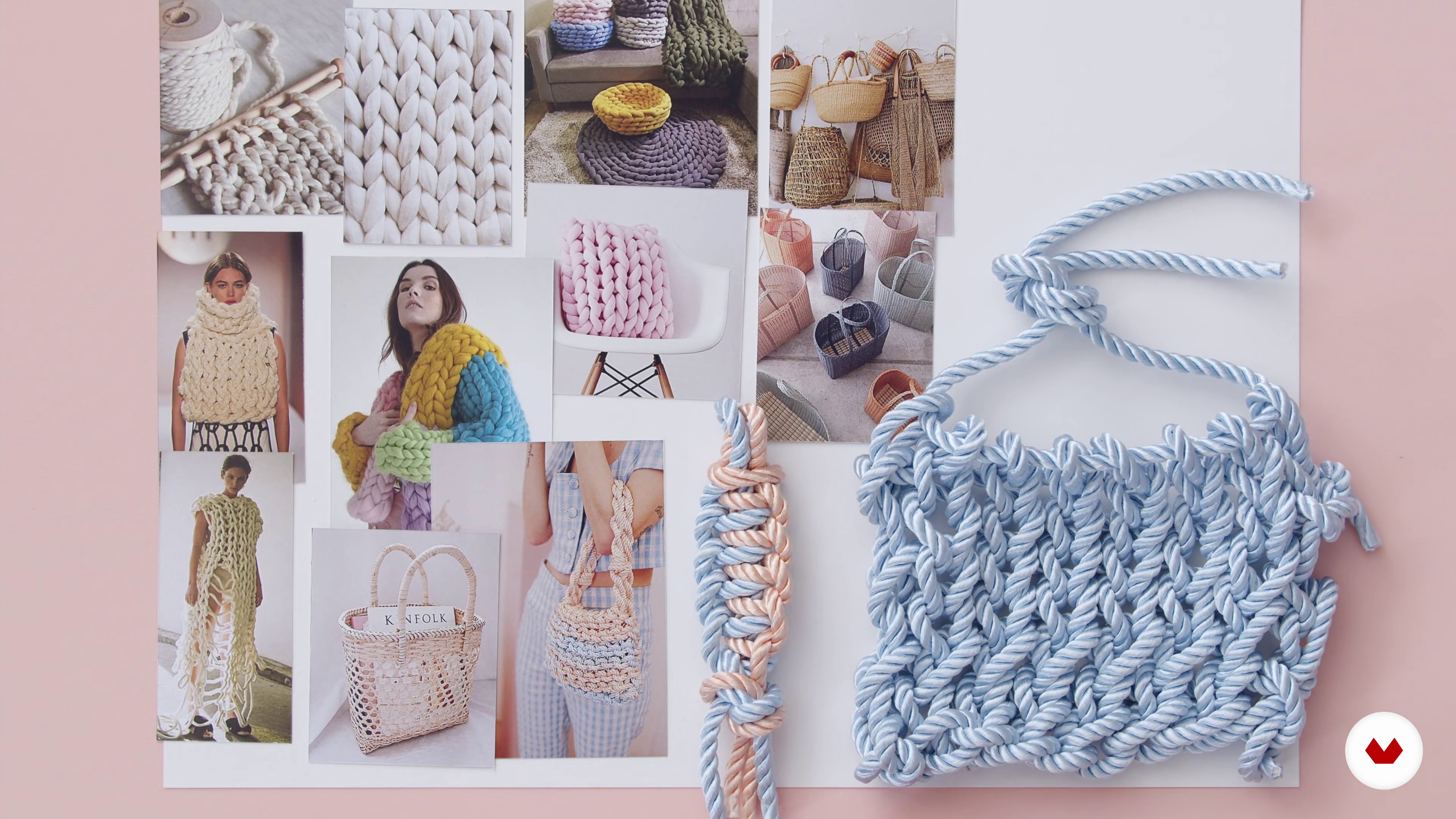
Inspiration Dashboard
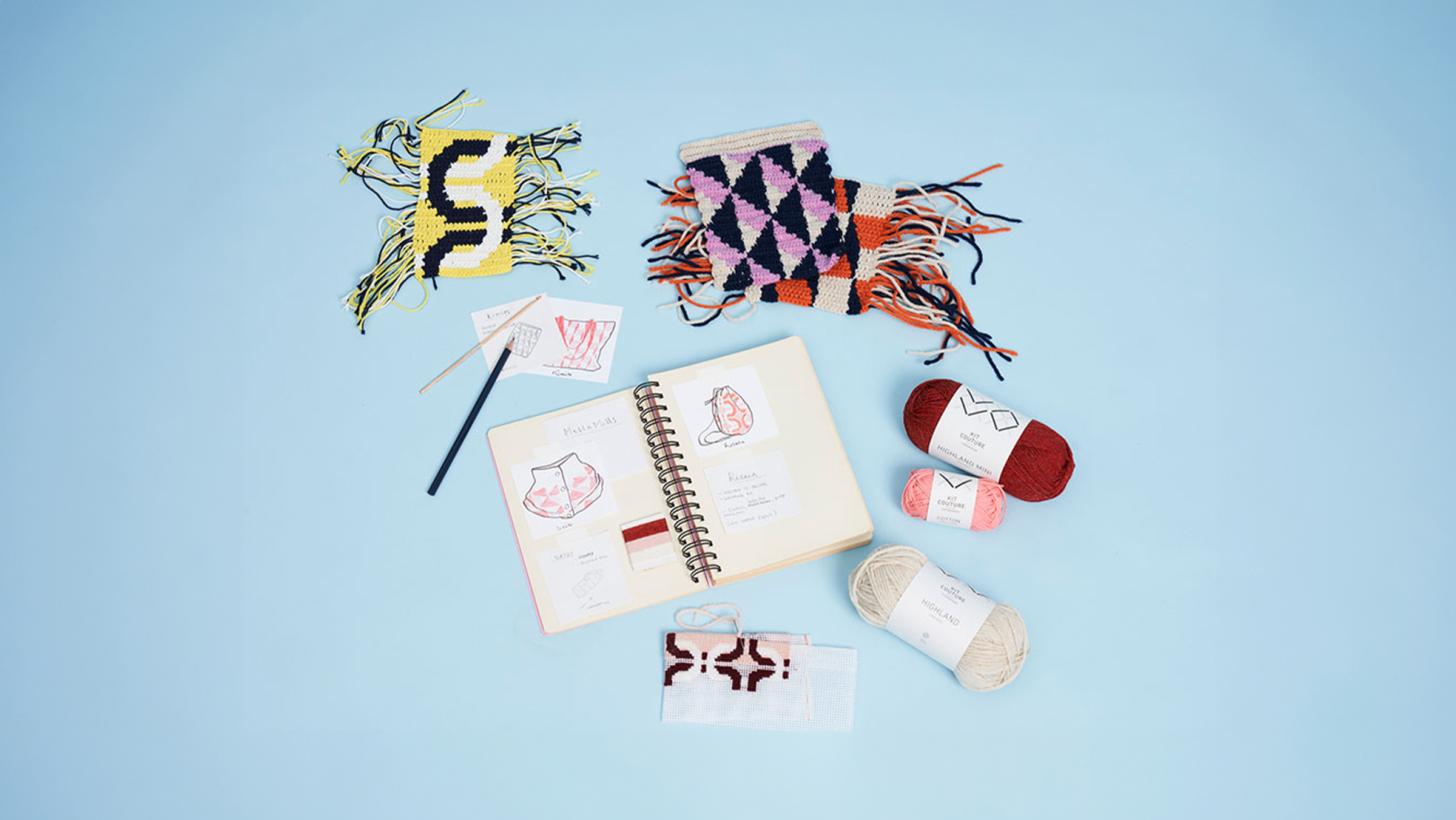
We are going to put together all the ideas and techniques that we find to create a mood board that guides us in our design process. We will combine our photos and samples that we will keep in a working filing cabinet, so we can use it whenever we need it.
4m
image
8
Design our bag
Now is the time to design our bag based on the ideas that we have compiled in the mood board. Remember that our designs have to be original as well as comfortable and functional. Be consistent with the size of your design and the length of the handles depending on how you want to use it.
9m
image
9
Weave the body of our bag
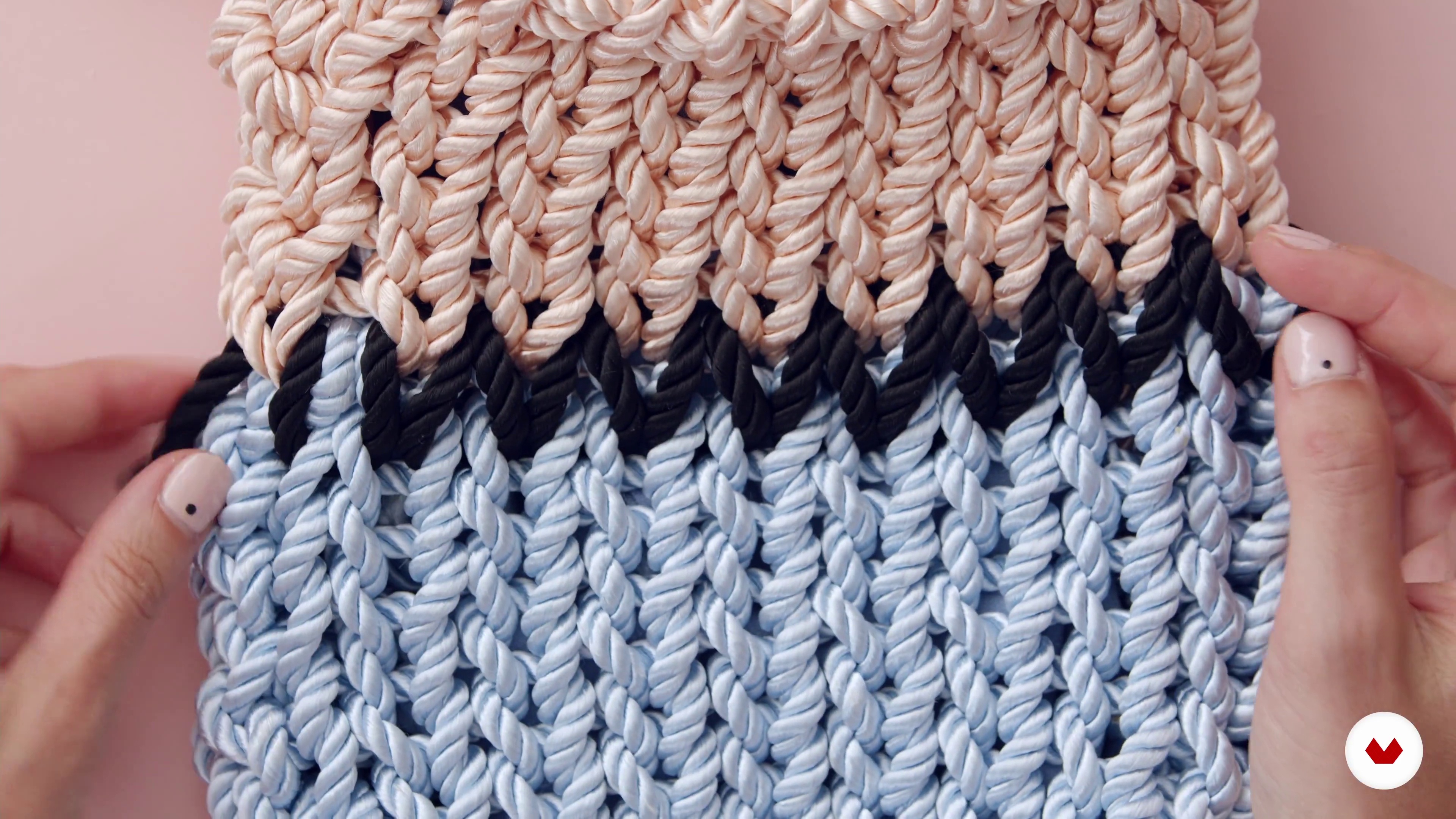
Now we are going to start working on our project. For this we will build with the technique of knitting with two needles, which we have practiced in Unit 2, the two outer parts that will form the body of our bag. Here I will teach you how to change the color so that you can create an original and fun design.
19m
image
10
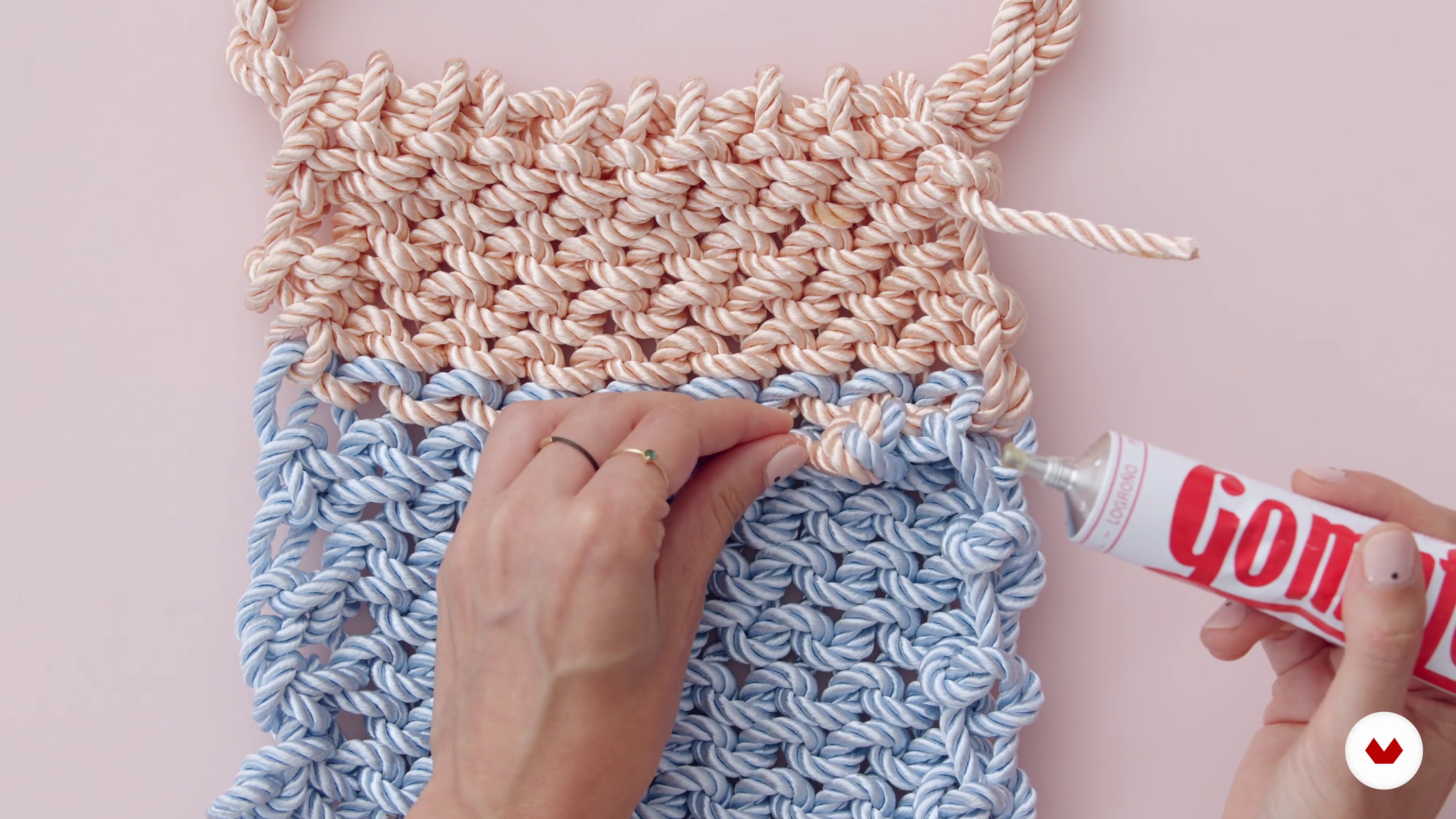
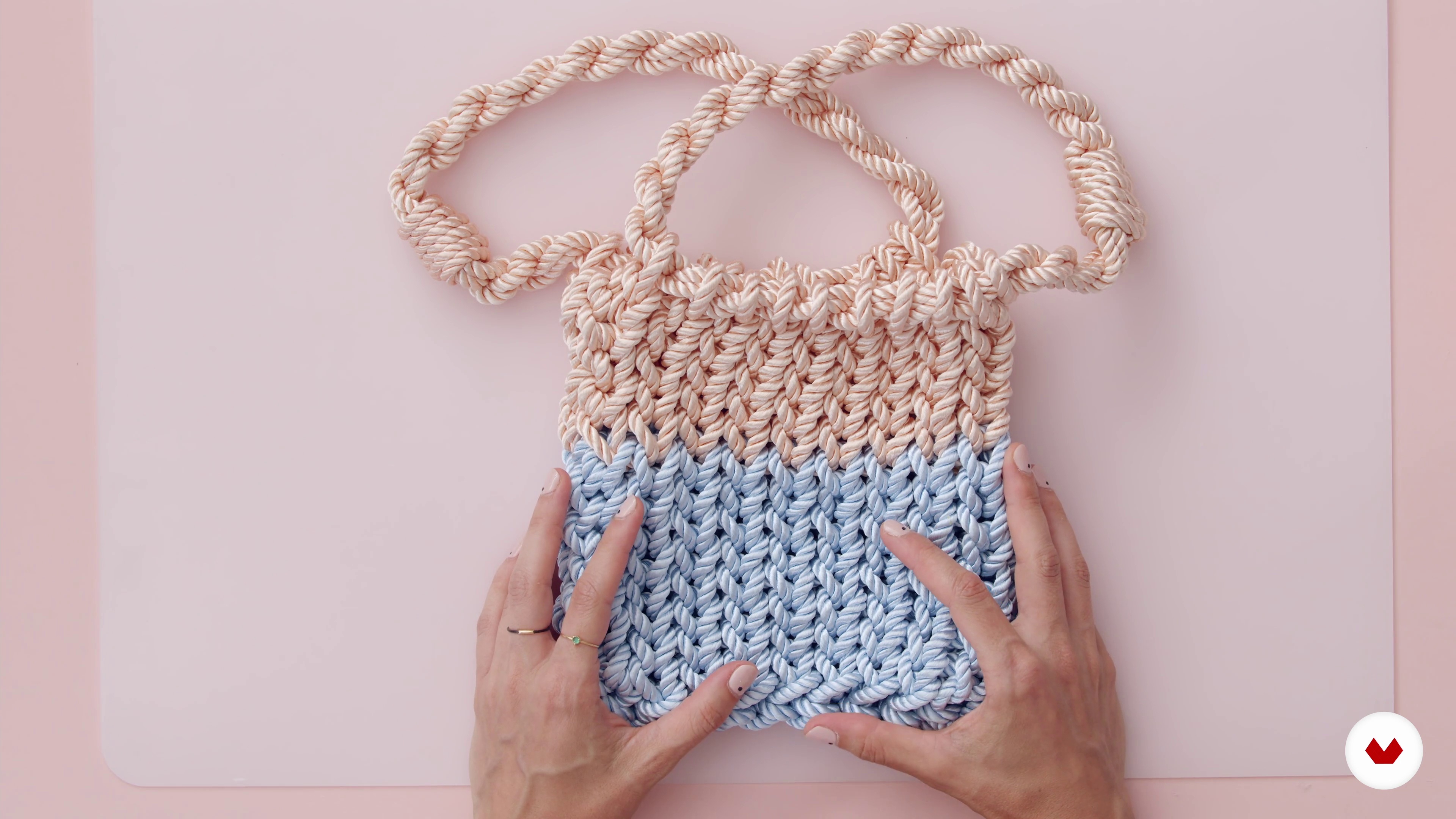
Join all parts and end caps 1
You have already learned how to make different drawstring handles, so you can use the one you like the most, but for my final project I am going to use the twisting technique to make the handles of our bag. We will also join the different pieces of the bag - outer caps and handles - to give shape to the project.
15m
image
11
Join all the parts and end caps 2
We continue to put together the different parts of our bag, paying attention to details.
16m
image
12
Final part: lining 1
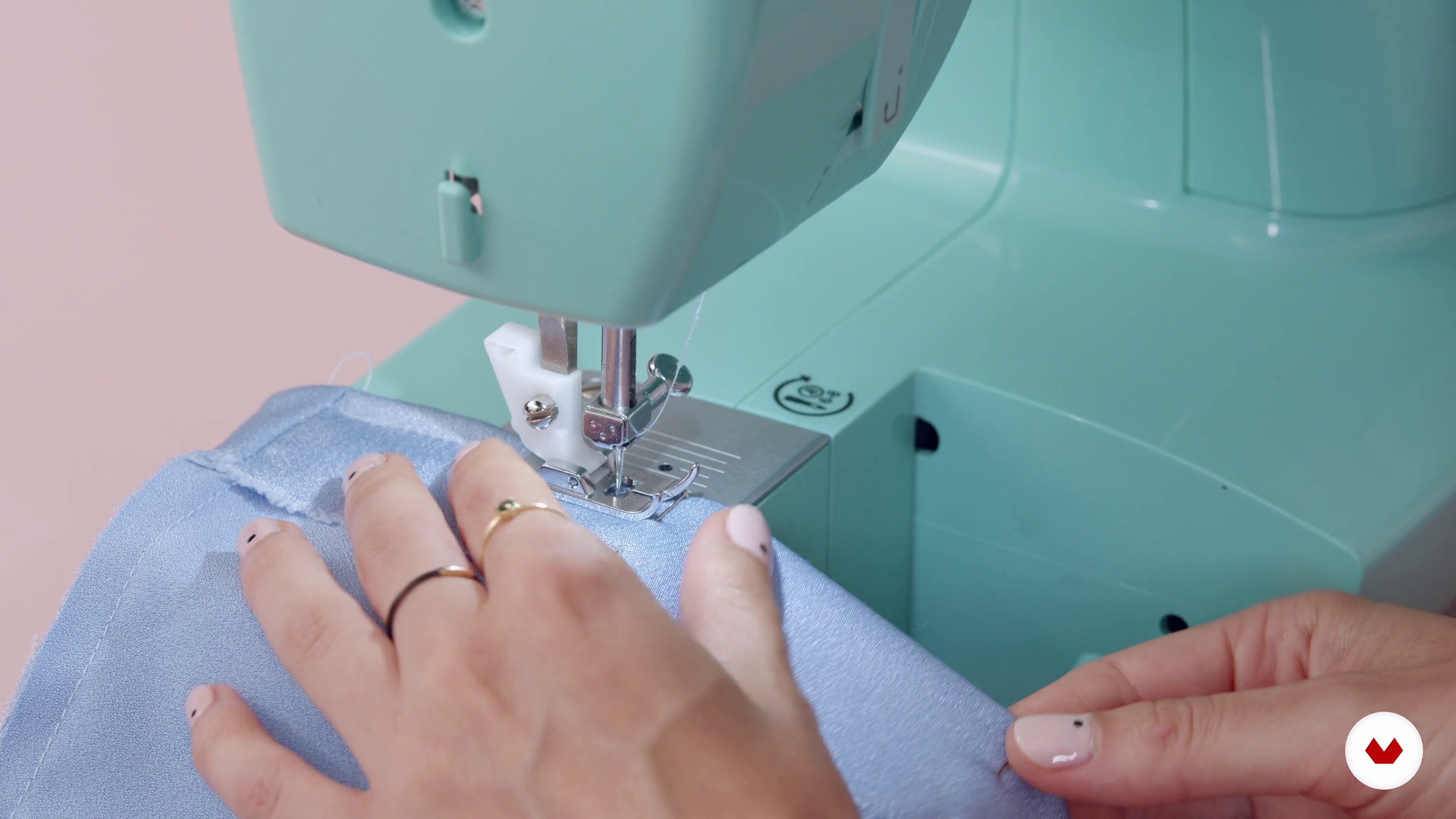
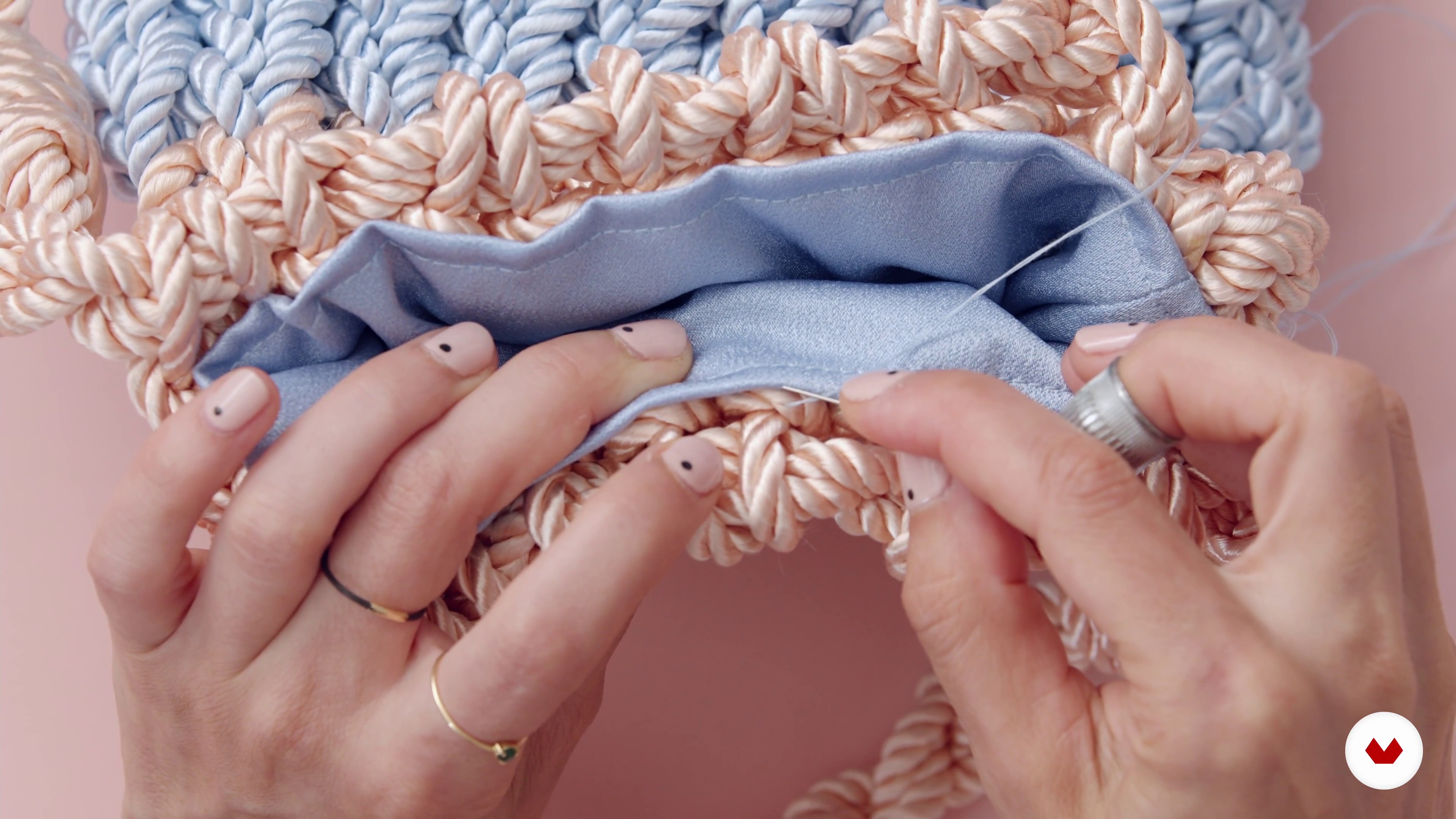
The last part of the project is to make a lining for our bag. We will see how to make a simple pattern, different ways to sew it and how to attach it to the bag in such a way that it is fixed and supports the weight of what we carry inside.
19m
image
13
Final part: the lining 2
After sewing the lining, it is time to join it to the body of the bag.
10m
image
14
Customize your silk drawstring bag
Now that you know how to make a silk drawstring bag by combining colors, why not customize it? I'm going to teach you some simple and very effective techniques to make your design even more unique.
6m
image
15
The importance of packaging
Our designs must always be accompanied by a beautiful and practical packaging. The elements you choose will speak about you and your brand, so try to be consistent with the message you want to give.
8m
image
16
Basic photography
I'm going to show you how I create simple and beautiful compositions to take professional photos of my products with my mobile.
5m
image
3
Getting to Know Crochet
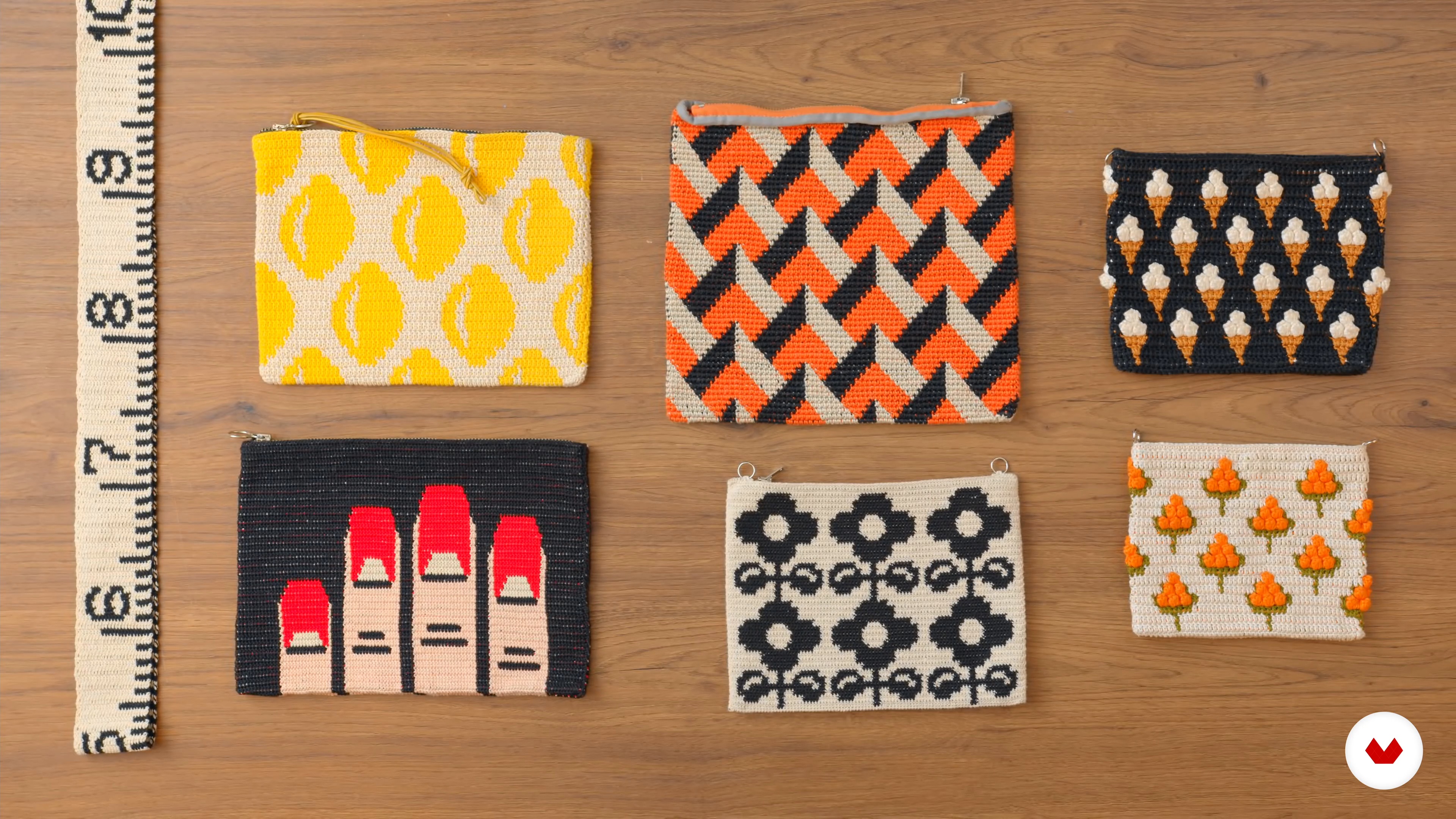
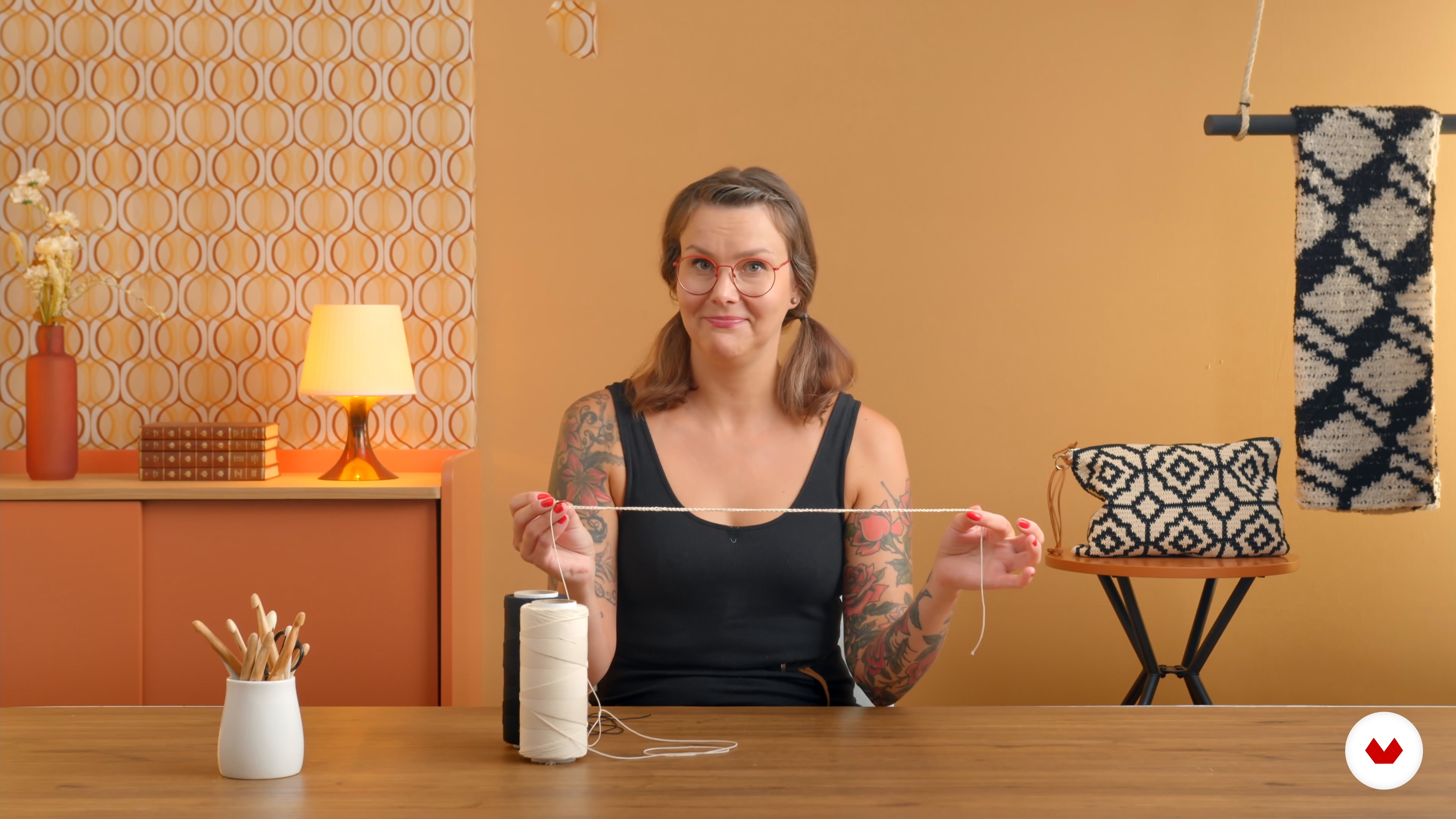
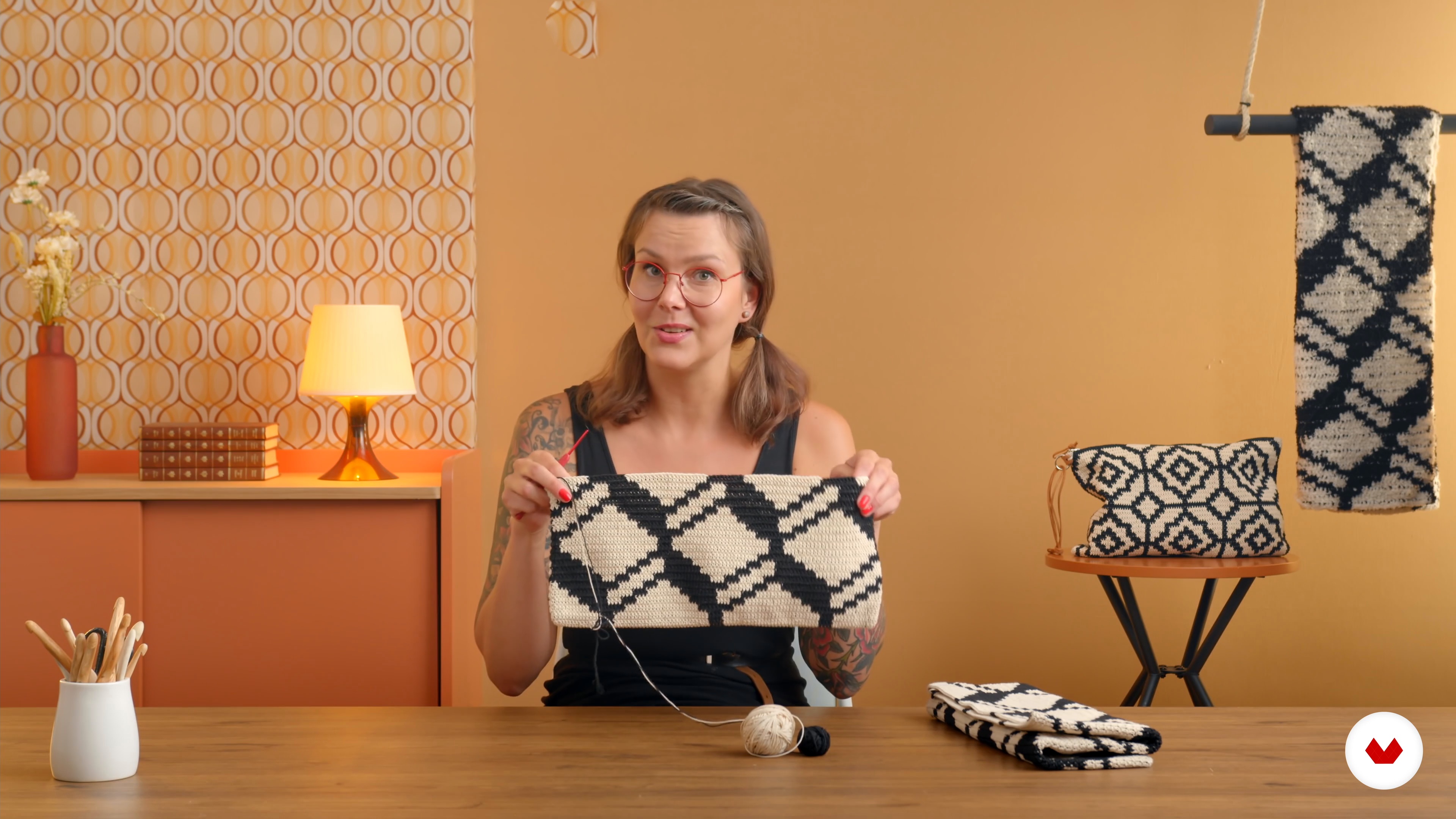
Our course project will be a bag. A bag is something we all carry with us every day. It may be a backpack, a laptop bag, a suitcase, or a simple phone pocket. You use a bag for practical reasons, but you can also choose a design that fits with your personal style. And this bag you can make yourself. First, I will show you several variations of crochet bags I have made during my career as a designer. Some of these bags have been touring the world with me, some of them I have at my studio waiting to get to be used. To give your crochet bag a long life, choose your yarn wisely. Later on, we'll talk more about yarns. Next, I will show what you'll need when designing a bag with your own pattern - starting with the size, the pattern repeats, where and how to sew a zipper, whether the bag needs a lining, how to attach handles, where to sew buttons and how to use a reinforcing cotton ribbon. There are many ways to create your bag, and I will give you some tips that will help you in your design process. I guess you have questions about the bags I have just shown you. They all have different patterns! Where did I find the inspiration for these bags?
4m
image
4
Choosing Yarns, Colors, and Tools
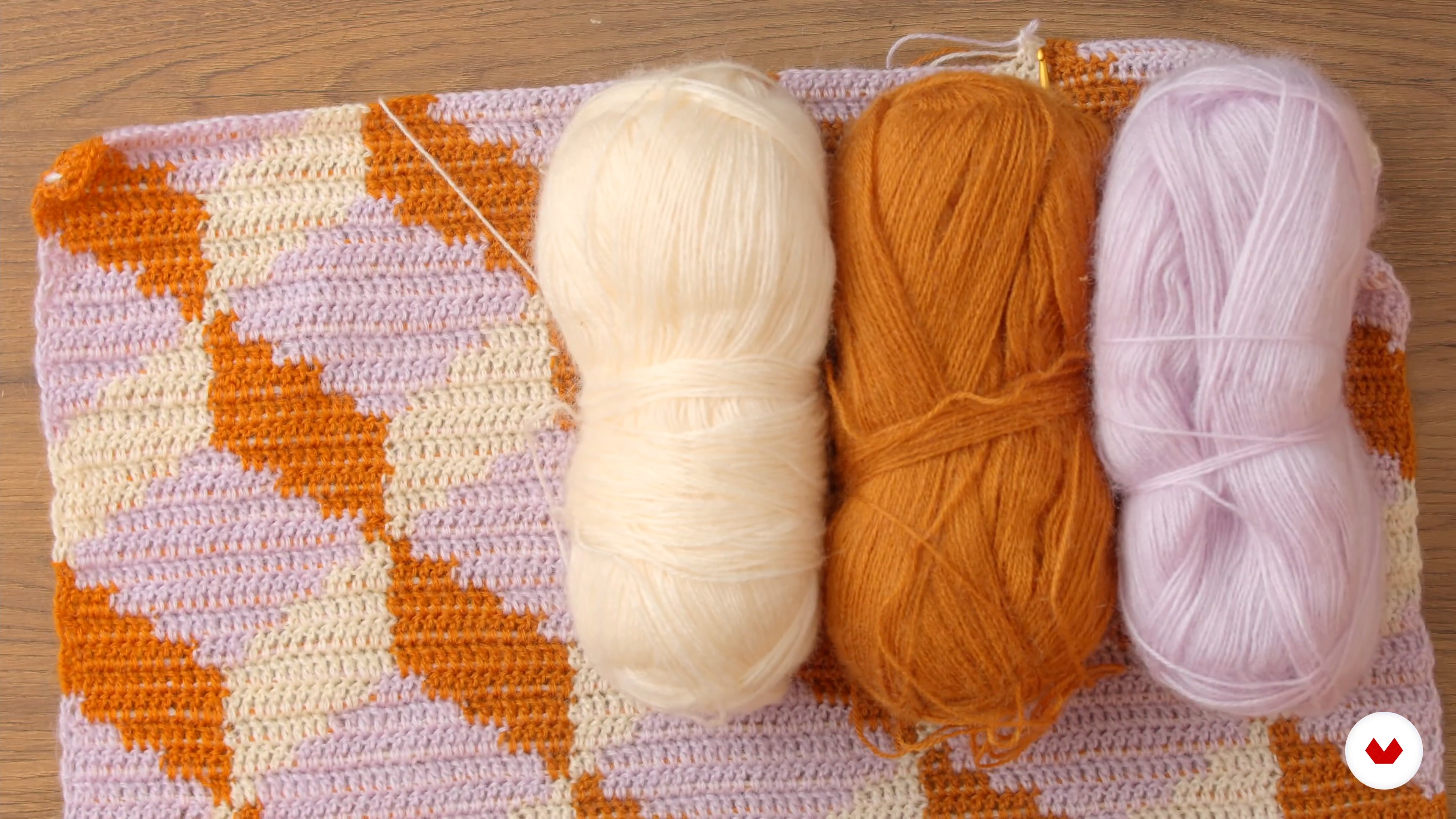
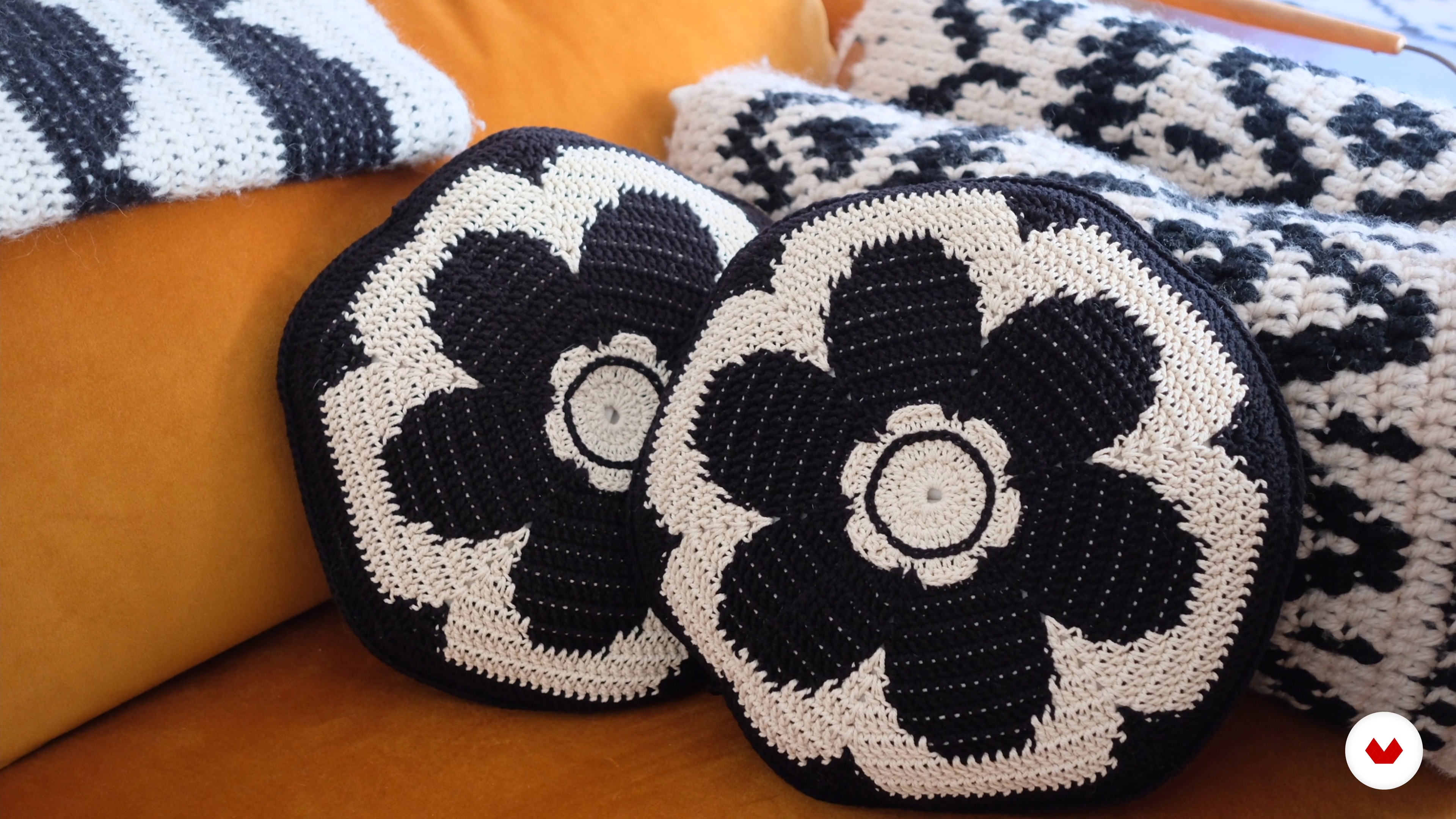
Yarns. Don’t we all love them! Visiting your favorite yarn shop after a long day of work just brightens up the day! It is so relaxing and inspiring to squeeze the fluffy soft rolls and plan your next project. My course yarns are from Lankava, a Finnish yarn house that has a long history of providing people with yarns and craft tools. We have been working together for ten years and I’m happy to soon have my own yarn collection made with Lankava. For the main work, the black and white backpack, I have used Liina yarn. Liina is made from one hundred percent cotton and fits any project that needs to be mighty strong, because the yarn is basically unbreakable. The soft rug is made of Frotee yarn, which is a famous weaving yarn from the early 1990s. Lankava has brought it back to production with new solid colors. The black and white shawl is made of Alpaca boucle, a soft and warm yarn nice to crochet with a big hook. The colorful pillow is made of wool with a three-color tapestry technique, same as the fluffy wall hanging.
11m
image
5
Grid-Based Design
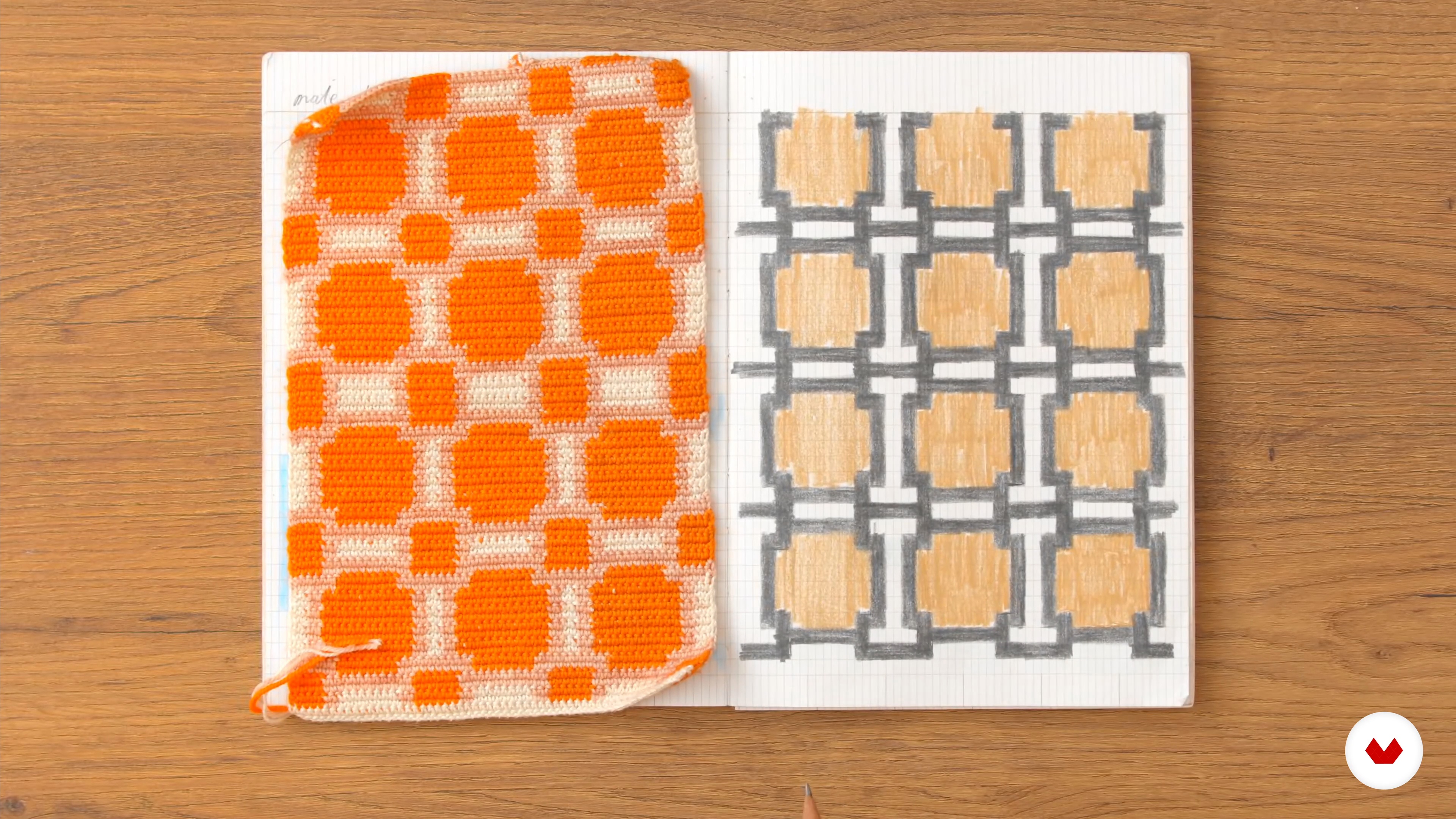
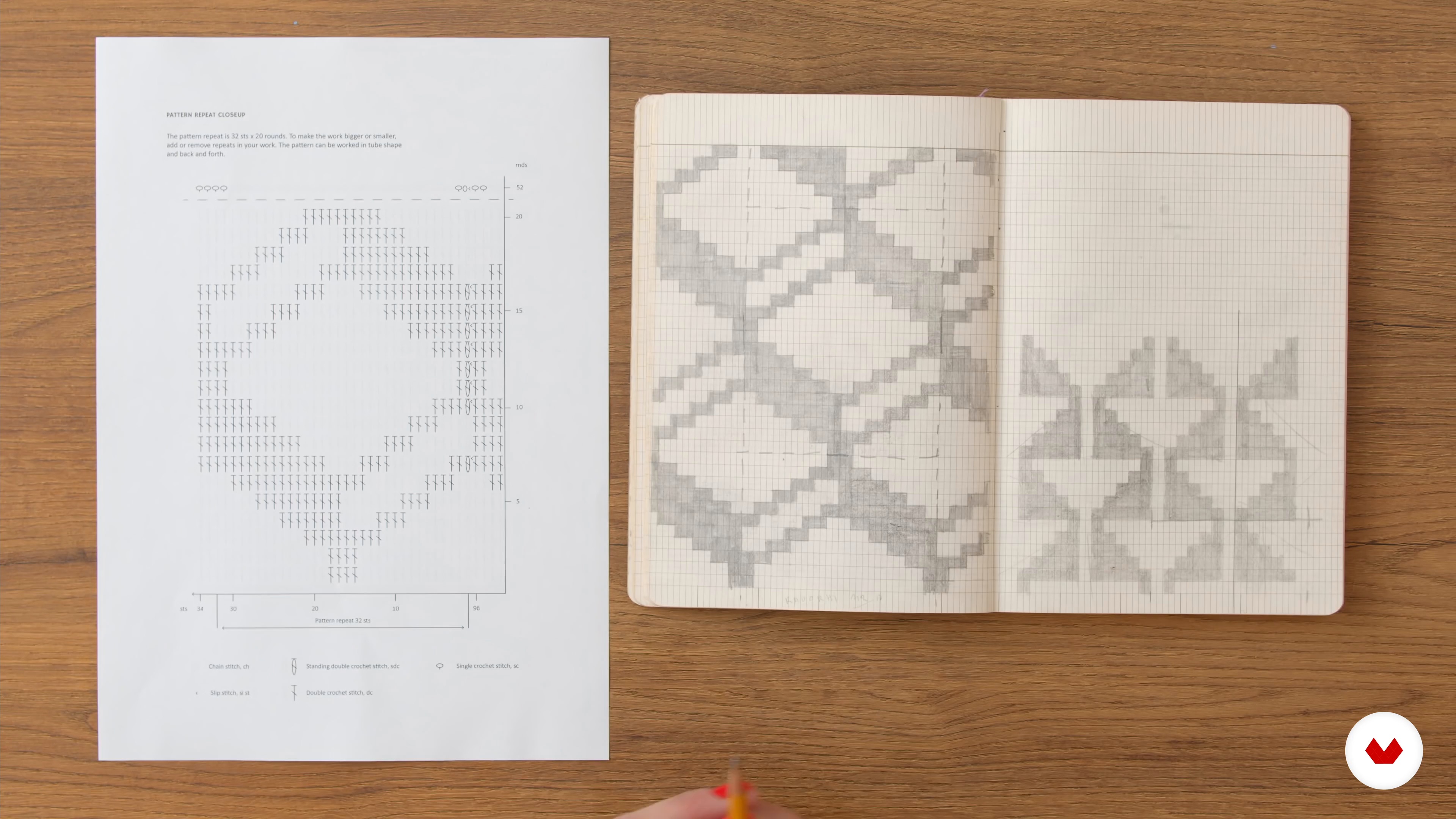
Let's now talk about how to design a grid-based crochet pattern. The nature of a crocheted texture is grid-based, and in most cases, you can design your pattern on grid paper, the same paper you used during your maths exam. But why grid paper? Why not sketch paper? If you have been crocheting before, you know that the stitches are all stacked on top of each other forming a grid-based pattern. Imagine if the stitches were Legos. We would use the square and the rectangular ones to create a crochet pattern by building a surface where you only have certain moves to make. These moves represent the stitches you will crochet, in our case, single crochet stitches (square lego) and double crochet stitches (rectangular lego). So when we design the crochet pattern, we use the grid base as a map for the stitches. You can go wild as well, skip the grid paper, and crochet on: This would be called free-form crochet. But with a grid-based crochet design, you can explore the limits of the grid and see how complicated a pattern you are able to create. I have a few of my pattern design memos to show you, they are all grid-based. There are three types of grid in the memo: a square, a rectangular, and a honeycomb shape. The latter is for designing patterns for tube-shaped single crochet surfaces. We will use the rectangular grid. Next, we learn how to read the grid-based color charts and the universal crochet symbols, which often look like some weird alien language. What about the pattern repeat? Let’s see how that works.
4m
image
6
Spotting the Pattern
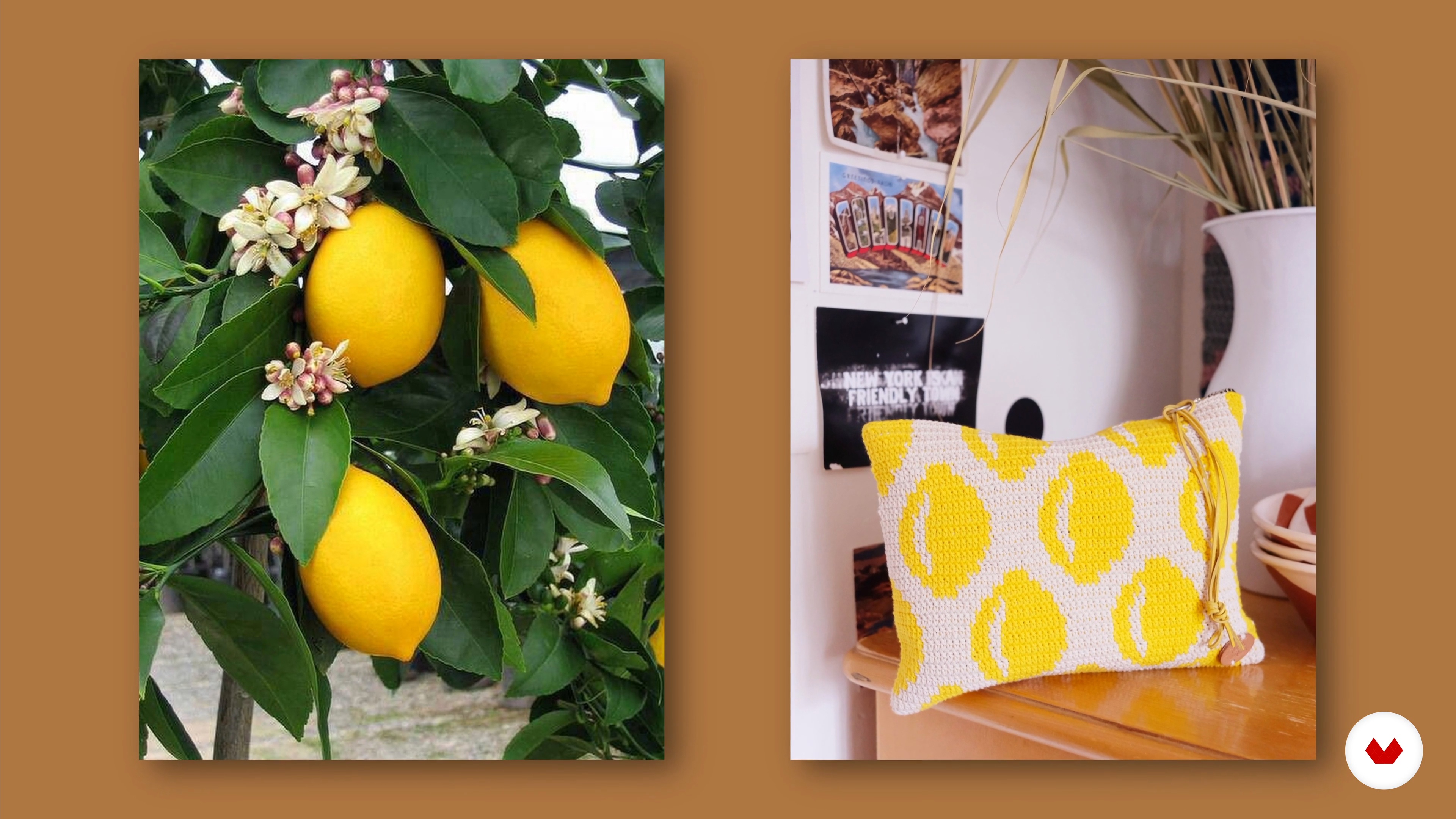
Patterns are everywhere! I believe the patterns we surround ourselves with have a big impact on our mindset. Needless to say, this is my favorite part of my job: designing the pattern aka pattern spotting. You might always be on the creative lookout like me, but as humans, we don’t always register the beauty of the moment - it's our subconsciousness that does this. It collects and packs the visual information we see, the sounds we hear, the emotions we feel. It then stirs it all up and ... There you have it: your designer identity. The majority of my works are in black and white, this is how people see my designer identity. This is a fun part of the course: Keep your senses open and your camera close, maybe carry a sketchbook in your pocket as well before going out to spot patterns. We will focus on the details of nature, observe architecture, breathe in the colors we see, and smile at people when walking around. Observe what you see and feel when reading a book, when watching a movie, when visiting a new restaurant, when talking to your grandma. The idea is to collect inspiration and get creative for the next lesson in which you will focus on drawing the pattern.
5m
image
7
Drawing the Pattern
Let's start drawing! Grab your pencils and paper, let’s get creative. Just remember, you don’t need to be an artist to create your crochet patterns, just use your imagination and choose colors that make you feel inspired.
8m
image
8
Making Stitches
First, let’s have a look at the most common crochet stitches. In most of my works, I’m using a double crochet stitch, a tall stitch that goes well with accessories and home decorations. The other stitch I prefer is a single crochet stitch. This one is smaller and stronger than a double crochet stitch, making it perfect for any work that needs a strong texture. I use this stitch in small wallets and purses, sometimes in small rugs as well. There are many variations of these two common stitches, but with just these two you can make amazing patterns. For joining the rounds and finishing the edges we use a slip stitch, and to start each crocheted piece we use a chain stitch. Let’s now make some stitch samples.
12m
image
9
How to Make Tapestry Crochet
You have now learned to make stitches with one yarn. Let’s mix it up a bit and add more yarns. This is called tapestry crochet.
7m
image
10
Start Crocheting!
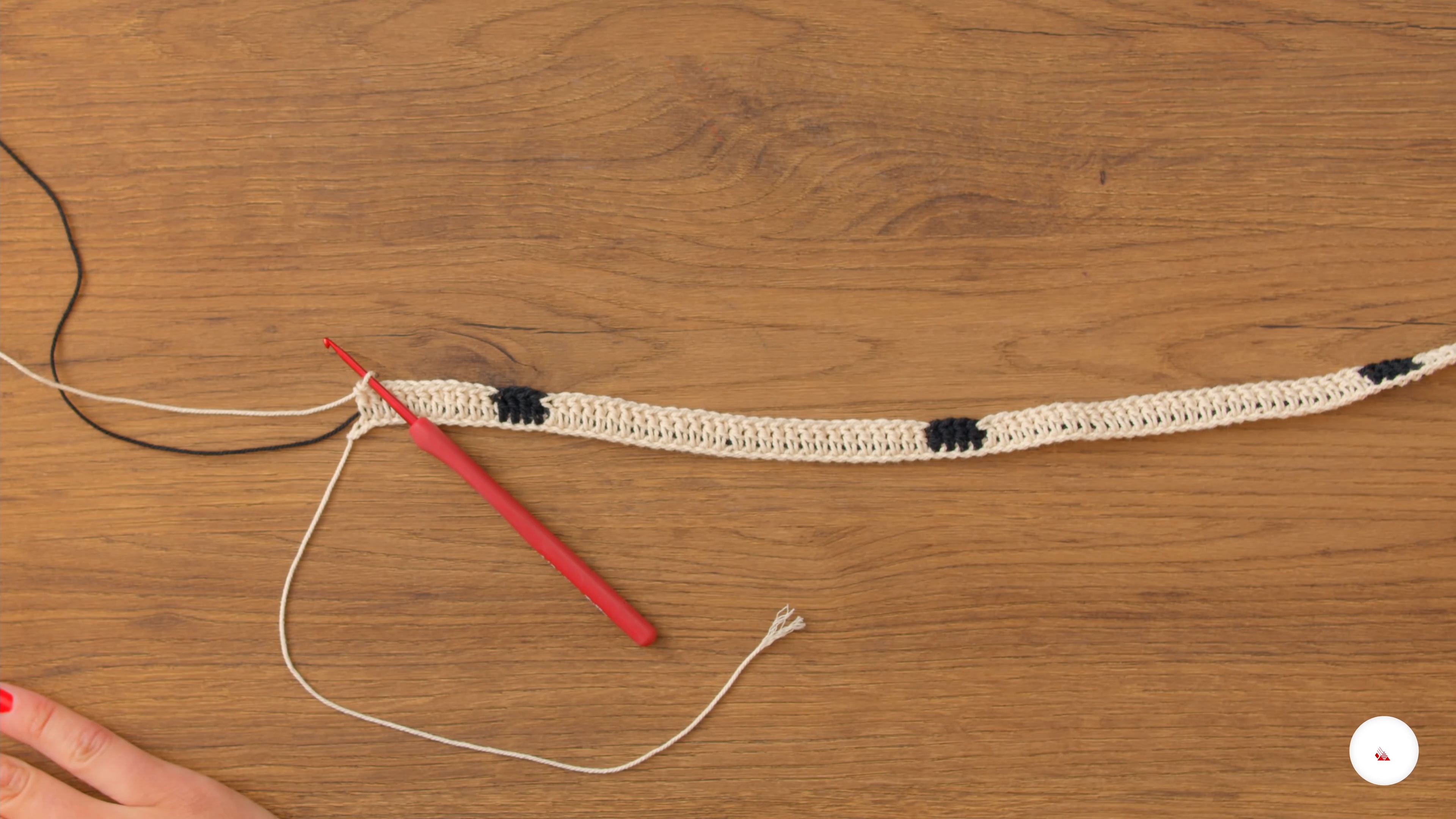
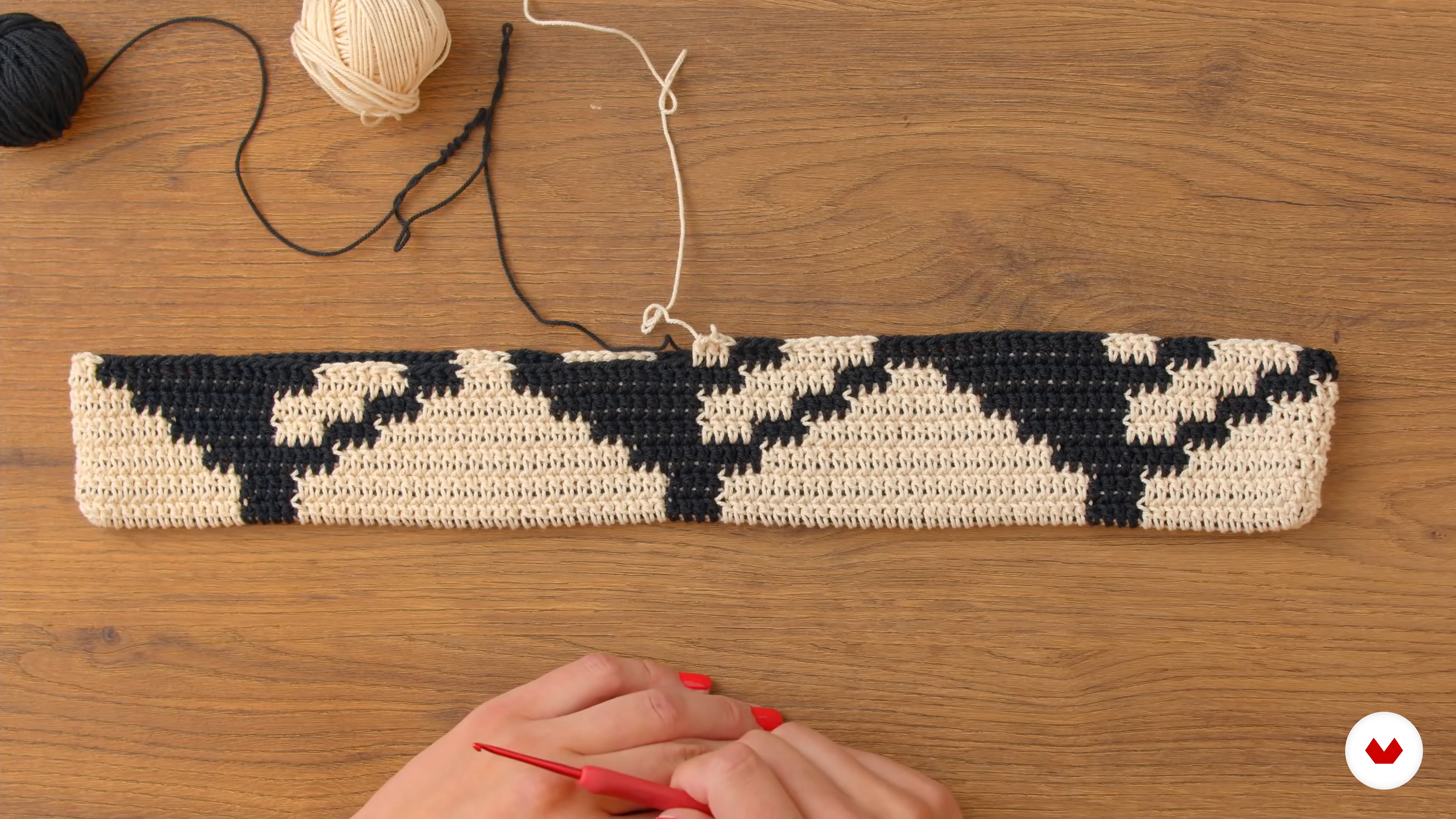
You have done a wonderful job of learning the idea behind the crochet technique, drawing your pattern, and even doing the first stitches! Now let’s start the course project. Grab your yarns, two or more colors, and here we go! Start with 95 chain sts with white yarn: This is called the foundation chain. Then, grab the black yarn and carry it inside the stitches. Work 2 dc in 4th st from the hook leaving the black yarn inside the sts. Check out the tapestry lesson if you forgot how to carry the yarn in your work. With white yarn, work altogether 14 dc counting in the chains. Change to black yarn and work 4 dc, change to white yarn. Continue the work by following the pattern chart.
6m
image
11
Work Around the Corner
Now we are at the end of the foundation chain. To work a closed bottom, you have to work on both sides of the chain. First work 6 dc in the last chain, then continue working on the other side of the chain. Follow the pattern chart. If you want to leave the bottom open, work a longer foundation chain and close it with a slip stitch. If you want to work a back and forth pattern, turn here at the end of the foundation chain, leaving the yarn one st from the end and jumping to the new row with 2-3 chain sts.
3m
image
12
End of First Round, Going to Second Round
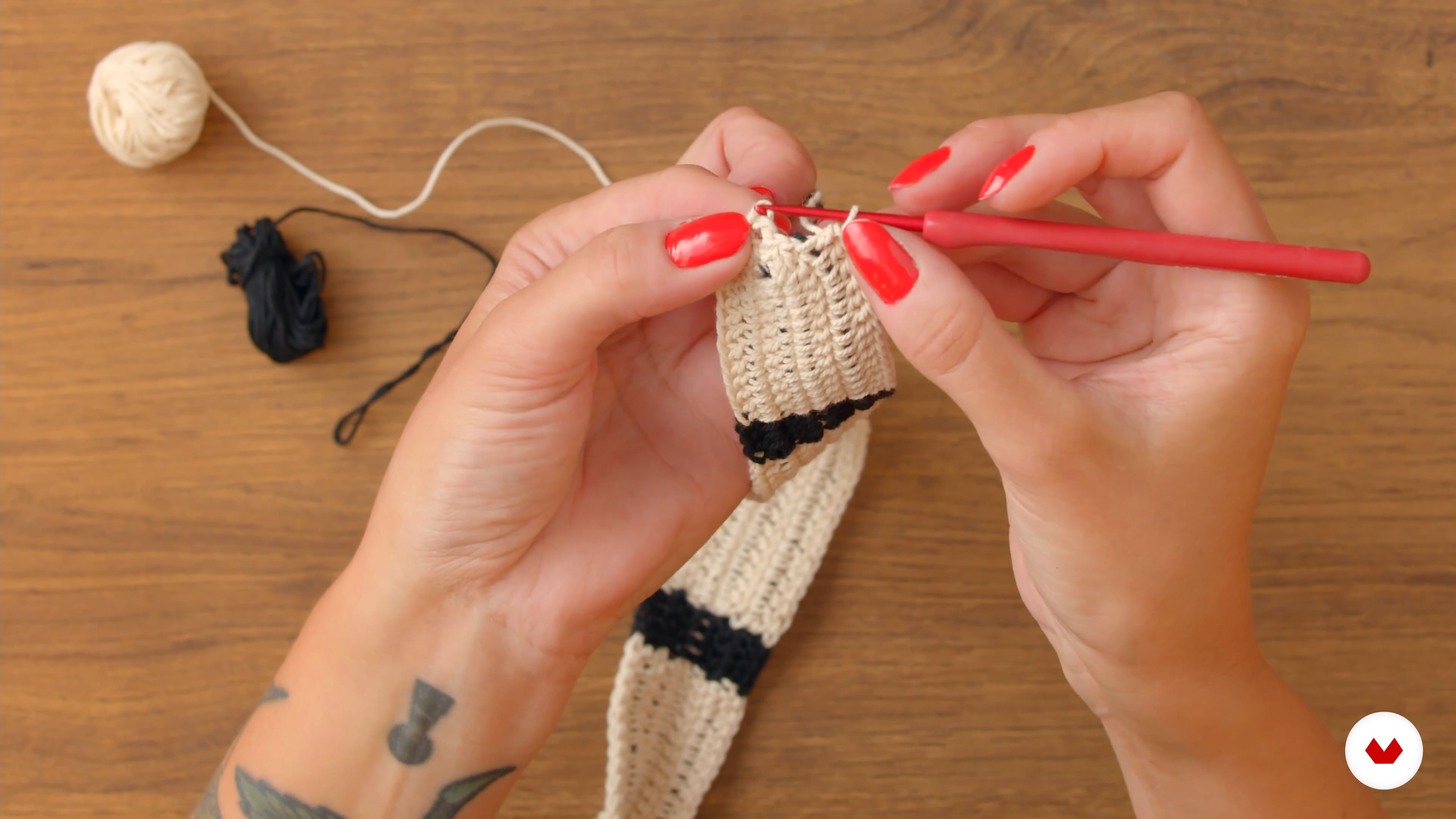
You have now come to the end of your first round. We should now work a slip stitch to close the round. Take a close look at your work and the 3 chains you have left standing at the beginning of the round. To work the sl st, insert your hook through the topmost chain, work a sl st into it. Leave the carry-on yarn out of the sl st, it will stay at the backside of the work leaving a loop. Next, we jump to round 2. Work a standing double stitch with white yarn, this will be your first dc of each round from this on. Grab the black yarn in the work and continue working dc sts with white yarn.
10m
image
13
Third Round
We have been slowly crocheting on the second round, carrying the other yarn inside the stitches all the time. Let’s stop for a second and take a look at the backside of the work. The carry-on yarn should be hiding inside the stitches, but what if it forms loops? If there are loops between the stitches, you have to have a tighter grip on the carry-on yarn. Hold both yarns in your hand while working, but make sure not to pull the carry-on yarn too tight. What is your favorite thing to do while crocheting? Do you watch movies, listen to music, or chat with friends? Working round after round can be tiring and sometimes monotonous, but the result is always worth the work. We have now finished the first full pattern repeat, 20 rounds. This bag pattern has three horizontal pattern repeats and 2,5 vertical pattern repeats.
15m
image
14
Last Round
You made it! Now let’s work the last round of the bag together. Usually, I work the last round in single crochet stitches because it will reinforce the edge.
8m
image
15
Finishing the Bag 1
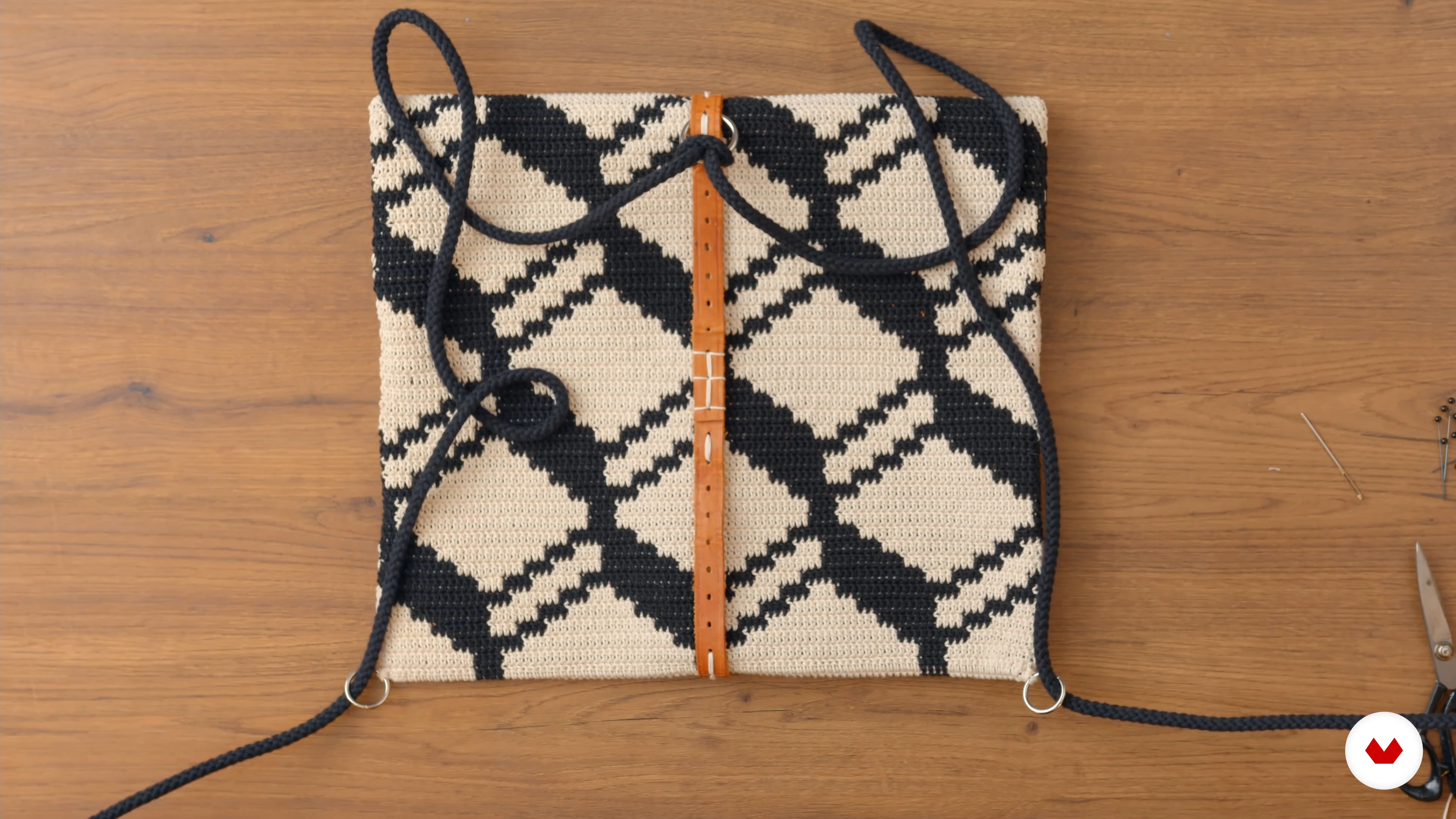
Did you notice that the crochet piece you just made has a multifunctional shape? It can be a tote bag with two long handles, a pouch with a zipper and a lining, or a backpack with a belt fastening. Let’s see what we can make!
14m
image
16
Finishing the Bag 2
Let's now sew the leather belt into the final piece. This way, you'll be able to close your handmade bag and take it wherever you want. Looks nice, doesn't it?
18m
image
17
One Pattern, Many Means
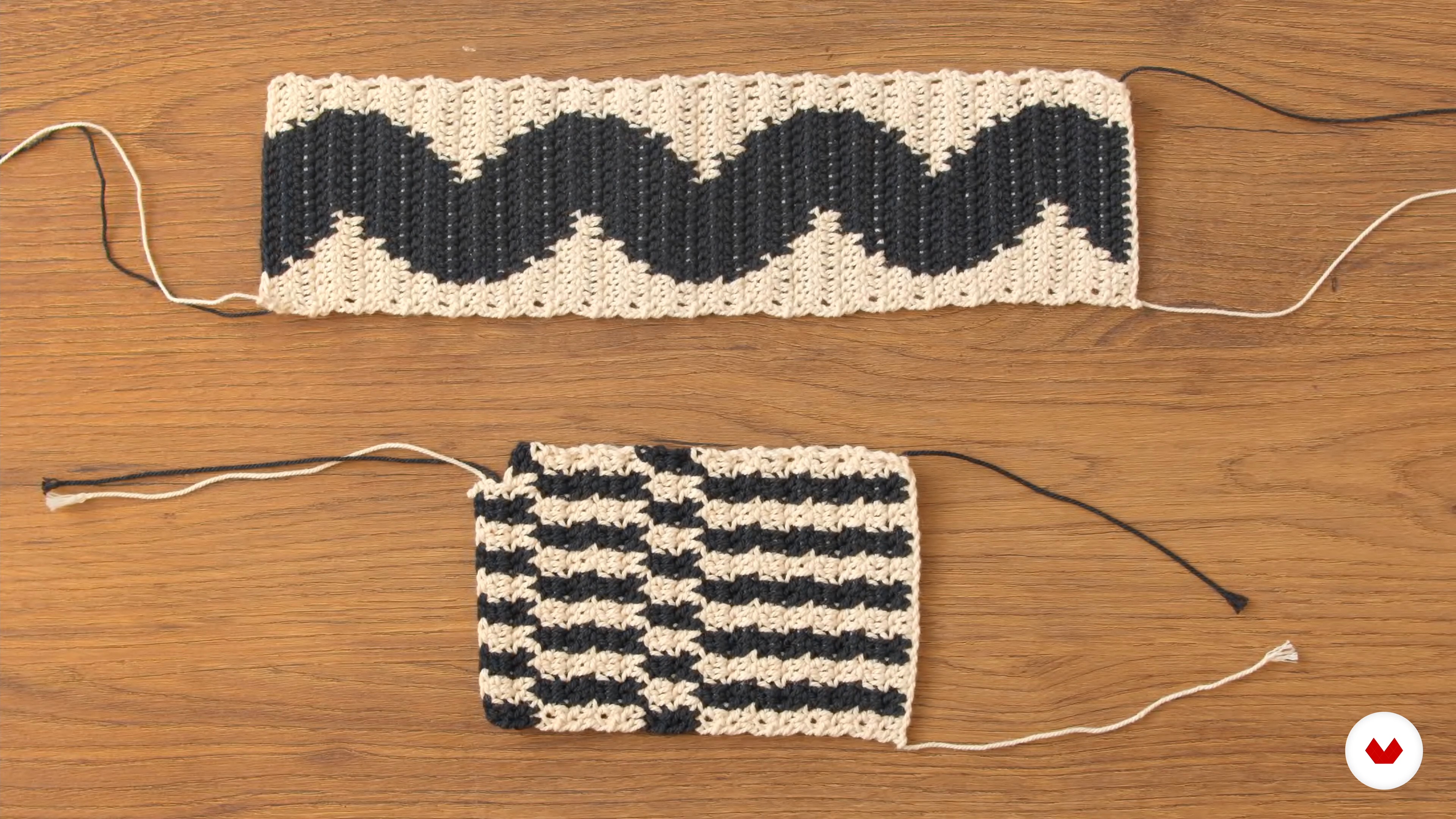
One of the coolest things about making crochet patterns is their multiple uses! You can use the same pattern in so many ways and it will look different in each work. The colors and thickness of yarn already change the pattern a lot, but what happens when you work the tube-shaped pattern in back and forth? Let's have a look!
8m
image
18
Branding
Do you have a favorite designer brand? Or a brand that you keep on seeing everywhere? Take a moment and think about what makes that specific brand recognizable. Is it the color palette, the repeating shapes, the materials, the patterns and prints? If you want to stand out and let people know about your brand, start by creating a recognizable style. Since the start of my design career, my patterns have had the same significant style: geometrical and, most of the time, black and white. They are easy to spot from afar! Apart from the cool surfaces and timeless structure, the purpose of my patterns and works is to be practical and simple, easy to make. I make patterns for people.
8m
image
19
The Health Benefits of Crochet
After hours of crocheting, how do you feel? Your shoulders may be a bit tired, but you did some stretching in the meantime? I often find myself sitting still for hours and crocheting, and when I get up, my knees are macaroni. To avoid this, have breaks, get up from your chair, stretch your shoulders and legs, crack your knucklebones and get back to work. The mental health factor of hand-making has been in the media a lot lately. Research has proven that sitting and crocheting has many positive health benefits, as does any other repetitive craft. Your stress levels go down and your mind cleanses up while you work on the stitches and hold soft yarns in your hands. We may know this already, being crocheters for a lifetime, but I’m happy it has scientific support as well.
9m
image
3
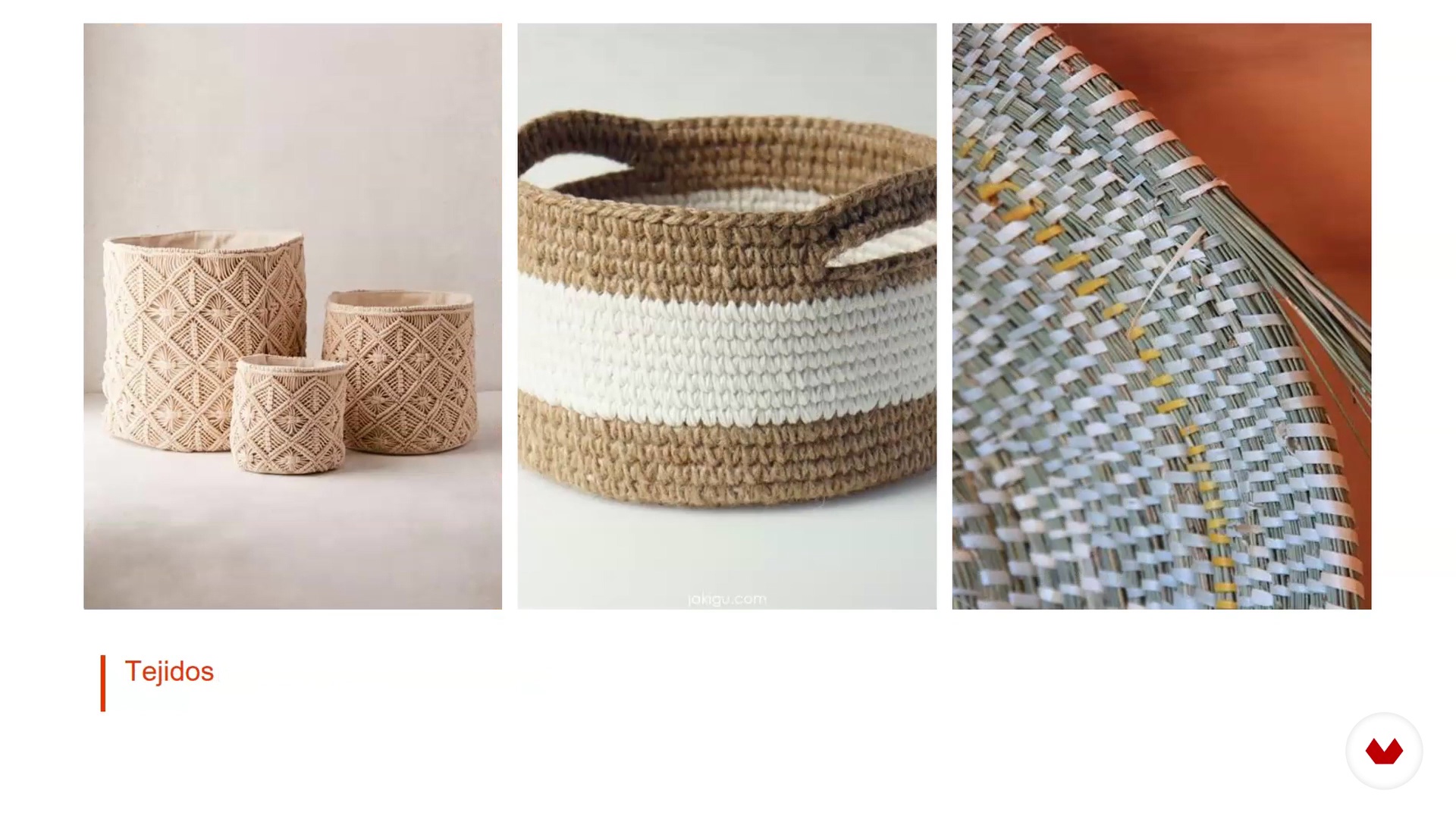
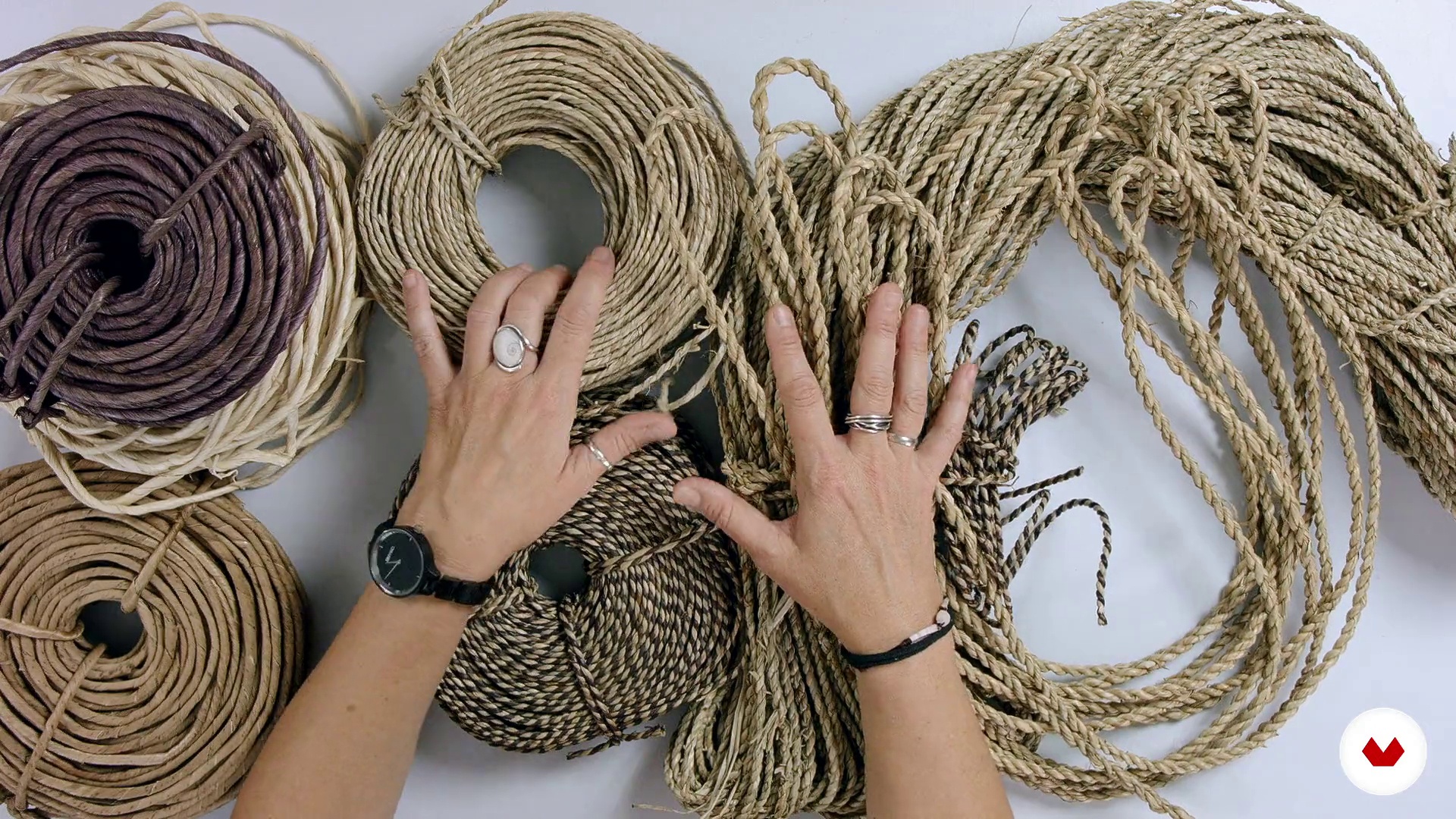
Types of vegetable fibers
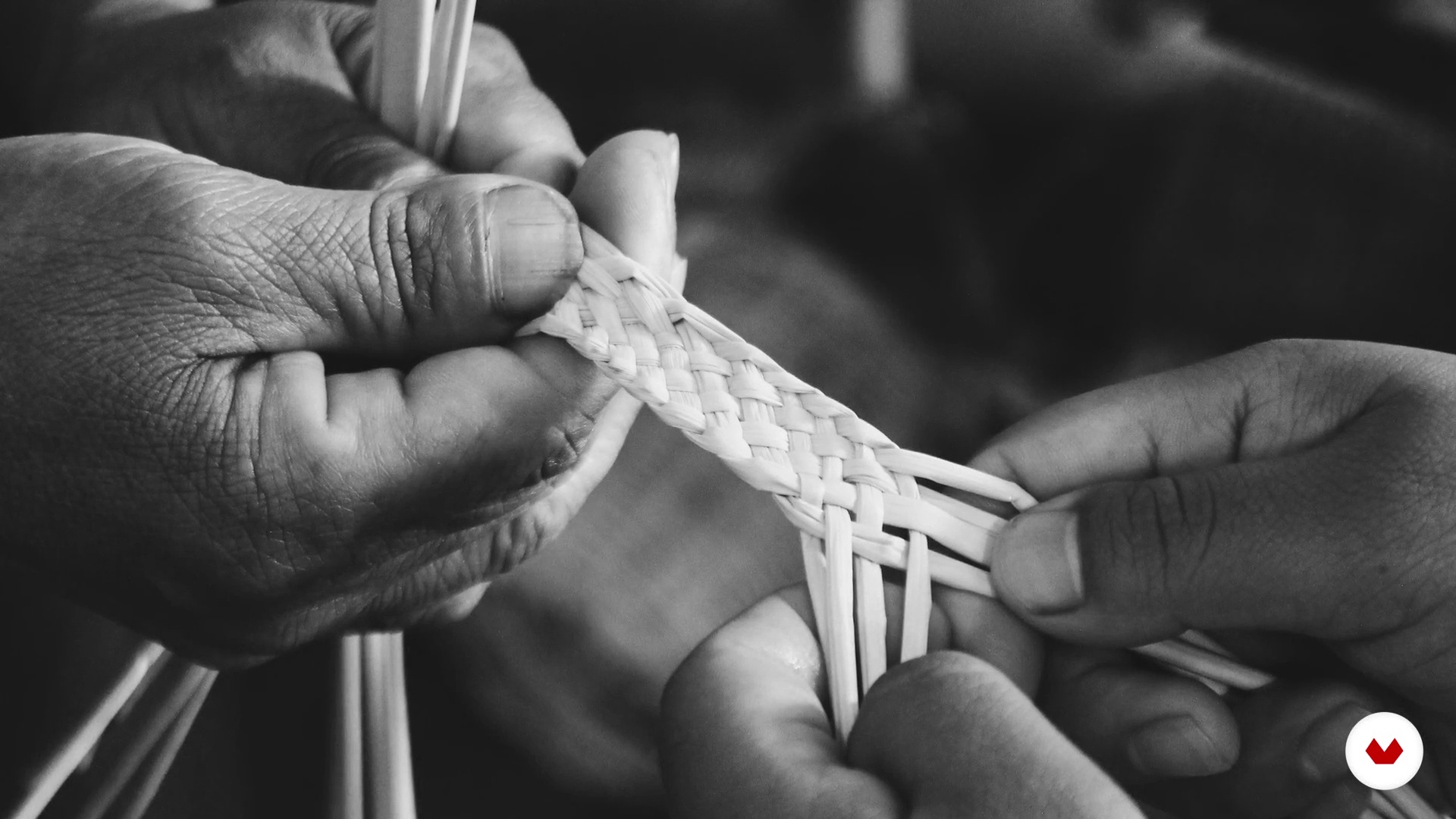
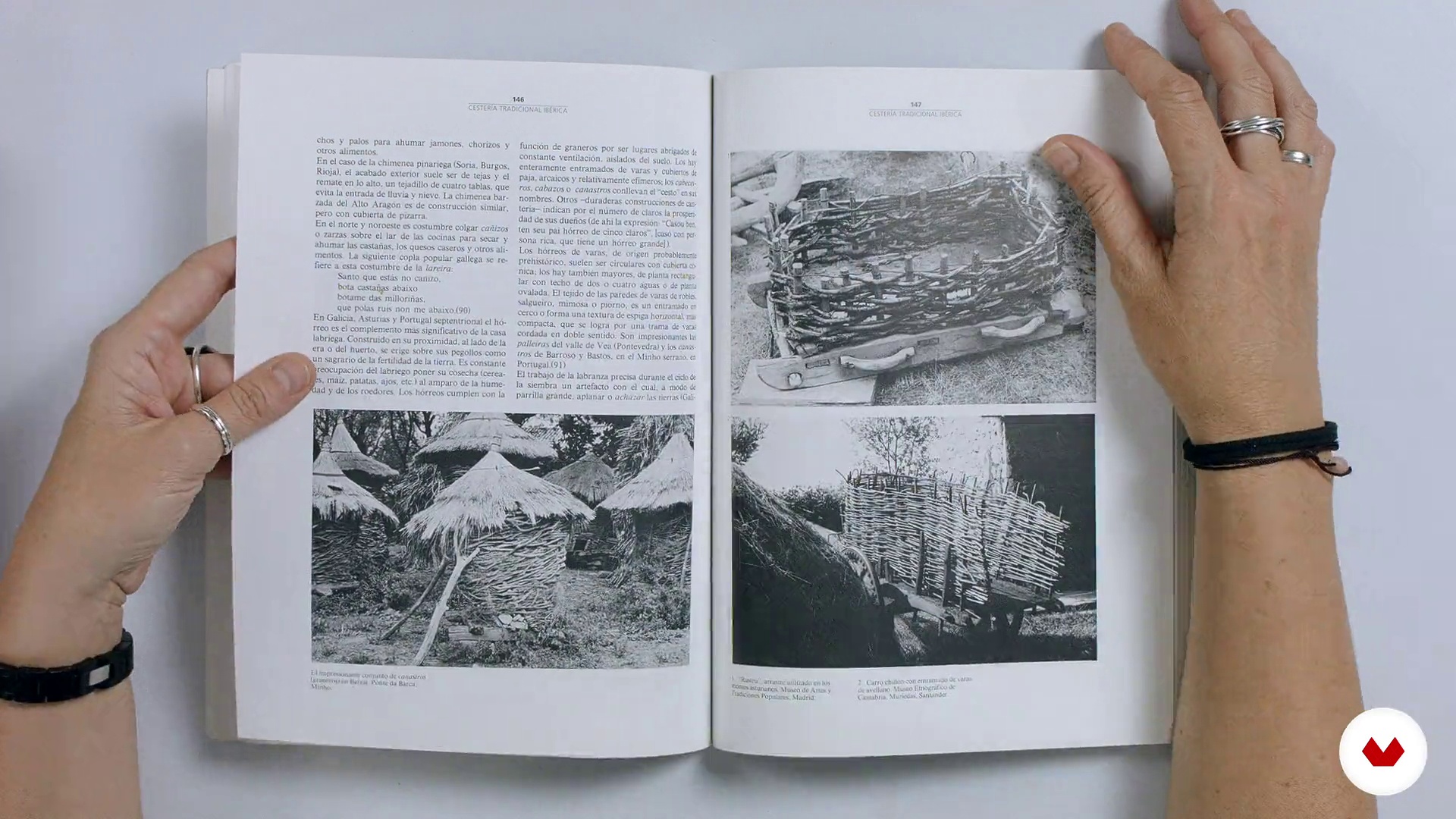
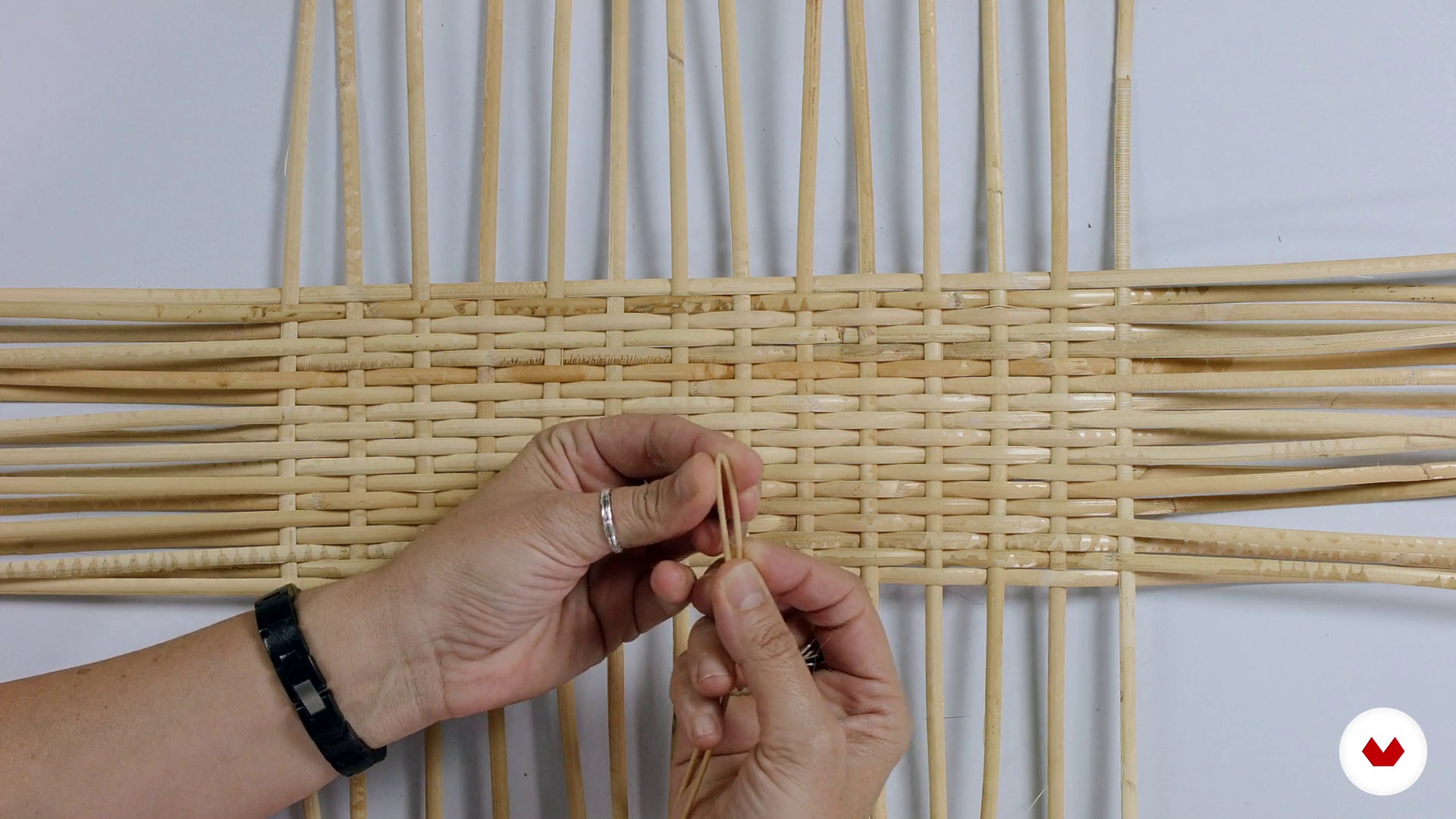
In this lesson what I intend is to give a broad view of the world of vegetable fibers so that you are able to recognize a bit the different types of vegetable fibers that can be applied and used in basket weaving.
12m
image
4
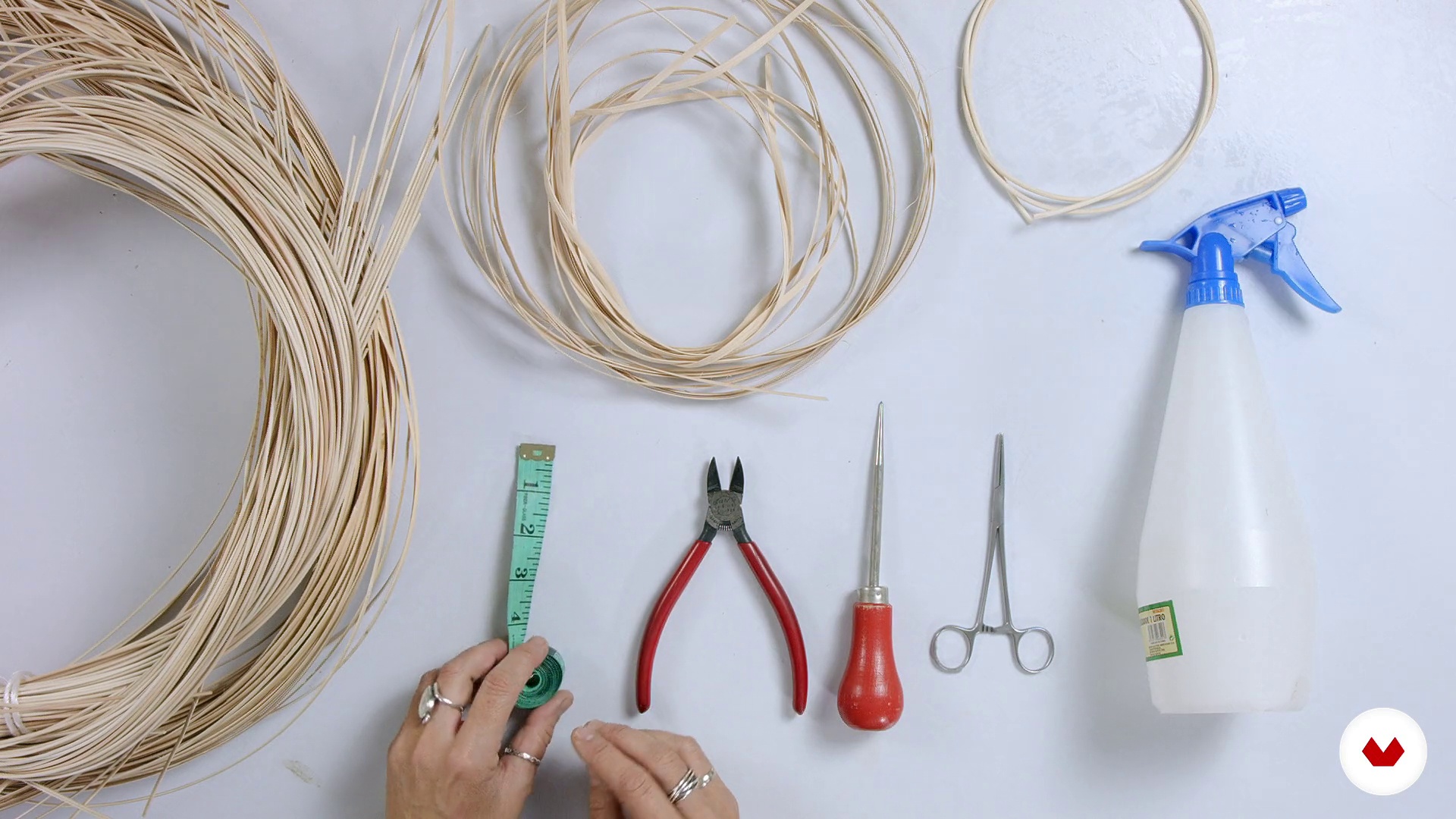
Materials and tools for this course
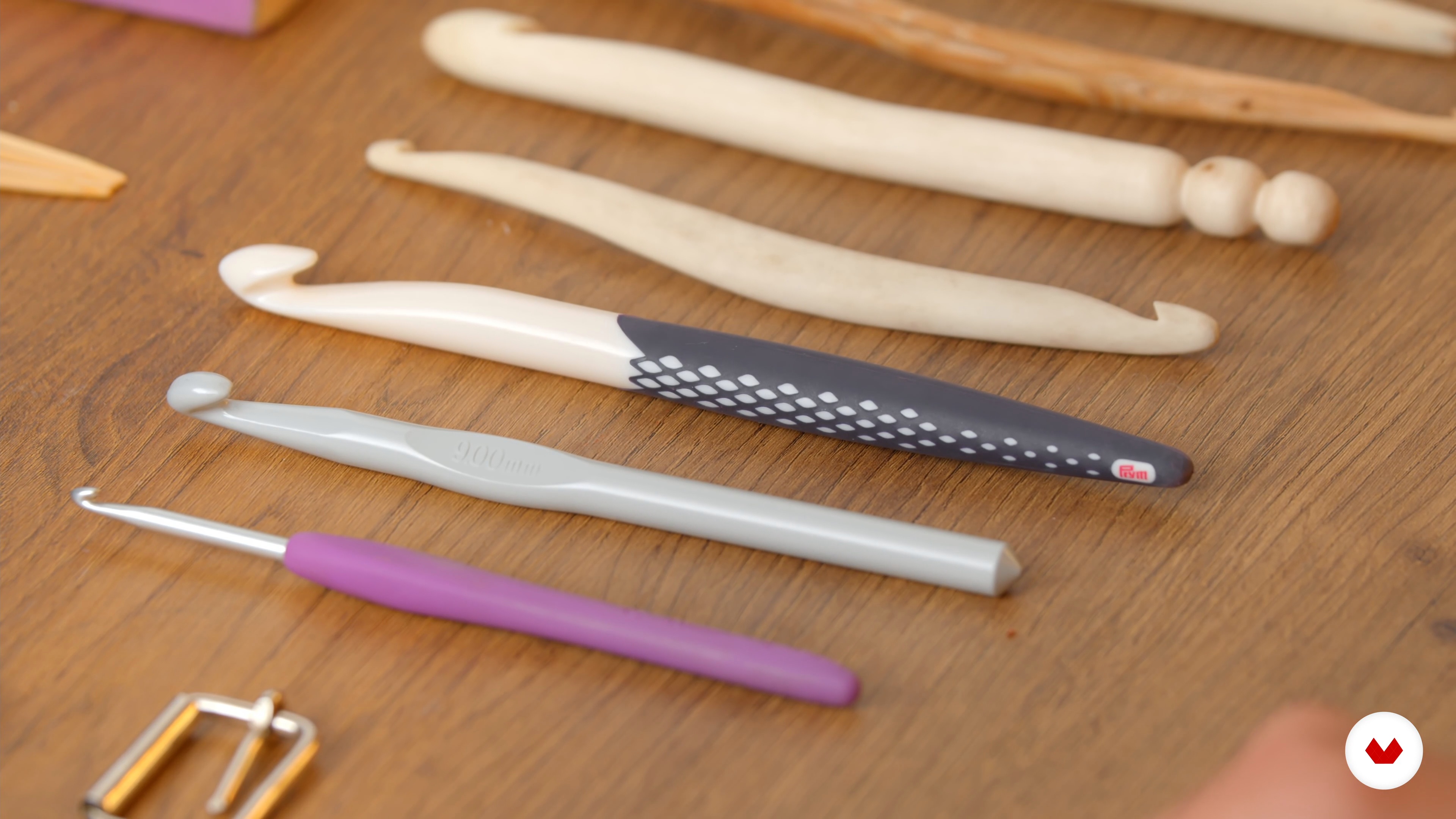
In this lesson we will see the materials and tools that are very basic that we will use for the course project.
4m
image
5
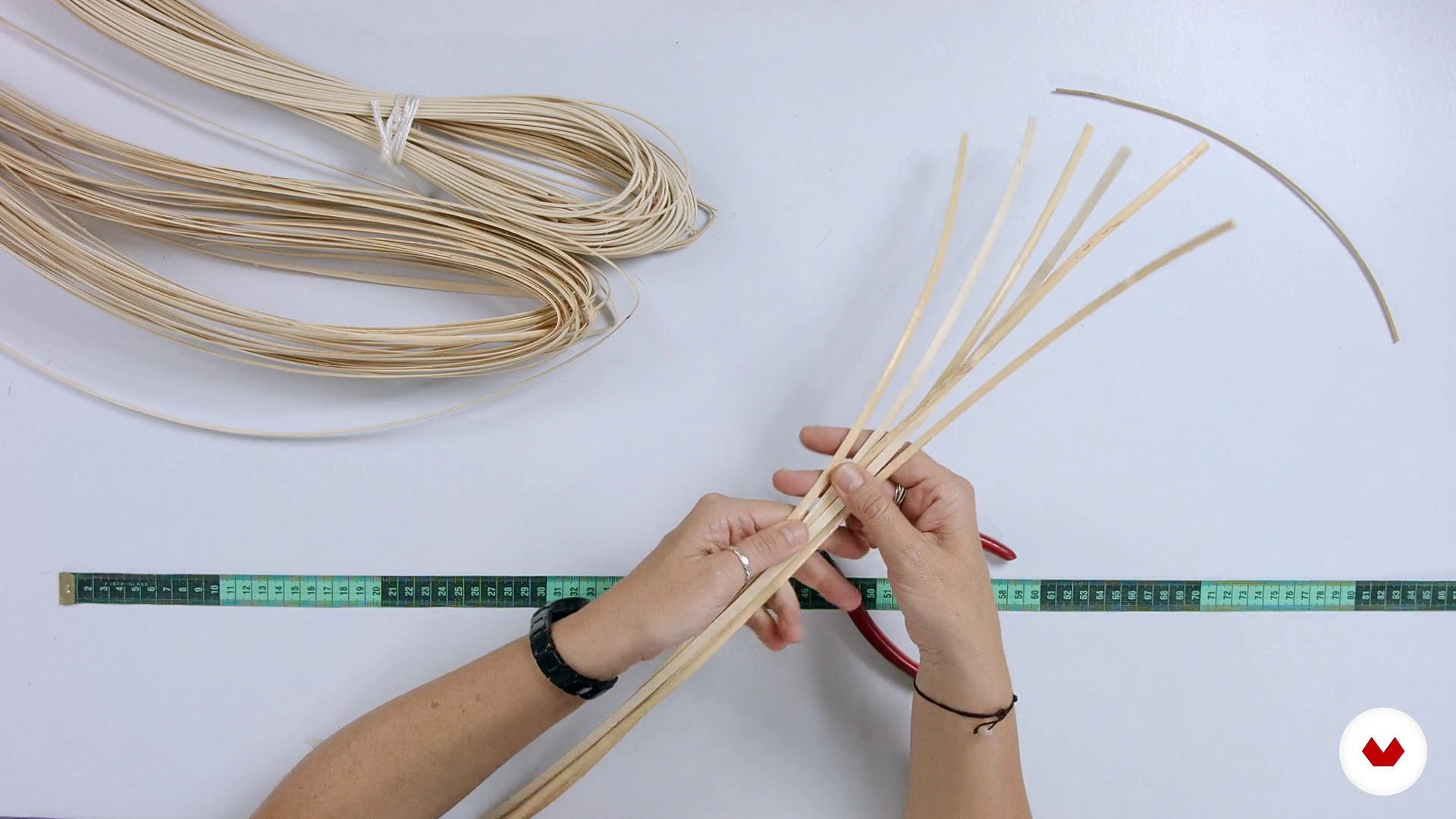
Preparation of the material
In this lesson I am going to tell you how we are going to prepare the material for our project and the precautions that we have to have.
7m
image
6
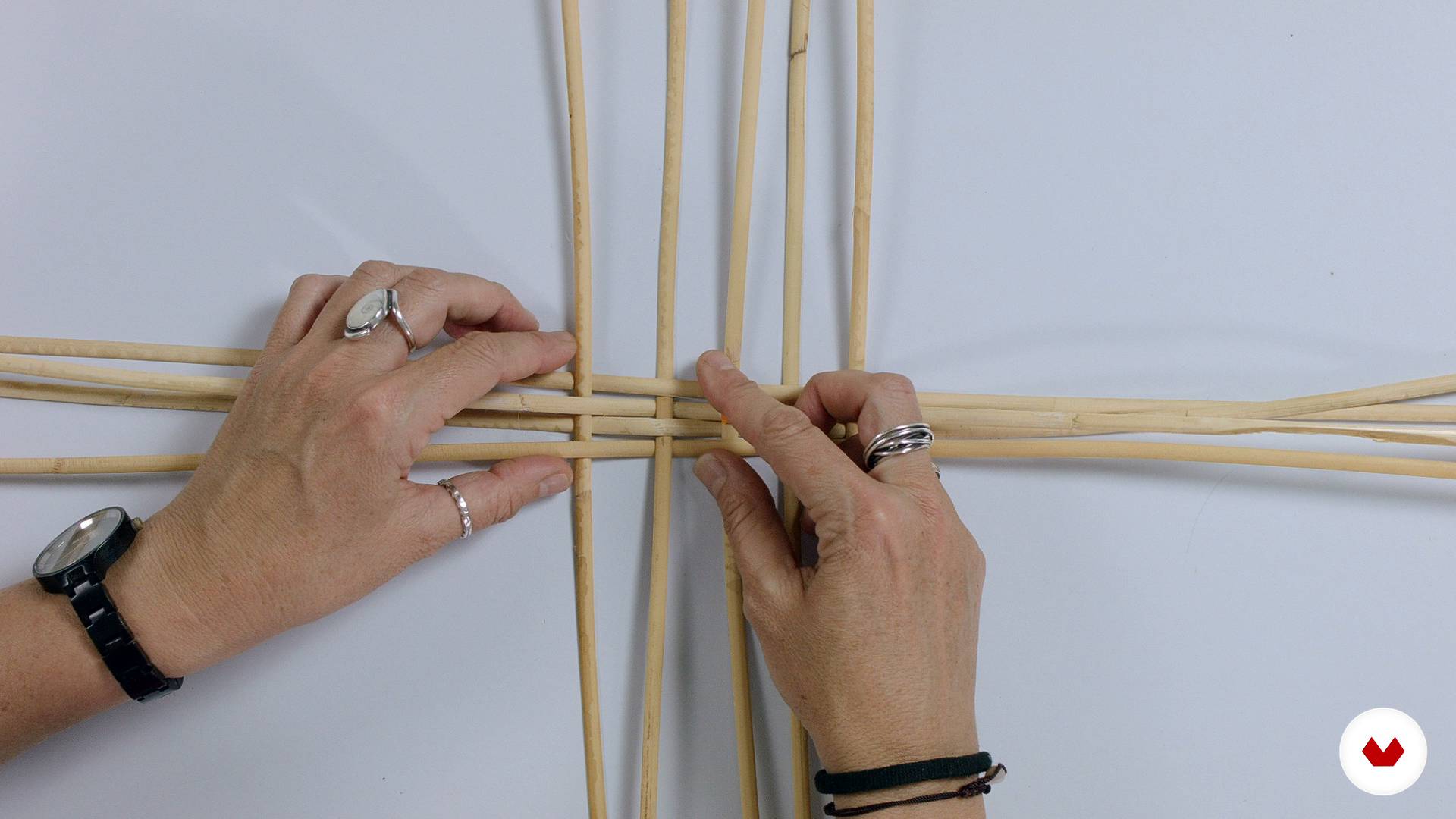
Core tissue
In this lesson I explain the first steps we have to take to develop the basis of our bag.
14m
image
7
Fabric structure bag 1
14m
image
8
Fabric structure bag 2
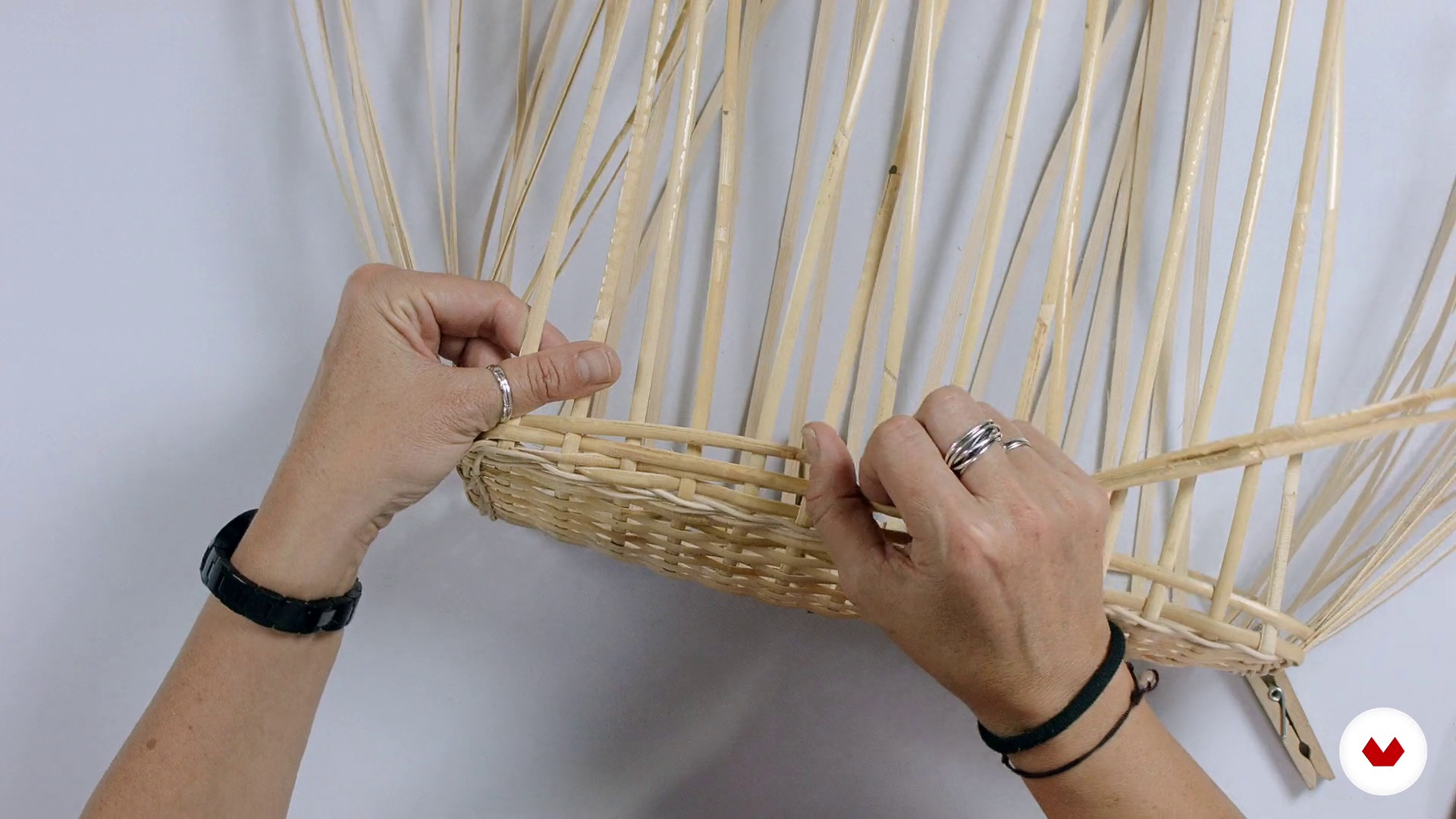
In this lesson I explain how to finish our base to proceed to lift the bag.
12m
image
9
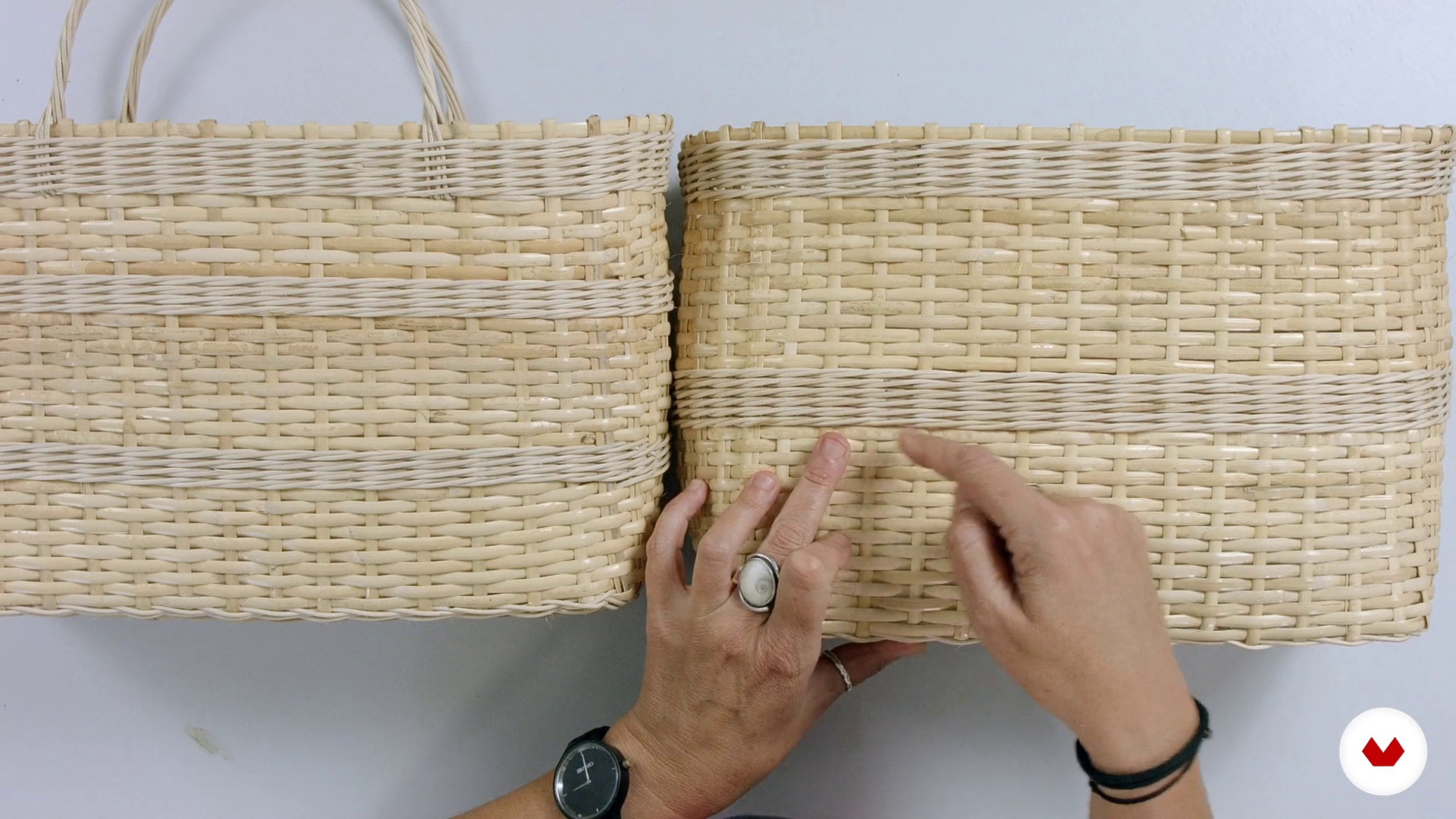
Fabric structure bag 3
In this lesson, we applied a different material to the one we were doing to add decorative details.
11m
image
10
Bag top
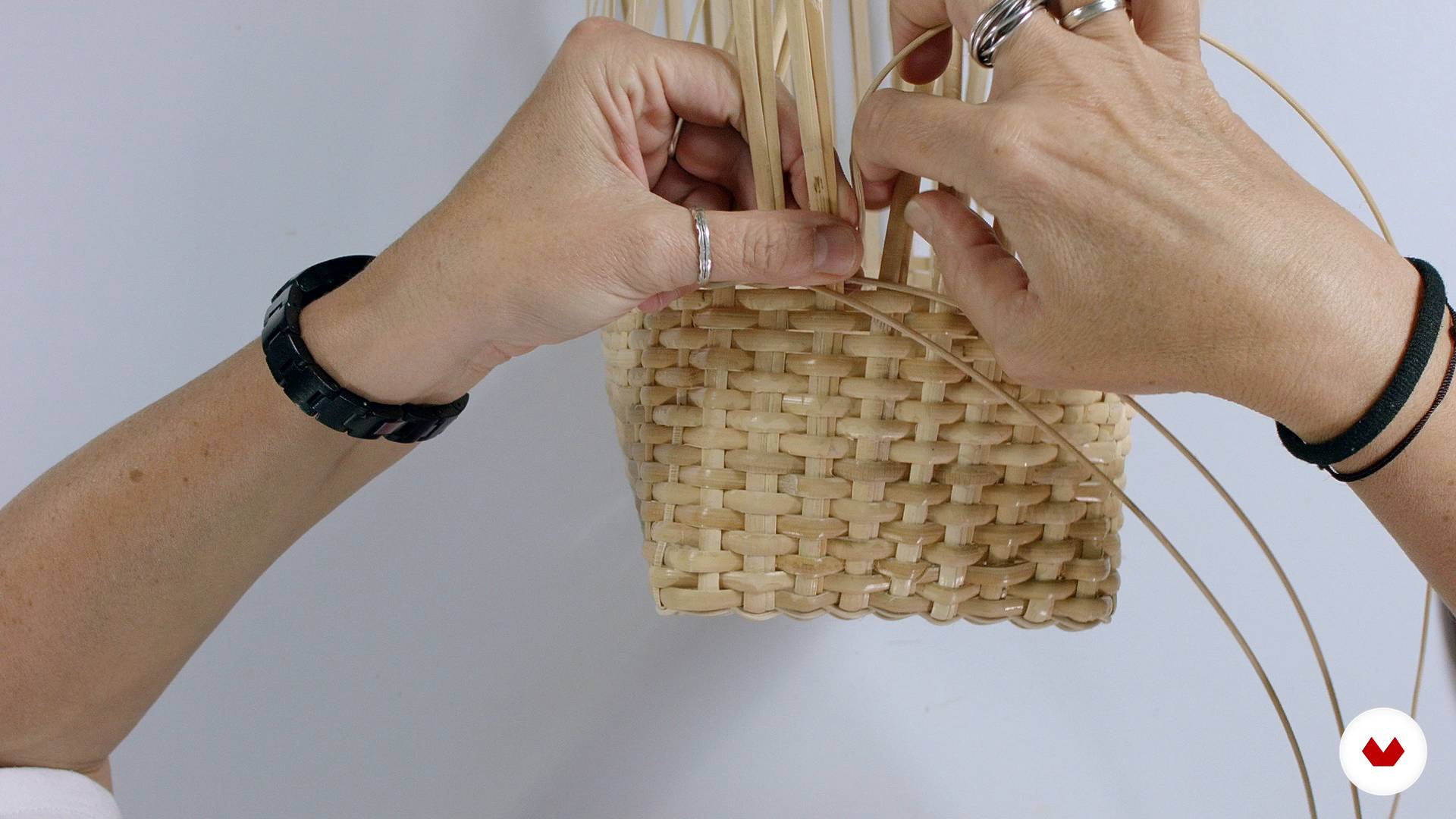
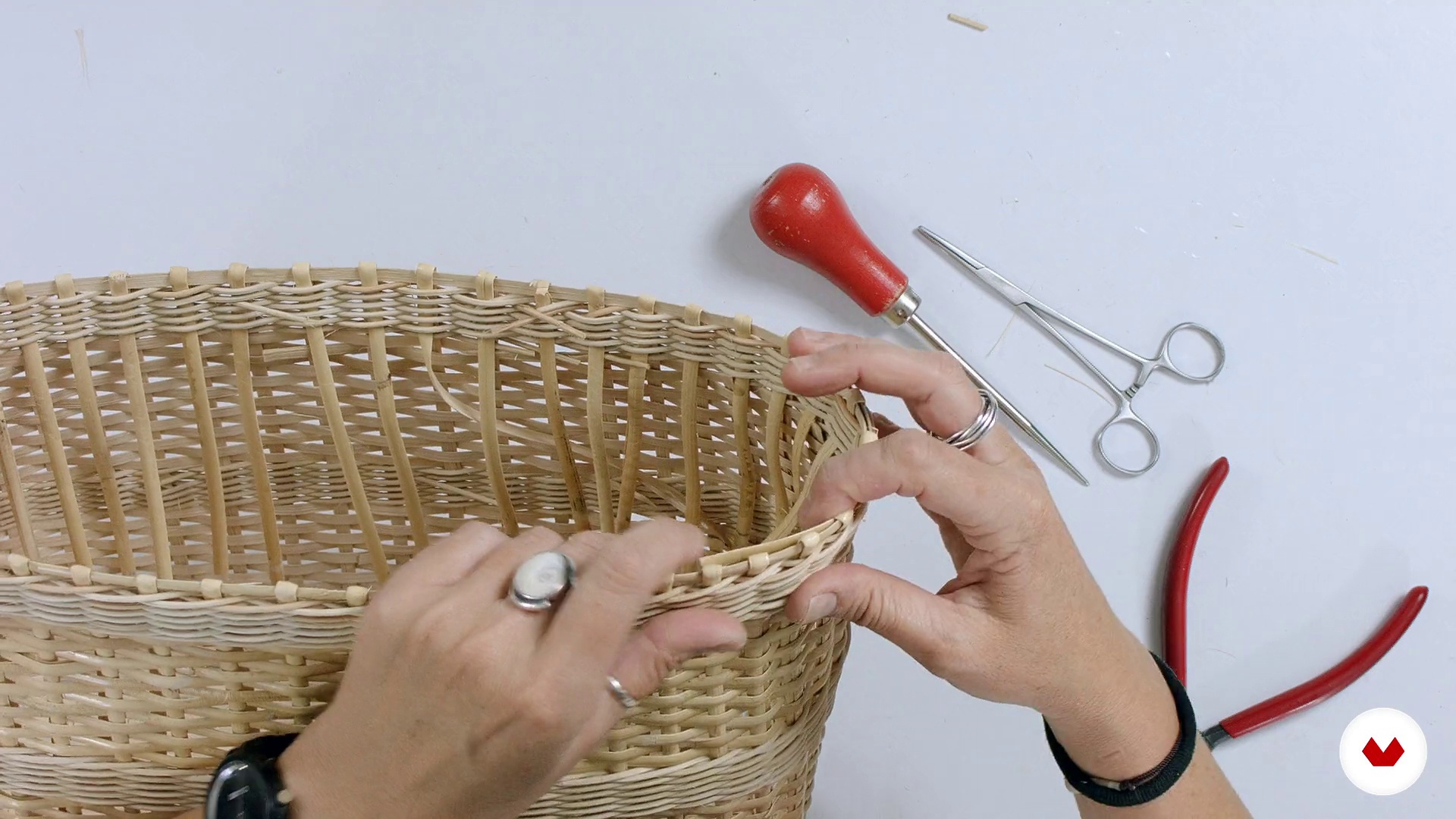
Now we continue with the next phase of the bag, once we have woven with the tire the desired size we will start with the auction. In this lesson I explain how to do it.
17m
image
11
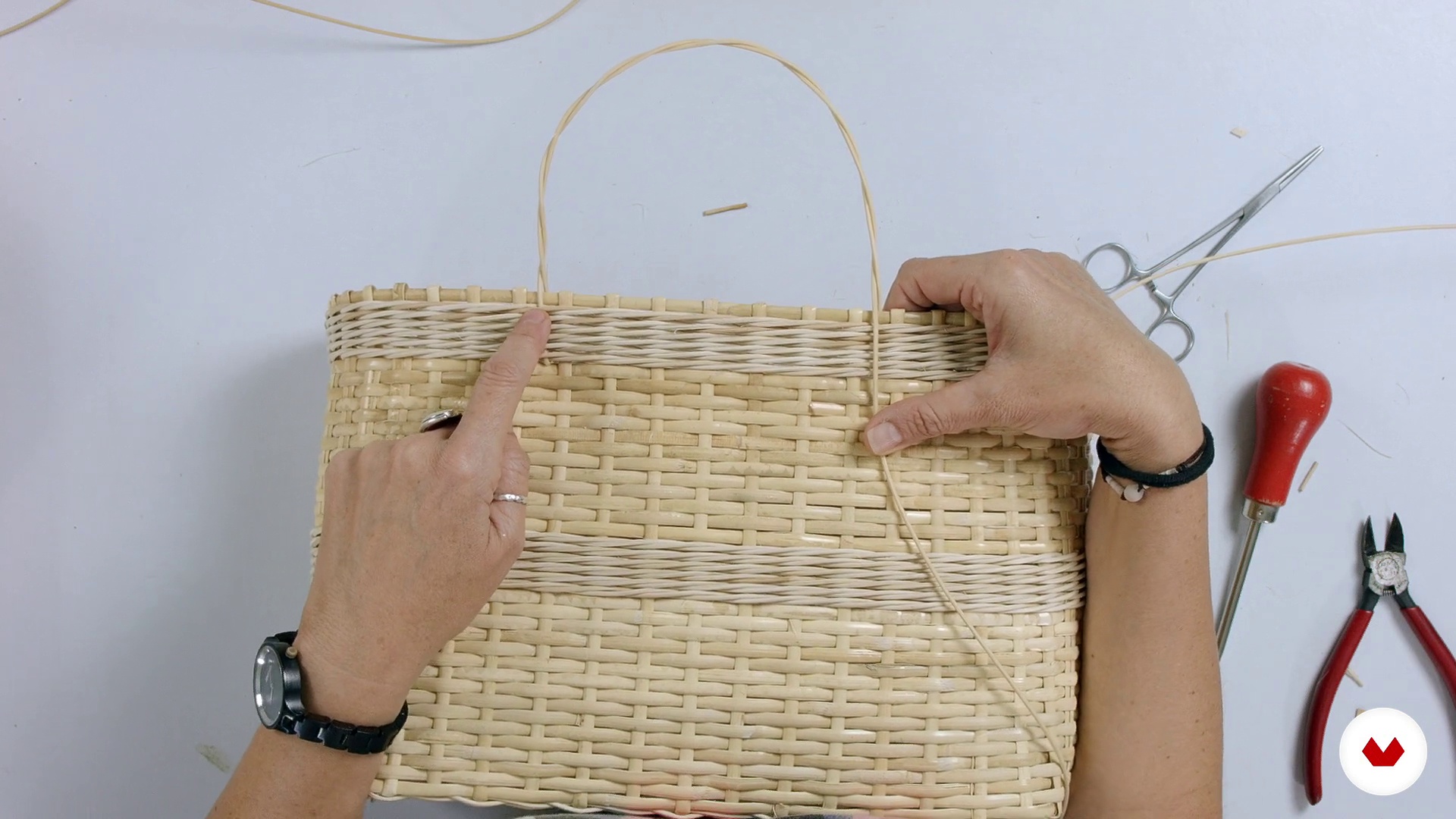
Placement of the handles
In this lesson I am going to explain to you how to place twisted handles with the roten medulla of number 2 that we have also used for the fabric of the bag.
18m
image
12
Customization of future projects
In this personalization lesson, I am going to give you different ideas and suggestions on how you can modify the fabric weft of the bag.
8m
image
13
Practical tips
In this lesson I am going to tell you a series of recommendations and practical advice when working in basket weaving.
4m
  • 131 students
  • 75 lessons (12h 15m)
  • 82 additional resources (34 files)
  • Online and at your own pace
  • Audio: English, German, Spanish, Spanish (Latam), French, Indonesian, Italian, Dutch, Polish, Portuguese, Romanian, Turkish
  • Spanish · English · Portuguese · German · French · Italian · Polish · Dutch · Turkish · Romanian · Indonesian
  • Level: Beginner
  • Unlimited access forever

What is this course's project?

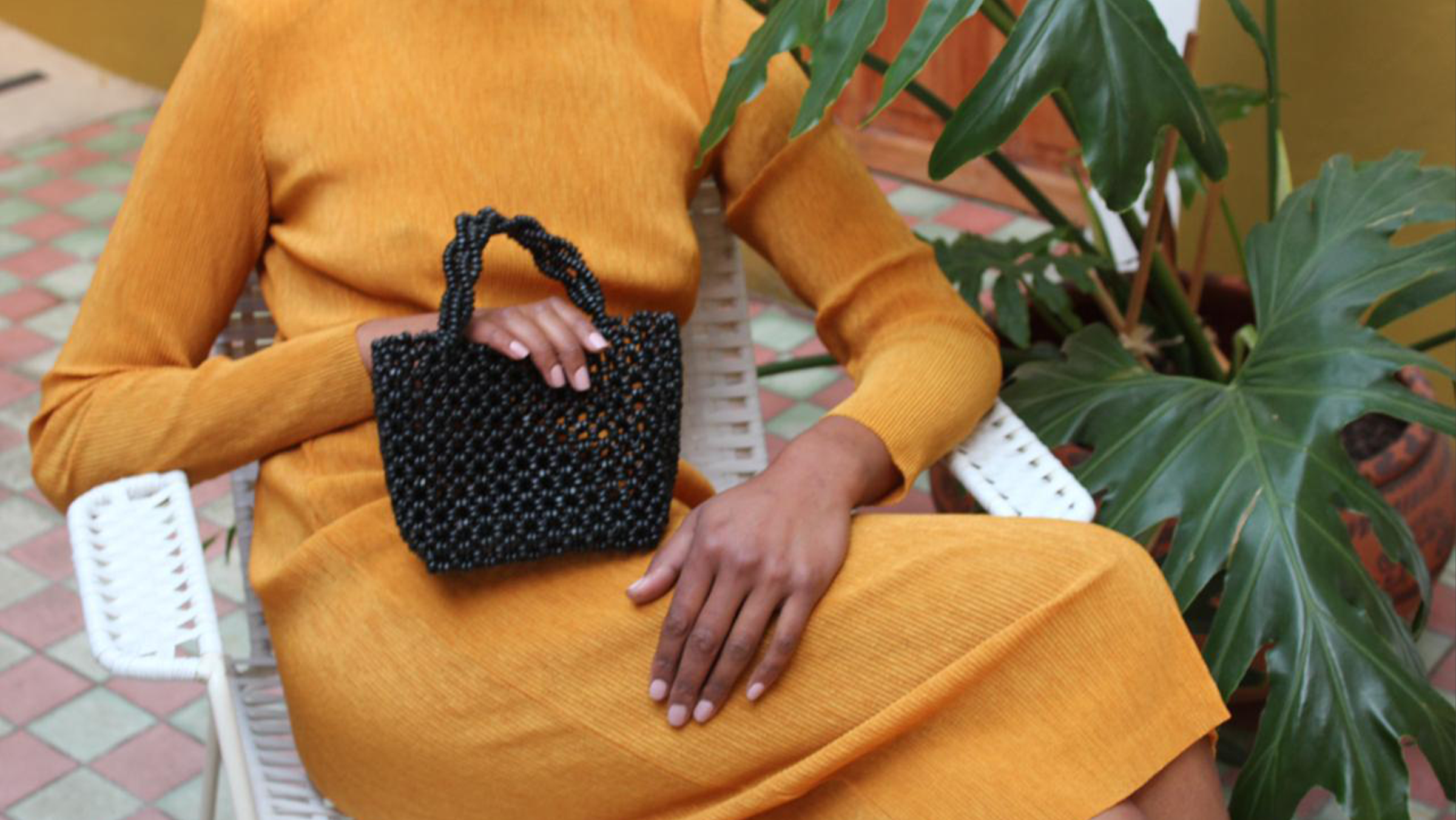
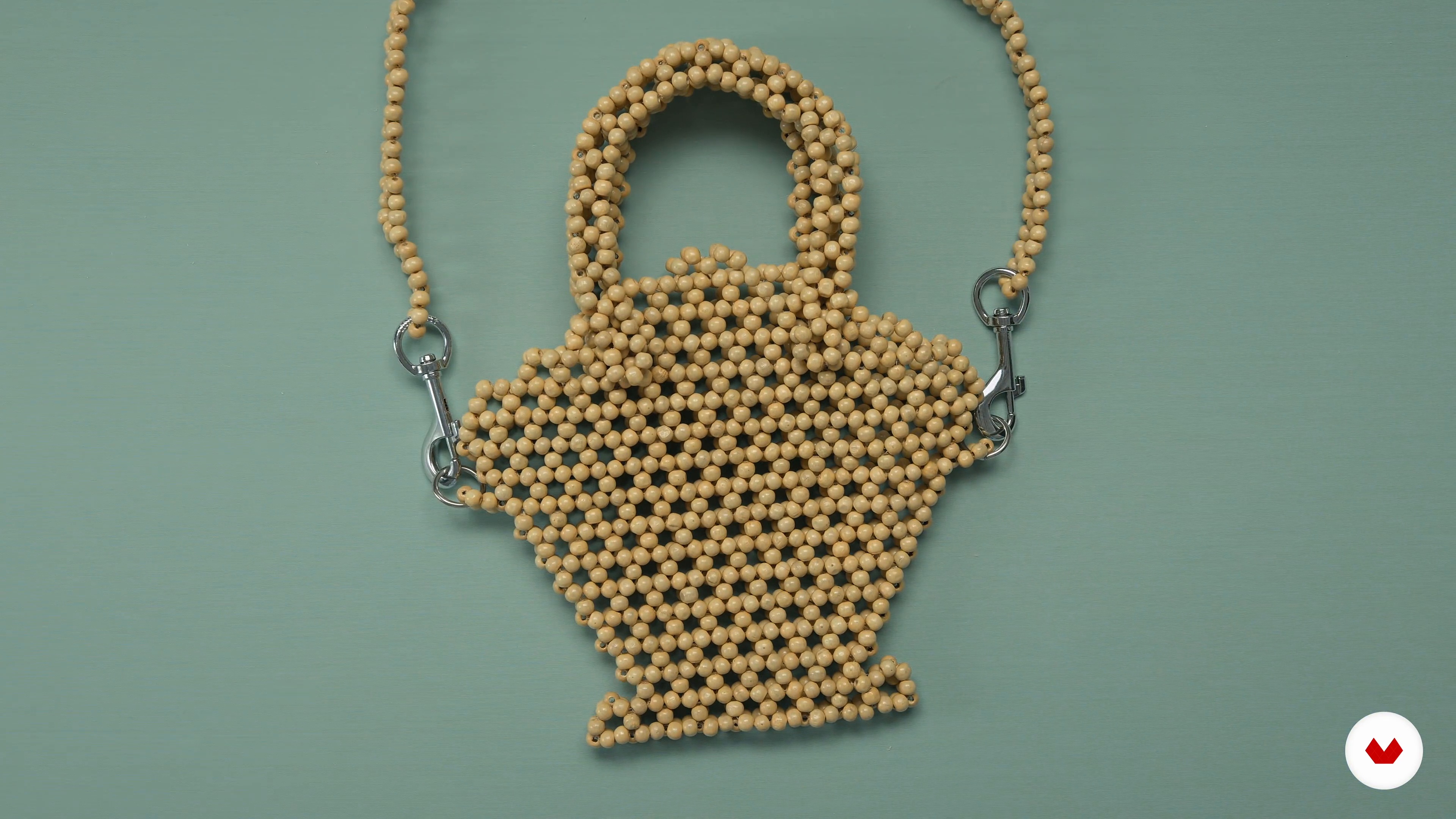
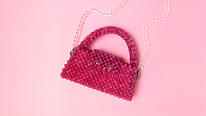
Create a stunning beaded bag by mastering decorative techniques with beads and embellishments. You'll design a fully adorned purse, showcasing your creativity and precision while developing a keen eye for detail and an aesthetic sensibility for high-quality artisanal projects.

Who is this specialization for?

This online course is designed for artisans and designers eager to master handbag creation, exploring traditional and contemporary techniques. It's ideal for those looking to enhance their skills in crafting unique, high-quality accessories using diverse materials and methodologies.

Requirements and materials

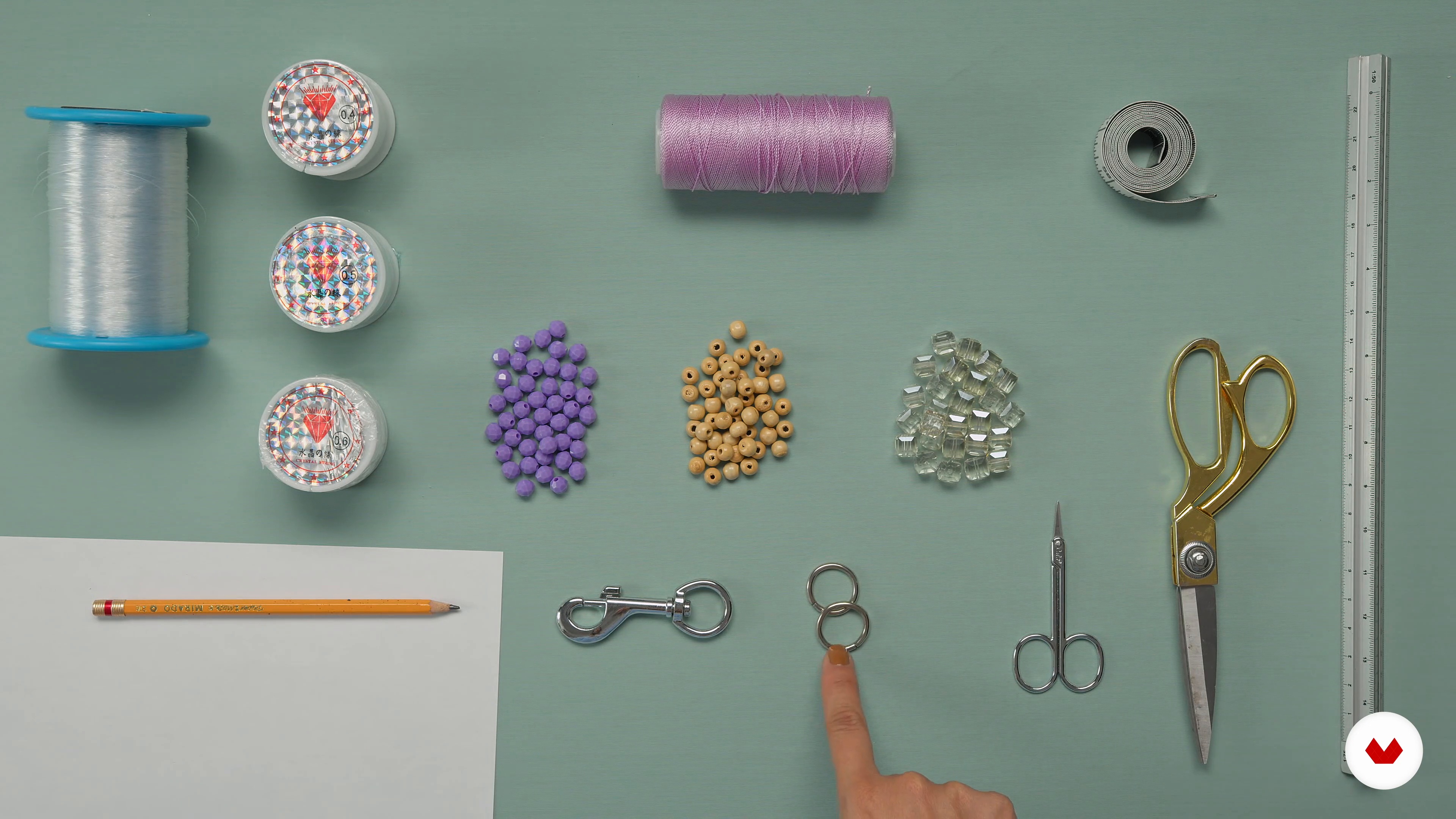
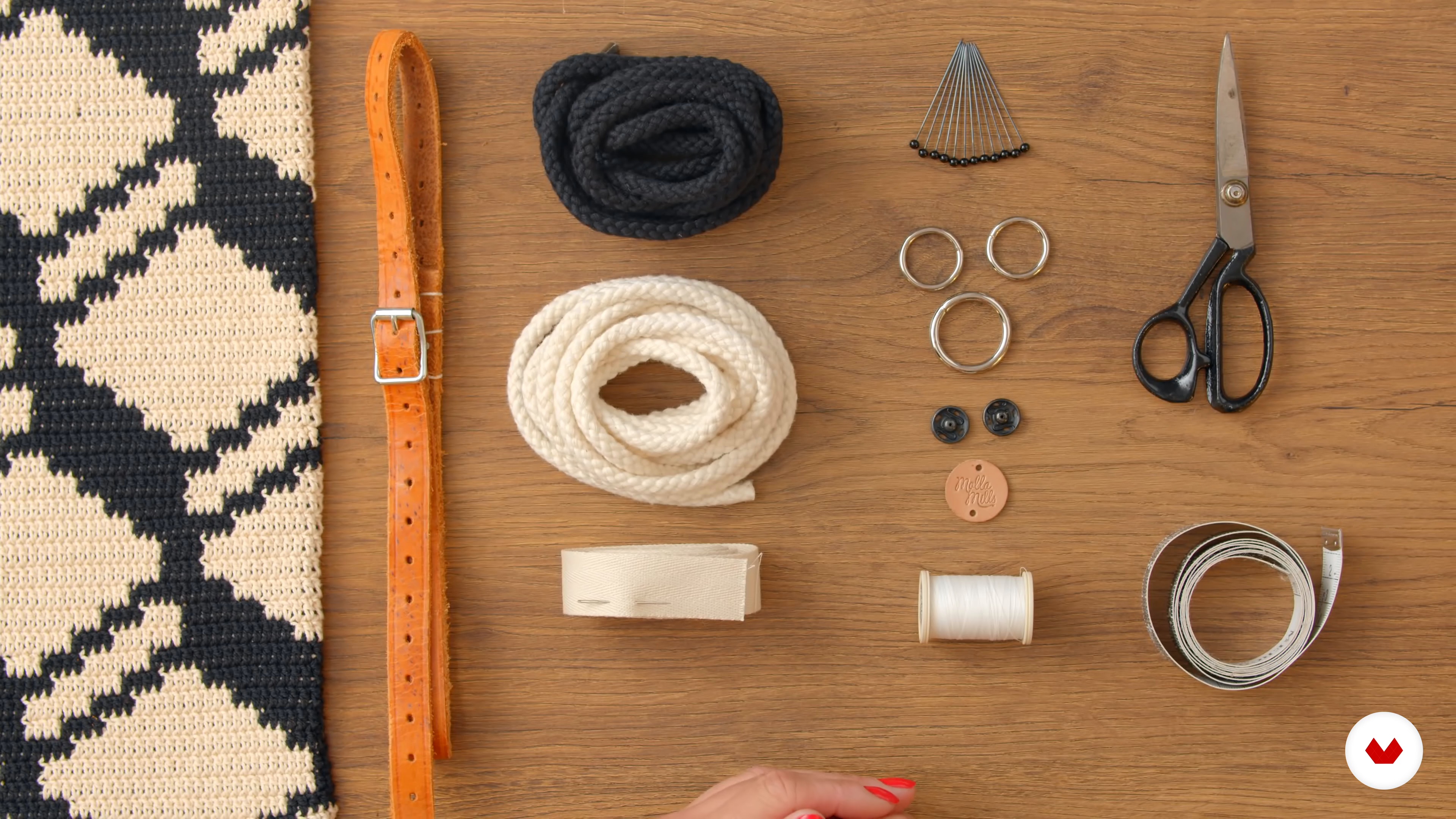
No extensive prior knowledge required—just a passion for crafting. Gather basic materials like beads, leather, silk cords, crochet hooks, and natural fibers. Have handy tools such as needles, scissors, and measuring tape to start creating your unique bag designs.
Select to get to know your teachers in this specialization course
Read more ↓

What to expect from this specialization course

  • Learn at your own pace

    Enjoy learning from home without a set schedule and with an easy-to-follow method. You set your own pace.

  • Learn from the best professionals

    Learn valuable methods and techniques explained by top experts in the creative sector.

  • Meet expert teachers

    Each expert teaches what they do best, with clear guidelines, true passion, and professional insight in every lesson.

  • Certificates
    Plus

    If you're a Plus member, get a custom certificate for every specialization course. Share it on your portfolio, social media, or wherever you like.

  • Get front-row seats

    Videos of the highest quality, so you don't miss a single detail. With unlimited access, you can watch them as many times as you need to perfect your technique.

  • Share knowledge and ideas

    Ask questions, request feedback, or offer solutions. Share your learning experience with other students in the community who are as passionate about creativity as you are.

  • Connect with a global creative community

    The community is home to millions of people from around the world who are curious and passionate about exploring and expressing their creativity.

  • Watch professionally produced courses

    Domestika curates its teacher roster and produces every course in-house to ensure a high-quality online learning experience.


FAQs

Domestika courses are online classes that allow you to learn new skills and create incredible projects. All our courses include the opportunity to share your work with other students and/or teachers, creating an active learning community. We offer different formats:
Original Courses: Complete classes that combine videos, texts, and educational materials to complete a specific project from start to finish.
Basics Courses: Specialized training where you master specific software tools step by step.
Specialization Courses: Learning paths with various expert teachers on the same topic, perfect for becoming a specialist by learning from different approaches.
Guided Courses: Practical experiences ideal for directly acquiring specific skills.
Intensive Courses (Deep Dives): New creative processes based on artificial intelligence tools in an accessible format for in-depth and dynamic understanding.

All specialization courses are 100% online, so once they're published, specialization courses start and finish whenever you want. You set the pace of the class. You can go back to review what interests you most and skip what you already know, ask questions, answer questions, share your projects, and more.

The specialization courses are divided into different modules. Each one includes lessons, informational text, tasks, and practice exercises to help you carry out your project step by step, with additional complementary resources and downloads. You'll also have access to an exclusive forum where you can interact with other students, as well as share your work and your final project, creating a community around the specialization courses.

You can redeem the specialization courses you received by accessing the redeeming page and entering your gift code.

If you're a Plus member, when you complete a course you've purchased, you'll instantly get your personalized certificate. You can see all your certificates in the Certificates section of your profile. You can download your certificates as PDFs and share the link online. Learn more about certificates.
Specialization in Artisanal Handbag Design and Creation. Craft, and Fashion course by Domestika

Specialization in Artisanal Handbag Design and Creation

A specialization by multiple teachers
Berkeley, United States.
Joined April 2002
  • 131 students