
Explore psychological fiction, create multidimensional characters, craft suspenseful plots, and master horror, thriller, and speculative fiction genres
Delve into the world of psychological fiction, where captivating narratives unravel the complexities of the human psyche. This specialization, guided by expert writers Cecilia Magaña, Andrea Chapela, María Fernanda Ampuero, Raquel Castro, and Emily Barr, takes you on a journey through horror, thriller, and speculative fiction. Learn to create multidimensional characters with believable motivations, and craft suspenseful plots that captivate readers with psychological depth.
Explore the techniques behind effective horror writing, build fantastical worlds with grounded characters, and master the art of suspense in psychological thrillers. Each course offers unique insights into character psychology, emotional arcs, and the conventions of popular fiction genres. By the end of the specialization, you'll have a versatile portfolio showcasing your ability to craft psychologically rich narratives across multiple genres, ready for submission to publishers, agents, or creative writing programs.
What will you learn in this specialization?
 1
Introduction
This is a journey into the mind’s darkest corners—where fear becomes fuel and fiction reveals truth. You’ll explore how identity, memory, and imagination shape emotionally rich stories that blur reality, creating characters and worlds that linger long after the final page.
1m
 2
Influences | Cecilia Magaña
Now I will share with you some of the references and authors that have marked me. I will tell you how certain readings, films and manuals have influenced my creative process and the way in which I shape a fictional character.
4m
 3
Influences | Andrea Chapela
I will share with you the people, books, and movies that have influenced me as a writer. Not everything is speculative fiction, but all are things that I go back to again and again to look for inspiration or knowledge. Although every writer has their own influences, I’m sure by seeing mines we can find something in common.
6m
 4
Influences | María Fernanda Ampuero
Now I want to tell you about my teachers and teachers. Those to whom I owe my fascination with the genre. I recommend that you read them!
5m
 5
Influences | Raquel Castro
Now I will share with you some of my most important influences; artists from different times who combine horror with humor and who inspired me to do what I do in my stories.
3m
 6
Influences | Emily Barr
In this lesson, I will talk about writers, artists, and filmmakers who have inspired and influenced me.
6m
 3
The character's profile
I will tell you about the character profile, which is the final product of the course. I will show you how it can be customized, what is its use and how you are going to put it together from questions, notes and mind maps.
16m
 4
How character 1 is born
You will know some elements that give life to the characters and how they start from observation, yourself and other characters.
19m
 5
How character 2 is born
Now you will start working on the character for your final project. I will show you how to work with personal paradoxes to apply them to your character, you will see that this will make it easier for you to develop your character.
8m
 6
Character, theme and emotions 1
You already have the first brushstrokes of a character with whom you can connect intimately: through him you can talk about a topic that interests you.
19m
 7
Character, theme and emotions 2
I will continue to show you how to tone your character to evoke certain emotions in your future reader or viewer.
10m
 8
Autobiographical resources and research
I will explain two basic resources that you will use to give more definition to your character: autobiographical resources and research.
6m
 9
The outer life of character 1
You will learn how to give more definition to your character from questionnaires and schemes to record their age and evolutionary stage, their context, their appearance, language and behavior.
20m
 10
The outer life of character 2
I will continue to teach you how to define the outer life of your character. I will show you what are the elements that will be part of my character, so it will be easier for you to do this same exercise, but with yours.
7m
 11
The inner life of character 1
You will return to the interior of your character to register what moves him, what he wants, how his past defines him, what shows and what he hides, what ideas govern him, what other characters he resembles.
20m
 12
The inner life of the character 2
Remember that there are no original characters, in one way or another they have qualities of others that already exist. I will show you how to make the mashup of your character, so you will have more clear what elements your character has from other pre-existing ones. In addition, I will explain to you how to make me know all this is represented externally with objects in your inner world.
12m
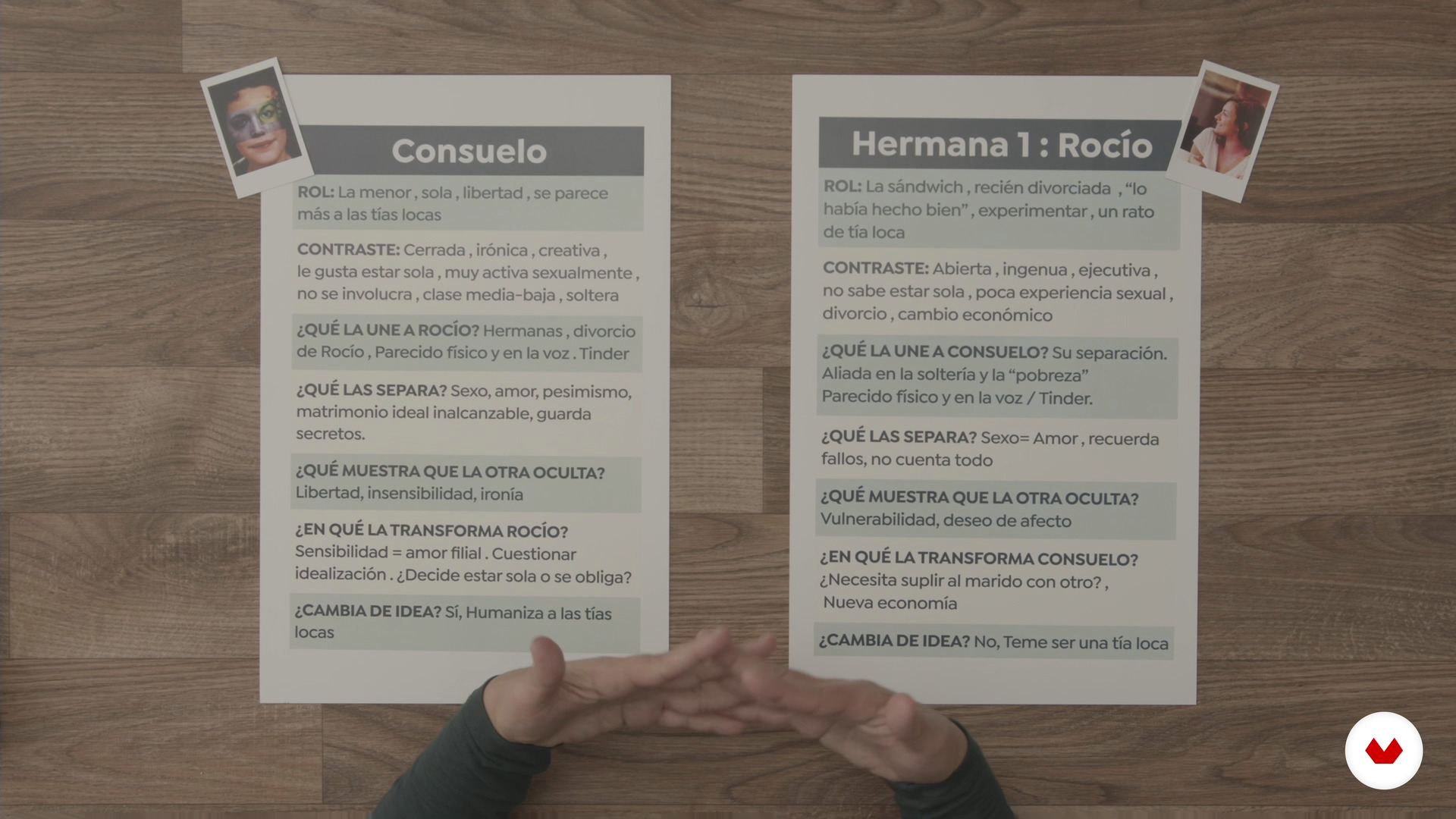 13
The character and his dynamics with other 1
Characters do not exist alone and the best way for them to shine is by relating them to other characters who, in turn, give them definition and meaning, that is what the following pages of your character's profile will be about.
15m
 14
The character and his dynamics with 2 others
Finally, you will see how to develop the dynamics of the character with four or five other secondary characters, always thinking about what these characters will contribute to the topic you are talking about.
8m
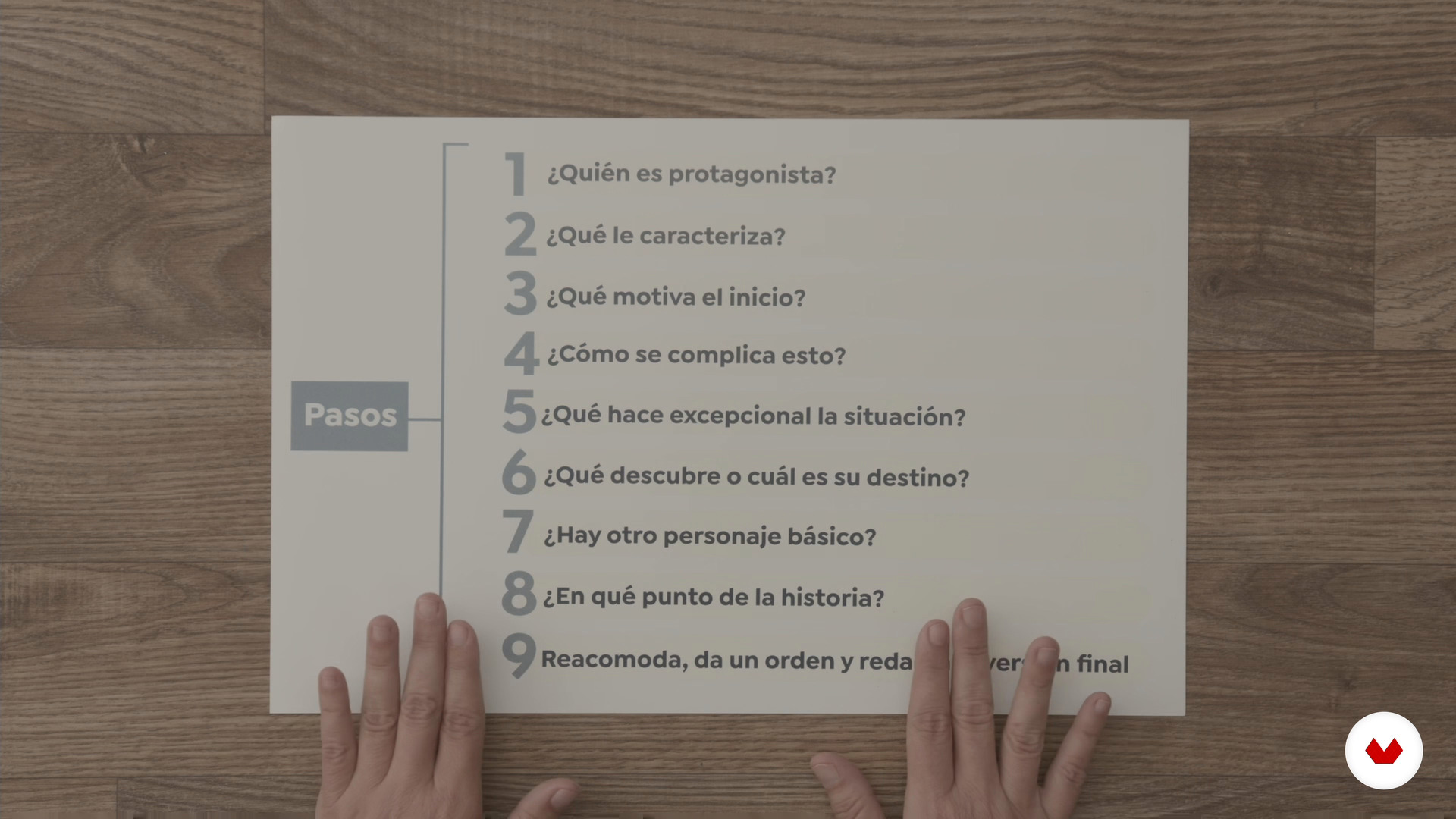 15
The character is the story
I will talk to you about how what you have already written down for your character contains the seed to give it a story and a destination or ending, also taking advantage of resources such as the letimotiv to prepare a brief synopsis that allows you to discover more about him or her along the way, This will be the last page of your character's profile.
12m
 16
Capture the character and his story
I will explain what you can do now with your character and his story, in addition, you will see how to capture it in a medium. Mine is literature, but there are many other possibilities.
7m
 17
How to publish your story?
I will show you calls and spaces to publish and share what you do with your already developed character, especially in my area, which is literature and the publishing field.
6m
 3
What Is Speculative Fiction?
First, you need to establish your genre. I will talk about the different definitions of speculative fiction, the conventions of the genre, and what distinguishes it from other styles of literature.
6m
 4
Where Do Ideas Come From?
Ideas are slippery. They come and go and there’s always the fear that the idea you just got could be the last, but that is just fear. Ideas (even speculative ideas) are everywhere, but you will need time and patience to make those ideas into stories. In this lesson, I will talk show you some examples of the ways I have gotten my ideas and how you can figure out some of your own.
14m
 5
How to Pay Attention and Ask Questions?
You will explore two paths to get ideas. To do that you will have to understand your own curiosity, and you will need to be always aware of what catches your attention. Then, you have to learn how to ask questions. Here is where the big “what if” of speculative fiction comes into the game.
11m
 6
How to Develop Your Notebook?
I will share with you one of my biggest tricks to find ideas: keeping a notebook. This is a very personal practice and every writer’s notebook is different. You will learn different ways in which you can keep a notebook of your own and how this practice can help your writing.
8m
 7
How to Stop Caring about Originality?
I will talk to you about originality. Do you really need to be original or is giving our take on a certain trope enough? Where does originality really dwell?
9m
 8
What Is Worldbuilding?
Let’s start by defining what worldbuilding is and how it can help you tell better stories. Worldbuilding might seem like a term that only applies to speculative fiction, but if you look closely every story has to build a world in some way. I’ll talk about the basics of worldbuilding and I’ll walk you through the world of my own story.
13m
 9
How to Go from Little to Extremely Different?
You’ll take a closer look at worlds that are very different from our own and worlds that are only slightly different. How do we tackle each one? Which one is better or easier? You’ll take a look at a couple of examples to appreciate the different degrees of separation that you can find in speculative stories and the effects these differences can have on a story.
11m
 10
How to Build a Second-World?
I have talked too much, now it's time to get your hands dirty and actually build a world. You will learn two different methods to world build and I’ll walk you through the process I used to figure out the world of my own project: The Grey Quarter.
14m
 11
Do We Have to Choose between Magic and Technology? 1
Worldbuilding is fun because you can let your imagination run wild. But an important question to take into account is how the laws of physics act in your world. Here is where magic and futuristic technology come in. Arthur C. Clarke said that for the people of the past futuristic technology is like magic, and he was right; therefore you can treat futuristic technology the same way you treat magic. I’ll talk to you about all the laws that can help you find your way around this issue.
17m
 12
Do We Have to Choose between Magic and Technology? 2
I will share with you how I will be dealing with this decision in my project and I will show you another example for you to make the best decision for your story.
7m
 13
What Is Worldbuilder Disease and How to Avoid It?
Research is very important to write any story. I’ll share with you some strategies to research and not get lost so you can get to the good part: writing a story!
17m
 14
How to Find a Story?
Let’s say you don’t know what story you want to tell in the world you’ve created. How do we find one? Here I’ll introduce you to a tool that is very good to think through stories and organize ideas in your mind: the idea cloud.
12m
 15
What’s the Shape of Your Story?
The structure of the story, meaning how you give information to the reader, can help you develop a plot, find a story or even explore a world. Knowing some basic structures of stories, you can start organizing the events of your story in a compelling way.
12m
 16
Who Tells the Story?
When exploring a world, knowing the point of view you are working with is vital. Here I’ll help you figure out which is the best point of view to tell your story and how this decision affects everything you are going to write.
16m
 17
How to Avoid Infodumping?
When you start with a world, one of the biggest perails is using exposition to introduce the world you’ve created to the reader. When done badly you can cross into info-dumping. You don’t want to bore the readers, you want them to be as fascinated by the world as you are. Exposition is not always bad, when used correctly it can make a world very vivid, but exposition like everything else must be connected to character and plot. You’ll see how to handle it and I'll give you some tips and tricks to avoid boring your reader.
12m
 18
How to Make a Story Better?
I’ll talk about what to do now that you have been writing stories in your world. I’ll talk to you a bit about editing and how to make your story better. It is important not to fear or, worse, hate editing because it is a normal step of writing. Some might argue it is where the real writing happens. I'll share with you some questions that can guide you when you start editing and I will explain to you the process I follow on my own stories.
14m
 19
What’s Next?
Have you ever wonder what to do with the stories you have. I will show you some workshops, magazines, and conventions. This is just the beginning of a long journey through your personal world!
7m
 3
Tell me your worst nightmares
In this lesson I will tell you how there are great stories that are born out of real terrors (insecurity, family violence, loss of loved ones, bankruptcies, exiles, etc.).
4m
 4
And now, where do I get a monster?
Here you will learn to identify how the best-known horror stories use the technique of using a real fear to, applying the techniques that I will teach you, turn it into something that scares us. It's super natural for you to doubt your own ability to create horror stories that might scare readers, it seems so difficult! Calm down, breathe. Be creative and, most of all, read a lot of books and watch a lot of movies about the genre. Learn from the masters.
9m
 5
The voice from beyond the grave
You already have your monster, great, but you don't know how to make him talk. Calm down, I'll give you basic notions about the narrative voice so you can decide how you want your monster or your victim to speak. This decision is the basis for everything to come.
3m
 6
It was a monster, it is a monster, it will be a monster
One thing that usually paralyzes us when writing is the choice of verb tense. Present past Future? What will be scarier? In this lesson, I will help you choose the form of the verb that best suits the horror story.
4m
 7
Everything was going so well
In this lesson you will learn that one of the classic manifestations of terror is to start with a seemingly innocent, even calm story. The biggest scares come when you least expect them.
6m
 8
The sinister knocks at the door
The monster's shadow begins to appear. Just a pinch. A rarefied atmosphere begins to be generated in that space of peace that you began to outline in the previous lesson.
10m
 9
Do not look under the bed
I'll tell you about how everything changes when the sinister makes its appearance. Turn up the tension. The horror story begins to be.
7m
 10
Look under the bed
I will pause to recap and help you with the most common doubts. It's been a lot of information in a very short time, right? Do not worry, I will be here for any doubts you may have, but first I will remind you of the most important points of what we have learned.
8m
 11
The call comes from your own home
The success of a horror story is, first, that the reader believes it and, second, that they put themselves in the shoes of the protagonist. You have to use your friend's verisimilitude .
9m
 12
I'll go with you to hell itself
In this lesson you will learn something fundamental not only for the horror genre, but for all literature: trust the reader , trust the reader, trust the reader.
9m
 13
The exorcist's last words
The end is rushing, the one that can turn your story into a masterpiece or a fiasco. This is the last push and I know you are going to do very well.
9m
 14
Ranger to the rescue
In this lesson we will talk about the habits, practices and strategies that you will have to develop if you want to dedicate yourself seriously to writing stories or, why not, scripts or horror novels.
6m
 15
A book of black magic
Well, we have already met, we have spoken, we have delved into our fears, we have faced demons known and yet to be known, but now comes the great question of every amateur writer: How do I publish? How to get read to me? At what point does this become a book?
5m
 3
Who Are Teenagers?
The first thing we are going to do in this unit is define what adolescence is and what the needs and interests of readers are at this stage of life. Accompany me!
7m
 4
Why Do We Like Fear?
Are you a fan of scary stories? In this lesson, we're going to explore why horror is so popular in literature and other arts, particularly among teen audiences.
4m
 5
Best Horror Books for Teens
In this lesson I will tell you about some authors and scary stories that are very popular among teenagers who are fans of the genre.
6m
 6
The First Steps Towards the Project
The time has come to start the pre-production of the course project. We must take into account the materials and the space we need, as well as the particular theme that we are going to address.
11m
 7
Good Characters for Good Stories 1
The best scary stories have characters that the reader cares about. Do you know how this is achieved? Let's look at it in detail in this lesson.
18m
 8
Good Characters for Good Stories 2
I continue to bring to life the protagonist of my story, Regina, using various templates to define both her characteristics and her place in the work.
15m
 9
Even Monsters Follow Rules: Narrative World Pattern
The characters need a context, a world in which to live their adventures. In this lesson I am going to explain to you how it is possible to invent a world that is believable, consistent and credible.
10m
 10
The Skeleton of the Story and Its Importance 1
Since we already know the protagonist, now comes the time to decide what is going to happen to her. In this lesson I will explain what are the most important points of a story and how we can define them in our creation.
15m
 11
The Skeleton of the Story and Its Importance 2
Now I am going to complete the project sheet template to have at hand all the information about the project we are going to work on.
15m
 12
Choosing the Narrator and the Verb Tense
In this lesson we are going to define from which point of view the story is going to be narrated according to the effect we want to achieve on the reader.
8m
 13
Actions and Descriptions
Now I am going to show you some strategies so that you can develop actions and descriptions within your scary story for teenagers.
4m
 14
The Dialogues
Dialogue is one of the most important elements of a narrative. In this lesson I will explain how to approach them so that you can use them to give rhythm and depth to your story.
6m
 15
Writing and Editing
It's time to write a scene. In this lesson I will explain my process: first I wrote the scene in my notebook and then I transferred it to the computer so I could review and correct it.
11m
 16
Publishing the Text
Once you have a finished text, it's time to present it to your potential readers. How to do it? Let's look at some options in this lesson.
19m
 3
What Is a Psychological Thriller?
Let’s start with the basics: what is a psychological thriller? And how the hell do you set about writing one?
10m
 4
Overcoming the Creative Block
Many people want to write a book, fewer people start it, and even fewer finish. So how do you silence that voice in your head that tells you you can’t do it? We all have that voice. It says that it’ll be too difficult. You’re not good enough. Other people are writers, not you, and anyway, the bathroom needs cleaning. Whatever it is: you can get past it. Getting past it is one of the critical steps to becoming a writer.
4m
 5
Research and Workspace
Research is a vast topic: while you need to ensure your story is correctly researched, don’t let it stop you from writing. In your first draft, you can write your story as you’d like it to be. Then, when you’ve got the shape of your book, you can go back and make sure you’re getting the details right.
11m
 6
The Plot
For a psychological thriller, the plot is everything. But do you need to know every detail before you start writing? The truth is that, even if you think you do, it will change as you write it. This lesson will help you get to grips with plotting: how detailed is a plan you make, and when do you deviate from it? And how do you weave in red herrings, twists and revelations in a way your readers will appreciate?
17m
 7
How to Write
It’s easy to overlook the question of how you actually write. A psychological thriller needs to have a personal, dynamic narrative. This isn’t the place for a thousand-word description of the light on the sea. Instead, it’s about clarity, tension and pace.
8m
 8
The Character
Character is crucial to hooking in your reader, particularly in a psychological thriller. Whether you’re writing in first or third person, your main character is going to be living in your reader’s head for quite some time. So, how do you invent a cast of human beings? How do you channel your main character’s voice and work out how they react in different situations? You need to make your readers care what happens to them because if they don’t care, they won’t bother to read on. There are extra considerations of reliability in a psychological thriller: we’ll also look at this and consider how it relates to your protagonist.
12m
 9
The Setting
The setting is hugely important for any novel, and it can heighten the tension in a psychological thriller. Anyone picking up a book wants to be transported to a new place, and it’s your job to take them there, so a good sense of place is essential. But, you don’t need your setting to be dramatically exciting: wherever it is, you’ll be able to pick out and convey vivid details.
6m
 10
The Theme
The theme is different from the plot: your theme is the underlying message or question of your book, the thing you are writing about.
5m
 11
The Dialogue
As soon as your characters start speaking to each other, the reader sees them in a new light. Dialogue can make or break a novel, so in this session, you’re going to learn how to make it work for you.
7m
 12
The Opening Pages and the Ending
The opening pages of your psychological thriller are critical. These are the words that will hook your readers. Therefore, you need to spend time making sure your opening is as impactful as it can be: as part of your final project, you’ll write the beginning of your psychological thriller. Similarly, the ending is the thing that sticks in your reader’s mind when they’ve finished the book. Anyone reading any thriller wants to be surprised and fooled. Therefore, the ending will shape their immediate impression of it, so you must make both the opening and the ending work as well as you possibly can.
8m
 13
‘25 Word’ Synopsis
Writers generally hate writing a synopsis. Writing a 25 word one, the famous ‘elevator pitch’ is painful but worth it. Here, you’ll spend a bit of time distilling your book into its essence and then sharing it with us.
3m
 14
Editing
I’ve talked a lot about writing your first draft. Getting the first draft down is a huge achievement: what happens next? How do you polish it?
11m
 15
Introducing Secondary Characters and Subplots
I’ve talked about the building blocks of your novel and how to write an exciting opening: as you carry on writing, you’re going to need to bring in secondary characters and subplots. This lesson is a brief overview of how to handle them.
10m
What is this course's project?
Craft a versatile portfolio showcasing your ability to create psychologically rich narratives across horror, thriller, and speculative fiction genres. Develop multidimensional characters, suspenseful plots, and a reflective analysis, ready for submission to publishers or creative writing programs.
Who is this specialization for?
Aspiring writers seeking to delve into psychological fiction will find this course ideal. It's perfect for those wanting to craft complex narratives, explore character depth, and master suspense across horror, thriller, and speculative fiction genres, enhancing storytelling skills.
Requirements and materials
No extensive prior knowledge is needed. A basic understanding of narrative structure and character development is helpful. Access to a computer with writing software and internet connection for course materials and assignments is essential. Bring your creativity and curiosity.

Reviews
- 4 months ago
Es un muy buen curso con temas variados y, sobre todo, mucha información útil también en los recursos adicionales.
- 7 months ago
excelente curso muy completo
- 9 months ago
Interesante rozando lo apasionante
- 1 year ago
Excelente taller.
Select to get to know your teachers in this specialization course


What to expect from this specialization course
Learn at your own pace
Enjoy learning from home without a set schedule and with an easy-to-follow method. You set your own pace.
Learn from the best professionals
Learn valuable methods and techniques explained by top experts in the creative sector.
Meet expert teachers
Each expert teaches what they do best, with clear guidelines, true passion, and professional insight in every lesson.
Certificates
PLUSIf you're a Plus member, get a custom certificate for every specialization course. Share it on your portfolio, social media, or wherever you like.
Get front-row seats
Videos of the highest quality, so you don't miss a single detail. With unlimited access, you can watch them as many times as you need to perfect your technique.
Share knowledge and ideas
Ask questions, request feedback, or offer solutions. Share your learning experience with other students in the community who are as passionate about creativity as you are.
Connect with a global creative community
The community is home to millions of people from around the world who are curious and passionate about exploring and expressing their creativity.
Watch professionally produced courses
Domestika curates its teacher roster and produces every course in-house to ensure a high-quality online learning experience.
FAQs
Yes, this course is designed for writers with some experience who want to deepen their skills in speculative fiction, worldbuilding, and story structure. Beginners may also benefit, but the material assumes a basic familiarity with creative writing concepts.
You’ll learn how to build fantasy and science fiction worlds, craft unique magic or technological systems, analyze global influences, develop original story ideas from observation, and structure narratives using advanced techniques like the MICE Quotient and iceberg theory.
No special tools are required. However, you’ll benefit from having a notebook (digital or paper) and optionally using note-taking apps such as Evernote or Google Docs to organize your creative ideas.
Yes, the course provides detailed strategies for designing unique worlds, including top-down and bottom-up worldbuilding techniques, balancing realism and fantasy, and developing cohesive settings for your stories.
You’ll learn how to combine genres, mix tropes, and create narratives that cross traditional science fiction and fantasy boundaries, resulting in fresh, original stories.
Absolutely. The course teaches you to identify, remix, and personalize common tropes, transforming familiar elements into unique and meaningful narratives.
Yes, the course emphasizes attention training and observation, teaching you to capture sensory details and use real-life inspiration to create immersive settings and characters.