Photoengraving with Photopolymer Etching
A course by Juan Lara HierroArtist
A course by Juan Lara Hierro, Artist

Explore this contemporary engraving technique and learn to transfer photos to a photosensitive plate to print on paper
For Juan Lara, one of the great virtues of printmaking is that the techniques are not substituted for one another, but rather, like layers, they overlap and enrich the graphic universe. Juan is an artist whose work is always full of dualities: positive-negative, original-copy, white-black.
Specialized in photoengraving and committed to experimenting with different techniques, he has been awarded prizes such as the Jesús Nuñez, the V Certamen internacional Atlante, and the VII Premio Internacional de Grabado y Vino Fundación Vivanco. In this online course, explore both digital and analogue images with one of the most interesting methods of contemporary printmaking.
What will you learn in this online course?
15 lessons & 16 downloads
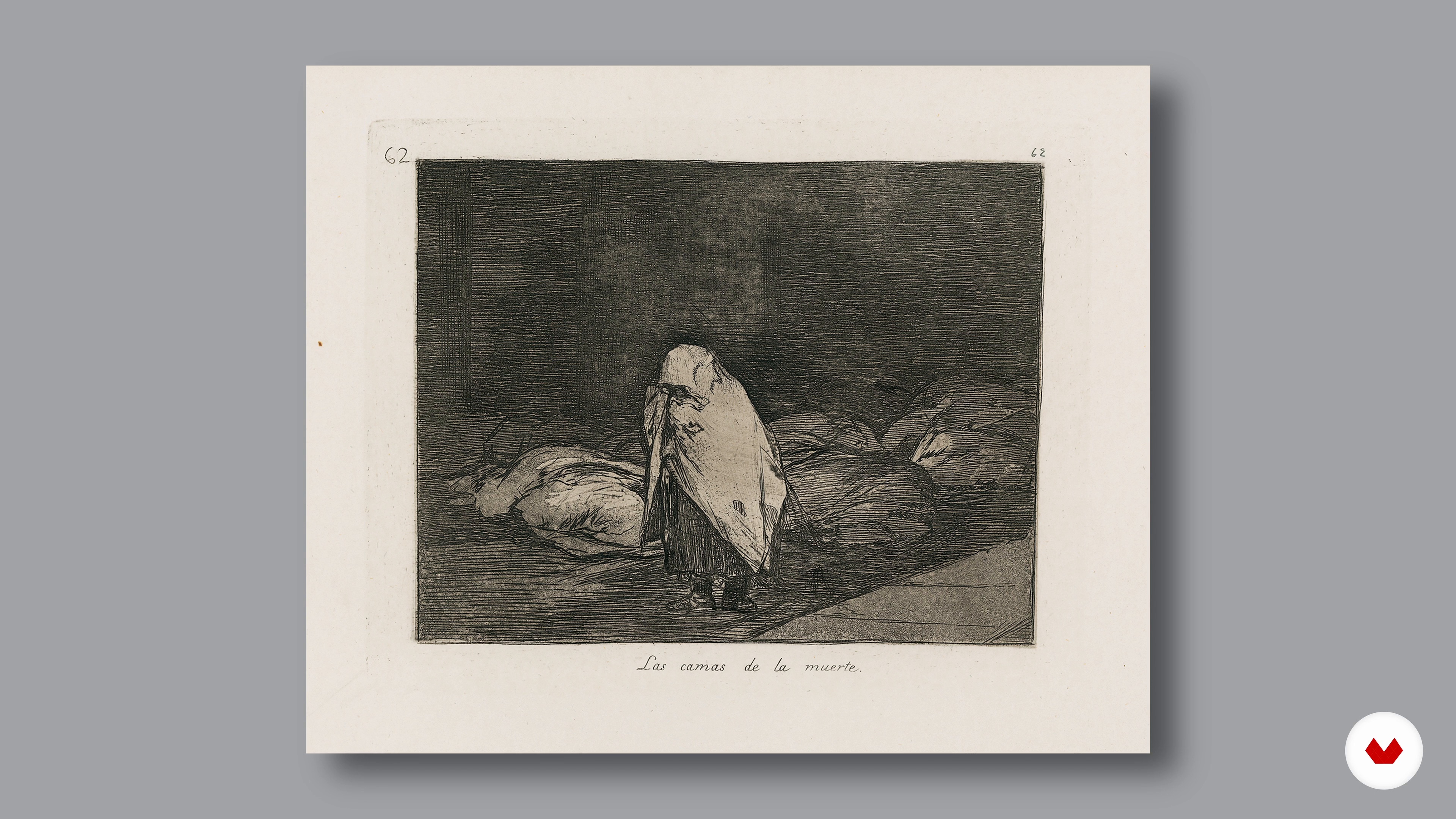
Influences
6 minutes, 0 seconds
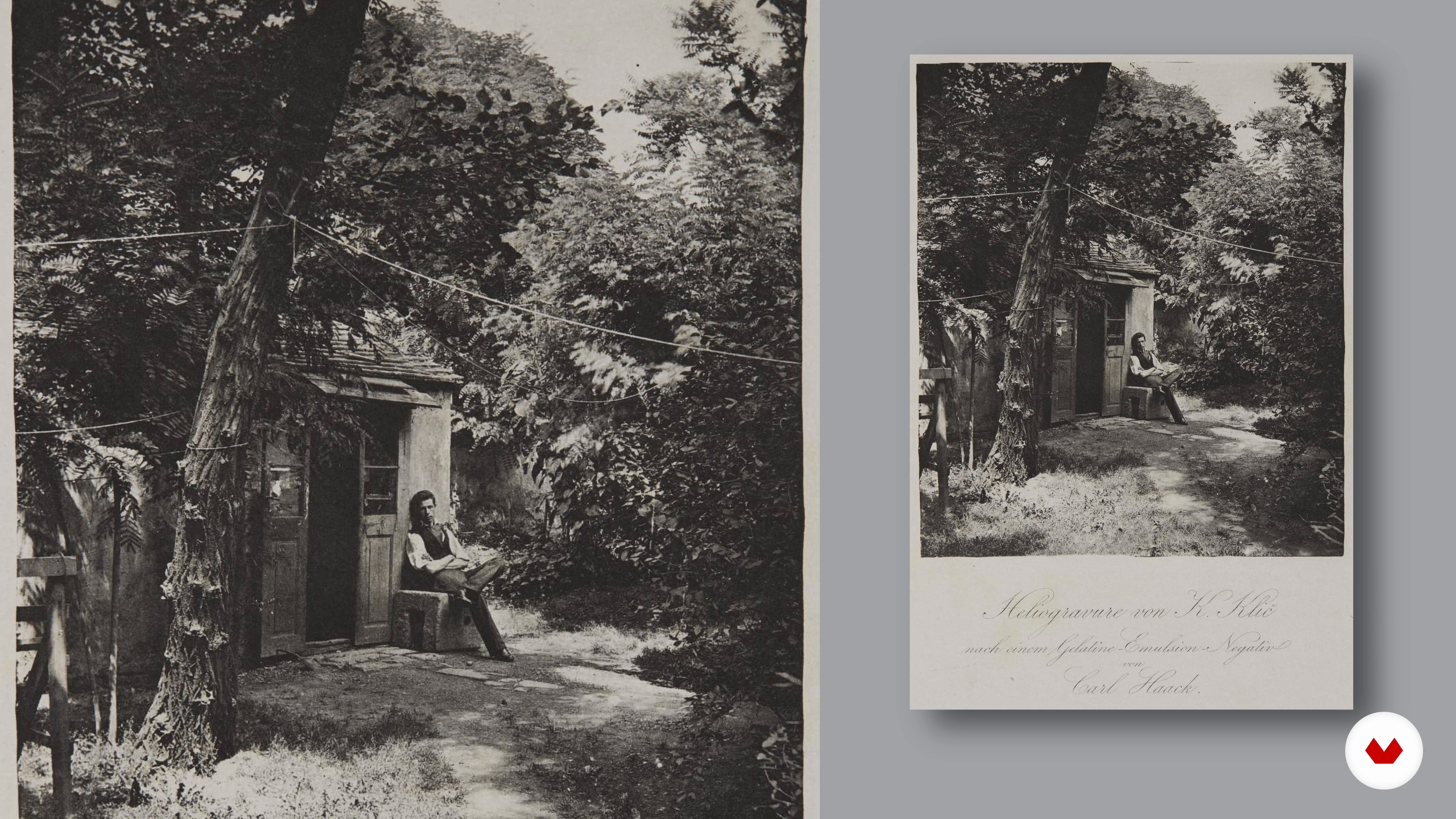
History of photogravure
3 minutes, 28 seconds
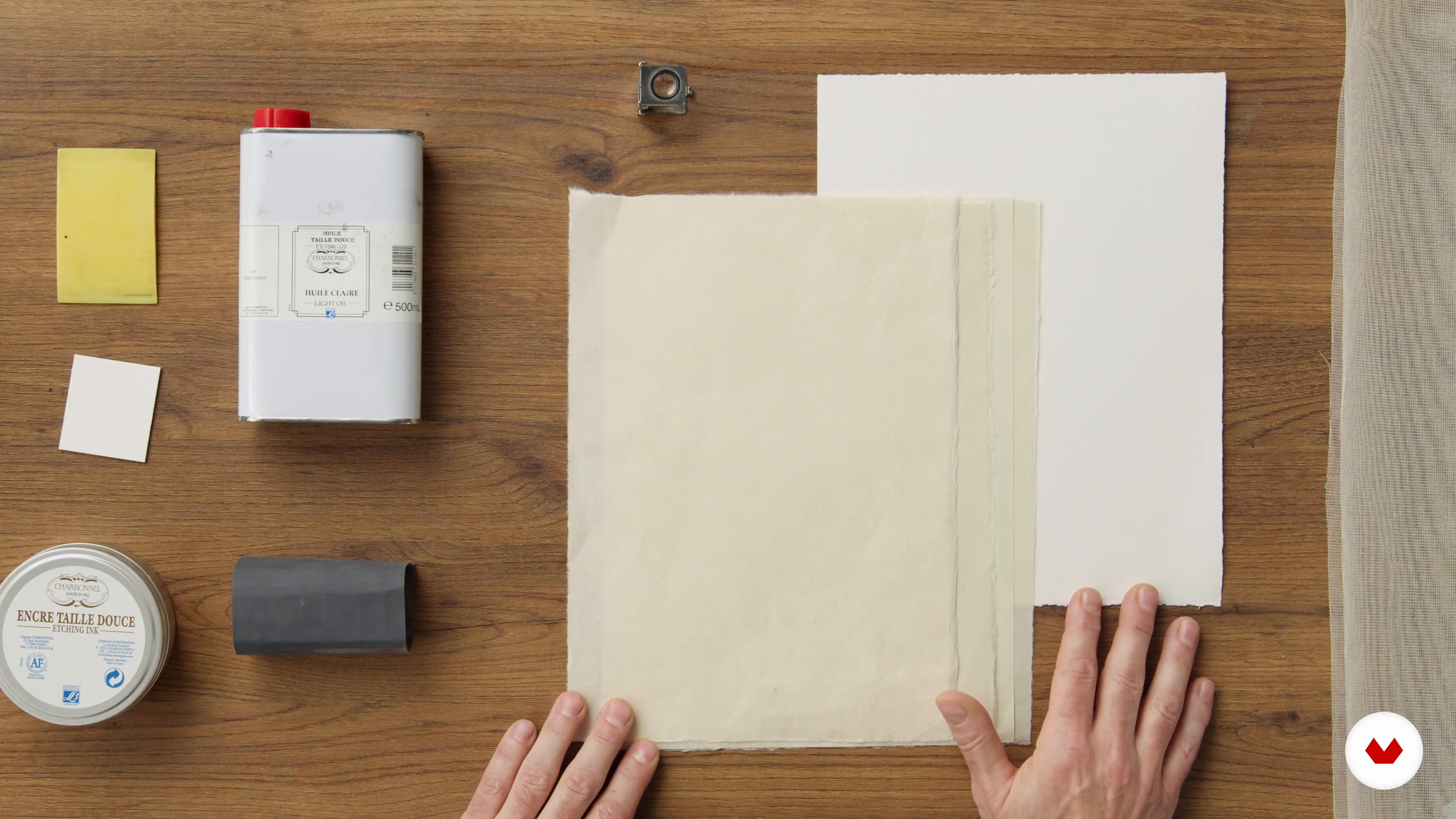
Materials needed to work with photopolymers
8 minutes, 55 seconds
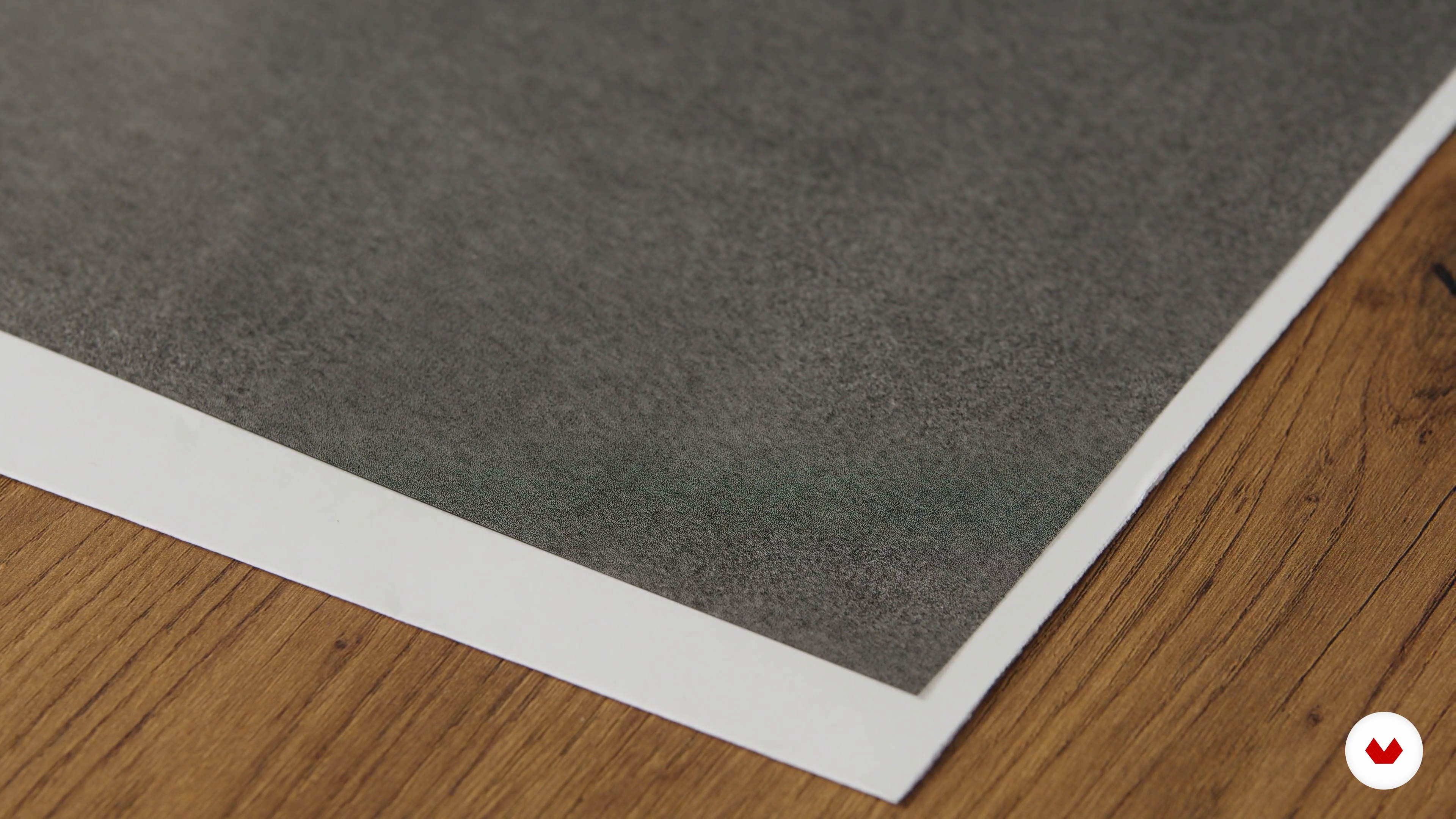
The plot
4 minutes, 10 seconds
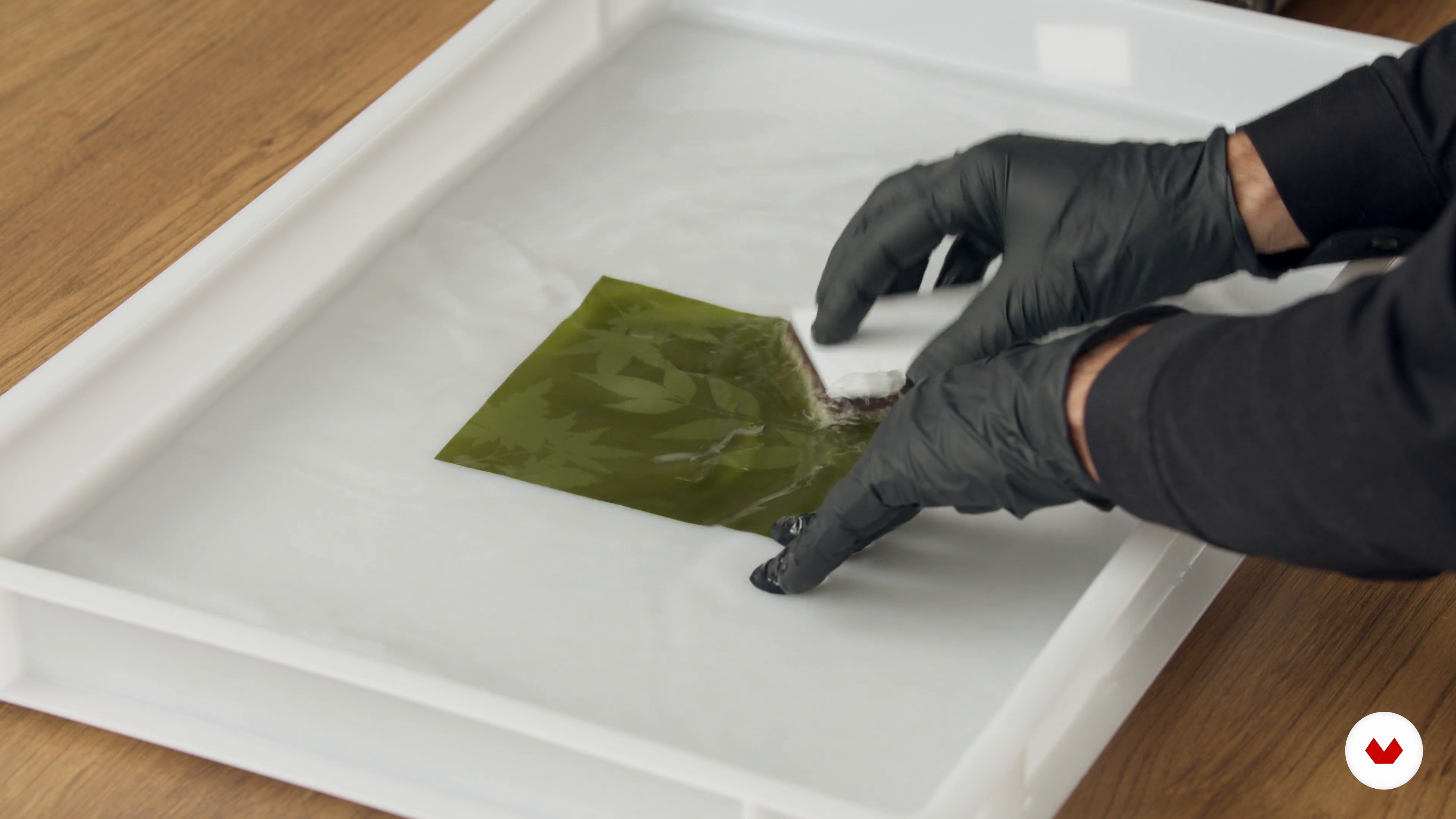
Sunt frames
13 minutes, 33 seconds
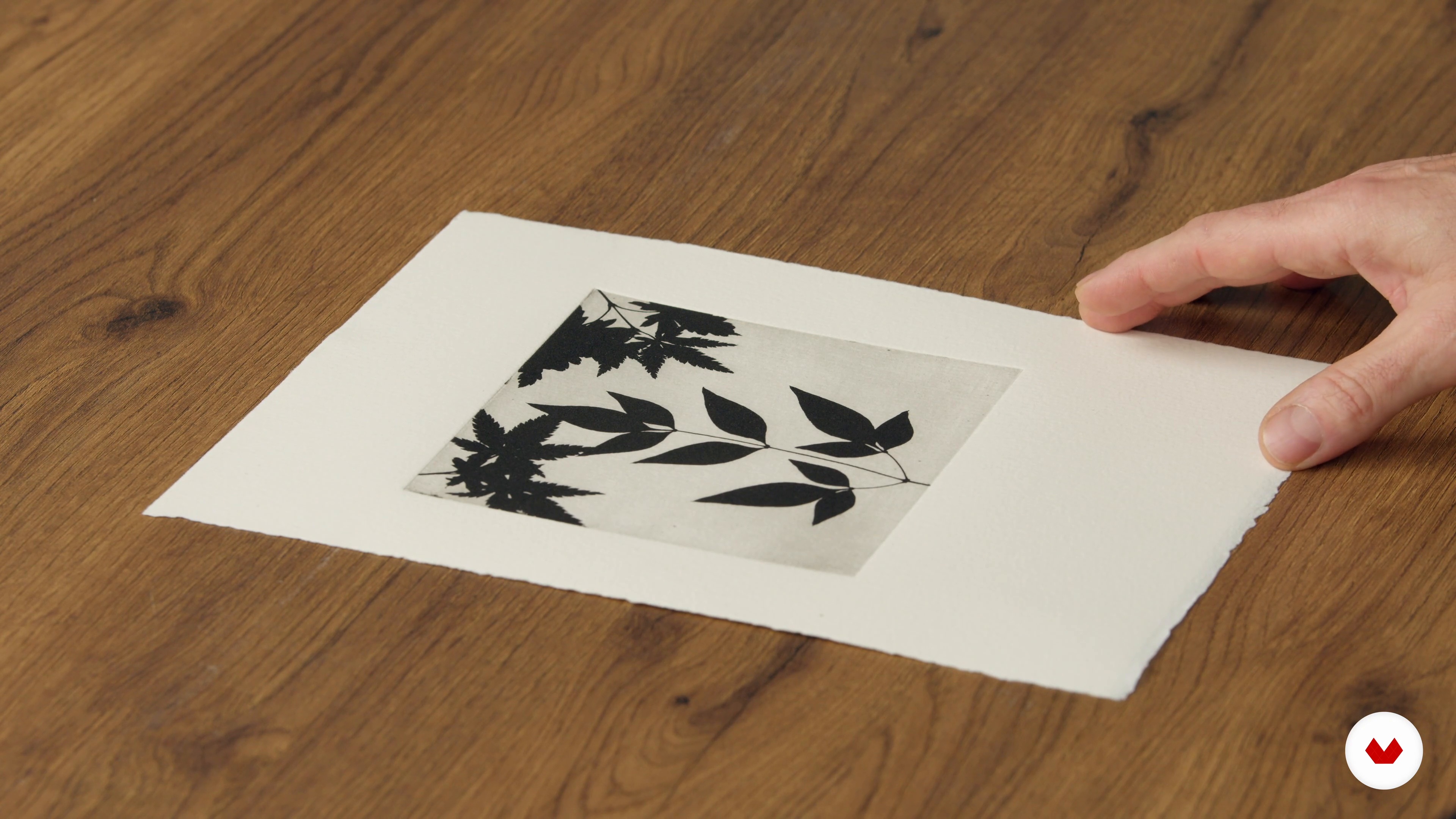
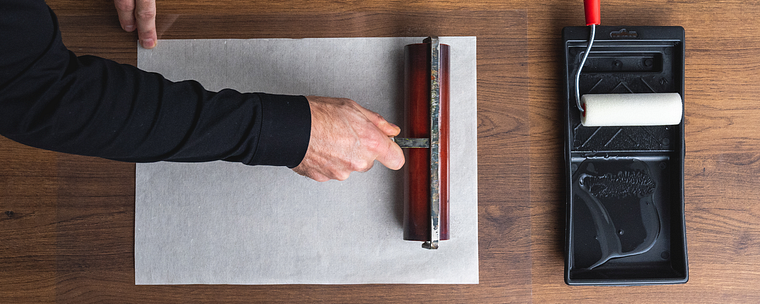
Inking and stamping
16 minutes, 24 seconds
What's included in this course?
First, Juan Lara tells you about his professional career, his artistic work, and his influences in the world of photoengraving. Learn about the history of this process and its evolution through time to the present day. Focus on photopolymer and discover the materials needed to carry out your project. Then, study the use of screens and have a first contact with plates and ultraviolet light to make a photogram. Learn how to ink and prepare your tools for printing. Next, see how to calibrate your monitor and manage the digital image so that it connects with the printed image. Prepare a grayscale and do some ink tests. Go into Photoshop and create an output curve from the results. Finally, adjust measurements, percentages, and tones of the photograph to process the final printing.
What is this course's project?
Make a photopolymer from a digital image and its artistic stamping.
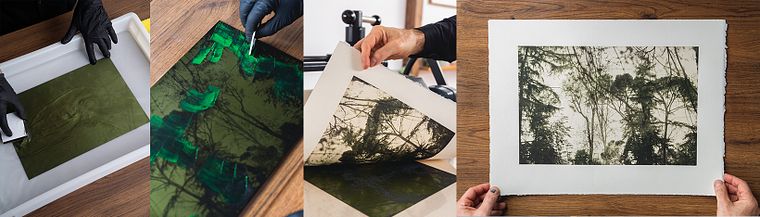
Projects by course students


Who is this online course for?
Anyone interested in both digital and analog photography and to all those who are passionate about engraving.
Requirements and materials
To take the course you need a computer with Photoshop, engraving materials, and access to a small engraving workshop, a press, and a home screen exposure unit.
Reviews
- 2 months ago
Muy buen curso de introducción al grabado con la técnica de fotopolímero. Altamente recomendable
- 5 months ago
inegnante molto preparato, descrizioni chiare e approfondite, facile da seguire. la possibilità di scegliere la lingua facilita molto l'ascolto
- 11 months ago
Um curso muito bom. O Professor tem uma ótima didática e os exemplos são claros e meticulosos. Recomendo.
- 1 year ago
O curso é excelente e muito bem conduzido, gostei muito. Todas as etapas são ensinadas detalhadamente, foi muito útil para mim. Obrigada!
- 1 year ago
Me ha encantado, muy util!

Content
- U1
Introduction
- About Me
- Influences
- U2
The photogravure
- History of photogravure
- Photopolymer
- Materials needed to work with photopolymers
- U3
Frames: the stochastic plot as a resource
- The plot
- Sunt frames
- Inking and stamping
- U4
Gray scale
- The image on the screen
- Processing and stamping of the scale
- Create an output curve
- U5
Project development
- Image management in PHS
- Plate processing
- The artistic print 1
- The artistic stamping 2
- FP
Final project
- Photoengraving with Photopolymer Etching
What to expect from a Domestika course
Learn at your own pace
Enjoy learning from home without a set schedule and with an easy-to-follow method. You set your own pace.
Learn from the best professionals
Learn valuable methods and techniques explained by top experts in the creative sector.
Meet expert teachers
Each expert teaches what they do best, with clear guidelines, true passion, and professional insight in every lesson.
Certificates
PLUSIf you're a Plus member, get a custom certificate signed by your teacher for every course. Share it on your portfolio, social media, or wherever you like.
Get front-row seats
Videos of the highest quality, so you don't miss a single detail. With unlimited access, you can watch them as many times as you need to perfect your technique.
Share knowledge and ideas
Ask questions, request feedback, or offer solutions. Share your learning experience with other students in the community who are as passionate about creativity as you are.
Connect with a global creative community
The community is home to millions of people from around the world who are curious and passionate about exploring and expressing their creativity.
Watch professionally produced courses
Domestika curates its teacher roster and produces every course in-house to ensure a high-quality online learning experience.
FAQs
Photopolymer is a light-sensitive plate that allows images or drawings to be transferred through exposure to light, enabling modern printmaking techniques with fine detail for both art and industrial uses.
No prior printmaking experience is required, though basic knowledge of art or printing is recommended. The course is designed for intermediate level and guides you step-by-step through the main processes.
You’ll need photopolymer plates, a printer for film positives, a UV exposure unit, a press, inks, special paper (like Japanese or polyester), plus cleaning and cutting supplies. The course covers each item and how to use it.
You’ll learn how to transfer images to plates, develop and ink photopolymers, adjust digital halftones, use both traditional and modern techniques, and apply printing methods on various papers and surfaces.
Photopolymer printmaking offers greater precision in transferring digital images or drawings, is more versatile with different materials, and involves fewer hazardous chemicals than traditional methods like acid etching or drypoint.
Yes, the course is designed to help you develop artistic and editorial projects, integrating contemporary photopolymer etching techniques to enrich your print work and expand your creative possibilities.
You can transfer original drawings, photographs, digital images, and black-and-white or grayscale compositions, adjusting halftone patterns and resolution to achieve the desired effect.