Visual Development: Illustrate Imaginary Settings
A course by Lara Pickle , Visual Development Artist

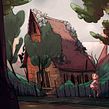
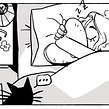
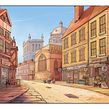

Learn the creative process behind illustrating visual environments for storytelling, from the initial idea to the final composition

Visual development involves building the aesthetic and atmosphere of imaginary worlds for media projects, from video games to animation. Larisa Bumb, better known as Lara Pickle on social media, is an illustrator specializing in this form of story-driven art. Her quirky, cartoon-style designs can be seen in animated shows like Nickelodeon’s Pony and Netflix’s Dead End: Paranormal Park.
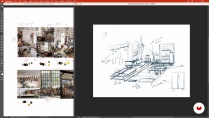
In this online course, discover the creative process behind illustrating visual environments. Lara teaches you how to develop concept-based compositions from start to finish and convey ideas through lines, colors, and texture. Explore your imagination and design artwork that sets the tone for a story.
What will you learn in this online course?
19 lessons & 27 downloads
- 100% positive reviews (74)
- 6,272 students
- 19 lessons (4h 29m)
- 27 additional resources (6 files)
- Online and at your own pace
- Available on the app
- Audio: English, Spanish (Latam), French, Indonesian, Italian, Portuguese, Romanian, Turkish
- English · Spanish · Portuguese · German · French · Italian · Polish · Dutch · Turkish · Romanian · Indonesian
- Level: Beginner
- Unlimited access forever
Recommended software & tools for this course
 Adobe Photoshop
What is this course's project?
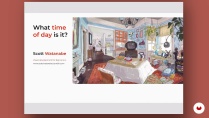
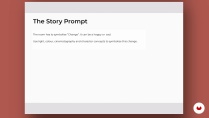
Illustrate a room based on a character concept and prompt.

Projects by course students


Who is this online course for?
Artists, illustrators, designers, animators, and anyone who wants to learn more about visual development for storytelling.
Requirements and materials
Basic drawing skills and familiarity with Photoshop are required.
In terms of materials, you need a computer with access to Photoshop. A graphics tablet and stylus are also recommended.

Reviews

Lara Pickle
A course by Lara Pickle
Larisa Bumb, better known as Lara Pickle, is a Spanish-Romanian visual development artist based in the UK. Inspired by the cartoons of her childhood, she always knew she wanted to draw for a living. Although she studied animation, she found that her passion lay elsewhere in the industry. She loves the behind-the-scenes work of developing characters and the environments they live in, as it gives her the freedom to explore her imagination and tell stories through her art.
Over the course of her career, Lara has developed designs for animated shows like Nickelodeon’s Pony, Netflix’s Dead End: Paranormal Park, Nella the Princess Knight, and Powerbirds, as well as the musical P.S. I’m a Terrible Person and the comic Kajko and Kokosz. She has also published her own graphic novel Estoy fatal, gracias.
Content
-
U1
Introduction
-
About Me
-
Influences
-
-
U2
Preparing the Project
-
What is Visual Development?
-
Key Elements of Visual Development
-
The Brief
-
-
U3
Creating the Room
-
Initial Research and Inspiration 1
-
Initial Research and Inspiration 2
-
Thumbnails and Sketches 1
-
Thumbnails and Sketches 2
-
Thumbnails and Sketches 3
-
The Design 1
-
The Design 2
-
The Design 3
-
Painting and Lighting 1
-
Painting and Lighting 2
-
Painting and Lighting 3
-
Painting and Lighting 4
-
-
U4
Additional Tips
-
Presenting Your Work
-
Final Advice
-
-
FP
Final project
-
Visual Development: Illustrate Imaginary Settings
-
What to expect from a Domestika course
-
Learn at your own pace
Enjoy learning from home without a set schedule and with an easy-to-follow method. You set your own pace.
-
Learn from the best professionals
Learn valuable methods and techniques explained by top experts in the creative sector.
-
Meet expert teachers
Each expert teaches what they do best, with clear guidelines, true passion, and professional insight in every lesson.
-
Certificates
PlusIf you're a Plus member, get a custom certificate signed by your teacher for every course. Share it on your portfolio, social media, or wherever you like.
-
Get front-row seats
Videos of the highest quality, so you don't miss a single detail. With unlimited access, you can watch them as many times as you need to perfect your technique.
-
Share knowledge and ideas
Ask questions, request feedback, or offer solutions. Share your learning experience with other students in the community who are as passionate about creativity as you are.
-
Connect with a global creative community
The community is home to millions of people from around the world who are curious and passionate about exploring and expressing their creativity.
-
Watch professionally produced courses
Domestika curates its teacher roster and produces every course in-house to ensure a high-quality online learning experience.
FAQs
Domestika courses are online classes that allow you to learn new skills and create incredible projects. All our courses include the opportunity to share your work with other students and/or teachers, creating an active learning community. We offer different formats:
Original Courses: Complete classes that combine videos, texts, and educational materials to complete a specific project from start to finish.
Basics Courses: Specialized training where you master specific software tools step by step.
Specialization Courses: Learning paths with various expert teachers on the same topic, perfect for becoming a specialist by learning from different approaches.
Guided Courses: Practical experiences ideal for directly acquiring specific skills.
Intensive Courses (Deep Dives): New creative processes based on artificial intelligence tools in an accessible format for in-depth and dynamic understanding.
All courses are 100% online, so once they're published, courses start and finish whenever you want. You set the pace of the class. You can go back to review what interests you most and skip what you already know, ask questions, answer questions, share your projects, and more.
The courses are divided into different units. Each one includes lessons, informational text, tasks, and practice exercises to help you carry out your project step by step, with additional complementary resources and downloads. You'll also have access to an exclusive forum where you can interact with the teacher and with other students, as well as share your work and your course project, creating a community around the course.
You can redeem the course you received by accessing the redeeming page and entering your gift code.
 Adobe Photoshop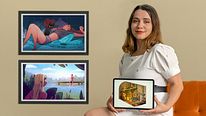
Ame el curso <3 explica muy bien e inspira un monton !
muy bueno! explica bastante bien
Well written course and a lot of extra material that's been incredibly useful (like the Marco Bucci youtube series). Highly recommended!
¡Muy buen curso!
Este curso es grandioso.