
Learn to draw detailed, surreal illustrations by combining multiple perspectives, pencil sketching, shading, and inking techniques
Drawing is a form of therapy–it’s a way to disconnect from the world, and reconnect with your well-being. Illustrator and musician Eva Redamonti always starts her process by listening to music, relaxing, and allowing her subconscious to manifest on the blank page. Her work has been featured in publications like Juxtapoz Magazine and The New York Times, and has collaborated with clients like Adobe and Medium.
In this online course, you will learn how to draw surreal illustrations by combining multiple perspectives and imagery. Explore** pencil and inking techniques **that allow you to give shape to your imagination. By the end of this course, you’ll know how to use patterns and lines to create dreamlike compositions.
What will you learn in this online course?
11 lessons & 22 downloads
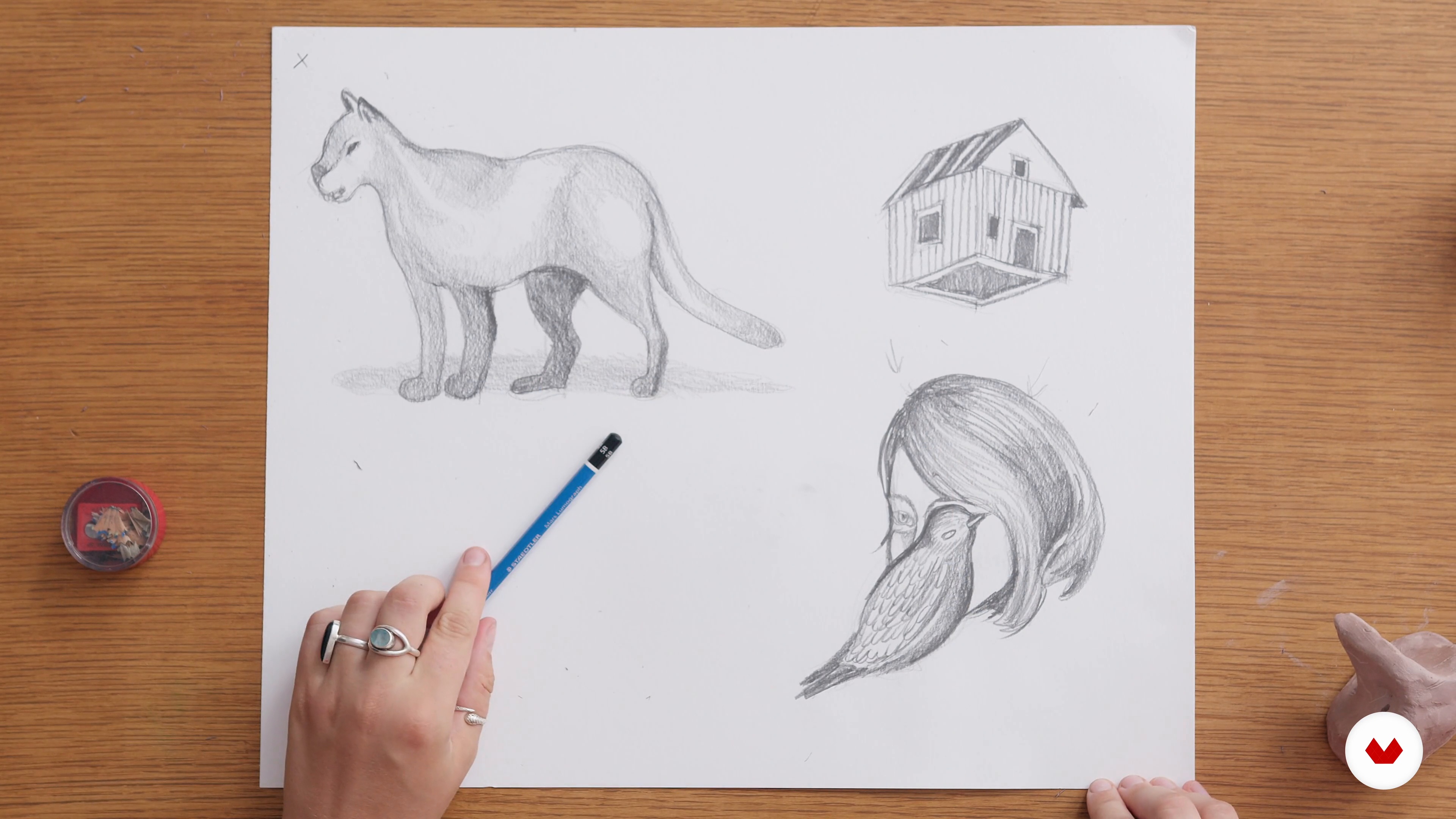
The Basic Drawing: Seeing Shapes in Everything
14 minutes, 42 seconds
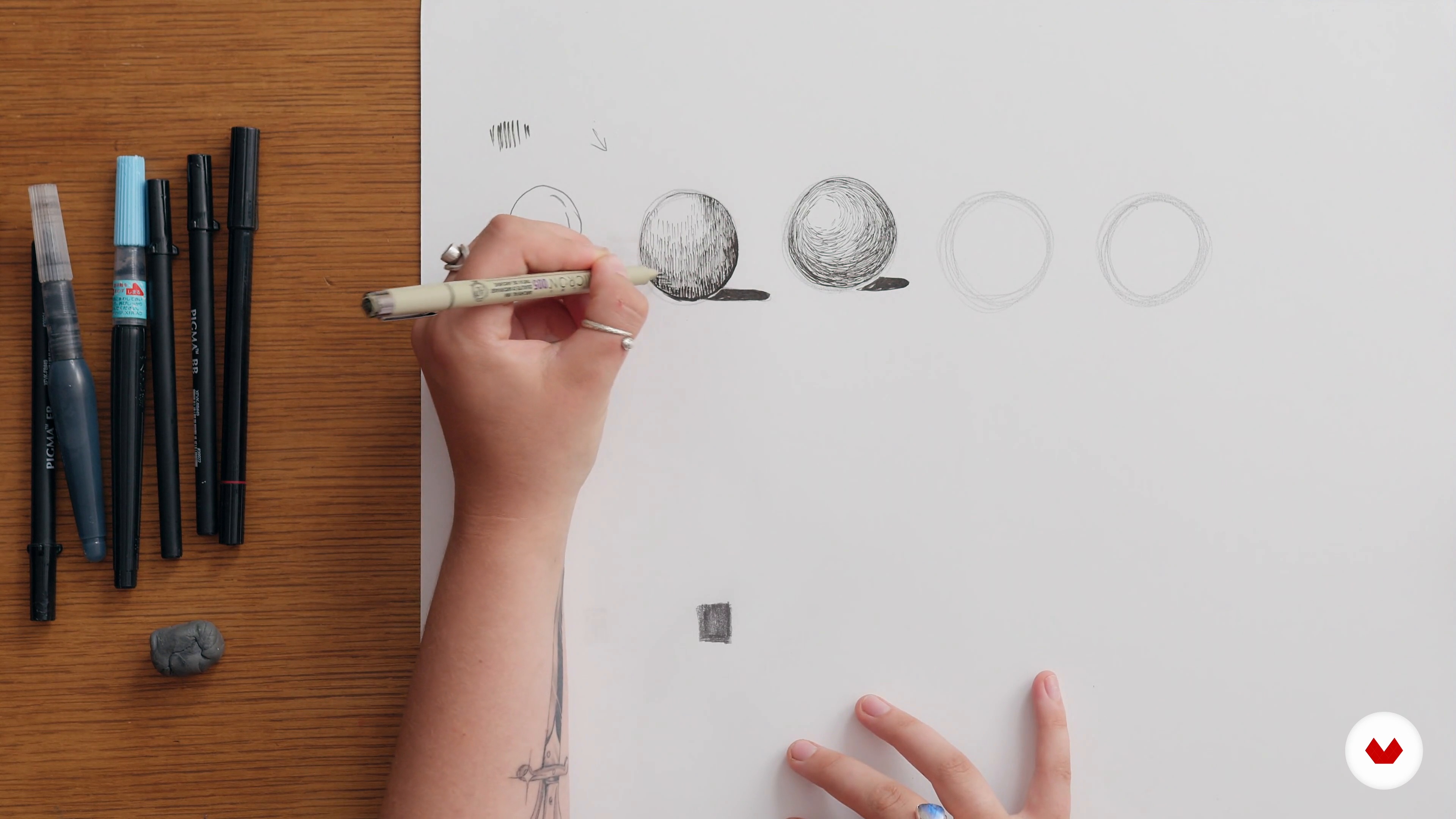
Materials and Inking Methods 1
17 minutes, 53 seconds
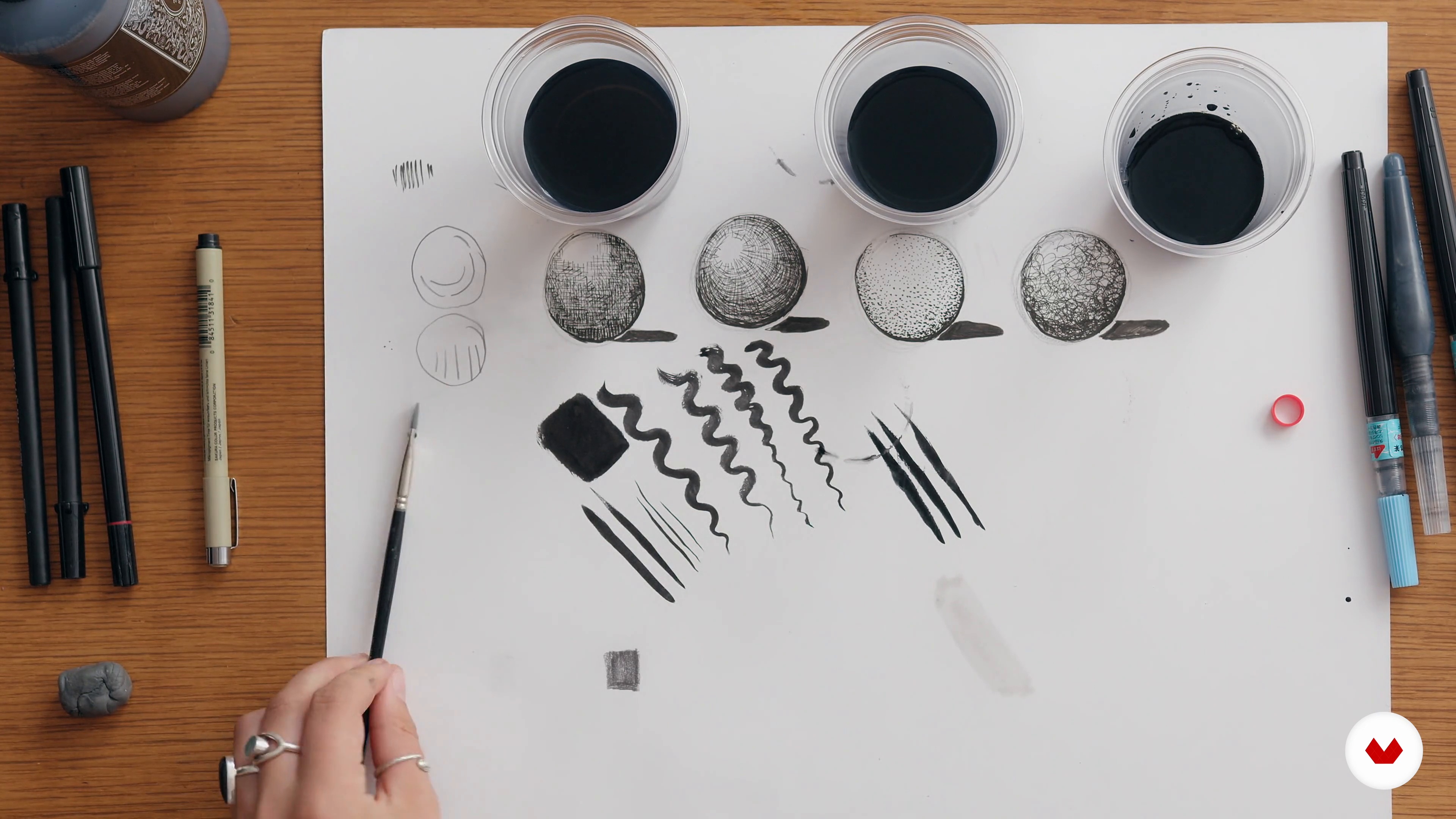
Materials and Inking Methods 2
4 minutes, 31 seconds
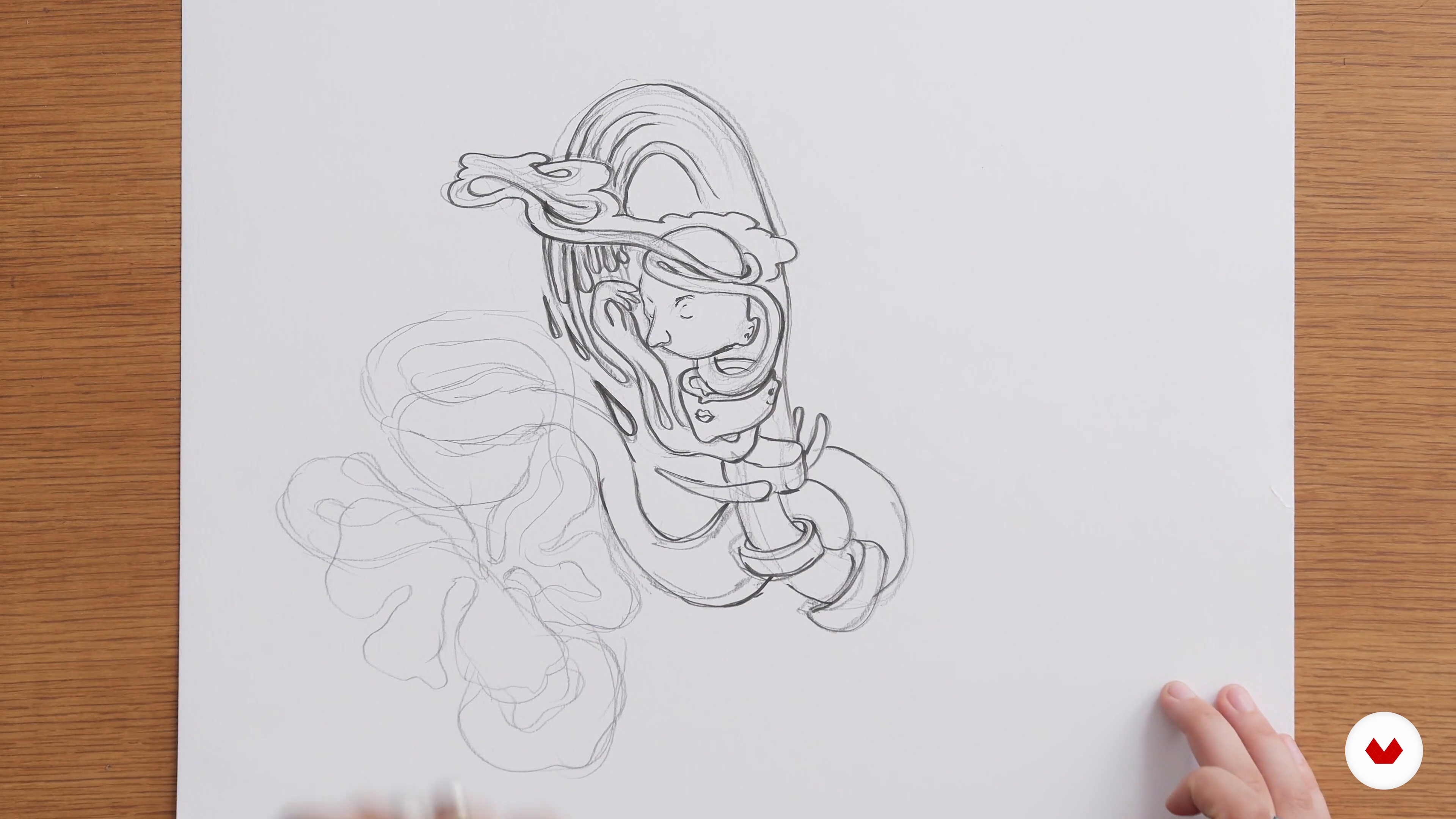
Warming Up
5 minutes, 34 seconds
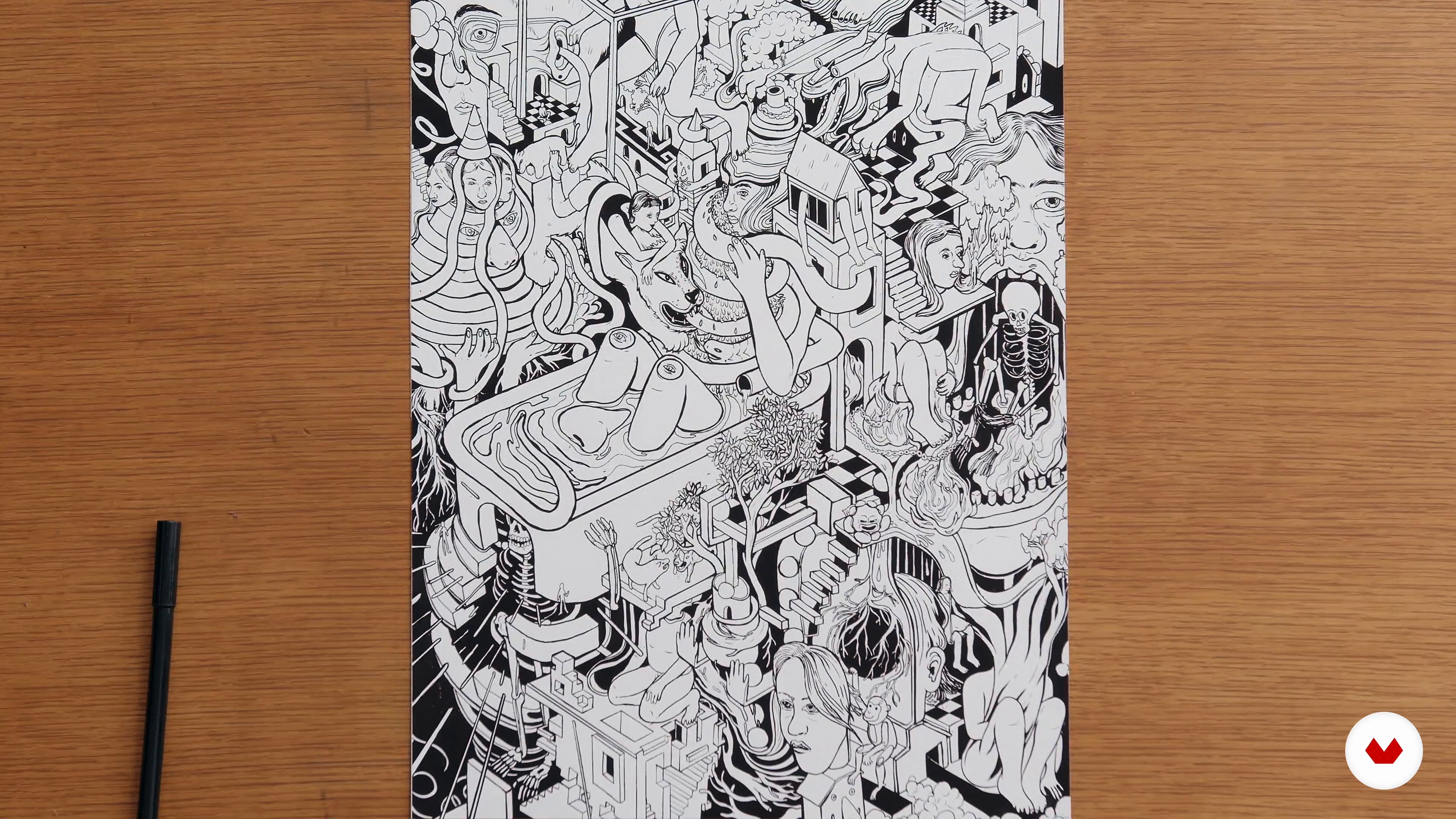
Laying Down the First Marks
9 minutes, 10 seconds
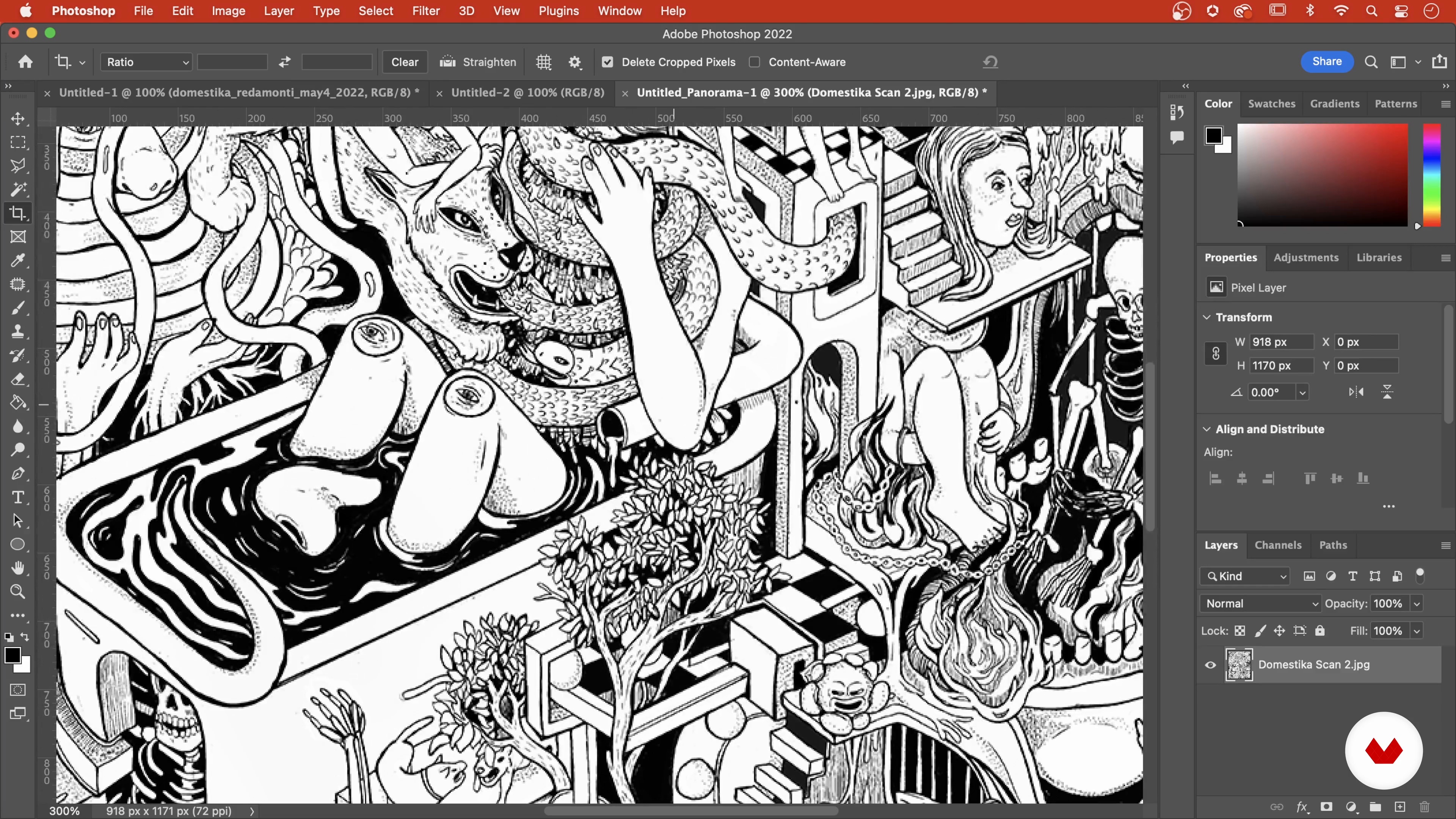
Scanning, Merging, and Cleaning Up the Artwork
3 minutes, 15 seconds
What's included in this course?
Meet Eva Redamonti, an illustrator, animator, and your teacher for this course. Hear about her creative background, her accomplishments, and the influences that have inspired her work.
Get inspired by your surroundings by collecting references for a collage. Eva then teaches you some** basic drawing and inking techniques. **
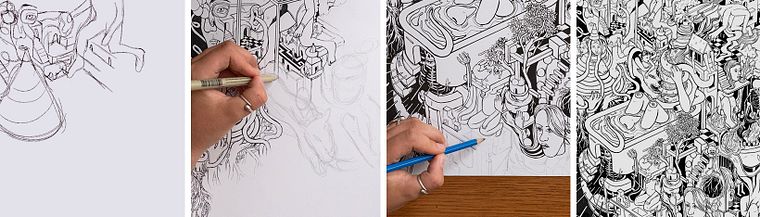
Explore some warm-up exercises, which Eva calls “automatic drawing”. Then start doodling based on two reference images or mixing a real-life picture with elements of the warm-up, before solidifying with ink. Next, see how to** add shading and neatly adjust your linework to establish perspective.**
As a bonus, Eva teaches you how to merge your scans and** touch up your illustration in Photoshop**. She also discusses ways to build a strong portfolio or series, and present your art pieces in real life.
Recommended software & tools for this course
What is this course's project?
Draw a dreamlike composition on a large sheet of paper with pencil and ink.
Projects by course students


Who is this online course for?
This course is for anyone interested in learning drawing, inking, and pattern techniques for surreal illustration–from beginners to intermediates.
Requirements and materials
No previous experience necessary.
To take this course, you will need:
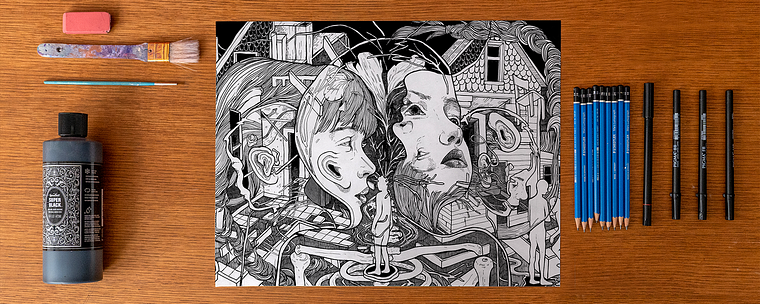
⦁pencils ⦁thick Bristol paper ⦁ink with a brush ⦁quills with a nib ⦁pigment-based brush pens
If you want to digitize your work, you can also use a photo scanner and Photoshop.
Reviews
- 2 months ago
Excelente!
- 1 year ago
I learned so much from this course and have gone back to it several times. Great stuff
- 1 year ago
muy claro
- 1 year ago
Pretty awesome for some abstract! I love abstract! This course is stretching me!!
- 2 years ago
The instructor has a great body of work, but her teaching style is very vague. More steps would have added value to this course.

She has collaborated with clients like Adobe, The New York Times, WIRED Magazine, Medium, CNN, The New Scientist Magazine, among others. Her work has been featured in publications like Juxtapoz Magazine, Hi-Fructose Magazine, Chop-em-Down Films, Society of Illustrators, Communication Arts, and American Illustration.
Content
- U1
Introduction
- About Me
- Influences
- U2
Preparation
- Collecting References and Creating the Digital Collage
- The Basic Drawing: Seeing Shapes in Everything
- Materials and Inking Methods 1
- Materials and Inking Methods 2
- U3
Production
- Warming Up
- Laying Down the First Marks
- Finishing Up the Drawing
- U4
Post-production
- Scanning, Merging, and Cleaning Up the Artwork
- Building a Strong Portfolio
- FP
Final project
- Dream-like, Surreal Drawing in Ink on Paper
What to expect from a Domestika course
Learn at your own pace
Enjoy learning from home without a set schedule and with an easy-to-follow method. You set your own pace.
Learn from the best professionals
Learn valuable methods and techniques explained by top experts in the creative sector.
Meet expert teachers
Each expert teaches what they do best, with clear guidelines, true passion, and professional insight in every lesson.
Certificates
PLUSIf you're a Plus member, get a custom certificate signed by your teacher for every course. Share it on your portfolio, social media, or wherever you like.
Get front-row seats
Videos of the highest quality, so you don't miss a single detail. With unlimited access, you can watch them as many times as you need to perfect your technique.
Share knowledge and ideas
Ask questions, request feedback, or offer solutions. Share your learning experience with other students in the community who are as passionate about creativity as you are.
Connect with a global creative community
The community is home to millions of people from around the world who are curious and passionate about exploring and expressing their creativity.
Watch professionally produced courses
Domestika curates its teacher roster and produces every course in-house to ensure a high-quality online learning experience.
FAQs
Yes, this course is designed for beginners and covers fundamental drawing, inking, and digital art techniques, making it accessible to students with little or no prior experience.
You'll need sketching pencils, Micron pens, brush pens, archival ink, paper, kneadable erasers, gouache paint, and access to Photoshop for digital portions. A scanner is helpful for digitizing artwork.
You'll learn foundational drawing, inking, shading, mural creation, digital collage, portfolio preparation, and how to integrate music and references into your art practice.
Yes, the course teaches digital art workflows, including creating digital collages, rasterizing images, using selection tools, and post-processing artwork in Photoshop.
No prior experience is required; the course is beginner-friendly and gradually introduces both traditional and digital techniques.
You'll learn to curate, categorize, and present your work professionally, including scanning, editing, and organizing artwork for gallery shows and networking opportunities.
You'll practice hatching, crosshatching, stippling, scumbling, using brush pens, creating gradients, and experimenting with line weights for depth and contrast.