Architectural Illustration: Perspective and Reinterpretation
A course by Felipe de Castro , Architect

Joined February 2022

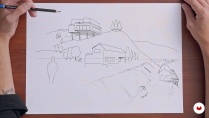
Learn to depict architectural spaces through freehand sketching and give everyday objects a new perspective using pencils and felt-tips

According to architect and drawing professor Felipe de Castro, "architecture is essential for a good quality of life and hand drawing is an exercise for the mind and relaxation for the body." After working with major brands and having illustrations recognized around the world, in this online course, Felipe teaches you how to represent buildings on paper, exploring loose lines and imagination.
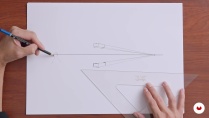
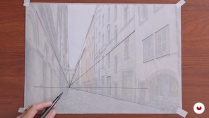
Throughout the course, Felipe explains perspective techniques and how to draw correct volumes with pencil and markers. He also shows you how to reframe everyday objects to idealize the most diverse constructions. The everyday is much more inspiring than it looks—an old microphone can turn into a hotel or a stapler into a cable-stayed bridge. So sharpen your creativity and design unusual spaces!
What will you learn in this online course?
14 lessons & 18 downloads
- 89% positive reviews (18)
- 854 students
- 14 lessons (1h 17m)
- 18 additional resources (6 files)
- Online and at your own pace
- Available on the app
- Audio: Portuguese
- Spanish · English · Portuguese · German · French · Italian · Polish · Dutch · Turkish · Romanian · Indonesian
- Level: Beginner
- Unlimited access forever
What is this course's project?
Design a building inspired by an everyday object.

Projects by course students


Who is this online course for?
No previous knowledge is necessary.
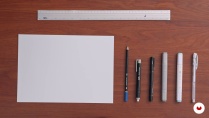
All you need is paper, a pencil, an eraser, and markers.
Reviews

Felipe de Castro
A course by Felipe de Castro
Felipe de Castro is an architect and design teacher, who explores creativity, sensitivity, and perception in each new assignment. Specialized in freehand drawing, he knows the importance of presenting a well-crafted sketch to the client. During his career, he's worked on architectural projects for the Rio 2016 Olympic Games and, today, he works for the Brazilian company Custódio Soluções.
He is also known for creating reinterpretations of objects to idealize buildings. He developed these drawings for Brazilian celebrities and in partnership with brands such as Nikon, Cis, Kingston, Logitech, and Belgotex. These works gained popularity on Instagram and were subsequently featured on several international websites.
Content
-
U1
Introduction
-
About Me
-
Influences
-
-
U2
Understand and apply the perspective
-
What is perspective and why is it important?
-
Materials
-
The main elements of the perspective
-
Studying a single vanishing point
-
Study two vanishing points
-
The importance of scale for drawing
-
Find inspiration in everyday objects
-
-
U3
Practicing image depth
-
First steps: represent the object on paper
-
Work the shape of the object
-
Application of human scale and outline
-
-
U4
Enhancing and detailing your art
-
How to work light and color in drawing
-
Adding shadow to drawing
-
-
FP
Final project
-
Architectural Illustration: Perspective and Reinterpretation
-
What to expect from a Domestika course
-
Learn at your own pace
Enjoy learning from home without a set schedule and with an easy-to-follow method. You set your own pace.
-
Learn from the best professionals
Learn valuable methods and techniques explained by top experts in the creative sector.
-
Meet expert teachers
Each expert teaches what they do best, with clear guidelines, true passion, and professional insight in every lesson.
-
Certificates
PlusIf you're a Plus member, get a custom certificate signed by your teacher for every course. Share it on your portfolio, social media, or wherever you like.
-
Get front-row seats
Videos of the highest quality, so you don't miss a single detail. With unlimited access, you can watch them as many times as you need to perfect your technique.
-
Share knowledge and ideas
Ask questions, request feedback, or offer solutions. Share your learning experience with other students in the community who are as passionate about creativity as you are.
-
Connect with a global creative community
The community is home to millions of people from around the world who are curious and passionate about exploring and expressing their creativity.
-
Watch professionally produced courses
Domestika curates its teacher roster and produces every course in-house to ensure a high-quality online learning experience.
FAQs
Domestika courses are online classes that allow you to learn new skills and create incredible projects. All our courses include the opportunity to share your work with other students and/or teachers, creating an active learning community. We offer different formats:
Original Courses: Complete classes that combine videos, texts, and educational materials to complete a specific project from start to finish.
Basics Courses: Specialized training where you master specific software tools step by step.
Specialization Courses: Learning paths with various expert teachers on the same topic, perfect for becoming a specialist by learning from different approaches.
Guided Courses: Practical experiences ideal for directly acquiring specific skills.
Intensive Courses (Deep Dives): New creative processes based on artificial intelligence tools in an accessible format for in-depth and dynamic understanding.
All courses are 100% online, so once they're published, courses start and finish whenever you want. You set the pace of the class. You can go back to review what interests you most and skip what you already know, ask questions, answer questions, share your projects, and more.
The courses are divided into different units. Each one includes lessons, informational text, tasks, and practice exercises to help you carry out your project step by step, with additional complementary resources and downloads. You'll also have access to an exclusive forum where you can interact with the teacher and with other students, as well as share your work and your course project, creating a community around the course.
You can redeem the course you received by accessing the redeeming page and entering your gift code.

Very pedagogical presentation not only of perspective, but also of scale as well as their respective values. I enjoyed very much that the teacher only deals with essentials. In a short time, you get a lot.
good
muito, mas muito bom o curso! muito didático, fácil e divertido de aprender, eu amei!
muy buen curso para entender lo básico de la perspectiva
Muy bueno y muy útil , lo recomiendo totalmente.