Organic Architecture with Generative art
A course by Chantal Matar , Architectural and Generative Designer

Joined December 2021

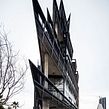
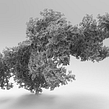

Learn about organic architecture and embrace a unique perspective on building design that merges with the environment.
Joined December 2021

‘I am constantly inspired by nature, geological formations, patterns, repetition and natural aesthetics.’
Introduce nature and biology to your architectural forms with the architect and generative designer, Chantal Matar. She has developed a unique and distinct style that stems from her passion for art, and her experience with avant-garde studios such as Zaha Hadid Architects. She recreates shapes in nature in her product and building designs using generative art techniques. Exploring the powerful software Houdini and its trail system, which are vectors that follow an organic path as they form, Chantal gives her pieces an important spatial dimension.
In this online course, learn with her how to develop organic architectural shapes using a procedural workflow and focusing on mineral formations. Set up an environment for your project, identify the structural base, and then put together a whole building.
What will you learn in this online course?
20 lessons & 17 downloads

- 100% positive reviews (24)
- 2,150 students
- 20 lessons (2h 22m)
- 17 additional resources (6 files)
- Online and at your own pace
- Available on the app
- Audio: English, Spanish (Latam), French, Italian, Portuguese, Turkish
- Spanish · English · Portuguese · German · French · Italian · Polish · Dutch · Turkish · Romanian · Indonesian
- Level: Beginner
- Unlimited access forever
What is this course's project?
Use Houdini’s trail system to design a futuristic object, including the site, the base, and the building itself.
Projects by course students


Who is this online course for?
Anyone curious about computational design at a beginner and intermediate level
Requirements and materials
Houdini

Reviews

Chantal Matar
A course by Chantal Matar
Chantal Matar is a multidisciplinary architectural designer working at the intersection of mixed media and architecture. She has worked in various international studios, including Zaha Hadid Architects. It was there that she developed the skills that would later shape her design style. As a generative artist, she has collaborated with Tsyphur Zaltan to create a mediated ambient album with her own motion design. She has exhibited across Europe, in Berlin, Paris, and Venice.
Content
-
U1
Introduction
-
About Me
-
Influences
-
-
U2
The Research Process
-
What Is Organic Architecture?
-
Drawing Inspiration from Nature
-
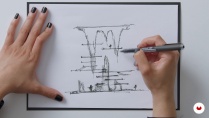
Sketching: Conceptualizing the Idea
-
-
U3
Houdini’s Terrain Tools
-
Building Terrain with Height Fields
-
Understanding Grid Parameters and Applying Noise
-
-
U4
The Grid and Volume Trail
-
Setting up the Grid
-
Setting up the Volume Trail
-
Applying the Volume Trail
-
-
U5
Creating Horizontal Slabs
-
Basic Coding: The Attribute Wrangle Node
-
Generating Repeating Patterns
-
Converting the Abstract Trails to Solid Forms
-
-
U6
Making the Vertical Elements
-
Regrouping the Vector Trails
-
Point Displacement and Complex Coding
-
Developing Repetition for the Vertical Elements
-
-
U7
The Last Steps: Exporting and Rendering
-
Merging the Nodes
-
Converting the Outcome Into a Solid Representation
-
Exporting the Project Into Different Platforms
-
Rendering In KeyShot
-
-
FP
Final project
-
Organic Architecture with Generative Art
-
What to expect from a Domestika course
-
Learn at your own pace
Enjoy learning from home without a set schedule and with an easy-to-follow method. You set your own pace.
-
Learn from the best professionals
Learn valuable methods and techniques explained by top experts in the creative sector.
-
Meet expert teachers
Each expert teaches what they do best, with clear guidelines, true passion, and professional insight in every lesson.
-
Certificates
PlusIf you're a Plus member, get a custom certificate signed by your teacher for every course. Share it on your portfolio, social media, or wherever you like.
-
Get front-row seats
Videos of the highest quality, so you don't miss a single detail. With unlimited access, you can watch them as many times as you need to perfect your technique.
-
Share knowledge and ideas
Ask questions, request feedback, or offer solutions. Share your learning experience with other students in the community who are as passionate about creativity as you are.
-
Connect with a global creative community
The community is home to millions of people from around the world who are curious and passionate about exploring and expressing their creativity.
-
Watch professionally produced courses
Domestika curates its teacher roster and produces every course in-house to ensure a high-quality online learning experience.
FAQs
Domestika courses are online classes that allow you to learn new skills and create incredible projects. All our courses include the opportunity to share your work with other students and/or teachers, creating an active learning community. We offer different formats:
Original Courses: Complete classes that combine videos, texts, and educational materials to complete a specific project from start to finish.
Basics Courses: Specialized training where you master specific software tools step by step.
Specialization Courses: Learning paths with various expert teachers on the same topic, perfect for becoming a specialist by learning from different approaches.
Guided Courses: Practical experiences ideal for directly acquiring specific skills.
Intensive Courses (Deep Dives): New creative processes based on artificial intelligence tools in an accessible format for in-depth and dynamic understanding.
All courses are 100% online, so once they're published, courses start and finish whenever you want. You set the pace of the class. You can go back to review what interests you most and skip what you already know, ask questions, answer questions, share your projects, and more.
The courses are divided into different units. Each one includes lessons, informational text, tasks, and practice exercises to help you carry out your project step by step, with additional complementary resources and downloads. You'll also have access to an exclusive forum where you can interact with the teacher and with other students, as well as share your work and your course project, creating a community around the course.
You can redeem the course you received by accessing the redeeming page and entering your gift code.

The course was very well explained and simple despite appearances. It provides a good overview of using the Houdini software without being too complex. We are achieving encouraging results. Thank you, Chantal.
resultados bellos con métodos simples!!!
Amazing course
muy bueno , interesante
-Es un buen curso para conocer diferentes formas de representar arquitectura aun mas creativo, pero si le hace falta adentrarse o explicar mas cosas.