Natural Dyeing of Textiles with Plants
A course by AniaTextile Artist and creator of the company Kaliko
A course by Ania, Textile Artist and creator of the company Kaliko

Learn to bring natural colors to textiles of all kinds in a sustainable way and dye a two-tone cotton scarf
Ania Grzeszek is a textile artist and the creator of Berlin company Kaliko, specializing in weaving garments and dyeing them with plants. She sells her sustainable products all over the world and loves exploring textiles and mixing things up using different materials, designs, techniques, and dyes. By way of this meditative and natural craft, Ania hopes to get you better acquainted with sustainability.
The beautiful colors of nature are waiting! In this course, learn to dye different materials using a diverse range of plants, techniques, and designs. Harness nature's potential and extract unique dyes from plants to then apply them to your fabrics. Get ready to work more sustainably and in perfect harmony with the environment.
What will you learn in this online course?
14 lessons & 19 downloads

Find and use dye plants
5 minutes, 19 seconds

Prepare and mordant fabrics
7 minutes, 58 seconds

Extract the color from an avocado
4 minutes, 59 seconds

Expand the color palette
7 minutes, 53 seconds

Dyeing the cotton scarf
6 minutes, 23 seconds

Other dyeing methods
14 minutes, 29 seconds
What's included in this course?
Start the course by getting to know textile artist Ania Grzeszek, creator of the company Kaliko, as she explains how she got into dyeing fabrics with plants and shows you some of her main influences.
Ania moves on to introduce the materials required for this course, as well as the three main components used in dyeing your textiles. She also explains how to maintain safety in the kitchen throughout the preparation and dyeing process.
Next, with the help of your teacher, discover how and where to find suitable plants for this task. Learn some of the general rules for dyeing textiles, as well as broadening your color palette. Then, prepare and dye your fabrics.
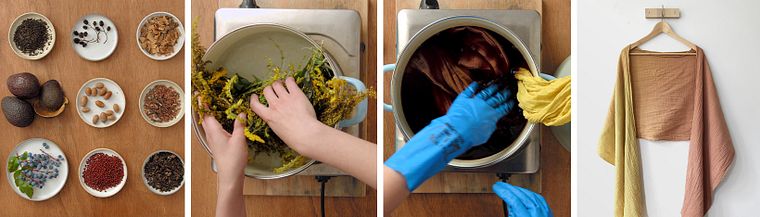
It's time to extract the dye from the avocados, goldenrod, and black hollyhocks. Test out some of their different colors, then Ania teaches you how to modify them with iron salt and by varying the pH. Using the botanical palette you've made up, dye a cotton scarf with a cool ombré effect.
She also shows you another method known as bundle dyeing. Round off the course with some great tips on finding the best work method to suit your needs.
What is this course's project?
Dye a cotton scarf with an ombré effect using two natural plant dyes.
Who is this online course for?
Anyone interested in sustainability who wants to learn to create a broad color palette using only plants.
Requirements and materials
For this course, you need cotton fabric, dye plants (avocados, goldenrod, hollyhocks), natural detergent, mordant (aluminum tri-formate), citric acid, bicarbonate of soda, iron sulphate, a stainless-steel pot, a steel or wooden spoon, a plastic bucket with a lid, a salad bowl, cheesecloth, three small glasses, and some rubber gloves.
Reviews
- 1 year ago
Muy interesante y agradable, gracias!! Me ha venido genial para desarrollar mis proyectos personales, además de tener nociones básicas para poder continuar y apoyarme en los procesos ♥️
- 2 years ago
Excellent course. I recommend it to everyone.
- 2 years ago
I was also interested in natural painting with plants, so I signed up for this course. I learned a lot, I got what I expected, I recommend this course.
- 3 years ago
Bonito curso
- 3 years ago
muito obrigado, gratidão. Belo curso

Ania offers ecologically dyed products, supplied by international yarn and textile stores, she buys her dyeing and weaving materials and teaches courses in her Berlin workshop. The artist focuses on making and manually coloring textiles for different products that she sells around the world. Ania loves to experiment and has fun exploring the endless possibilities offered by materials, dyes, designs, and techniques to create each piece.
Content
- U1
Introduction
- About Me
- Influences
- U2
Preparation: basics, safety and materials
- Materials
- How plant coloring works
- Safety in the color kitchen
- Find and use dye plants
- Prepare and mordant fabrics
- U3
Extract colors and dye textiles
- Extract the color from an avocado
- Extract color from goldenrod
- Extract color from black hollyhocks
- Expand the color palette
- Dyeing the cotton scarf
- U4
Other dyeing methods
- Other dyeing methods
- Work with vegetable colors
- FP
Final project
- Natural Dyeing of Textiles with Plants
What to expect from a Domestika course
Learn at your own pace
Enjoy learning from home without a set schedule and with an easy-to-follow method. You set your own pace.
Learn from the best professionals
Learn valuable methods and techniques explained by top experts in the creative sector.
Meet expert teachers
Each expert teaches what they do best, with clear guidelines, true passion, and professional insight in every lesson.
Certificates
PLUSIf you're a Plus member, get a custom certificate signed by your teacher for every course. Share it on your portfolio, social media, or wherever you like.
Get front-row seats
Videos of the highest quality, so you don't miss a single detail. With unlimited access, you can watch them as many times as you need to perfect your technique.
Share knowledge and ideas
Ask questions, request feedback, or offer solutions. Share your learning experience with other students in the community who are as passionate about creativity as you are.
Connect with a global creative community
The community is home to millions of people from around the world who are curious and passionate about exploring and expressing their creativity.
Watch professionally produced courses
Domestika curates its teacher roster and produces every course in-house to ensure a high-quality online learning experience.
FAQs
You’ll learn how to sustainably dye textiles with plant-based colors, select suitable dye plants, apply mordanting and dyeing techniques, and create creative projects like a hand-dyed scarf.
Yes, this course is designed specifically for beginners and explains every step and technique involved in plant dyeing from the ground up.
You’ll need natural fabrics (like cotton), dye plants or kitchen scraps, mordants, protective gear such as gloves and masks, pH test strips, and basic household tools.
Yes, the course shows you how to refresh or transform used textiles sustainably using plant dyes.
You’ll learn how to identify and gather local plants and kitchen scraps as natural sources of dye.
No prior knowledge is required. All the chemical basics and techniques are clearly explained.
You can create a wide range of natural shades and patterns, and learn how to control color intensity and longevity.