Realistic Portrait with Graphite Pencil
A course by Diego Catalan AmiliviaPainter and Illustrator
A course by Diego Catalan Amilivia, Painter and Illustrator

Learn the basics and technique to create realistic anatomical drawings
Painter and expert anatomy artist Diego Catalán is as passionate about realism as he is about fantasy and horror. His incredible portraits emerge from this eclectic mix as well as the inspiration he draws from the classical masters. Diego works with a range of techniques, but finds the greatest expression in graphite as it allows him to work in maximum detail and with an understanding of the light and structure of the human anatomy.
In this course, learn how to draw a realistic portrait in pencil using a model. Diego explains a wide range of technical concepts, from composition and the anatomy of the head, to modeling and adding texture. Discover all the skills you need to make your own realistic portrait with graphite.
What will you learn in this online course?
35 lessons & 27 downloads
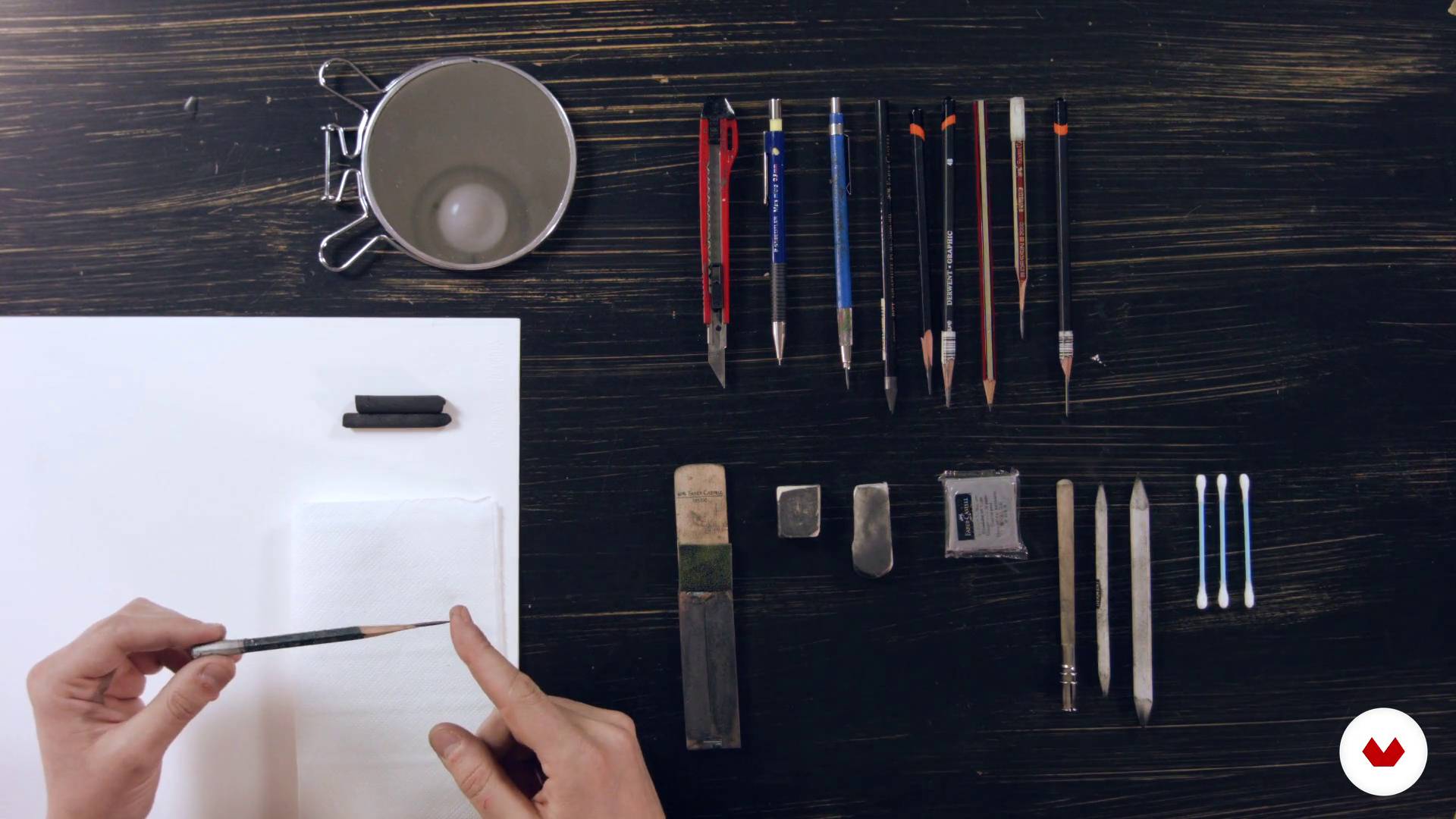
Materials
5 minutes, 2 seconds
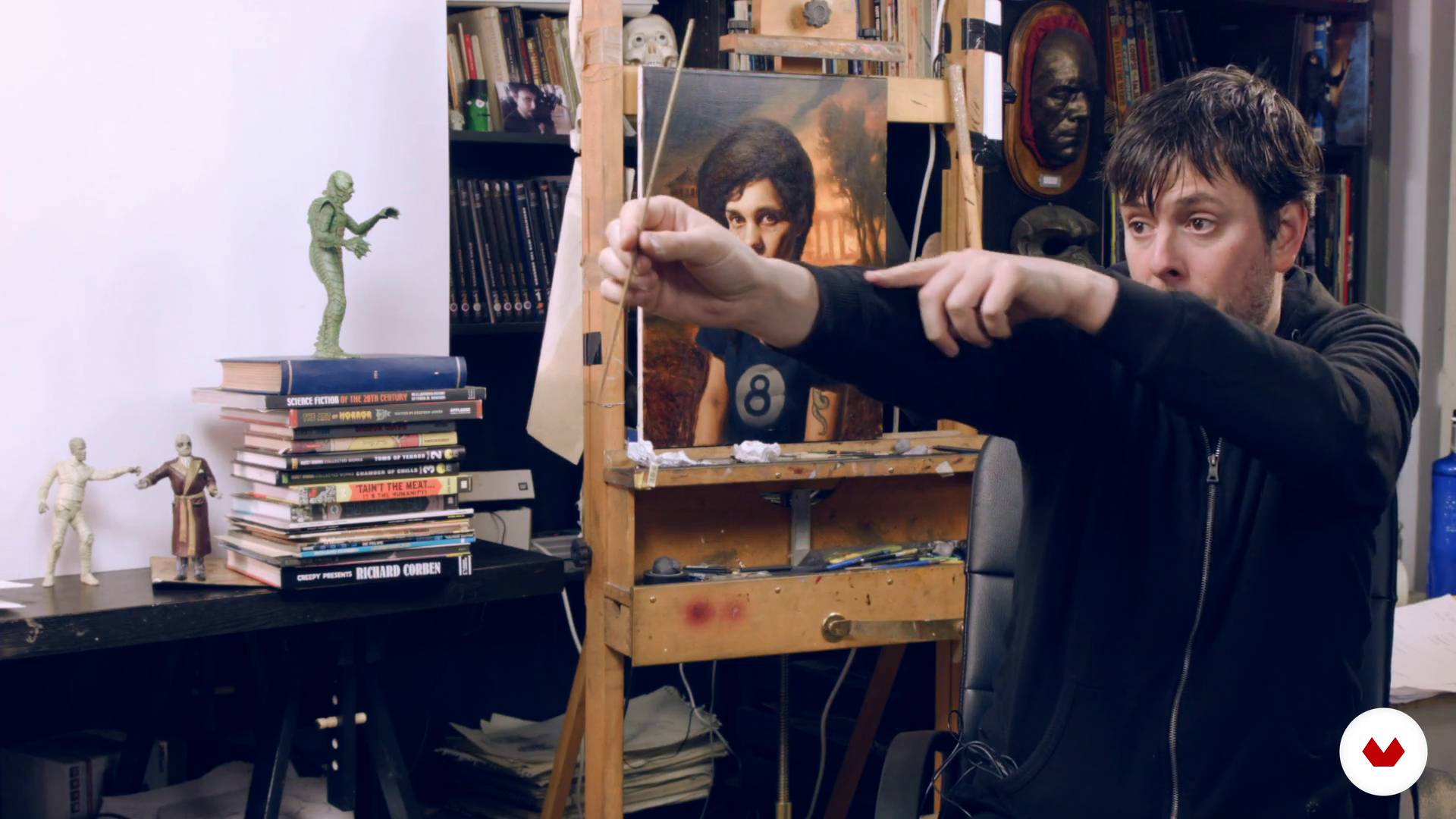
Concepts of academic drawing - I
17 minutes, 42 seconds
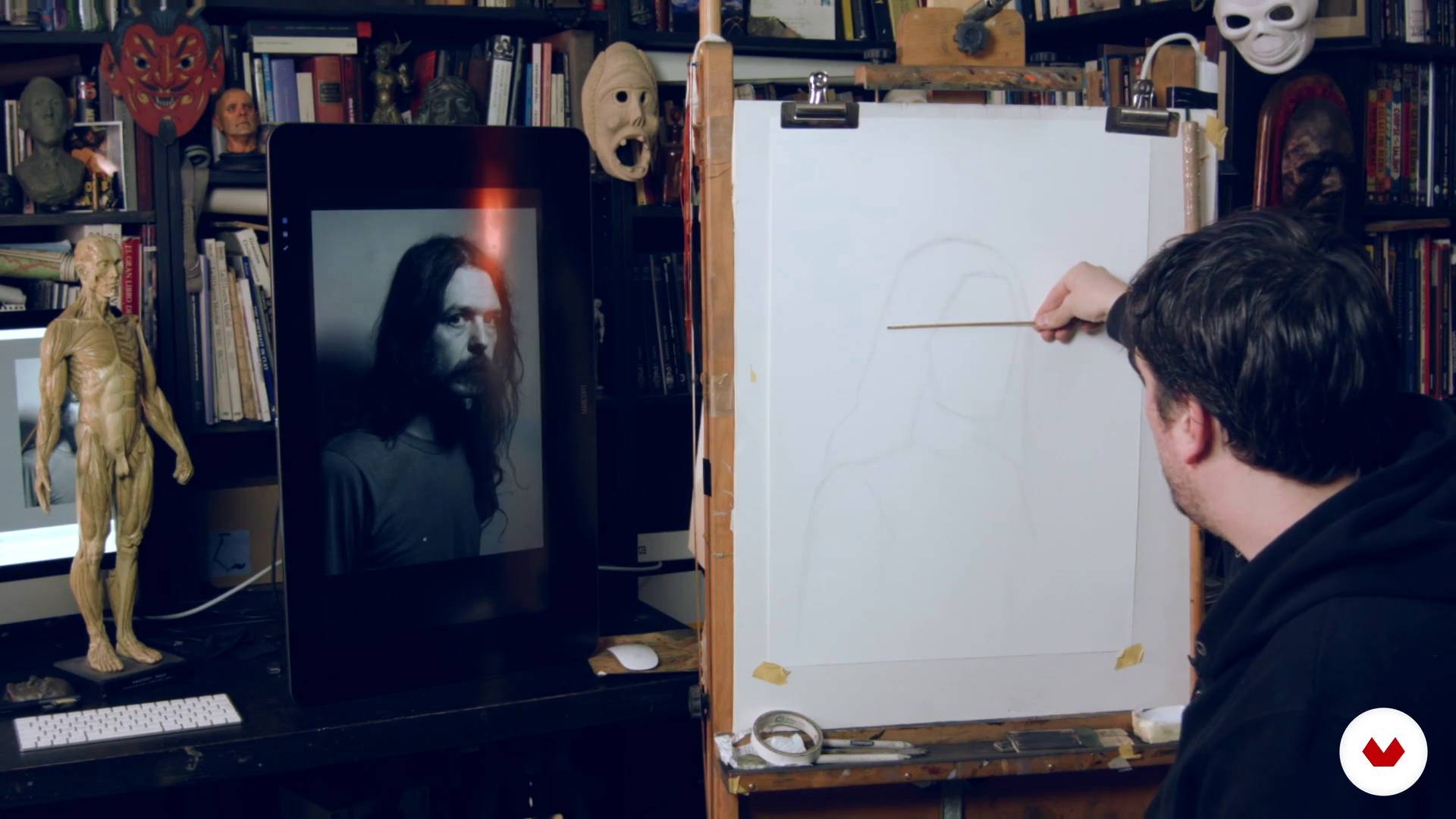
The size, scale and composition
18 minutes, 4 seconds
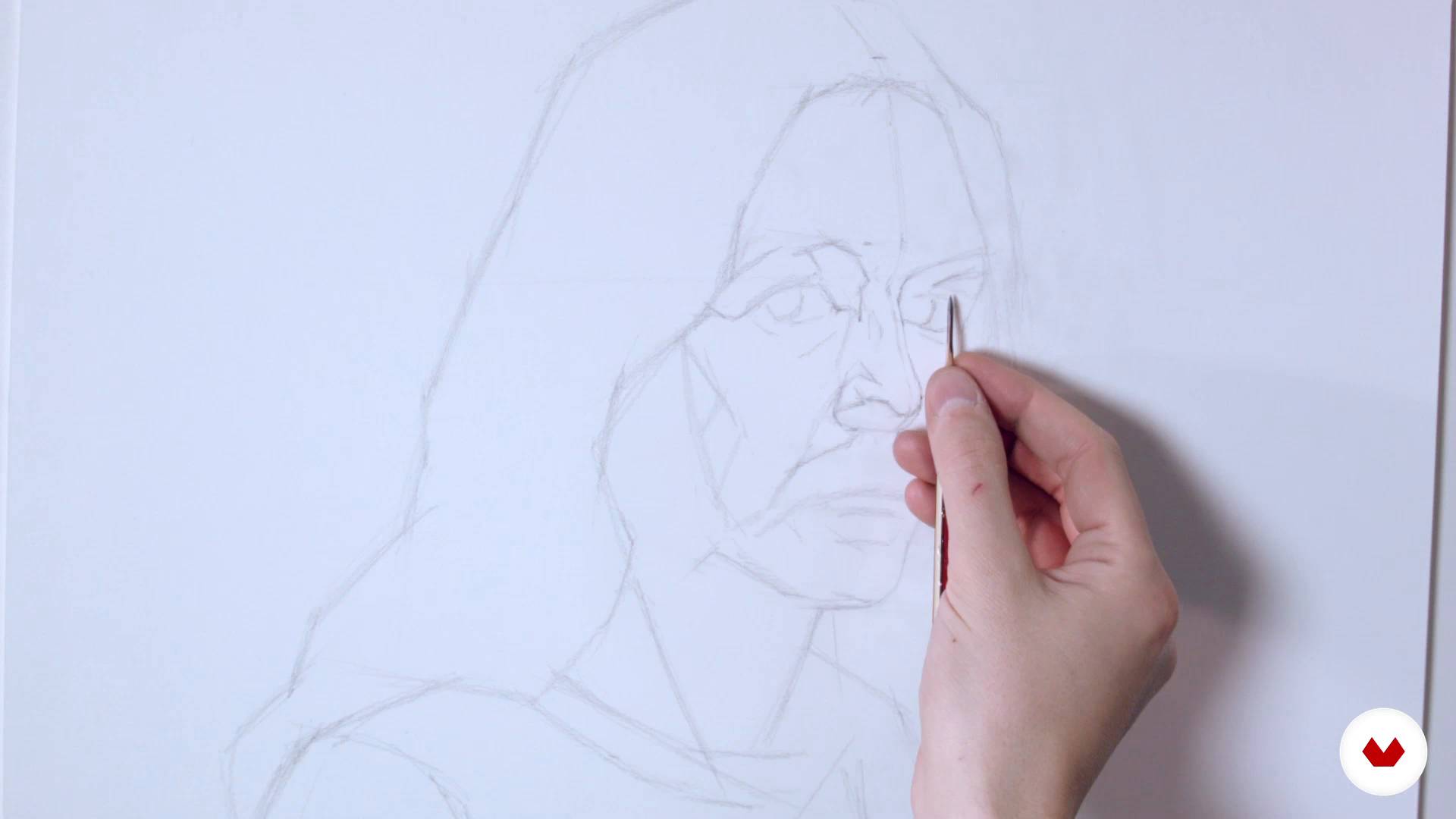
Introduction of the shadow 2D - I
20 minutes, 44 seconds
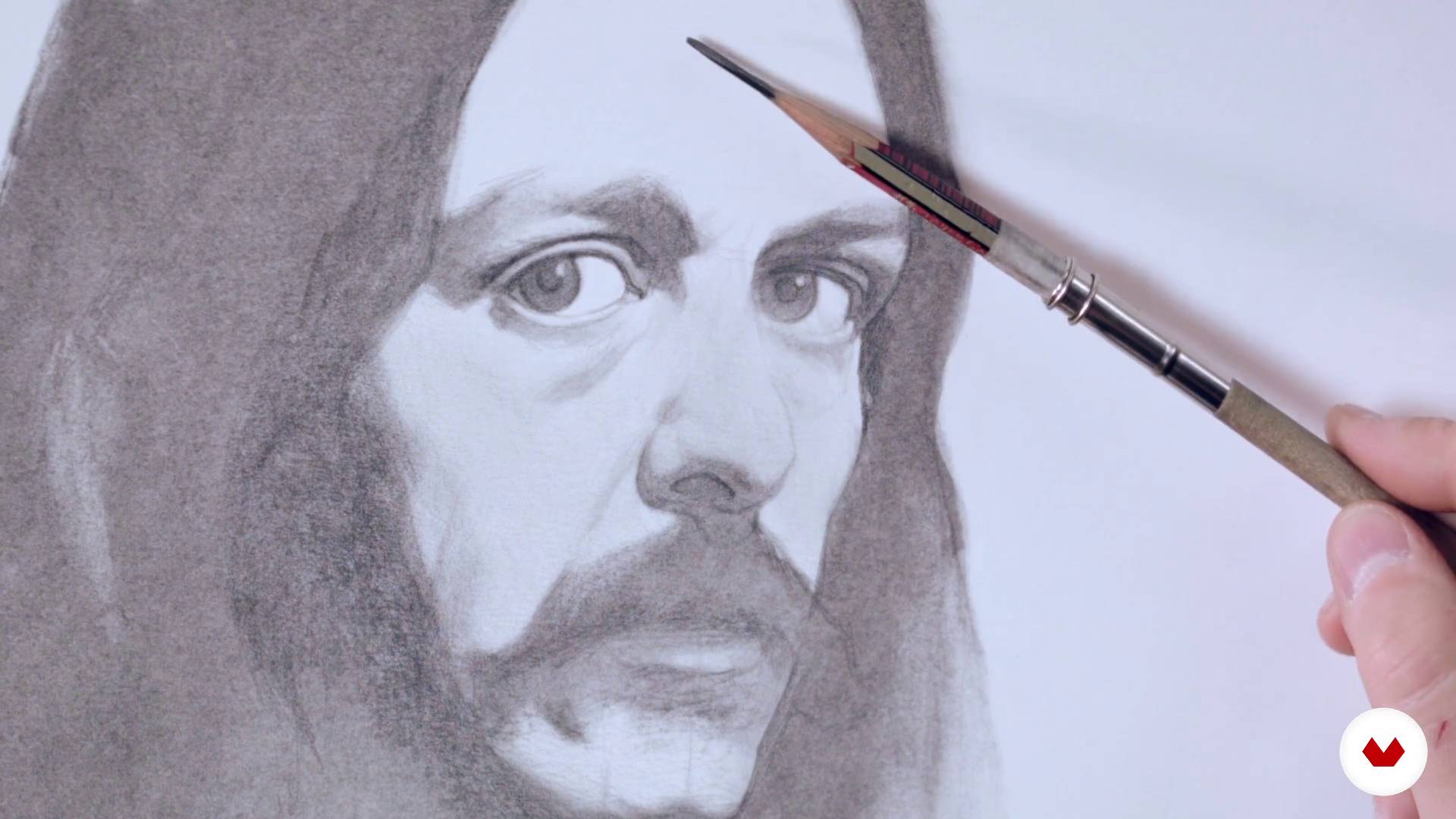
Modeling - I
18 minutes, 59 seconds
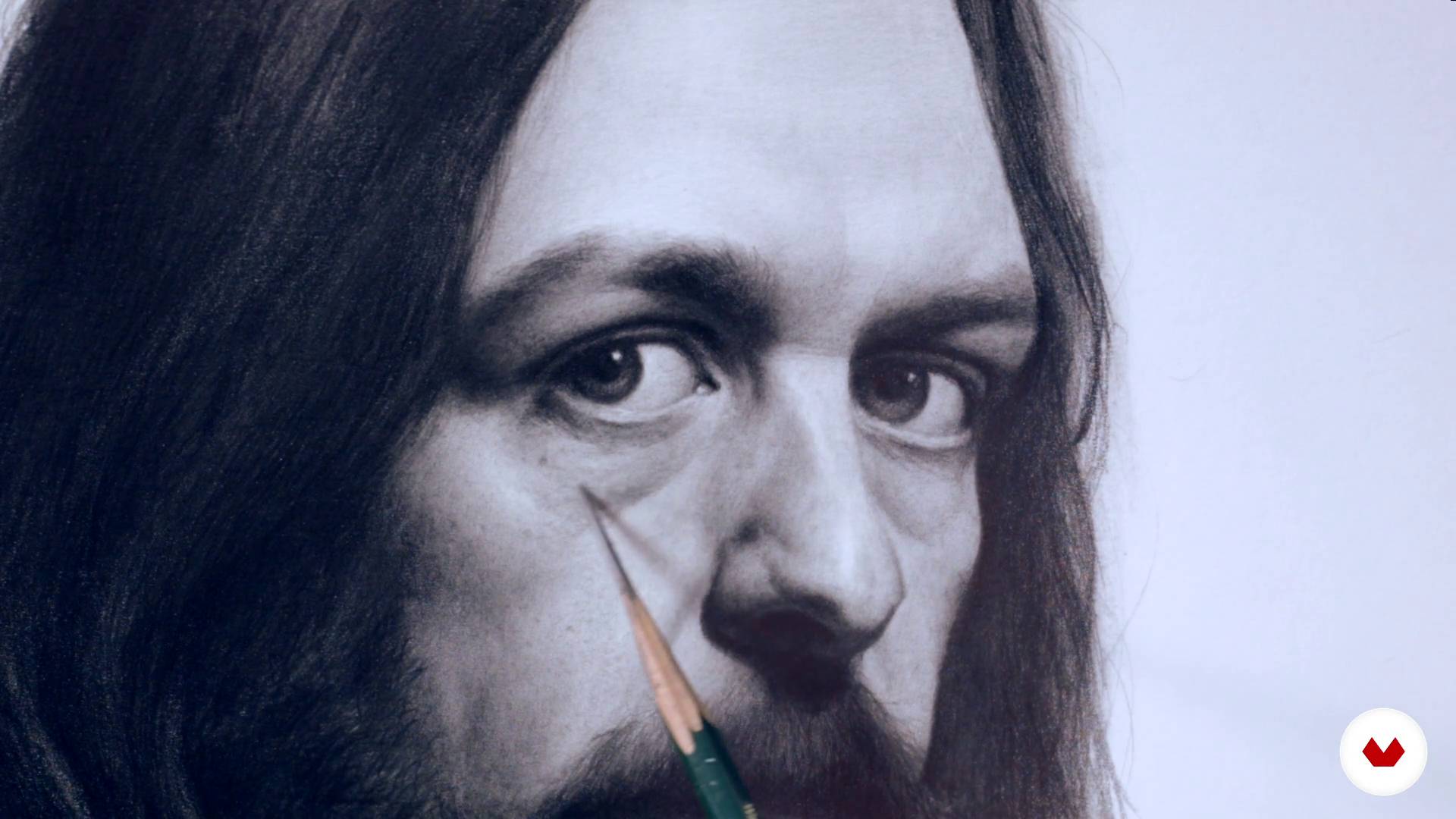
Texturing and finishing touches - I
18 minutes, 17 seconds
What's included in this course?
Start the course by getting to know Diego's work. He also tells you about his favorite artists, giving you a tour through the history of portraiture.
He goes through the materials you need for your final project and gives you some tips for choosing your model and the best way to compose the photograph to facilitate the drawing process.
Then get straight to work learning the fundamental principles of academic drawing to help you draw the silhouette of your portrait and begin your first sketch.
Next, Diego teaches you to analyze the proportions of the face from a theoretical point of view and you begin to consider scale and proportion.
Study the bone structure of your model's skull as well as muscle structure. Now it’s time to carefully detail each facial feature.
Once your portrait is down on paper, apply two-dimensional shadows. Diego goes into detail about the physics of light and its properties, before moving onto the modeling phase designed to bring realistic volume to your portrait.
Finish up by applying textures to your drawing, including hair, wrinkles, and pores, etc.
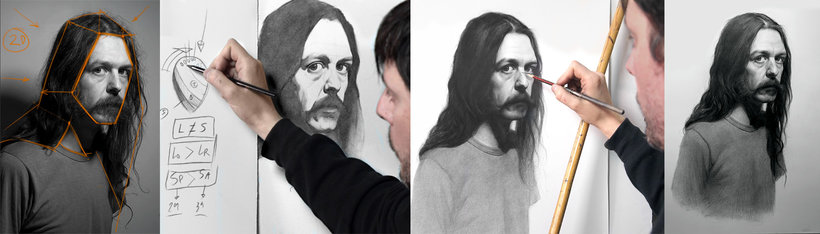
What is this course's project?
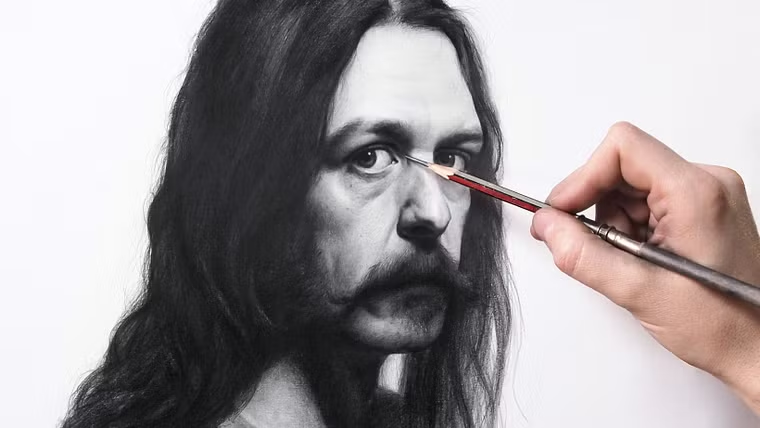
Compose a realistic drawing with graphite pencil from a photograph of a real model.
Projects by course students


Who is this online course for?
Illustrators, drawers, designers, and anyone interested in doing realistic drawings with graphite pencils.
Requirements and materials
Basic drawing knowledge is necessary for this course.
In terms of materials, all you need is a pencil and some paper. An easel or board, a range of different grade pencils, an eraser, a stick, and a mirror are also recommended but not essential.
Reviews
- 28 days ago
interesante como el profesor explica, me ha gustado mucho
- 1 month ago
Veré que tal
- 1 month ago
Otimo curso
- 1 month ago
El instructor es claramente un gran artista y me gusta su estilo realista. Pero el curso se me hizo pesado y aburridísimo. Me parece que se regodea en largas explicaciones que pudieron ser mas cortas.
Para ser un curso no parece tener un guion preparado sino que va pensando qué dirá sobre la marcha y de forma errática, y tarda mucho en explicar su punto, lo cual me hizo perder la atención muchas veces. Desde que empezó a trabajar en el lienzo pasó mas tiempo de video hablando que dibujando.
- 2 months ago
Excelente curso. Mejor explicado imposible, con muchos fundamentos y bien diagramado . Yo que nunca tomé una clase de dibujo siento una notable mejora (desde luego, es mucha práctica, como en todo. Pero los consejos que brinda son valiosos)

Content
- U1
Introduction
- Presentation
- Influences
- History of portrait, evolution and types - I
- History of the portrait, evolution and types - II
- U2
Materials and preparation
- Materials
- Choose your model
- The photo
- U3
The drawing
- Concepts of academic drawing - I
- Concepts of academic drawing - II
- The size, scale and composition
- Face proportions
- We draw the inside of the face
- Anatomy: Advanced skull, neck and shoulder osteology - I
- Anatomy: Advanced osteology of the skull, neck and shoulders - II
- Structure analysis: perspective and 3D shape - I
- Structure analysis: perspective and 3D shape - II
- Surface anatomy: facial features and muscles - I
- Surface anatomy: Factions and muscles of the face - II
- Surface anatomy: Factions and muscles of the face - III
- Introduction of the shadow 2D - I
- Introduction of the 2D shadow - II
- Introduction of the shadow 2D - III
- Introduction of the shadow 2D - IV
- U4
Modeling and texturing
- The physics of light - I
- The physics of light - II
- Modeling - I
- Modeling - II
- Modeling - III
- Modeling - IV
- Modeling - V
- Texturing and finishing touches - I
- Texturing and finishing touches - II
- Texturing and finishing touches - III
- Texturing and final touches - IV
- Texturing and final touches - V
- FP
Final project
- Realistic portrait with graphite pencil
What to expect from a Domestika course
Learn at your own pace
Enjoy learning from home without a set schedule and with an easy-to-follow method. You set your own pace.
Learn from the best professionals
Learn valuable methods and techniques explained by top experts in the creative sector.
Meet expert teachers
Each expert teaches what they do best, with clear guidelines, true passion, and professional insight in every lesson.
Certificates
PLUSIf you're a Plus member, get a custom certificate signed by your teacher for every course. Share it on your portfolio, social media, or wherever you like.
Get front-row seats
Videos of the highest quality, so you don't miss a single detail. With unlimited access, you can watch them as many times as you need to perfect your technique.
Share knowledge and ideas
Ask questions, request feedback, or offer solutions. Share your learning experience with other students in the community who are as passionate about creativity as you are.
Connect with a global creative community
The community is home to millions of people from around the world who are curious and passionate about exploring and expressing their creativity.
Watch professionally produced courses
Domestika curates its teacher roster and produces every course in-house to ensure a high-quality online learning experience.
FAQs
This course is designed for intermediate students who already have basic drawing skills and want to deepen their knowledge of realistic techniques, applied artistic anatomy, and advanced methods in both traditional and digital media.
You’ll need pencils of various hardness, smooth paper, blending stumps, kneaded eraser, charcoal, mechanical pencils, pencil extenders, a mirror, a camera or smartphone for photo references, and optionally a digital tablet like a Cintiq.
You’ll learn to analyze facial proportions, apply observation techniques, model shadows, manage lighting, create portraits in oil, digital media, and illustration, and understand both historical and contemporary portrait styles.
Yes, basic drawing experience is recommended since the course focuses on intermediate and advanced portrait and artistic anatomy techniques.
The course covers realistic drawing, realistic caricature, metal modeling, tenebrism, Rembrandt lighting, grid use, proportion transfer, oil painting, digital illustration, and anatomical simplification methods.
You’ll study bone and muscle structures, skull and face proportions, and use measurement and alignment methods to create anatomically accurate and expressive portraits.
Yes, you’ll learn to control light, create contrast, apply techniques like chiaroscuro and Rembrandt lighting, and understand how lighting affects mood and volume in portraits.