Kumiko: Learn Japanese Woodworking Design
A course by Matt Kenney, Professional Furniture Maker

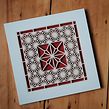
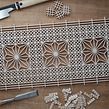
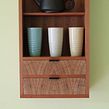

Combine geometry, patterns, and clean lines to craft delicate artwork with this ancient technique

Kumiko is a quiet and thoughtful technique that requires patience and precision. The ancient Japanese woodworking technique consists of making patterns from small pieces of interlocking wood, and it’s something professional furniture maker, Matt Kenney is an expert in. He uses Kumiko to create furniture with a meaning beyond function and has published a book, The Art of Kumiko, on the subject.
In this course, Matt walks you through the steps needed to create delicate pieces of art with wood. Learn to combine geometry, patterns, and clean lines to find serenity in the ancient art form of Kumiko.
What will you learn in this online course?
18 lessons & 11 downloads
What's included in this course?
Begin the course by getting to know your teacher, Matt Kenney. Hear about his career and the influences that have impacted his work. Then, he shares what motivates him to make furniture before delving into what you can expect from the course.
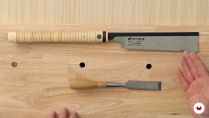
Discuss the types of wood that work best for Kumiko and find out where to buy them. Learn how to transform wood from its original condition into a state you can work with. Then review the tools needed for this course and how to use them safely.
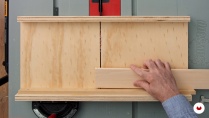
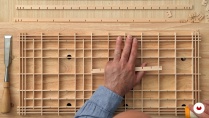
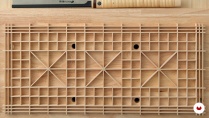
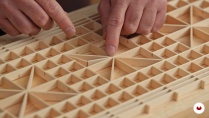
Explore what Kumiko is and how it is used to create fixed wooden patterns without glue. Discover how to make your frame, starting by cutting the notches that hold it together. Then cut thin strips of wood that make up the frame itself and assemble it.
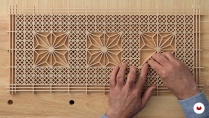
Understand the parts of the asa-no-ha pattern, along with how to make and assemble them. Start by looking at each of the pieces and their angles to see how they fit together to make a completed pattern. Then set up the paring jig and find out how to cut your pieces and create a birdsmouth joint. Make the locking piece that holds the pattern together.
Next, learn how to create the hashtag pattern. Matt demonstrates how to cut notches, rip thin strips and assemble and cut the hashtag. Finally, learn how to finish your piece for a professional-looking end result using plywood and sandpaper.
- 99% positive reviews (147)
- 5,804 students
- 18 lessons (2h 53m)
- 11 additional resources (5 files)
- Online and at your own pace
- Available on the app
- Audio: English, Spanish, French, Italian, Portuguese, Turkish
- English · Spanish · Portuguese · German · French · Italian · Polish · Dutch · Turkish
- Level: Beginner
- Unlimited access forever
What is this course's project?
Create an intricate wooden panel that incorporates different Kumiko patterns.

Projects by course students


Who is this online course for?
This course is ideal for anyone with woodworking skills who would like to expand their knowledge of the art form by learning Kumiko.
Requirements and materials
Previous experience with woodworking is required.
You’ll need access to various woodworking tools which your teacher will explain in the second unit. You’ll also need sandpaper, plywood, and other materials that can easily be found at your local woodshop.

Reviews

Matt Kenney
A course by Matt Kenney
Matt Kenney is a professional furniture maker who has been creating things from wood his entire life. He left academia to work as an editor at Fine Woodworking Magazine where he wrote articles, shared instructional videos, and co-hosted the magazine’s podcast. In 2015, he took on the “52 boxes in 52 weeks” challenge and discovered the Japanese woodworking technique Kumiko in the process. Since then, he’s been dedicated to learning new patterns and techniques whilst teaching others to do the same.
As well as furniture, Matt uses Kumiko to create decorative pieces of art. He has also published two books, 52 Boxes in 52 Weeks, and The Art of Kumiko in which he shares the techniques and knowledge he has developed during his career as a furniture maker.
Content
-
U1
Introduction
-
About Me
-
Influences
-
-
U2
Tools and Materials
-
Tools
-
What Type of Wood and Where to Find It
-
How to Mill Wood
-
-
U3
Making the Frame
-
The Anatomy of Kumiko
-
Using the Sled and Finger Joint Jigs
-
Making Thin Strips for the Frame
-
Assemble the Frame 1
-
Assemble the Frame 2
-
-
U4
The Asa-No-Ha Pattern
-
Parts of the Pattern: Diagonal, Hinge Piece, Locking Piece
-
Making the Diagonal Piece
-
Cutting Offset Bevels and Fitting the Hinge Pieces
-
Make the Locking Piece
-
-
U5
The Hashtag Pattern
-
Cutting Notches
-
Ripping Out Thin Strips for the Pattern
-
Assembling the Pattern and Cutting The Hashtag to Fit
-
Finishing Your Piece
-
-
FP
Final project
-
The Art of Kumiko: Creating Patterns with Wood
-
What to expect from a Domestika course
-
Learn at your own pace
Enjoy learning from home without a set schedule and with an easy-to-follow method. You set your own pace.
-
Learn from the best professionals
Learn valuable methods and techniques explained by top experts in the creative sector.
-
Meet expert teachers
Each expert teaches what they do best, with clear guidelines, true passion, and professional insight in every lesson.
-
Certificates
PlusIf you're a Plus member, get a custom certificate signed by your teacher for every course. Share it on your portfolio, social media, or wherever you like.
-
Get front-row seats
Videos of the highest quality, so you don't miss a single detail. With unlimited access, you can watch them as many times as you need to perfect your technique.
-
Share knowledge and ideas
Ask questions, request feedback, or offer solutions. Share your learning experience with other students in the community who are as passionate about creativity as you are.
-
Connect with a global creative community
The community is home to millions of people from around the world who are curious and passionate about exploring and expressing their creativity.
-
Watch professionally produced courses
Domestika curates its teacher roster and produces every course in-house to ensure a high-quality online learning experience.
FAQs
This Kumiko woodworking course is best suited for intermediate woodworkers with some prior experience in basic woodworking and tool handling. Beginners may find the techniques challenging without foundational skills.
You’ll need hand tools like chisels, Japanese back saw, guide blocks, finger joint jigs, and a table saw. Materials include basswood or other suitable light-colored woods, sandpaper, and milk paint for finishing.
You will learn Kumiko panel making, drafting, furniture sketching, proper wood selection, safe milling, joinery techniques, assembling geometric patterns, and creative design principles using color, proportion, and texture.
Kumiko is a Japanese woodworking art that assembles intricate geometric patterns from precisely cut wooden pieces, typically without nails or glue, focusing on exact fit and traditional joinery.
Choose fine-grained, light-colored woods like basswood for ease of cutting and clean lines. The course covers sourcing, evaluating grain direction, and preparing wood for Kumiko work.
Yes, the course covers creating traditional Kumiko patterns such as Asanoha, including marking, cutting, assembling, and fitting the geometric components accurately.
Yes, the course emphasizes safe operation of table saws and jointers, including body positioning, use of push sticks, safety equipment, and best practices for milling and cutting thin strips.

Easy to follow step by step
Thanks
Nice course, good explanation
Im sorry? You need a table saw ? Oh yah because i have one of them !!
excelente curso! me gustó el nivel de detalle con el que explica Matt. lo recomiendo sin duda.
Curso excelente muito bacana conhecer técnica da marcenaria japônesa.