Photo Embroidery on Fabric
A course by Studio VariopintoEmbroiderer and Photographer
A course by Studio Variopinto, Embroiderer and Photographer

Learn the techniques to transfer images onto textiles and create textured embroidery pieces full of color
Minia Banet is a photographer and embroiderer who creates unique decorative pieces and accessories from her own studio, Studio Variopinto. Using threads and pixels, she explores new ways to create by mixing photography with embroidery. She has created crochet patterns for brands like DMC, We Are Knitters, and Labores del Hogar magazine.
In this course, Minia teaches you the different ways of transferring images onto fabric and how to create a collage using a photo and three dimensional embroidery techniques. Learn flat and raised embroidery stitches, see how to find the ideal color palette, and start creating embroidered elements onto your transferred photo. Finish the course with a unique handmade item filled with color, texture, and volume.
What will you learn in this online course?
19 lessons & 14 downloads

What will we do in the course?
2 minutes, 1 second

Materials and tools
12 minutes, 10 seconds
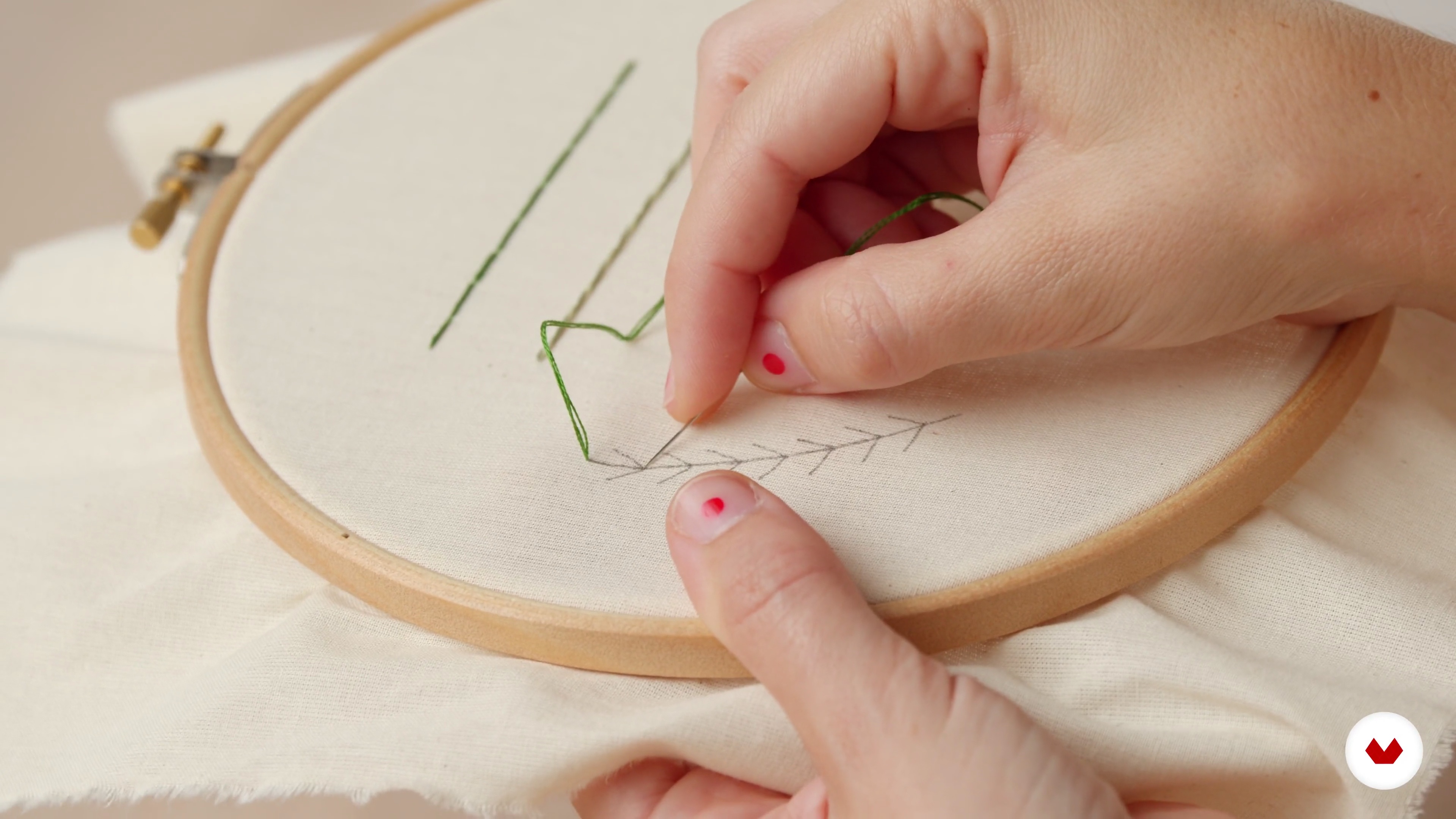
Flat points sample 1
19 minutes, 56 seconds
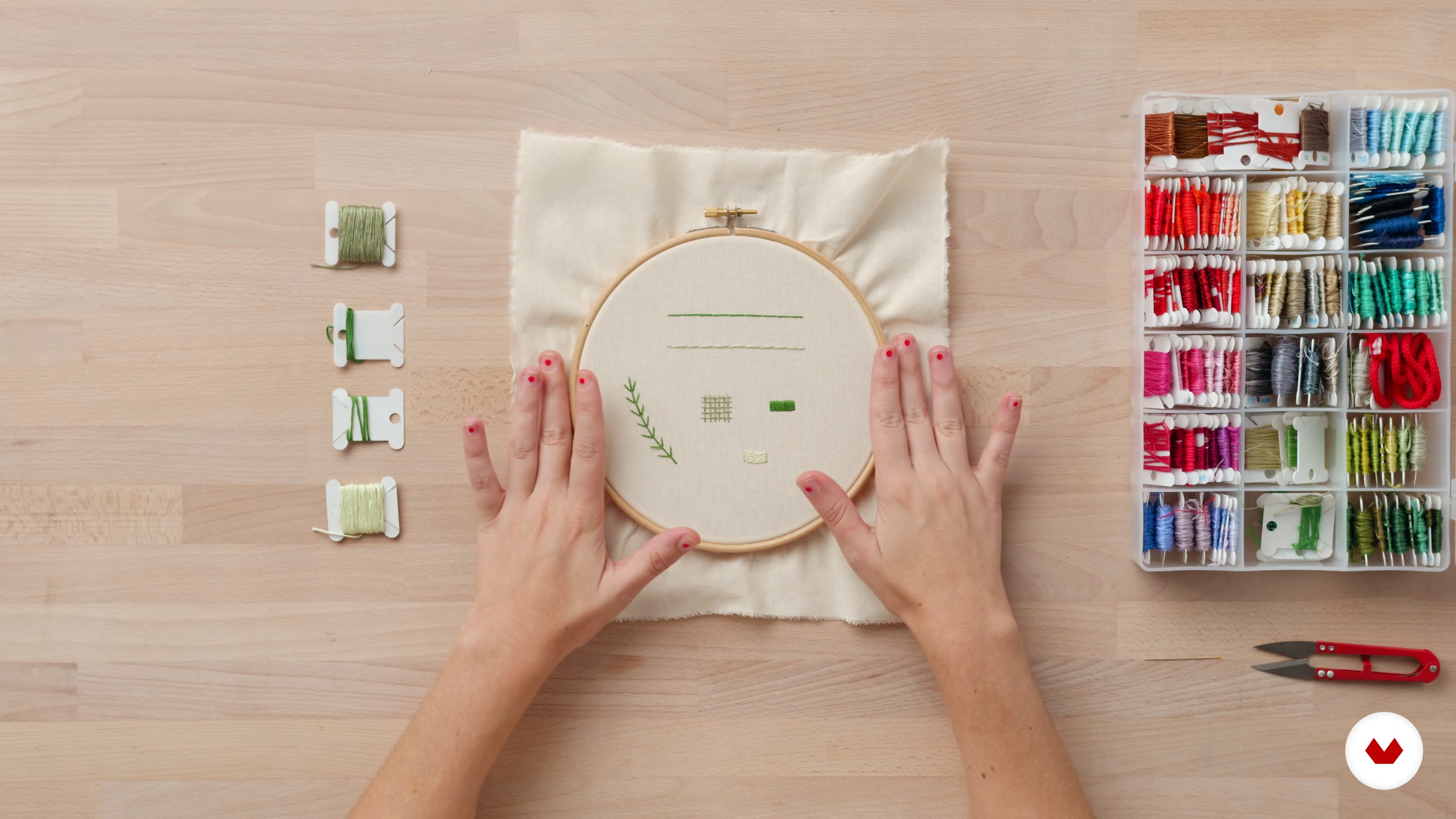
Flat points sample 2
11 minutes, 48 seconds
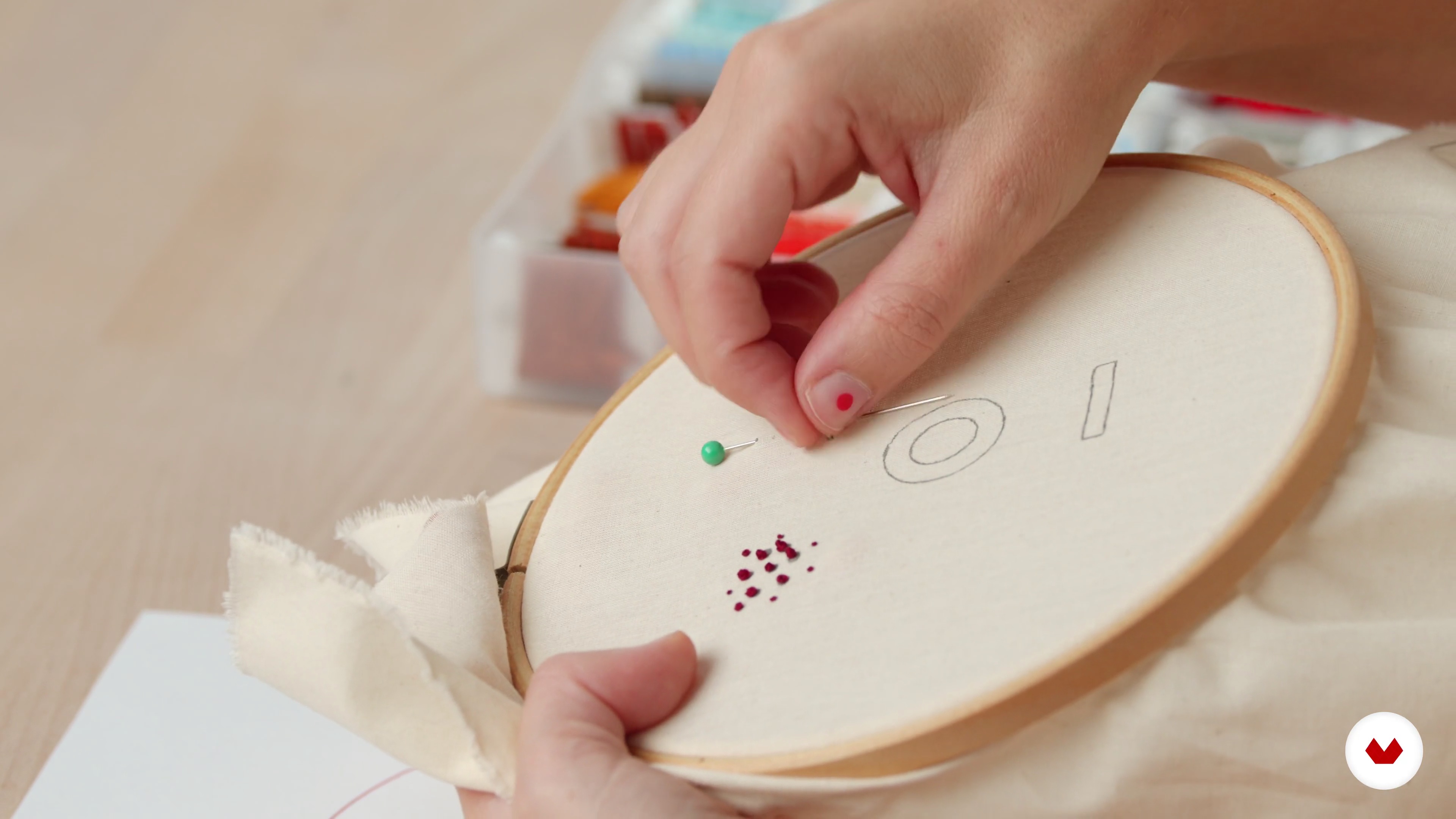
Sample of relief points
15 minutes, 22 seconds
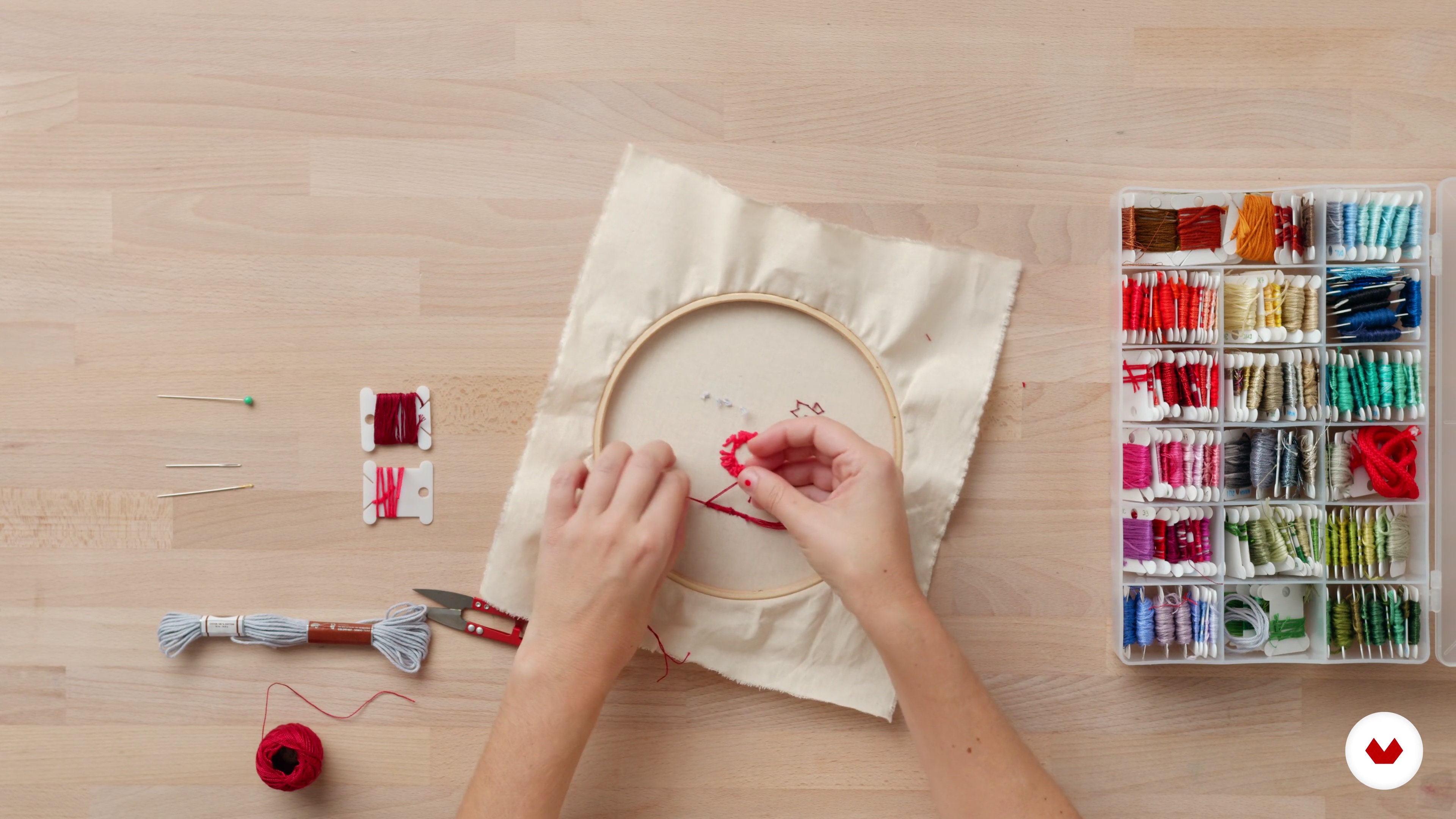
Sample of relief points 2
15 minutes, 40 seconds
What's included in this course?
Get to know Minia, photographer, embroidery specialist, and founder of Studio Variopinto. She talks you through her journey into the world of embroidery, and what led to making it her full-time profession. She also shares her references and goes through what you’ll learn in the course.
Start off by discovering the tools and materials you are going to use. Learn the basic flat embroidery stitches: back stitch, running stitch, fly stitch, weave stitch, and split stitch. Then learn the raised stitches: french knot, picot stitch, and rope stitch.
Explore the ideal type of photos for transferring onto fabric, learn how to use color, and see how to select an attractive color palette. Create a collage of your design and composition idea with Photoshop before starting your final project.
Minia teaches you three techniques to transfer your images: with printable fabric, with gel transfer medium, and fabric transfer paper.
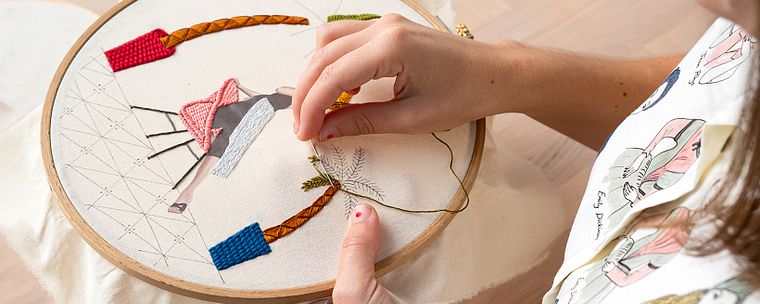
Next, it’s time to start embroidering! Create stitches onto your transferred image with an embroidery hoop. Work in a step by step method, creating each element of your final design.
Finally, Minia teaches you how to make the finishing touches to your composition, leaving it ready to decorate the space you’ve chosen for it. End the course with Minia’s final tips and advice for preserving your embroidered piece.
What is this course's project?
Create an embroidered collage on an embroidery hoop, filled with color and volume. Transfer a photo onto fabric and embroider directly onto the image.
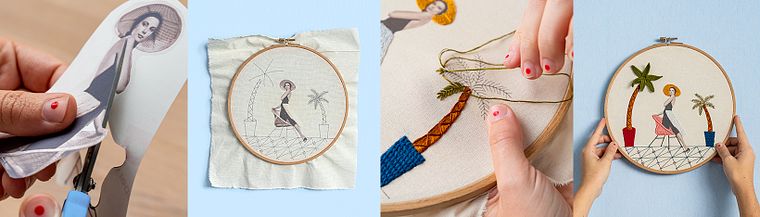
Projects by course students


Who is this online course for?
For anyone interested in new embroidery techniques as well as anyone looking for new ways to express their creativity.
Requirements and materials
No previous experience is necessary to take this course. It is adapted to both beginners and more advanced embroidery levels.
You will need an embroidery hoop, cotton fabric, needles, mouliné thread, dmc etoile thread, tapestry or crochet thread, scissors, needles, cardboard, textile glue, a printer, an iron, transfer paper, gel transfer medium, a paintbrush, water, printable fabric, a laser copy of a photograph, and a computer with Adobe Photoshop.
Reviews
- 1 month ago
Emocionada por empezar a bordar y dar nueva vida a fotografías =)
- 3 months ago
Very well taught course. The variety of stitches were great and I liked how different photo transfer methods were explained. Lots of inspiration here. I can see that the tutor has written a book on photo embroidery, but I wish an English version was available as it would be a good accompaniment to the course.
- 3 months ago
Esta muy bien explicado, las técnicas de bordado no son difíciles y uno podría pensar en que son las básicas pero la manera en que las utiliza hacen la diferencia. Lo recomiendo si quieren abrir sus ojos a nuevas maneras de usar el bordado.
- 4 months ago
Excelente, muy fácil y didáctico
- fanny_lavanchyPLUS6 months ago
Muy buen curso, Minia explica increíble, muy detallado y generosa con su contenido.Muy inspirador su trabajo, las diversas aplicaciones y múltiples posibilidades. Me encantó!

Her pieces can be found on her online store and in a few physical stores across Spain and France. She also works part time as a teacher, giving in-person embroidery courses that largely focus on botanical embroidery and image transferring.
Content
- U1
Introduction
- Presentation
- Influences
- What will we do in the course?
- U2
Tools, materials and point swatches
- Materials and tools
- Flat points sample 1
- Flat points sample 2
- Sample of relief points
- Sample of relief points 2
- U3
Photography, color and image transfer
- Types of photographs we can use and why
- Color palettes
- Image Transfer Techniques 1
- Image Transfer Techniques 2
- U4
Embroidery and finishing of our hoop
- Embroidery on photo 1
- Embroidery on photograph 2
- Stage embroidery 1
- Stage embroidery 2
- Frame finish
- U5
Care and applications of your embroidery
- Surfaces where to apply your embroidery
- Parts Care
- FP
Final project
- Embroidery in photographs on fabric
What to expect from a Domestika course
Learn at your own pace
Enjoy learning from home without a set schedule and with an easy-to-follow method. You set your own pace.
Learn from the best professionals
Learn valuable methods and techniques explained by top experts in the creative sector.
Meet expert teachers
Each expert teaches what they do best, with clear guidelines, true passion, and professional insight in every lesson.
Certificates
PLUSIf you're a Plus member, get a custom certificate signed by your teacher for every course. Share it on your portfolio, social media, or wherever you like.
Get front-row seats
Videos of the highest quality, so you don't miss a single detail. With unlimited access, you can watch them as many times as you need to perfect your technique.
Share knowledge and ideas
Ask questions, request feedback, or offer solutions. Share your learning experience with other students in the community who are as passionate about creativity as you are.
Connect with a global creative community
The community is home to millions of people from around the world who are curious and passionate about exploring and expressing their creativity.
Watch professionally produced courses
Domestika curates its teacher roster and produces every course in-house to ensure a high-quality online learning experience.
FAQs
Embroidery on photography is a technique that blends printed images on fabric with hand embroidery, creating unique artworks. Image transfer lets you imprint photos or illustrations onto fabric to then enhance them with stitches and textures.
No advanced experience is needed, but basic embroidery skills are recommended. The course is intermediate level and explains techniques step-by-step.
You’ll need fabrics, embroidery hoops, mouliné threads, tapestry needles, scissors, a heat pen, gel transfer medium, transfer paper, and mild detergent. Access to a laser printer and Photoshop for image prep is also recommended.
You’ll learn how to transfer images onto fabric, select photos, create color palettes, use flat and raised embroidery stitches, compose embroidered collages, and care for finished pieces.
The course covers methods like gel transfer, transfer paper, and photo transfer, explaining how to prepare, print, and fix images onto various fabrics before embroidering.
Yes, the techniques can be applied to clothing, bags, notebooks, or other textile surfaces, adjusting the process based on format and fabric type.
You’ll learn filling stitches like split stitch, weaving stitch, overcasting, backstitch, and raised techniques like knots, picots, and cords, combining textures and volume.