Embroidered Linear Portrait
A course by Koral Antolín Maillo , Designer, embroiderer, and art director

Joined March 2013

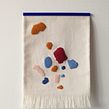
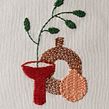

Combine embroidered stitches with a traditional and Kantan needle to create unique portraits
Joined March 2013


Do you want to learn how to make portraits in a way that is both different and full of personality? The designer and embroiderer Koral Antolín will show you how to synthesize the essence of someone to represent them in a unique and personal way, through a linear embroidered portrait. Koral is the founder of Fábrica de Imaginación, a multidisciplinary studio focused on art direction, and the creator of Studio fi, a brand of hand-embroidered products, whose work has been published in specialized magazines such as Interiores, Mollie Makes, and Elle Casa.
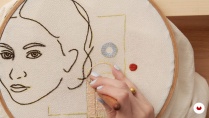
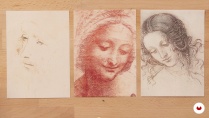
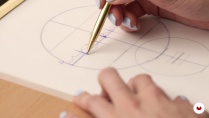
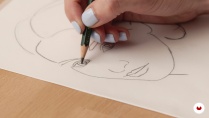
In this course, learn how to make a portrait and embroider it on a textile garment. Learn how to draw and simplify a linear portrait step by step and then embroider it with a traditional and Kantan needle. In addition, see how to enrich the embroidery with different textures, which you will achieve by combining several stitches and applying beads and sequins.
What will you learn in this online course?
22 lessons & 16 downloads

- 100% positive reviews (191)
- 3,016 students
- 22 lessons (4h 27m)
- 16 additional resources (8 files)
- Online and at your own pace
- Available on the app
- Audio: Spanish
- Spanish · English · Portuguese · German · Italian · French · Polish · Dutch
- Level: Beginner
- Unlimited access forever
What is this course's project?
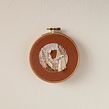
Embroider a linear portrait on a garment from the photograph you choose. You can use the traditional needle or the Kantan needle, and learn how to enrich your embroidery by adding texture and a raised effect through a combination of stitches, beads, and sequins.

Projects by course students


Who is this online course for?
This course is for creative people, illustrators, and lovers of handmade things who want to learn how to embroider a linear portrait with a traditional needle or learn a new technique using the Kantan needle.
Requirements and materials
No previous knowledge of drawing or embroidery is required, but patience and willingness to learn are. If you already have some experience, this course will also help you to add new techniques to your repertoire.
Regarding materials, for the drawing part of the portrait, you will need a photograph, tracing paper, pencils, a pencil sharpener, and an eraser. For the embroidery part, you will use threads, needles, and a frame. Although it is not mandatory, a Kantan needle is recommended, since there will be specific lessons where you will learn how to use it and thus you will be able to get the most out of the course.

Reviews

Koral Antolín Maillo
A course by Koral Antolín Maillo
Koral Antolín is a multidisciplinary creative: embroiderer, designer, photographer, art director... although her two great passions are drawing—since it allows her to synthesize ideas—and embroidery, with which she gives life and texture to her drawings stitch by stitch.
She is the founder and creative mind of the studio Fábrica de Imaginación and has her own brand of embroidery products, Studio fi.
Her work has been published in specialized magazines such as Interiores, Molly Makes, Elle Casa, Mr. Wonderful, Labores, AD, and Sewing box.
Content
-
U1
Introduction
-
Presentation
-
Influences
-
What will we do in the course?
-
-
U2
Materials and Line Drawing
-
Materials
-
Pictorial drawing vs. line drawing
-
Portrait Adjustments
-
Line drawing: referent and simplification
-
-
U3
Kantan traditional embroidery and needle
-
Points with the traditional needle 1
-
Points with the traditional needle 2
-
The Kantan needle
-
The Kantan technique 1
-
The Kantan 2 technique
-
Advanced points with the Kantan needle 1
-
Advanced points with the Kantan 2 needle
-
-
U4
Let's Embroider!
-
Transfer your portrait to fabric
-
The first stitches 1
-
The first stitches 2
-
Textures with more advanced points 1
-
Textures with more advanced points 2
-
Beads and sequins 1
-
Beads and sequins 2
-
Other apps
-
-
FP
Final project
-
Embroidered Linear Portrait
-
What to expect from a Domestika course
-
Learn at your own pace
Enjoy learning from home without a set schedule and with an easy-to-follow method. You set your own pace.
-
Learn from the best professionals
Learn valuable methods and techniques explained by top experts in the creative sector.
-
Meet expert teachers
Each expert teaches what they do best, with clear guidelines, true passion, and professional insight in every lesson.
-
Certificates
PlusIf you're a Plus member, get a custom certificate signed by your teacher for every course. Share it on your portfolio, social media, or wherever you like.
-
Get front-row seats
Videos of the highest quality, so you don't miss a single detail. With unlimited access, you can watch them as many times as you need to perfect your technique.
-
Share knowledge and ideas
Ask questions, request feedback, or offer solutions. Share your learning experience with other students in the community who are as passionate about creativity as you are.
-
Connect with a global creative community
The community is home to millions of people from around the world who are curious and passionate about exploring and expressing their creativity.
-
Watch professionally produced courses
Domestika curates its teacher roster and produces every course in-house to ensure a high-quality online learning experience.
FAQs
Domestika's courses are online classes that provide you with the tools and skills you need to complete a specific project. Every step of the project combines video lessons with complementary instructional material, so you can learn by doing. Domestika's courses also allow you to share your own projects with the teacher and with other students, creating a dynamic course community.
All courses are 100% online, so once they're published, courses start and finish whenever you want. You set the pace of the class. You can go back to review what interests you most and skip what you already know, ask questions, answer questions, share your projects, and more.
The courses are divided into different units. Each one includes lessons, informational text, tasks, and practice exercises to help you carry out your project step by step, with additional complementary resources and downloads. You'll also have access to an exclusive forum where you can interact with the teacher and with other students, as well as share your work and your course project, creating a community around the course.
You can redeem the course you received by accessing the redeeming page and entering your gift code.

ishahfm
Muy lindo curso, esta explicado muy bien, me encanto la sencilles del punto la creatividad es de uno. Gracias
View translation
Hide translation
esmuyfacil
no esta mal
View translation
Hide translation
damavilaro
muy bueno
View translation
Hide translation
n_huetter
Ein toller Kurs der mir wirklich sehr dabei geholfen hat, Silhouetten von Fotos auf Stoffe zu transferieren. Gute Erklärungen und tolle Beispiele.
View translation
Hide translation
jeannemconnolly
This course project was incredibly gorgeous! Very inspiring!