


Essential Tools to Crochet Your First Granny Square Garments

From sketching to stitching, discover all of the tools you'll need to learn this popular crochet technique
If your wardrobe looks like it could use a pop of fun, why not try making your own cozy knits using the granny square crochet method? Using a few hues of yarn and a trusty crochet hook, you can revitalize your outfits by adding psychedelic and joyful patterns, completely unique to you.

British knitwear designer Katie Jones (@katiejonesknit) is a pro when it comes to using yarn to craft statement pieces in bold colors. Through her brand, Katie Jones Knit, she sells patterns for vibrantly-colored crochet garments online, and her designs have been featured at the V&A Museum as well as in publications including The Telegraph and The Guardian.
Advocating for the make-it-yourself (MIY) revolution, she wants everyone to be able to access a luxury feel and design through their own creativity.
Here, she shares the key tools you’ll need to make your own granny squares, a style of crochet that can be easily used to ‘build’ larger garments and interior fabrics. But first, let’s get back to basics…
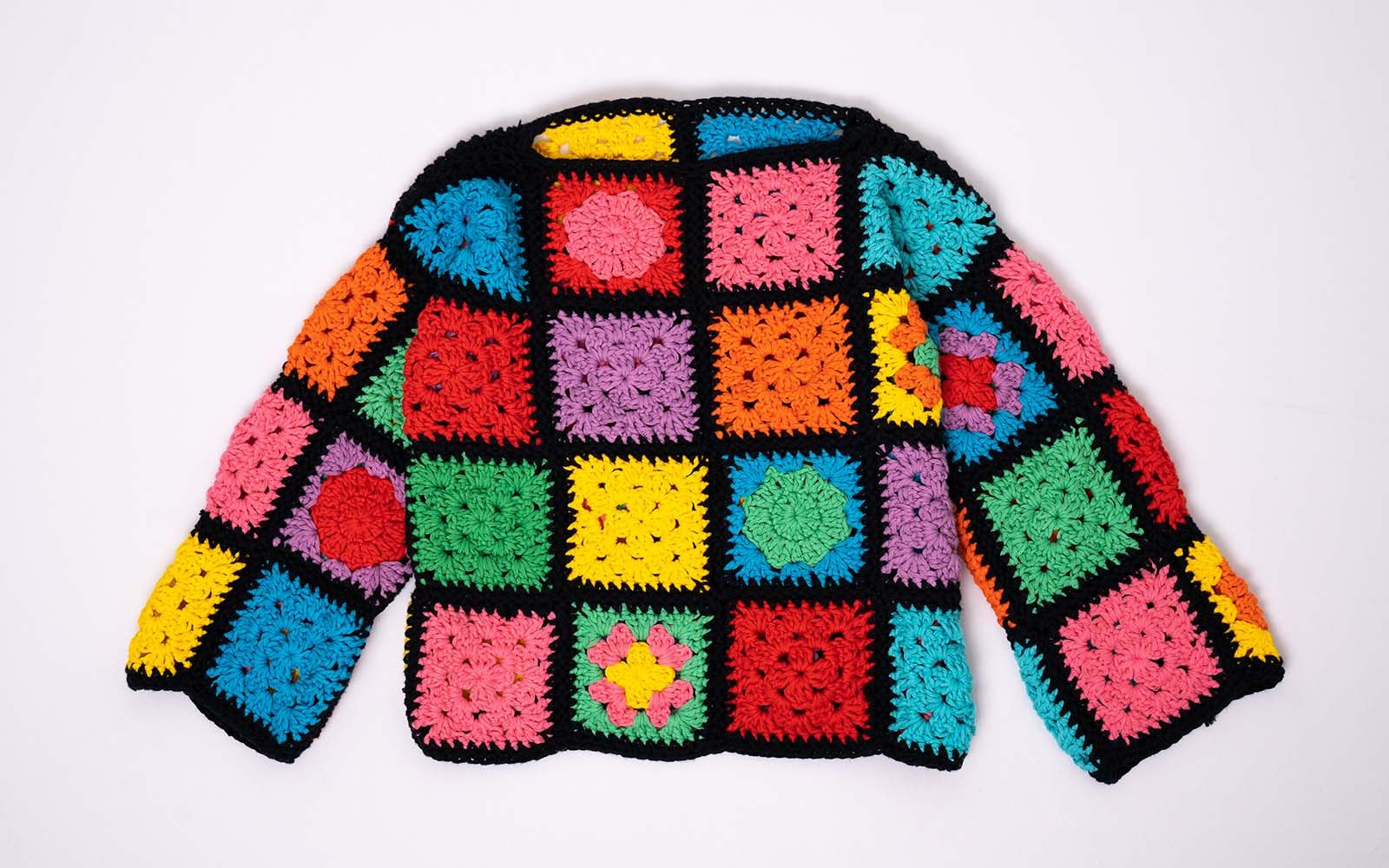
What’s a granny square and how do they form garments?
The granny square is a crochet square motif made using only a couple of types of stitches, working in "rounds" from the middle to the outer edge. The finished form looks almost like a flower, blooming outwards.
Traditionally, different colors of yarn are surrounded with a final black or dark border, often to use up old yarns. Because the stitches create easy-to-feel gaps in the pattern, the squares are very easy to hold and manipulate into place for attaching together. This means you can create quilts, cushion covers, and garments without things getting too messy.
And once you master the square shape, you can experiment with different stitches to produce hexagons and more.
The granny square actually dates back to the 19th century—it was first seen in The Art of Crocheting as an etching back in 1891. Since then, infinite ways to style them has emerged, from natural, artisanal looks to bold rainbow brights. Following a boom in the 1970s, the look has become cyclical and often ends up in shops and on catwalks. The rise of Instagram and TikTok has created another boom in popularity, with many sellers opening shops selling playful designs for crop-tops, bags, hats—just about any garment you can imagine.
So, if you're ready to MIY, read on for your toolkit...

Design tools
If you’re hoping to design your own garments, or plan out quilts and covers using many granny squares, you’ll need to plan! To allow you to sketch ideas and draw out final designs, Katie recommends having these at the ready:
- A sketchbook
- Colorful crayons
- Pens and pencils
- A ruler
- A calculator
- Measuring tape
- Optionally, kitchen scales for weighing your yarn
- A Pinterest board for inspiration
You can use all of these materials to pull together an idea for a clothing item, such as a sweater—which Katie teaches the exact process for in her course.

Crochet tools
Now, you’re ready to start your crochet. Katie notes that even as a beginner, it’s useful to get a couple of yarns, and a couple of needles in different sizes, as explained below. This will give you a chance to see what you like working with: what’s comfortable for your hands and what will suit the end product you’re hoping to create.
Crochet hook
Crochet hooks come in a range of sizes. The UK and EU use a metric size range in mm, and the most helpful ones for beginners to look for are sizes 3-6mm. Many yarn manufacturers now label their yarns with the hook size that will work best, so look out for those labels when you’re shopping.
Another thing to consider is the feel of your hook. Many come with ergonomic handles which are easier to hold, so try them out and see what's comfortable. Some people hold their needle-like a pen, while others hold it like a cutting knife.
Yarns
You don’t want to overwhelm yourself in the early stages, so choose a brightly-colored yarn that you can easily see. Also, look for double knit weight, aran weight, or worsted yarn. These chunkier types will be far simpler to use at the beginning, before you move onto more intricate work.
Yarn needles / Tapestry needle
This is a large needle used to sew in ends and make your squares look neat and polished. Again, you might want a couple of sizes to fit with the yarns you’ve chosen.
Supporting tools
- Scissors
- Safety pins or stitch markers, which hold work together for planning and while you’re attaching many squares together
- Latch hook, a closable small hook (often used in machine knitting) that is used to weave in ends
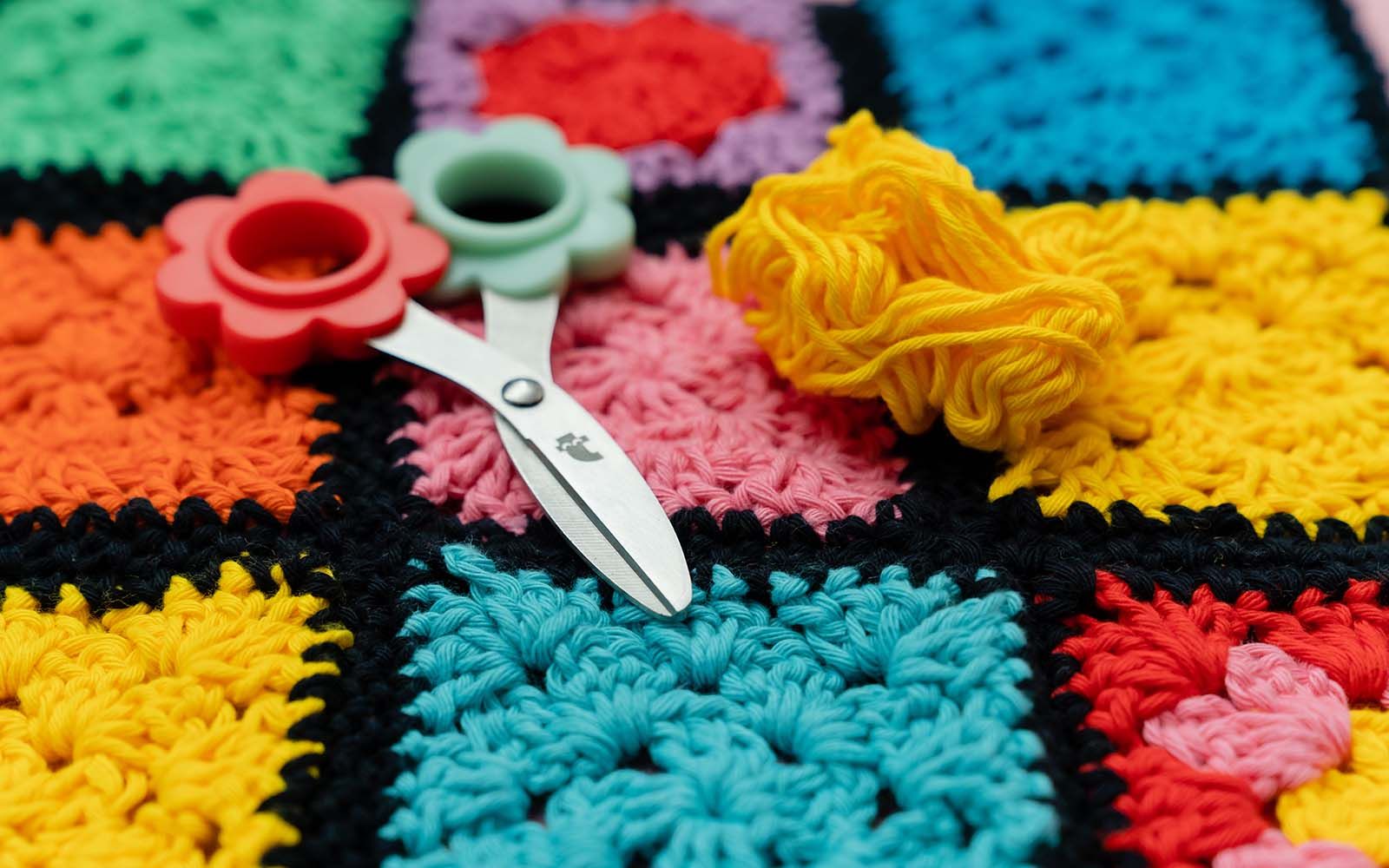
With all of these tools assembled, you can confidently crochet granny squares and plan a more complex piece of clothing or homeware. If you're ready to get started and want to learn more, sign up for Katie’s course, Granny Square Crochet: Make Your Own Sweater.
Plus, to see more guides on essential materials for your creative projects, check out the Materials tag on the blog.
You may also like:
- What is Crochet?
- 5 Websites for 100s of Free Crochet and Knitting Patterns
- Creating Garments Using Crochet, course by Alicia Recio Rodríguez
- 5 Fashion Trends for 2022: From Haute to Homemade
- Crochet Tutorial: How to Make a 3 Color Popcorn Stitch


0 comments