


10 artists who explored the dark (and turned fear into art)

The Art of Darkness: Ten Artists Who Transformed Fear into Their Muse and Created Unforgettable Works
.
10 artists who turned fear into art.
Art is not only born from beauty or harmony. It also arises from the fear, anguish and darkness that inhabit the human interior.
Throughout history, many artists have found in these intense emotions a source of creative energy, transforming the disturbing into works that move, disturb and fascinate at the same time.
Far from fleeing from the shadow, these creators confronted it in order to understand and shape it.
This article traces the work of ten artists who made fear their muse, demonstrating that the dark, when turned into art, can be one of the purest forms of truth and beauty.
Art as a reflection of fear.
From cave paintings to contemporary installations, fear has accompanied humanity as a mirror of its vulnerability. Representing the sinister has not only served to exorcise fears, but also to explore them and give them meaning. The dark in art does not always provoke rejection; it also arouses curiosity, empathy and fascination..
When looking at the horror, pain or anguish reflected in a work, the viewer is confronted with his or her own limits. Thus, darkness becomes a tool to connect with the deepest part of the human being.
10 artists who made fear their muse.
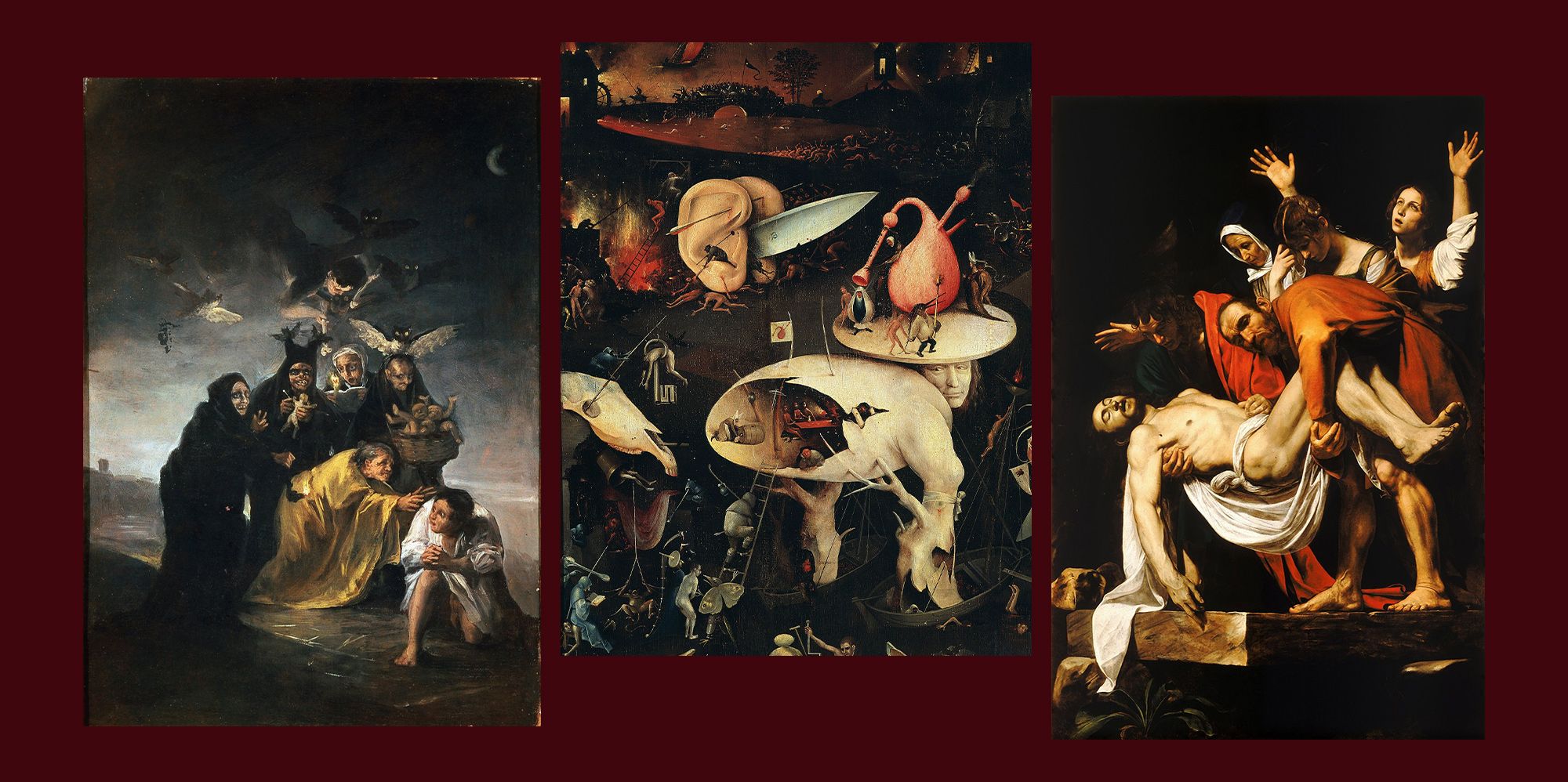
1. Francisco de Goya 2.
From the political sarcasm of Los caprichos to the rawness of Pinturas negras, Goya was a pioneer in depicting madness, violence and despair. His work reflects both the external horror of his time and an introspective journey into inner darkness.
2. Hieronymus Bosch
With The Garden of Earthly Delights, Bosch opened the doors to a universe of hybrid creatures, infernal punishments and impossible landscapes. His vision, between the religious and the fantastic, anticipated the exploration of the subconscious centuries before surrealism.
3. Caravaggio
The master of chiaroscuro transformed light into an emotional language. In his compositions, darkness is not absence, but a space charged with tension and drama. His violent scenes and vulnerable figures speak of a torn, tangible and real humanity.
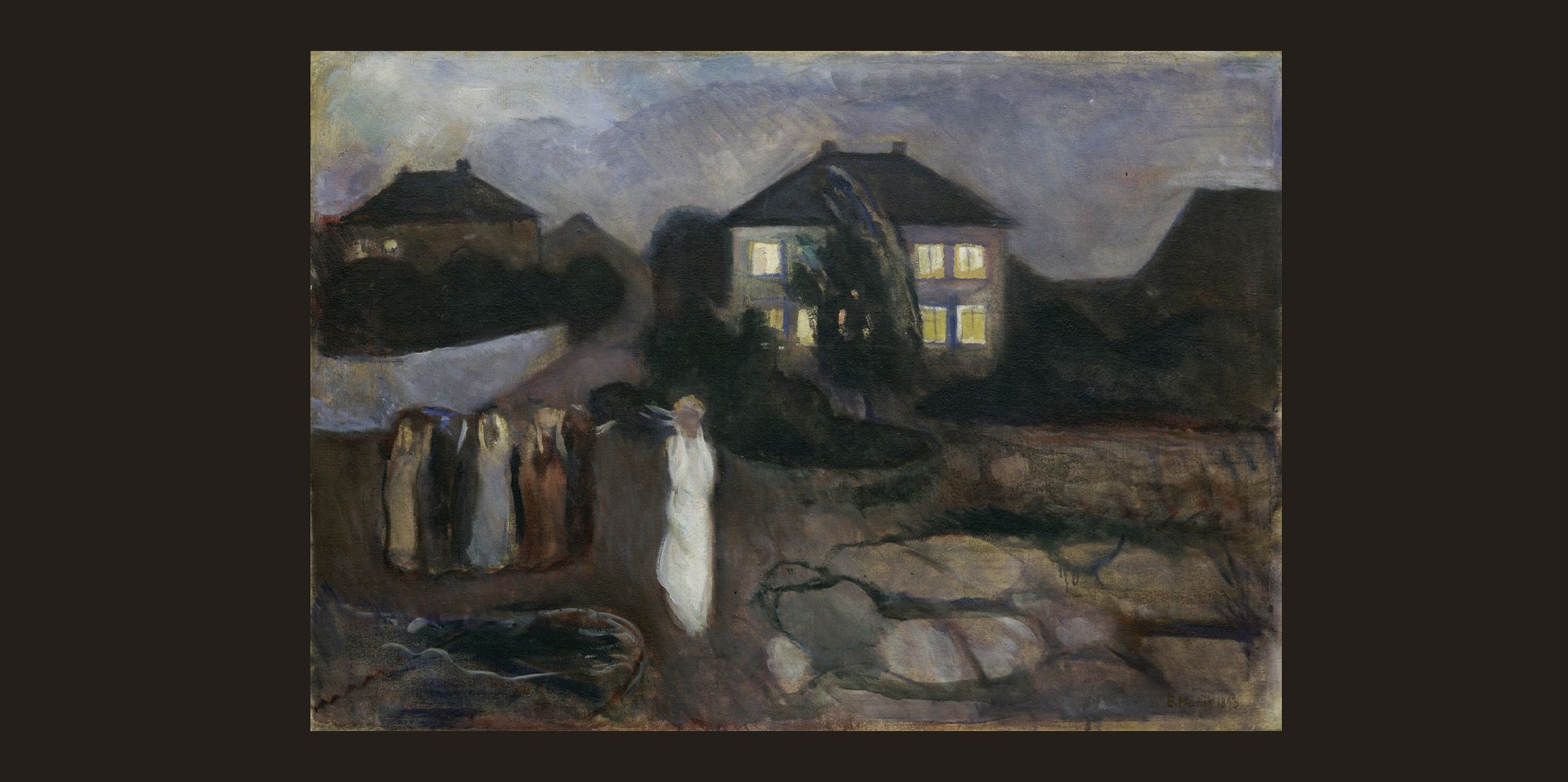
4. Edvard Munch
In The Scream and many of his works, Munch captured the existential fear of modernity. His trembling line and intense colors translate the anxiety, loneliness and fragility of the human being in the face of an uncertain world.
5. Zdzisław Beksiński.
The Polish artist created apocalyptic landscapes where death and melancholy are confused with poetry. His compositions, full of organic structures and disfigured figures, turn terror into a form of tragic beauty.
6. H.R. Giger
With his biomechanical imagery, Giger redefined modern fear. His fusion between the organic and the technological gave rise to the visual universe of Alien, where the disturbing becomes hypnotic and sensual. His work reflects on the limits of the body and the machine.
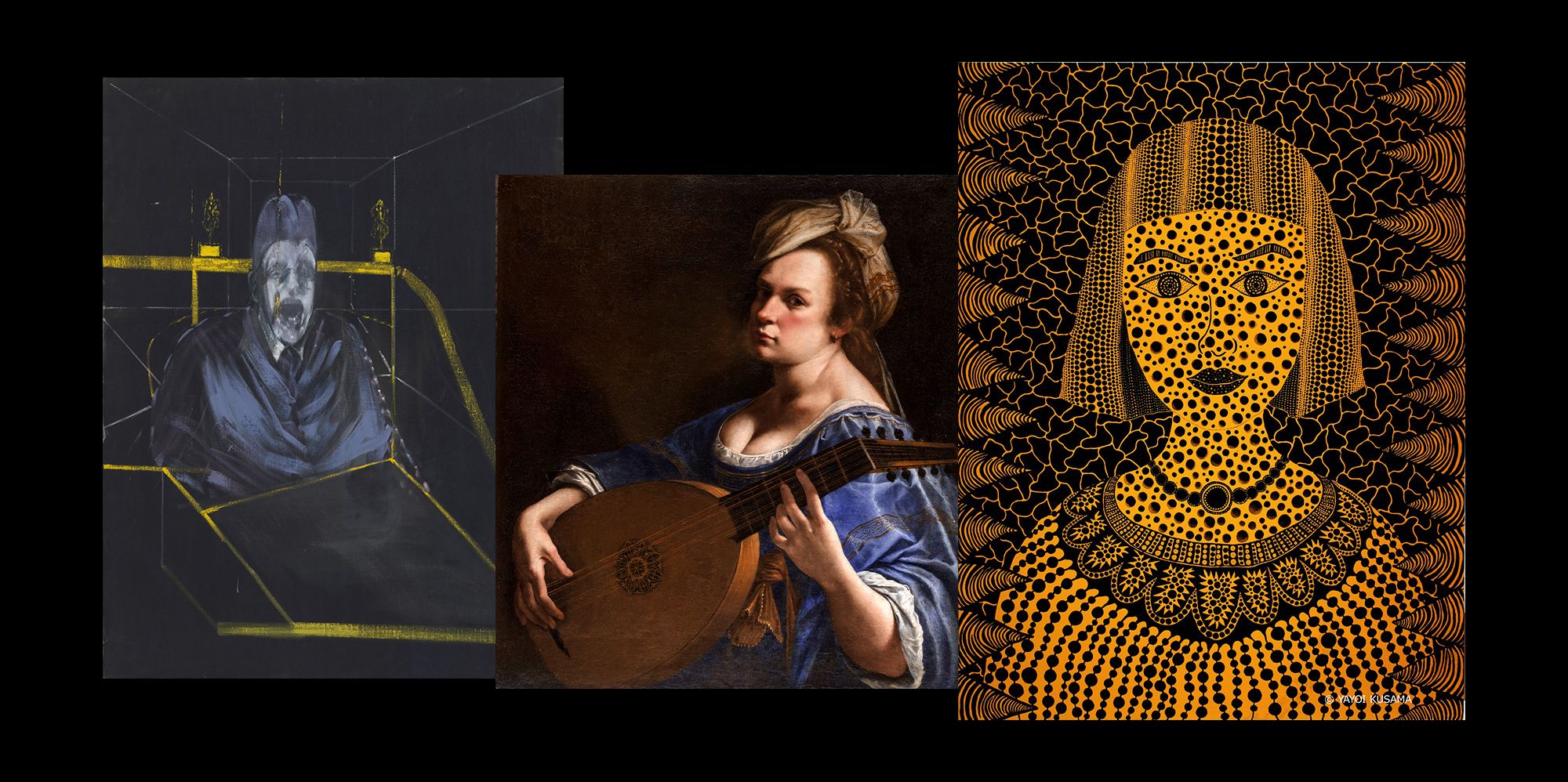
7. Francis Bacon
Bacon distorted the human figure to reveal its essential vulnerability. In his deformed portraits, flesh becomes a metaphor for suffering and the ephemeral condition of existence. His art is a contained cry: a mirror of contemporary pain.

8. Artemisia Gentileschi
In the 17th century, Gentileschi challenged the norms of her time by depicting scenes of violence from the female gaze. Works such as Judith beheading Holofernes are both a denunciation and an assertion of power, where darkness is transformed into resilience.
9. Kara Walker.
Through her black silhouettes, Walker revisits the history of racism and slavery in the United States. Her art is disturbing for its apparent simplicity and conceptual hardness: a direct confrontation with collective traumas and structural violence.
10. Yayoi Kusama
Behind her infinite spaces and repetitive patterns, Kusama transforms the fear of obsession into a form of healing. Her psychedelic art turns anxiety into a visual universe of light, color and reflection.
What do these artists have in common?
Beyond their styles or periods, they all shared a conviction: vulnerability can be a source of creative strength. They turned darkness into a means to know themselves better, challenged the limits of the accepted, and demonstrated that art can be both a wound and a cure. Each, in their own way, transformed fear into a tool to look beyond the obvious and reveal the invisible.
Why the dark attracts us.
Psychologically, art that explores the disturbing allows us to confront what we fear without real danger. By observing it from an aesthetic distance, the viewer finds a form of liberation.
The sinister stimulates reflection, awakens the imagination and forces us to question our certainties.
From The Cabinet of Dr. Caligari to the visual worlds of Guillermo del Toro or David Lynch, the fascination with the dark continues to inspire contemporary artists, illustrators and filmmakers.
How to be inspired by the disturbing without losing the light.
Exploring the dark doesn't mean falling into negativity, but using emotion as creative subject matter.
You can reinterpret a feeling of fear or anxiety through color, texture or composition. Play with light and shadow, experiment with contrasts and seek balance between tension and calm. [Art does not heal by hiding what hurts, but by transforming it into something that communicates, excites and transcends.[/i] Art does not heal by hiding what hurts, but by transforming it into something that communicates, moves and transcends.]

Explore art and emotion with Domestika
If you are interested in delving into how emotions influence artistic creation, on Domestika you will find courses on conceptual illustration, contemporary art and emotional creativity. Learn from artists who use vulnerability and fear as engines of inspiration and turn the disturbing into a form of beauty. Discover the Art and Emotion courses at Domestika and channel your feelings through your projects.
Fear, when transformed into art, ceases to be weakness to become knowledge. Each work that is born from darkness reminds us that beauty does not always lie in the light, but in the courage to look at what scares us. Sometimes, in order to find the light, one must first dare to look at the shadow.[/i


0 comments