
Pollinating
Polinizando
de L Magallanes @lmagallanes
- 176
- 6
- 1
Introduction
I can spend hours observing the intricate patterns of nature; every detail is a new inspiration. I enjoy observing each element of the ecosystem, the relationships between them, and the intelligence behind it all, which we are still far from understanding.
This illustration is inspired by the community garden where I live. Every spring feels as if life springs up again after the lull of winter: flowers begin to color the landscape and pollinators begin to do their work. Pollination, it seems to me, is one of nature's and evolution's greatest achievements: a collaborative process between species that sustains life.
I've done a few other individual nature-related illustrations (https://www.instagram.com/lmagallanes/); however, this time I wanted to go a step further and illustrate the interspecies relationship within an ecosystem.
Materials
The sketches for this illustration were made with pencil and colored pencil, on kraft paper and in my 250g watercolor paper sketchbook.
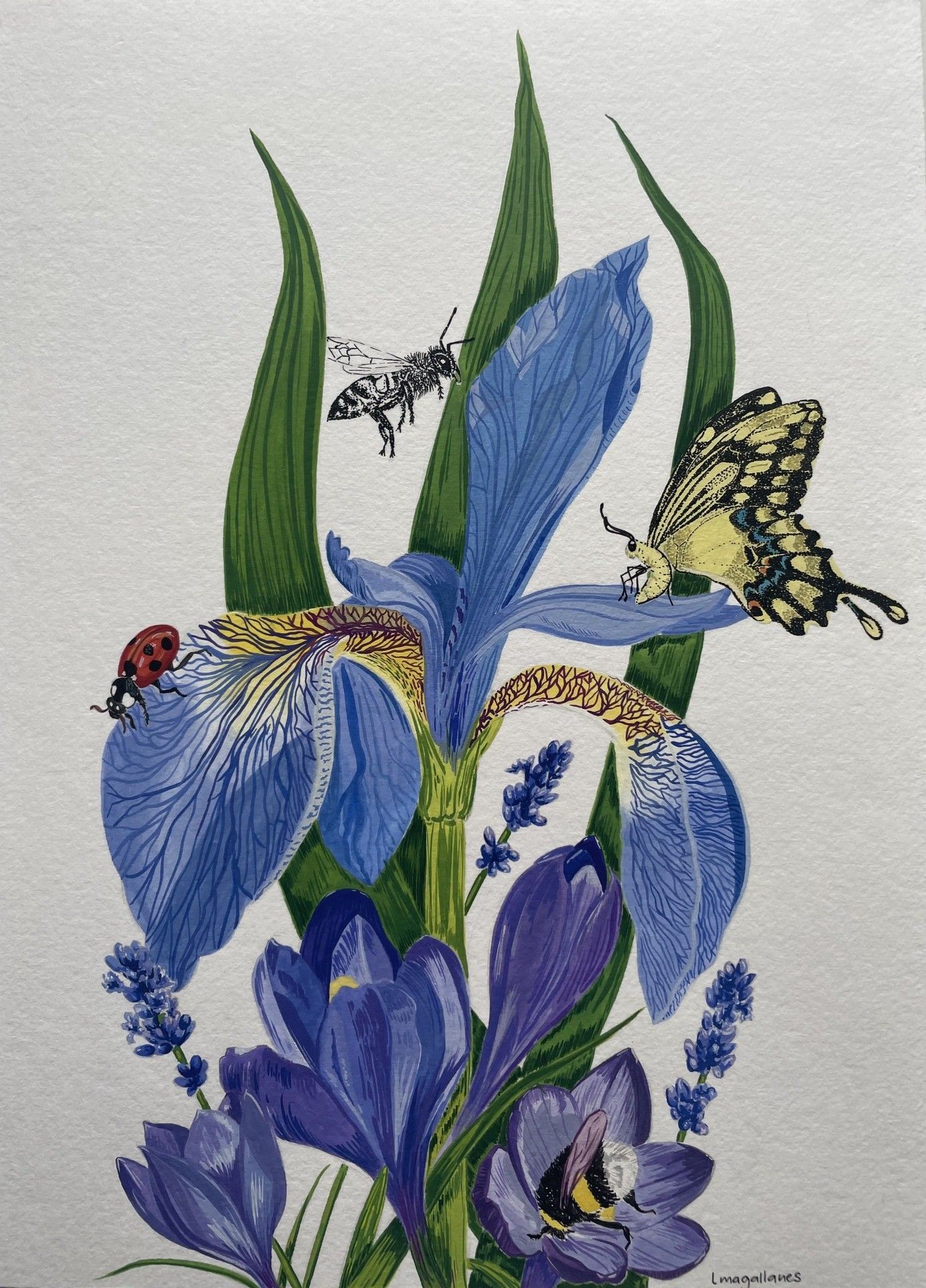
For color, I mainly applied Winsor & Newton gouache, although I also added some details with Micron ink markers.
The final illustration was then traced and painted in gouache on 300g Arches cotton paper.
I did the digital editing in Photoshop.
Research and references
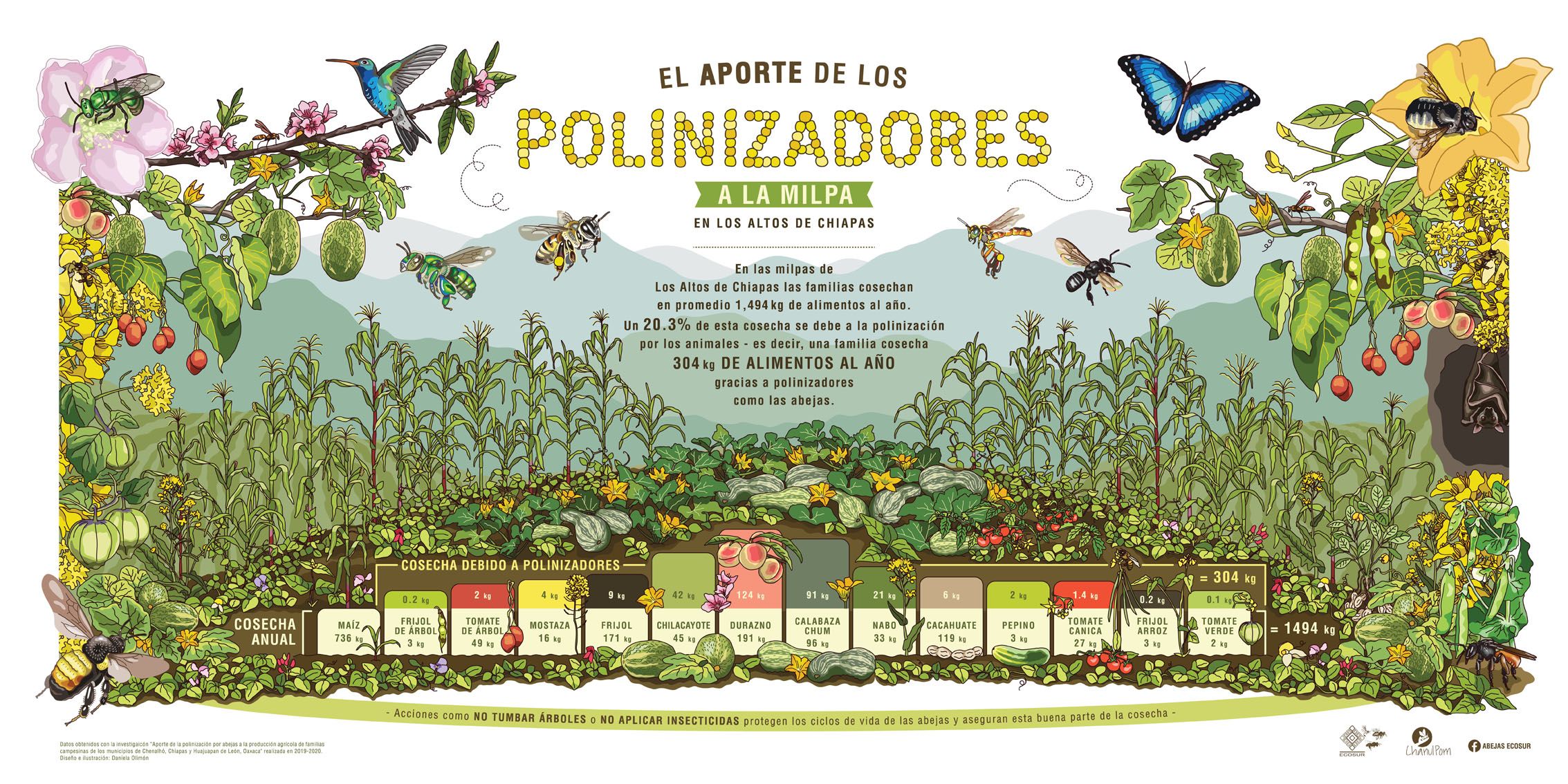
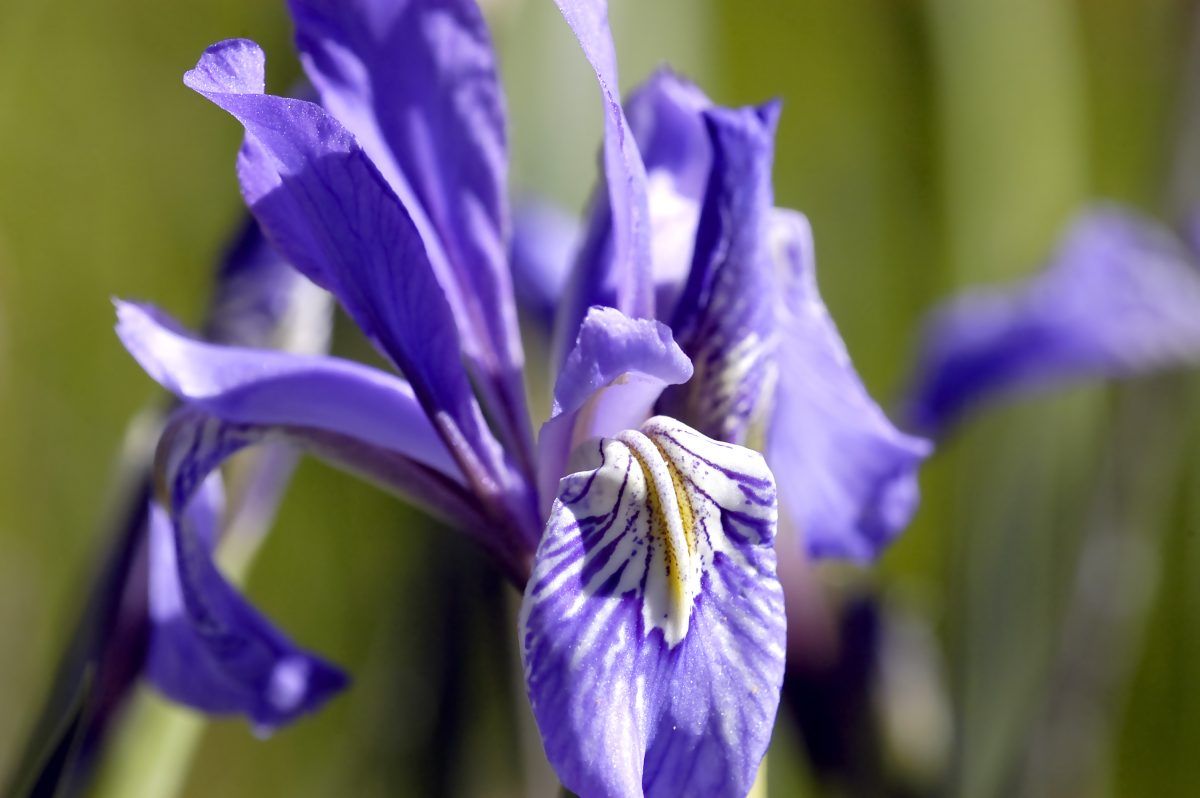
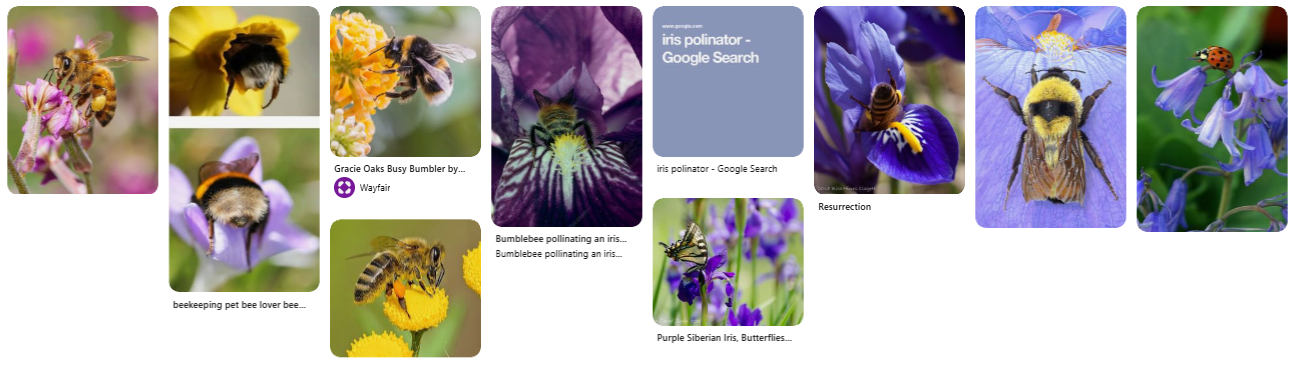
Before starting the illustration, I did some research on different pollinators and their role in different ecosystems. I realized the field is very vast, so I decided to focus on a single flower to start. Since it was iris season when I created the illustration, I decided to research the pollinator ecosystem associated with some similar flowers.
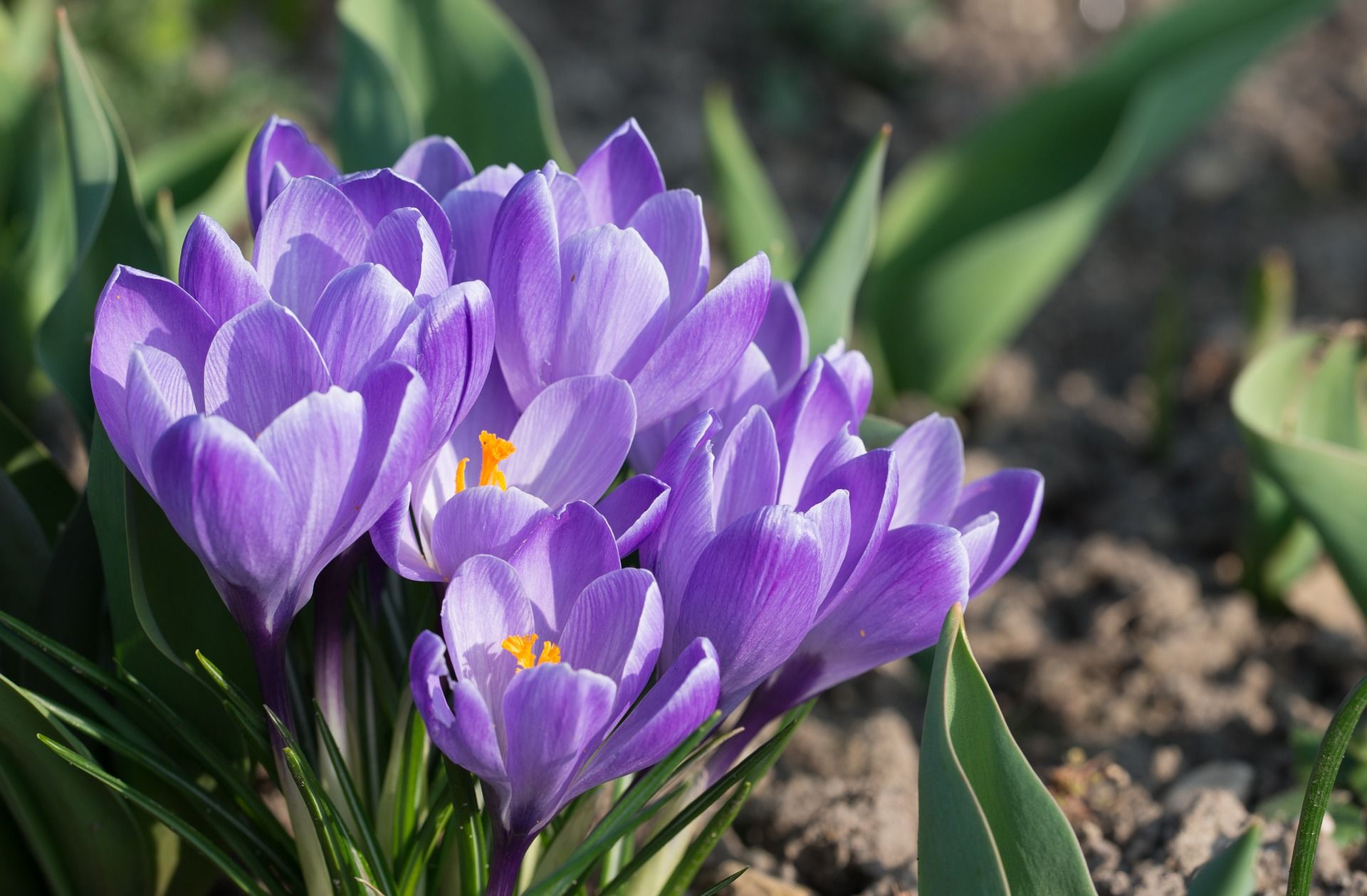
Looking for a similar color palette, I decided to add other purple flowers, such as lavender and crocuses, and compiled references to create a mood board that I show below.
Illustrations for the research, made by the Colegio de la Frontera Sur (ECOSUR), Mexico.
Choosing the color palette
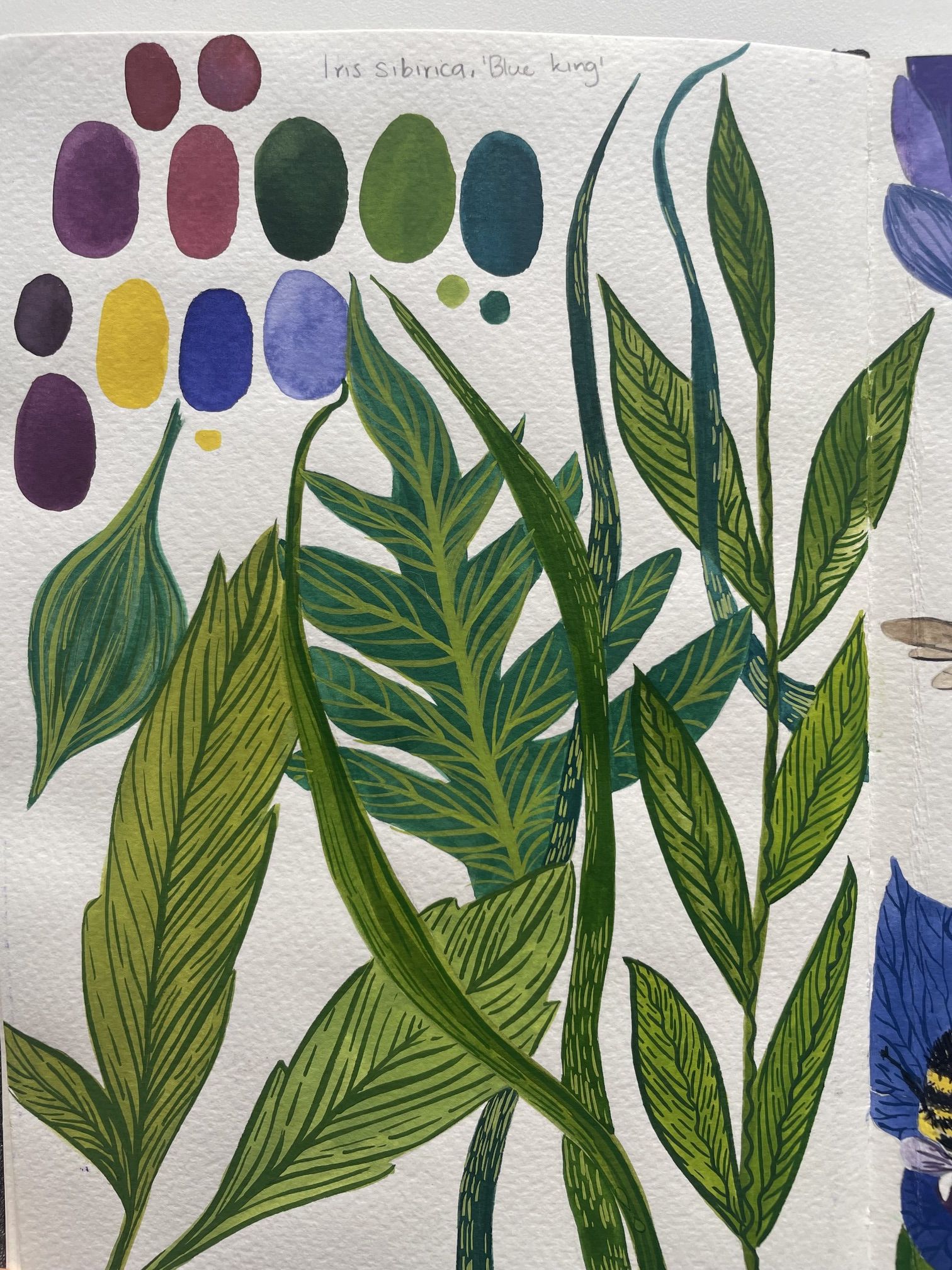
To choose the color palette, I started in my sketchbook, exploring some textures and combinations for the different elements such as leaves, petals, and insects.
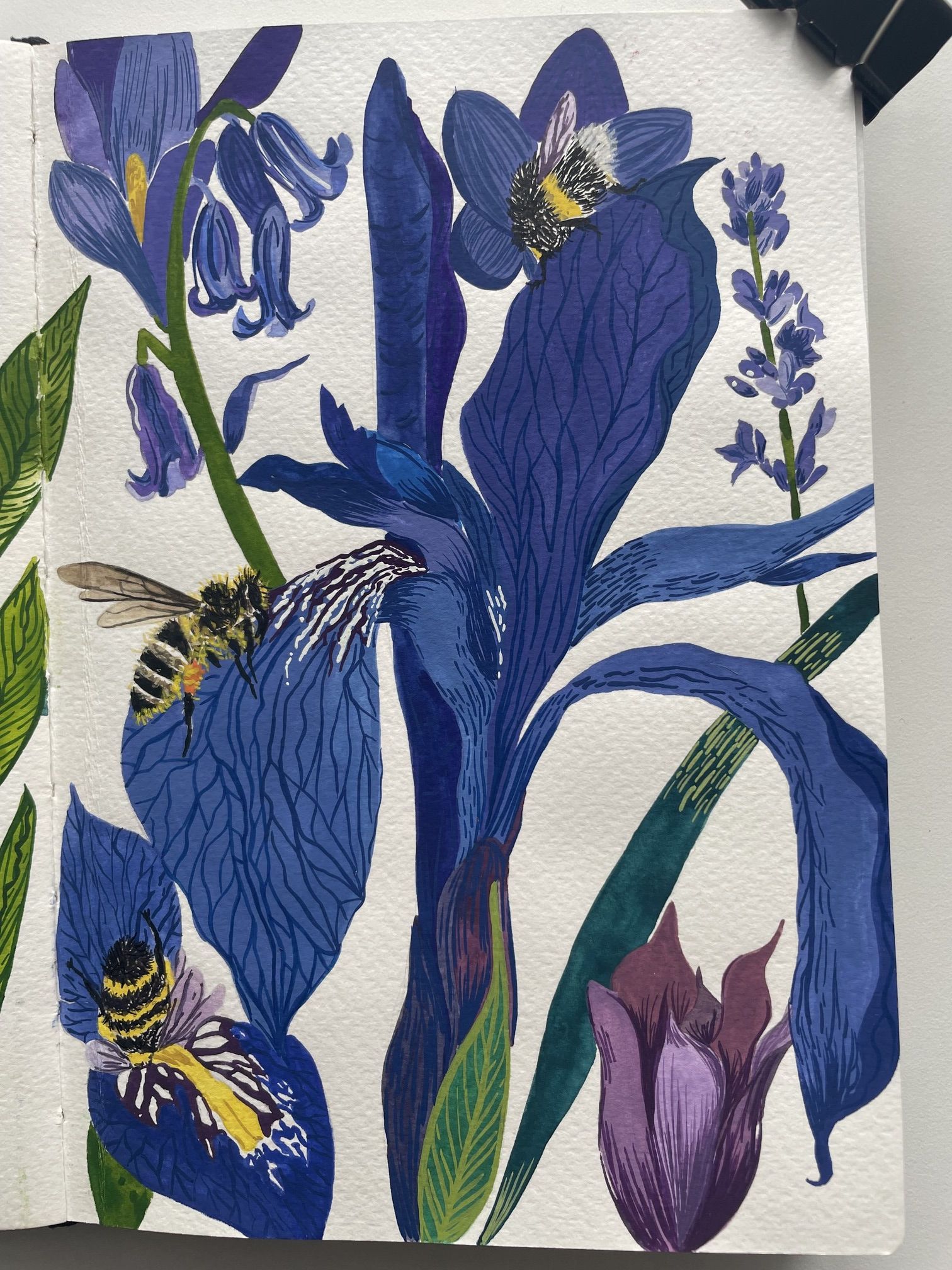
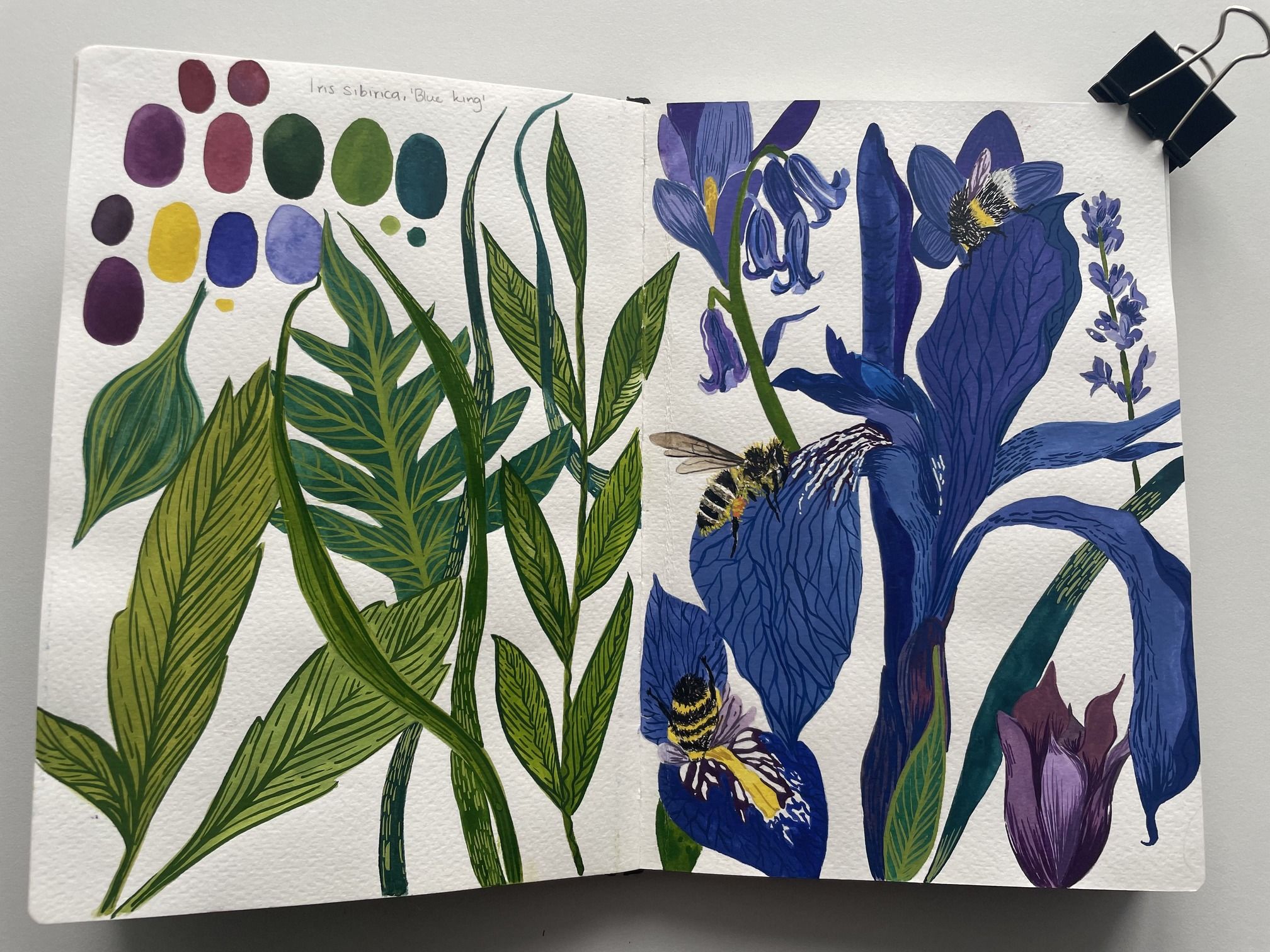
Composition and Sketches
Once I decided on the theme of the illustration, I ventured to sketch different compositions of the elements (flowers and pollinators) until I chose the final composition and painted it too, even though the paper was not ideal.
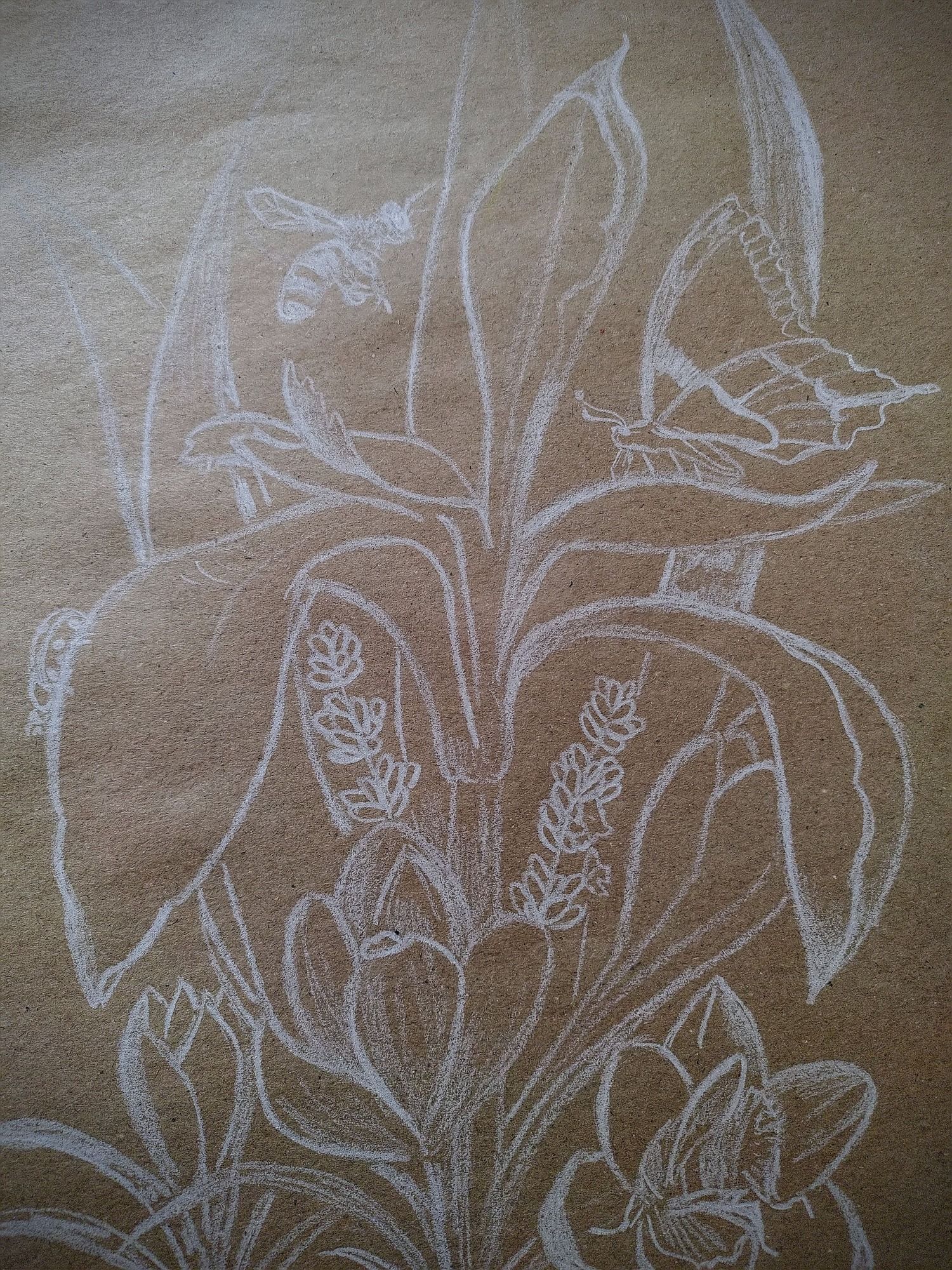
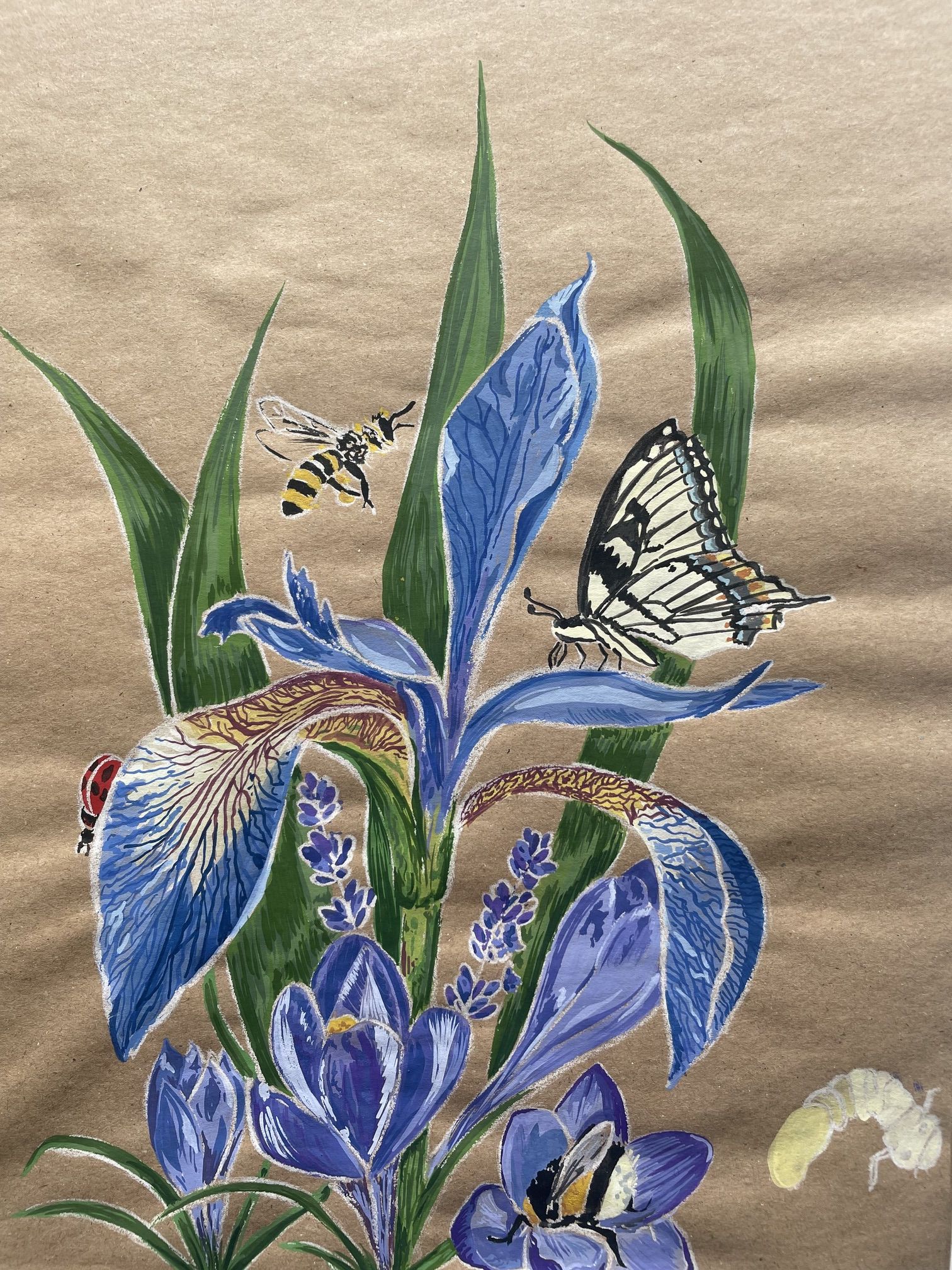
Final illustration
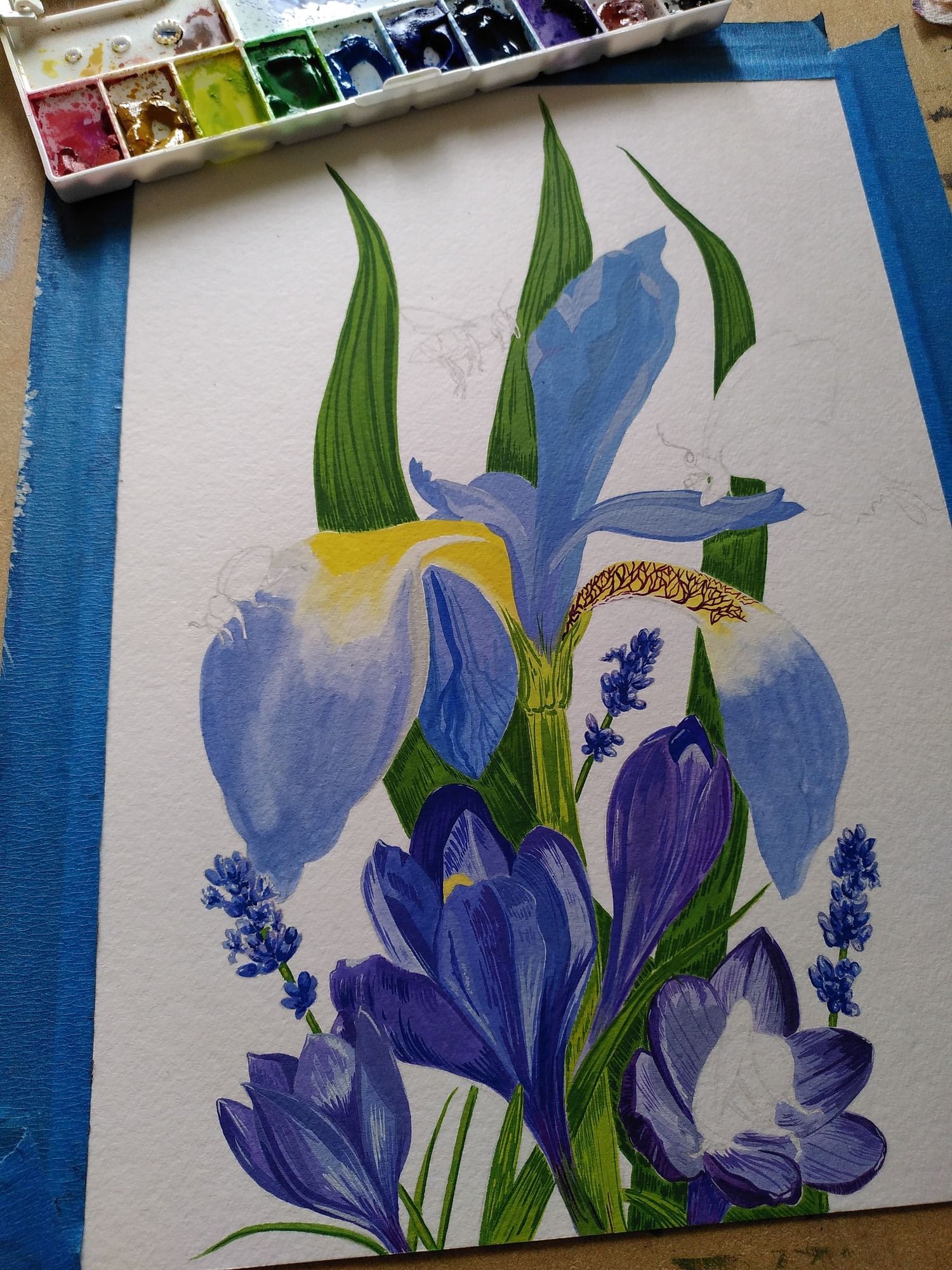
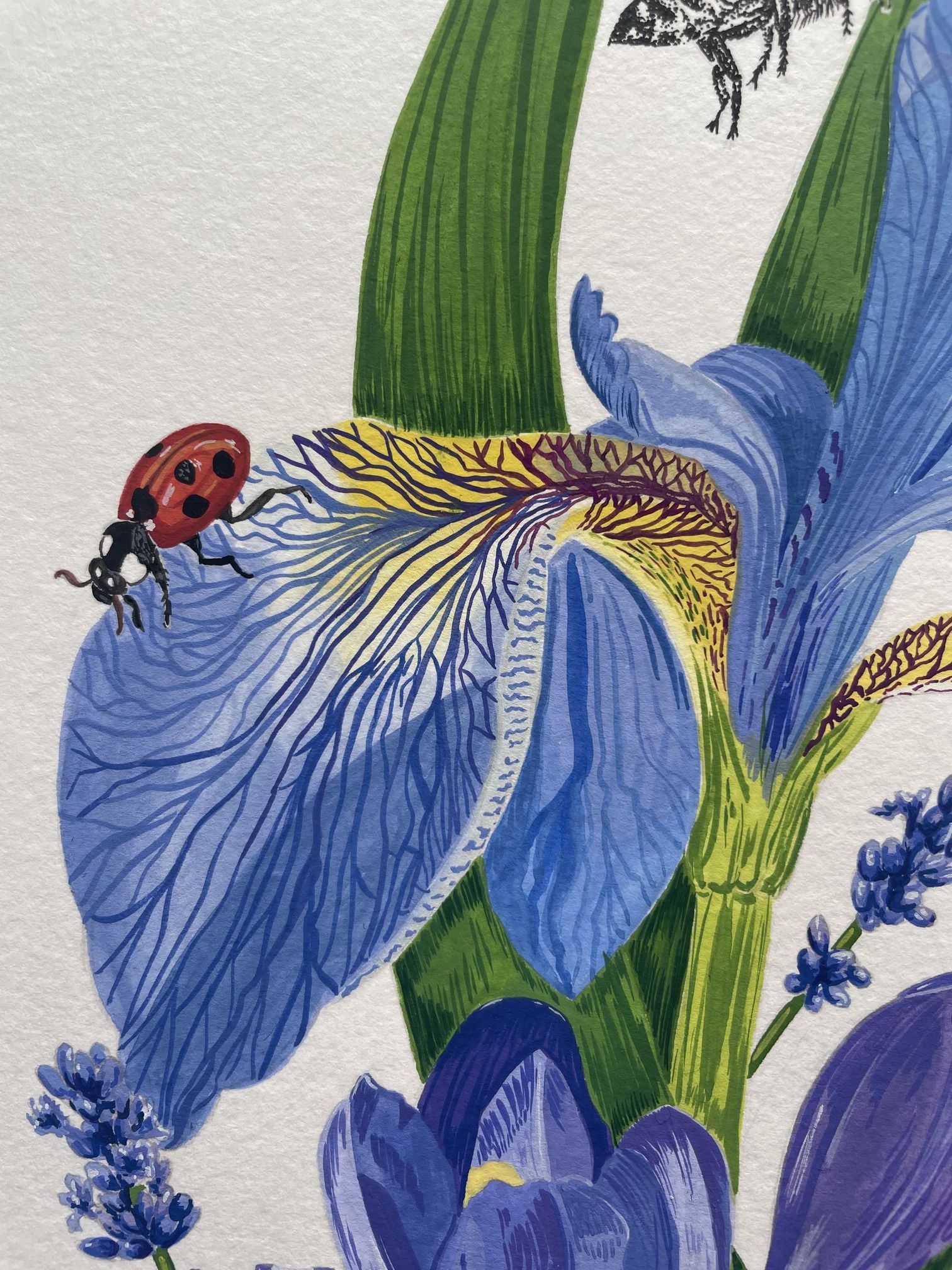
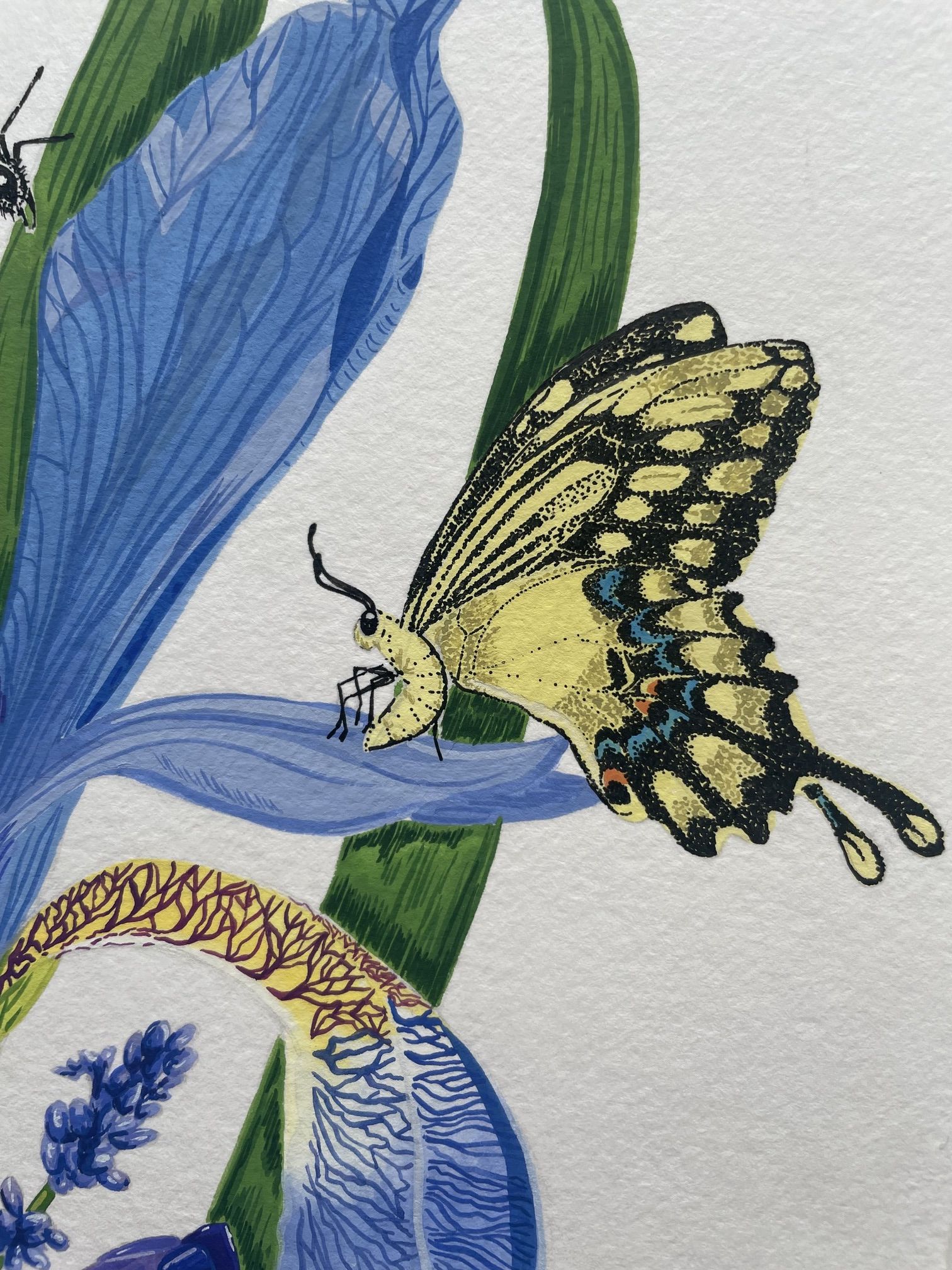
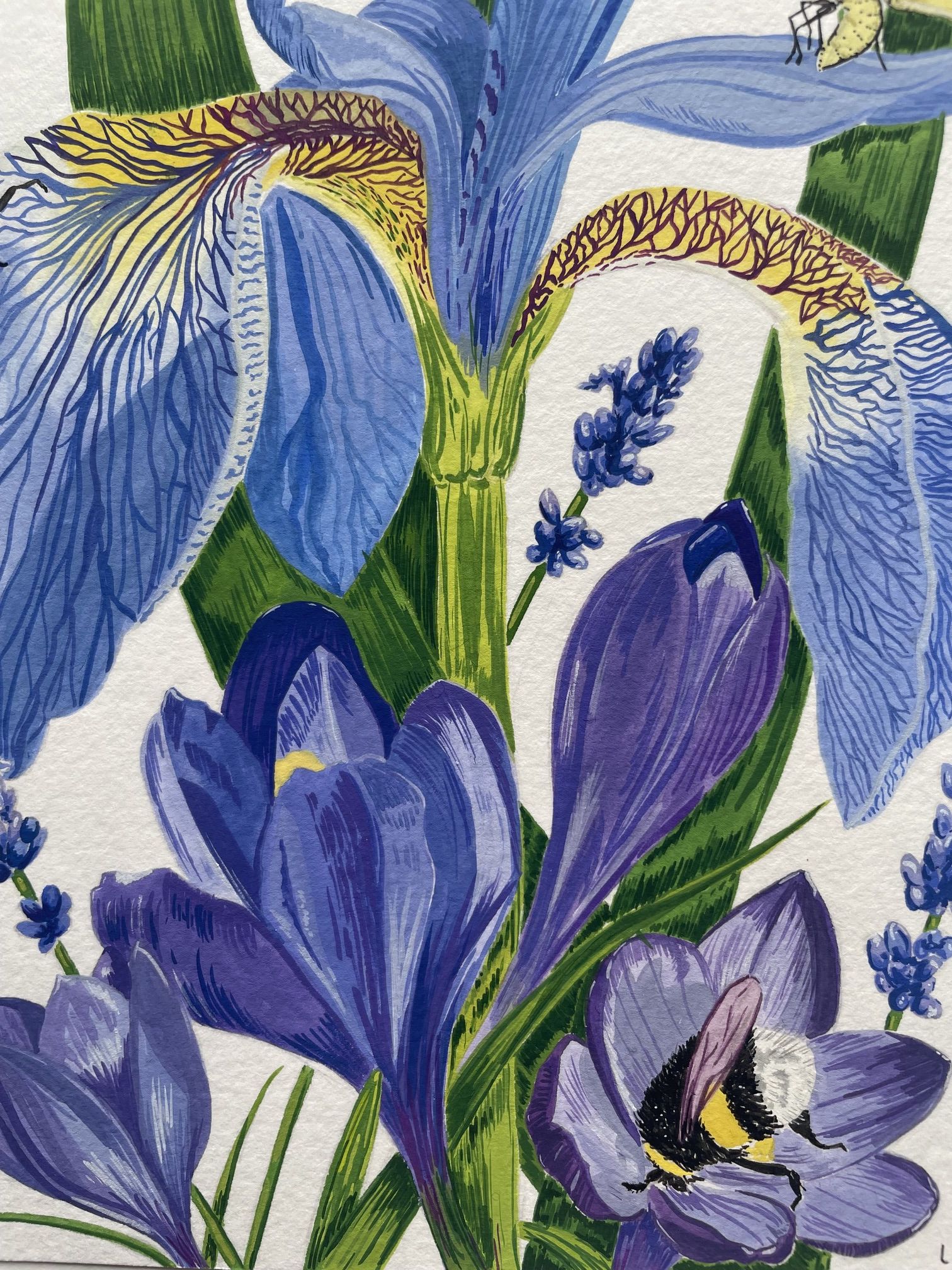
Finally, I outlined the final composition in pencil and began painting, gradually adding details to the illustration. I started with the greens, which I felt most comfortable with, and then gradually incorporated yellows and blues. I decided to leave some elements outlined in ink to highlight their details, such as the bee and the butterfly.
Digital edition
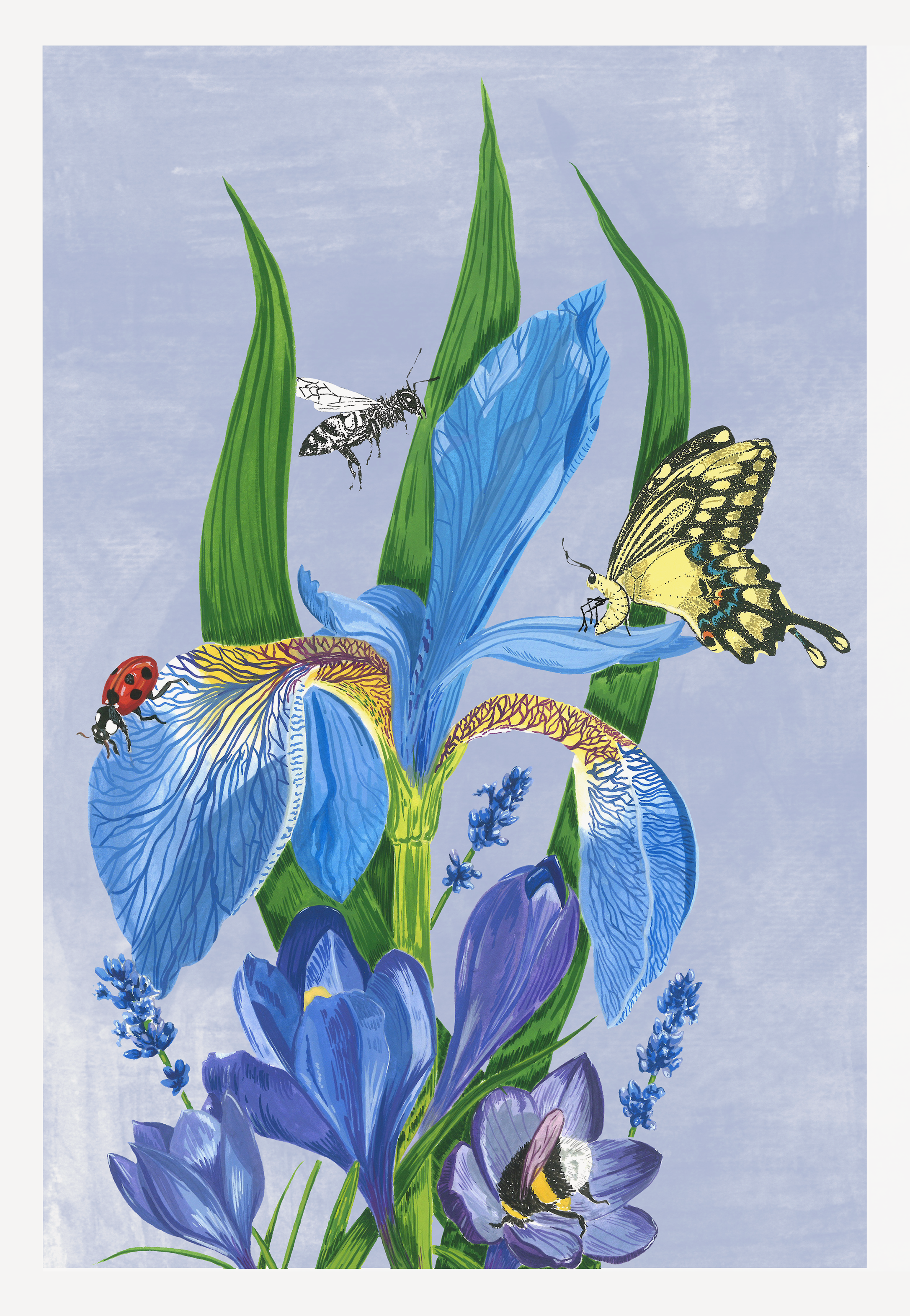
In the end, I decided to play around with digital editing the original illustration in Photoshop. I kept the colors almost intact and added a watercolor background to explore new atmospheres. Still, there's something about the texture and imperfection of handmade work that I still like more.


1 comentariu
Ce treabă frumoasă! Dă-i premiul. ❤️
Conectați-vă sau înscrieți-vă gratuit pentru a comenta