Narrate Vignettes with a Pen
A course by Miguel GallardoCaricaturist și ilustrator
A course by Miguel Gallardo, Caricaturist și ilustrator

Learn to construct the story of a comic based on a personal experience
In this course by Miguel Gallardo, comic book illustrator and illustrator of publications such as La Vanguardia, Herald Tribune and The New Yorker - you will learn to build the story of a graphic novel with minimal material resources based on your own experiences , those of your environment or family memories.
Gallardo will teach you to narrate in an exciting and fun way as life itself, just as he does in the novels dedicated to his daughter with autism, "María and I" and "María is 20 years old" , por those received by the National Prize of the Generalitat in the comic section and the Grand Prix of the Barcelona Comic Fair for its entire career.
You will discover how to define the relevant facts of a story and structure it clearly, with emotion and humor. That is the secret of the recipe. "The closest source of stories we have is our own life and experiences, as well as that of the circle closest to us, family, friends ... that's where the good stories come from." , as Miguel Gallardo admits.
Ce vei învăța în acest curs online?
1 lecție & 1 descărcare
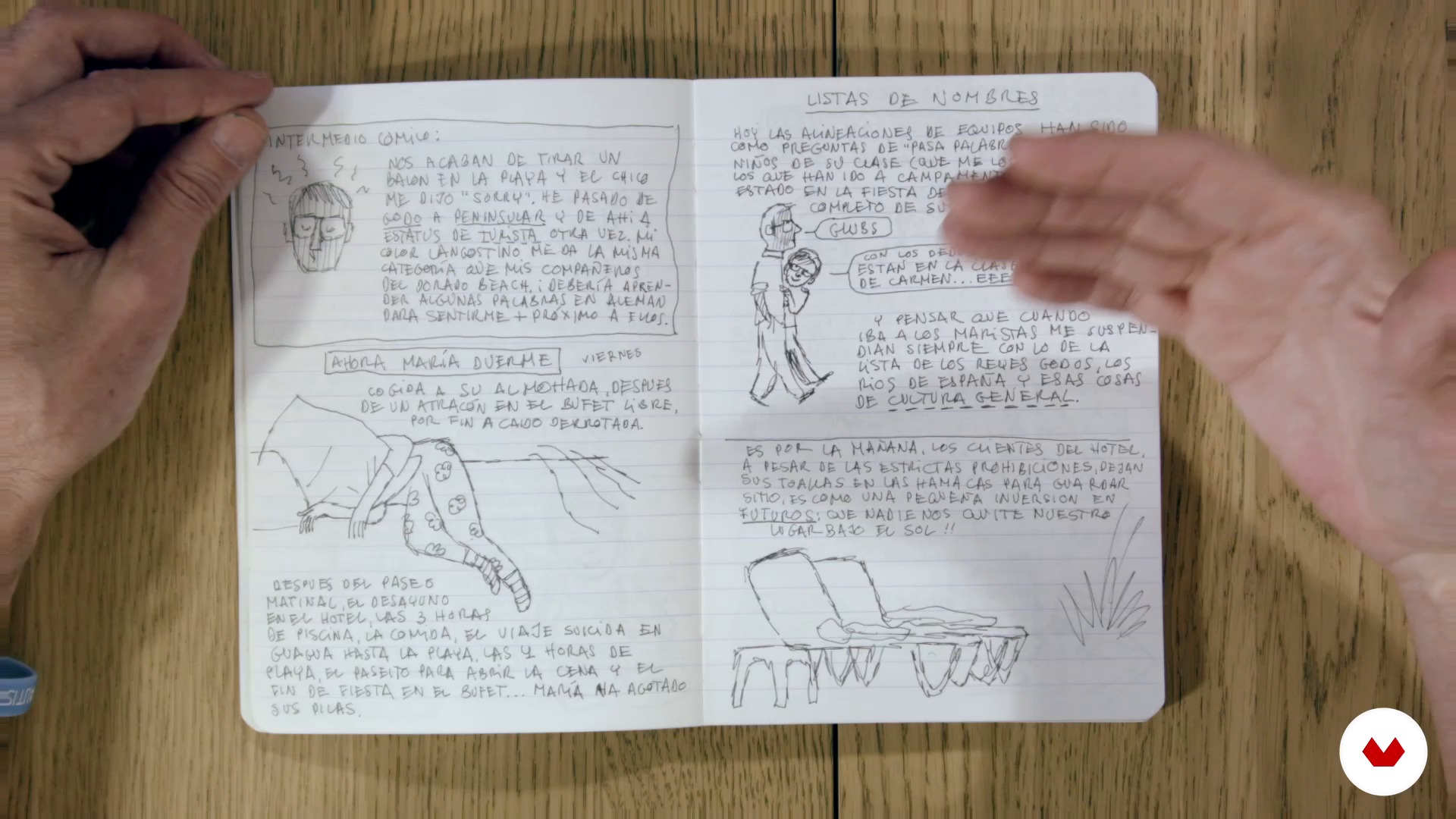
Maria and I
1 minut, 1 secundă
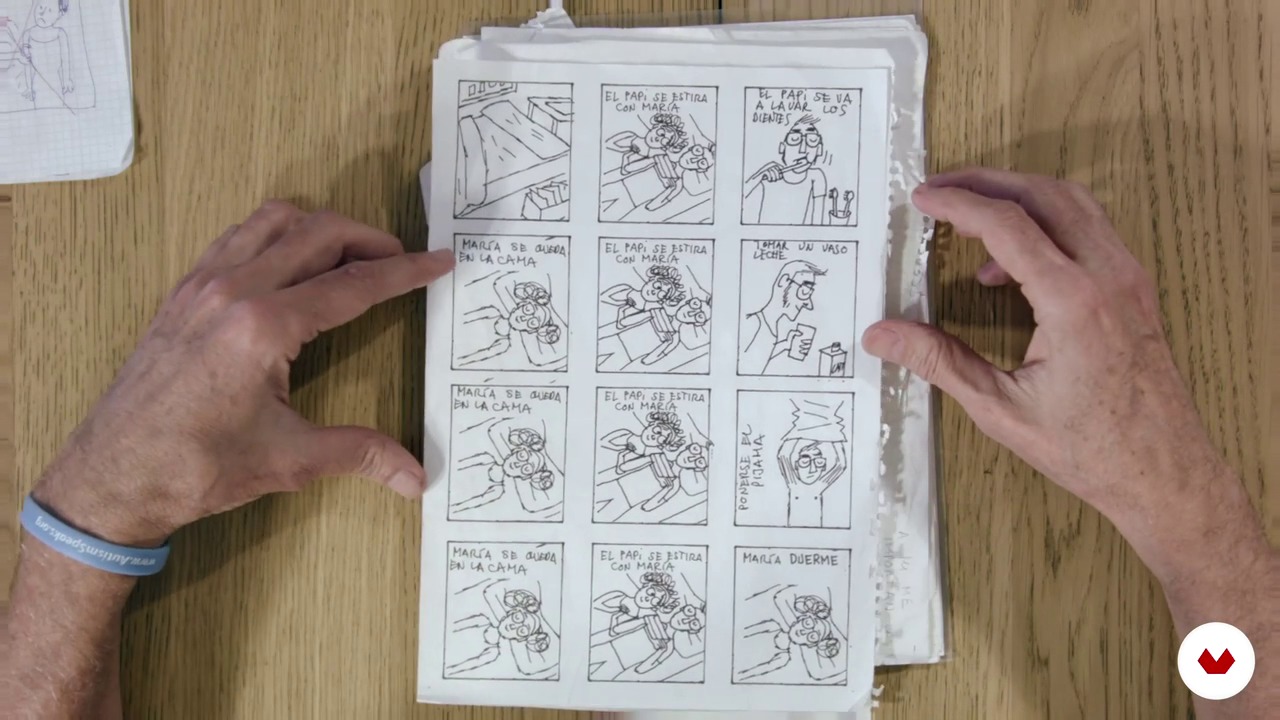
The project
1 minut, 1 secundă
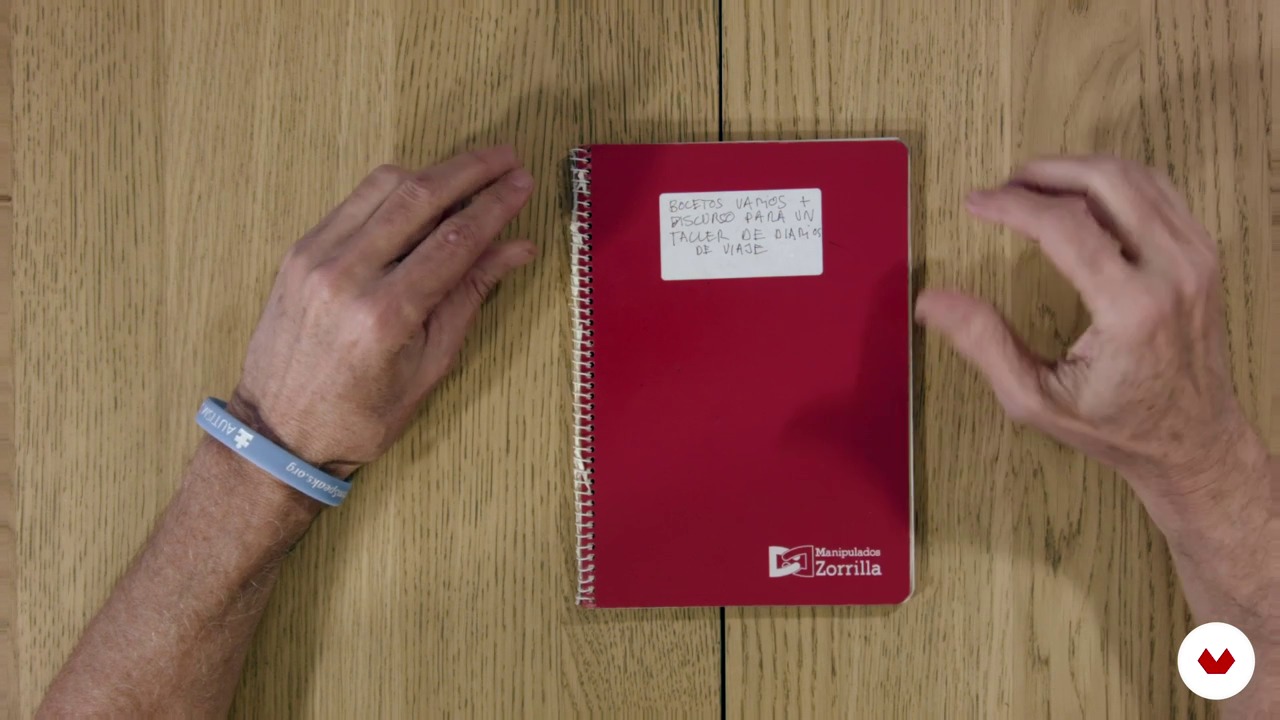
Material
1 minut, 1 secundă
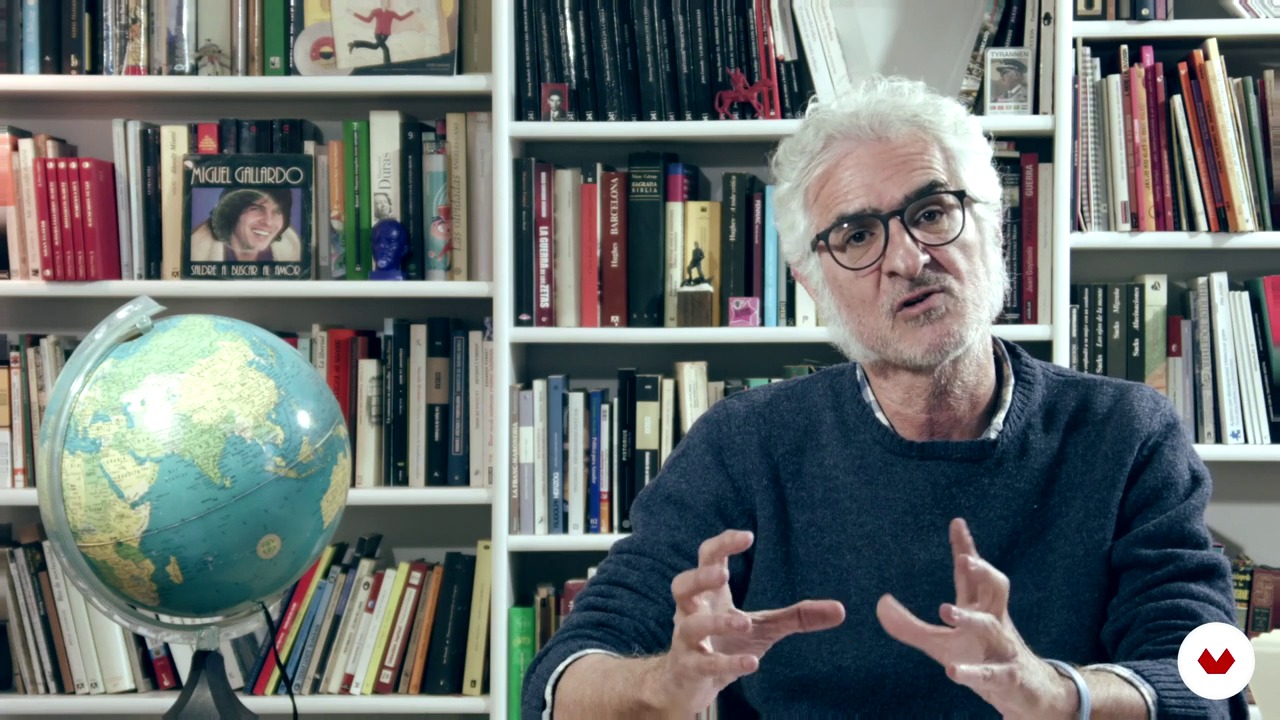
Written script
1 minut, 1 secundă
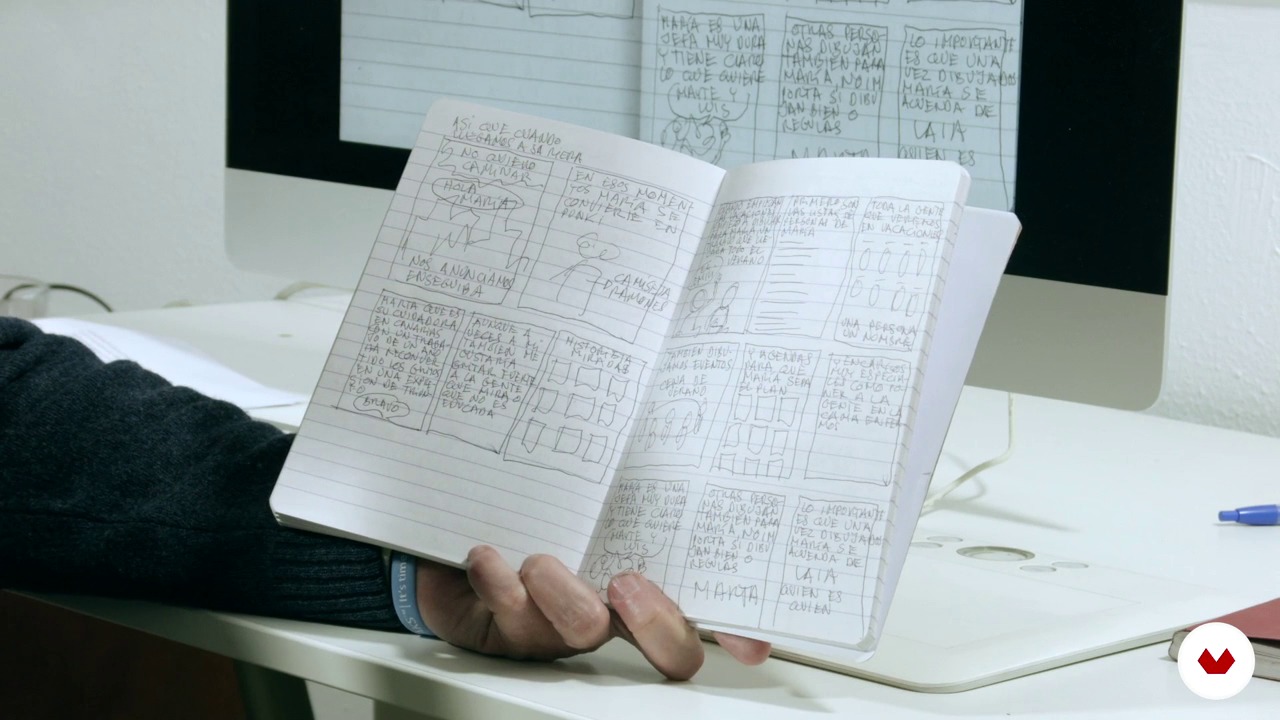
Storyboard script
1 minut, 1 secundă
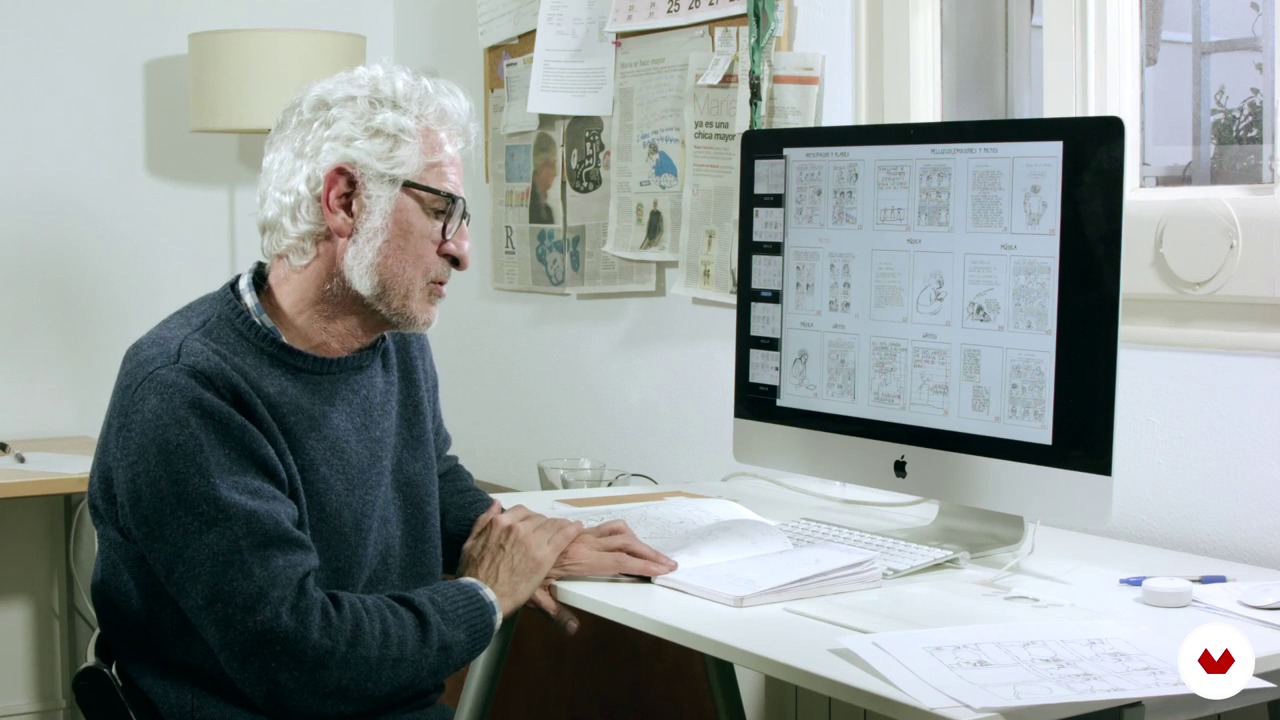
Collect images
1 minut, 1 secundă
Ce include acest curs?
First you will know the works and influences of this famous Catalan illustrator for being the author of Makoki.
Then, look for references for your story such as photographs, childhood anecdotes, notes, sketches, diaries, notebooks and diaries ... everything you need until you know what you are going to tell.
Later, with a notebook and a pen as allies, you will create a character based on your own physical characteristics and your personality, exaggerating or showing features that will help you to narrate the experience you are going to tell. Then it will be time to make the written script divided into three parts, in the classic way: presentation, node and ending.
This script will be passed to drawings in the Storyboard distributing the story among the 4 pages that will compose your comic without forgetting to place the action of the characters, put them in an unexpected situation and see how they react by measuring the times well and the emotions.
In addition, you will work different variations of the same vignette trying out different framings, postures, expressions ...
Later you will assemble the pages and incorporate the dialogues. At this point, one of Miguel's advice is that "the history and the images that accompany it are inevitably linked. They have to go together, no matter what level of drawing you think you have, the important thing is that you understand the story you're going to tell " .
Finally you will put the final touches to your comic on the computer.
In addition, Miguel Gallardo will also teach you some questions about contracts, billing and dissemination of your work.

What is this course's project?
Create a 3-page comic book plus the cover that narrates a personal experience with the precise dose of drama and comedy using minimal materials such as a pad of graph paper and a pen, your imagination and resources such as photographs, cuts, sketches or anything that you inspire You can also pull stories of your environment or a family memory without having to be especially true to reality.
There will be no distractions of styles, techniques or grammages of paper. Only you and the blank page, because it has always been that way.
Proiecte ale studenților cursului


Who is this online course for?
To all the people who want to learn to narrate, applicable to any discipline.
Requirements and materials
Notebooks, papers, slips, back of invoices, any pen at your fingertips and a computer with scanner for the final phase.
A tip from the teacher: "do not be fooled by the style of the notebook, the more humble the better, it's about looking for a support that does not scare, smudge and wrinkle".

Recenzii
- 11 luni în urmă
Genial!!!
- 1 an în urmă
muy bueno e interesante
- 1 an în urmă
Genial! gracias Miguel
- 1 an în urmă
The course is relatively simple but it is still inspiring for beginners like me and adds another perspective on the process of illustrating stories.
- 2 ani în urmă
Muy inspirador. Curso recomendado

Și-a început cariera profesională combinând benzile desenate – a fost unul dintre autorii lui MAKOKI , un personaj emblematic din lumea und...
Conţinut
- U 1
We introduce Maria and me
- Presentation of my work
- Influences
- Maria and I
- U 2
How to start a story and what do I need
- The project
- Material
- Written script
- Storyboard script
- U 3
How to make the story
- Collect images
- Final Art - Mount the pages
- General Review
- The cover
- U 4
Follow up, do not abandon your creation.
- Practice of life
- Give diffusion to your work
- FP
Proiect final
- Narrate in bullets with a pen
La ce să te aștepți de la un curs Domestika
Învață în ritmul tău propriu
Bucură-te de învățarea de acasă, fără un program fix și cu o metodă ușor de urmat. Tu îți stabilești propriul ritm.
Învață de la cei mai buni profesioniști
Învață metode și tehnici valoroase explicate de experți de top din sectorul creativ.
Întâlnește profesori experți
Fiecare expert predă ceea ce face cel mai bine, cu îndrumări clare, pasiune adevărată și perspicacitate profesională în fiecare lecție.
Certificates
PLUSIf you're a Plus member, get a certificat personalizat signed by your teacher for every course. Share it on your portfolio, social media, or wherever you like.
Obțineți locuri în primul rând
Videoclipuri de cea mai înaltă calitate, pentru a nu rata niciun detaliu. Cu acces nelimitat, le poți viziona de câte ori este nevoie pentru a-ți perfecționa tehnica.
Împărtășește cunoștințe și idei
Pune întrebări, solicită feedback sau oferă soluții. Împărtășește-ți experiența de învățare cu alți studenți din comunitate care sunt la fel de pasionați de creativitate ca și tine.
Conectează-te cu o comunitate creativă globală
Comunitatea găzduiește milioane de oameni din întreaga lume, curioși și pasionați de explorarea și exprimarea creativității lor.
Urmărește cursuri produse profesional
Domestika își gestionează lista de profesori și produce fiecare curs intern pentru a asigura o experiență de învățare online de înaltă calitate.
Întrebări frecvente
You’ll learn how to tell personal stories through panels, develop a script, create storyboards, draw with pen, digitize and layout pages, design covers, and promote your work on social media and self-publishing platforms.
The course is geared toward intermediate learners—perfect if you already have basic drawing or storytelling skills and want to dive deeper into creating and publishing your own comics.
All you need is paper, a pen, a simple notebook, and access to a scanner or camera to digitize your drawings. Having a computer with basic graphic editing software is also recommended.
You’ll learn how to promote your book on social media, target your audience, run page ads, and engage with online readers to boost your work’s visibility and sales.
Yes, the course teaches you how to design eye-catching covers, choose colors, compose images, and tailor your design to stand out in bookstores and digital platforms.
Yes, it covers contracts, copyright negotiations, invoicing, registering as a freelancer, and basic legal advice for illustrators.
You’ll work on pen-drawn panels, page composition, integrating text and art, manual and digital lettering, and narrative structure for both personal stories and fiction.