


@micaela_mh
Curious Minds Podcast: What Even Is Knolling?
Discover where these satisfying images come from with Curious Minds, an original podcast by Domestika
Curious Minds is an original podcast by Domestika that explores the curiosities and untold histories of the creative world.
Each week we’ll bring you a new episode, interviewing experts and creatives as we dive into the unusual origins of the images, patterns, and designs we take for granted.
Subscribe for free on Apple Podcasts, Spotify, or your favorite podcast app to never miss an episode.

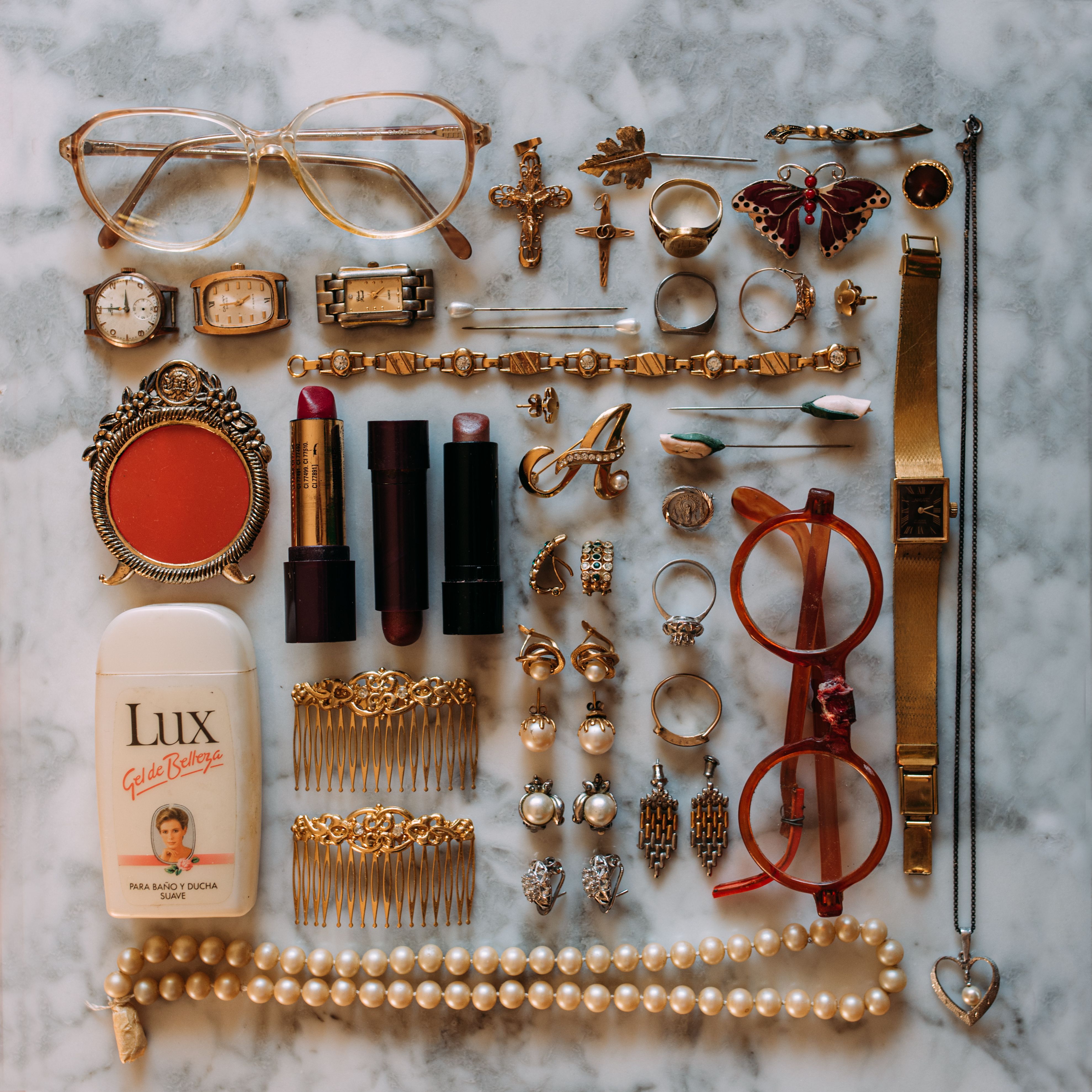
Even if you don’t recognize the term “knolling”, you probably would recognize a knolled image if you saw one. Especially popular on places like Instagram, there’s something strangely satisfying about these images of objects organized at right angles and photographed from above.
But how did this style make the jump from Frank Gehry’s studio to the internet? And why is it increasingly being favored by marketers and regular social media users alike?
In our sixth episode of Curious Minds, we interview photographer and Domestika teacher Pati Gagarin (@patigagarin) and graphic designer and director Henry Hobson to learn why this simple yet flexible photo format has taken off, and Michel Wedel, a professor of Consumer Science at the Robert H. Smith School of Business at the University of Maryland, explains why these images are so satisfying to look at.
Though we now associate flat lay photos of objects carefully arranged at right angles with the aesthetics of Instagram, knolling has somewhat less flashy origins.
Yes it was invented in 1987 in the studio of legendary architect Frank Gehry. But it wasn’t invented by Gehry, and it wasn’t intended to aesthetically show off a collection of objects. Rather, knolling was invented by Andrew Kromelow, who at the time was working as a janitor and was responsible for keeping the studio tidy. As part of that he developed a utilitarian technique of arranging objects on flat surfaces so that they could easily be seen at the same time. Because it involved placing objects along invisible right angles, and at the time the studio was producing angular Knoll furniture, Kromelow dubbed his new technique “knolling.”
Knolling was further popularized by another person who passed through Gehry’s studio, an artist named Tom Sachs who, as part of a manifesto, coined the directive “always be knolling”.

The style got its biggest boost with the advent of the internet, as designers began compiling and referencing different visual resources. Blogs like Things Organized Neatly featured knolling, among other styles, and hashtags on social media helped people like Gagarin discover the name of technique.
Taking influence from these images, many designers, like Hobson, even used knolling in their work without realizing the technique had a name. Or that it was a defined technique at all.
“I mean, the first I’d heard of the term knolling was when you wrote it in the email. I immediately went away and googled, [thinking] ‘she's talking about something I'm doing, but I have no idea what it is.’ And I found, you know, visual examples of the style that obviously I was using for the Academy Awards,” he says.

The reason that knolling lends itself so well to the visual storytelling in those Academy Awards slides, or in visual marketing, says Gagarin, is because of how flexible yet expressive the format can be. A self declared member of the “knolling fan club” she declares, “knolling is a way of expressing my life.” Her knolled images are unified by color or feature collections of personal objects, elevating even humble objects like childhood hairpins into something more expressive.
To learn more about how knolled images uniquely tap into how our brains process visual information, and what that means for advertisers, designers, and regular social media users, you can listen to Curious Minds on Apple Podcasts, Spotify, or wherever you get your podcasts.
Click on the link below to download a transcript of this episode. It will be saved in your Downloads folder as a PDF.
Dołącz za darmo i pobierz
CM S1E6 Always Be Knolling Transcript .pdf
If you'd like to read more stories behind the images, patterns, and designs we take for granted, check out our other blog posts for Curious Minds, an original podcast by Domestika.
You may also like:
- Curious Minds Podcast: What do a DC Villain and Marilyn Monroe Have in Common?
- Challenge: Improvised Knolling
- 5 Free Tutorials to Make the Most of Instagram


0 komentarzy