
Of All the Flowers
De Todas las Flores
by steban torres moya @stebantorresart
- 139
- 3
- 0
(Automatically translated from Spanish)
Introduction
Introducción
For this work, I chose Natalia Lafourcade because she's an artist who I feel is loyal to her origins, and with the album "De Todas las Flores" she manages to connect with that intimate gaze speaking of love, nature, life, and death.
This led me to choose oil painting as a source of expression, as it's a technique I've been working on for a few years and have been modifying it to suit my style, getting to know the material and adapting it to the works I paint. It's also a very classic material that I also link to my most intimate aspects as an artist.
Para esta obra escogí a Natalia Lafourcade porque es una artista que siento que es leal a sus origines y con el álbum “De todas las flores” logra vincularse con esa mirada íntima hablando del amor, la naturaleza, la vida y la muerte.
Esto me hizo escoger la pintura al Óleo como fuente de expresión, ya que es una técnica que trabajo hace unos años y la he ido modificando a mi estilo, conociendo el material y adaptándolo a las obras que voy pintando, además de ser un material muy clásico y que lo vinculo también a lo más íntimo como artista.

Materials
Materiales
Oils
Gel Medium
Turpentine
Polymerized siccative or liquin winsor and newton
soft synthetic bristle brushes No. 6 and No. 10
Fine line brush No. 2/0 (for small, fine details such as lip division.)
300gr Paper Support
Cotton rags or cloths
Glass Palette
HB pencil for sketching
Oleos
Gel Medium
Aguarrás
Secativo polimerizado o liquin winsor and newton
pinceles cerda sintética suave N° 6 y N°10
pincel fine line N° 2/0 (para detalles chicos y finos como la división de los labios.)
Soporte Papel de 300gr
Trapos o paños de algodón
Paleta de Vidrio
Lápiz HB para el boceto
Research and Sketch
Investigación y Boceto
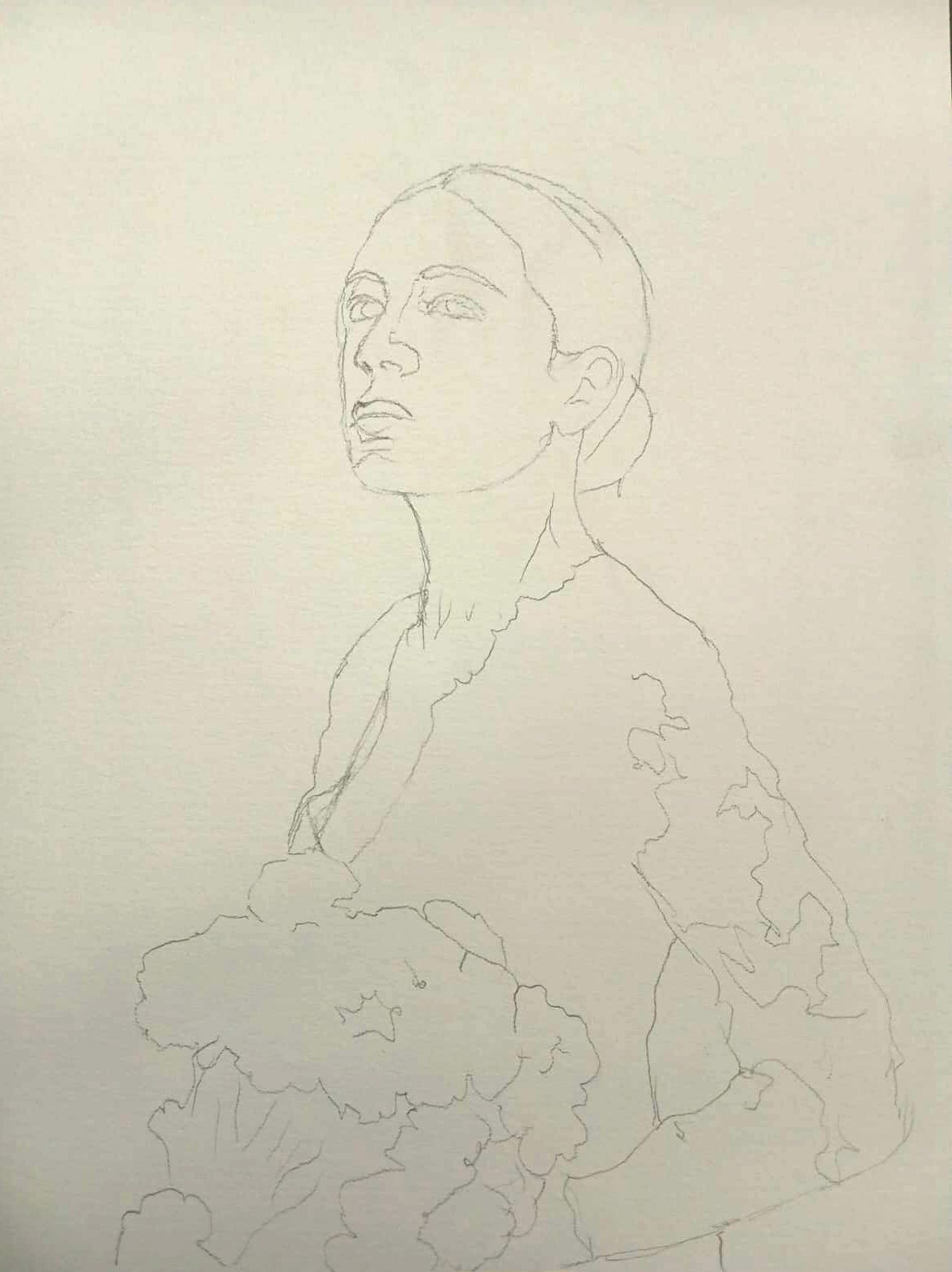
I started by researching an image that would represent that album and identify with the composition I was looking for: a central figure of the artist and flowers as a symbolic medium.
Comencé con investigar una imagen que representaré ese álbum y me identificara con la composición que buscaba, una figura central de la artista y las flores como medio simbólico.

Base and first brushstrokes
Base y primeras pinceladas
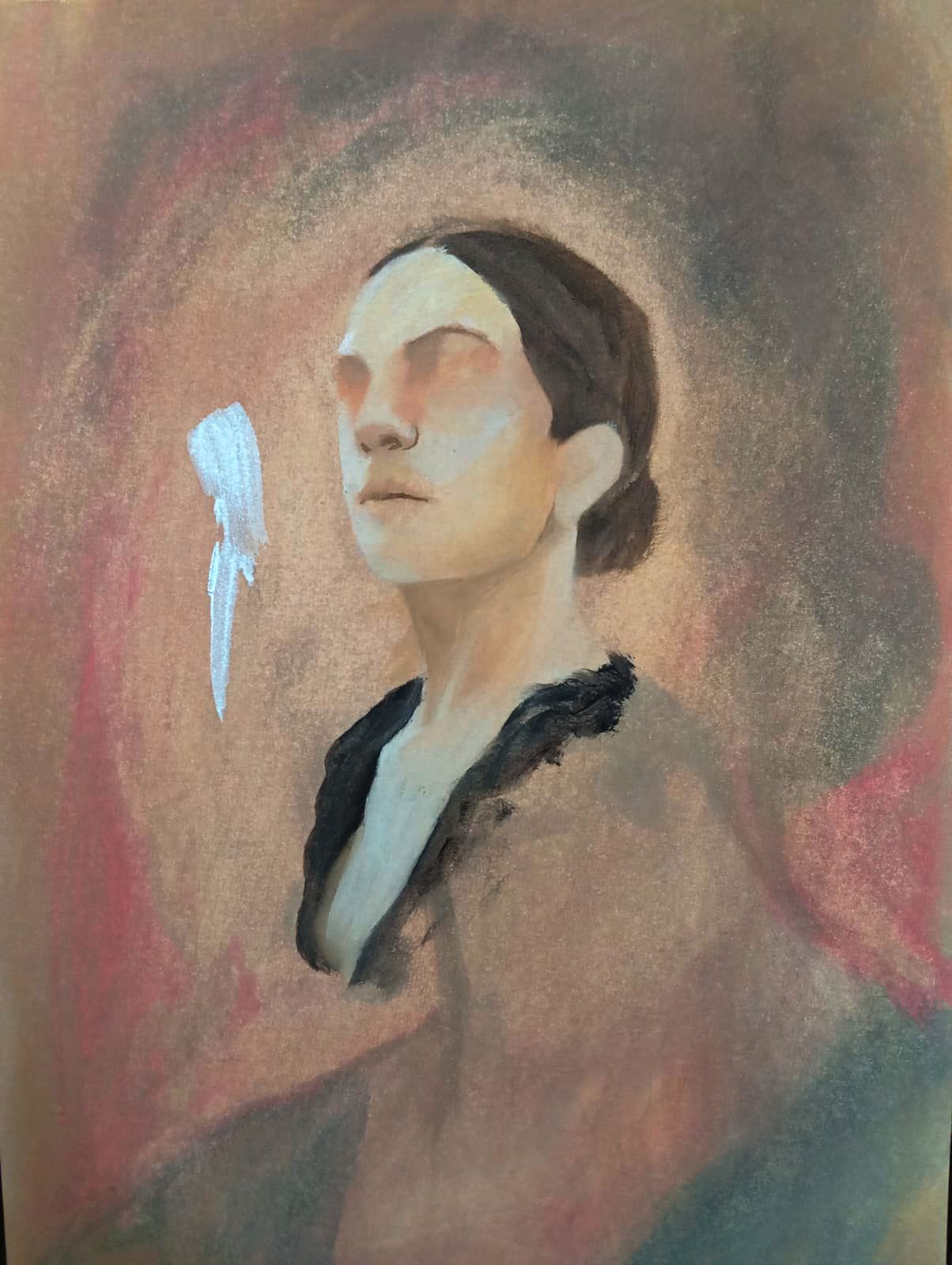
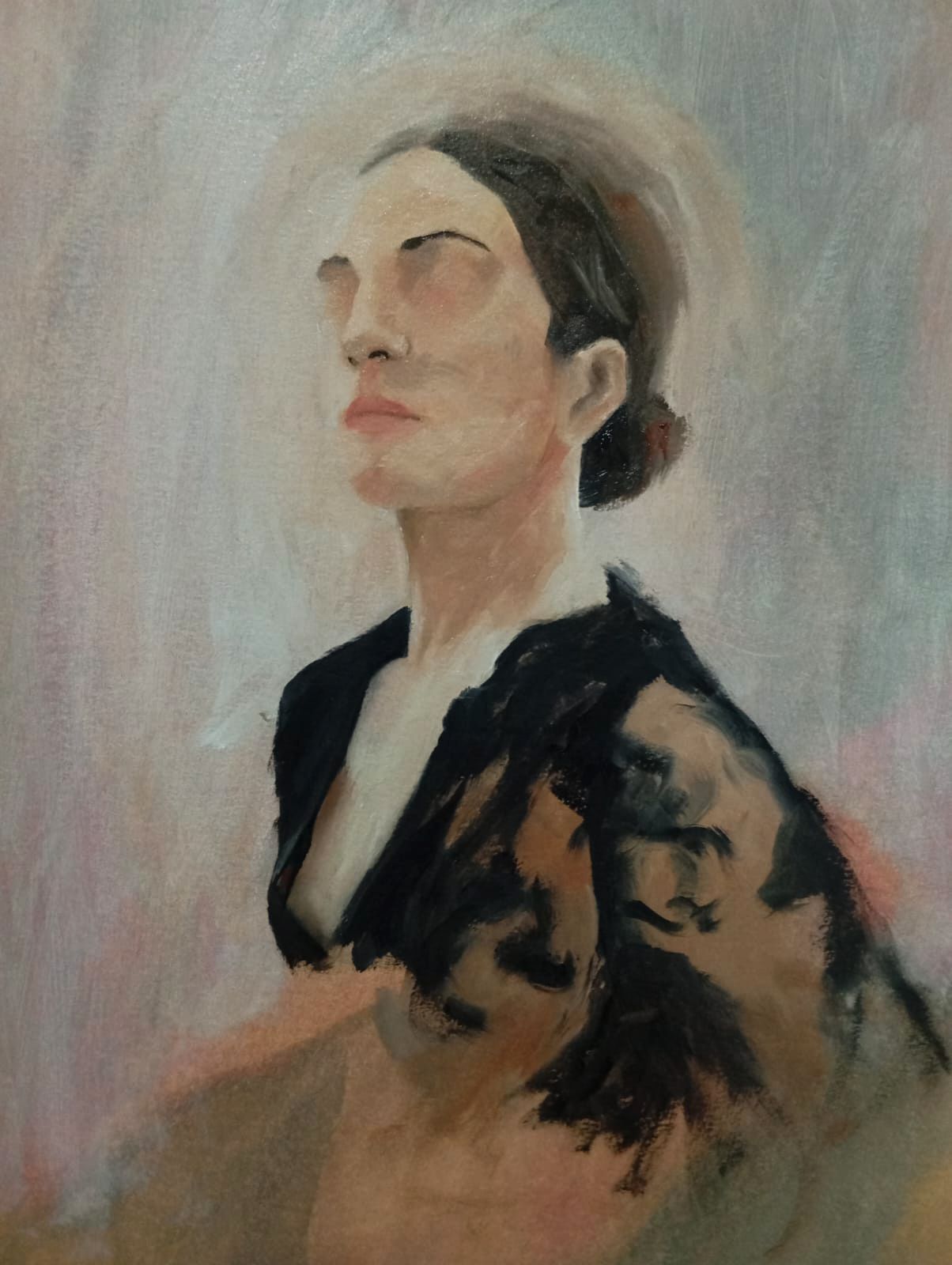
I started adding the base tones for the skin and hair last, so I could better control the colors. I stained the entire sheet with different oils, reddish and earth tones, mixing burnt sienna, vermillion red, ochre, and umber diluted in turpentine. This also happened because I was distracted, and I managed to get the colors I wanted.
I cleaned the entire surface with thinner, in this case turpentine, to remove excess paint and show the base drawing again. I began to reposition the skin tones, this time with greater clarity in the values and tones.
This time with less turpentine and more of the pigment that I was mixing on the palette.
Comencé a colocar los tonos base de la piel y el cabello, al final para poder controlar mejor los colores. Manche toda la hoja con diferentes Óleos, tonos rojizos y tierra, mezclando Siena tostada, rojo bermellón, ocre y sombra natural; diluidos en aguarrás. Esto también paso porque me desconcentre y lo lograba conseguir los colores que quería.
Limpie toda la superficie con diluyente, en este caso aguarrás, para quitar los excesos de pintura y volver a mostrar el dibujo base y empecé del vuelta a colocar los tonos de la piel, esta vez con una mayor claridad en los valores y tonos.
Esta vez con menos cantidad de aguarrás y más el pigmento que iba mezclando en la paleta.


Background and Details
Fondo y Detalles
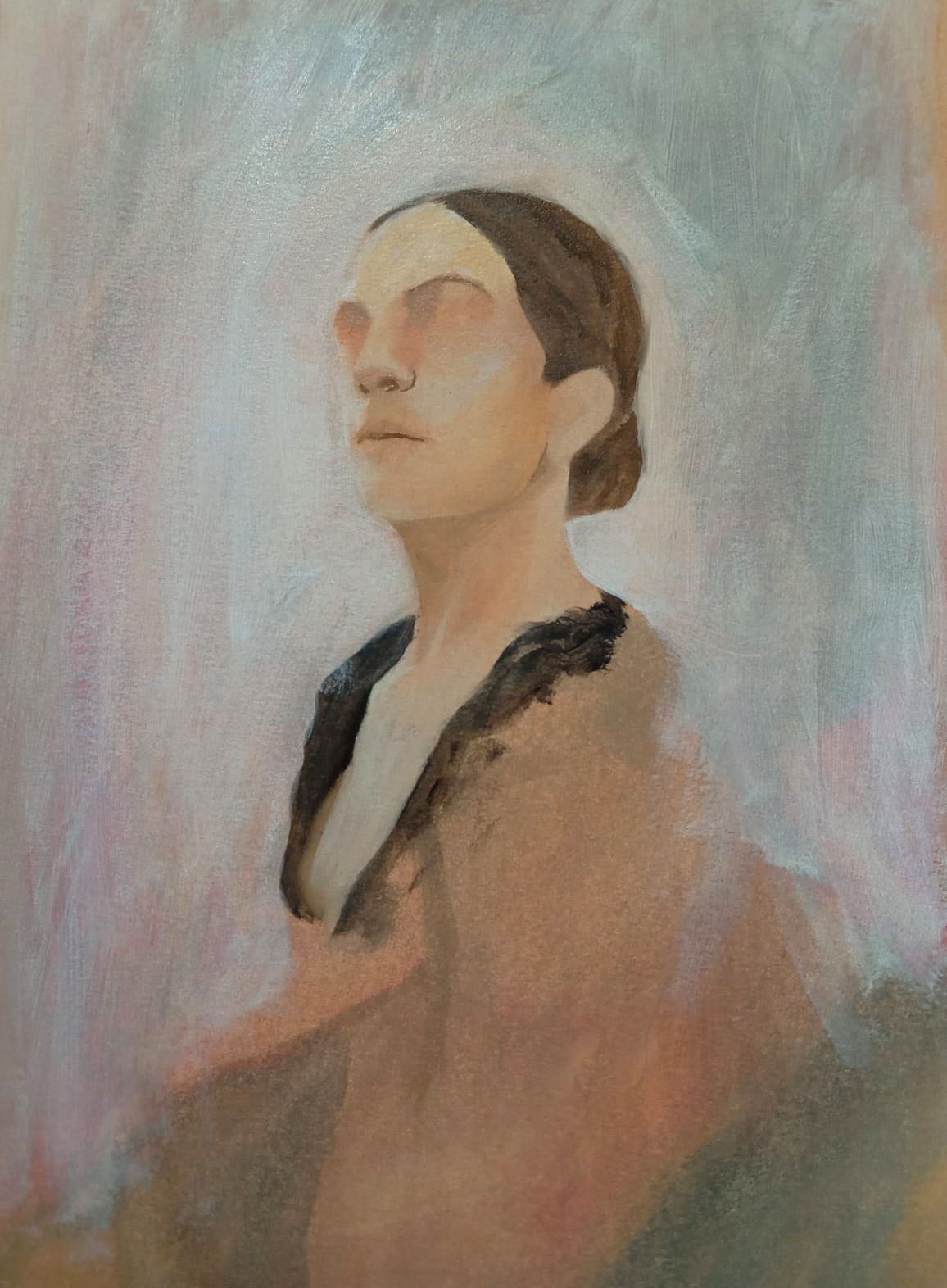
When I put together the base tones, I started painting the background with Titanium White and diluting it with a little turpentine, allowing the earth tones of the background to show through, but already blending the figure with the background at its edges.
I started adding details with ivory black to the suit, natural shade for the shadows and darks of the portrait, such as the hair, eyebrows, shadows of the neck and torso.
Cuando arme los tonos base empecé a pintar el fondo con Blanco titanio y diluyendo con un poco de aguarrás, dejando que se vean los tonos tierra del fondo, pero ya mezclando la figura con el fondo en sus bordes
Empecé a dar detalles con negro marfil al traje, sombra natural para las sombras y oscuros del retrato, como el pelo, las cejas, las sombras del cuello y el torso.
Flowers and final details
Flores y detalles finales
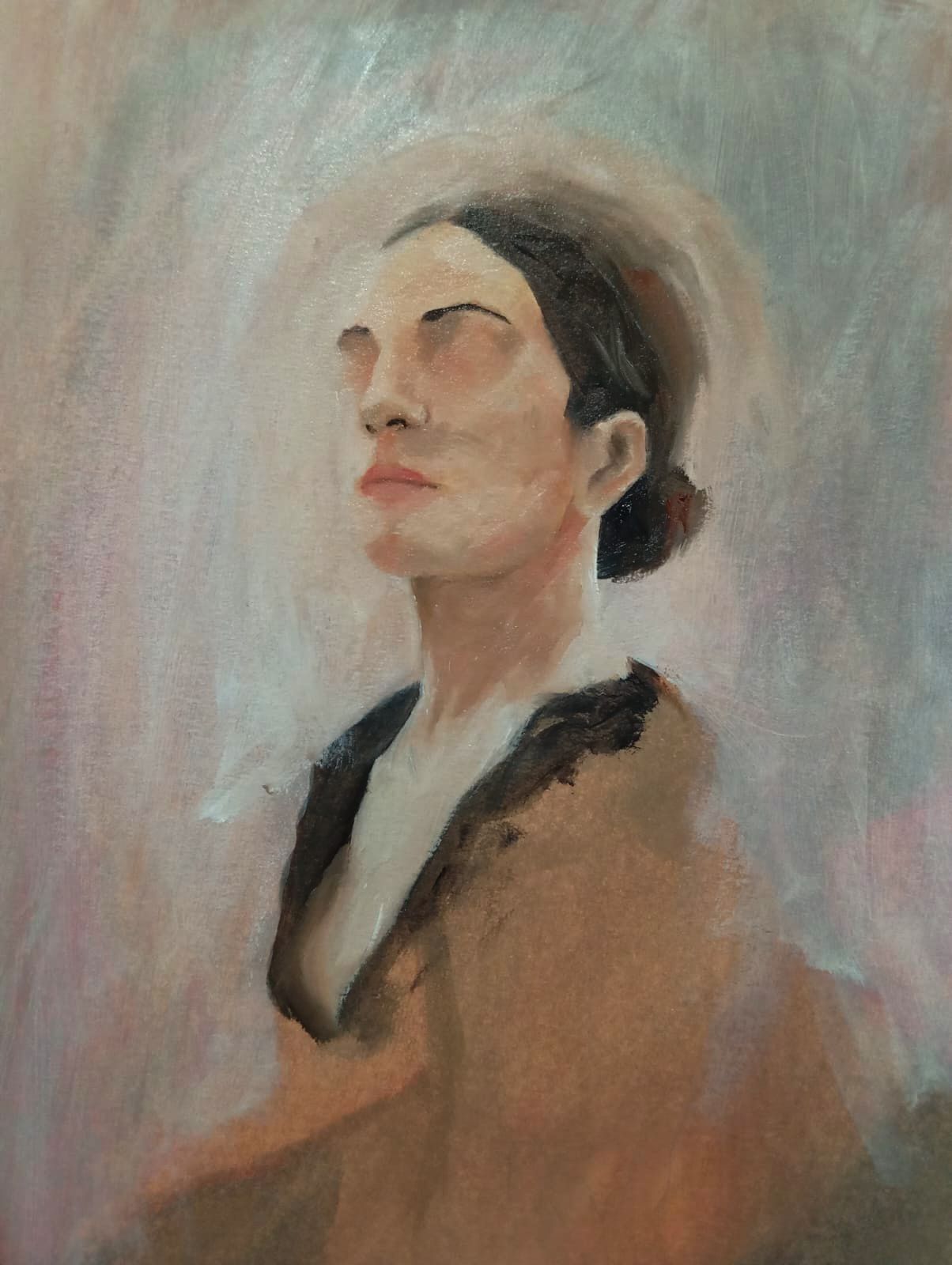
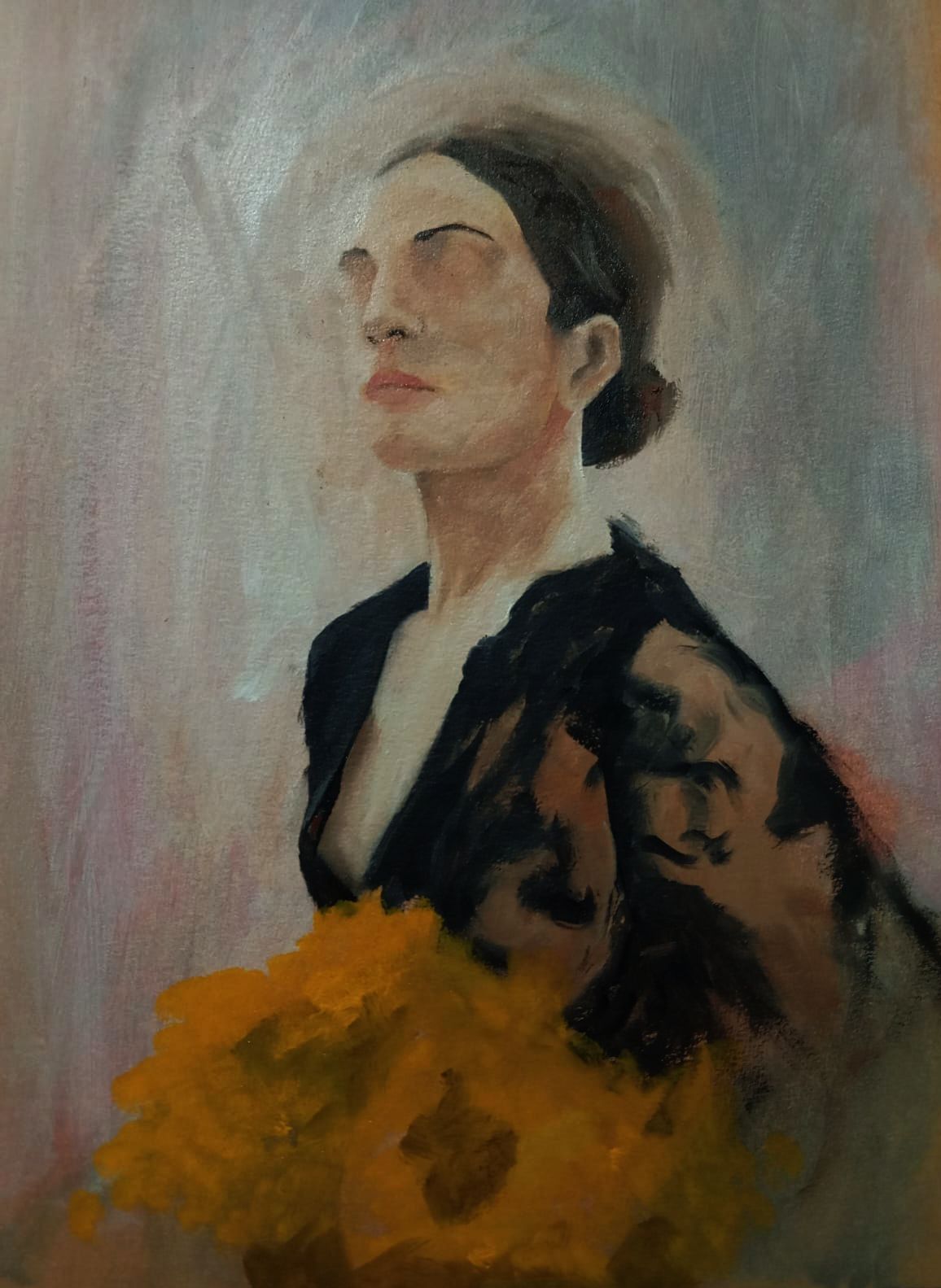
I began by directly tapping the surface with the brush to create the flowers. In this case, I painted the carnations with a medium yellow and highlighted them with Naples yellow. The shadows were done with bladder green, and the stems were darkened a little further with natural shadows.
Finally, I add the details I want to highlight on the face, neck, and torso, deepening the blacks and adding some highlights with white. I try to blend the edges more with the background so the figure blends seamlessly into the entire work. I give the background another coat of titanium white to enhance its contrast with the center of the figure.
Empecé por medio de toques directos al soporte con el pincel a crear las flores. En este caso unos claveles que los arme con un amarillo medio y dando las iluminaciones con amarillo Nápoles. Las sombras se realizaron con verde vejiga y los tallos oscureciendo un poco más ese verde con sombra natural.
Al final realizo los detalles que quiero resaltar en el rostro, cuello y torso, profundizando negros y colocando algunas luces con el blanco. Los bordes busco mezclarlos más con el fondo para que la figura se vea fusionarse con toda la obra. y el fondo le doy otra pasada de blanco titanio para que haga mejor contraste con el centro de la figura.

Final Clarifications
Aclaraciones Finales
It's essential to paint vertically with the model in the background, where I don't have to move my head too much and thus not lose sight of what I'm painting.
I always apply the first strokes with plenty of turpentine to see the values and tones, and then gradually add more pigment. When painting Alla Prima, oil paint is good to use in layers of color, as it enriches the final work.
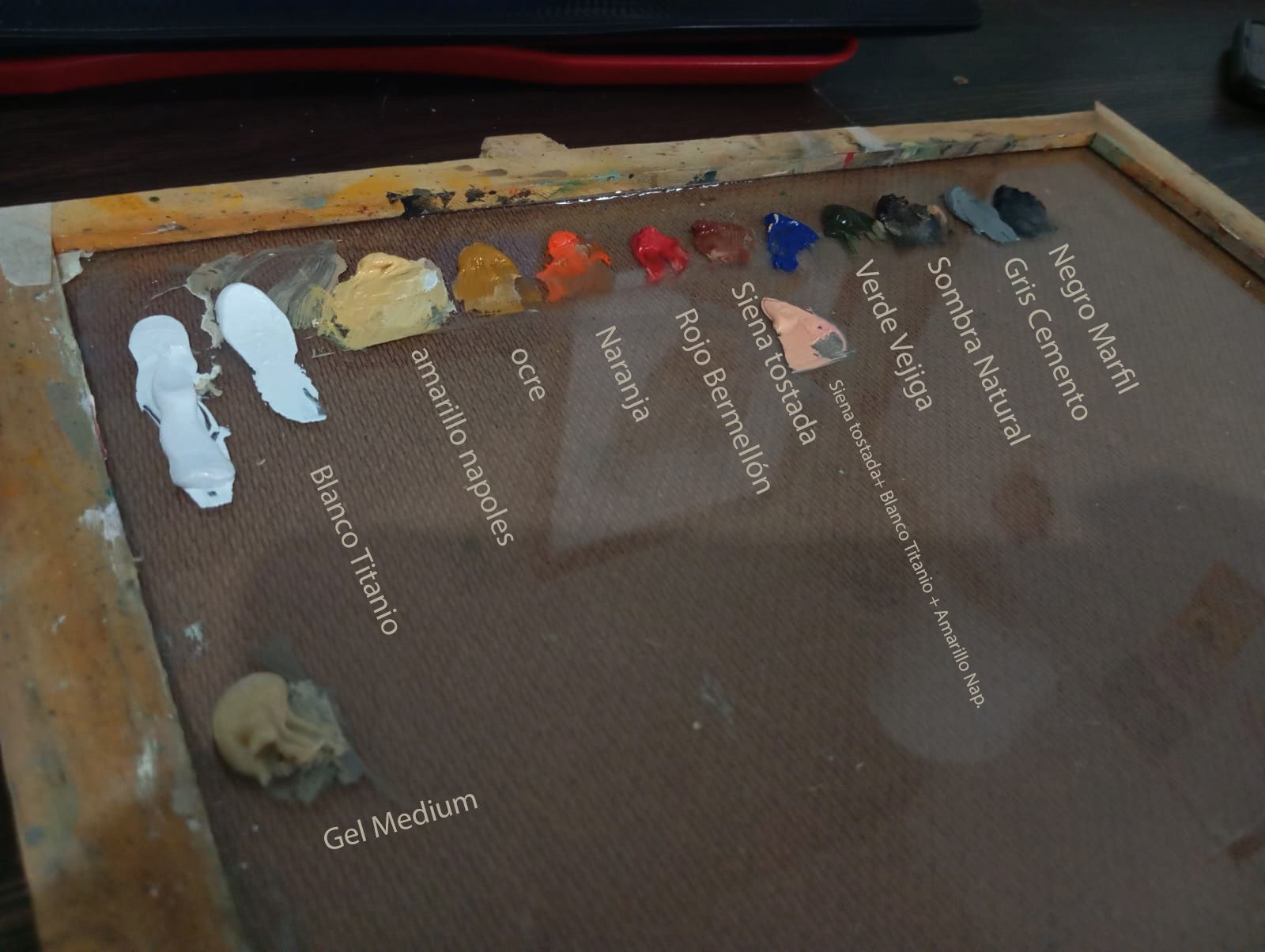
I arrange the palette on a glass stand, in this case a frame, and I mix with the center. Every time I want to add a new color, I clean the brush with a rag. I work and play with it so as not to dirty the tones I've already created. When I started making the flowers, I cleaned the center of the palette and started using those yellows so as not to dirty that color.
Cleaning your palette and brushes is essential.
I also use gel medium to make the paint more viscous so as not to lose tone and to give it more consistency if I want some thickness.
To avoid diluting the pigment too much, I also use a polymerized drying agent or Winsor and Newton Liquin so that the oil flows more, so I can make glazes without it being as liquid as with turpentine.
When finished and completely dry, it is good to varnish with damar varnish to better preserve the work and highlight the shine of the oil that is lost when it dries.
Es primordial pintar en vertical con el modelo de fondo, donde no tenga que mover mucho mi cabeza y así no perder de vista lo que estoy pintando.
Siempre doy los primeros trazos con bastante aguarrás para ir viendo los valores y tonos y luego si ir colocando mayor pigmento. Al pintar Alla Prima el óleo es bueno usarlo en capas de color y eso enriquece la obra final.
La paleta la organizo sobre un soporte de vidrio, en este caso un marco y voy mezclando con en la parte central cada vez que quiero colocar un nuevo color limpio el pincel con un trapo y es ir trabajando y jugando con eso para no ensuciar los tonos que ya se tienen armados. cuando empecé a hacer las flores limpie la parte central de la paleta y comencé a usar esos amarillos para no ensuciar ese color.
La limpieza en la paleta y los pinceles es esencial.
También uso el gel médium para que me haga la pintura más viscosa para no perder tono y darle más consistencia si quiero algo de espesor.
Para no diluir tanto el pigmento también uso un secativo polimerizado o liquin winsor and newton para que el óleo fluya más, pueda hacer veladuras sin que sea tan líquida como con el aguarrás.
Al finalizar y cuando seque por completo es bueno barnizar con barniz damar para conservar mejor la obra y resaltar los brillos del óleo que se pierde cuando seca.


0 comments
Log in or join for Free to comment