Stumpwork Embroidery: Create 3D Ornaments

Learn how to embroider beautiful double-sided flowers and transform them into accessories
Stumpwork embroidery allows your designs to come to life. With the added influence of traditional Chinese techniques, embroidery artist Shan Xu teaches you how to create beautiful three-dimensional flowers.
Explore the world of stumpwork embroidery by exploring stitching techniques, learning how to wire your designs, and bringing it all together. Continue exploring your creativity by turning your artwork into an accessory.
What will you learn in this online course?
18 lessons & 33 downloads

Materials
9 minutes, 1 second
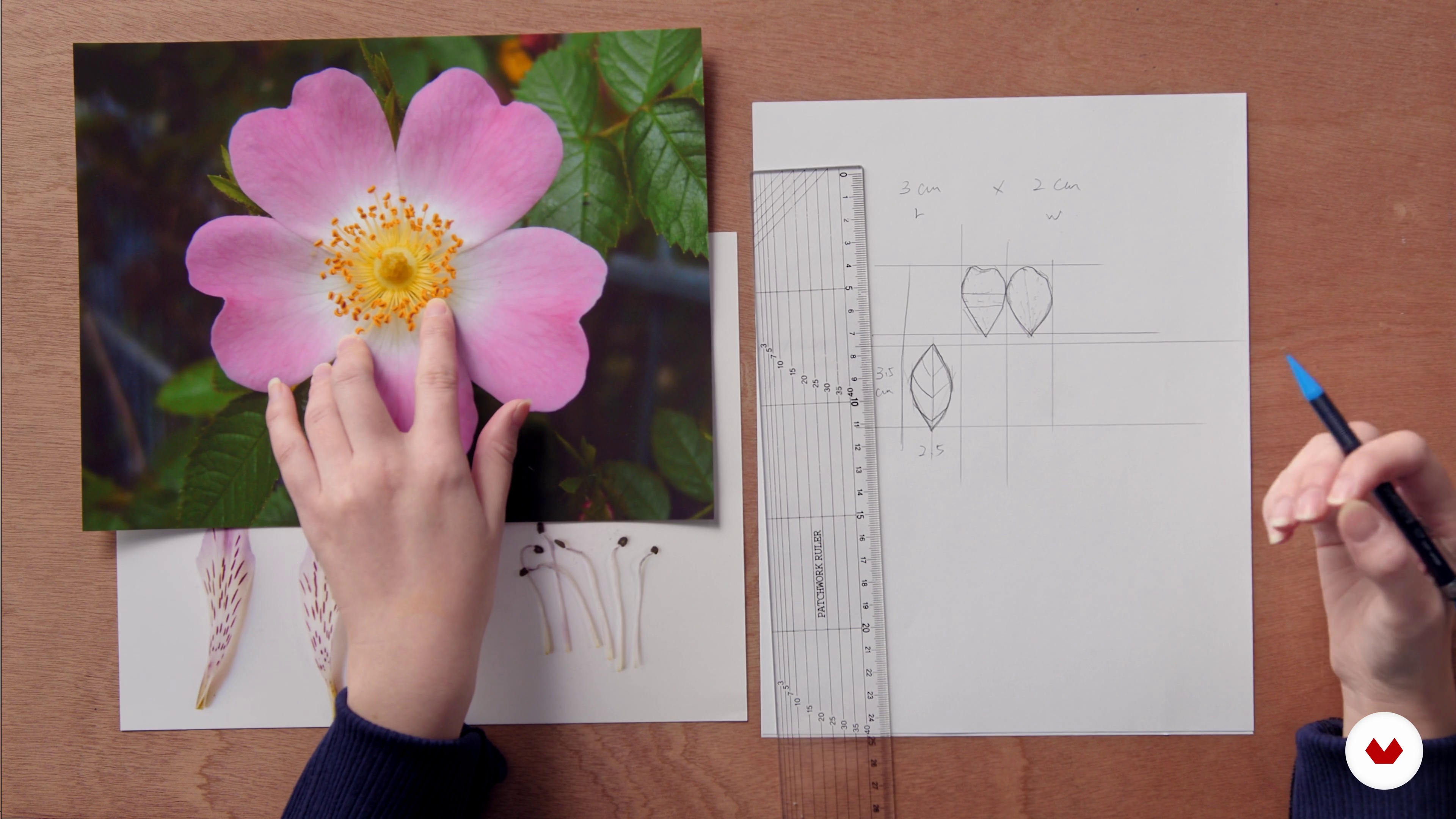
How to Prepare the Pattern for Embroidery
8 minutes, 49 seconds

Prepare the Hoop 1
14 minutes, 43 seconds

Prepare the Hoop 2
7 minutes, 43 seconds

Stitches Used for This Project 1
15 minutes, 44 seconds
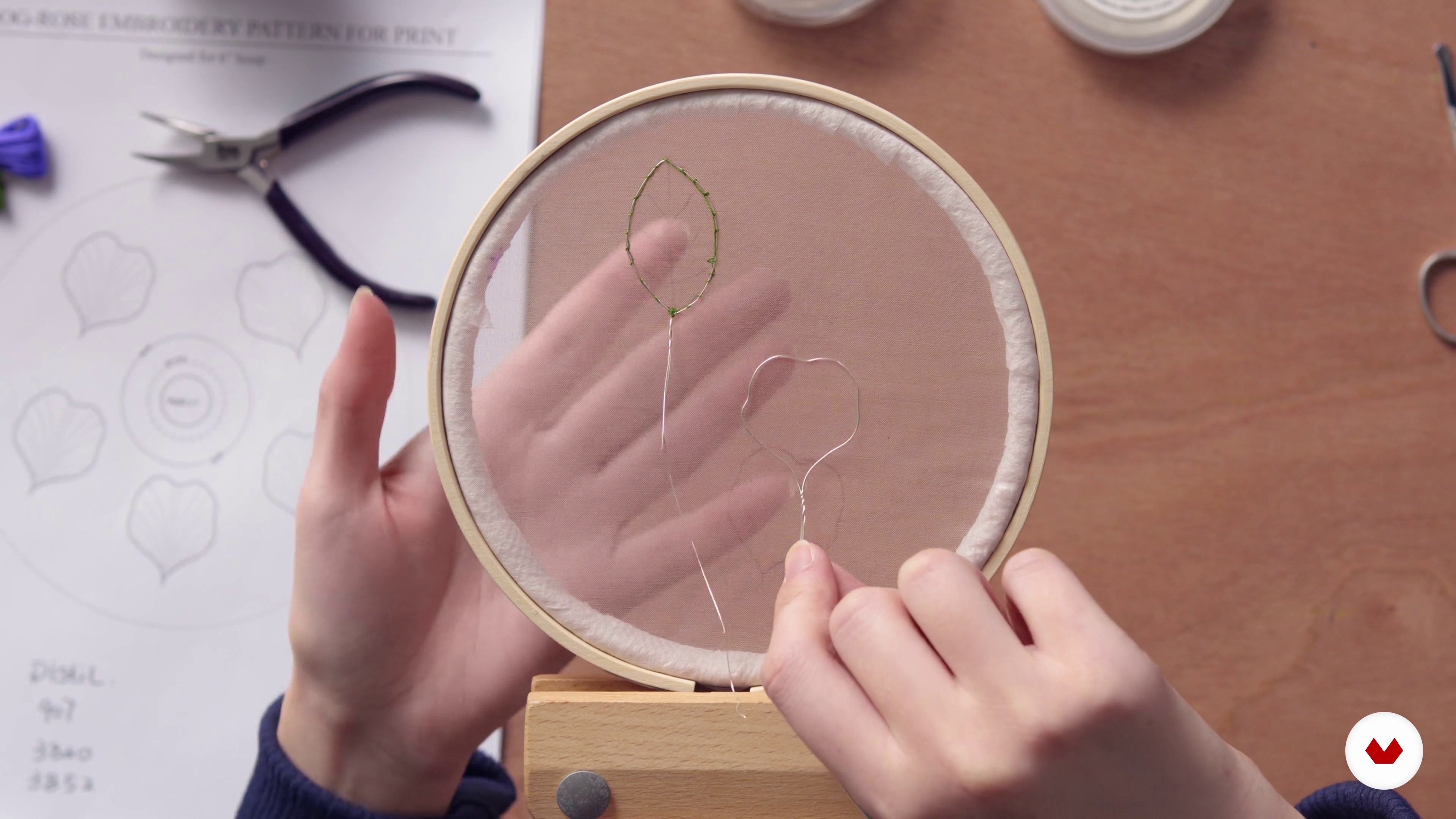
Wiring Up
18 minutes, 47 seconds
What's included in this course?
Begin by getting to know Shan. She tells her story about how she began working with embroidery and how she implements traditional Chinese styles and techniques in her work. She also shares her sources of inspiration and her influences.
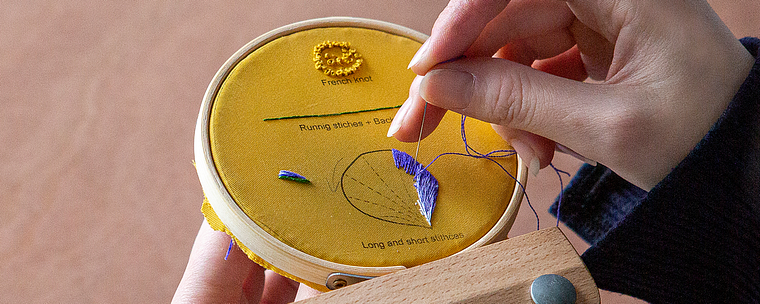
Shan goes through all the materials needed and gives recommendations on which to get. Next, prepare the pattern for your embroidery by choosing your flower, tracing the pattern, and defining the color palette. Explore different methods to prepare your hoop. Discover the French knot and the different kinds of stitches in double-sided embroidery.
Start stitching your project by outlining the pattern with wire. Beginning with the petals, fill in the outlined shapes with thread. Stitch your way onto the leaves before reaching the rest of the details of your flower. Next, carefully cut out your work from the hoop and assemble the parts together to bring your three-dimensional flower to life.
Transform your artwork into an accessory. Shan shows you how to make a brooch from your flower. She also shares her tips on how to make earrings or an appliqué, which is ornamental needlework added to garments.
What is this course's project?
Create a 3D embroidered flower and make it into an accessory.
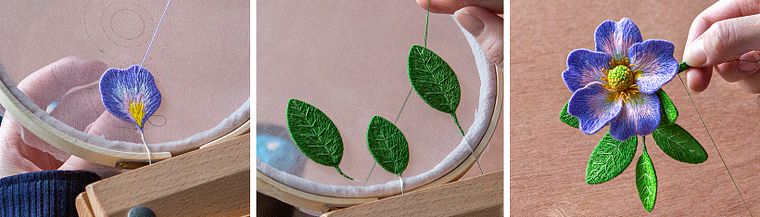
Projects by course students


Who is this online course for?
Anyone who wants to learn double-sided and 3D embroidery, known as stumpwork.
Requirements and materials
This course is suitable for beginners as well as experienced embroiderers.
For this course, you will need needles, scissors, cotton threads, non-stretch fabric, wooden hoops, wires, a pen, 3M tapes, and some wax. Optional materials include a printer, a light box, transfer paper, pliers, and tweezers.
Reviews
- 2 days ago
Curso excelente! Professora muito clara e com uma boa didática. Valeu muito a pena!
- 4 months ago
Simplesmente Perfeito S2
- 5 months ago
Me encantó el curso, es una técnica de bordado muy hermosa y la profesora es muy clara para explicar.
- 5 months ago
great course! the instructor was easy to follow, the camera angles were excellent. enjoyed this course very much!
- 10 months ago
**I'm using my Malay Language for this review** Stumpwork embroidery course ni sangat murah berbanding local (Malaysia), bagus untuk belajar basic dan sesuai untuk beginner. Boleh ulang video jika tak faham. 10 of 10 rate untuk teacher!

Her work incorporates traditional Chinese silk techniques in stumpwork embroidery. She has taken on various commissioned work and has her own online shop on Esty. All her work can be seen on her instagram page, @shanxuhandmade.
Content
- U1
Introduction
- About Me
- Influences
- What Will We Do in This Course?
- U2
Getting the Materials and the Patterns Ready
- Materials
- How to Prepare the Pattern for Embroidery
- Prepare the Hoop 1
- Prepare the Hoop 2
- Stitches Used for This Project 1
- Stitches Used for This Project 2
- U3
Stitch the Project
- Wiring Up
- Stitch a Petal 1
- Stitch a Petal 2
- Stitch a Leaf
- Pistil and Stamens
- Cutting
- Assembling 1
- Assembling 2
- U4
Transform Your Piece of Art into Jewelry
- Ideas of Playing with the Flowers
- FP
Final project
- Stumpwork Embroidery: Create 3D Ornaments
What to expect from a Domestika course
Learn at your own pace
Enjoy learning from home without a set schedule and with an easy-to-follow method. You set your own pace.
Learn from the best professionals
Learn valuable methods and techniques explained by top experts in the creative sector.
Meet expert teachers
Each expert teaches what they do best, with clear guidelines, true passion, and professional insight in every lesson.
Certificates
PLUSIf you're a Plus member, get a custom certificate signed by your teacher for every course. Share it on your portfolio, social media, or wherever you like.
Get front-row seats
Videos of the highest quality, so you don't miss a single detail. With unlimited access, you can watch them as many times as you need to perfect your technique.
Share knowledge and ideas
Ask questions, request feedback, or offer solutions. Share your learning experience with other students in the community who are as passionate about creativity as you are.
Connect with a global creative community
The community is home to millions of people from around the world who are curious and passionate about exploring and expressing their creativity.
Watch professionally produced courses
Domestika curates its teacher roster and produces every course in-house to ensure a high-quality online learning experience.
FAQs
Stumpwork embroidery is a three-dimensional technique that raises elements off the fabric using wires, padding, and special stitches, unlike traditional flat embroidery. It creates textured, lifelike designs such as flowers, leaves, and insects.
This course is best for those with some basic embroidery experience, as it covers intermediate techniques like wiring and assembling 3D elements. Beginners may find it challenging but motivated learners can still participate.
You'll need embroidery hoops, non-stretch fabric, silk or cotton threads, embroidery needles, fine wire, pliers, scissors, transfer paper, and marking tools. Some projects also require organza, masking tape, and jewelry findings.
You'll learn stumpwork basics, wire outlining, double-sided embroidery, petal and leaf stitching, assembling 3D flowers, creating embroidered butterflies, and techniques for neat cutting and professional finishing.
This course covers multiple transfer methods, including tracing with a light box, using transfer paper, printer methods, and securing patterns with tape. You'll learn how to align and prepare different fabrics for precise results.
Yes, the course covers assembling 3D embroidered components into jewelry and decorative objects, including how to securely attach findings and adapt designs for wearable or display purposes.
While regular embroidery floss can be used, the course recommends silk threads for certain projects due to their sheen and smoothness, especially for double-sided and high-detail embroidery.