Geometric Pattern Design
A course by Matacho Descorp, Illustrator and Graphic Designer

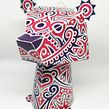
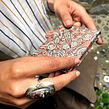
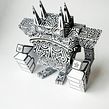

Create your own repeating pattern based on traditional shapes with a contemporary touch that can be applied to all types of products

Illustrator and graphic designer David Ñáñez found inspiration for his artistic identity in the indigenous cultures of his country and began creating as Matacho in 2007. He uses his work to pay tribute to his heritage by transforming forgotten shapes into patterns with a modern touch to decorate everyday objects.
In this course, learn how to make repeating geometric patterns based on traditional shapes from ancient cultures. Discover endless ways to illustrate using basic shapes and design complex, eye-catching compositions to create apparel and accessories with a distinct personality and style.
What will you learn in this online course?
18 lessons & 27 downloads
What's included in this course?
To start the course, David Ñáñez explains where the Neo Pre-Columbian concept comes from, why it's important, and how it inspired the creation of his artistic identity Matacho. He also tells you about his influences, what motivated him to create his own illustration style, and how he adapted it to decorate objects, clothing, and accessories.
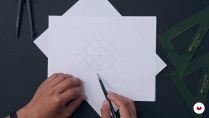
Discover where Matacho gets his ideas to create repeating patterns and explore your own culture and roots in search of inspiration for your project. Cover some technical aspects starting with basic drawing tools and continue with the principles of illustration focused on symmetry. Then, apply what you've learned to overcome your fear of the blank page.
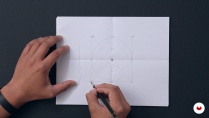
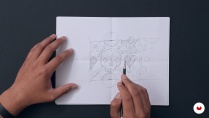
Now it's time to travel to the past and find visual references to help develop your design. Once you have a solid idea, start sketching and experiment with different tracing techniques to create your repeating traditional pattern.
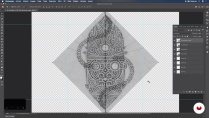
Finally, focus on the digital design process and learn how to preview your work, create vectors, and test your designs on different products like clothing or accessories. To tie everything together, Matacho shows you several printing techniques you can use based on the end product and shares some tips on how to become a master at pattern design.
- 99% positive reviews (135)
- 3,860 students
- 18 lessons (3h 45m)
- 27 additional resources (10 files)
- Online and at your own pace
- Available on the app
- Audio: Spanish, English
- Spanish · English · Portuguese · German · French · Italian · Polish · Dutch · Turkish · Romanian · Indonesian
- Level: Beginner
- Unlimited access forever
Recommended software & tools for this course
 Adobe Illustrator
 Adobe Photoshop
What is this course's project?
Create your own repeating pattern based on traditional shapes with a contemporary touch that can be applied to all types of products.

Projects by course students


Who is this online course for?
Anyone interested in design, illustration, or art who wants to create graphic designs for the clothing industry. This course is also perfect for anyone who wants to learn more about their heritage and recreate it with a modern approach by designing clothing with a distinct personality and style.
Requirements and materials
Basic notions of design are needed for this course.
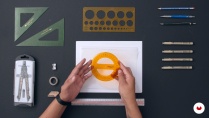
The materials include a computer with Adobe Photoshop and Illustrator and drawing supplies such as a set square, a compass, a protractor, white paper, tracing paper, and other materials you can find at home .

Reviews

Matacho Descorp
A course by Matacho Descorp
In 2007, graphic designer David Ñáñez began both a retrospective and introspective journey in his hometown of Popayán, Colombia, which resulted in the creation of his second identity: Matacho. Since then, he began to immerse himself in his cultural heritage and to create art inspired by his roots and the indigenous cultures of his country.
Matacho's work is a tribute to those forgotten cultures with an added contemporary touch. Following this modern approach to ancient art has allowed him to work on identity and object customization projects and collaborate with brands like Citroën, Victorinox, and Paperwallet.
Content
-
U1
Introduction
-
Presentation
-
Influences
-
-
U2
The origins
-
The roots
-
Recognizing the tools
-
First encounter with blank paper 1
-
First encounter with blank paper 2
-
-
U3
The main thing is the sketch
-
Finding the north
-
Sketches and loose shapes 1
-
Sketches and loose shapes 2
-
Debug to find balance
-
-
U4
From analog to digital
-
Digitizing and previewing
-
Time to vectorize 1
-
Time to vectorize 2
-
Time to vectorize 3
-
Time to vectorize 4
-
Time to take a little glimpse into the future
-
Debugging
-
Final Recommendations
-
-
FP
Final project
-
Ancestral geometric pattern design
-
What to expect from a Domestika course
-
Learn at your own pace
Enjoy learning from home without a set schedule and with an easy-to-follow method. You set your own pace.
-
Learn from the best professionals
Learn valuable methods and techniques explained by top experts in the creative sector.
-
Meet expert teachers
Each expert teaches what they do best, with clear guidelines, true passion, and professional insight in every lesson.
-
Certificates
PlusIf you're a Plus member, get a custom certificate signed by your teacher for every course. Share it on your portfolio, social media, or wherever you like.
-
Get front-row seats
Videos of the highest quality, so you don't miss a single detail. With unlimited access, you can watch them as many times as you need to perfect your technique.
-
Share knowledge and ideas
Ask questions, request feedback, or offer solutions. Share your learning experience with other students in the community who are as passionate about creativity as you are.
-
Connect with a global creative community
The community is home to millions of people from around the world who are curious and passionate about exploring and expressing their creativity.
-
Watch professionally produced courses
Domestika curates its teacher roster and produces every course in-house to ensure a high-quality online learning experience.
FAQs
This course focuses on creating vector illustrations and patterns inspired by Pre-Columbian elements, blending manual and digital techniques to design original pieces that can be applied to objects, clothing, and urban art.
Yes, the course is aimed at those with basic prior knowledge in design or illustration, as it explores intermediate techniques and concepts to refine visual style and technical accuracy.
Basic knowledge of Adobe Illustrator and Photoshop is recommended since the course uses both tools for digitizing, vectorizing, and applying patterns.
You'll need basic drawing supplies (paper, pencil, rulers, compass, tracing paper, kneaded eraser) and access to a computer with Adobe Illustrator and Photoshop installed.
You'll learn to create symmetrical patterns and compositions inspired by Pre-Columbian cultures, work with vectors, develop your visual style, digitize sketches, and apply your designs to various surfaces and products.
The course teaches how to research, abstract, and reinterpret Pre-Columbian symbols, patterns, and stories to integrate them into contemporary and original graphic designs.
Yes, the course includes exercises and examples for applying your vector illustrations and patterns to clothing, accessories, mockups, and personalized objects.
 Adobe Illustrator
 Adobe Photoshop
Adorei esse curso. As referências que o professor nos forneceu foram extremamente valiosas - a maioria eu nunca tinha ouvido falar. Eu imaginei que era um curso mais voltado para a geometria em si, mas me surpreendi ao perceber que ele dialogava com culturas antigas pré-colombianas. Minhas ideias de design se alteraram bastante após a atividade final do curso.
I really enjoyed this course, and it helped my artwork move in new directions.
I got so many insight about pattern from this lesson
I was looking for a course that uses stencils to create drawings and found this course in the search. I'm happy I got this course, it gives great inspiration and now I know how to utilize stencils in my drawings and how to digitize them as well.
Me ha motivado incorporar la estructura en la creación de imágenes. La propuesta didáctica y metodológica de diseñar imágenes a partir de una cuadrícula que conserve la simetría, me parece de gran valor. Gracias al maestro. Saludos desde Chile.