
El Sauzal
ile Alejandro Merodio @meraudio
- 404
- 0
- 0
Introducción
"El Sauzal" is a raw and powerful rock-blues track from 2015 by Mexican band Old Natives, drawing inspiration from the gritty sound of U.S. desert rock and the visceral energy of modern blues revival bands like The Black Keys. The song features a commanding male lead vocal with a timbre reminiscent of Jim Morrison, complemented by a female voice in the choruses that adds contrast and emotional resonance. My role on this project was to deliver a mix and master that captured the band’s explosive performance while enhancing the modern edge of their vintage-rooted sound.

Materiales
The mix and mastering were carried out in Pro Tools, using tools and techniques suited to a raw, analog-driven aesthetic. The goal was to retain the energy and live feel of the band while giving the mix definition, impact, and competitive loudness.
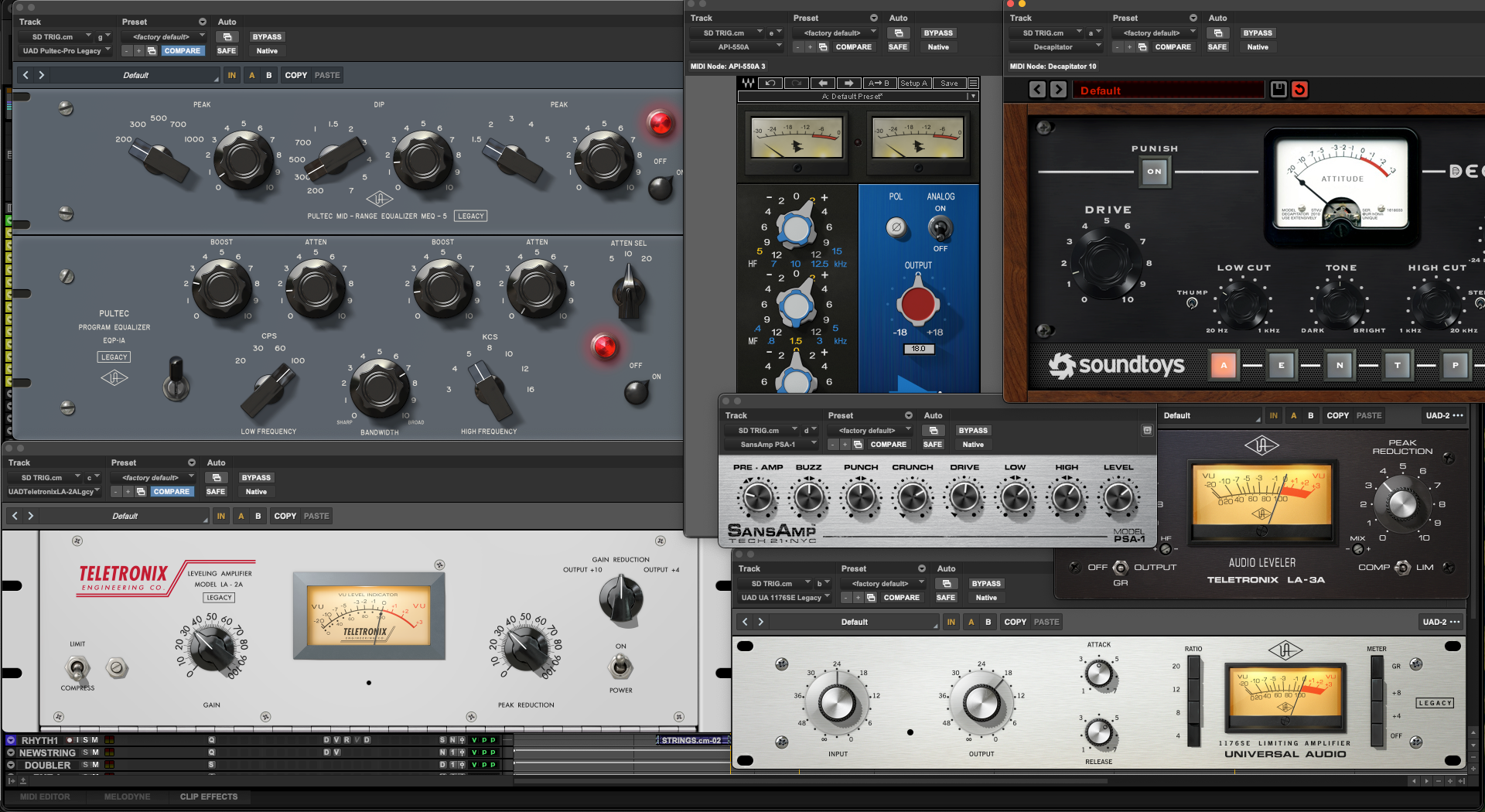
In the mixing stage, I used classic-style EQs and compressors to shape tone and dynamics—relying on plugins such as the UAD 1176 Rev A, LA-3A, Pultec EQP-1A, and API 550A. For coloration and saturation, I worked with Soundtoys Decapitator, Waves Kramer Tape and SPL TwinTube, which helped add grit and harmonics to the guitars and vocals. Reverbs were used subtly but effectively to create a sense of depth and room, with spring and plate-style emulations chosen to match the rock-blues aesthetic.
The drums and guitars were grouped and treated with bus compression and parallel distortion, enhancing punch and grit without losing control. The vocals, especially the lead, were processed to emphasize power and character—using dynamic EQ and saturation to balance presence and body across the dense mix. The female vocals in the chorus were treated with stereo spread and modulation to create contrast and lift.
For the mastering stage, the workflow focused on preserving the mix’s analog feel while adding final polish and loudness. Equalization was applied using minimum-phase filters and subtle shelving to open up the top end and reinforce low-mid weight. Compression and limiting were handled with transparent gain control, applying just enough pressure to maintain energy without crushing dynamics. The final loudness was tailored for digital release, with saturation and soft clipping used to maintain impact and color across playback systems.
Mixing
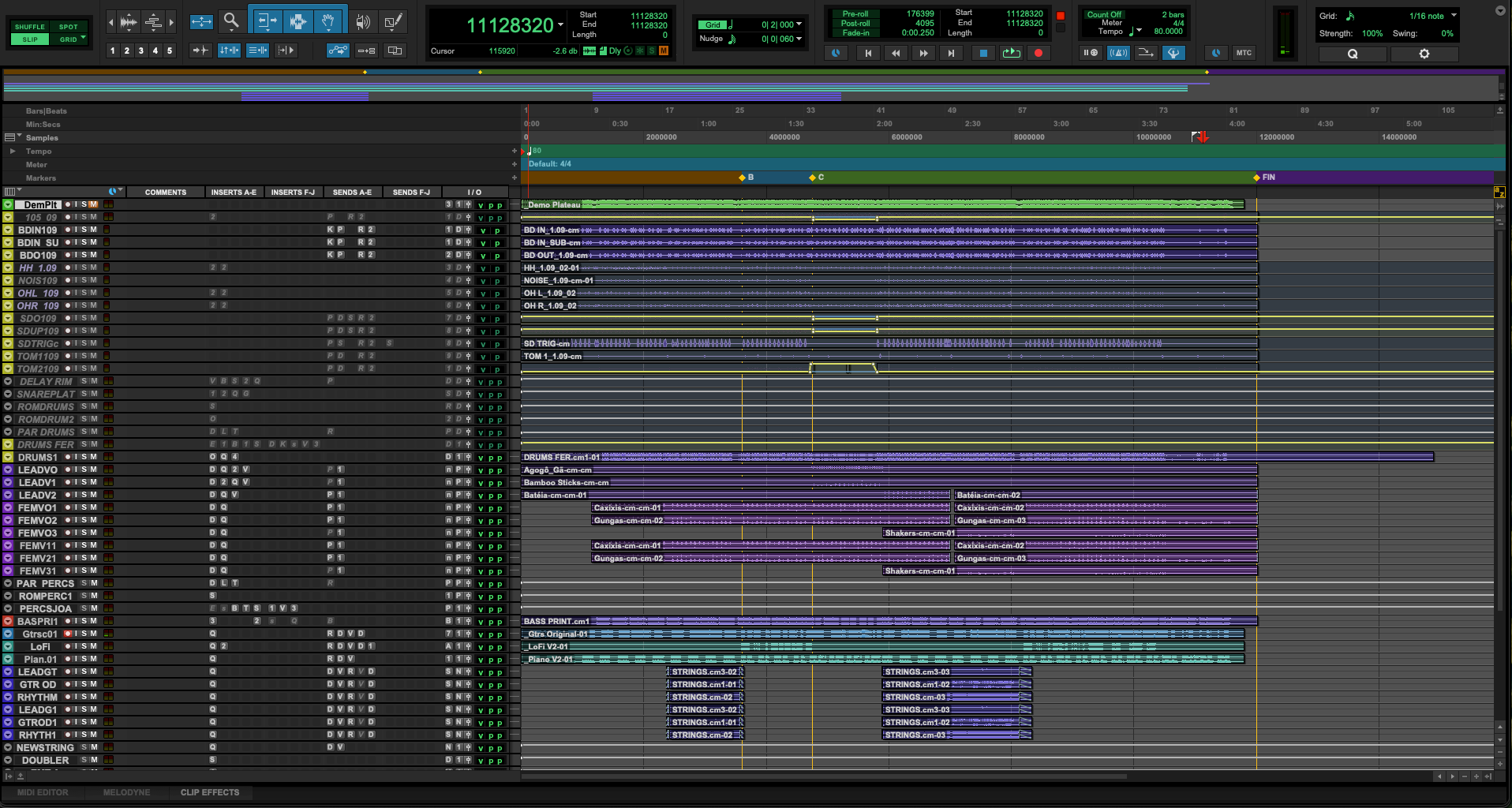
1. The session began with a clean setup and organization, grouping elements by instrument family and routing them through carefully constructed bus chains. A static balance was built using levels and panning to preserve the natural energy and interplay of the performance. The drum kit was processed to retain a live, punchy character—using compression, transient shaping, and tape emulation to add drive and cohesion.
2. Guitars—the core of the track’s identity—were given focused attention with EQ and saturation to highlight their midrange growl and analog texture. Multiple amp layers were blended and enhanced with parallel distortion and subtle stereo manipulation to maintain aggression while avoiding harshness.
3. Vocals were processed to match their role in the narrative: the male lead was sculpted with saturation, midrange compression, and analog EQ to emphasize attitude and presence, while the female vocals in the chorus were treated with widening effects and time-based processing to lift and differentiate them emotionally and spatially.
4. Each bus group (drums, bass, guitars, vocals, FX) was processed with analog-style dynamics and harmonic treatment, carefully balancing power and definition. Parallel processing was used on both drums and vocals to bring controlled aggression and excitement, while automation helped shape transitions and highlight dynamic changes.
Mastering
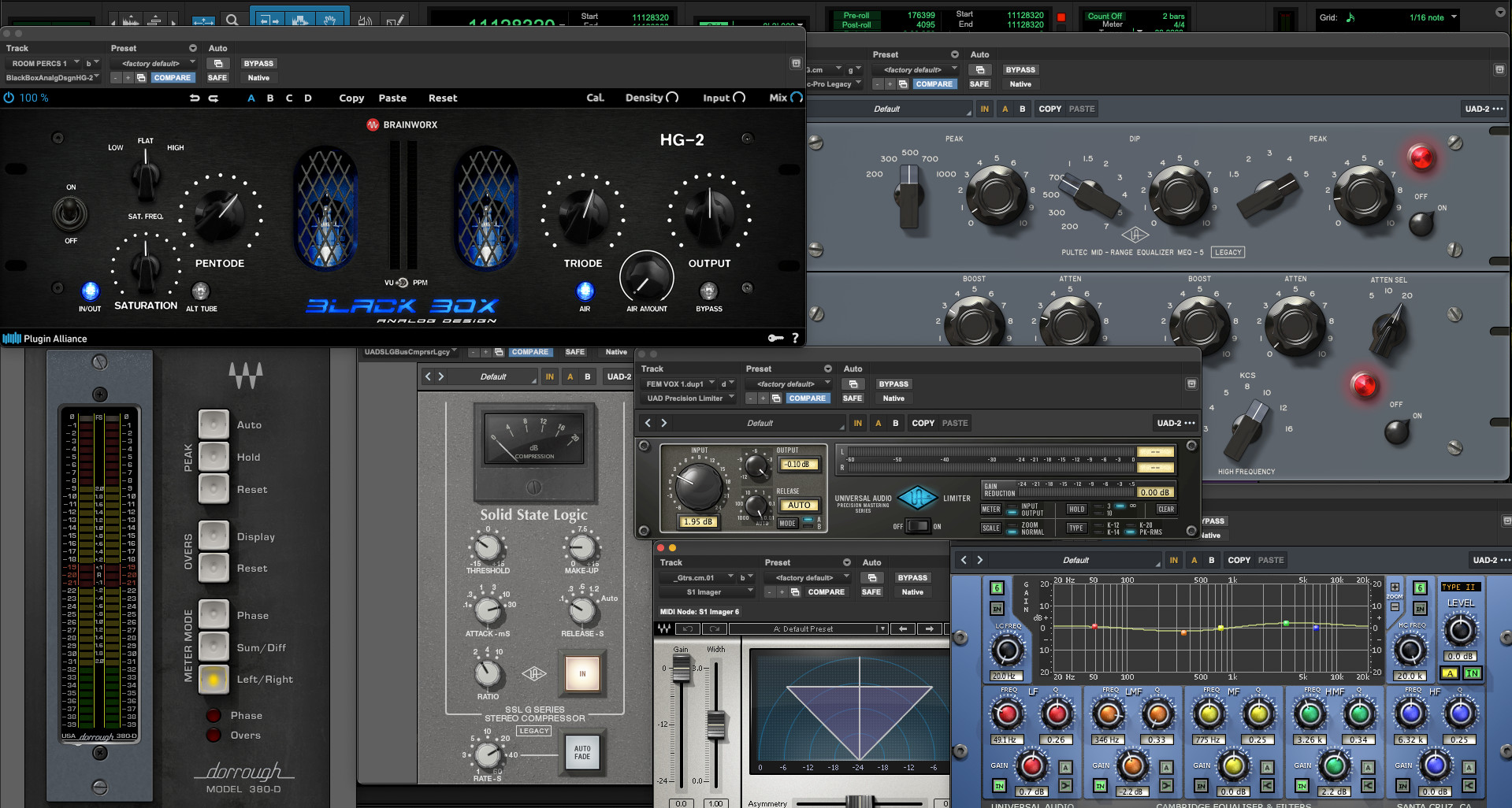
The mastering process aimed to preserve the grit and physicality of the mix while optimizing it for digital release. Tonal balance was refined with subtle EQ adjustments using UAD's Cambridge EQ, focusing on enhancing upper harmonics without losing warmth or low-mid body. To add harmonic richness and cohesion, I applied soft tube-style saturation with the Black Box Analog Design HG-2, which helped glue the mix together while reinforcing its analog character. A combination of broadband compression and soft clipping controlled the dynamics transparently, retaining transients and impact without sacrificing headroom. Stereo imaging was carefully adjusted using the Waves Imager to subtly widen the top end and enhance spatial depth without compromising mono compatibility. Final limiting was handled with UAD's Precision Limiter for clean loudness. The gain staging was calibrated for streaming platforms, ensuring clarity, energy, and consistency across listening systems—from headphones to club and PA environments.


1 yorum
Yorum yapmak için Ücretsiz olarak giriş yapın veya katılın