


Interior Design Tutorial: Tips and Materials to Create a Lovely Home Office
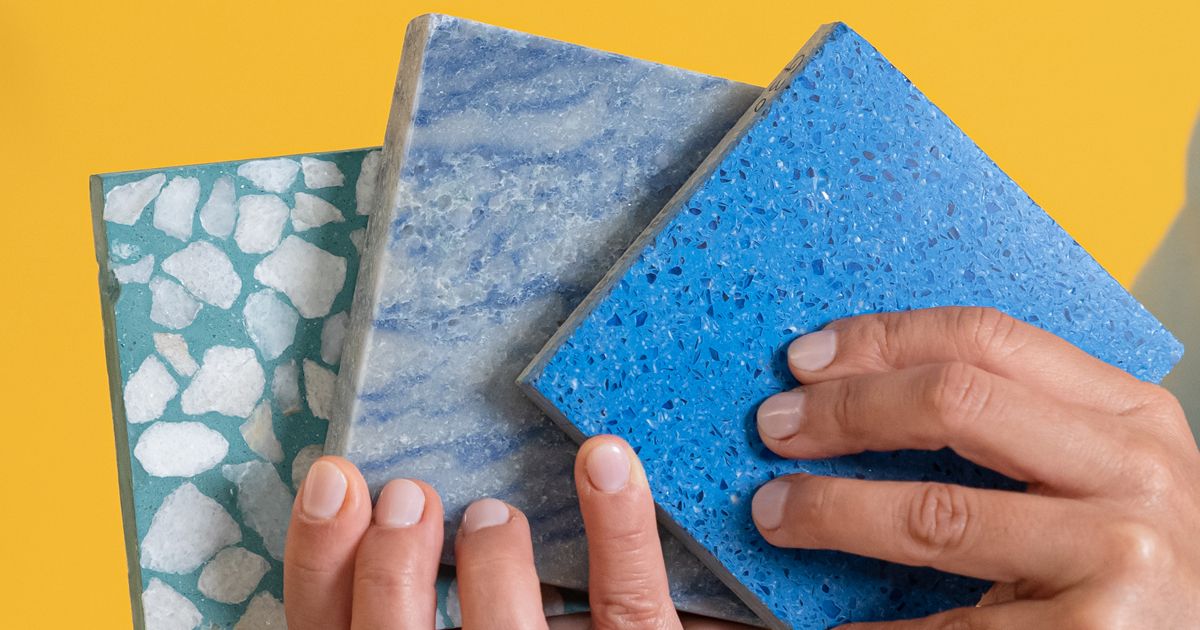
Discover how to create an ideal home workspace by combining different materials, with Masquespacio
Working from home (WFH) is now a hot professional concept. Previously associated with self-employment or limited to very specific professions, WFH has become one of the preferred ways to operate in the new normal.
Although there are numerous advantages to WFH, it’s worth mentioning some of the potential downsides. One is the lack of a suitable workspace. Not everyone has a separate office where they can shut themselves away, and even those that do may not be optimally set up. Because a home office is much more than a table with a dining chair.
Ana Hernández (@masquespacio) is Creative Director at Masquespacio interior design studio. She shares her expert tips and the ideal materials you need to create your home office. Don’t miss her video!

1. Your desk materials
Your desk is probably a long piece of wood supported by a pair of trestles, are we right? Ana Hernández recommends using different materials to “upstyle” your desk so that it looks ultra professional.
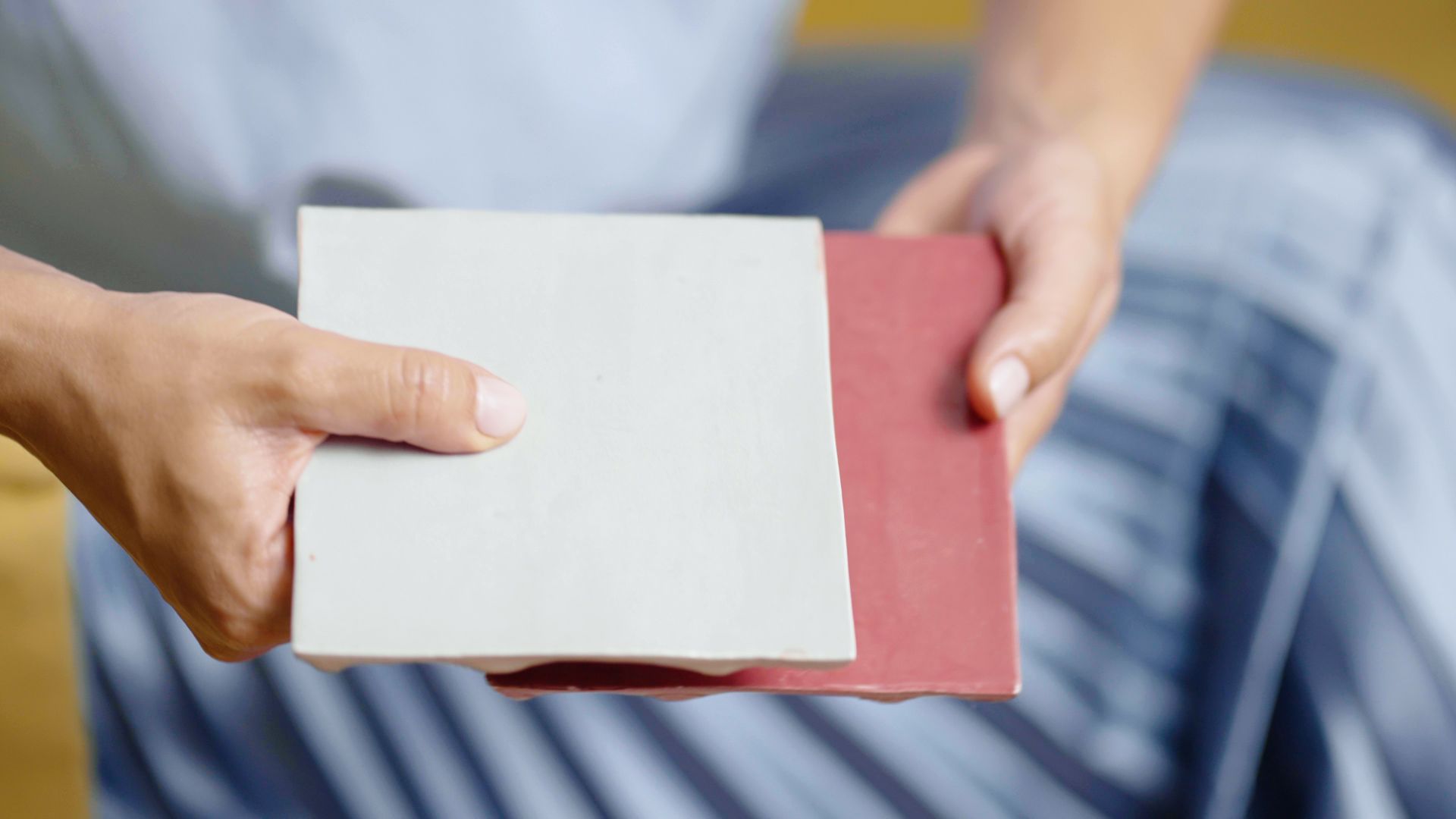
Tiles: If you’ve reformed your kitchen or bathroom, you’ll probably have a few space ceramic tiles kicking around. Simply cut the tiles to fit your work surface to achieve a lovely, colorful effect.
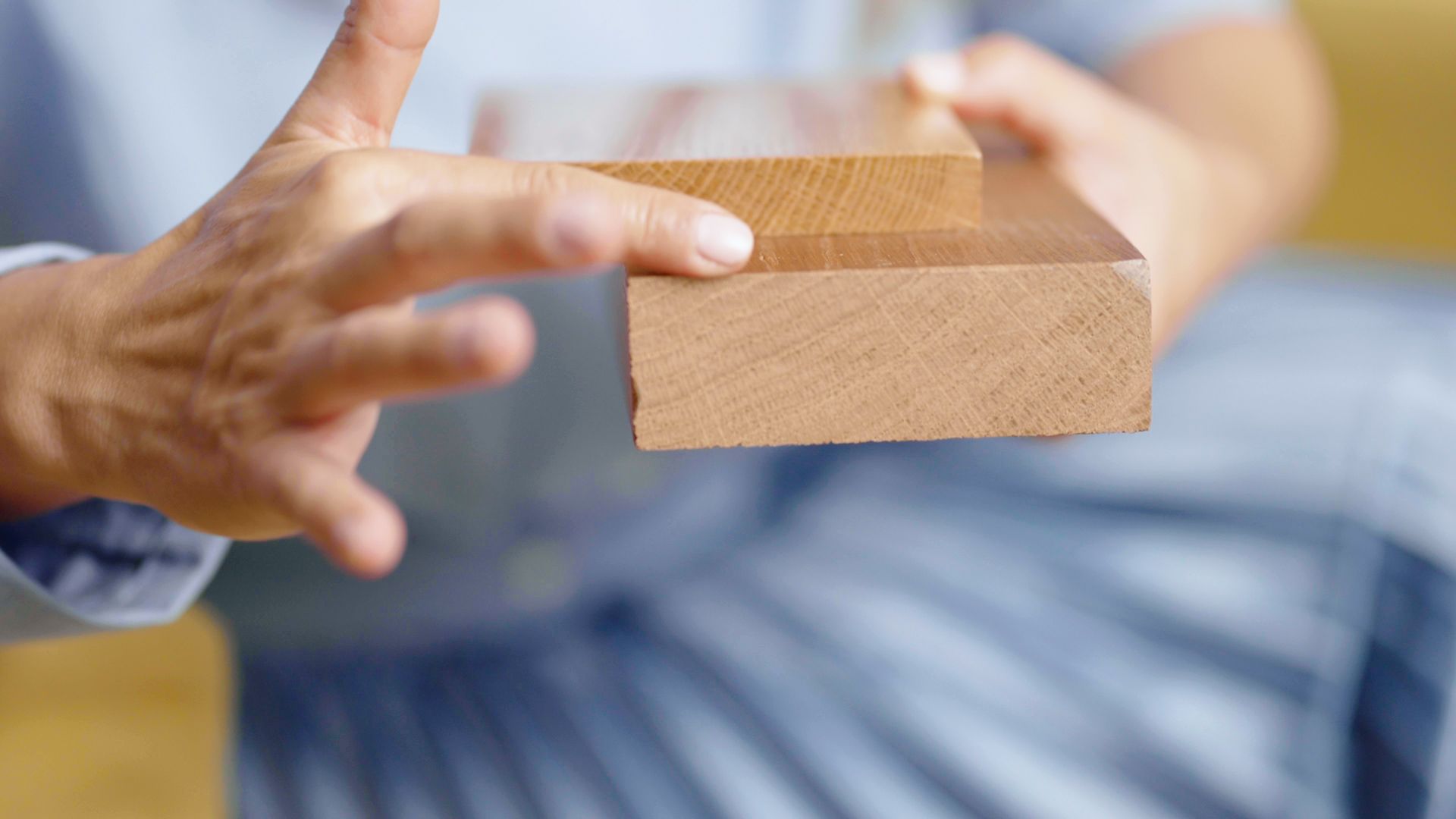
Give your wooden table a new lease of life: Your home may have a characterful wooden table in need of a new life. It may be painted in a color you don’t like, or simply look a bit worn. In which case, your new best friends are sandpaper and varnish.
Try sanding down and varnishing your old table. It will soon look like new.
2. Your videocall space
Your Zoom background can be your ally... or your worst enemy. A clear wall or a beautiful background can make your calls look much more professional, and avoid capturing your colleagues’ attention for the wrong reasons. Ana Hernández recommends a simple solution for distracting backgrounds: simply hang up a curtain in one of your favorite colours.
This option gives you multiple benefits. It will improve the sound quality of your meetings as the fabric deadens noise. And a curtain is a perfect background to play with. Try wearing a color that contrasts with your background, you’ll notice the difference immediately!
3. Separate your workspaces
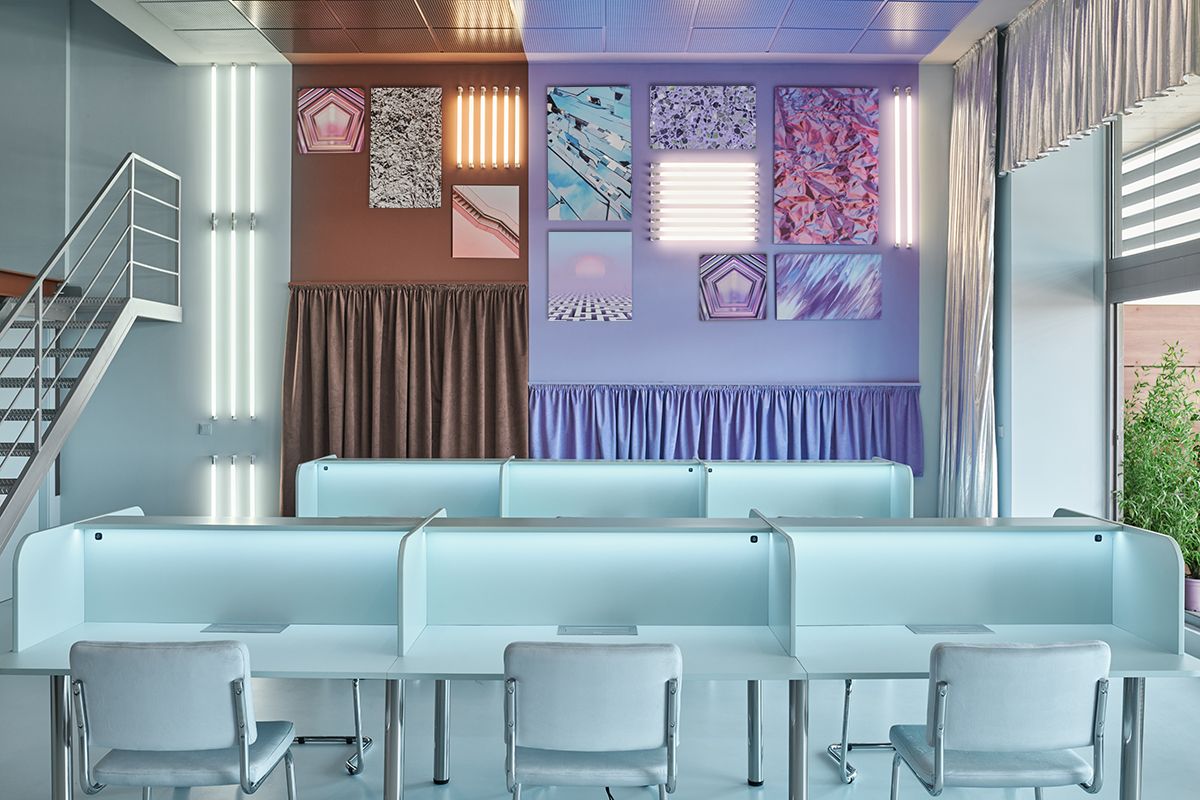
You may be lucky enough to have a spare room that can house a home office. Or you might end up sitting in one corner of your living room, perhaps alongside other people.
Ana Hernández recommends a good way to make things easier when you find yourself in the second category: create a cubicle. Have a look at the following image to see what she means.
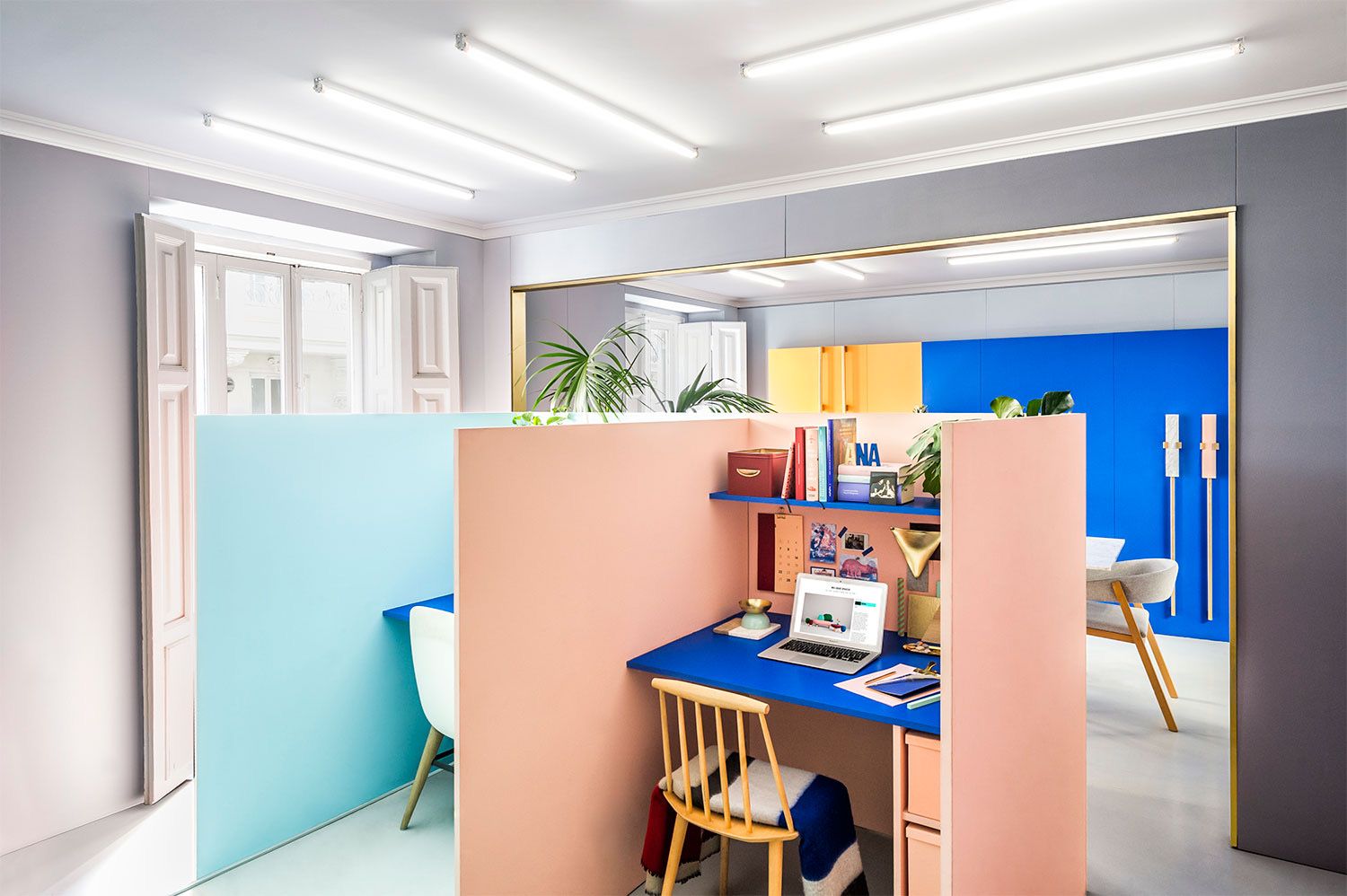
It’s really easy to build yourself a cubicle. All you need is a back section measuring 1.50 m x 2.20 m and three side panels each measuring 1.50 x 1.40 m. This little cubicle not only isolates you from background noise, it also helps create a separation in rooms where you can’t install an extra wall, like in an airy living room or a studio flat.
4. Surround yourself with things you like
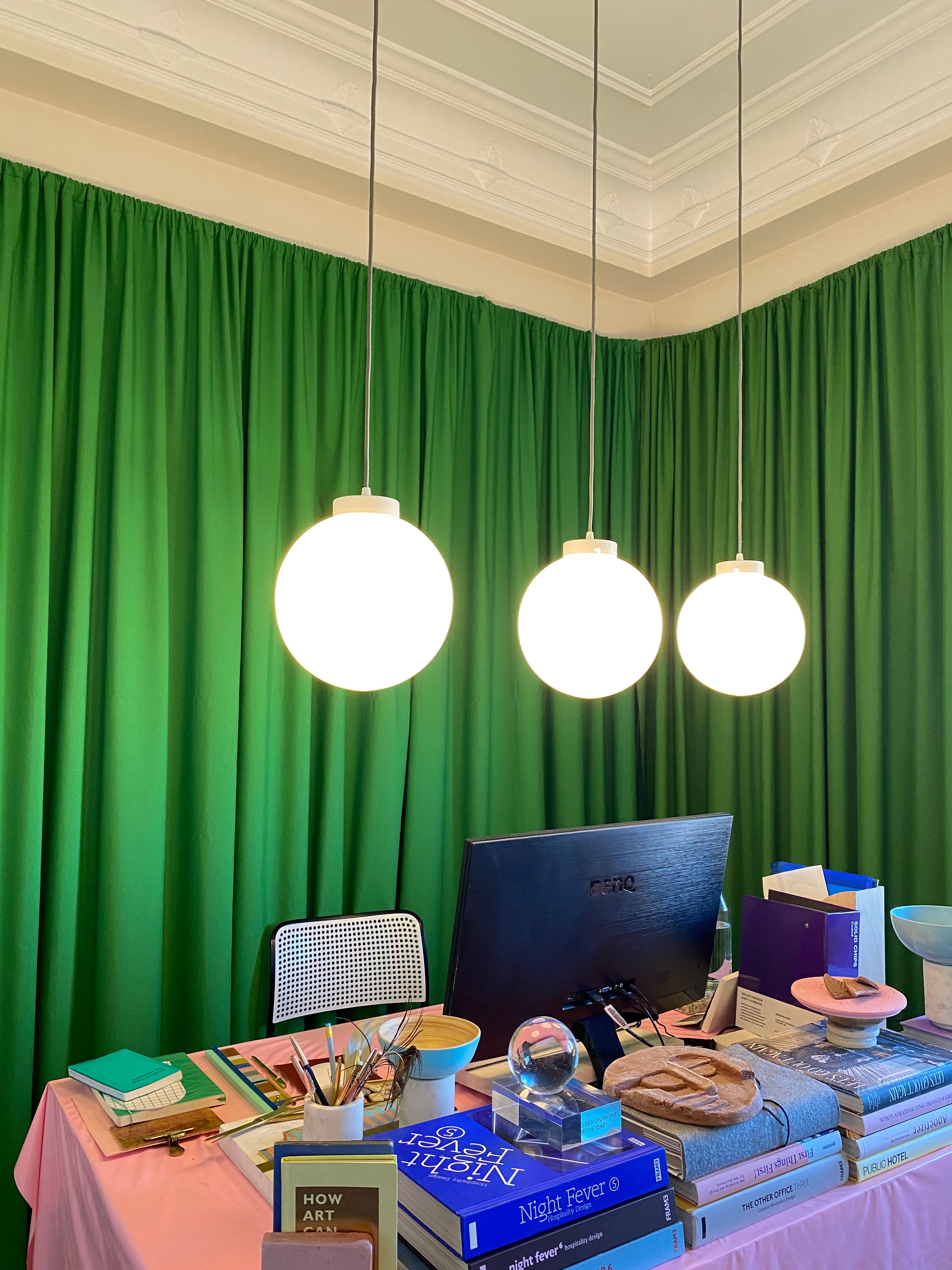
Place items that convey your personality, that inspire and give you everything you need for an enjoyable working environment. Use everything from books to vases or stationery, anything goes when it comes to giving your workspace a personal touch.
5. Lighting is key
It’s normal for your eyes to get tired after hours of screentime. This kind of fatigue can be worse if you don’t have the right lighting. Masquespacio recommend avoiding both cold lighting and lighting that’s too warm. They work with neutral lighting ranging from 3,500 to 4,000K. It’s best to have three light sources: a ceiling lamp, natural light from a window and a desk lamp.
Love this tutorial? If you want to learn how to select materials and combine textures and colors to make every space a unique experience, don’t miss Masquespacio’s online course: Materials for Interior Design.
You may also like:
- 10 Inspiring Interior Design and Lifestyle Bloggers You Should Check Out
- Interior Design Tutorial: How to Choose Your Light Source
- How to Apply Japanese Wabi-Sabi in Interior Design
- Home Office Best Practices: Working from Home Effectively, a course by Foncho Ramírez-Corzo
- Introduction to Interior Design, a course by Masquespacio


0 comentarios