
Taxnest
przez temidayo_arikawe @temidayo_arikawe
- 28
- 0
- 0
Introduction
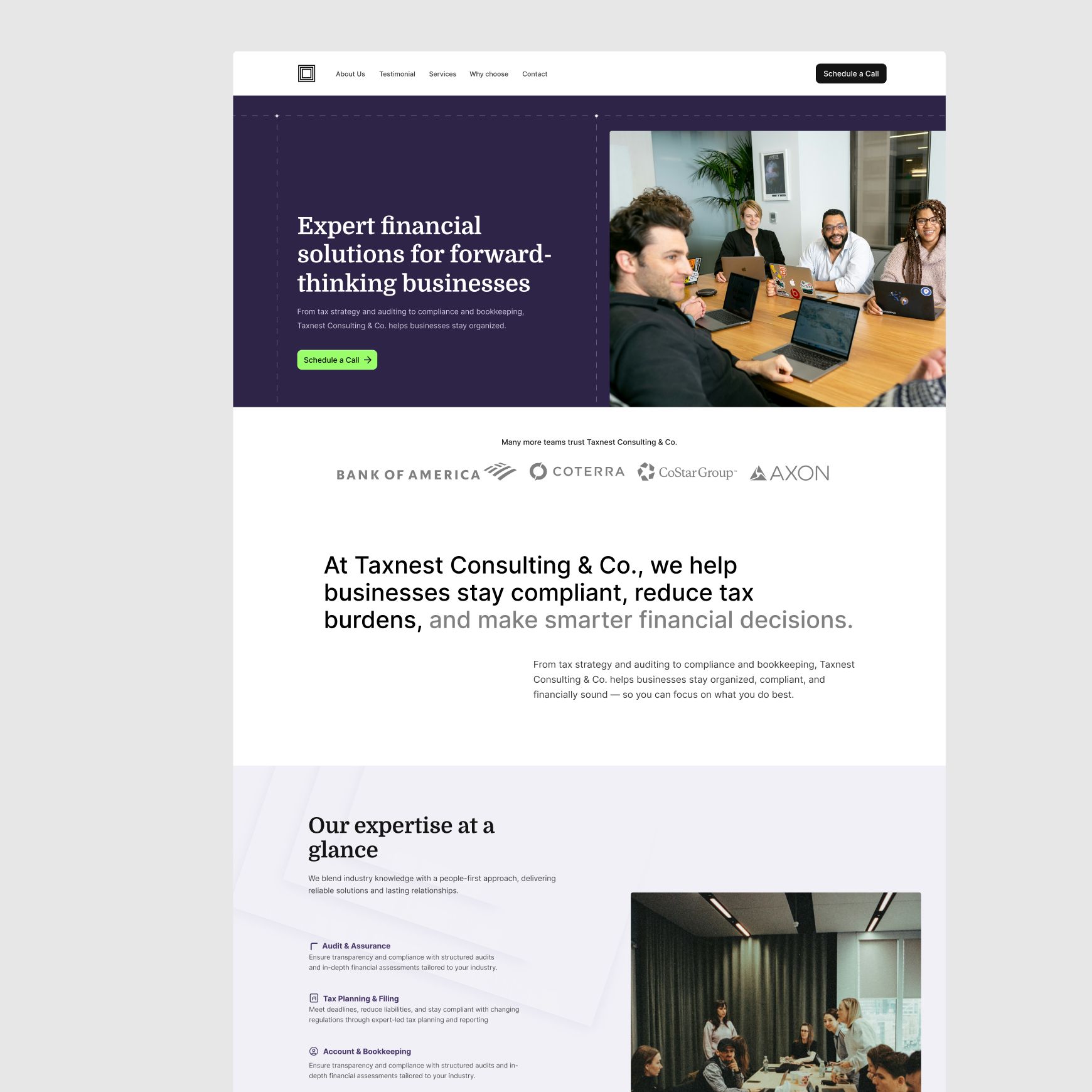
I chose TaxNest because financial and tax-related services are often perceived as complex, intimidating, and difficult to navigate. Many users struggle to find trustworthy financial guidance and understand available services. I wanted to explore how thoughtful UX and clear information architecture could make financial advisory services feel more accessible, approachable, and easier to understand.
Supplies
Figma, chatgpt, pinterest,notes, freepik
Creative Process
Throughout the project, I applied several UX and UI design principles learned during the course. I started by identifying the primary user needs and defining the core services offered by TaxNest. From there, I created wireframes to establish content hierarchy and user flows before moving into high-fidelity designs.
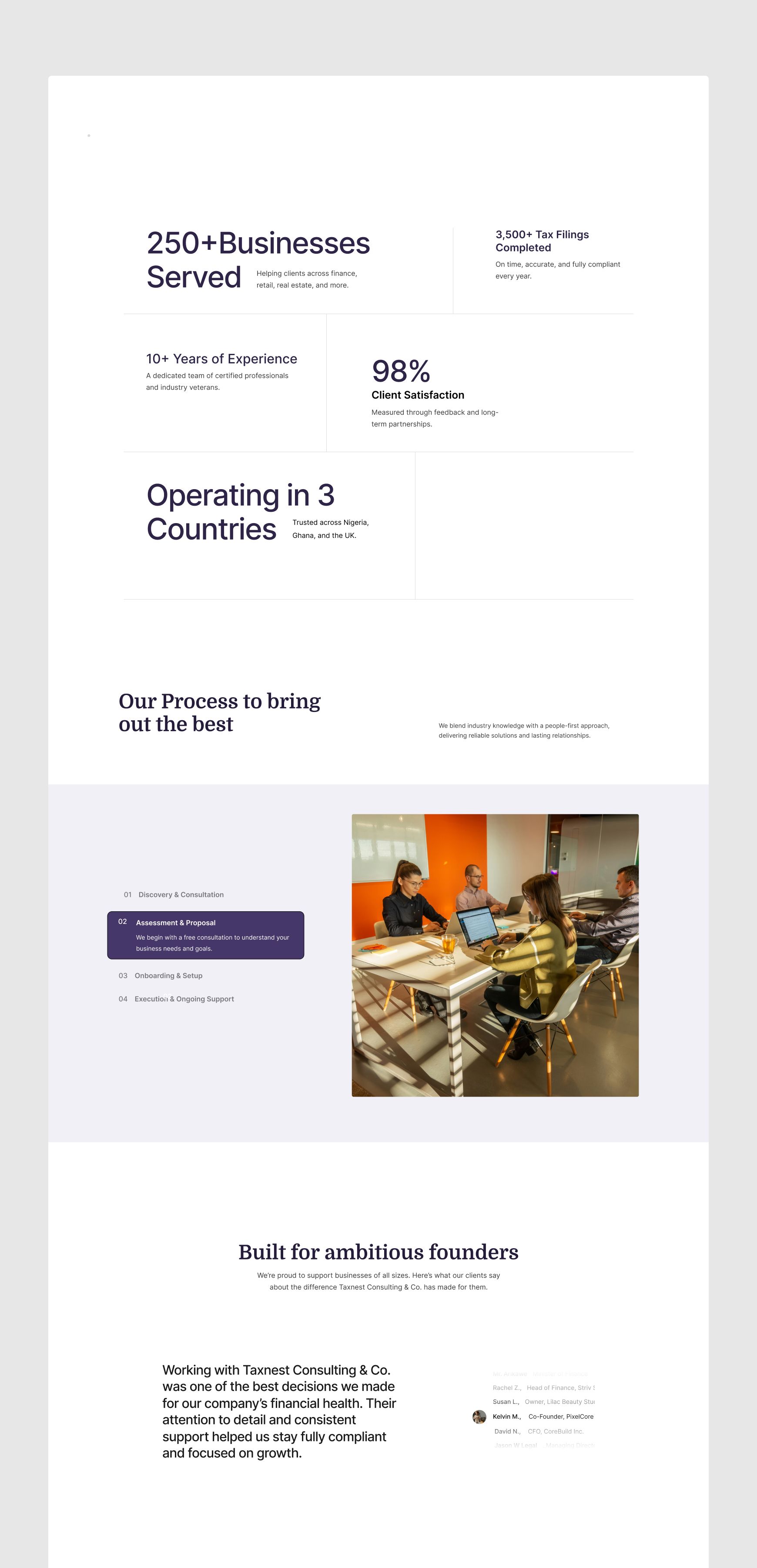
Particular attention was given to visual hierarchy, spacing, typography, and component consistency. I designed reusable UI patterns and focused on reducing cognitive load by presenting information progressively instead of overwhelming users with too much content at once.
The final prototype incorporates interactive elements and transitions that help users navigate the platform naturally while maintaining a professional and trustworthy feel suitable for a financial advisory brand.
Challenges Faced
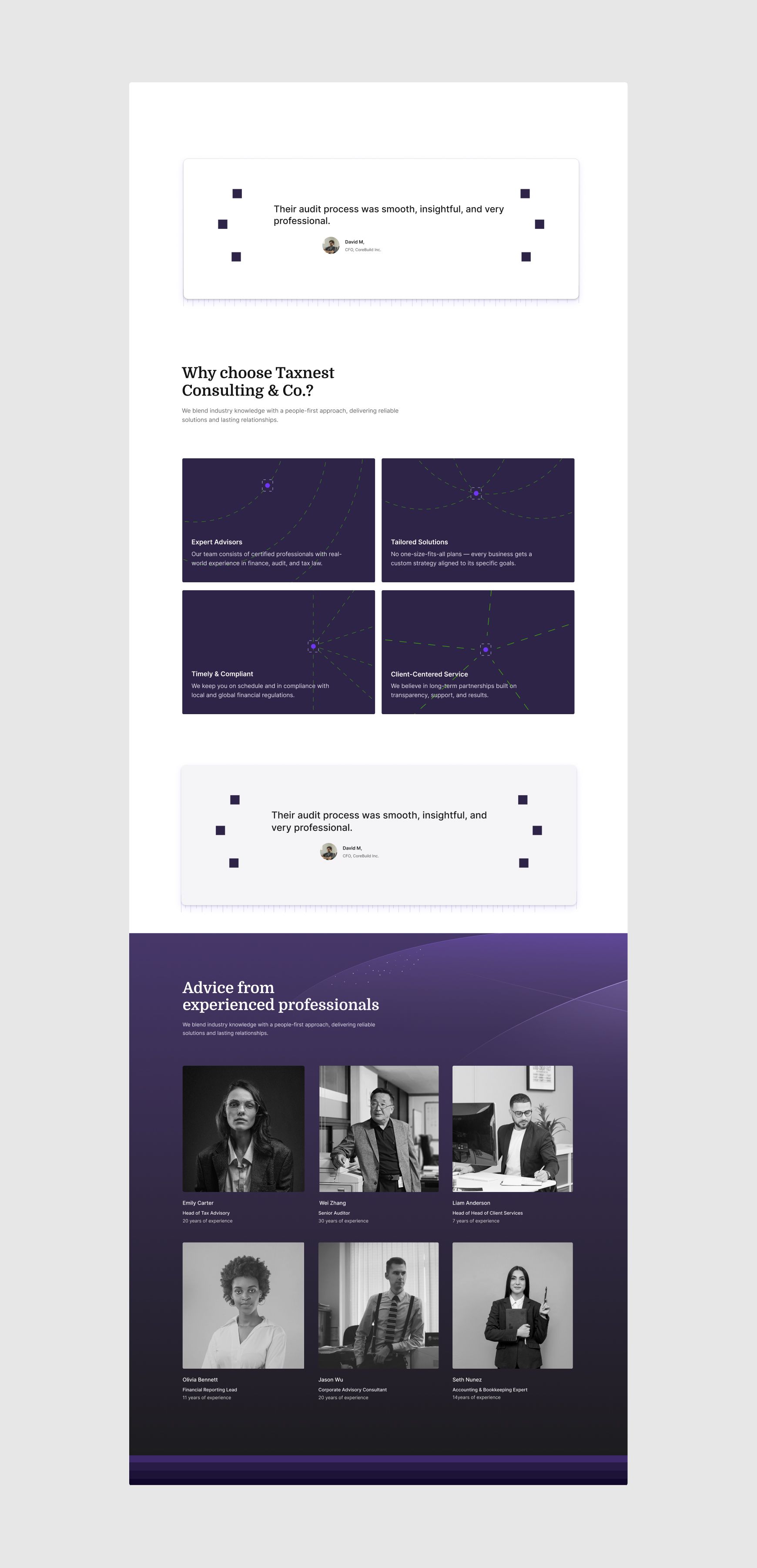
One of the main challenges was balancing the amount of financial information presented on the interface. Financial services often require detailed explanations, but presenting too much information at once can overwhelm users.
To address this, I used progressive disclosure techniques, clear content grouping, and strong visual hierarchy to guide users through information step by step. Another challenge was creating a design that felt professional and credible without appearing overly corporate or intimidating. Through multiple iterations, I refined the typography, spacing, and layout to achieve a balance between trustworthiness and usability.
Key Learnings
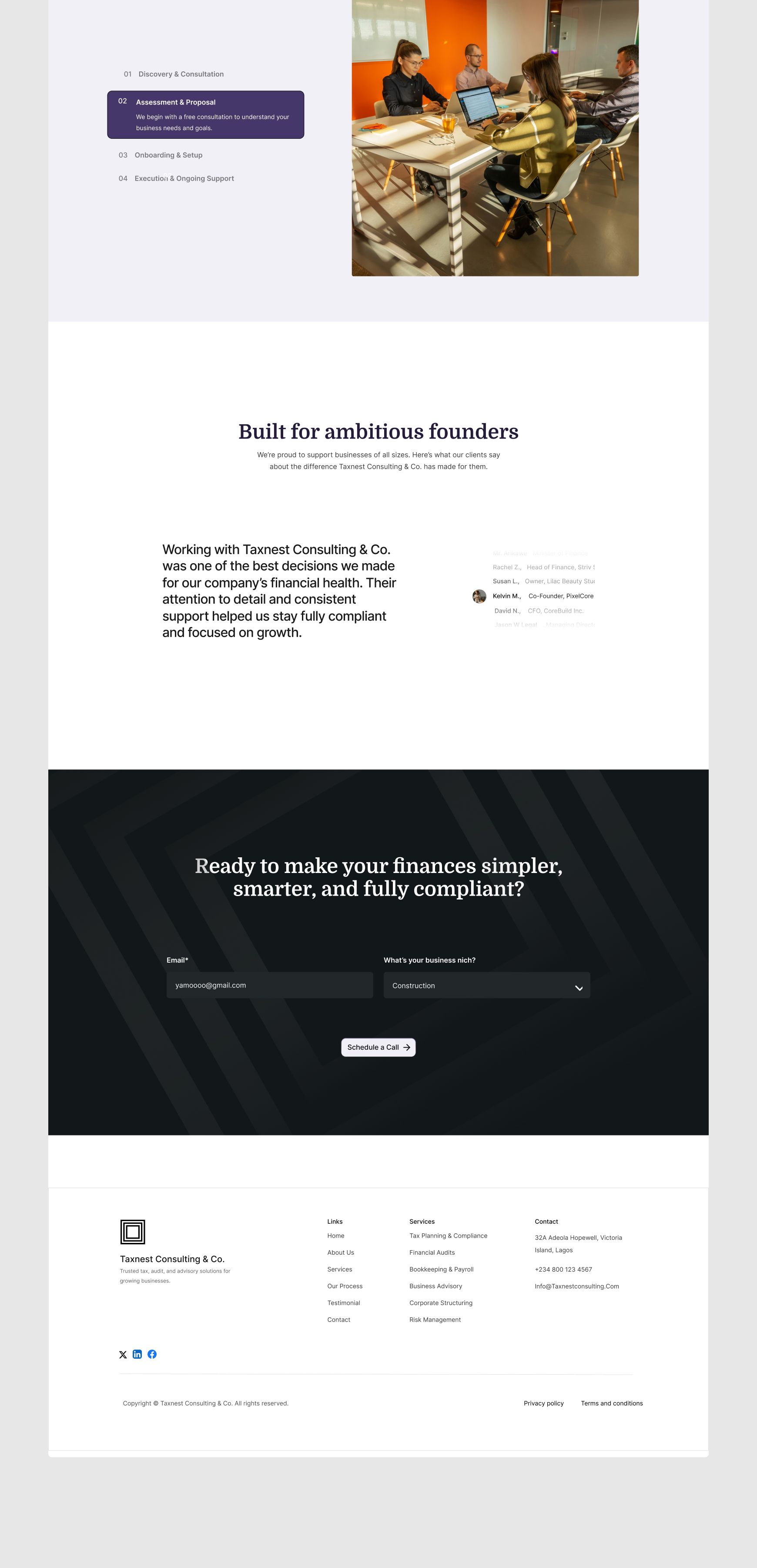
This project reinforced the importance of information architecture, content prioritization, and consistency within a design system. It also demonstrated how small design decisions—such as spacing, typography, and interaction feedback—can significantly impact user understanding and confidence. The experience helped me strengthen both my visual design skills and my ability to solve user problems through design.
0 komentarzy
Zaloguj się lub dołącz bezpłatnie, aby móc komentować