
Colourful Leopard Head
Colourful Leopard Head
oleh niggola @niggola
- 268
- 5
- 1
Introduction
Hi, my name is Nicky. For this project I had a couple of goals. The first was to play and experiment. I am relatively new to embroidery and there are so many different styles and techniques to choose from. The second was let go of perfectionism and try to embrace imperfections and mistakes. I often suffer from a need to make things 'perfect' the first time. Play is the opposite of this. It's about embracing mistakes, and maybe even building on them.
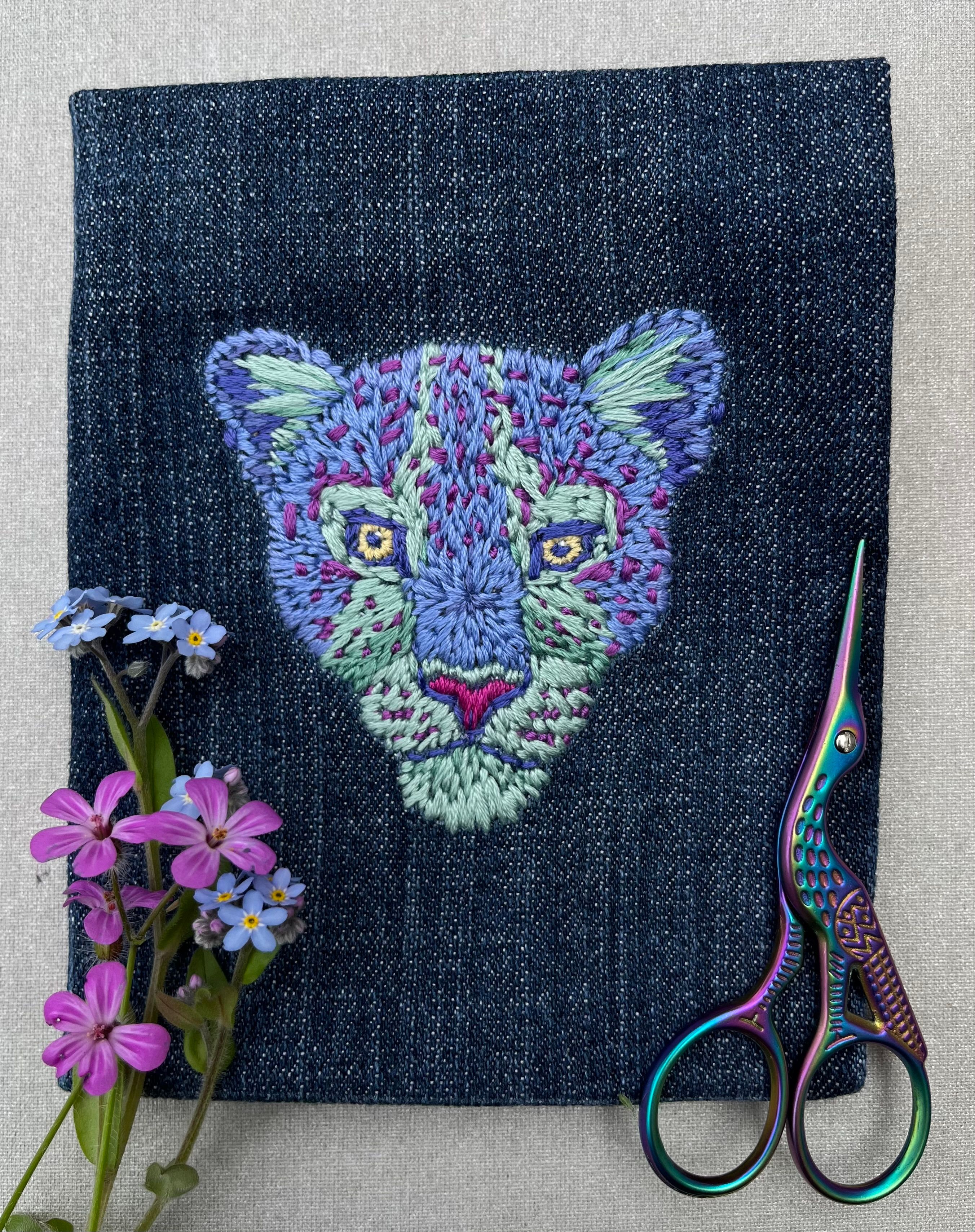
Supplies
Tools:
iPad and Procreate
Fabric: denim recycled from old jeans
Embroidery floss:
DMC
3813
3816
3817
3839
3807
792
white
Anchor
99
89
Moonbrand (a Chinese brand I found on Amazon)
2293
Other tools:
Embroidery hoop
embroidery scissors
white washable fabric marker
various embroidery needles
copy paper
Inspiration and first ideas
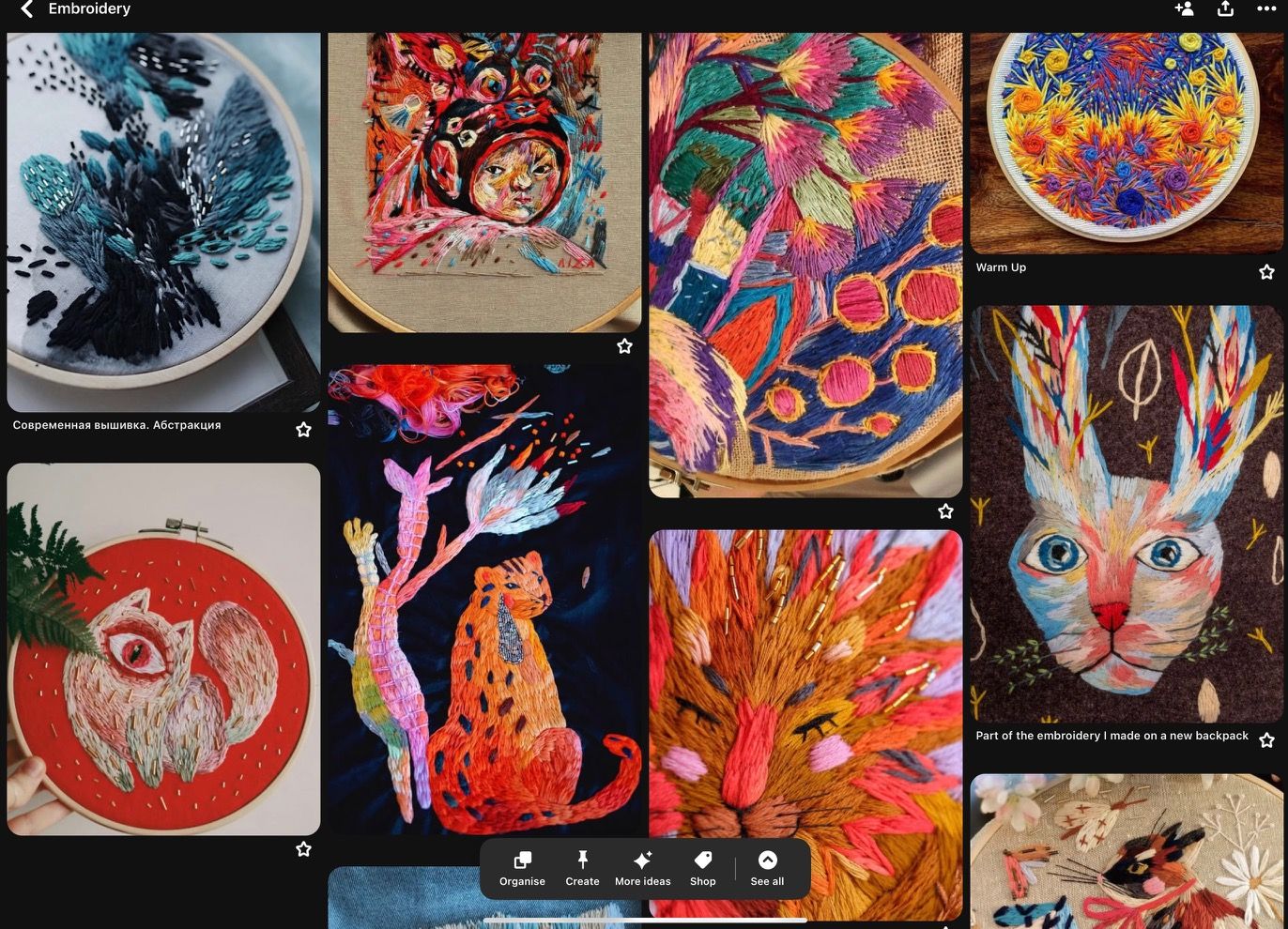
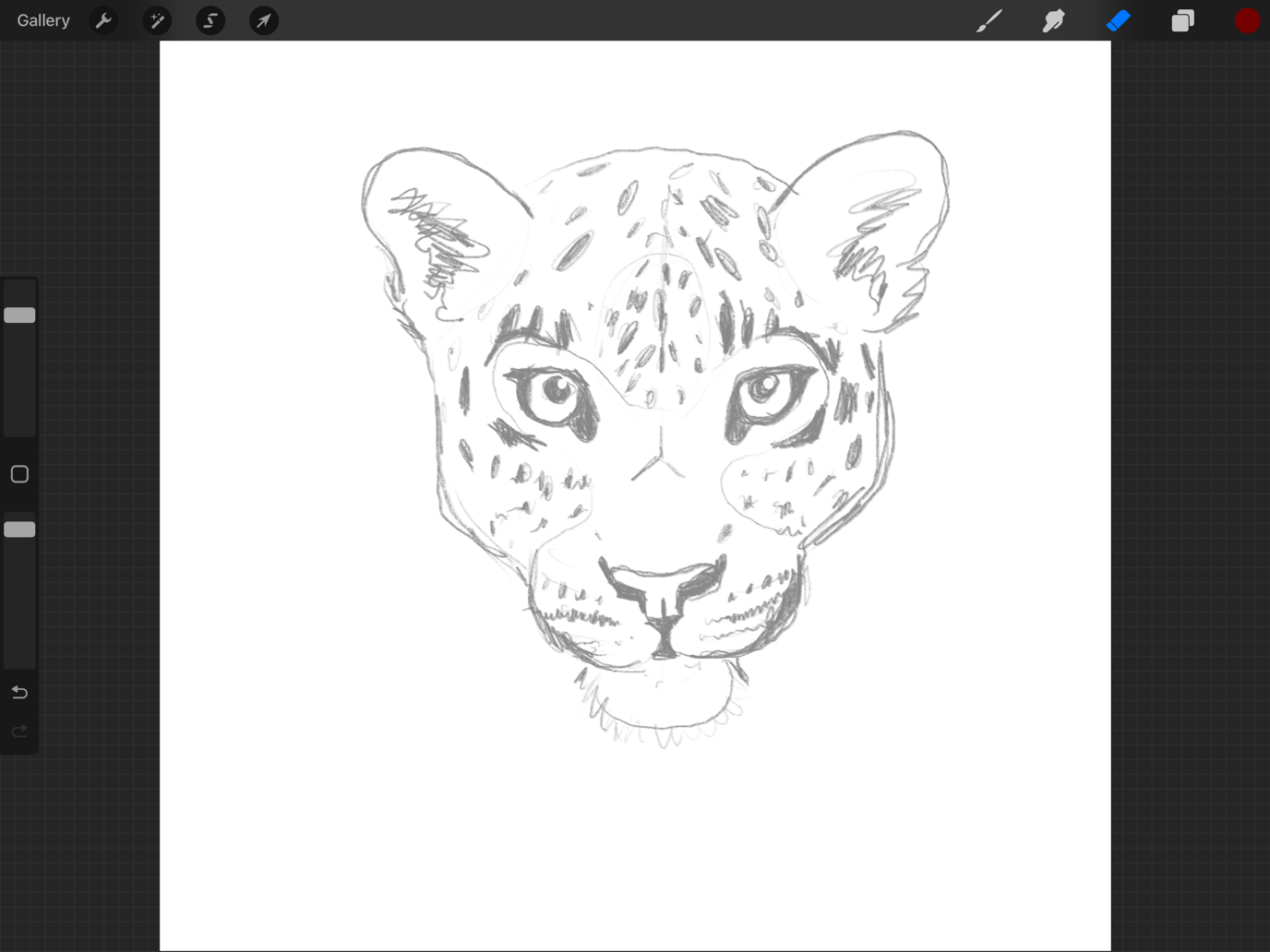
I had an inspiration board on Pinterest of embroidery artists and work that I was drawn to and inspired by. I decided for this project that I wanted to make a practical object embellished with embroidery. I have previously made needle books embellished with sashiko embroidery, so I decided on an embroidery that I could use for a needle book cover. I wanted to try a different type of embroidery inspired by my Pinterest board. I decided on a leopard head. I searched for appropriate reference images until I found some good ones that I used to make a rough sketch in Procreate.
Preparation
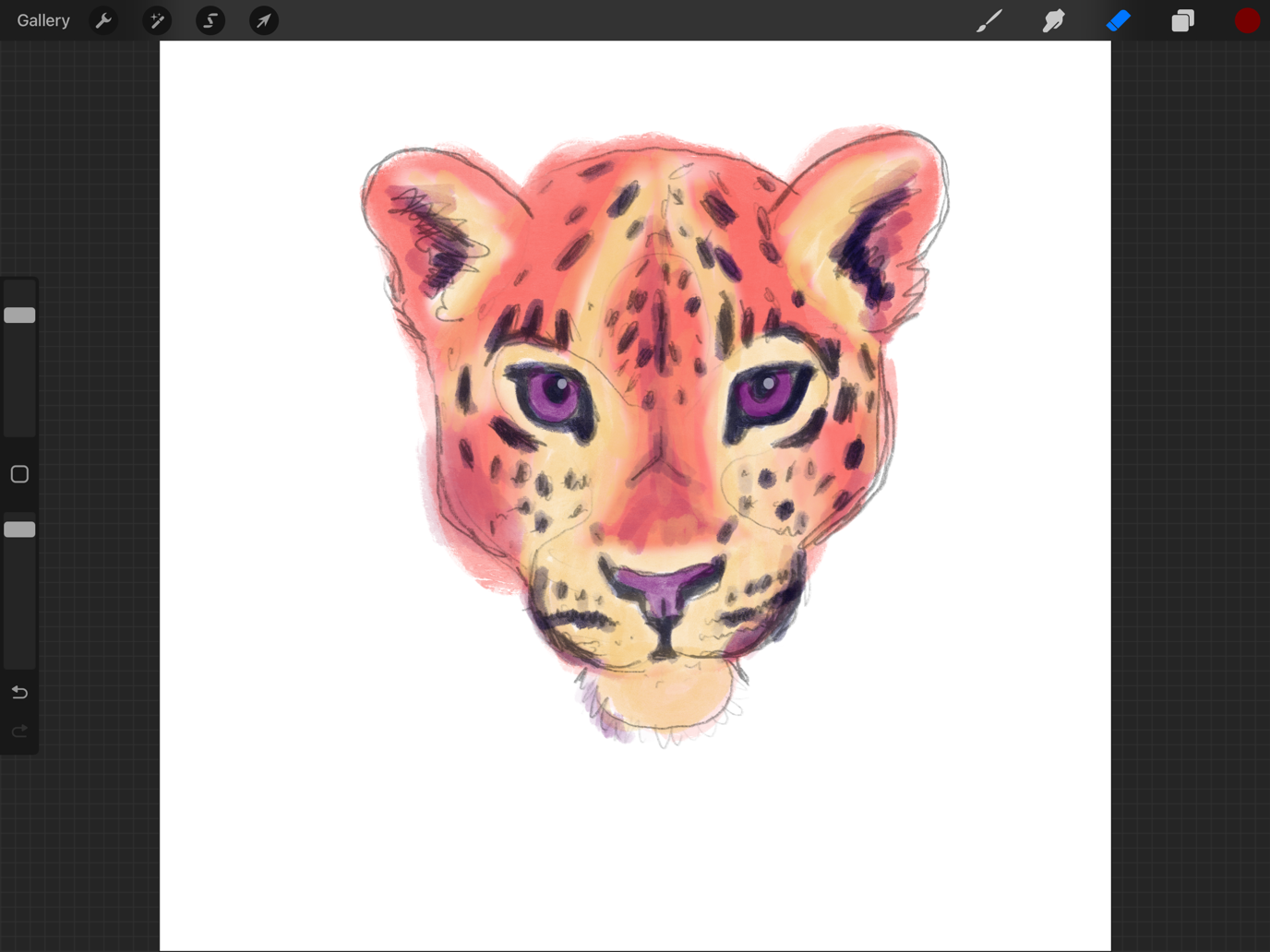
Linked to my original goals, was the desire to play with colour. I wanted to try using colours that were not true to life, but that could still be understood by the viewer. To do this I started by choosing a limited palette of around 3-4 colours. I tried a couple of variations, but ultimately chose a palette with blue as the main hue. I selected magenta/purple as a contrasting hue for the nose and spots, and yellow for the eyes because I wanted them to stand out. I mapped out these colours onto the initial sketch and then selected the closest colours I could find in my stash. I didn't want to buy anything new for this project so that I wouldn't be precious about using any of the supplies, so I decided to use an old pair of jeans as my fabric.
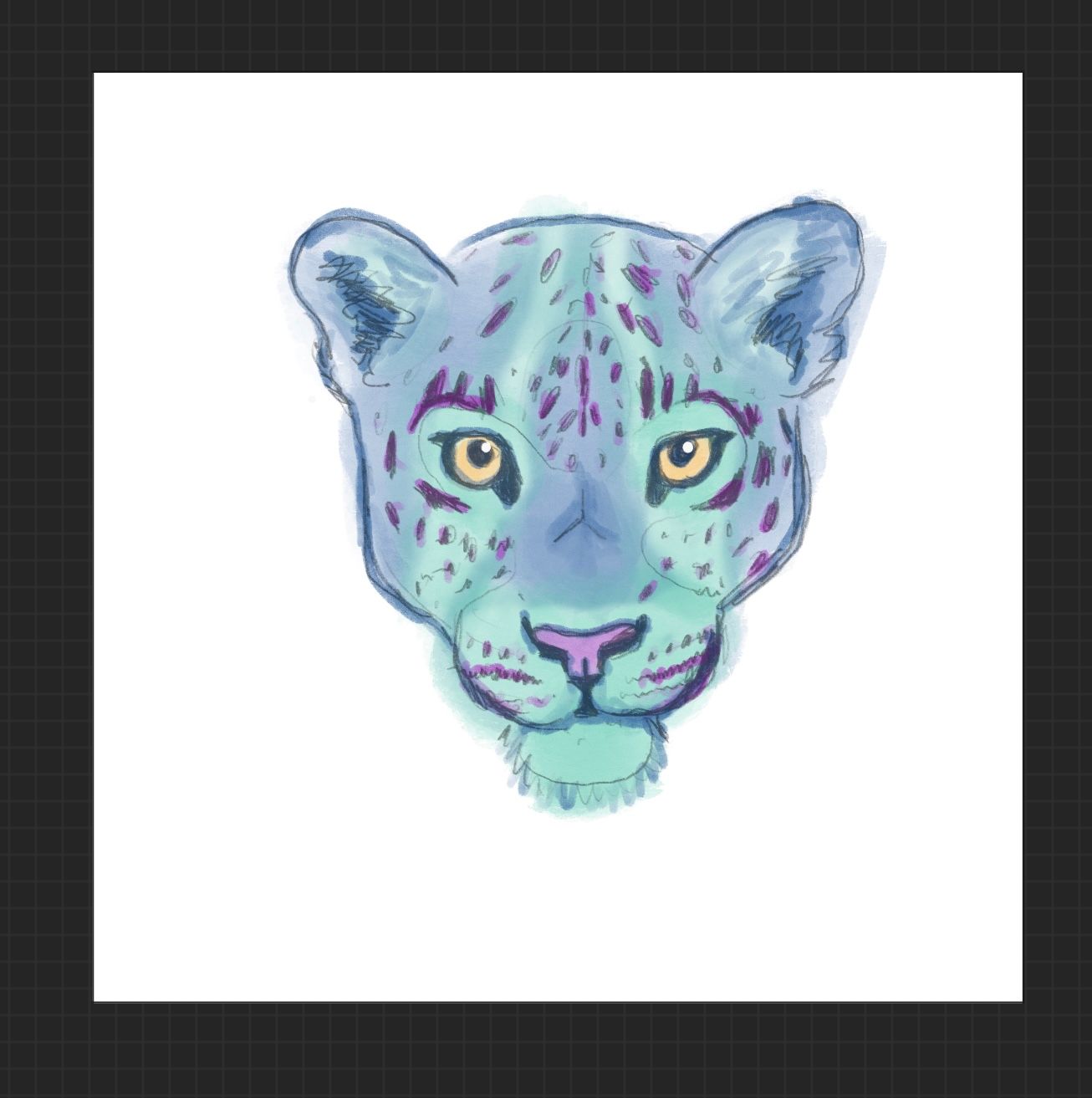
Transferring the design
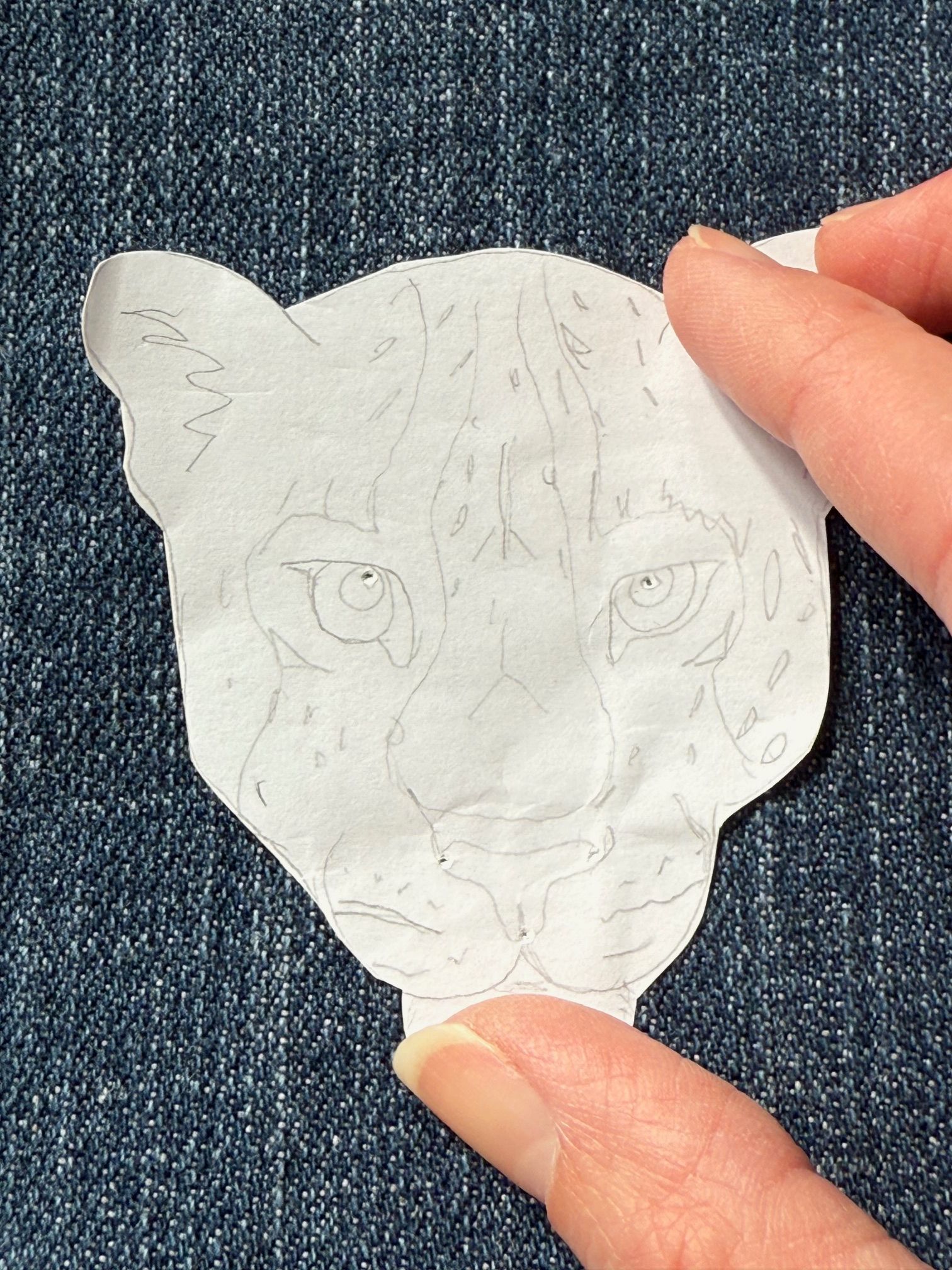
I prepared the fabric by cutting out an appropriate size of fabric and marking out where all the edges would be using my washable fabric marker. I ironed the fabric to make sure all wrinkles were removed. I then resized my initial sketch on the iPad until it would fit nicely onto the area I had marked out on the fabric for the front of the needle book. I then used the iPad like a light box and lightly traced the sketch onto copy paper. I cut out the sketch and then held it in place while I drew around it with the white washable fabric marker. If you use a similar pen, be aware that it takes about 30 seconds for the marks to become visible, so it requires some patience. If the fabric had been lighter in colour and density, I could have possibly traced the design directly onto the fabric. I made holes in the paper with a pin, marking the eyes and the points of the nose. I used the pen to mark these through the holes. I then drew them on and roughly marked out where each colour would be grouped.
Starting the embroidery
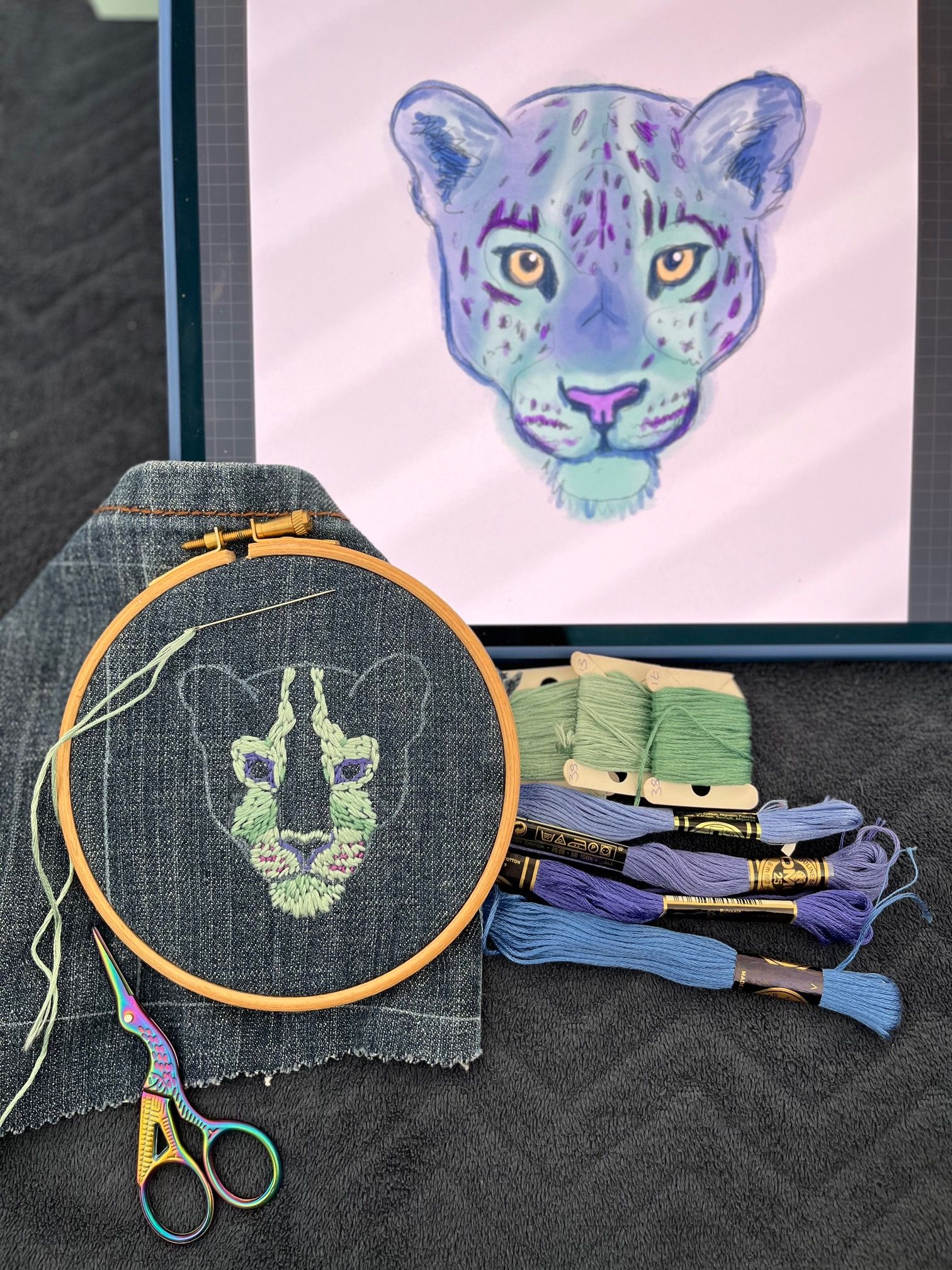
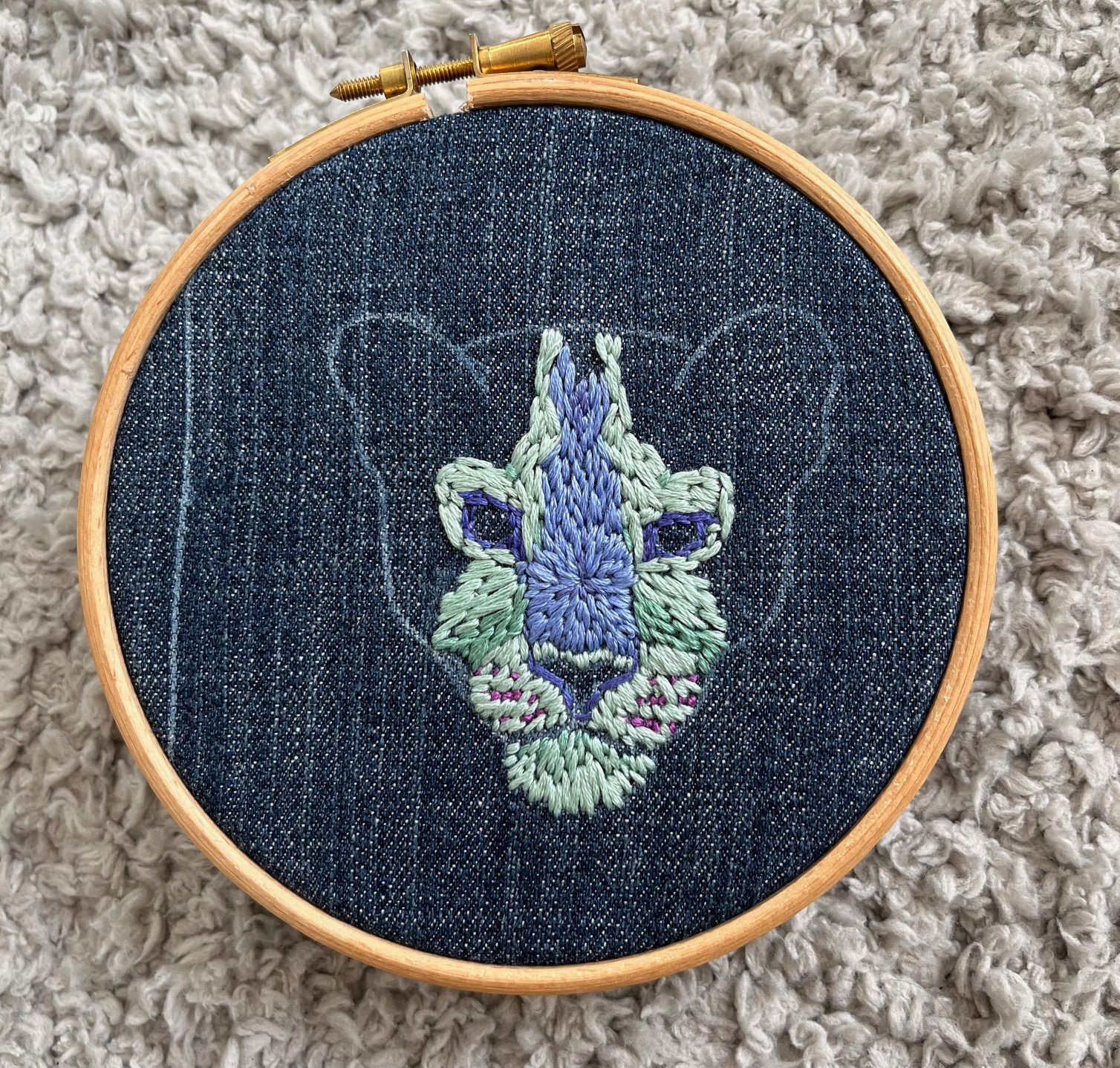
I decided to start embroidering the lightest areas first. I made a decision to use 6 strands of floss because I wanted the leopard head to have a chunky, almost sketch-like quality to it. In hindsight, I could have probably achieved the same effect with 4 strands, which would have allowed me to blend the individual stitches better. Lesson Learned!
Referring to my colour plan often, I worked the whisker spots at the same time as the light green thread on the muzzle. I used two needles threaded at the same time so I could change between them as I needed. I like the effect of the spots nearly disappearing into the green as I wanted them to be quite subtle here. I decided at this point though, that I would do the main spots over the background colour so that they would be stronger visually.
Moving on to blue
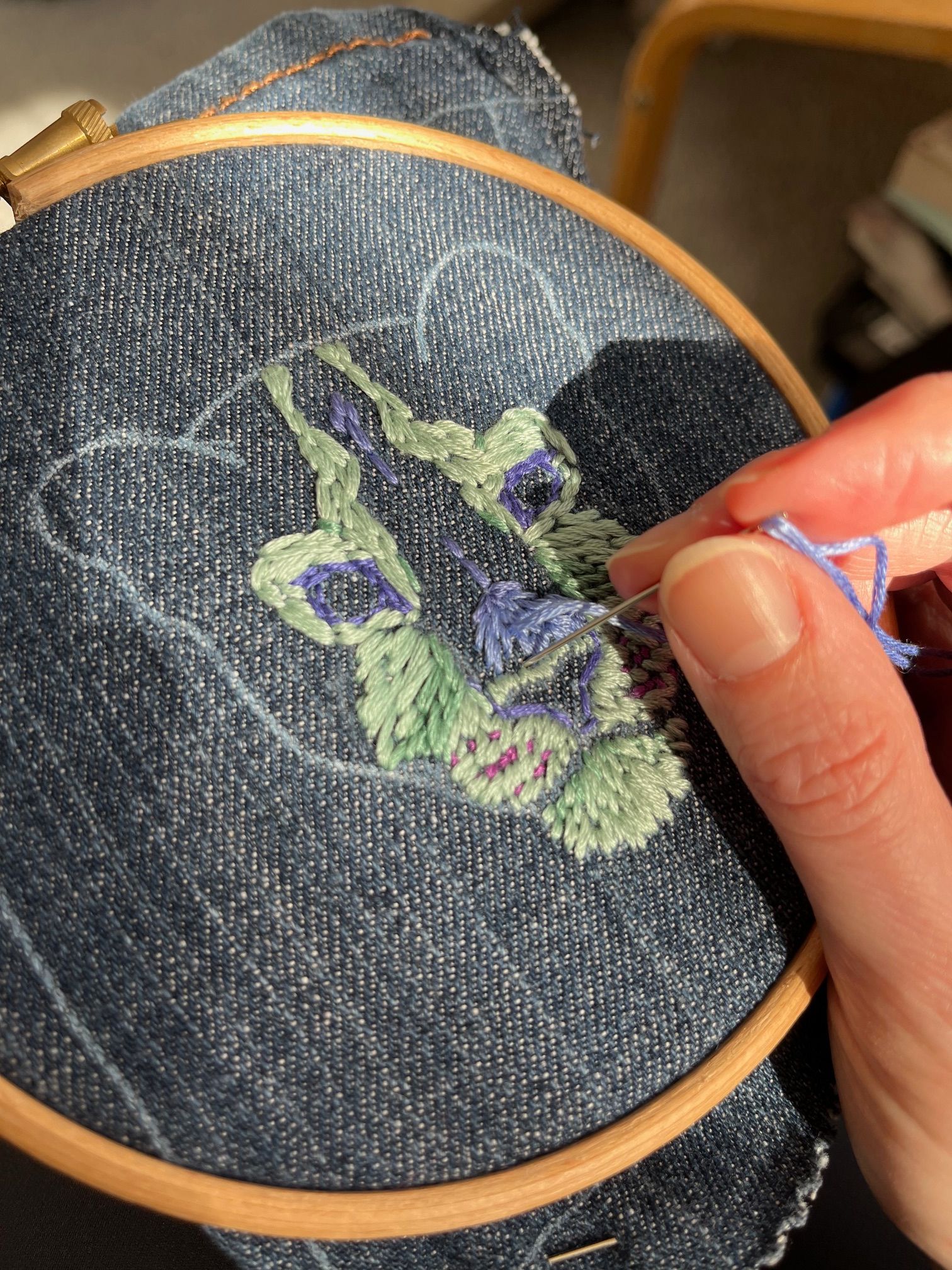
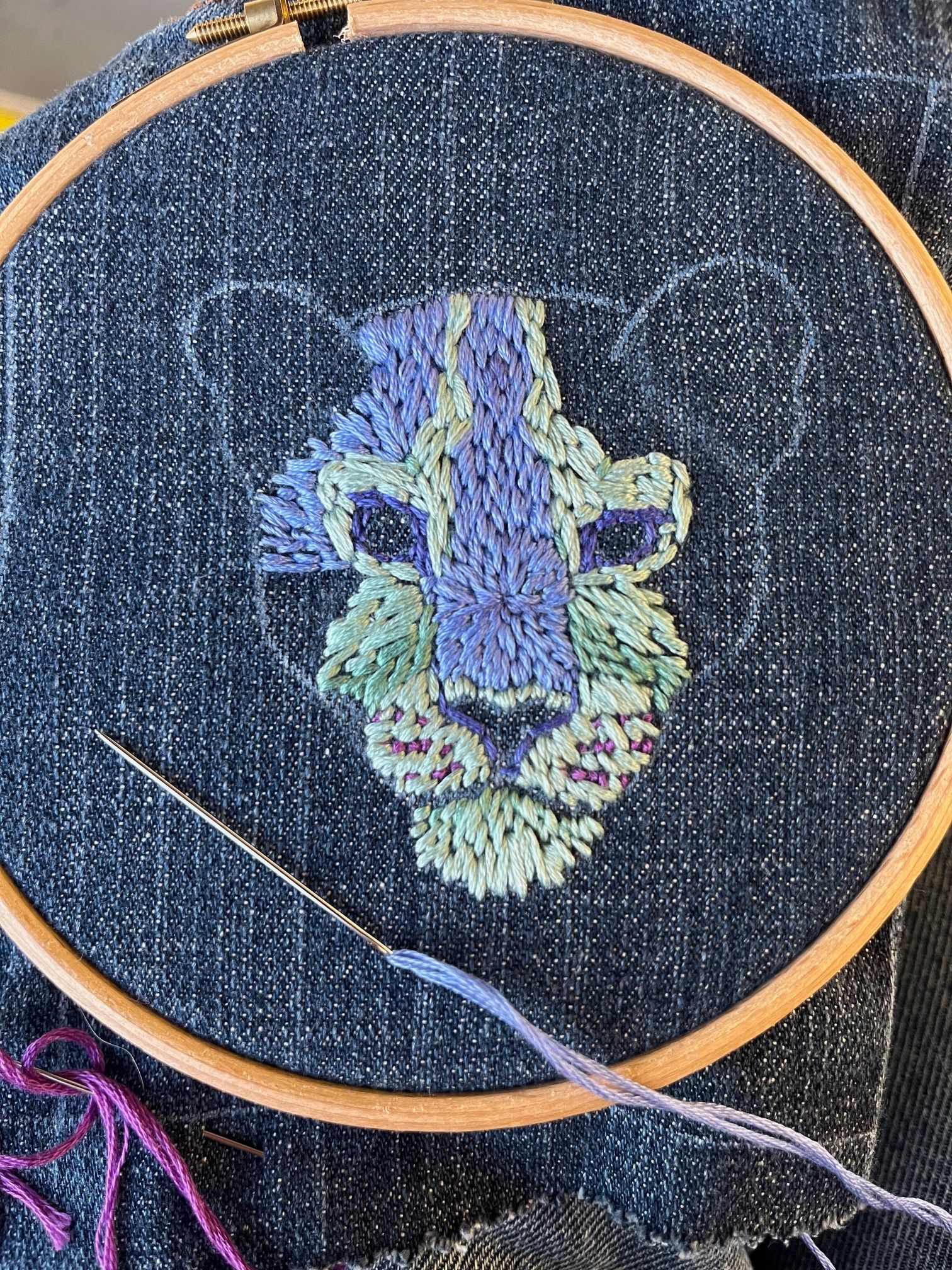
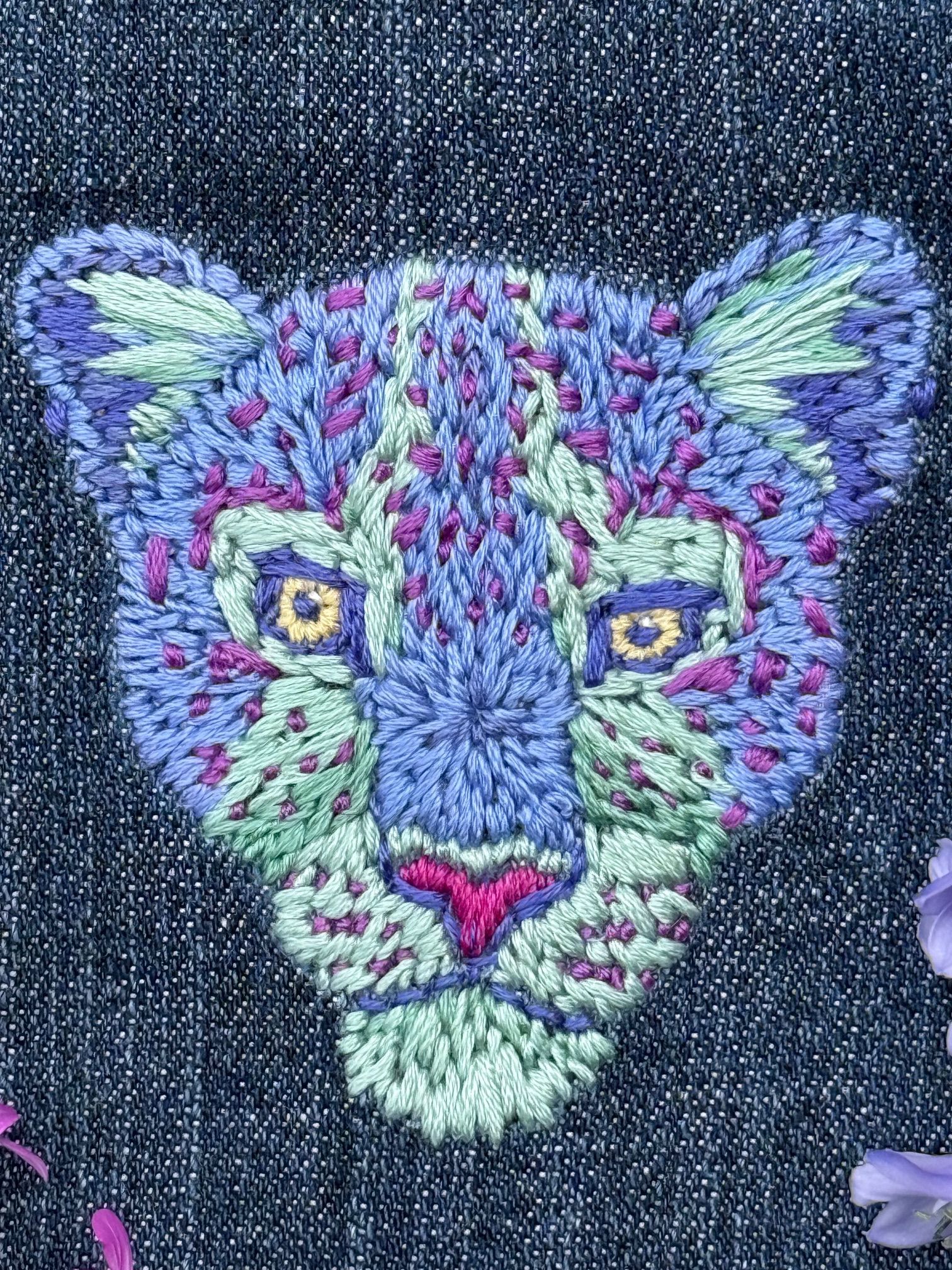
After the green, I moved on to the blue thread and worked my way up the nose, and then down each side of the head. I used many reference photos of leopards to stitch in the direction that the fur lies. This is a subtle detail, but it makes the final image more understandable and gives it a more realistic quality.
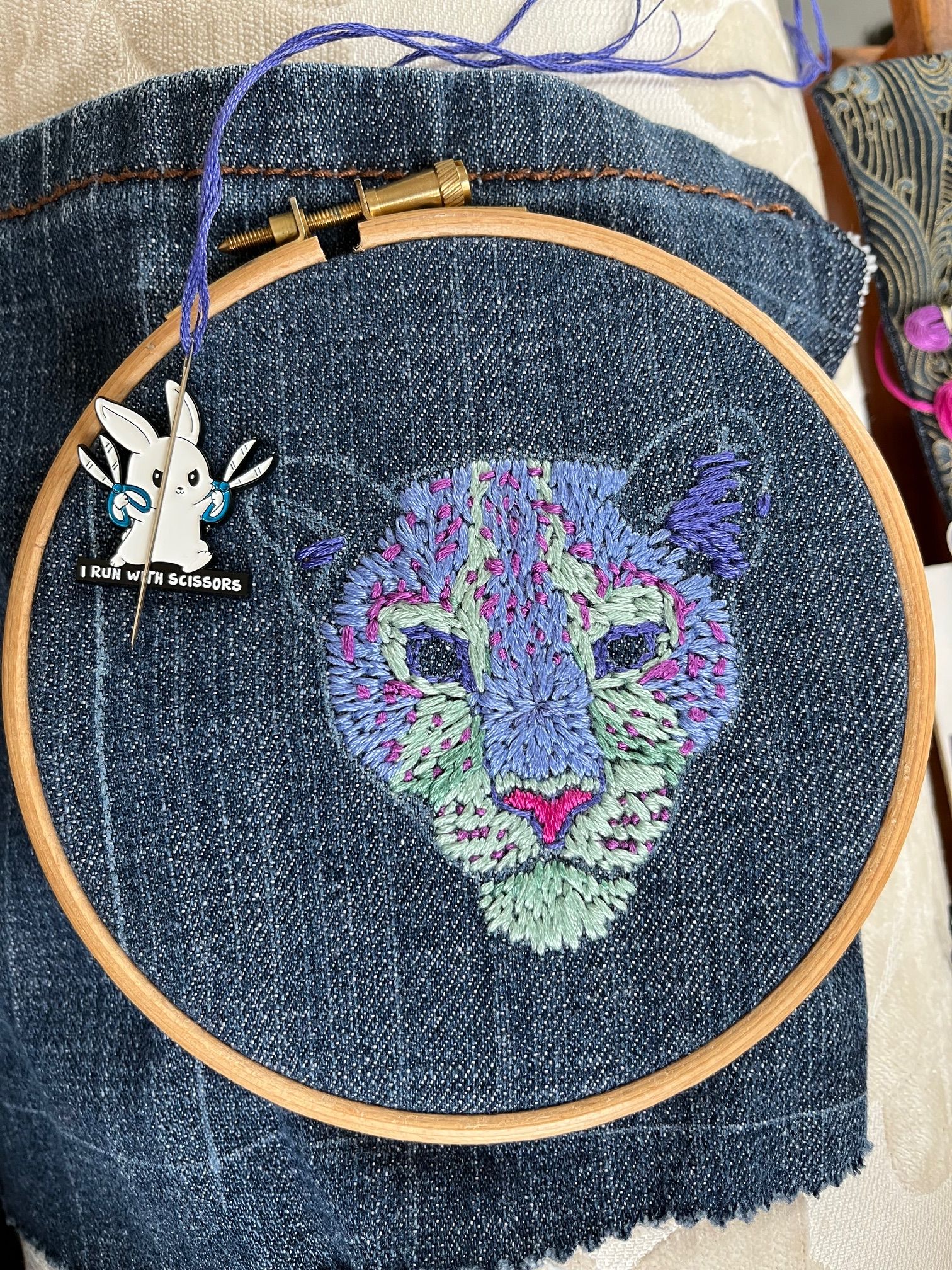
I then started on the spots. As I mentioned earlier, I decided before I started on the blue that I wanted the spots to be laid over the top of the blue to make them more visible. I used both my sketch and referred to photos to make sure the spots were roughly in the correct positions and size, although I gave myself some creative licence here.
I used satin stitch for the nose using three strands of floss so that I could get a smoother finish. I started in the middle of the nose and then worked my way outwards one way and then the other. This meant I was able to keep the stitches correctly aligned and all going in the same direction.
The ears
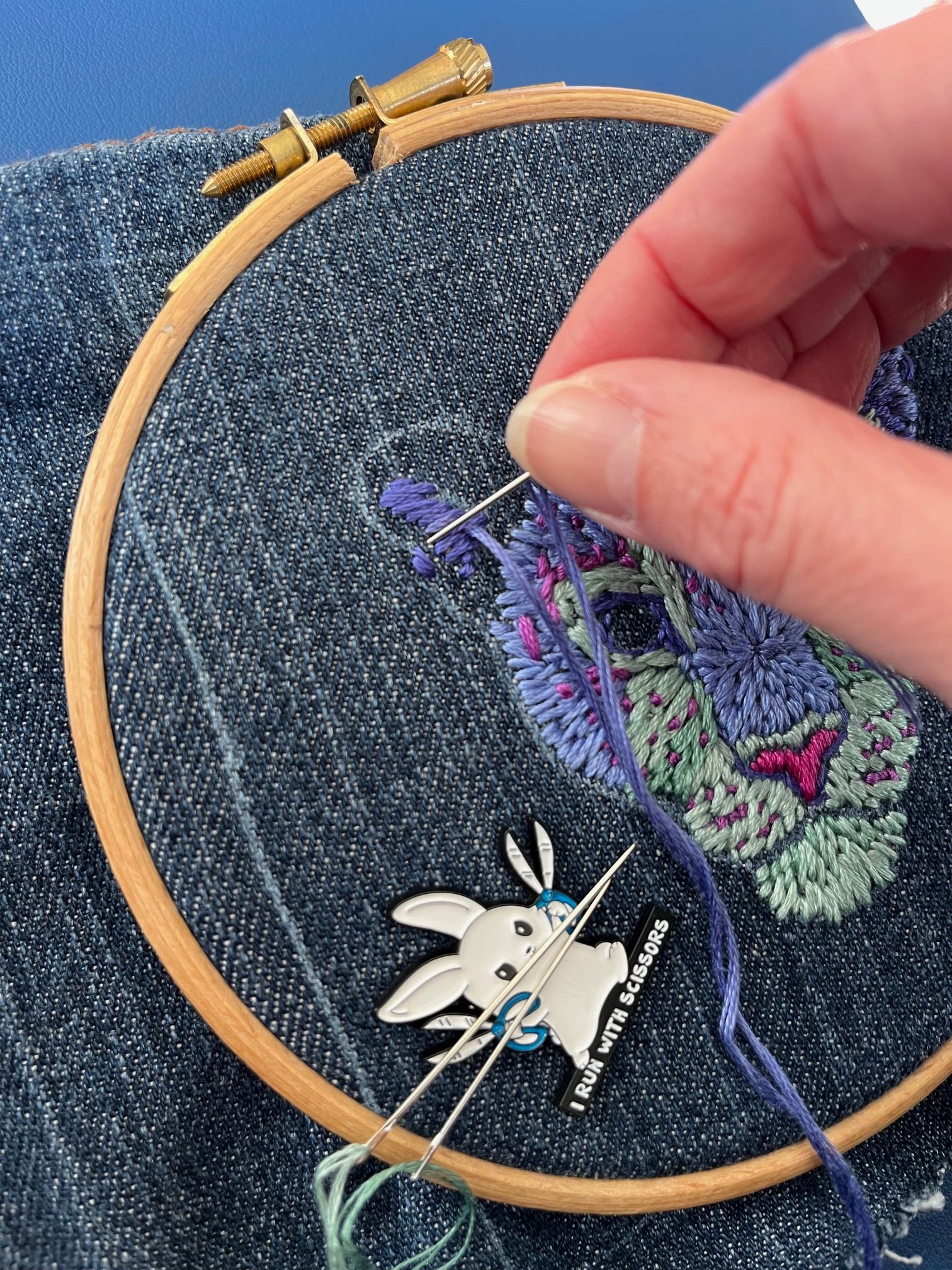
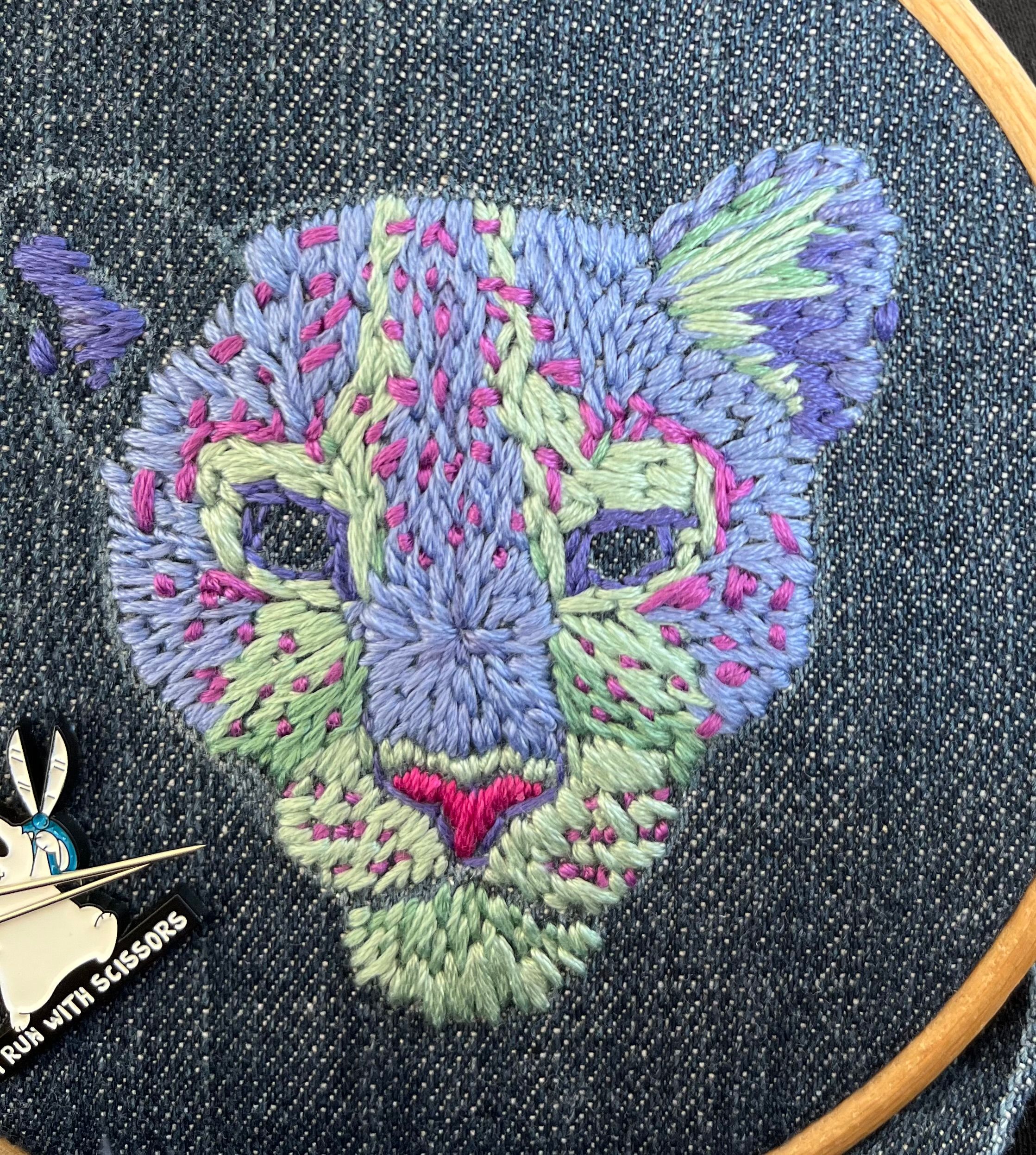
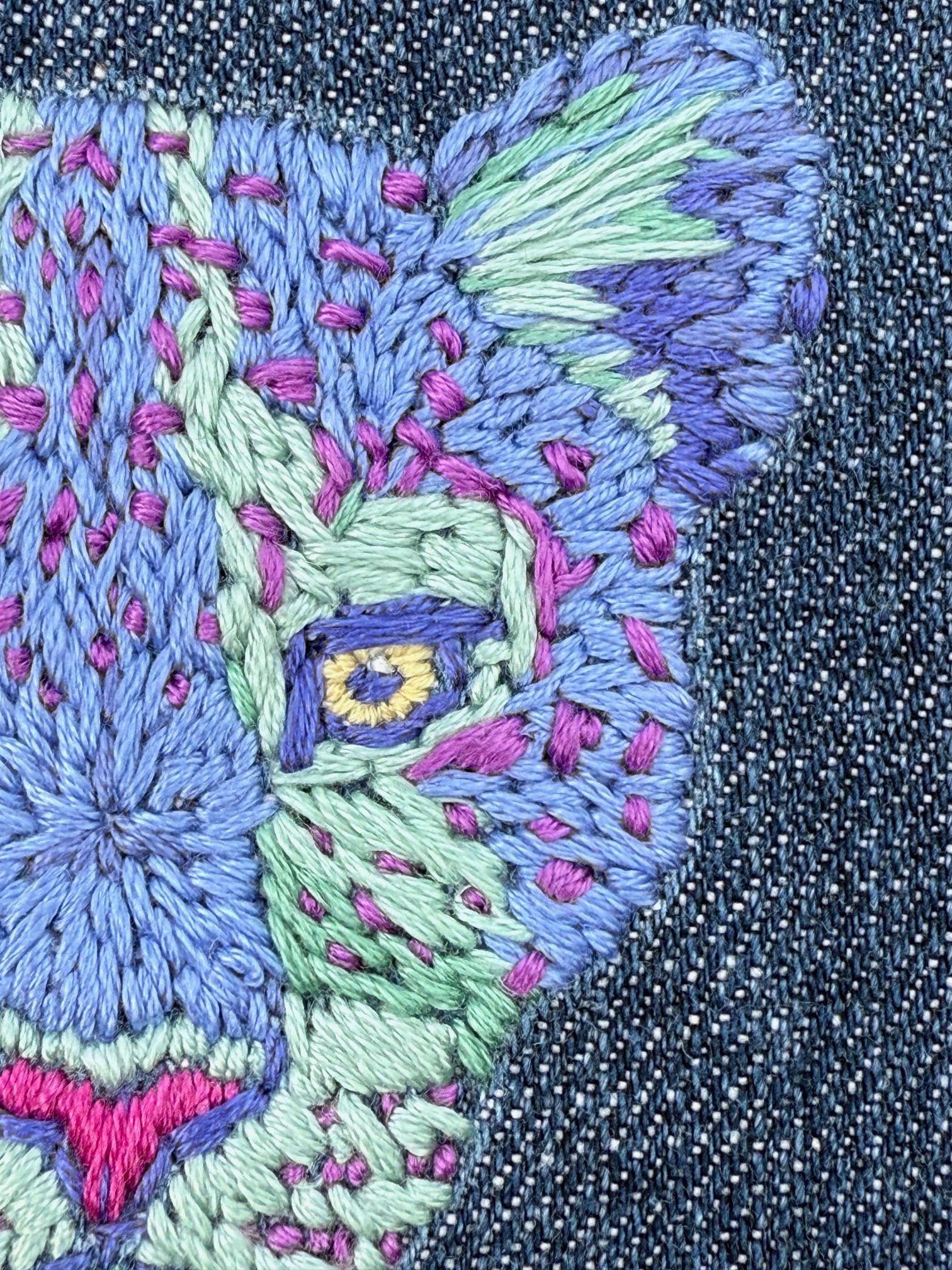
I then worked on the ears. I used my fabric pen to roughly mark out the transition between the light and shadowed areas and then stitched in the dark areas first. This is because I wanted the light stitches to overlap the shadowed areas. I graded out the dark stitches to the lighter blue on the edge of the ear by using long and short stitches that interlinked. For the pale fur in the ear I used 3 strands of floss because the fur here is longer, more wispy and delicate and 6 strands wouldn't have conveyed that very well. I used different values of the green hue to give the fur some depth. I had 2-3 needles threaded at the same time here so that I could change between them easily.
The eyes - fixing a problem
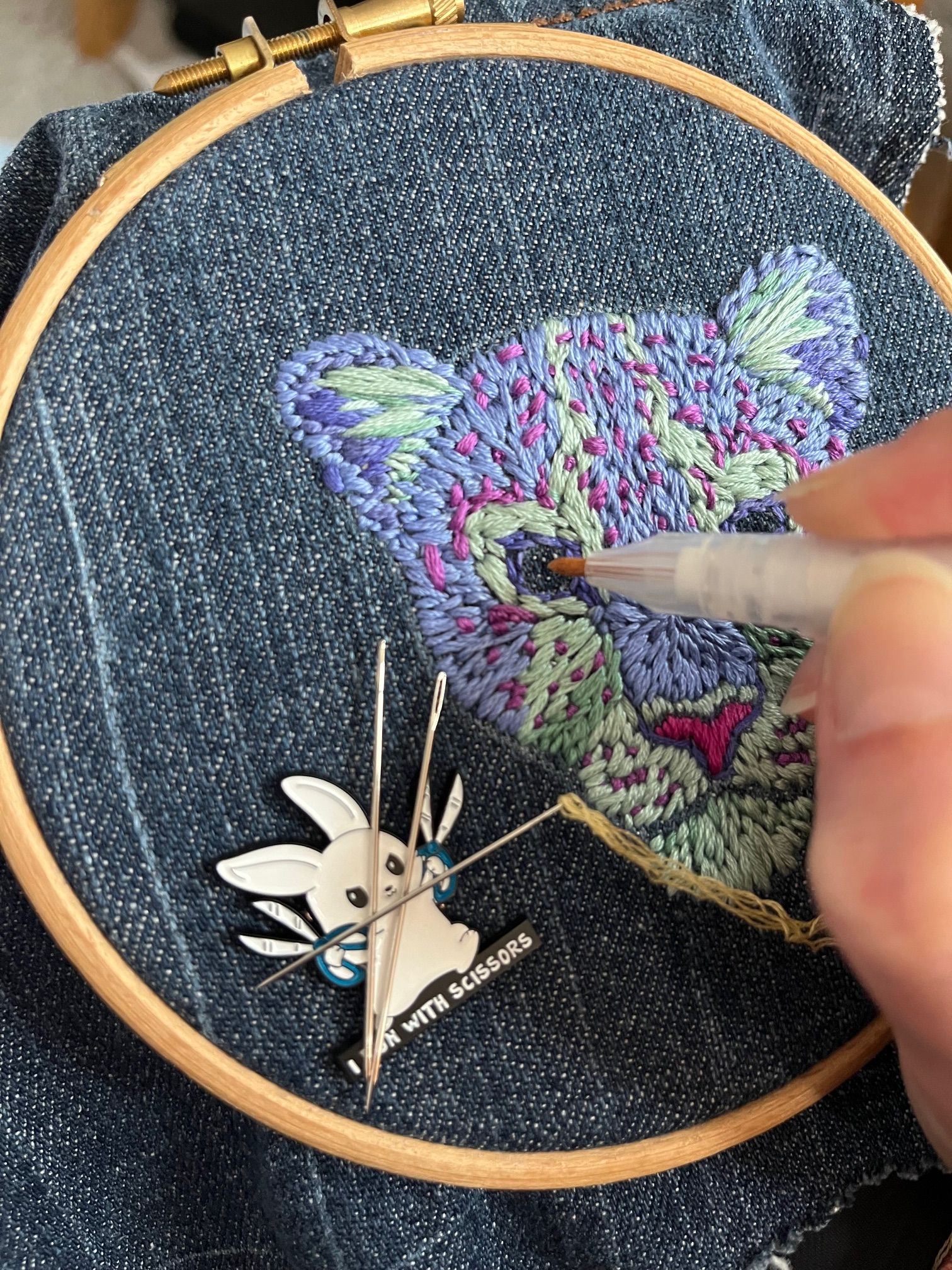
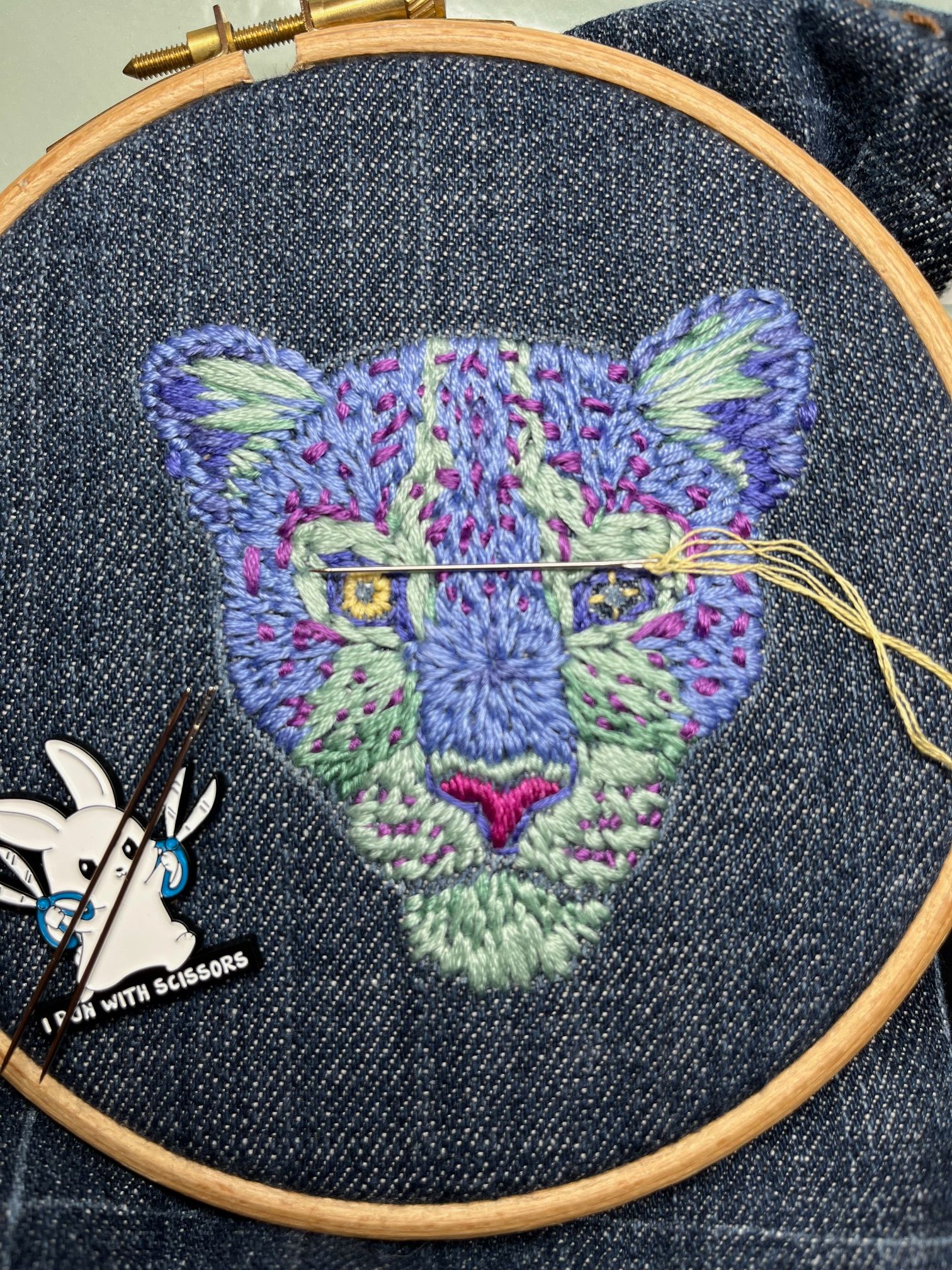
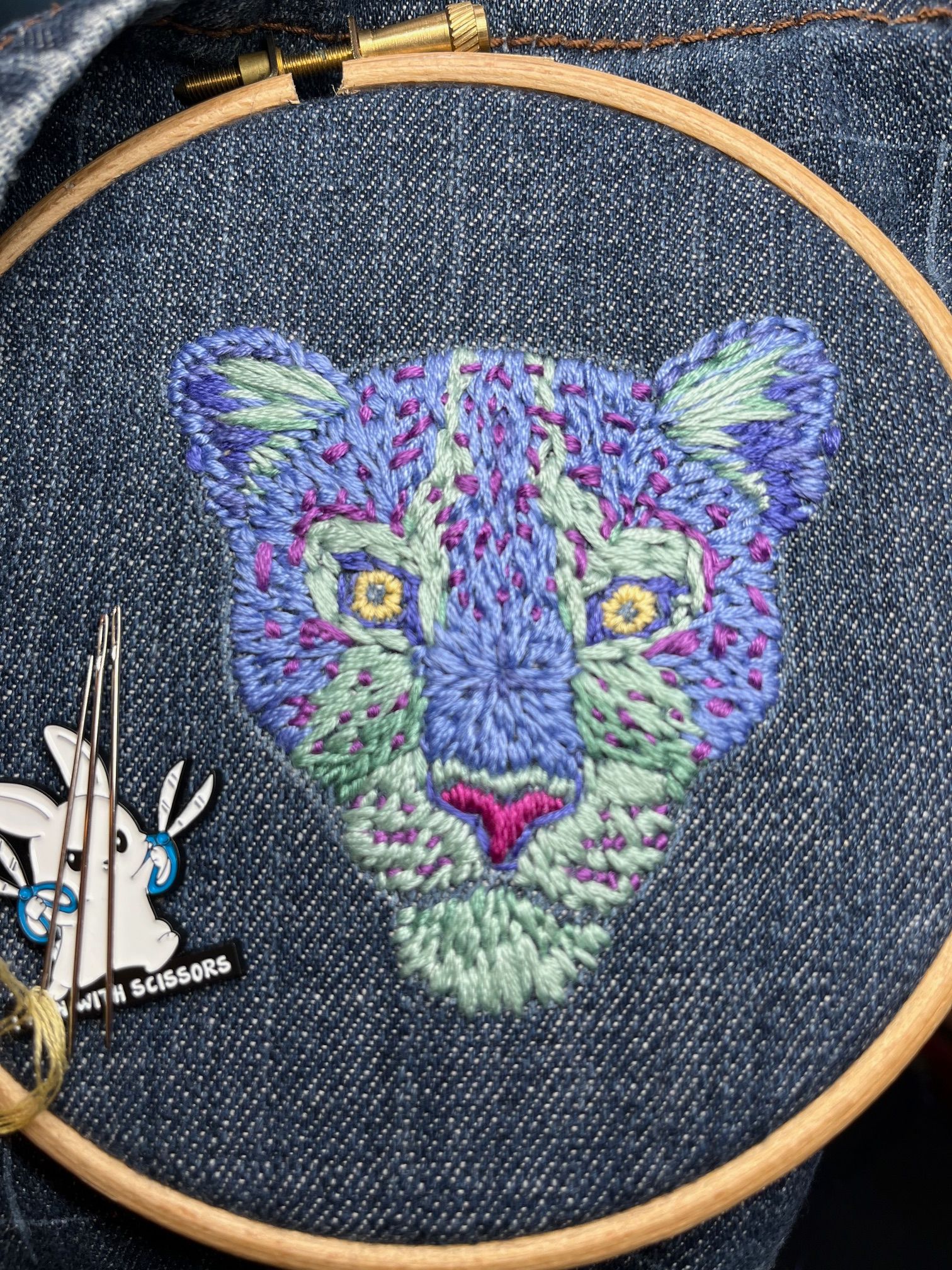
Turning to the eyes, I realised that I had a small problem because the right eye was smaller than the left, and slightly lower. Although I was trying to embrace mistakes, I felt that this is a problem I needed to solve because the eyes are one of the most important parts of the image. To solve the problem, I started by using my fabric pen to mark out where I wanted the pupils to be. I then started working on the left eye so that I could use it as a reference for the right. I had to decide whether to do a normal satin stitch with all the stitches going in the same direction, or to radiate the stitches outwards from the pupil. I chose to have the stitches radiate, but the area is so small and fiddly, I used 3 strands so I could have more control. After doing the first iris, I used my needle to roughly measure where the top of the right eye should be. I had to stitch over the top of the existing edges to do so. I then stitched in the pupils and then went over the original edges of the eye to thicken them, even them out, and to give the leopard more of a top eyelid so it looked less surprised and added a little white stitch to each eye for an eye shine. I then used the darkest thread to add details to the nose and mouth.
Final steps
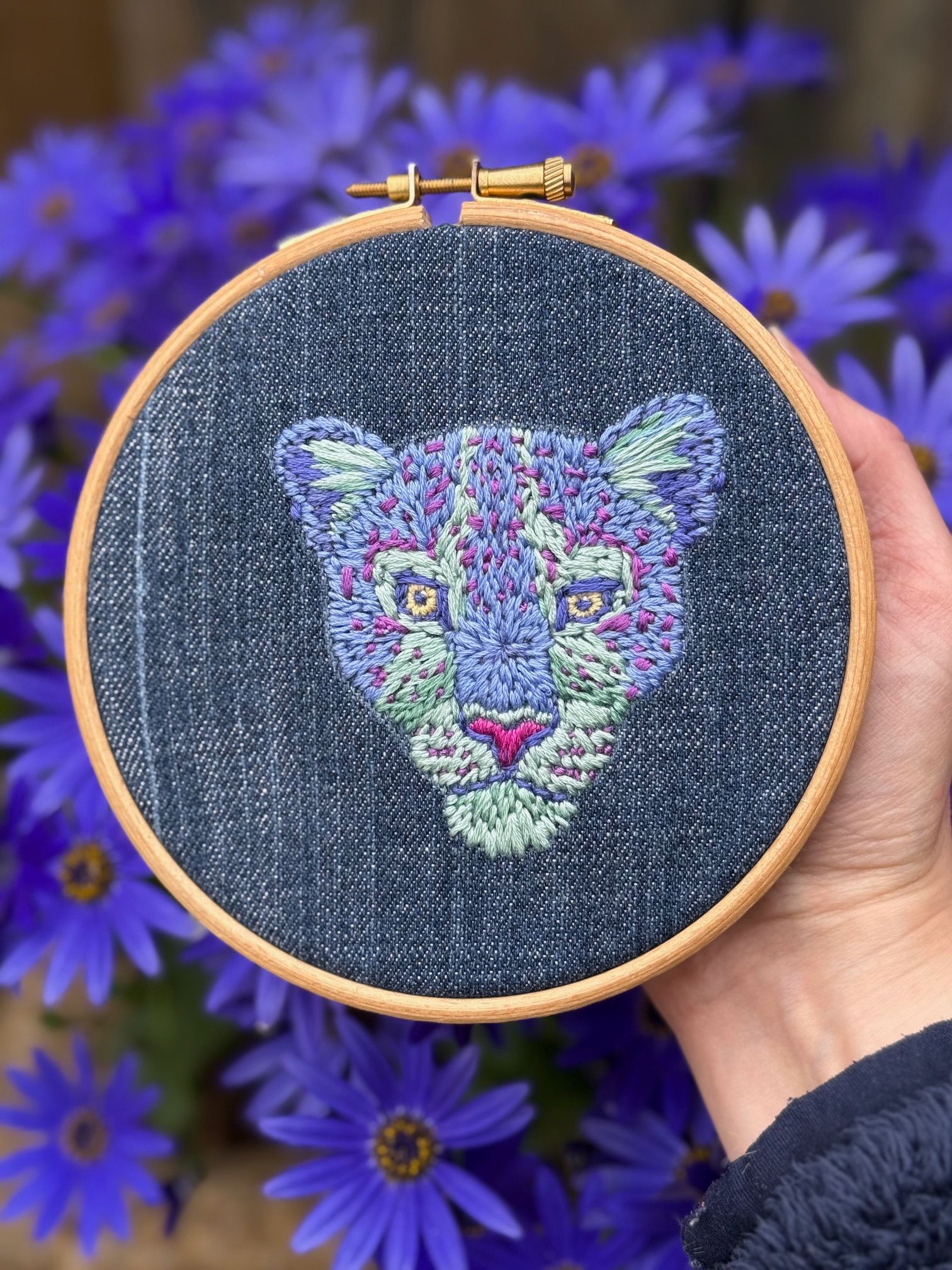
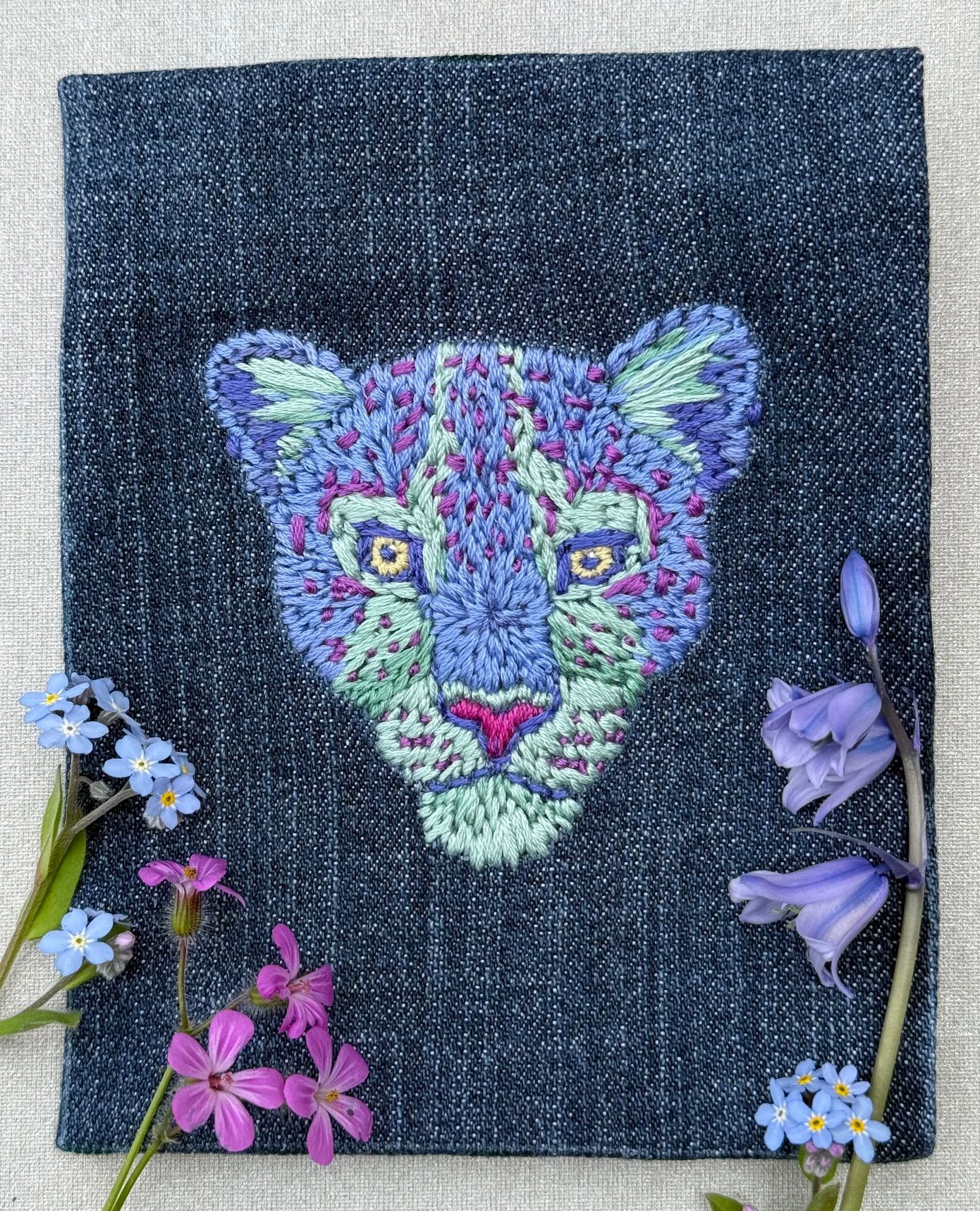
When I took the leopard out of the embroidery ring, I used a little bit of water on my fingers to wash away any fabric pen that was still visible. I then covered the embroidery with a clean, dry muslin and ironed the denim flat. It is now ready to be used as a cover for my next needle book.
I really enjoyed doing this project. I feel like I learned a lot from the process of just jumping in a trying. It isn't perfect by any means, but that wasn't the goal I set out to achieve. I hope you like the end piece as much as I do. I hope that if you are thinking of starting a project but feel like you don't know what you are doing, you take the plunge and just give it a go. As long as you have fun and learn something, you can't lose.


1 komentar
Benar-benar menakjubkan!!!
Masuk atau bergabung Gratis untuk berkomentar