
Retratos realistas de animais de estimação com pastéis a óleo para iniciantes
Realistic Pet Portraits with Oil Pastels for Beginners
de happyrainbowchan @happyrainbowchan
- 207
- 3
- 1
(Traduzido automaticamente de inglês)
Introdução
Introduction
Sobre mim
Olá, eu sou o Rain. Prazer em conhecê-lo!
Bem-vindo ao meu curso de Criação de Retratos Realistas de Animais de Estimação usando Pastéis a Óleo para Iniciantes.
Sobre este curso
Há algo mágico em capturar o espírito de um animal de estimação querido no papel — aqueles olhos comoventes, aquela inclinação peculiar da cabeça, a textura única de seus pelos. Neste projeto, mostrarei uma maneira fácil de criar retratos realistas de animais de estimação usando pastéis oleosos e maneiras de realçá-los com técnicas mistas, como lápis de cor e canetas de ponta fina, para adicionar textura e dimensão.
Minhas Influências
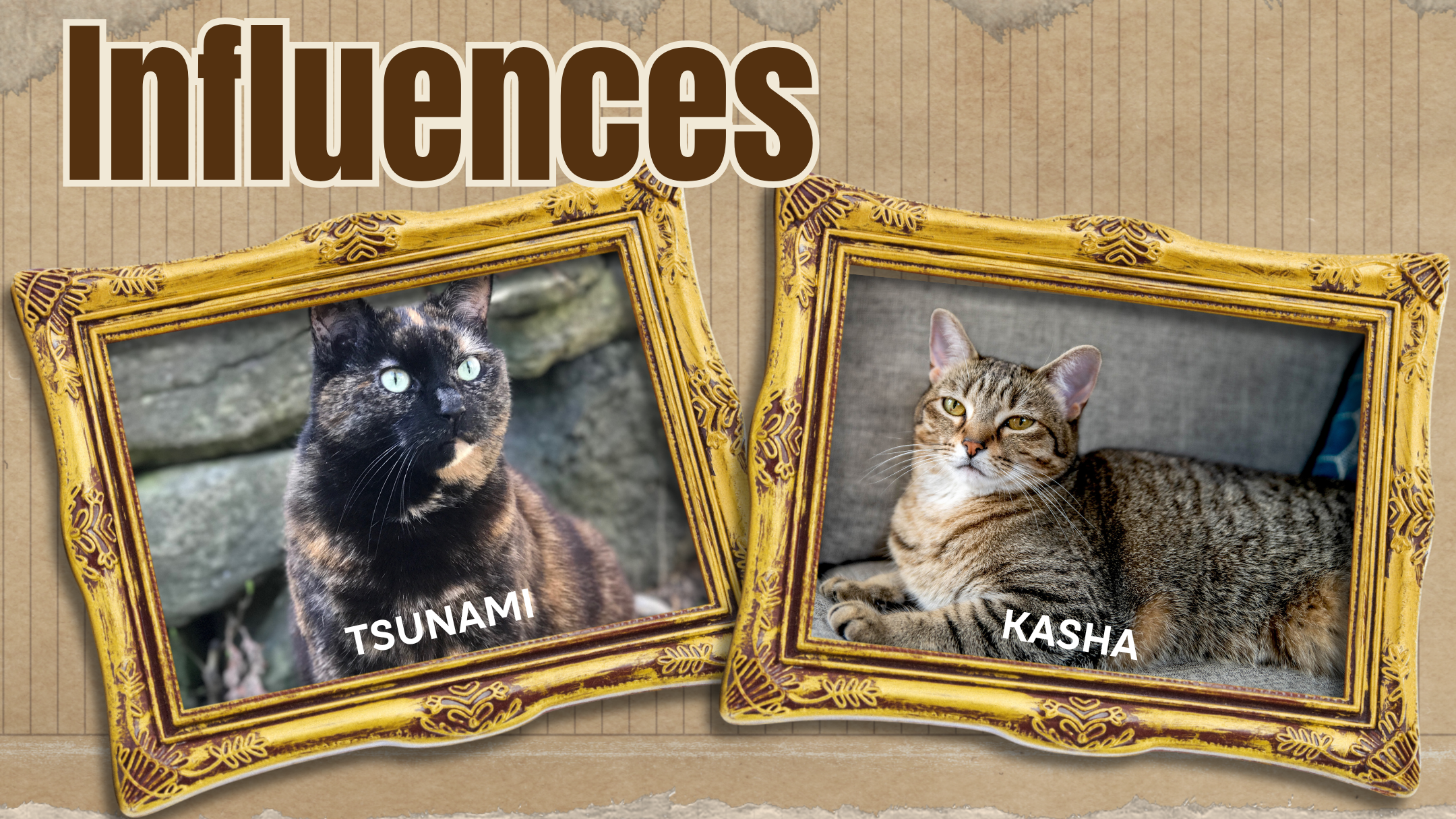
Meus gatos, Tsunami e Kasha. Durante a pandemia, me senti confinada em casa, com pouca ou nenhuma vida ao ar livre, mas me fascinava ver meus gatos brincando e fazendo pequenas coisas bobas. Isso me levou a querer capturá-los em seus momentos mais travessos, mas no papel. Primeiro, experimentei lápis e canetas grafite por um tempo, mas depois, na tentativa e erro, me levaram aos pastéis oleosos. E agora estou apaixonada por eles!
Por que pastéis a óleo?
Depois de experimentar diferentes materiais, optei pelo pastel a óleo por sua cremosidade e pigmentação intensa. É também um material muito interativo, onde você pode realmente sentir as cores com os dedos sem se preocupar muito em deixar secar, borrar ou espalhar. Este curso, no entanto, pode ser feito em qualquer material com o qual você se sinta mais confortável. O objetivo é combinar emoção com textura. É perfeito para iniciantes ou criativos curiosos que buscam explorar um material que seja tolerante, vibrante e cheio de personalidade. Então, vamos nos divertir juntos!
About Me
Hello, I'm Rain. Nice to meet you!
Welcome to my course of Creating Realistic Pet Portraits using Oil Pastels for Beginners.
About This Course
There’s something magical about capturing the spirit of a beloved pet on paper- those soulful eyes, that quirky tilt of the head, the unique texture of their fur. In this project, I’ll show you an easy way to create realistic pet portraits using oil pastels, and ways to enhance it with mixed media techniques like colored pencil and fine liner pens to add texture and dimension.
My Influences
My cats, Tsunami and Kasha. During the pandemic, I'd felt home bound with little-to-no outdoor life but would find myself being fascinated to see my cats being playful and doing silly little things. That led me to want to capture them in their most mischievous moments but on paper. I first tried graphite pencils and pens for a while, but then the trial and error led me to oil pastels. And now I'm in love with them!
Why Oil Pastels?
After trying different media, I gravitated towards oil pastels for its creamy blend-ability and intense pigmentation. It's also a very interactive media where you can truly feel the colors with your fingers without worrying too much about letting it dry, smudging or spreading colors. This course however can be followed along in any media that you feel most comfortable using. It's all about layering emotion with texture. It’s perfect for beginners or curious creatives looking to explore a medium that’s forgiving, vibrant, and full of character. So let's have some fun together!
Suprimentos
Supplies
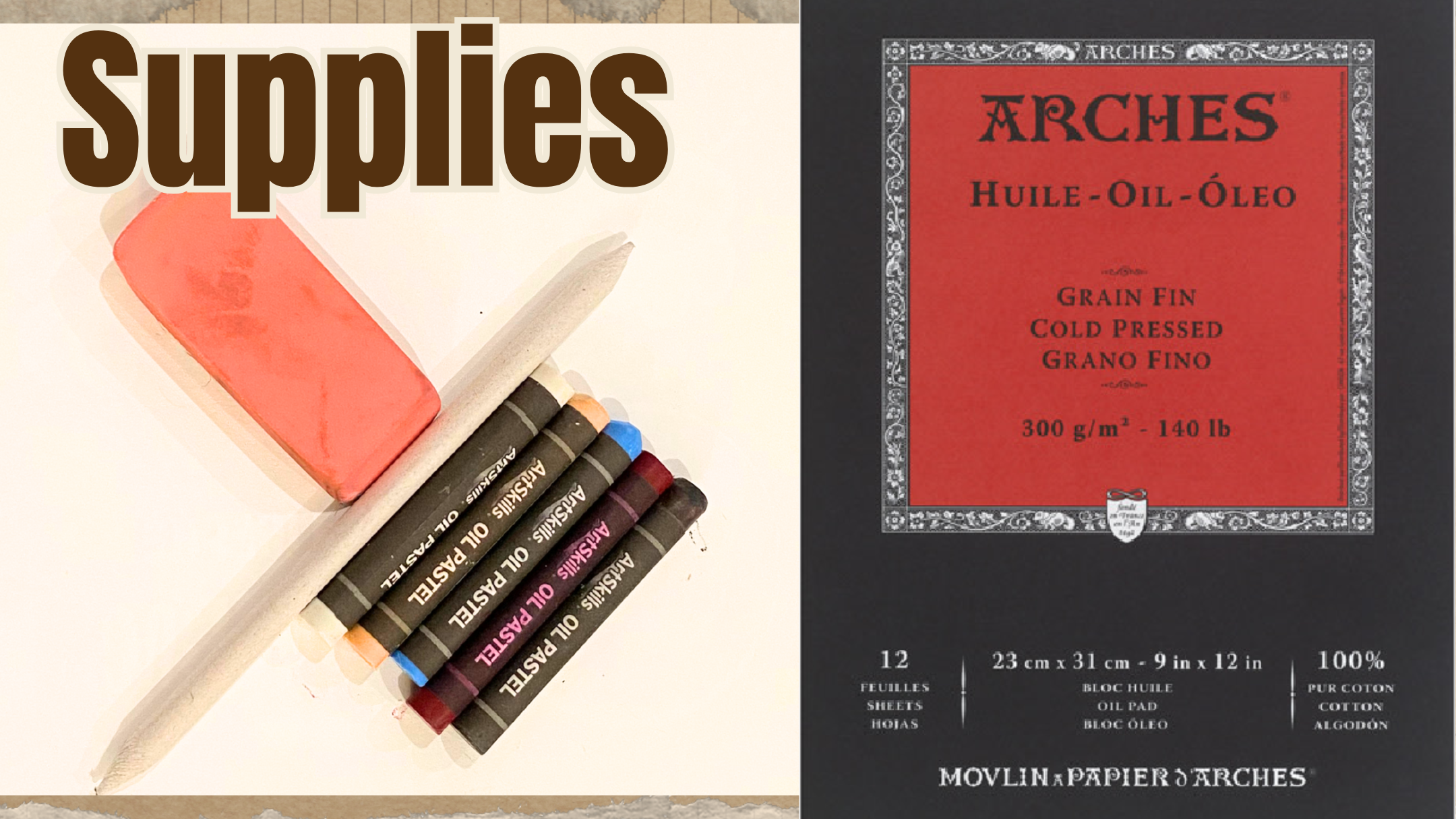
Pastéis a óleo: Artskills ($), Faber-Castell ($$) ou Mungyo ($$$).
Papel tonalizado ou texturizado: Arches. Descobri que papéis prensados a frio são ótimos para textura e camadas.
Ferramentas de mistura: cotonetes, papel de seda ou apenas seus dedos!
Lápis de cor (Prismacolor ou Faber-Castell): para realçar texturas e detalhes finos, como pelos e bigodes.
Canetas de tinta ou marcadores finos: ótimos para linhas nítidas, cílios ou contornos sutis.
Lápis de grafite (opcional): para esboços iniciais e trabalhos leves de composição.
Spray fixador (opcional): essencial para preservar sua arte final.
Oil Pastels: Artskills ($), Faber-Castell ($$) or Mungyo ($$$).
Toned or Textured Paper: Arches. I've found that cold-pressed papers are great for texture and layering.
Blending Tools: Cotton swabs, tissue paper or just your fingers!
Colored Pencils (Prismacolor or Faber-Castell): To enhance texture and fine details like fur and whiskers.
Ink Pens or Fine Liners: Great for crisp lines, eyelashes, or subtle outlines.
Graphite Pencil (Optional): For initial sketching and light composition work.
Fixative Spray (Optional): Essential for preserving your final artwork.
Etapa 1: Rascunho
Step 1: Draft Sketch
Comece escolhendo uma foto de referência que lhe faça sentir algo. Pode ser seu próprio animal de estimação ou alguém com quem você se conecte emocionalmente. Procure por iluminação clara e texturas visíveis, especialmente ao redor dos olhos.
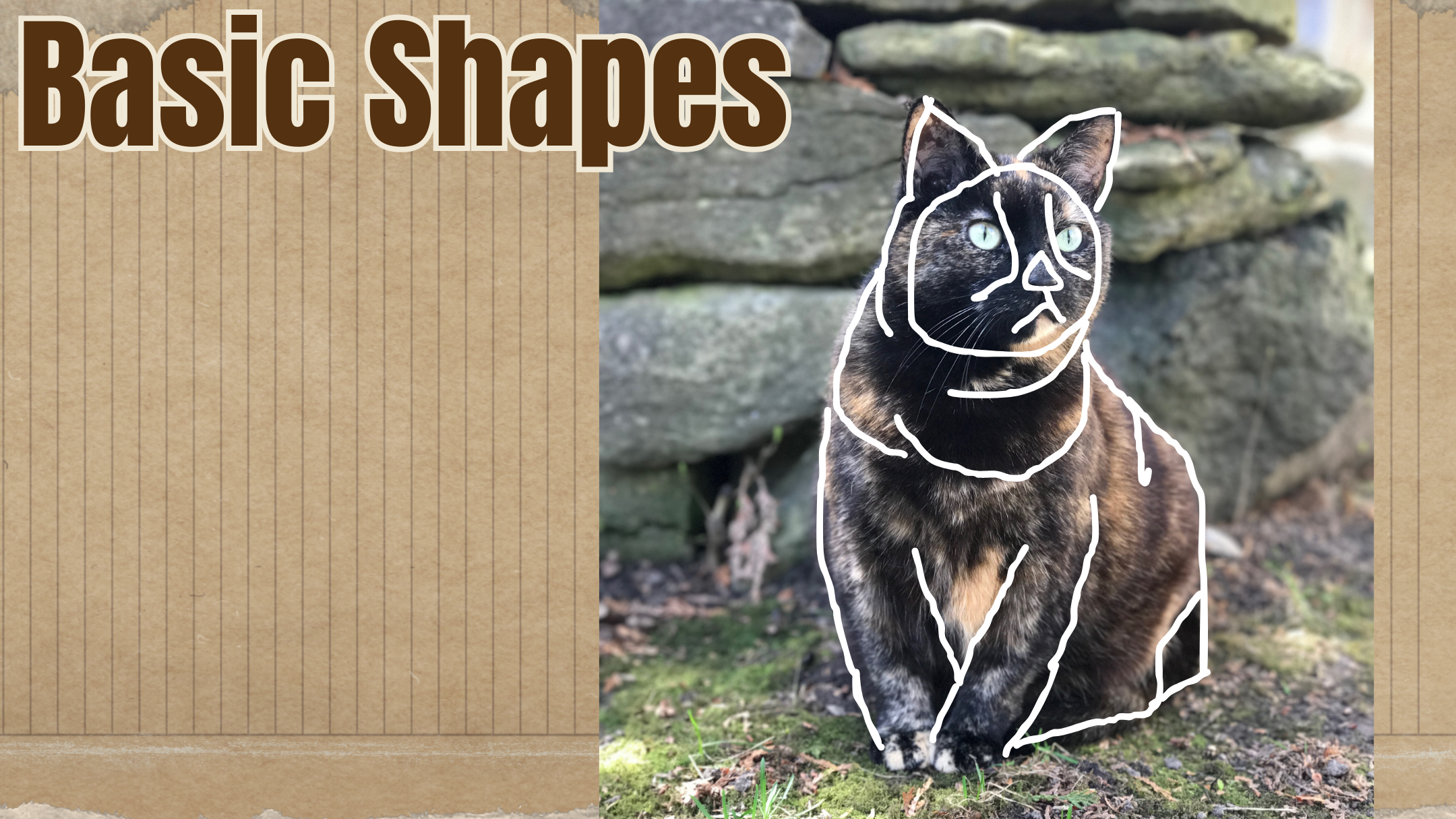
Gosto de planejar meu esboço digitalmente primeiro, mas você também pode fazê-lo no papel ou à mão livre. Usando um lápis digital, faça um esboço leve na sua foto de referência para identificar as formas principais. Concentre-se nas formas básicas, proporções, posicionamento dos olhos e postura. Você não precisa criar detalhes completos ainda, apenas um mapa sólido de onde a alma do seu retrato viverá.
Start by choosing a reference photo that makes you feel something. It could be your own pet or one you connect with emotionally. Look for clear lighting and visible textures, especially around the eyes.
I like to plan my sketch digitally first, but you can do it on paper or free hand too. Using a digital pencil, sketch lightly on your reference photo to identify the main shapes. Focus on basic shapes, proportions, eye placement, and posture. You’re not going for full details yet, just a solid map for where the soul of your portrait will live.
Etapa 2: Transferindo para o papel
Step 2: Transferring to Paper
Agora que você identificou as formas básicas do seu pet, vamos colocá-las no papel. Eu gosto de começar pelas orelhas e ir descendo, pois isso me ajuda a planejar o tamanho do retrato sem ultrapassar o tamanho do papel. Eu uso giz pastel oleoso para desenhar as feições do meu gato, usando as cores que mais se aproximam da foto de referência. Mas você sempre pode fazer um esboço leve com lápis, se isso ajudar.
Desenhando o Rosto
Orelhas: Desenhe dois sinais de V invertidos com cerca de 4 dedos de distância.
Olhos: Desenhe duas contas com cerca de 2 dedos de distância entre elas.
Nariz: Desenhe um triângulo com bordas curvas.
Lábios: desenhe um sinal de W com bordas curvas centralizadas no nariz.
Ponte do nariz: usando uma cor escura, desenhe duas formas de L espelhadas e deslocadas, frouxamente, ao redor do nariz.
Dica: Para manter as proporções, acho útil usar os dedos para calcular a distância entre as diferentes características. Por exemplo, as orelhas estão a 4 dedos de distância. Da mesma forma, os olhos estão a 2 dedos de distância. Você também pode usar uma régua para maior precisão.
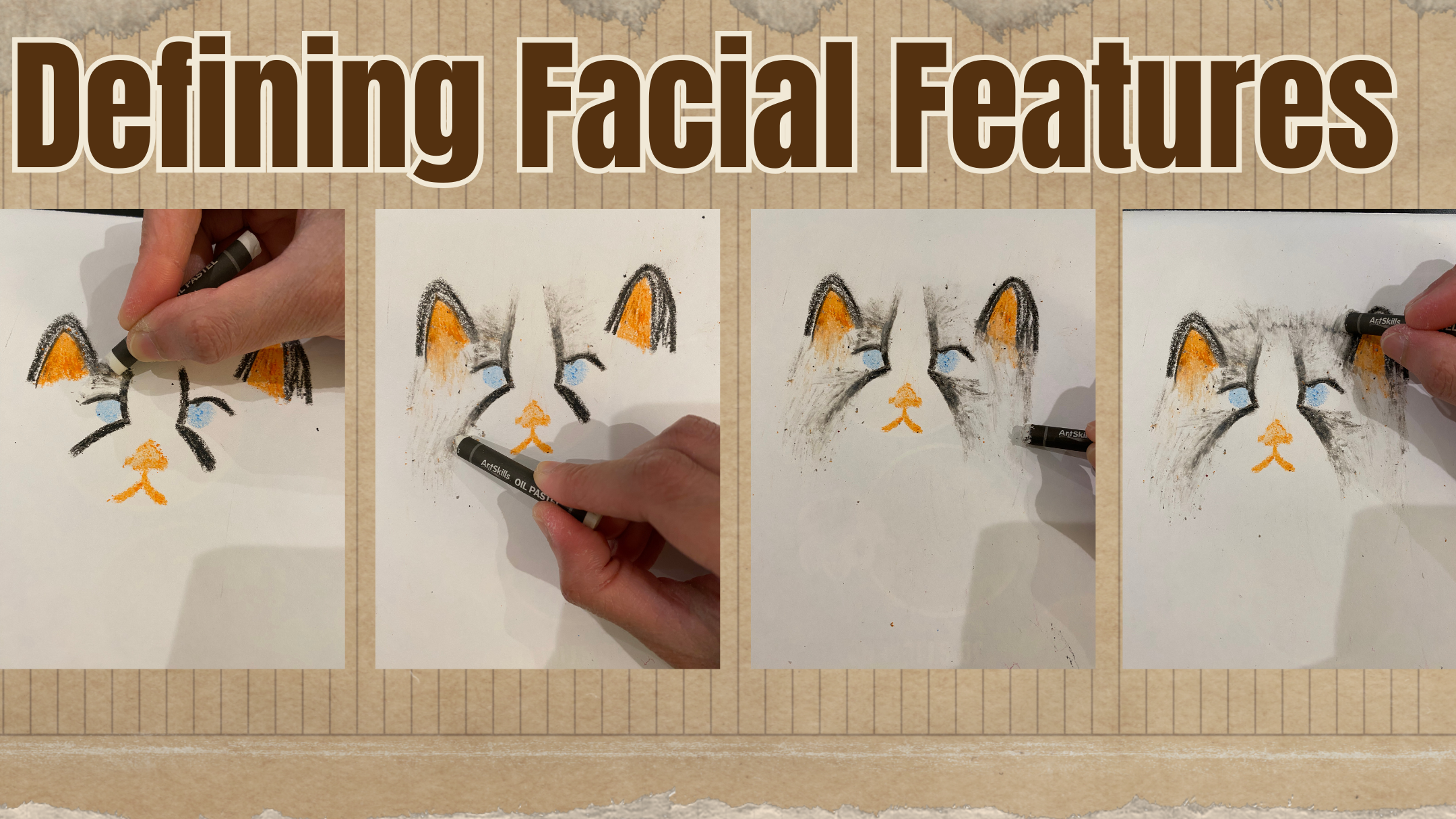
Definindo as características faciais
Usando um pastel oleoso branco ou um cotonete, esfume a ponte nasal para criar um efeito de sombra ao redor do rosto. Trabalhe gradualmente do centro do nariz para as bordas do rosto. Ao final, você deverá conseguir ver a silhueta da cabeça do animal. Se a cor não chegar até a borda, tente adicionar um pouco mais na ponte nasal e repita o processo até obter o tamanho certo. Dessa forma, você obterá um tom de pele gradual, em vez de uma separação brusca entre as diferentes camadas.
Now that you have identified the basic shapes of your pet, let's bring it to paper. I like to start at the ears and work my way downward as it helps me plan the size of the portrait without exceeding the size of the paper. I directly use oil pastels to draw the features of my cat using the colors that closely match the reference photo. But you can always draw a light sketch using a pencil, if that helps.
Drawing the Face
Ears: Draw two inverted V sign about 4 fingers apart.
Eyes: Draw two beads about 2 fingers apart.
Nose: Draw a triangle with curved edges.
Lips: Draw a W sign with curved edges that center at the nose.
Bridge of the nose: Using a dark color, draw two offset mirrored L shapes loosely around the nose.
Tip: To maintain proportions, I find it helpful to use my fingers to calculate the distance between different features. For example, the ears are 4 fingers apart. Similarly, the eyes are 2 fingers apart. You can always use a ruler for more accuracy too.
Defining the Facial Features
Using a white oil pastel or cotton swab, smudge the nose bridge to create a shadow effect around the face. Gradually work your way from the center of the nose outward to the edges of the face. At the end of this, you should be able to see the silhouette of the pet's head. If the color does not carry all the way to the edge, try to add some more to the nose bridge and repeat the process until you get the right size. This way, you will get a gradual skin tone instead of a jarring separation between different layers.

Etapa 3: Camadas de cores e construção de formas com pastéis a óleo
Step 3: Layering Colors & Building Form with Oil Pastels
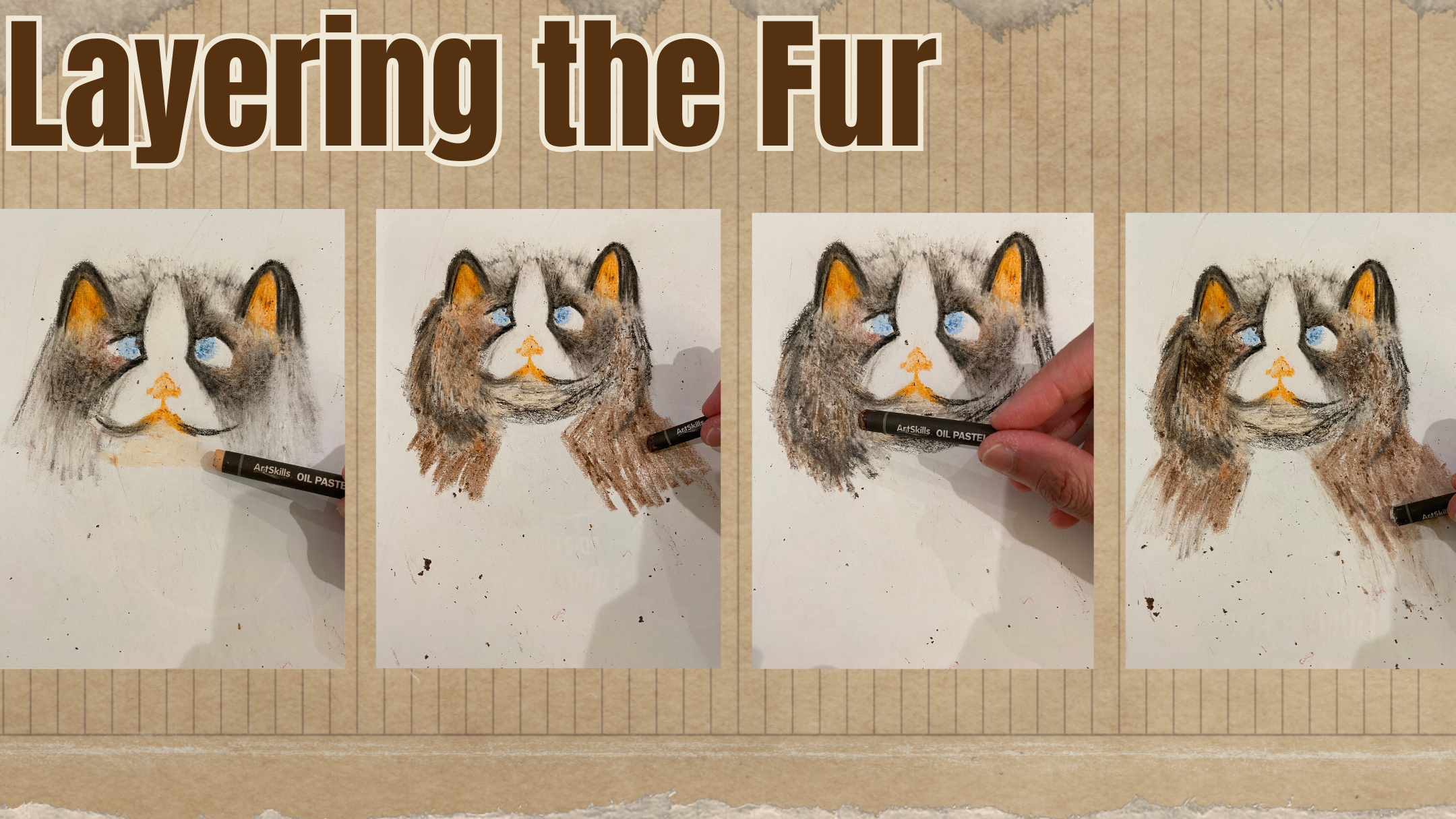
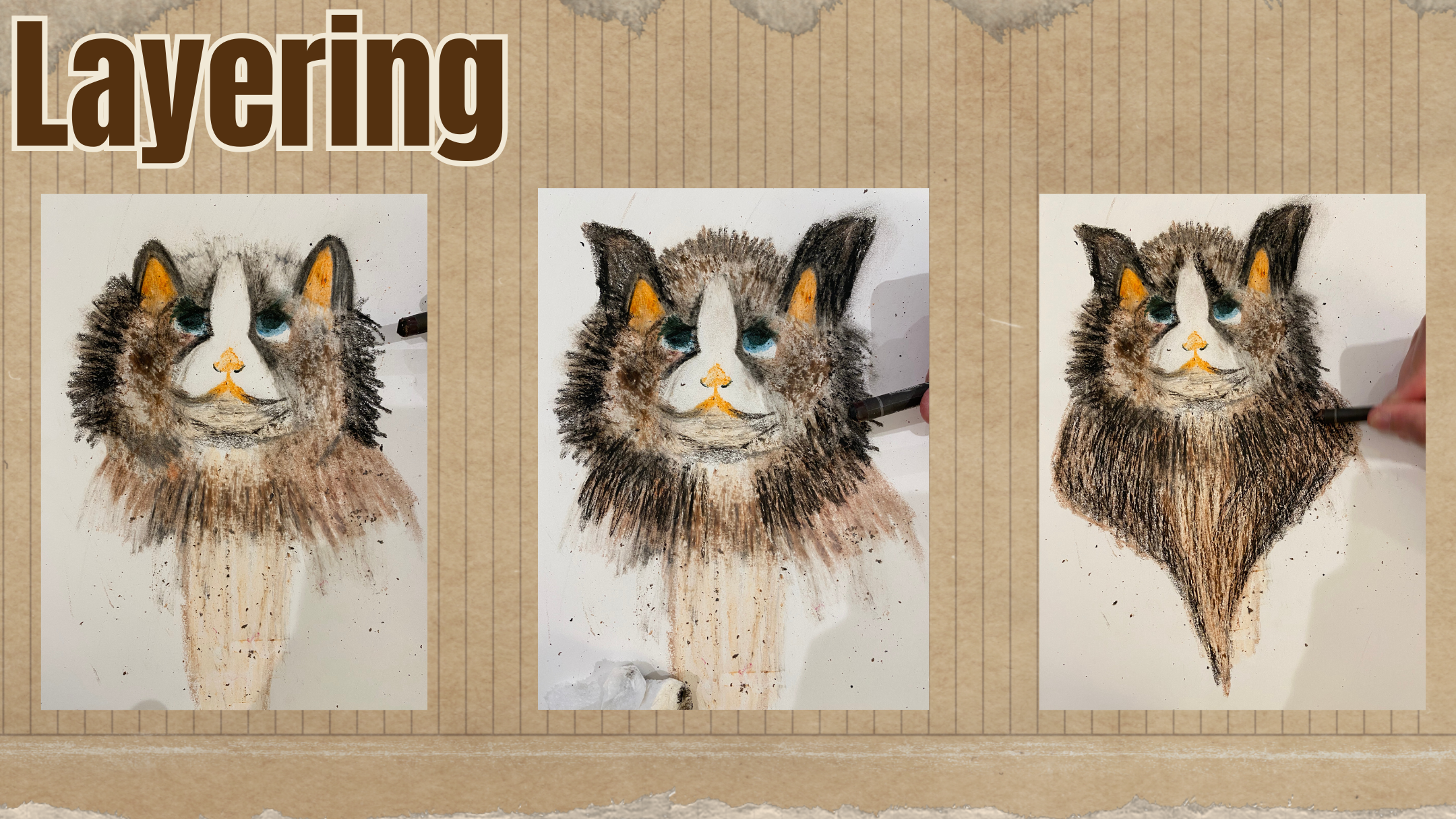
Agora vem a parte divertida! Comece aplicando camadas com os tons mais claros, como marrom-claro, laranja e cinzas quentes (dependendo da cor da pelagem do seu pet), bloqueando as sombras. Em seguida, vá aumentando aos poucos os tons mais escuros para adicionar profundidade. Use pinceladas suaves que sigam a direção do pelo para criar uma textura realista. Não há problema em deixar pequenos espaços entre os pelos para destacar as áreas onde a luz os atinge.
Now for the fun part! Start layering your lightest tones first like light brown, orange, warm greys (depending on the coat color of your pet) blocking in the shadows. Then slowly work up into the darker tones to add depth. Use soft strokes that follow the direction of the fur to build realistic texture. It's okay to leave some small gaps in between the fur to highlight the areas where the light touches the fur.
Etapa 4: Mistura de cores
Step 4: Blending Colors
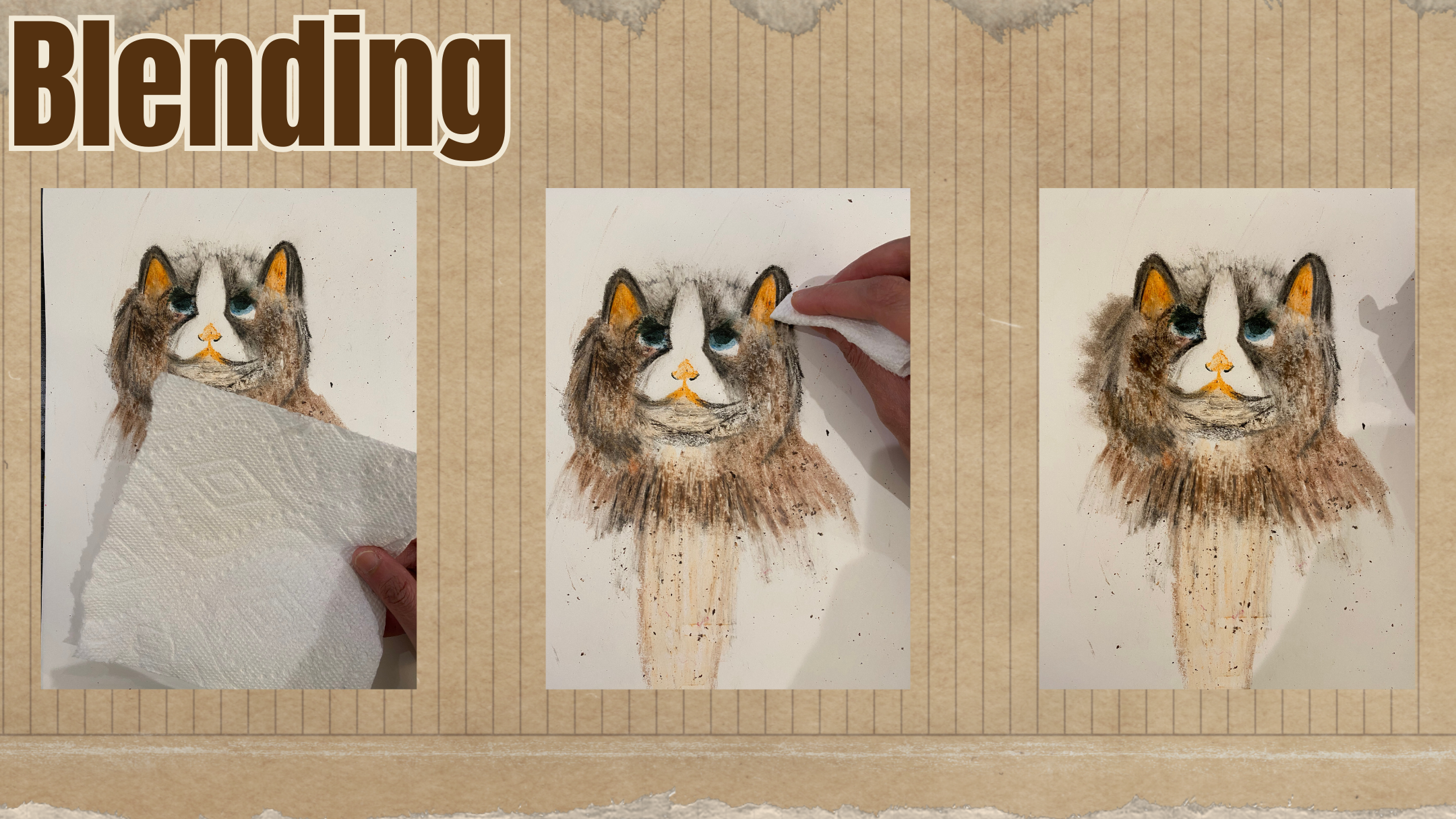
A mistura é fundamental aqui. Use um lenço de papel, um cotonete de mistura ou apenas os dedos para suavizar as transições, especialmente em áreas como o focinho ou as orelhas. Ficará bagunçado, mas não entre em pânico e aproveite o processo. Recomendo seguir a direção do pelo para criar uma textura realista. Além disso, acho útil usar pressões diferentes para adicionar misturas claras e escuras. Aplique mais pressão nas áreas onde o pelo é mais claro e vice-versa.
Blending is key here. Use a tissue paper or a blending stump or just your fingers to soften transitions, especially in areas like the muzzle or ears. It will look messy, but do not panic and just enjoy the process. I would recommend to follow the direction of the fur to build a realistic texture. Also, I find it helpful when using different pressures to add light and dark blends. Use more pressure in the areas where the fur is lighter, and vice versa.
Etapa 5: Camadas adicionais de pele
Step 5: Layering more Fur
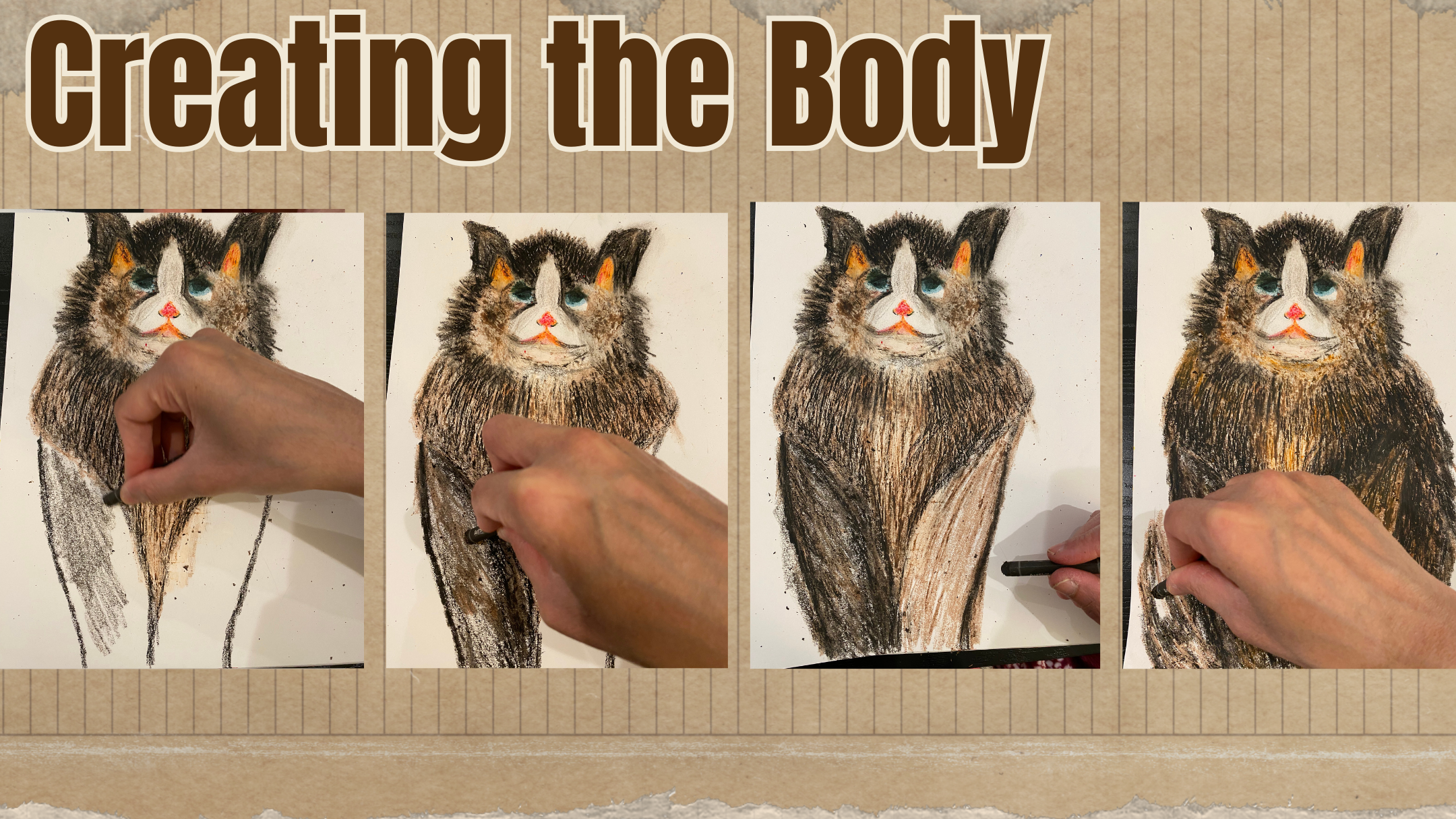
Aplique o mesmo conjunto de cores seguindo a abordagem do claro para o escuro para criar outra dimensão. Afinal, o pelo nunca é apenas marrom; geralmente, ele apresenta tons de dourado, vermelho, cinza e até mesmo azul ou roxo nas sombras. Portanto, sinta-se à vontade para usar os tons que achar convenientes.
Trabalhe lentamente e crie camadas, repetindo o mesmo processo para o resto do corpo, trabalhando em pequenas seções, até obter uma aparência uniforme.
Layer the same set of colors following the light to dark approach to create another dimension. After all, fur is never just brown, it usually has tones of gold, red, grey, even blue or purples in the shadows. So feel free to use any tones you see desirable.
Work slowly and build up layers, and repeat the same process for the rest of the body working in small sections until you have achieved a uniform look.
Etapa 6: Toques finais
Step 6: Final touches
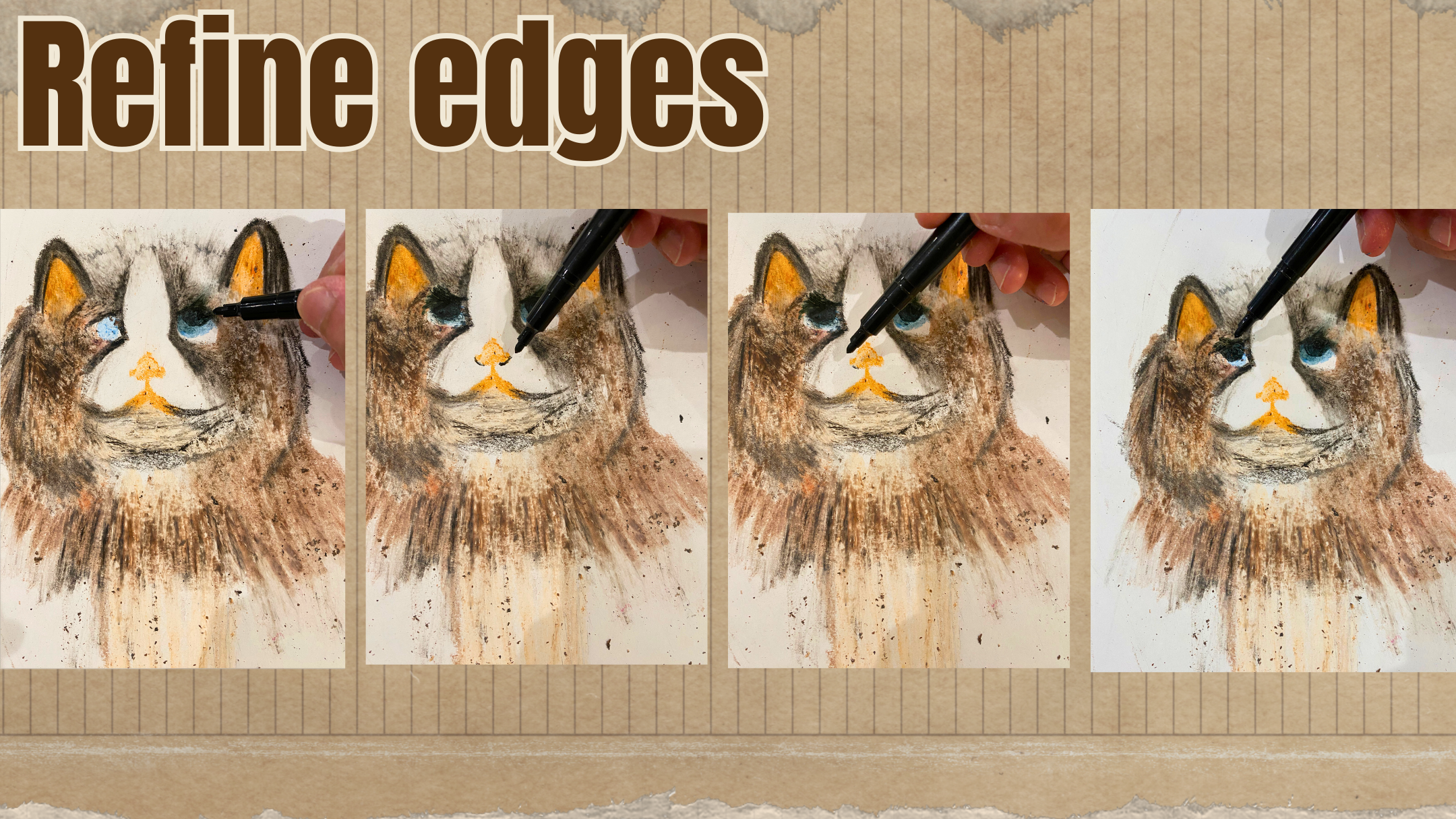
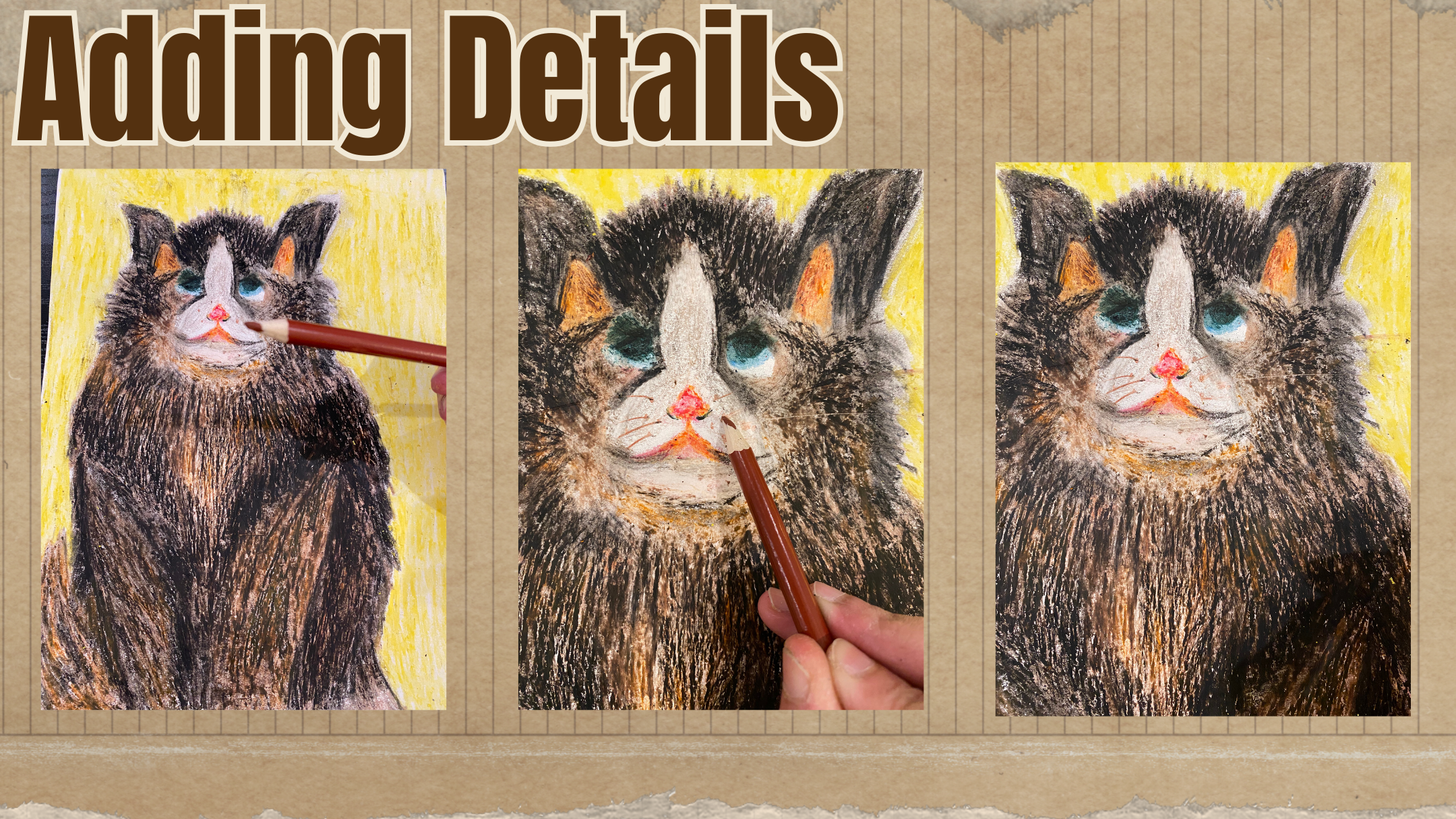
Agora é hora de refinar o retrato. Use lápis de cor para definir fios de pelo, cílios ou pequenos bigodes. Você também pode usar tinta para contornos mais definidos ou caneta gel branca para dar brilho aos olhos.
Técnicas mistas ajudam a transformar seu retrato de "desenho bonito" em "uau, parece vivo". Use aquarelas ou lápis pastel no fundo para sugerir um clima ou ambiente lúdico, mas mantenha o foco no seu objeto. Portanto, escolha uma cor que contraste com o seu animal de estimação.
Now it's time to refine the portrait. Use colored pencils to define fur strands, eyelashes, or tiny whiskers. You can also use ink for crisp edges, or white gel pen for bright glints in the eyes.
Mixed media helps push your portrait from “pretty drawing” to “wow, that looks alive.” Use watercolor washes or pastel pencils in the background to suggest a playful mood or environment, but keep the focus on your subject. So choose a color that contrasts your pet.
Conclusão do Projeto
Project Completion
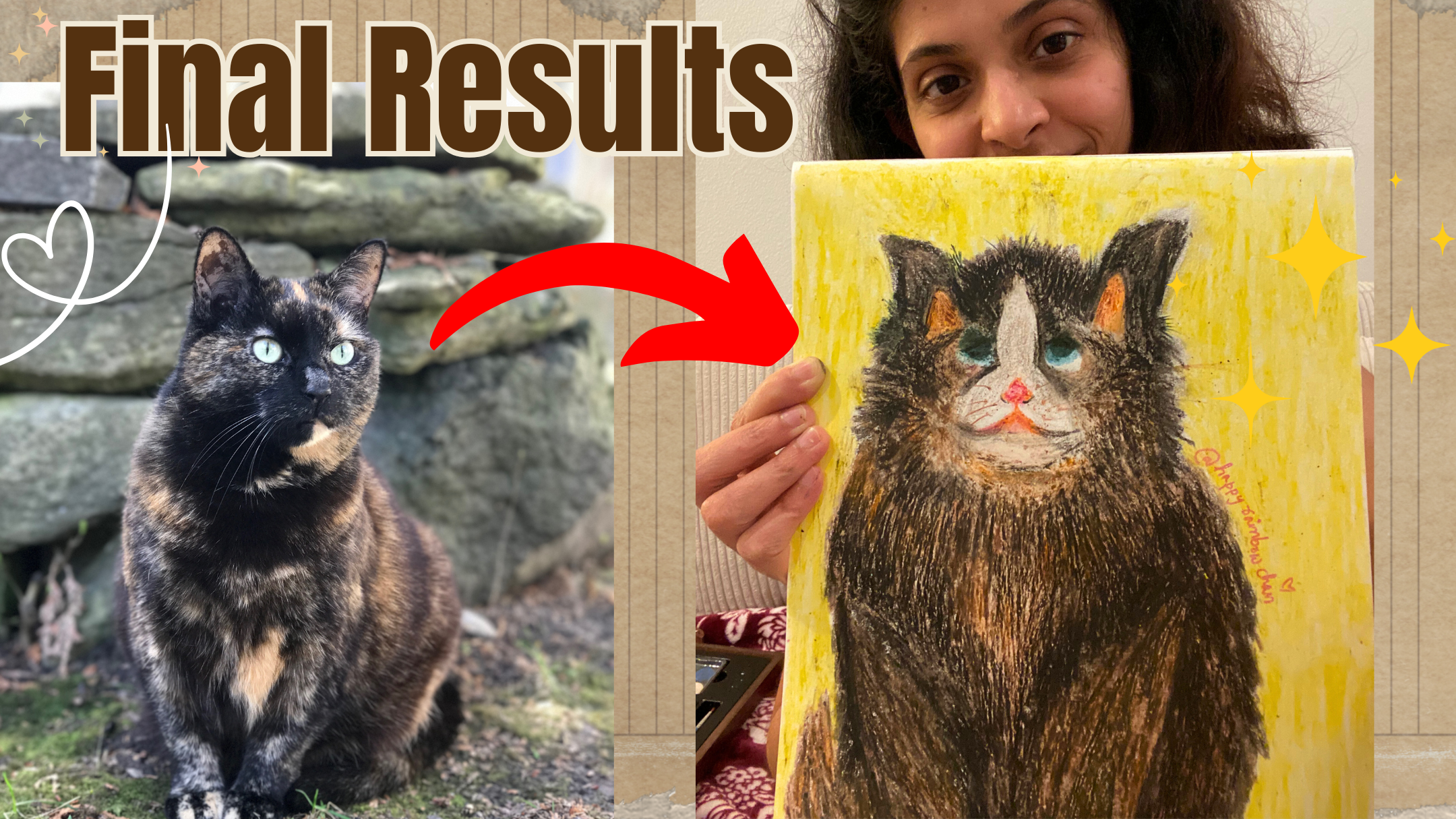
PARABÉNS! Você concluiu este curso com sucesso.
CONGRATS! You have successfully finished this course.
Obrigado por assistir
Thanks for watching
Muito obrigada por embarcar nessa jornada criativa comigo. Retratos realistas de animais de estimação são mais do que apenas desenhos. São cartas de amor em cores e texturas. Seja desenhando o seu próprio animal de estimação ou o de outra pessoa, a emoção que você coloca nele é o que o torna real.
Mal posso esperar para ver o que você criará, então me marque @happyrainbowchan no TikTok, Instagram e YouTube.
Boa sorte! :)
Thank you so much for taking this creative journey with me. Realistic pet portraits are more than just drawings. They’re love letters in color and texture. Whether you're drawing your own pet or someone else's, the emotion you put into it is what makes it real.
I can't wait to see what you create so please tag me @happyrainbowchan on TikTok, Instagram and YouTube.
Good Luck! :)


1 comentário
Espero que tenham gostado deste curso. Estou curioso para ver suas criações peludas (me marquem!) :) Além disso, sintam-se à vontade para fazer perguntas.
Faça login ou cadastre-se Gratuitamente para comentar